We place far too much faith in the first verb.
Launch the intranet. Start the business. Join the platform. Introduce flexible working. Take off.
They’re pleasingly definite things. They have dates and project plans and announcements. You can put a tick next to them and briefly enjoy the sensation that something has been achieved.
Unfortunately, almost none of the interesting problems live there.
They live in what happens afterwards. Whether anyone can find anything on the intranet you launched. Whether the business you built ten years ago still fits the person running it. Whether the platform you joined actually rewards the kind of communication you’re trying to do. Whether “work from anywhere” still works once anywhere is seven time zones away. Whether an aircraft that took off shows any comparable enthusiasm for landing where you expected.
This has been a fortnight of second-order problems: the things that appear only after the first-order problem has been triumphantly declared solved.
Which is irritating, because those are generally the ones that require the actual work.
This week at work
Last week came and went without much time to reflect, still less to write. So this is two weeks in one. Not so much a bumper edition as the usual edition with the middle taken out.
Most of it has gone on information architecture for a client we’ve worked with, on and off, for several years. They launched a new intranet a couple of years back. It works. People still can’t find anything.
That’s less damning than it sounds. In an organisation of any real complexity, findability isn’t a problem you solve so much as a collection of compromises you choose deliberately. Ten teams have a legitimate claim on the same page. Three of them call it something different. The structure that makes perfect sense to the people who own the content is almost never the one that makes sense to the person frantically hunting for it while trying to do something else. There are no clean answers, only trade-offs — and the work is deciding which ones you can live with.
Hence card sorts. Open first, then closed.
An open sort gives people the content and no categories at all. They group it however they like, then name the groups themselves. You learn what belongs with what in their heads rather than on the org chart — and, just as usefully, where their heads disagree. The naming is the gift. Nothing exposes the alleged obviousness of a category quite like asking five people to name it and getting six answers.
The closed sort comes next, and it isn’t simply the open sort with the answers filled in. New cards this time, and the categories we’ve derived from the open sort, already named. People file content they haven’t seen before into labels they didn’t write. That’s the harder test: not whether the structure accommodates the set we happened to start with, but whether it survives contact with the next thing somebody publishes into it. Cards that land consistently are settled. Cards that scatter are contested, and those are the ones worth having an argument about.
Then a tree test, which asks the other question entirely: not where you’d put something, but whether you can find it after somebody else has put it there.
Between them, you end up knowing not just where to compromise but why — which is the difference between an information architecture you can defend and one that lasts until the first person with strong opinions, edit permissions and a free half-hour in their calendar.
The rest of the fortnight has gone on preparing for a heavy run of talking. Unite in London at the end of the month: a working clinic on attention and overload, which means building something people actually do rather than sit through while discreetly answering email. A keynote in Ljubljana for Dan PR, on building communication that holds when the ground keeps moving. And before either of them:
This Tuesday I’m doing a fireside chat for IABC with Tony Stewart on communicating with digital nomads — 12:00 UK, 13:00 CEST, 19:00 HK — with Simon Cavendish joining as a third voice.
Tony will be in Hong Kong. I’ll be in Bosnia, Simon in London. None of that should be remarkable. The fact we have to design communication differently because of it, rather than simply pretending we’re all sitting in the same office with slightly worse Wi-Fi, is very much on point. Sign up to join us here
Also this week
A trip back to London: a client catch-up, a certain amount of prospective-client schmoozing, and a long-overdue few days with my parents, which is the item that should have been top of that list and wasn’t.
Took my mum to the Frida Kahlo exhibition at Tate Modern. I’ve seen a great many Frida shows over the years — I’ve been to the Casa Azul three times — and she still hasn’t worn out on me. Familiarity doesn’t seem to do to her what it does to other artists. Perhaps because the work was so relentlessly about the same person changing underneath it.

Also went to an evening called Owning Our Becoming at Soho House, run by Ten with Veuve Clicquot, with Fabienne Chapot and Marthe de Groot. Fabienne started her label at 24 on instinct and not much corporate experience, took investment, and grew it from €3m to €30m in six years — then stepped down as CEO to become founder and shareholder instead, focusing on culture, storytelling, key clients and mentoring. Marthe arrived at much the same conclusion from a different direction. Their advice, distilled: everything will be okay. Just jump.
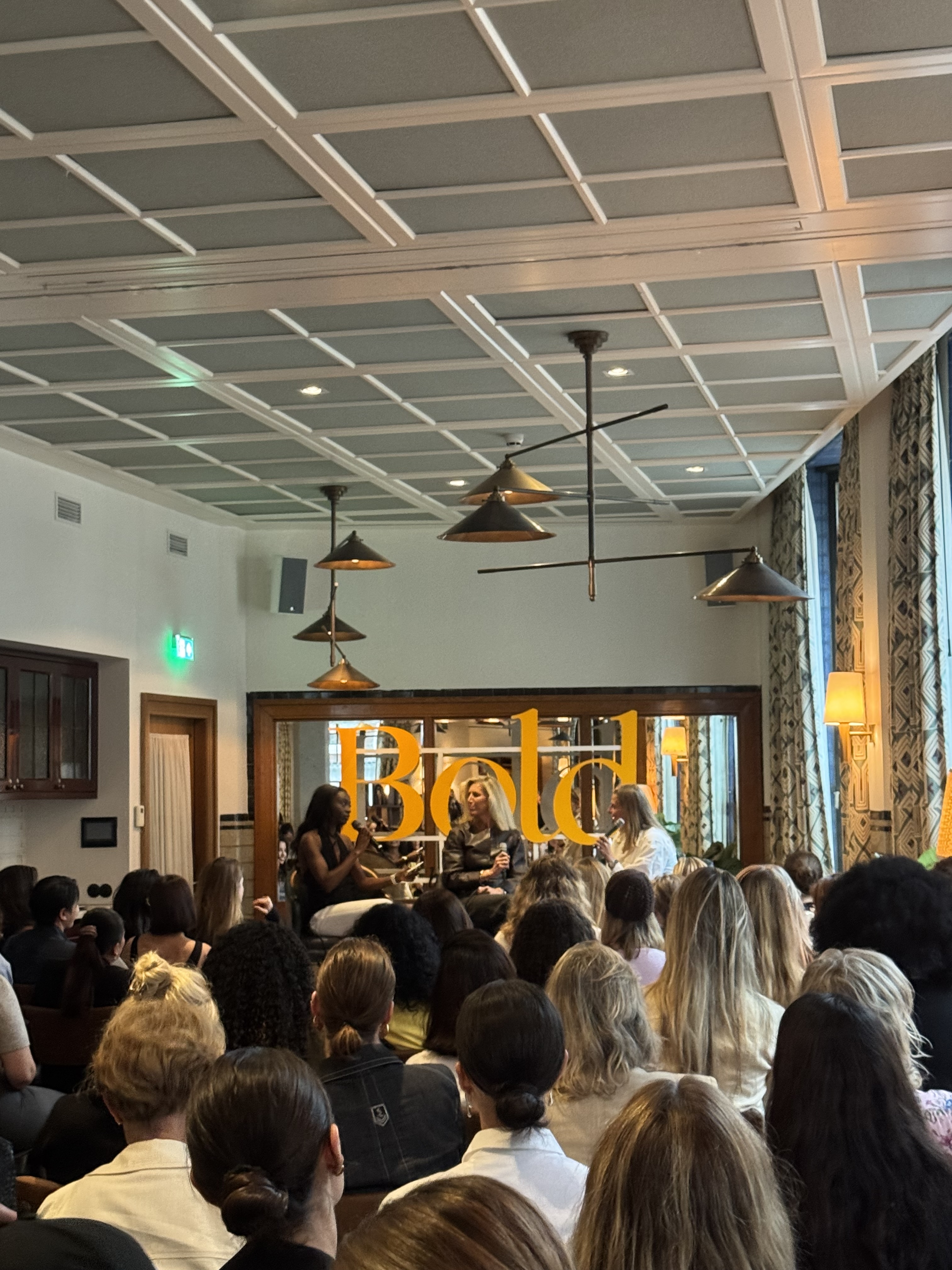
Which I did, ten years ago, though I’ve written about how little it resembled a jump at the time. I left because staying had stopped being survivable, without a plan or much of a cushion, and it took a long, unglamorous middle before any of it looked retrospectively like a brave decision rather than a sequence of things I somehow kept getting away with.
The more useful reminder was the bit after the jump. The thing you leapt to isn’t necessarily the thing you’re supposed to keep doing forever. The role you carve out for yourself when the business is new has to change as the business does, otherwise eventually you’ve just built yourself another job you’re slightly annoyed about having.
That’s more or less where I landed at the end of that series: orientation rather than arrival. Expect the ground to move; build accordingly. Easy enough to write in December. Slightly different to hear it said out loud by someone who’s just voluntarily moved the ground again.
Connections
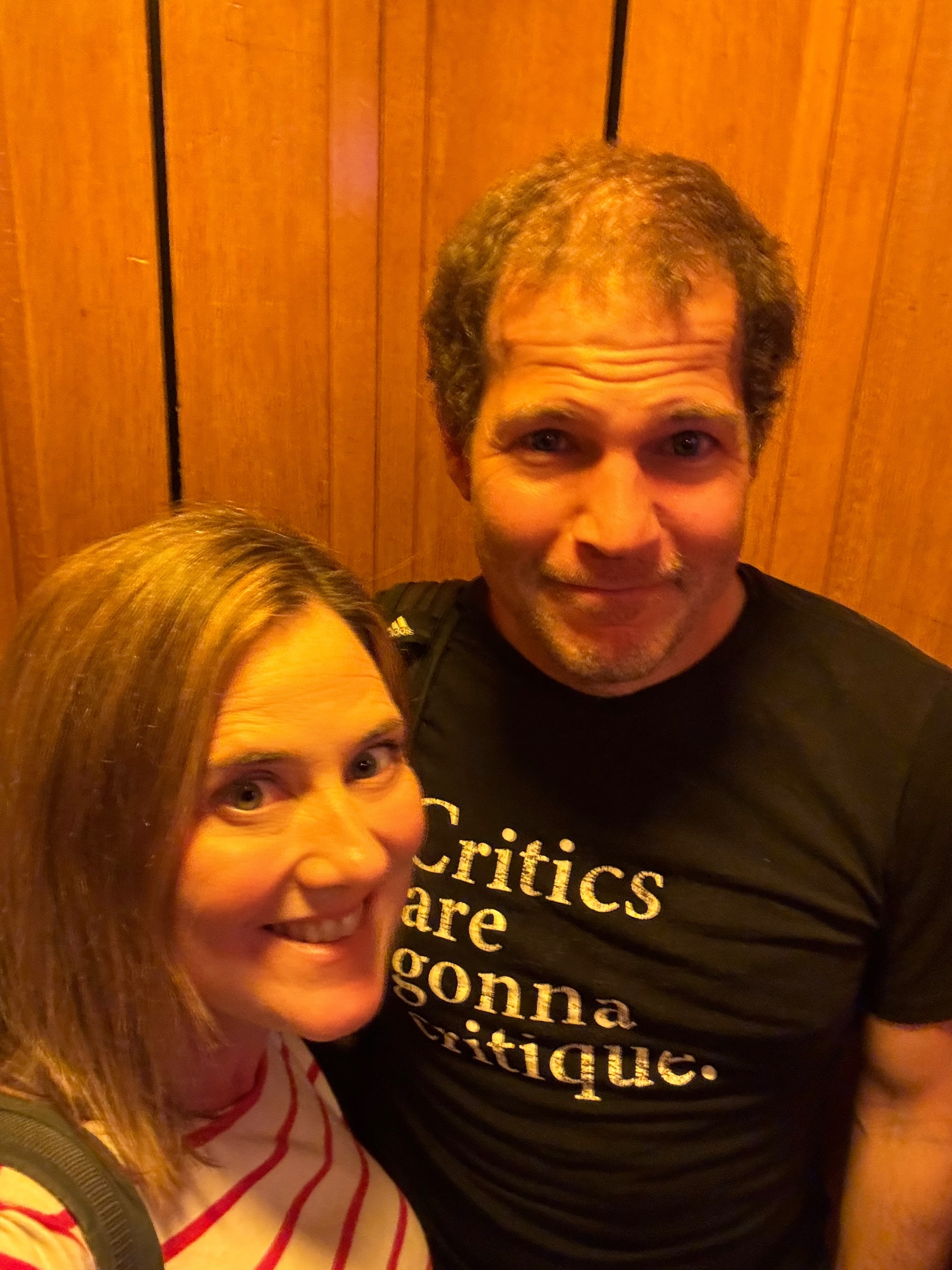
Caught up with Ezra Butler, last seen in New York in 2019. Over brunch we covered the etymology of colour, whether Robin Hood was Jewish, and the missing pieces in the creator economy — a conversational range I’d normally spread across three separate people and at least one WhatsApp group. Seven years is too long.
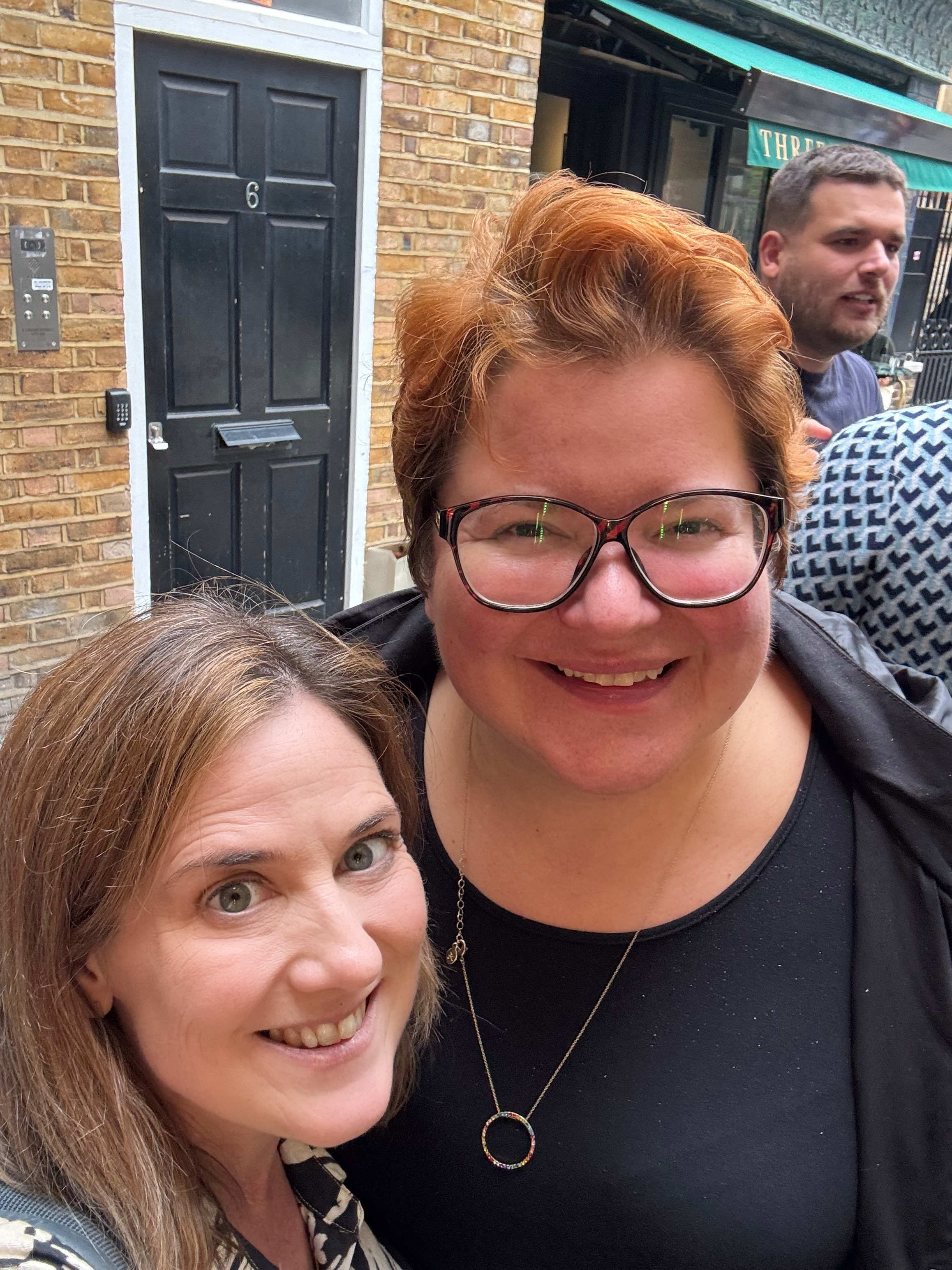
In London, I put the world to rights with Janet Hitchen over wine, and had a brief catch-up with regular co-conspirator Lisa Riemers. A last-minute let-down then turned into a spontaneous and splendidly decadent lunch with Steve Chambers, which is clearly the correct response to a cancellation and one I intend to make policy.
Coverage
Quoted in Finextra’s long read on how social media became a fintech antihero, alongside a solicitor, a market analyst and several people worrying about finfluencers. My contribution was the structural bit: organic reach has been in decline since around 2014, and social without both excellent content and paid promotion is now functionally invisible. Which makes it advertising, not conversation.
Attention is the only currency on there, and outrage and aspiration are the cheapest ways to buy it — neither of which sits particularly comfortably with products that are boring, slow, probabilistic and occasionally required by law to explain fourteen different ways you might lose your money. There is no native social format for “this is moderately sensible and, assuming several things nobody controls, may work out quite well over thirty years”.
Answering their questions shook loose rather more than would fit in a quote, so I wrote the rest of it up: The communication mismatch. Finextra’s piece is about the advice consumers get; mine is about the organisations trying to compete with it, and why they can’t.
Platforms reward speed, certainty and strong opinions. Regulated sectors deal in qualification, edge cases and several legally significant ways this might all go tits up. That’s not a gap a better copywriter closes. It’s the nature of the thing being communicated, and being bad at social might therefore be information rather than a problem to solve.
The argument I suspect will annoy the greatest number of people is that employee advocacy is an organisational trust strategy with a social media output, rather than a distribution plan with a toolkit. If your people don’t trust the organisation enough to say useful things about it in public, another webinar about optimising their LinkedIn profiles is unlikely to be the missing ingredient.
Travel
This one comes to you from Bosnia, by way of Belgrade, which was not on the itinerary.
The flight made two attempts at landing, neither of which resulted in the traditional outcome of being on the ground, and then returned to where it had started — an experience I’d describe as mildly terrifying while it was happening and extremely tedious for the subsequent 24 hours.
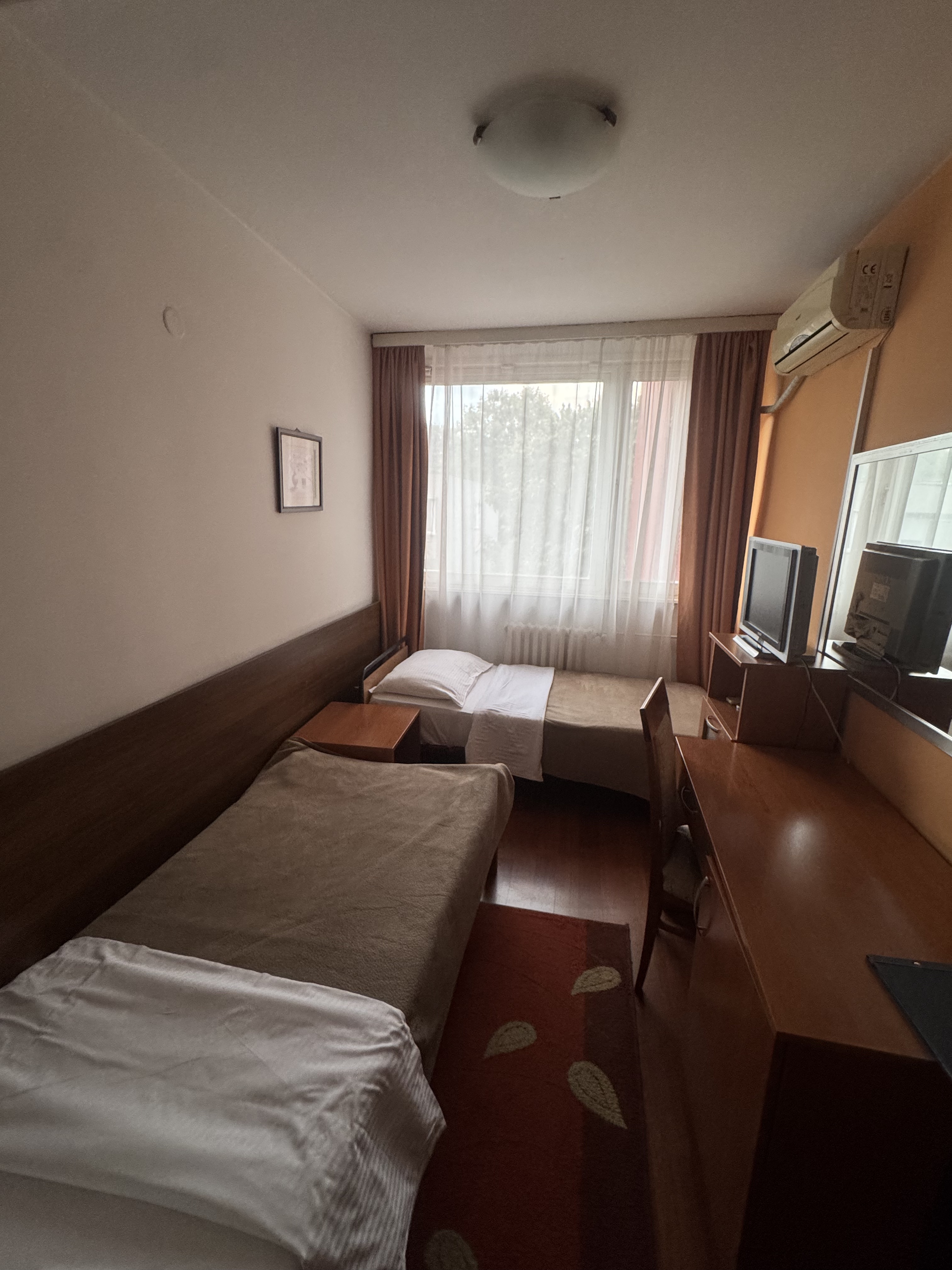
Country 92, therefore, ticked off in perhaps the least satisfying manner available: transit, unexpected return, then being decanted into a hotel that appeared to have been sealed in 1974 and reopened specifically for me.
The room had wood panelling to waist height and curtains the colour of weak gravy. Dinner was a buffet of such profound pallor that the chicken, mashed potato and vegetables — boiled to the outer limit of their structural integrity — were all, and I want to be absolutely clear about this, paler than me. The waiters had the manner of men serving out a sentence.
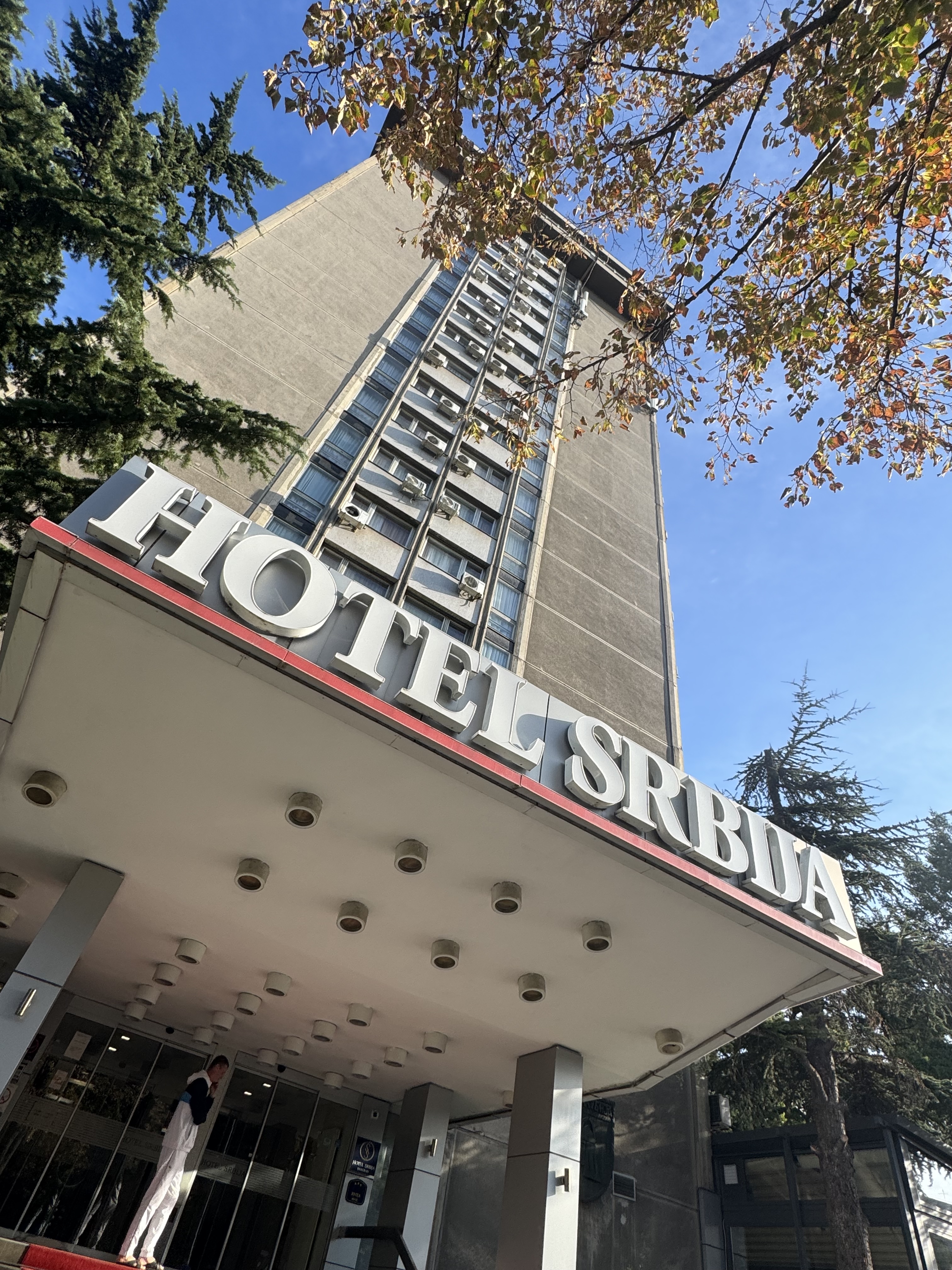
And everyone was smoking. Indoors. Everywhere. At all times. With the serene absence of self-consciousness you only see in people who have never once been asked whether they might perhaps take that outside.
I’d forgotten how much the 1980s smelled of cigarettes. Twelve hours in a Belgrade hotel and it all came flooding back, along with the light nausea and a powerful urge to watch Bergerac.
I did eventually make it to Mostar, 24 hours later than planned. More on which next week, once I’ve recovered my sense of humour and everything I own no longer smells faintly of Marlboro.
This week in photos

Pingback: Weeknote 2026/39: Organisational dark matter
Pingback: Weeknote 2026/40 | Sharon O'Dea