There is a great deal of stuff in the world that is technically there.
I briefly thought the theme of this week was dark matter: things we know are there largely because of the effort involved in detecting them. But this is unfair to dark matter, which appears to perform an important structural function in the universe. The same cannot necessarily be said for the 95% of SharePoint content nobody has touched in the last ninety days.
I’ve been thinking about the gap between being present and having an effect. The information exists. The capability exists. The feature exists. Someone has carefully written it, approved it and uploaded it to the place where the governance document says it should go. Whether anybody has looked at it since is an entirely different field of study.
This week I’ve encountered that gap in client content, in a research method we put in a book published less than three months ago, in the 270 messages competing for the average worker’s attention every day, and in my own ability to speak Dutch, which turns out to exist but requires mild peril to activate.
Presence is not effect. Existence is not utility. And there is an astonishing amount of organisational dark matter just taking up space while everyone insists the answer is probably another platform.
This week at work
This week Jon and I went from nought to a hundred on two discovery projects at once. That is not a speed anyone recommends. It is also, apparently, the only speed there is.
For one of them we now have a board with ninety-nine hypotheses on it, pulled from desk research and a small mountain of documents. Every one is coded and tracked.
This is not, I should admit, what our book tells you to do.
In the book, we recommend running hypothesis-led research on a Kanban tool like Planner. We add that you could use a relational database if you had the time and the skills, in the tone of someone mentioning that you could also build your own boat. Probably overkill, we said.
AI has since made the overkill option an afternoon’s work.
So that’s what we use now, and it’s better. The method hasn’t changed. What counts as a practical way to execute it has.
It’s the second thing in the book to age since July. One of our case studies has since changed its approach completely. This is the problem with writing a printed book: you spend eighteen months making it as current as possible, hand it to the printer, and reality immediately begins issuing corrections.
None of the ninety-nine hypotheses are in the ‘proven’ column yet. That’s the job of the survey going live today and the interviews after it. But a few patterns are already difficult to ignore.
A tiny fraction of the organisation’s SharePoint content has been touched in recent months. On another platform, the overwhelming majority of activity is concentrated on a vanishingly small proportion of pages.
This isn’t at all unusual. Do this exercise on almost any mature content estate and you’ll find the same thing: a small amount of content doing almost all the work, surrounded by an enormous sedimentary layer of stuff somebody once thought important enough to write.
Somebody wrote all of it. Somebody approved it. In some cases several somebodies probably discussed the title.
This is why we do discovery rather than audit.
An audit is a very thorough inventory of the fridge. It will tell you there are three jars of mustard, half a lemon and a yoghurt of uncertain vintage. It is accurate, complete and eminently conditionally formattable.
It will not tell you what anyone wants for dinner.
Discovery starts at the other end. Who’s eating? What are they hungry for? Who’s allergic to what? Who works nights? Who has four minutes between shifts to eat anything at all? Some of the answers will be in the fridge. Most won’t.
And you’d never discover that half the household quietly stopped eating in two years ago if all you did was count the jars.
In between all this I’ve been writing two talks, both about attention.
The average worker gets 117 emails and 153 Teams messages a day: an interruption roughly every two minutes. The first talk, for Unily Unite on Tuesday, argues that attention is finite and organisations spend it as though it isn’t. The second is for Dan PR in Ljubljana, on what makes communication hold when everything around it keeps moving.
To write it, I did what anyone who has studied workplace distraction closely would do.
I went into the office on a Saturday.
The co-work was, unhelpfully, busy, because someone was holding a party downstairs. But my floor was empty. Nobody was going to email me. Nobody was going to Teams me. I turned the music up and got more done in a few hours than I had in several days of attempting to concentrate alongside the normal digital woodpecker of working life.
The playlist was called ADHD Focus Music.
Sometimes the universe is a little heavy-handed with the symbolism.
Also this week
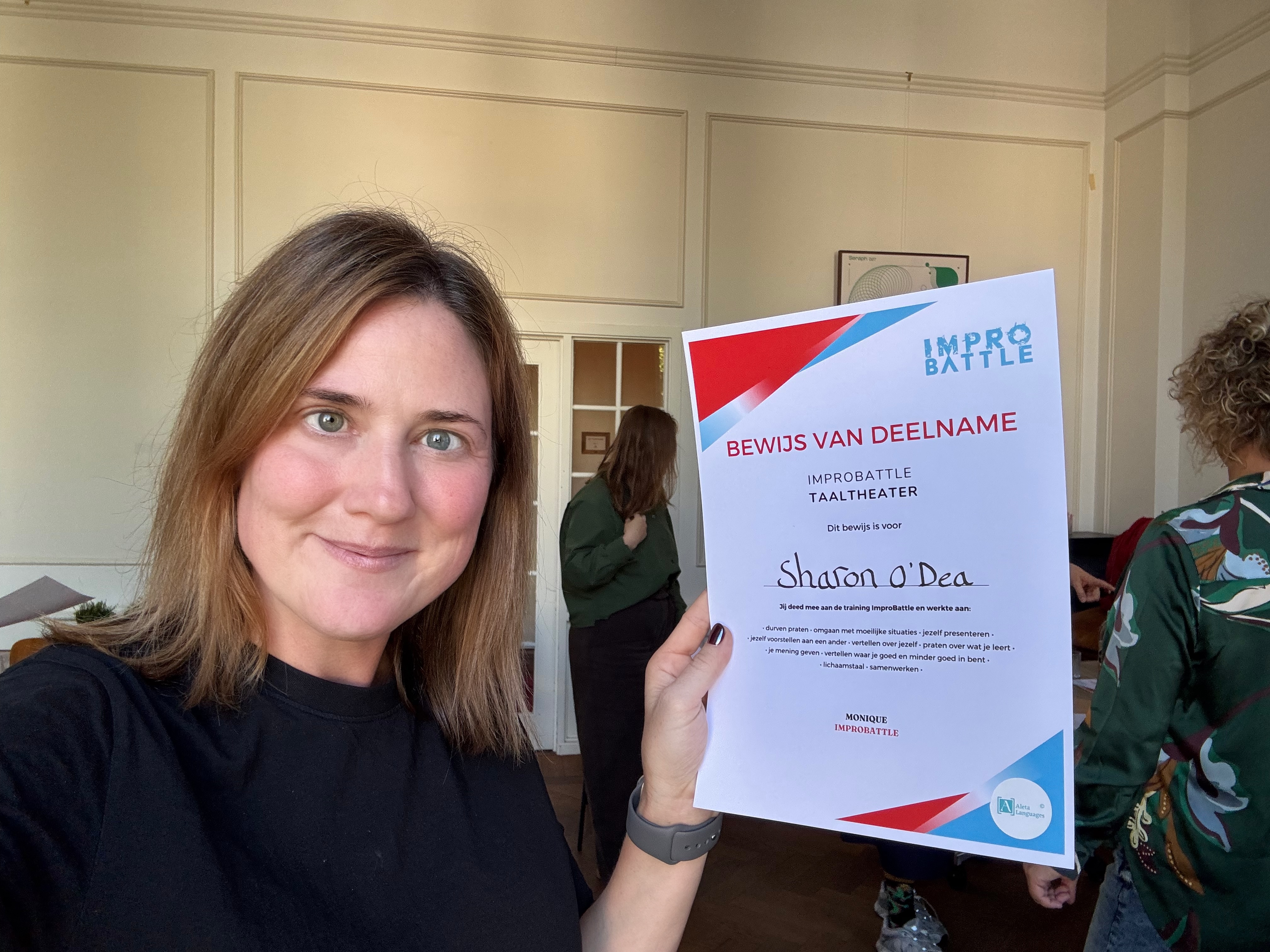
I did an improv class. In Dutch.
This combines two things I dislike: improv, and speaking Dutch in front of people who can hear me. Two fears for the price of one.
It was, against all my expectations, strangely enjoyable. More surprising still, it turns out I can speak Dutch when I need to. This is not the same as speaking it when I want to, when every noun immediately leaves my head and the word order becomes a hostage situation, but it’s closer than I’d thought.
I would do improv again, a sentence I did not expect to type this week.
Improv people call this ‘yes, and’. I’ve since signed up for Dutch conversation classes.
This is how they get you.
I also went to the Yayoi Kusama retrospective at the Stedelijk. I’ve seen her work in London and Tokyo, but never much of the early stuff: what she was making before she became Kusama, before the pumpkins, dots and infinity rooms became recognisable from fifty paces.
What I loved was seeing the evolution. Not one grand idea arriving fully formed, but an artist repeatedly changing materials, scale and approach as the world around her changed too. The recognisable thing is the endpoint we see looking backwards. Living through it presumably felt much messier.
There’s probably a lesson in there about changing your approach as the times change.
But mostly her work is just joyful, and I loved it.
Consuming
I watched 70 Up on catch-up. The series has followed the same group of people since they were seven, returning every seven years.
It’s extraordinary television. The ambitions at seven. The certainty of 21. The marriages and divorces, careers, children, disappointments, surprises and gradual accommodation with the person you turned out to be.
One participant looks back over a life that took him from a farm in the Yorkshire Dales to a career in the United States. At 70, he concludes quite matter-of-factly that he probably won’t be around to do this again in seven years.
He died days after filming.
I got quite emotional.
There’s something almost unbearably moving about watching people become themselves in seven-year increments, then realising that eventually there isn’t another increment.
Connections
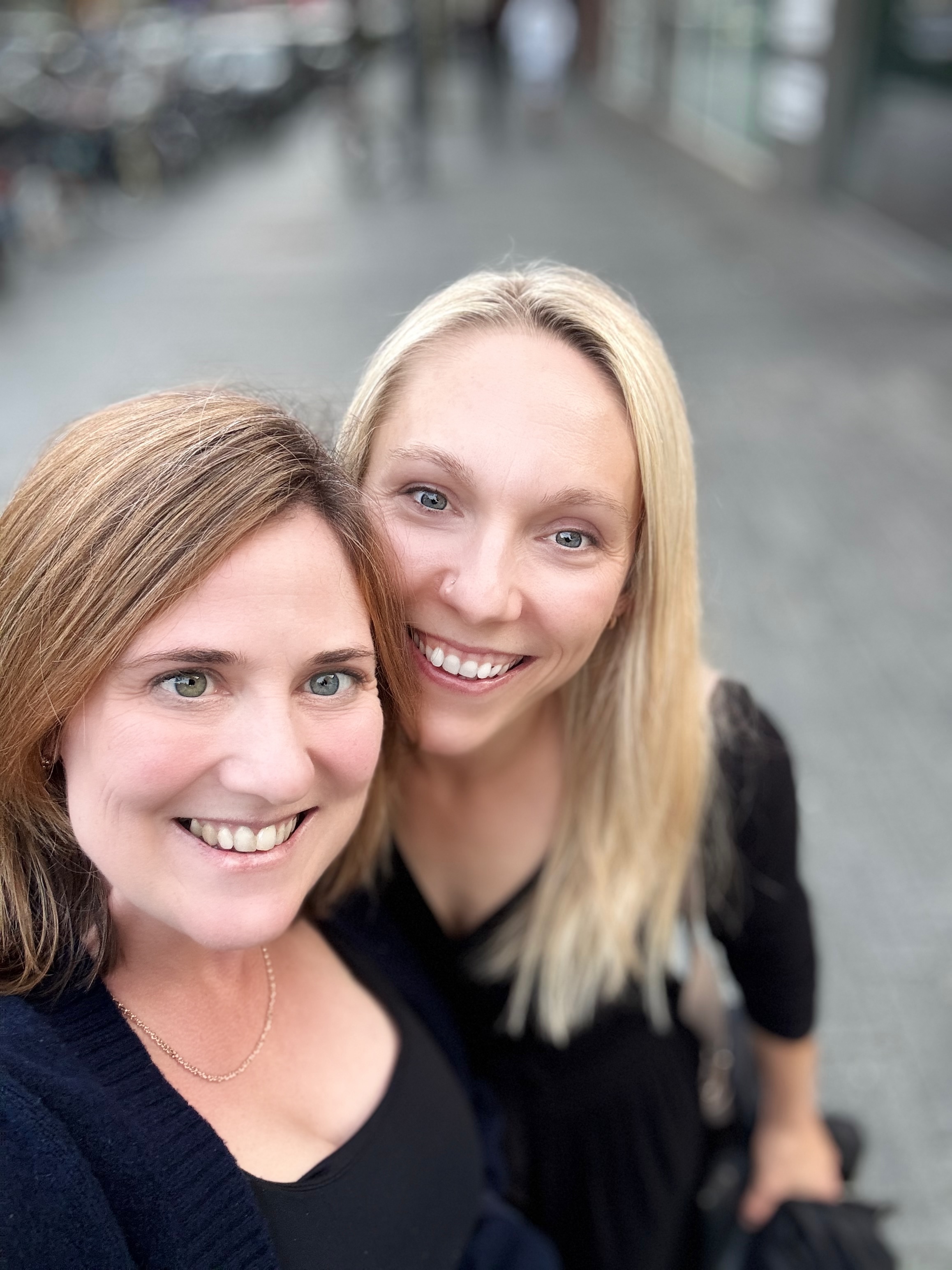
I met up with Liz McCarthy from Oxford University. We’ve worked with Oxford for several years, including with Liz, and always got on well with the team there. Well enough that some have escaped the client category entirely and become friends.
Liz and I had a long, lovely lunch and talked about… well everything, really.
It’s quite a vote of confidence when people who have experienced you professionally still choose to spend their weekends with you.
Coverage
Three book appearances in two days, each opening with the time ChatGPT invented two books I hadn’t written. By the third, I could hear myself doing the voice.
- Ana Neves wrote a detailed and very generous review of Digital Communications at Work. Thank you, Ana.
- ClearBox Hot Seat: Jon and I joined Suzie Robinson to talk about building employee experiences in a more complicated world. I argued that the conversational intranet has a whiff of the search-first intranet about it: bad content sank that idea, and the bad content has not subsequently been taken away by the content fairy. Jon was more bullish. We’ll see who’s right.
- Meet the Author with VMA Group: a longer conversation covering why the book exists, why governance is deeply unsexy but matters more than almost everything people prefer talking about, and why you cannot communicate your way out of bad management.
- The Internal Comms Podcast: recorded with Katie Macaulay, out when Season 16 launches in October. More then.
Published
This week’s essay: Why nobody can find anything on your intranet.
It started with the information architecture work I wrote about a couple of weeks ago, for a client whose intranet works perfectly well and on which people still can’t find things.
‘I can’t find anything’ turns out to be one complaint doing the work of at least five. The information isn’t there. It’s there but called something nobody would search for. It’s filed somewhere nobody would look. There are six plausible versions. Or nobody has agreed which version is true.
Only the second is really a search problem.
The rest are content, structure and governance problems, which is why organisations can upgrade their search, rebuild their navigation and still get exactly the same survey result eighteen months later, only now with nicer filters.
The essay covers how to work out which problem you’ve actually got, and why the research still won’t hand you the answer. It also explains why putting an AI assistant on top of three contradictory process pages isn’t solving the problem.
It’s asking a chatbot to referee your governance dispute.
Travel
On my way to London today for Unily Unite. I’m in town for four days, and looking forward to seeing familiar faces at the event and meeting some new ones.
If you’re in or around the City and fancy a coffee, let me know.
This week in photos