Weeknote 2026/35

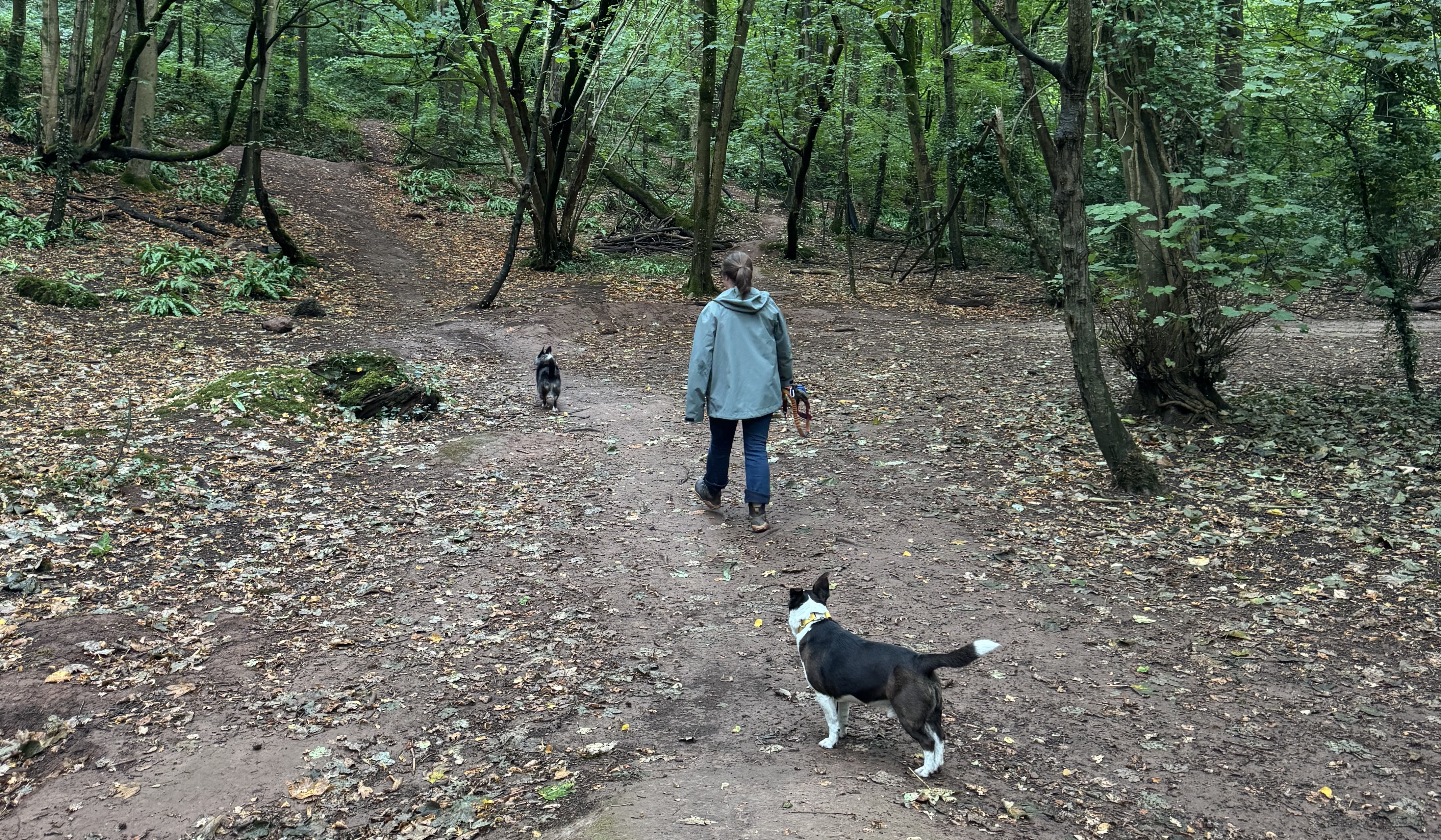
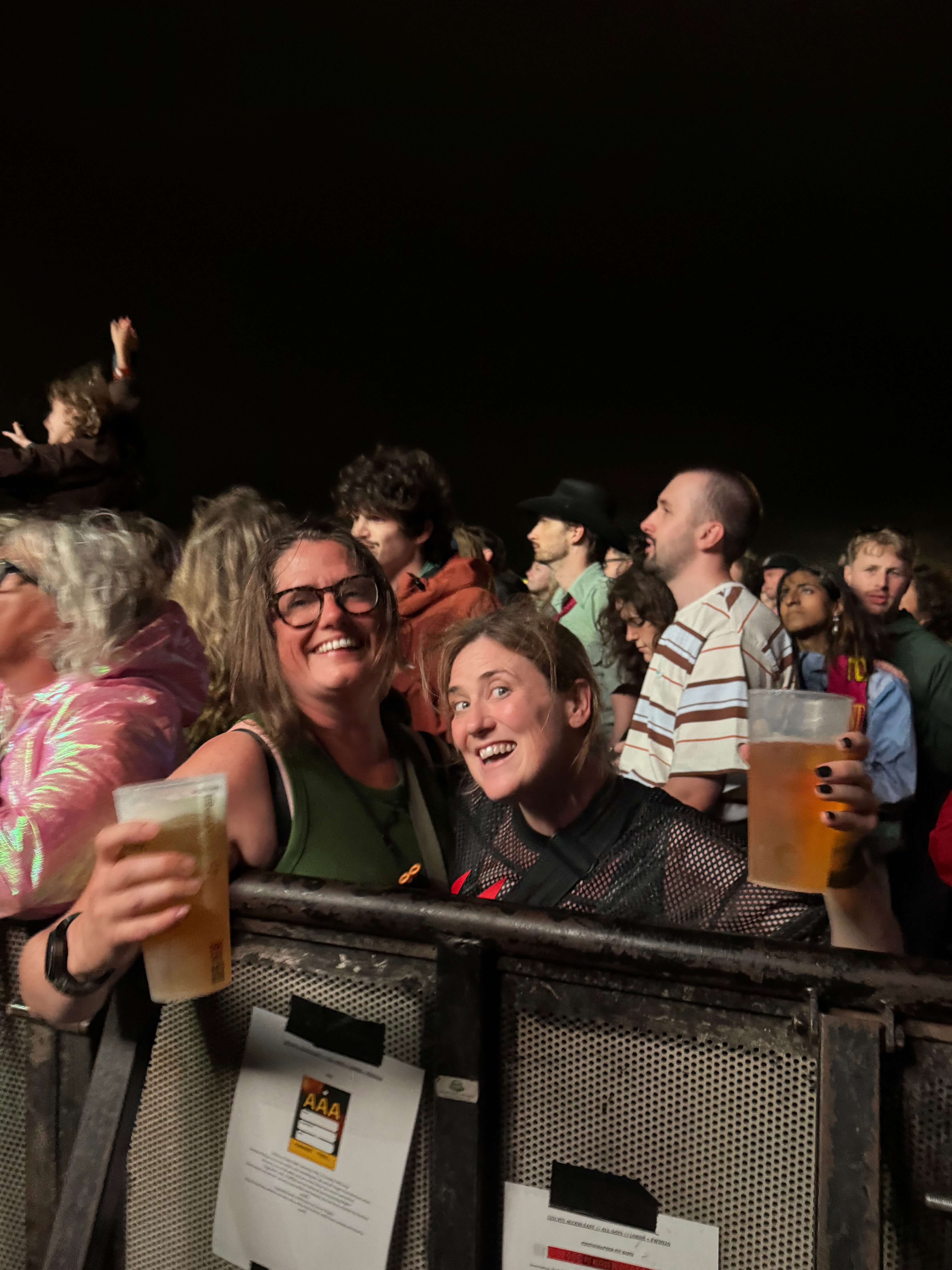
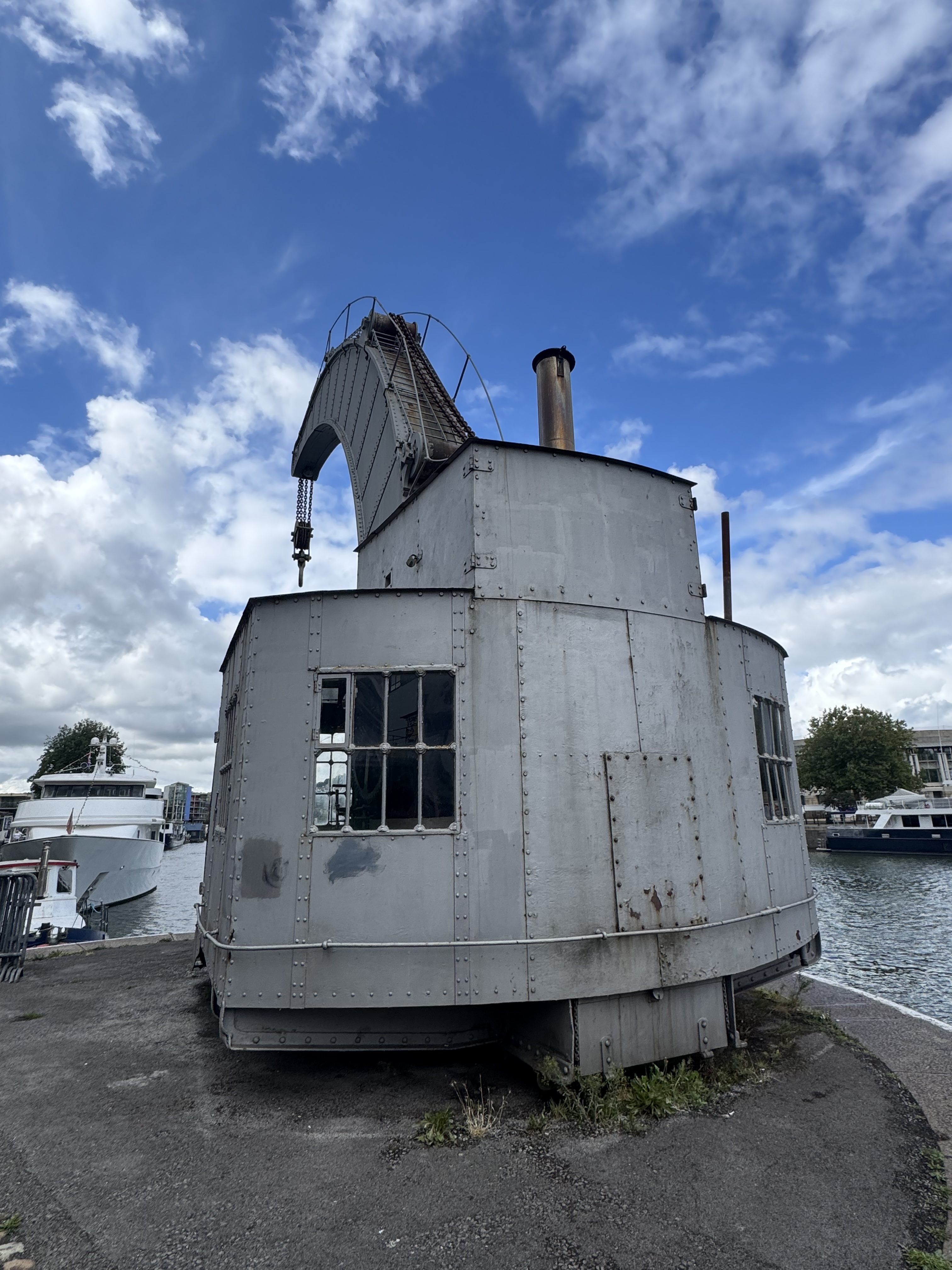
Pre-festival dog walks (Photo: me)

“If you want the rainbow, you gotta put up with the rain,” said Dolly Parton.

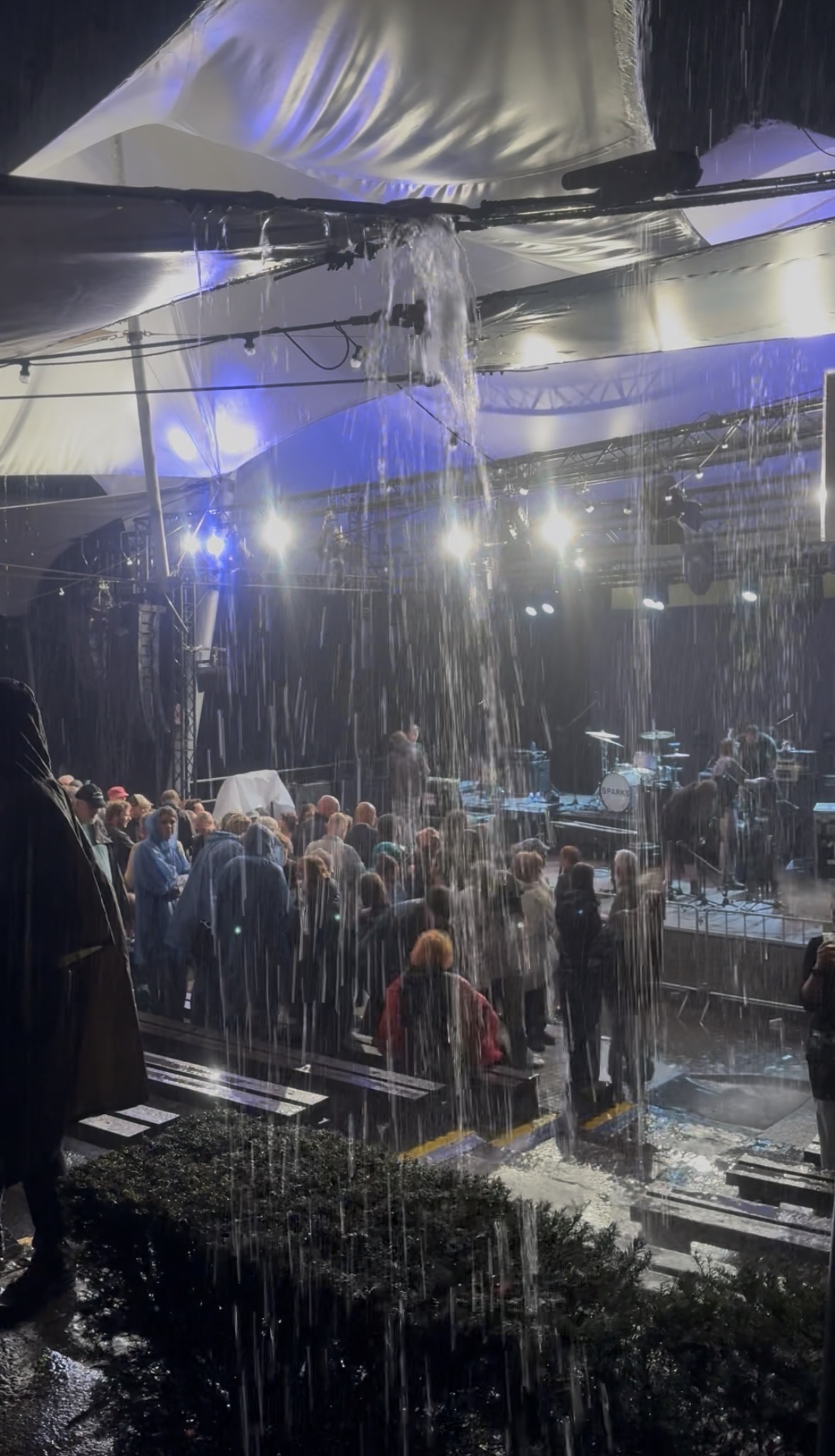
It absolutely pissed down at Forwards on Saturday.

Proper, committed rain. The sort where you spend the first twenty minutes trying to preserve some vestige of dignity before accepting that your hair is fucked, your shoes are wet and this is simply your life now. At which point, pleasingly, it becomes fun. I put my raincoat on and danced like an absolute twat and it was brilliant.

This week bought the sad news that Dolly died, and I spent much of the following two days listening to her music and having a bit of a cry. So the quote has been rattling around my head ever since.

It also turns out to be a reasonably good description of running a small consultancy.

The rainbow is the bit you get to announce: we won a new client. We ran a great session. We wrote something people wanted to read. The rain is contract negotiation, procurement portals, pitch decks for meetings that get postponed, timesheets, project plans, pipeline reviews and writing a scope annex whose principal purpose is to establish, at considerable length, all the things you are not going to do.

We tend to talk about work in terms of its outputs because those are the bits you can see. Projects delivered. Decisions made. Things launched. But underneath them is an enormous amount of preparation, negotiation, context and maintenance: the work behind the work.

Most weeks, you don’t notice it particularly.

This week, there was rather a lot of rain.

This week at work

We won a new client this week. Open tender, decision faster than expected, and we’re very pleased about it.

Winning it immediately produced a full day of contract negotiation, a scope annex written from scratch to define all the things we weren’t doing, and a compliance process that ran first into a legal team needing ten working days and then into our client contact going on annual leave. None of this is billable. All of it has to happen before the billable work can begin.

The same week, we spent two days preparing for a pitch. Deck built, case studies chosen, argument sharpened, review session with someone who knows the target organisation well. The session was postponed the day before it was due to happen. It’s been rescheduled, which is the good version of this outcome. The two days don’t come back either way.

Around that: proposal responses, project plans, timesheets, finances, contracts, and a full pass over every live and prospective piece of work on the board. All necessary. None billable.

A lot of people seem to be going independent at the moment, and the advice I keep giving them is unfortunately the least glamorous advice available: be brutally realistic about how much work you can actually do.

We’re pretty efficient at this stuff. We’ve put real effort into getting the machinery down — time tracking, project management, the pipeline board, templates for almost everything — and it works. But somebody still has to run the business. Somebody still has to make sure there’s work in three months’ time. Somebody has to negotiate the contract, write the proposal, chase the purchase order and discover that the procurement portal requires a document nobody has requested since 2009.

All of those somebodies are me.

Realistically, only about half my week is available to sell. Which means the useful calculation when you’re setting a day rate isn’t what you want to earn divided by 260 working days. It’s what you need to earn divided by the days doing work somebody might conceivably pay you for.

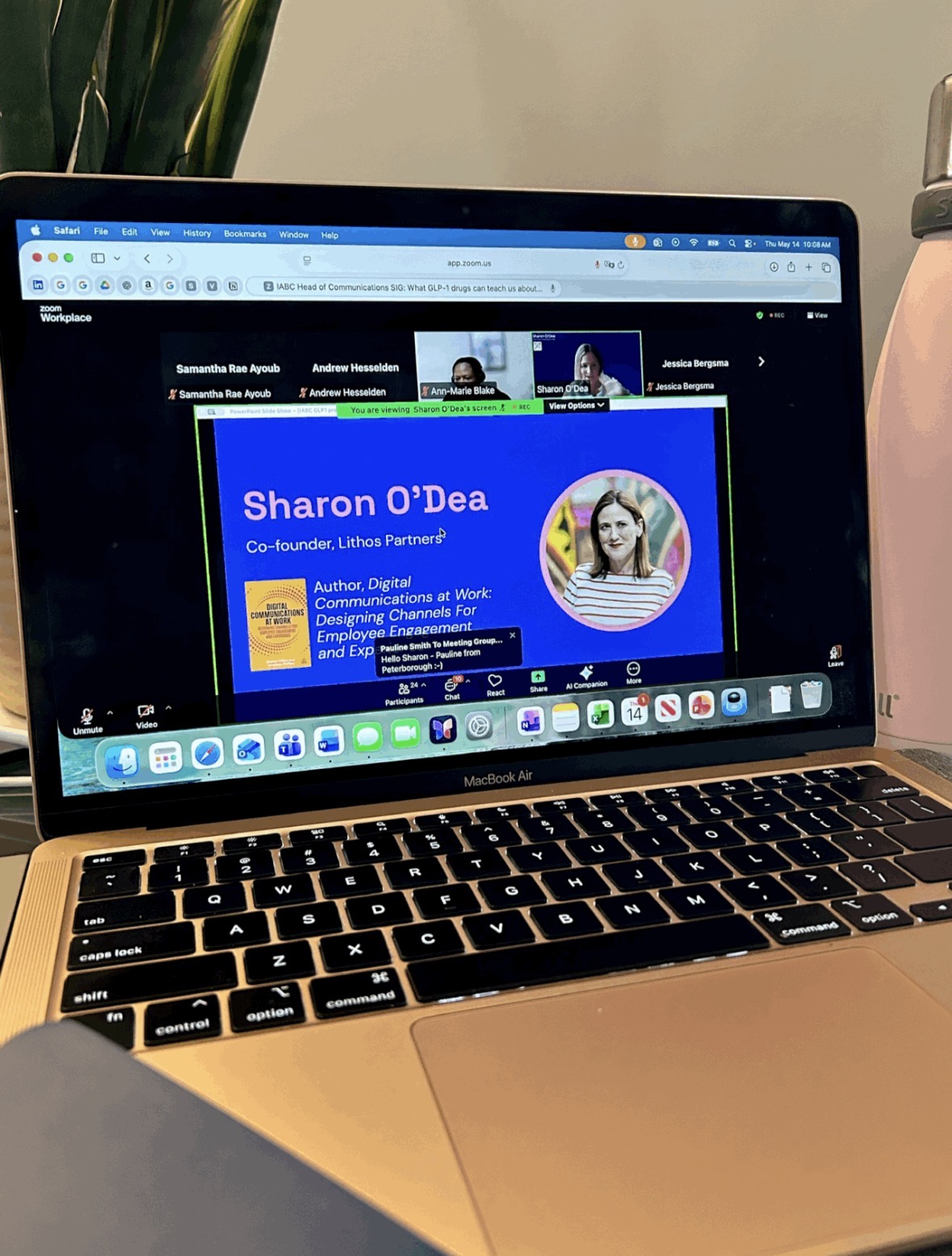
We also ran a session for IABC this week on discovery: how to work out what an organisation’s communication problem actually is before anyone buys something to fix it.

It went well. One attendee said he was taking our hypothesis-board approach straight into a meeting that afternoon, which is about the best feedback there is. Another asked whether all this was in the book. It is, and given that I literally wrote the thing I should probably have thought to mention that myself.

The following day we agreed a second session for a different audience, and there’s a keynote version coming in October. It’s a format we do a lot, enjoy doing, and — pleasingly — people keep asking us to do without us having to invent a funnel for it.

Also this week

Bristol again, this time for Forwards. There is still nothing better than a weekend in a field with loud music and good friends, and at 46 I think we can safely conclude I’m not going to grow out of it.

The weather did its level best. Once you’ve accepted that you look like a drowned rat and there is no longer anything worth protecting, dancing in the rain turns out to be enormous fun.

Little Simz, Wet Leg, Self Esteem and Viagra Boys all delivered. Tricky did not: weirdly quiet, strange atmosphere, and the peculiar experience of being able to hear his backing singers perfectly while the man whose name was on the poster remained largely theoretical. Princess Nokia was simply bad.

And a Rubicon crossed. For the first time in my life, I had genuinely never heard of one of the festival headliners.

I assume this is how it begins. Next year I’ll be bringing a folding chair.

Consuming

All Dolly, all week, after the news broke on Wednesday. Veering chaotically between bluegrass, the classics and Backwoods Barbie, all bought during a lengthy Dolly phase that followed a trip to Tennessee and a pilgrimage to Dollywood.

Live your life such that when you die the praise is that unanimous.

Me at Dolly’s Tennessee Mountain Home, a million years ago

Coverage

I wrote a piece for Reworked about the Spirit Airlines data sale, which is now the subject of a bidding war involving Google and a startup that builds AI agents to work inside simulated companies. A sentence that would have required considerably more explanation five years ago.

The argument, roughly: we spent a decade telling people to work out loud, on the understanding that persistence would work in their favour. Write things down. Share what you know. Leave a trail somebody else can follow.

What Spirit demonstrates is that the archive can outlive the conversation, the project, the team, your employment and, eventually, the company itself. And the first thing people stop writing down once they’ve noticed that isn’t the decision. It’s the messy reasoning behind it — the disagreement, uncertainty, context and half-formed thinking — which is the only part that was ever genuinely inheritable.

There’s a second half I expected to find harder to write than I did, about why that archive is worth twelve and a half million dollars.

Workplace software gets built by small young companies where twelve people talk to each other constantly, then sold to organisations with shift patterns, works councils, contractors, subsidiaries, six layers of sign-off and thirty years of documents nobody can find. The people building software for large organisations have surprisingly little evidence of what life inside one actually looks like.

Spirit’s archive isn’t a use case. It’s a world.

Which is why the sale is simultaneously creepy and entirely economically rational. Both things can be true at once, which is what makes it an argument rather than a lament.

The whole thing started as a paragraph in a weeknote a fortnight ago. I cut it because it was too much for the space it had. Turns out it was an essay.

Published

I’ve started putting essays on the site as well as these weeknotes. Weeknotes are chaotic by design – whatever happened that week, from day rates to a Dolly Parton deep dive. Some things need more room than that, and one subject at a time.

The first few are up:

Travel

This weeknote comes to you from a characterless, overpriced pub in Bristol Airport, which scores precisely nothing under the LoungeWanker rules.

Home for forty-eight hours, then back to the UK for client meetings.

The glamour of international consultancy remains largely theoretical.

This week in photos
Weeknote 2026/34

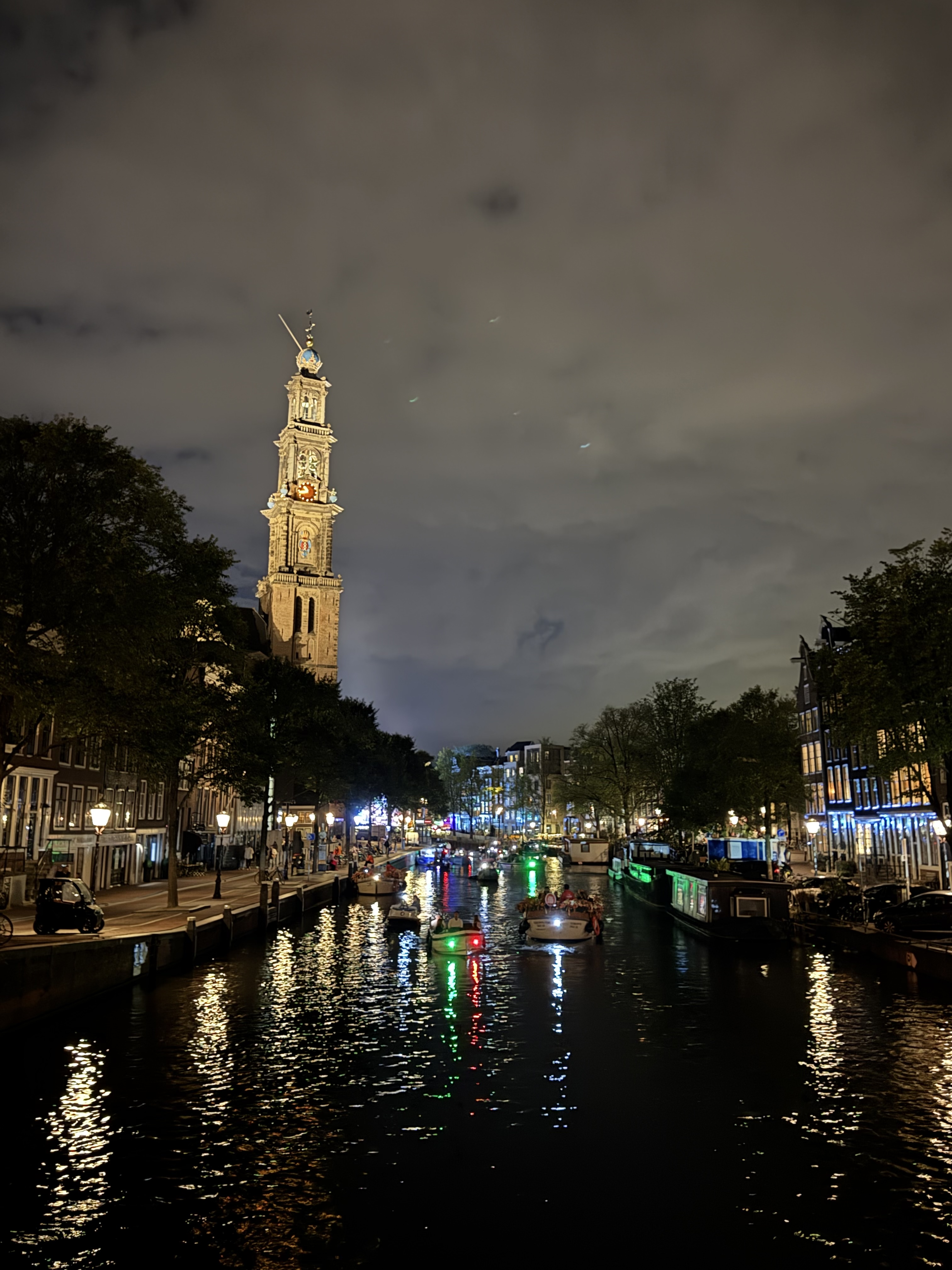
An Amsterdam canal at night, lined with lit gabled houses and a moored houseboat with flower boxes. A small open boat full of people passes under a bridge, its wake catching the reflected lamplight.
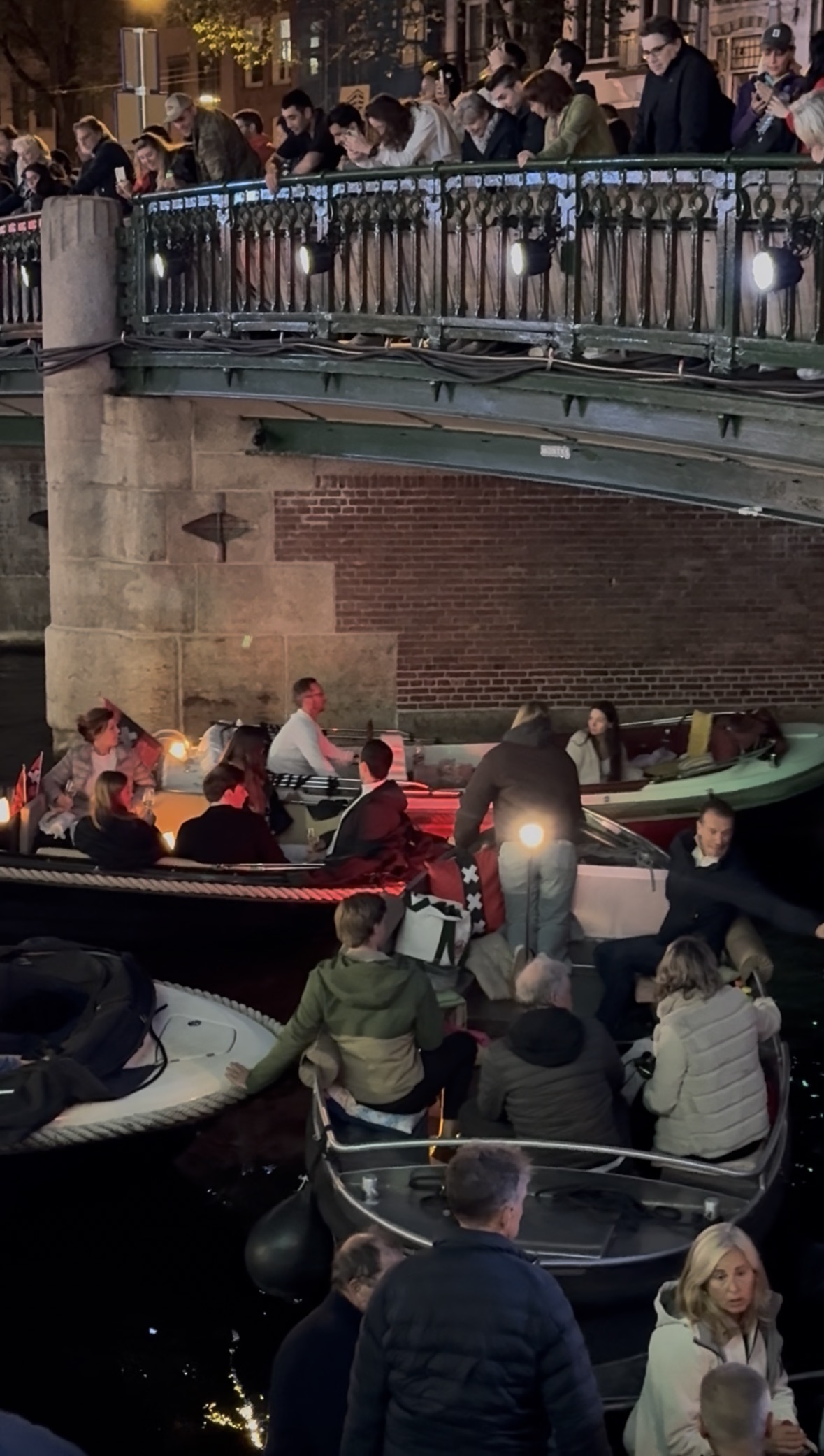
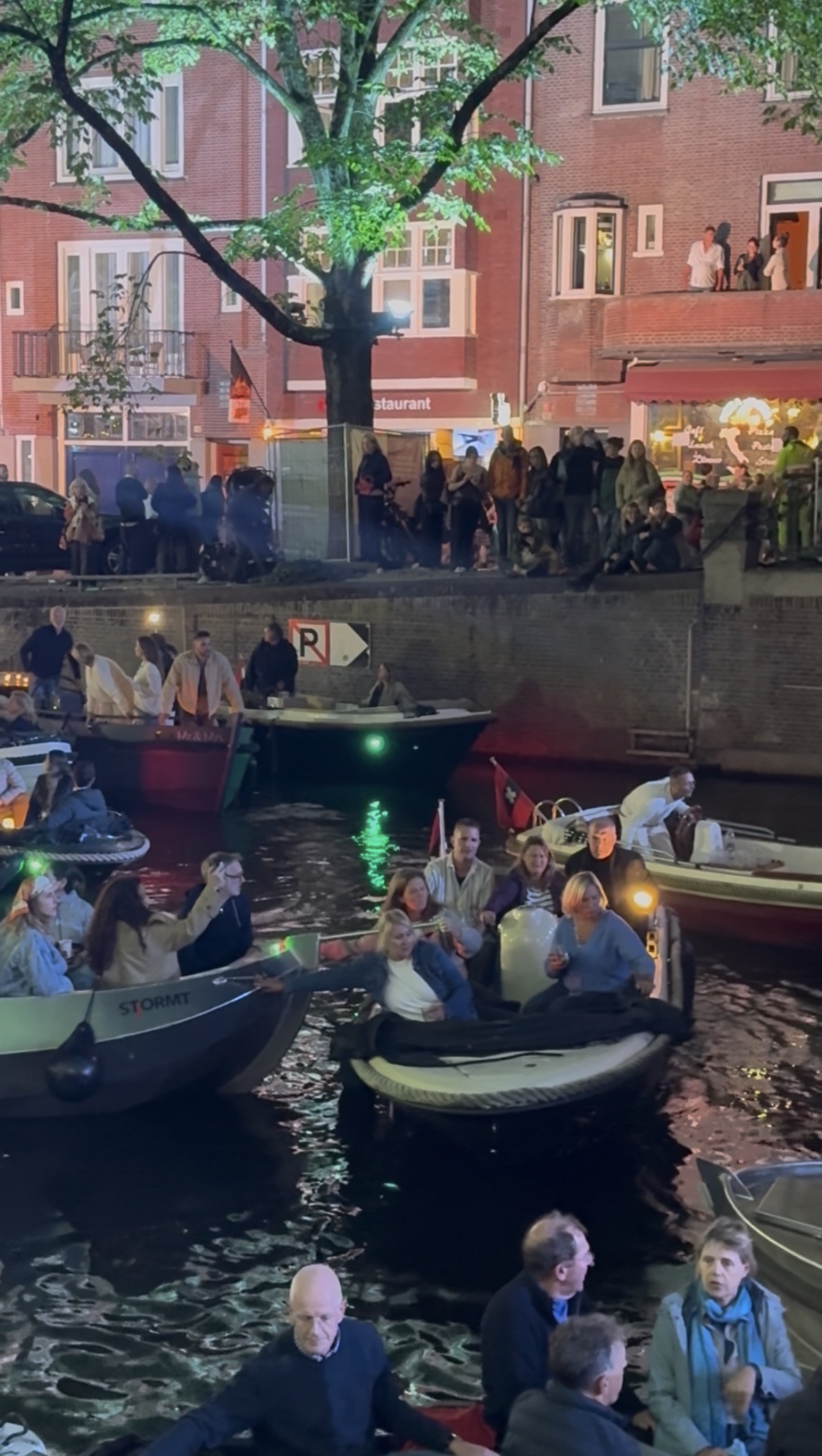
Prinsengracht after the concert (Photo: me)

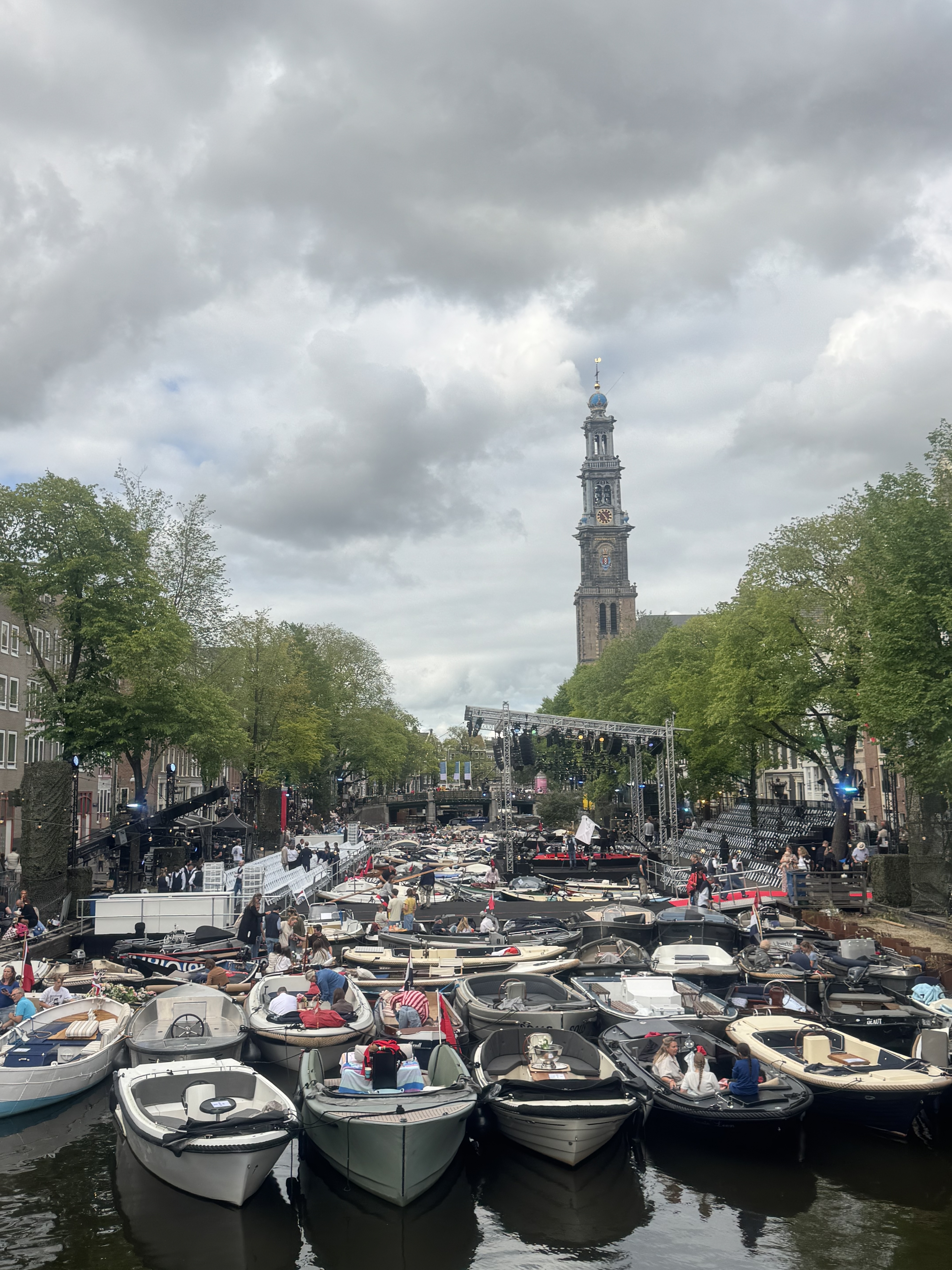
My second favourite part of the Prinsengracht Concert, after several thousand people singing Aan de Amsterdamse Grachten together, is what happens immediately afterwards.

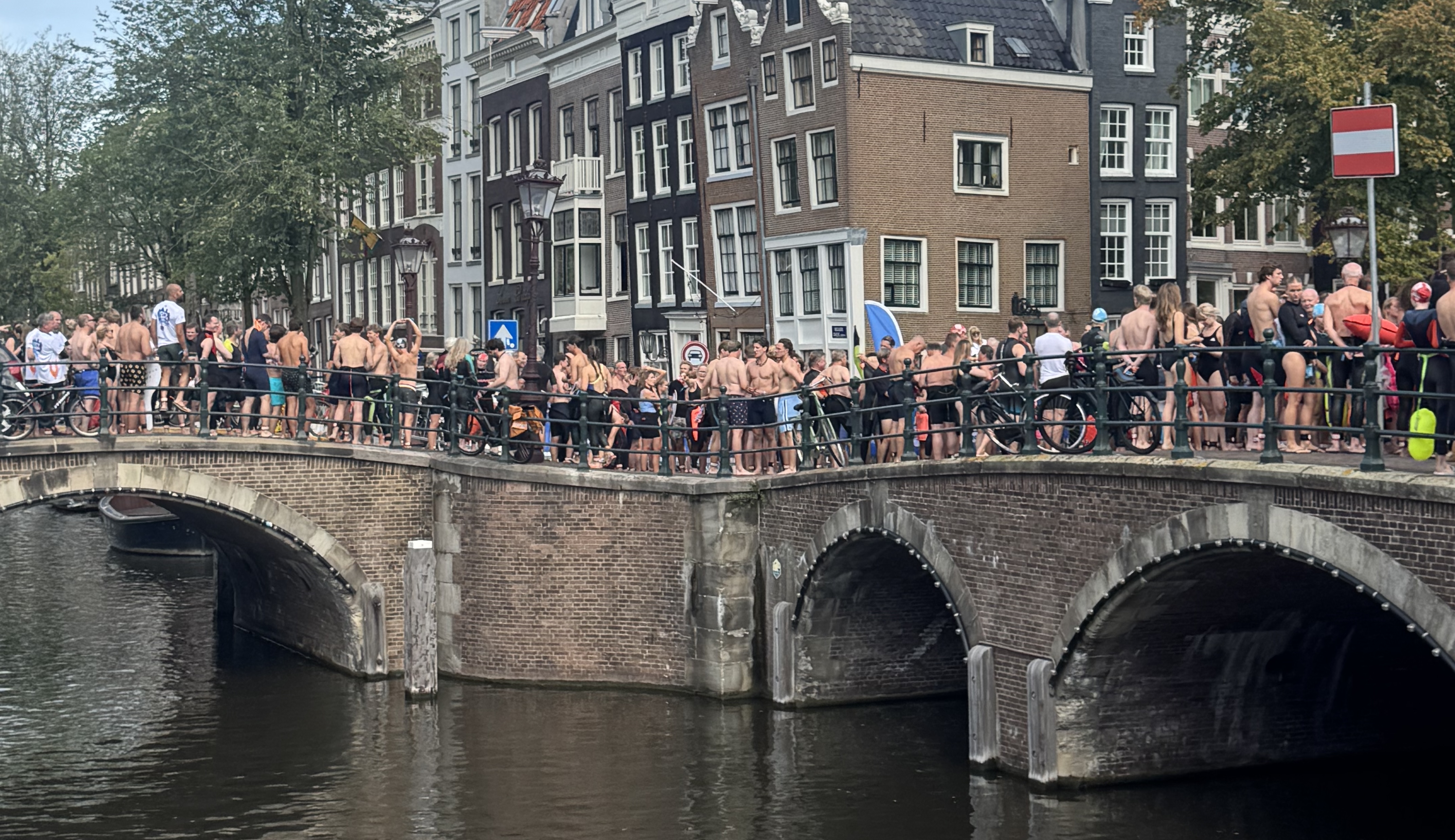
Hundreds of boats have spent the evening crammed into the canal, several deep, wedged against one another in a configuration that suggests nobody gave much thought to the concept of leaving. Then the concert ends and, simultaneously, everyone would like to go home.

It is magnificent.

For the next half hour the Prinsengracht becomes a giant aquatic game of Dodgems. Boats reverse into gaps that don’t exist. People push off neighbouring vessels with their hands. Someone three boats away is shouting instructions to a person they have never met. Entire flotillas shuffle sideways because one tiny boat has committed to a three-point turn and apparently we’re all seeing this through now.

From the bridge, it looks like complete chaos. Except it works.

There’s a system in there. It’s just not the sort anyone would put into PowerPoint. It runs on eye contact, shouted instructions, local knowledge, mild peril and hundreds of tiny negotiations between people adjusting constantly to what everyone around them is doing. There are formal rules, obviously, but they get you only so far when you’re pointing backwards in a canal with someone’s bow six inches from your wine glass.

Organisations work rather more like the Prinsengracht at 11pm than anybody designing an operating model would ideally like to admit.

We draw the hierarchy as a pyramid, put one person reassuringly at the top, arrange everyone else underneath and call it an organisation. We map systems into boxes. We assign owners. We draw solid lines and dotted lines and spend quite a lot of money arguing about where they should go.

This is all useful, up to a point. The problem comes when we mistake the diagram for the thing it describes. Reality has an irritating habit of continuing to be three-dimensional after we’ve put it on a slide.

The mess isn’t necessarily evidence that there is no system. Sometimes the mess is the system.

This week at work

Organisations are way more complicated than their org charts.

Someone can turn up wearing one organisation’s uniform, carrying another’s lanyard, logging into a third’s systems with a password reset only the first can authorise, doing a job that half of them think belongs to somebody else.

Work runs through partners, contractors, shared services and joint ventures, and plenty of people hold more than one allegiance at once. There’s a chapter on this in the book, framed mostly around the gig economy and deskless work, but the same problem turns up anywhere separate organisations share most of a back office and almost none of a culture.

That’s a comms problem before it’s a technology one. Your channels have to fit the organisation you actually have, mess included, rather than the neat little pyramid with one person at the top and everyone else arranged obediently underneath.

This week I ran a workshop with comms and digital leaders in an organisation dealing with exactly this kind of complexity. We started with what a digital workplace actually is, and why it matters more, not less, when the organisation around it is changing.

It’s how change gets communicated, obviously. But it’s also how you unlock the value you were promised when you bought all those services in the first place. A service nobody can find is, for most practical purposes, a service you don’t have.

I introduced our graphic equaliser model: the idea that a digital workplace is a mixing desk with four faders — comms, knowledge, transactions, and community and collaboration — and every organisation runs a different mix. Some crank comms all the way up. Others lean heavily into tools and self-service. We spent time looking at where their balance sits now, and where it needs to move.

I love sessions like this because I learn as much as I share about the increasingly messy reality of how work gets done. I always say there’s no right balance, only what’s right for your organisation. What this one reminded me is that there isn’t necessarily one setting for an organisation either.

Different parts of the business need the dials in different places. Increasingly, so do individuals.

Which means the digital workplace has to flex around the organisation you actually have. That took us into the perennial question of what needs local control and what benefits from central planning.

It’s harder when there are multiple reporting lines, because budgets and approvals follow accountability, while work has the irritating habit of ignoring it. Publishing pulls hard towards shared: one system, different lenses. Discussion stays stubbornly local, because that’s where culture lives and nobody particularly wants theirs decided by committee. Planning sits awkwardly in the middle, because of course it does.

No amount of elegant architecture fixes the fact that organisations contain politics.

The dials get set by whoever holds the budget line. They get lived with by everyone else.

Also this week

I tore a hamstring in a HIIT class, which is what I get for going to HIIT classes.

It turned out to be relatively minor, but kept me out of the gym and mostly confined to the flat for the week. Last weekend I was hobbling around with a walking stick, mentally rearranging the next three months of my life around my exciting new identity as Person With Hamstring Injury. By Friday I was walking again, albeit not at my usual faintly aggressive pace.

Recovery was swift enough that I’ve decided to take personal credit for it, having contributed absolutely nothing beyond sitting still.

The one casualty was the line dancing class I’d signed up for as part of my ongoing efforts to Try New Things. I was fully prepared to attend and be heroically bad at it. Then I couldn’t go, so my potential as a line dancer remains mercifully untested.

Next time.

Saturday was the Prinsengracht Concert, one of those moments every year that makes me absurdly glad to live here. The city is both backdrop and main character: a stage built over the canal, thousands of people lining the water, boats packed in until the whole thing looks faintly impossible.

It ends, as it always does, with everyone singing Aan de Amsterdamse Grachten together — a song about how beautiful this city is and how nobody could wish for anything better than to be an Amsterdammer.

Can confirm.

Consuming

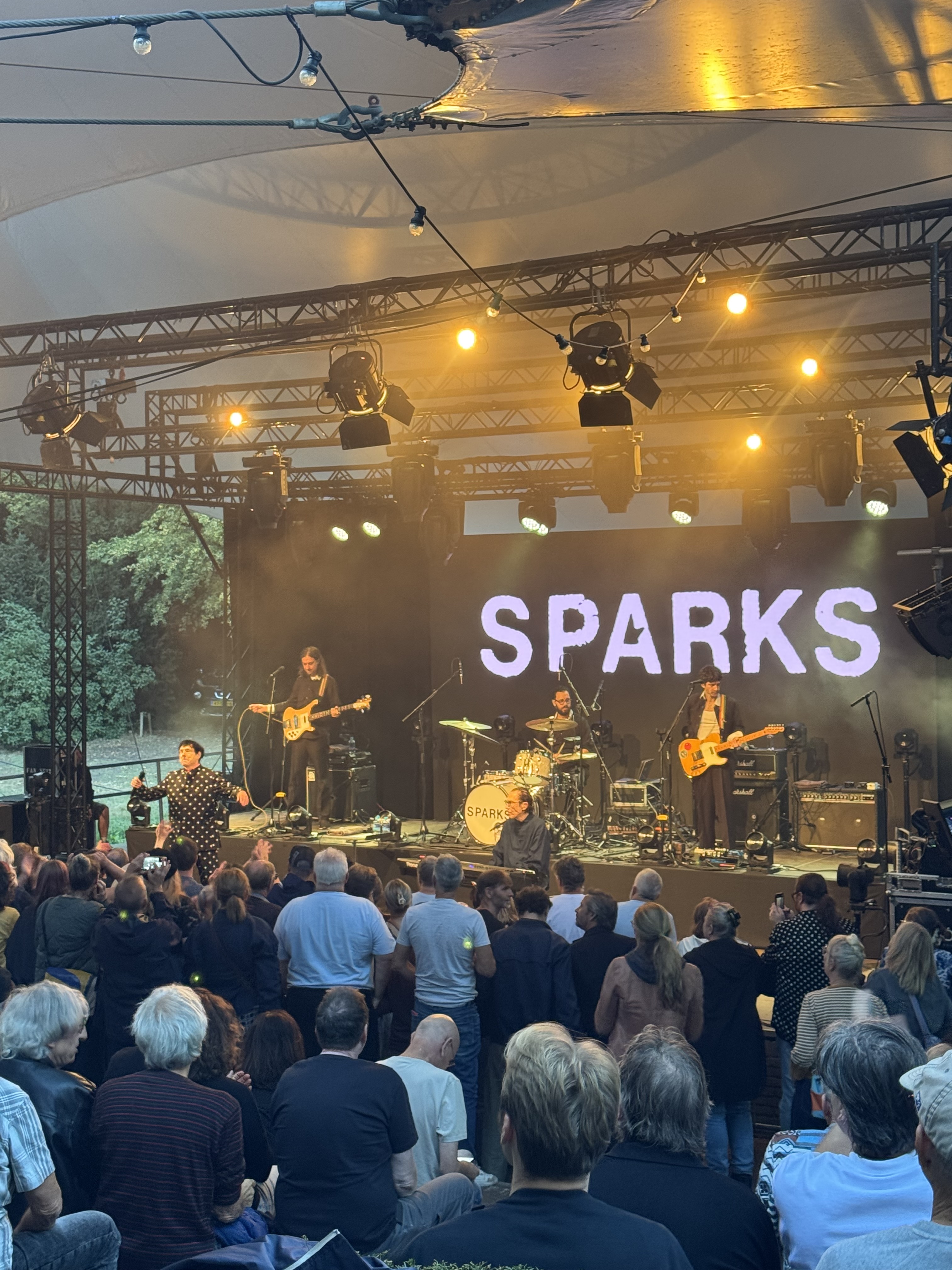
Saw Sparks in Nijmegen, for their only Dutch date this year, in a lovely outdoor theatre. We’d got ourselves in the mood the night before with The Sparks Brothers, Edgar Wright’s documentary: two and a quarter hours of people you already suspected of having excellent taste confirming that they do.

The gig was delightful right up until it wasn’t. They finished This Town Ain’t Big Enough for Both of Us and the heavens opened. They made it through Whippings and Apologies with rain sheeting off the canopies before the show was finally called off for safety.

Sixty years, twenty-odd albums, and I got about two thirds of a set. The Mael brothers have outlasted glam, disco, synth-pop, Britpop and several physical media formats, only to be defeated on Thursday night by Dutch weather.

I’ve also been transfixed by the Spirit Airlines story all week. Google has bought the bankrupt airline’s entire internal archive for $10 million: a hundred million emails, five hundred million Teams messages, seventeen million files, all to train AI on. Former employees are now in court trying to get themselves removed from the dataset.

It has absolutely everything.

What happens to how people behave at work once they realise the archive might outlive the company. The legal question of whether anything you wrote at your desk was ever really yours. Bankruptcy law colliding with data protection colliding with AI. Organisational complexity. Workplace technology. The lot.

And then there’s the bit I keep turning over, because I love nothing more than to be a contrarian, which is that this might actually make the software better.

Enterprise software has always been designed for an organisation tidier than any organisation that has ever existed. When I spoke to the Facebook team during the Workplace years, they seemed genuinely baffled that companies didn’t want information to be open in the way it was at Facebook. That openness was the product. It was also one of the reasons so many corporates couldn’t use it.

Microsoft, all these years later, still can’t cleanly accommodate someone holding multiple affiliations with one institution, never mind several institutions at once — which describes an enormous number of people I encounter through work.

Nobody has ever had a really good dataset showing how a large organisation actually functions, because all the interesting stuff is behind a firewall. The formal structure is easy. The useful bit is the messages, workarounds, accidental networks, weird permissions, duplicated effort, informal power and the seventeen people you have to ask before discovering that Sandra in Finance knows how it works.

Now, suddenly, there’s one on the open market.

The messiness is exactly what makes it valuable.

Which is also the problem. The upside depends on the data being rich, specific and human enough to reveal how work really happens. The privacy disaster is that it’s far too rich, specific and human to anonymise properly.

There’s no version where you get one without the other.

Connecting

Three this week, all people passing through.

Mark Chapman, who runs an NHS intranet, was briefly in town. I failed to have a proper conversation with him at the book launch, just as I failed to have a proper conversation with almost everyone at the book launch, so we made up for it in my local by nerding out about intranets at considerable length.

Then Chris Higham, finally, in person. Chris and I are part of a group that formed on Twitter years ago around sharing our fitness ups and downs, then migrated to WhatsApp when the platform went the way it went. It’s still one of the most supportive gangs I’m in: the rare group chat that survived the collapse of its natural habitat (I wrote about that community in 2025/49)

He was over with his family on holiday, so I got to meet all of them too.

And yesterday, a walk-and-talk with Anne Ditmeyer, a Paris-based designer and facilitator I met at the Awesome Authors meet in London in May (see Weeknote 2026/21). She was in the Netherlands for a design event, so we walked and talked about unlocking creativity. Eexactly the sort of conversation that gets better once you remove the table.

She also introduced me to Bonnie Cauble and Sarah Pedlow, both creatives based here. Amsterdam continues its long-running campaign to make everyone in the world no more than two introductions away

Travel

Autumn has been sitting ominously in the calendar for a while now.

This week it begins: a quick trip to Bristol.

This week in photos
Weeknote 2026/33

A lovely spot to ponder the nature of the universe (Photo: me)

Eighty-eight per cent of the sun went behind the moon on Wednesday and it barely got dark.

That night, every star I looked at turned out to be another sun, filed down by distance to a pinprick. The moon is a rounding error next to the sun. It just happened to be closer, and in exactly the right place to block most of it.

Scale, it turns out, is extremely easy to misunderstand.

Organisations have this problem too. The bigger something gets, the more we tend to discuss it in aggregate: tens of thousands of employees, enterprise-wide adoption, transformation at scale. Eventually the people disappear altogether and you’re left moving percentages around a slide.

Over coffee this week I spent an hour talking through one person’s job. Earlier I’d been on a call about essentially the same problem across an organisation of tens of thousands. The enormous version turned out to contain exactly the same question as the tiny one: what is this person actually trying to do, and what’s getting in their way?

That’s the irritating thing about scale. To understand the big thing, you usually have to get very close to the small one.

The trouble starts when you assume it works the other way round.

This week at work

Over coffee, a friend told me her employer has been telling everyone to use AI. She’s not against it. She just doesn’t know what she’s supposed to do with it. Nobody has said what it’s for.

There is a mandate, and there is a tool, and between them a gap roughly the size of her actual job.

So I did what any normal person does to a friend on their day off and interrogated her about work for an hour.

I didn’t start by asking what she wanted AI to do. I asked what she finds difficult. What’s stopping her being as good at her job as she’d like to be?

Planning, she said.

Her industry works a long way out; she’s on Christmas 2028 at the moment, which is a boggling timescale for me, a person for whom buying food on Sunday for Wednesday constitutes advanced logistics.

The problem isn’t really making the plan. It’s holding the thing together once it exists: knowing where versions have drifted apart, where assumptions no longer match, and where six teams have all independently decided that the same fortnight would be an excellent time to do something enormous.

This is precisely the sort of work computers are annoyingly good at and human brains aren’t. So: give it the plans. Ask it to find inconsistencies, collisions and crunch points.

She said they’re so busy they tend to repeat the things they already know work. Fine. Give it the data from the last few programmes. What performed unusually well or badly? What was different? Are there patterns worth investigating?

Within about twenty minutes we’d gone from I know I’m supposed to use AI but I don’t know what for to a list of things she was genuinely excited to try.

No use-case library. No maturity assessment. No 73-slide deck entitled Unlocking the AI-Powered Future of Work.

We just talked about her job.

Her own takeaway was better than mine. She’s going to ask everyone on her team to bring one thing they’ve used AI for lately that actually made the work better or easier.

Not a strategy. Not a policy. Not a prompt library containing 400 examples nobody will ever read. Just one thing that worked, said out loud, by someone you know and trust, and not some twat from a consultancy who wears a hat indoors.

The funny part is that I’d started the week having essentially the same conversation, only with several more zeroes attached.

I’d been on a call with someone running an AI programme somewhere very large indeed, ahead of a client conversation about what adoption looks like at that scale. And scale changes the conversation surprisingly quickly. One person has a planning problem. Ten thousand people have an adoption strategy.

At organisational scale, everything acquires nouns: Adoption. Enablement. Transformation. Capability. Use cases. You can spend months discussing all of them without getting anywhere near the awkwardly specific question my friend answered over coffee:

What is hard about your job?

Same problem. More zeroes.

The technology isn’t the difficult bit. Finding the useful problem is.

You have to do that first for a person, then for a team, then somehow across tens of thousands of people. And the further you get from the actual work, the easier it becomes to replace understanding it with buying something.

Which is how you end up with an enterprise AI strategy explaining very clearly that everyone should use AI, and an employee sitting in a café saying:

Yes. For what?

Also this week

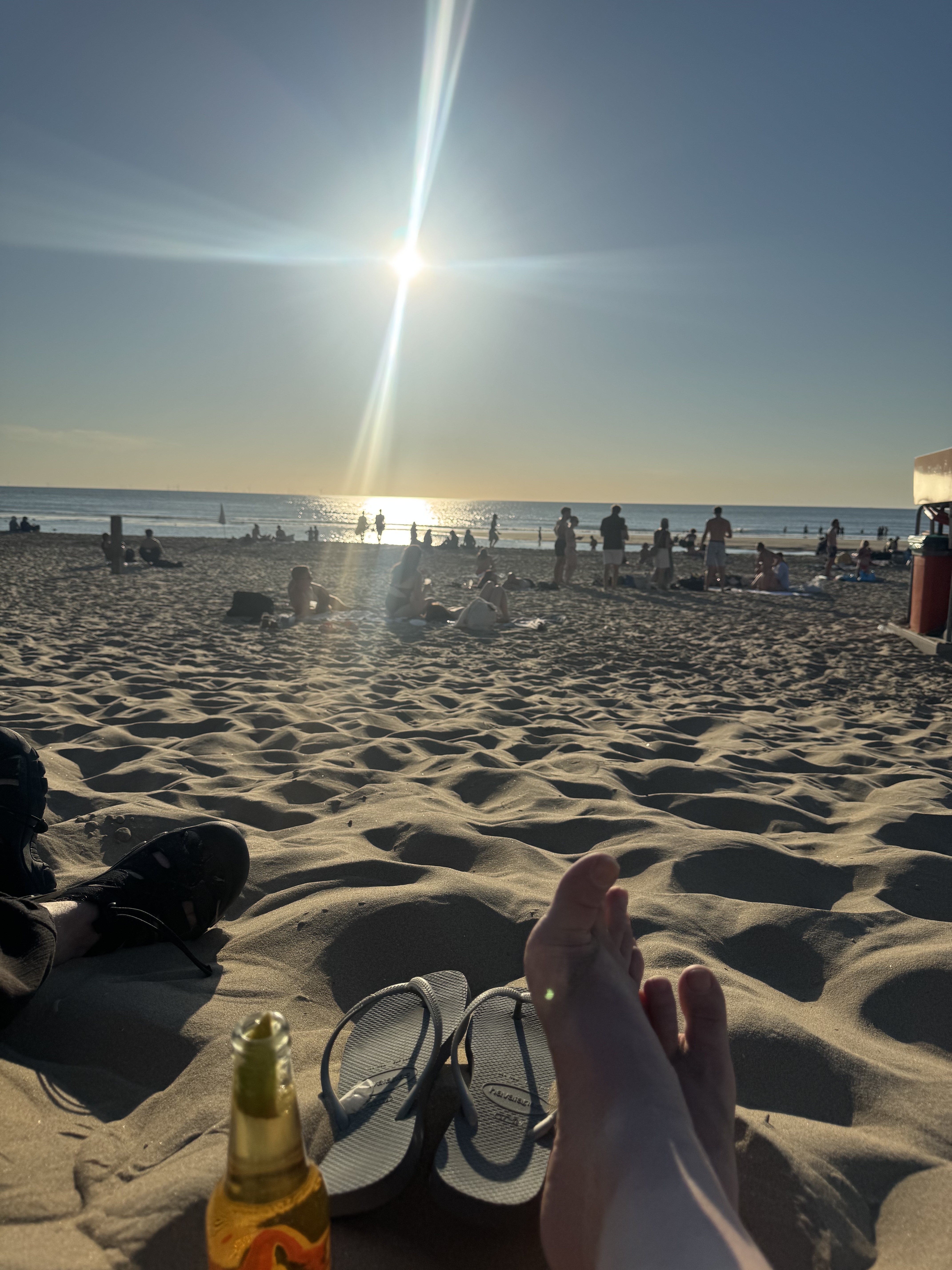
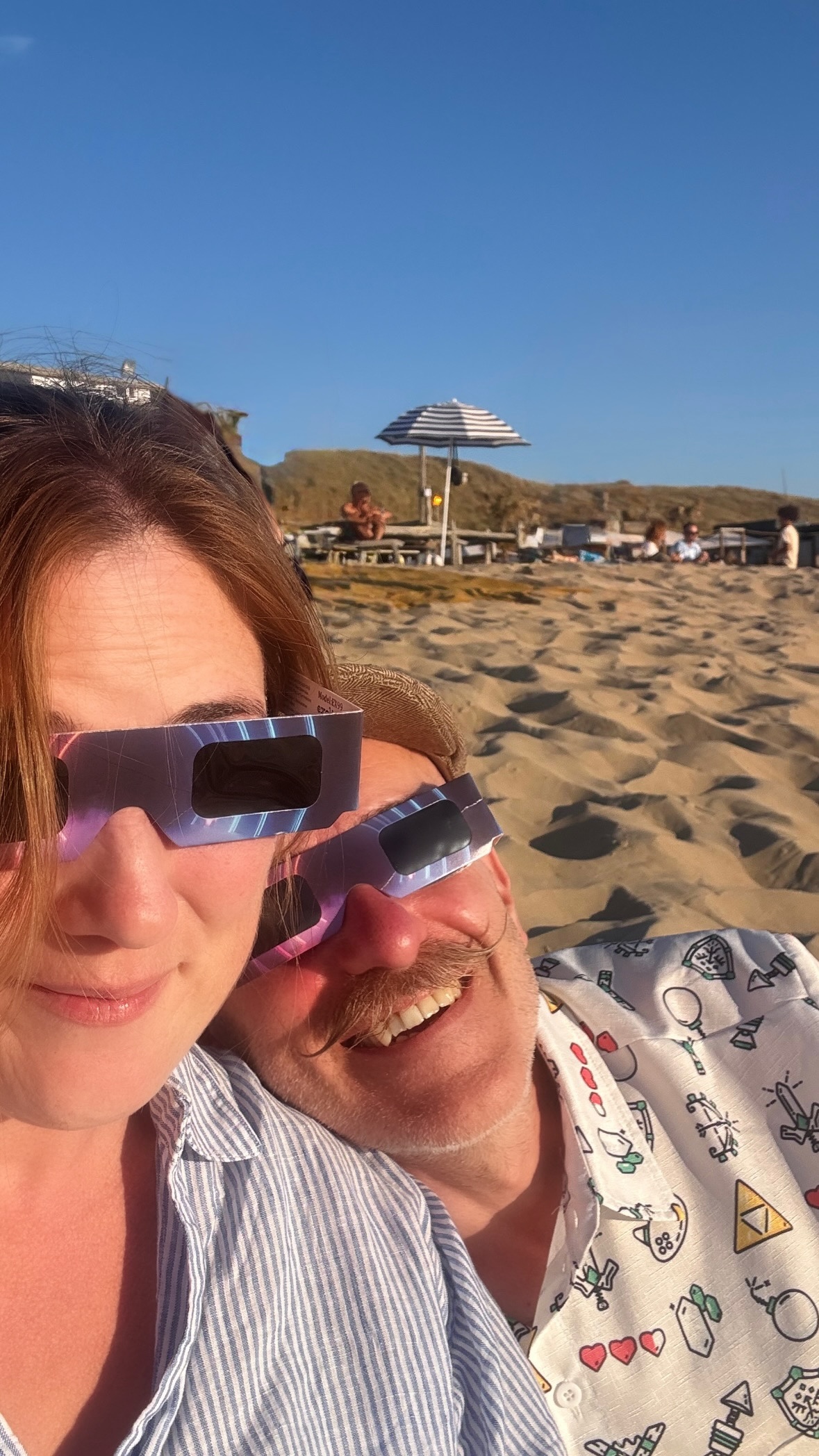
I took 24 hours off midweek and went to the coast for the eclipse.

First surprise: the Netherlands has genuinely stunning beaches. Huge sweeps of powdery sand running from the dunes straight into the North Sea. The climate makes them properly usable for approximately nine afternoons a year, which may explain why the Dutch have declined to make this a central plank of the national brand.

We got one of the nine.

Past me had also had the unusual foresight to book a cabin near the coast and buy eclipse glasses back when they weren’t €20 a pair and being traded with the intensity normally reserved for Taylor Swift tickets and Class A drugs.

We took a couple of bottles of Sol down to the beach, which I’m going to present as thematic intent rather than the consequence of the bar offering a choice between that and Heineken.

At around quarter past seven, through the cardboard glasses, the first bite of the moon appeared at the edge of the sun. Then, very slowly, it ate it.

There’s something profoundly weird about watching celestial mechanics happen in real time. You know perfectly well that the moon goes around the Earth and the Earth goes around the sun. You have presumably known this since primary school. But normally this knowledge sits in the same part of the brain as plate tectonics and the existence of Belgium: accepted as fact, rarely requiring direct confrontation.

Then you watch one enormous object physically move across another and suddenly the solar system stops being a diagram.

What I couldn’t get my head around was the arithmetic of it. The moon is enormous. The sun is so incomprehensibly much more enormous that the comparison is barely useful. And yet from one particular patch of Dutch sand, because of an absurd coincidence of distance and geometry, they looked almost the same size.

At the peak, 88 per cent of the sun was covered. It barely got dark.

That was the bit that broke my brain. You can remove nearly nine-tenths of the thing and the remaining sliver is still bright enough for the world to carry on more or less as normal. The sun, it turns out, is quite a lot of sun.

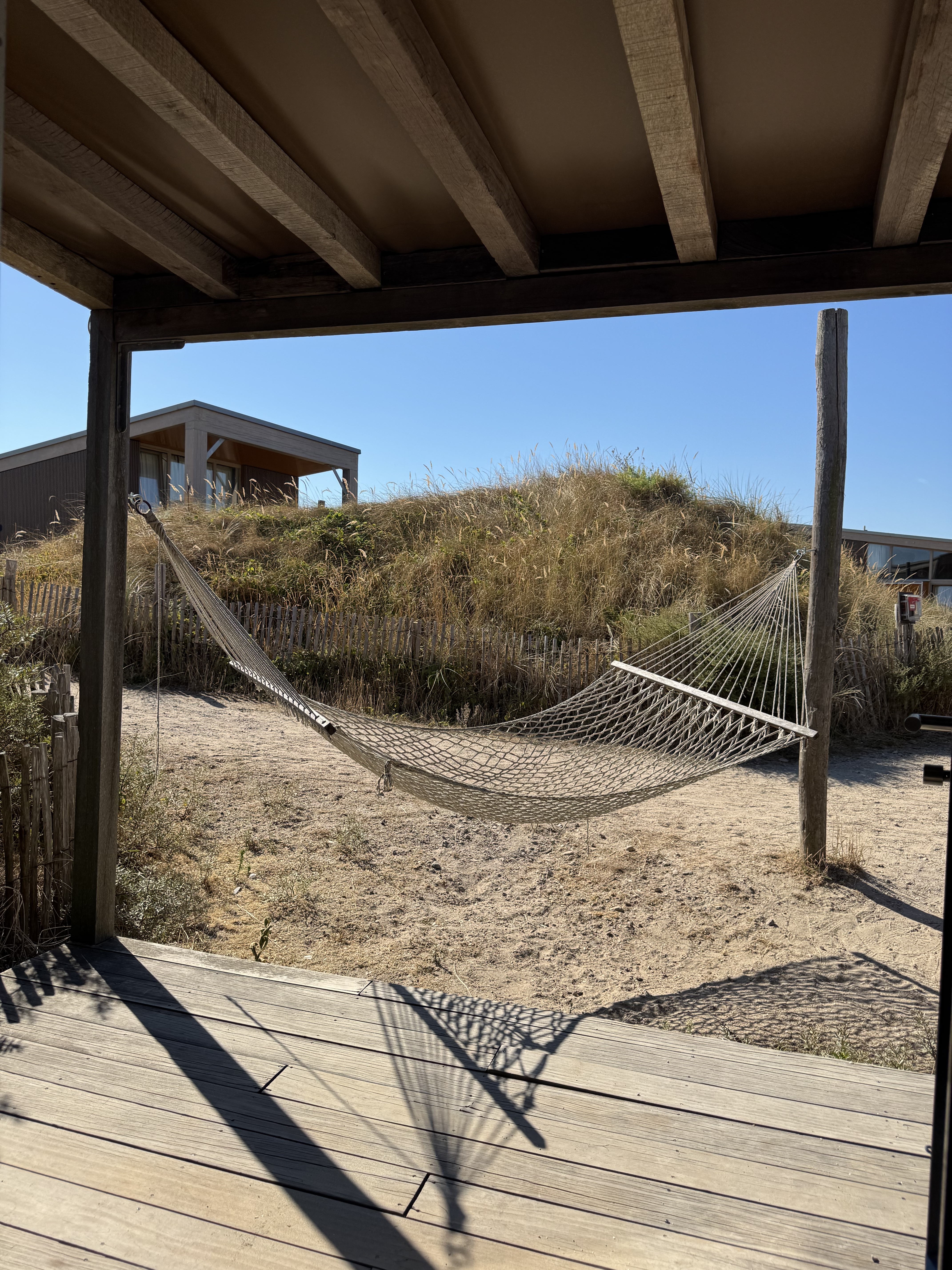
Later that night I lay in a hammock in the Kennemerland dunes waiting for the Perseids.

The advice for watching a meteor shower is blunt: no screens. Your eyes need around twenty minutes to adjust properly to the dark, and one glance at a bright phone sets you back. This isn’t mindfulness. Nobody is asking you to reconnect with your authentic self or purchase a journal. It’s optics.

So the phone went away.

I live in a well-lit city centre and almost never see stars. Properly see them, I mean. Give your eyes enough darkness and they just keep arriving. A handful becomes dozens, then hundreds, then an absolutely unreasonable number of them.

And having spent the evening staring through cardboard at our sun, I suddenly couldn’t stop thinking about what I was actually looking at.

Every one of those pinpricks is another sun.

Not a decorative light. Not a white dot conveniently provided as background scenery. An actual star: vast and violent and burning away at an incomprehensible distance, reduced by that distance to something I could cover with the tip of my finger.

Then every so often something would tear across the whole lot. A Perseid lasts perhaps a second. A streak, sometimes a flash of colour in the tail, and gone before you’ve quite finished registering it. We’d wait in the dark for another, talking quietly, then one of us would suddenly shout there at a piece of sky the other person was inevitably not looking at.

There are worse ways to spend a night.

I lay there thinking about the scale of all of it: the sun we’d watched disappear behind the moon; the other suns scattered above us; the tiny bits of comet burning up overhead; us underneath, temporarily occupying a couple of hammocks on a sand dune beside the North Sea.

The universe is offensively large.

I found this wonderful.

And then, because apparently even transcendence must eventually become professional development, I realised something mildly embarrassing about my phone.

I’ve written a book about attention and information overload. I talk about this stuff for a living. I know that phones are designed to capture attention. I know that environment beats intention. I know all the arguments.

None of that reliably stops me looking at the bloody thing.

But tell me that one glance at it will ruin my night vision and make me less able to see the meteor shower I came here specifically to see?

Phone in a drawer. For hours. No struggle whatsoever. Turns out I didn’t need better self-control. I needed an immediate and comprehensible consequence.

Design beats willpower. I really, really should know this by now.

Consuming

Two pieces by Oana Leonte, published two days apart, which have been rattling around my head ever since. The first starts with Rick Rubin, who cannot play an instrument or read music, and who told Anderson Cooper that what he’s actually paid for is confidence in his own taste. His contribution to a record is often subtraction: take that out, strip this back, do it again. He has no signature sound because a signature would compete with the judgement.

Leonte uses him to make a distinction I haven’t stopped thinking about: attention is rented; judgement is owned. Attention has to be re-earned every day and returns towards zero the moment you stop feeding it. Judgement compounds. Demonstrate good taste often enough and eventually people trust the verdict — which is why artists at the top of their careers will fly across continents to sit in a room with a man who can’t play a note. They’re not buying his output. They’re buying his judgement.

This is inconveniently at odds with how we measure most things online. We can count impressions, views, followers, clicks and frequency, so we do. Judgement is slower, fuzzier and extremely resistant to dashboards, which means it tends to sit outside the spreadsheet twiddling its thumbs while attention gets all the credit.

Then came part two, prompted by everyone asking how. And she corrects herself: invisibility isn’t the strategy, it’s a by-product. Copy the quiet without the substance underneath it and you’re not cultivating mystique, you’re just a person nobody has heard of. Queen were broke for years being too much for the rooms they were playing. Obscurity is what you pay to get good.

What actually holds is coherence — and here she draws a distinction I’m going to steal wholesale, because half my working life is spent in rooms where coherence and consistency are treated as synonyms. Consistency is surface: same logo, palette, tone, templates, everything governed until no rogue shade of blue can threaten the enterprise. It photographs as discipline and is often just rigidity with a hex code.

Coherence is the sense that the choices belong together, even when they don’t look the same. Consistency asks whether the parts match; coherence asks whether they came from the same place. You can be flawlessly consistent and mean absolutely nothing, which explains an alarming amount of corporate communication.

And then the question I’d put on a poster: would any of this still be standing if you stopped posting tomorrow?

I read all of this while planning a mailing list, a webinar and another run of book promotion, so I’m not claiming any position of moral superiority here. The most coherent thing I did all week was spend several hours in a hammock looking at objects that have existed for billions of years without once publishing a thought-leadership carousel.

Then I came home and wrote about them on the internet. The stars, presumably, remain relaxed about the competition.

Coverage

In.Comms asked five comms pros (including me) whether it’s internal comms’ job to motivate employees. Nobody said yes, which I found reassuring, because we’ve spent far too long accepting accountability for things we have almost no authority over.

Pay. Workload. Leadership. Whether the work itself is any good. Whether your manager is a prick. Motivation is downstream of all of these things, and when they’re not working, asking comms to boost engagement is applying corporate Febreze to a structural problem.

What we can do is help people understand what’s happening, why it matters and where their work fits. What we can’t do is communicate someone into being happy about a job that’s giving them perfectly good reasons not to be. My bit sits alongside Jennifer Sproul, Jo Coxhill, Adeela Warley and Rachel Miller.

Also recorded this week: Jon and I joined Nancy Goebel on DWG’s Digital Impact podcast to talk about designing channels employees actually use — the five layers, why most organisations have a coherence problem rather than a channel problem, and the intranet manager who hit an annual page-view target in 48 hours by leaving fifty browser tabs auto-refreshing.

This is both objectively funny and a near-perfect demonstration of what happens when a metric stops measuring the thing and becomes the thing. Somewhere, a dashboard was green. Everyone could go home.

Out in the autumn, at which point I’ll link it properly.

This week in photos
Weeknote 2026/32

The World Press Photo 2026 exhibition inside De Nieuwe Kerk. A red entrance panel sits beside a large black and white portrait of an older woman in traditional dress. Photographs are hung on curved slatted wooden screens down the stone nave, with red banners overhead.
World Press Photo in de Nieuwe Kerk (Photo: me)

I’ve started thinking about the things that earn their place.

Not in a minimalist, throw-away-everything-that-doesn’t-spark-joy sense. I own far too many shoes for that, and my travel plans would not survive even the most cursory audit. More in the sense that addition ought to come with a burden of proof.

We’re very good at adding things. Another name. Another message. Another platform. Another feature. Another trip. Complexity accumulates almost invisibly because every individual addition can be made to sound perfectly reasonable on its own. It’s only when you stand back that you realise you’ve built something requiring a diagram, a 45-minute induction and a SharePoint page explaining which SharePoint page to use.

This week threw a few variations of that at me, from some fairly unexpected directions.

More isn’t inherently the problem. Neither is less inherently virtuous. The interesting bit is what happens when you stop assuming that adding something automatically makes the thing better.

The question is whether it earns the space it takes up.

This week at work

Four client projects, two proposals, and all the usual scaffolding of running a business — invoices, contracts, the small administrative barnacles that attach themselves to any given week. Jon is still away. So: a lot.

Everything is moving in the right direction, at least. But four projects at four different stages means four sets of context, four vocabularies, four mental models to load and unload across a single day. The work isn’t the tiring bit. The switching is. By Thursday I had approximately six organisations’ worth of information in my head and no reliable way of knowing which one any given acronym belonged to.

The consolation of weeks like this is the pattern-spotting. Do this for long enough and you start seeing the same problem turn up in completely different organisations wearing a different coat and insisting you’ve never met before.

This week’s recurring guest was naming.

Whether to give your channels names — and, if so, what — is one of the great perennial arguments of our trade. Alongside where IC should report into and whether anyone has ever successfully governed a SharePoint site by sending the site owner an annual email, it will presumably outlive us all.

I have Views.

Names can be genuinely useful. A name gives people something to hold onto. It’s a handle in a sentence: put it on Yammer, it’s in the Hub, check Connect. It makes an abstract thing tangible and gives people a shared shorthand for talking about it. This is useful. Humans like naming things. We named the moon and that doesn’t even have single sign-on.

The trouble is that intranets and employee apps actively resist being named, because they aren’t one thing. What do you call the platform that’s the news, the payslips, the policy library, the person finder, the canteen menu and, for reasons nobody can now reconstruct, the only place you’re allowed to order a new security pass?

Nothing specific fits. So you end up at Workplace. Or Engage. Or Connect. Or Hub.

Names for tools that do everything, which is another way of saying names that describe absolutely nothing.

Worse, every single one is already a product on the market. Frequently it’s also the name of another tool already inside the same organisation, bought by a different department in a different year with a different budget and announced with exactly the same adjectives.

We have been brought in more than once to adjudicate which platform gets to be called Workplace.

This is a service we provide. I would love to tell you it’s the most intellectually demanding work we do. It’s certainly the one that requires my best diplomacy skills.

My rule is simple: a name is only worth having if it saves you an explanation. If it doesn’t, you’ve just doubled your workload, because now you have to explain the service and the name — in every induction, on every intranet page, every time somebody new asks which one you mean.

Some years ago I worked somewhere with a room-booking system called Trimble.

Not a codename, nor a project name that had escaped containment. Just Trimble, because that was the vendor, and the vendor’s name had welded itself to the product the way Hoover did to vacuum cleaners, except nobody had ever heard of Trimble and nobody was going around saying they were going to Trimble a meeting room.

At some point a rule established itself: any mention of Trimble on Slack was answered with the same photograph of David Trimble. This one:

A black and white photo of Northern Ireland politician David Trimble, in the 1970s.

Same photo. Every time. No comment.

Nobody agreed to this. There was no meeting. No governance model. No launch plan. It simply became true, the way the most successful bits of workplace culture generally emerge while somebody elsewhere is writing a 34-page launch strategy.

It fired constantly, because most mentions of Trimble were people asking what Trimble was.

And that was precisely the problem, right there: the name was prompting the question it should have answered.

The joke ended when someone* laughed out loud in an open-plan office and had to explain why a photograph of the former First Minister of Northern Ireland kept appearing in response to questions about meeting rooms.

* it might have been me.

Eventually the organisation gave up and renamed it The Room Booking System. Everyone knew what it was immediately, forever, at zero ongoing cost. The photos stopped.

The postscript is that the software has since been sold twice and now lives inside MRI Software, where it’s called Space Scheduling. The descriptive half of the name outlasted four owners. The corporate half fell off somewhere between acquisitions, unmourned.

Call things what they are.

There’s a section on this in the Launching Channels chapter of the book, which is considerably more even-handed than I have just been: when a distinct name genuinely earns its keep, why naming competitions are a trap, and explicit permission to just call the intranet the intranet.

You do not have to call it Spark. You do not have to call it Connect. You definitely do not have to invite 14,000 employees to submit suggestions and then spend three months explaining why the winner can’t be used because somebody forgot to check the trademark.

Sometimes good design is simply resisting the urge to make a perfectly comprehensible thing more interesting.

Also this week

Saturday afternoon at De Nieuwe Kerk for World Press Photo, which I go to most years and usually leave in silence, feeling slightly worse about humanity. This year felt different, and it took me a while to work out why.

Not less bleak. There were still plenty of bombed-out streets and destroyed homes, and this year’s Photo of the Year is a family being separated by immigration enforcement in an American courthouse. Nobody’s going to World Press Photo for a restorative afternoon.

What had changed was the scale. Previous years have felt dominated by destruction seen from a distance: ruined blocks, flattened cities, the landscape of catastrophe. This year leaned much harder into resilience and resistance, told through single lives followed over months and years. Girls’ education. A 46-year-old woman living with anorexia. The lives of girls born by IVF to a 60-year-old mother. Afro-Latin communities in Colombia holding onto traditions carried from lands their ancestors were taken from centuries ago.

None of it was nice. That isn’t the shift here.

But there’s a difference between an image that shows you the size of a disaster and one that puts a person inside it and makes you stay there with them. Destruction at scale numbs you slightly, if we’re honest. At some point the numbers get too large, the rubble starts looking like other rubble, and your brain puts up a screen marked TOO MUCH.

Then, halfway round, I found the panel explaining what I’d already noticed. They’ve threaded eight projects through the exhibition under the heading Visions of Hope. The stated reason is media fatigue: audiences tell them they want to stay engaged with the world, but through stories that illuminate rather than overwhelm.

Which is a curatorial decision, obviously. But it’s also a comms one, made by an organisation whose entire purpose is bearing witness to the worst things human beings do to one another.

They’ve concluded that relentlessness is counterproductive. That if you overwhelm people, eventually they stop looking. And a record of the world that nobody can bear to look at isn’t doing much bearing witness.

It’s not a million miles from the argument I spend my working life making, arriving from a considerably more consequential direction: more information does not necessarily produce more understanding. At some point volume stops informing people and starts providing them with reasons to disengage.

The photograph I keep thinking about, though, was something else entirely.

Paula Hornickel photographed Waltraud, a resident at a care home in Albershausen, sitting across the table from Emma — a toddler-sized social robot made by a Munich startup.

German care homes are dealing with two crises at once: not enough staff, and residents who are profoundly lonely. One in five over-80s in care describe themselves as severely lonely. Emma recognises faces and remembers previous conversations. Waltraud was sceptical, then came round.

“When she tells her jokes, that’s really good.”

And there, unexpectedly, in the middle of a photojournalism exhibition, was one of the more interesting future-of-work stories I’ve encountered in a while.

We spend enormous amounts of energy arguing about which bits of knowledge work AI will automate. The lawyers. The developers. The copywriters. The consultants, who remain remarkably confident that everybody else’s job consists of repeatable tasks while theirs involves ineffable reserves of judgement and human insight.

Meanwhile, automation is turning up in care homes. At the one kind of work we tend to assume is irreducibly human because the work is being there with another person.

And it’s arriving not because somebody has produced a spreadsheet showing a 14% productivity gain. It’s arriving because there aren’t enough humans there.

I don’t know how I feel about that. I can construct the argument in both directions and dislike parts of both of them.

Waltraud seems fine about it, which is probably the only opinion that counts.

Consuming

Peaches at the Melkweg. My first gig in months, which for me is close to a personal record and not one I’m remotely proud of.

Worth the wait, though. A proper show. Giant inflatable spread legs. Dancers dressed as vaginas. Costume changes, choreography, staging that commits absolutely and unapologetically to the bit. None of the standing-behind-a-laptop-looking-intense business that passes for a live electronic set surprisingly often these days.

At one point Peaches simply walked out over the crowd, held up entirely by the audience, and carried on performing.

You either have that kind of contract with a room or you don’t.

There’s something enormously satisfying about watching someone who’s been doing this for decades know exactly what the room is for, and use every inch of it. No attempt to make herself tasteful or contemporary or slightly less Peaches now she’s in her fifties. If anything, more Peaches.

Came out sweaty, delighted, and mildly annoyed with myself for leaving it so long.

Travel

None, and I’m delighted about it.

I’m midway through a long stretch at home, and it turns out that’s exactly where I want to be. No airports. No packing. No waking up and having to spend several seconds establishing which country I’m in. Just my own bed, my own kitchen, and an entirely unremarkable knowledge of where all my things are.

The Dutch weather asks a lot of you. Months of grey, damp, low-ceilinged winter, the sort that makes you question not just your decision to move here but the entire concept of northern Europe.

But summer in Amsterdam is the finest bargain in Europe. Long evenings, terraces spilling into streets, everyone outside because we’ve collectively understood that this is temporary and must therefore be treated as an emergency. I’ve spent most of this one amazed at my luck in getting to live in it.

I could get used to this.

I have, obviously, booked an enormous amount of travel for the autumn.

This week in photos

Weeknote 2026/22

A serene Amsterdam canal scene under a clear blue sky. Leafy green trees line both banks, with parked cars, bikes, and small boats (one named "Jocelle") along the water; an arched stone bridge crosses in the distance.
Amsterdam looking resplendent in the sunshine this week (photo by me)

Paracelsus, the 16th-century physician who helped invent toxicology, gave us one of those annoyingly reusable ideas: the dose makes the poison.

He was talking about arsenic. Modern life has broadened the category considerably.

This week featured debates about how many emails someone should receive, how much governance is enough governance, how much exercise compensates for too much travel, and whether every problem can be improved by adding another notification. The answer, as it often is, appears to be: less than whoever designed the system had in mind.

A surprising amount of adult life turns out not to be choosing between good things and bad things. It’s deciding when a good thing becomes too much of a good thing, then trying to hold that line while the world keeps moving underneath you.

This week at work

The question that ate most of the week wasn’t a glamorous one: what’s the right number of emails to send someone?

Every app now offers a digest. A tidy little summary of what you might have missed. And they’re useful, genuinely. They surface the thing buried three days back that you’d never have gone looking for. But each one also lands on top of an inbox that was already too full, and the cumulative effect is more noise, not less. So we spent the week on the unglamorous work: mapping what fires by default, how that lands inside the client’s particular context, and how to test our way toward a balance that actually serves people. Because the default is rarely set for the user. It’s set for some product manager’s Daily Active Users target — a number that measures the vendor’s health, not yours. Getting it right means treating “how often do we interrupt you” as a design decision rather than a checkbox.

Also caught up with a former colleague — now scaling a fast-growing, globally distributed organisation — about how comms and collaboration hold up under that kind of growth. The interesting part: the things that used to happen on their own, the hallway fixes, the overheard niggle defused before it became a feud, now have to be deliberately built. Scale doesn’t just add people. It removes the accidents that used to do the quiet work.

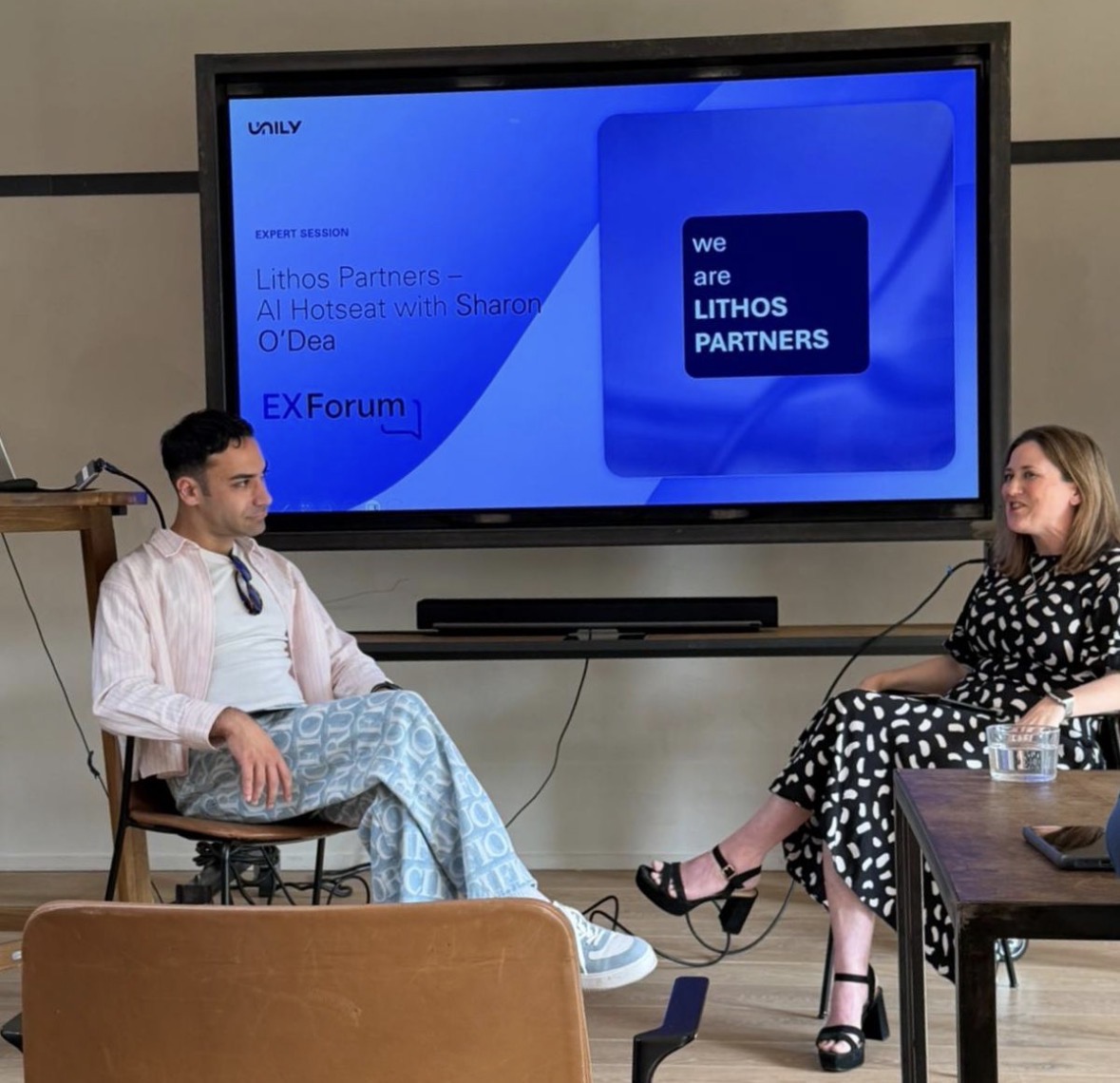
And I spoke at a Unily event, which was a splendid use of a morning. I’d prepped a bunch of talking points: start by actually understanding the problem you’re trying to solve, and — the less fashionable one — that governance has become more critical, not less, as the thing that maintains trust in an AI age. Reassuring, then, that ASML’s session right before mine had arrived at exactly the same place from the practitioner’s side. Always better to be the second person to say a thing.

Also this week

The gym, relentlessly. Strength, HIIT, boxing, four spin classes (two back-to-back). This is, I’ll admit, not a regime so much as a series of overcorrections. On the road I’m too busy and too tired to do anything. Then I come home and attempt to settle the debt in one go, as though the human body operates on the same accounting principles as an Amex card. It does not. But I have become the sort of person who has opinions about kettlebells, so something is working.

The rest of the week was just Amsterdam doing its thing. The sun came out, and the whole city rearranged itself around it — terraces full by four, everyone suddenly somewhere with a drink and nowhere to be. There’s a version of this place in February that tests your commitment. This was not that version. When the weather turns, I’m fairly sure it’s the best city in the world, and I say that with the smugness of someone who gets to keep living here.

Consuming

A pal and I went to see The Devil Wears Prada 2 at the cinema, which was jolly fun. Tl;dr:  Script: 6/10. Styling: 10/10. Aircon: 11/10.

Good for the diehards, a fun one-time watch that doesn’t match the aura of the first. But the part I enjoyed most was Justin Theroux playing a spray-tanned tech billionaire with a receding hairline, trying to buy Runway magazine for his girlfriend after divorcing his altruistic philanthropist ex — the ex, played by Lucy Liu, then going off to solve the world’s problems with her divorce windfall. Remind you of anyone? The film isn’t even coy about it: the girlfriend wants him to buy the magazine so she can run it, which is the Condé Nast rumour with the numbers filed off.

And the script does still spark when it matters, mostly because the best lines go, as they should, to Emily. “May the bridges I burn light my way” is the one doing the rounds, and rightly so. But Miranda’s “You’re not a visionary, you’re a vendor” may be the most useful line I’ve heard all year. I’m trying very hard not to deploy it professionally.

Anyway. The styling is where it earns its ticket. The clothes are smarter and less mockingly ridiculous than the first film. Nobody’s here for the script. We’re here for a dark room, a cold breeze, and Meryl Streep in an iconic coat.

Connections

Dinner this week with Natalie Pereira, who I worked with at Standard Chartered in Asia more than a decade ago and who was in Amsterdam for Money20/20 — along with what felt like half the finance industry.

The bank itself could be a challenging place to work, but it had a remarkable talent for hiring smart, internationally minded people. Natalie was one of them. Back then she showed me around her home city of Kuala Lumpur; this week I got to return the favour, more or less, on the other side of the world.

One of the unexpected dividends of spending years inside global organisations is the network you accumulate: smart, generous people scattered across the map, ready to be caught up with whenever work or life deposits one of you in the other’s city.

We spent most of the evening talking about starting over. Natalie is rebuilding a life in Canada; I’m doing the same in the Netherlands. Different countries, same experience: the paperwork, the cultural recalibrations, the slow business of turning somewhere you live into somewhere that feels like home.

It struck me that we’d landed on the same question that seemed to run through the rest of the week. How much is enough? How much work, travel, ambition, routine, belonging? And how do you hold that balance when the ground keeps moving underneath you?

No conclusions reached, obviously. Just good food, good company, and the comfort of talking to someone a decade and a continent removed from where you first met, and somehow not removed at all.

Two women smiling with arms around each other inside a warm, terracotta-walled café. One wears a black jacket over a zebra-print skirt; the other wears a grey top and cardigan with a tote bag. A street with a parked car is visible through the window behind them.

Published

A little over a month until the book is out, and this week’s teaser is on a subject close to my heart: Why intranets fail: governance, not technology.

The post starts with a familiar story. An intranet is struggling, people are unhappy, and the hunt begins for a culprit. Usually the technology gets arrested first. Wrong platform. Bad search. Over-promised implementation. Time to buy something else.

The trouble is that technology is where problems show up, not necessarily where they begin.

Most digital workplace failures aren’t caused by one catastrophic decision. They’re the cumulative effect of dozens of perfectly reasonable ones. An exception granted here. An ownership gap there. A standard ignored because everyone was busy. Over time, the system becomes harder to manage, harder to trust and harder to change.

Which is why I’m increasingly convinced that governance gets more important as technology gets more capable, not less. AI doesn’t remove the need for guardrails. It raises the stakes when they aren’t there.

My favourite line in the piece is one I’ve shamelessly recycled all week: governance should be cycle lanes, not roadblocks. The goal isn’t control. It’s confidence.

And when it’s working properly, nobody notices it at all. Which is, rather inconveniently, how you know it’s succeeding.

Travel

Nothing this week. I stayed in Amsterdam and, for once, resisted the urge to turn every free weekend into a boarding pass.

Which, given the theme of the week, may have been the correct dose.

A few days at home. Some decent weather. A city that reminded me why I chose it. Not every problem requires a flight.

The reprieve won’t last long. The IABC World Conference in Toronto is suddenly less than a fortnight away, and my preparations remain at the classic stage of “flight booked, details pending”. If you’re in Toronto, Ottawa or Montreal and fancy talking comms, intranets, AI, governance or any adjacent flavour of workplace geekery, give me a shout.

The human side is always the real reason to cross an ocean for a lanyard.

This week in photos
Weeknote 2026/21

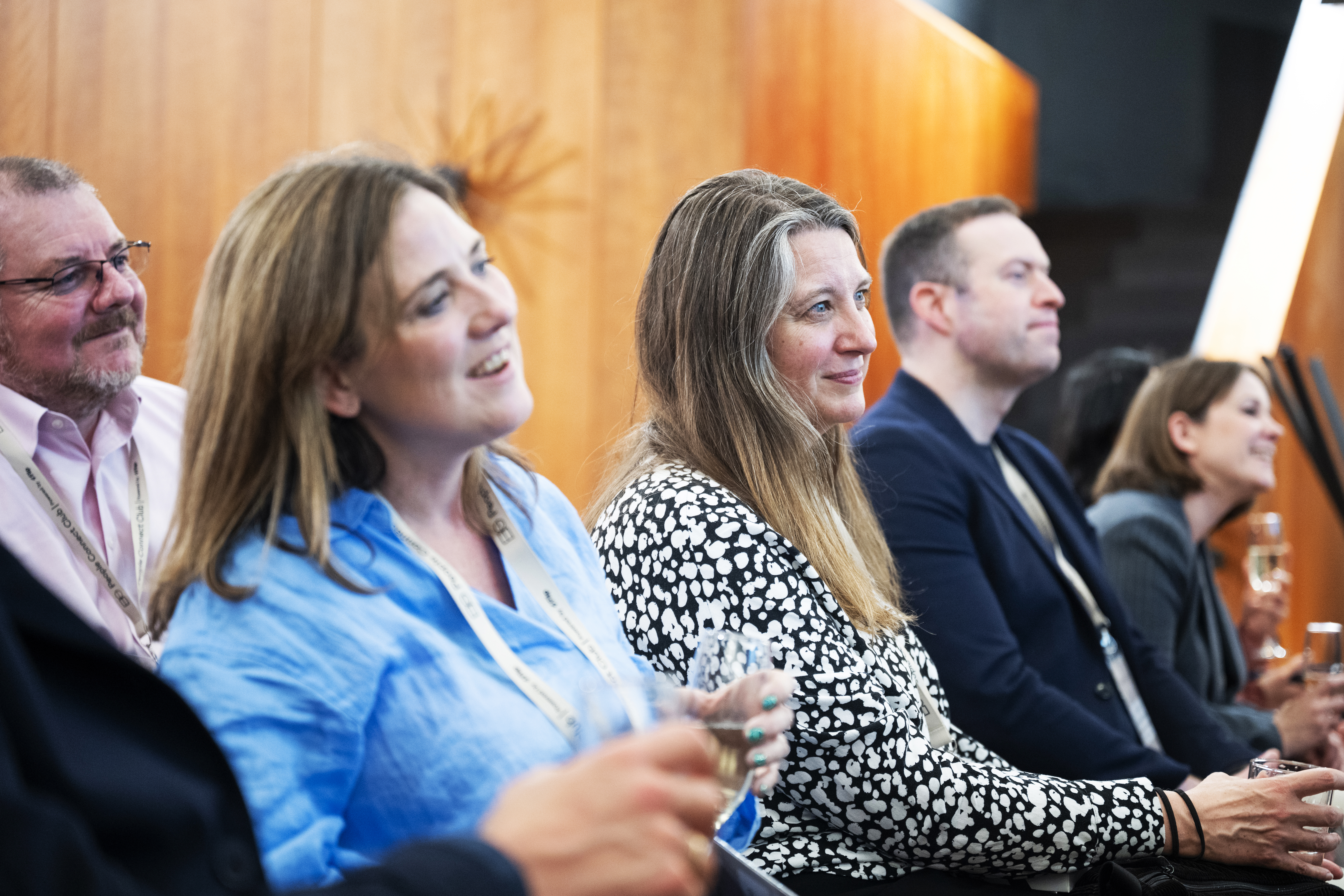
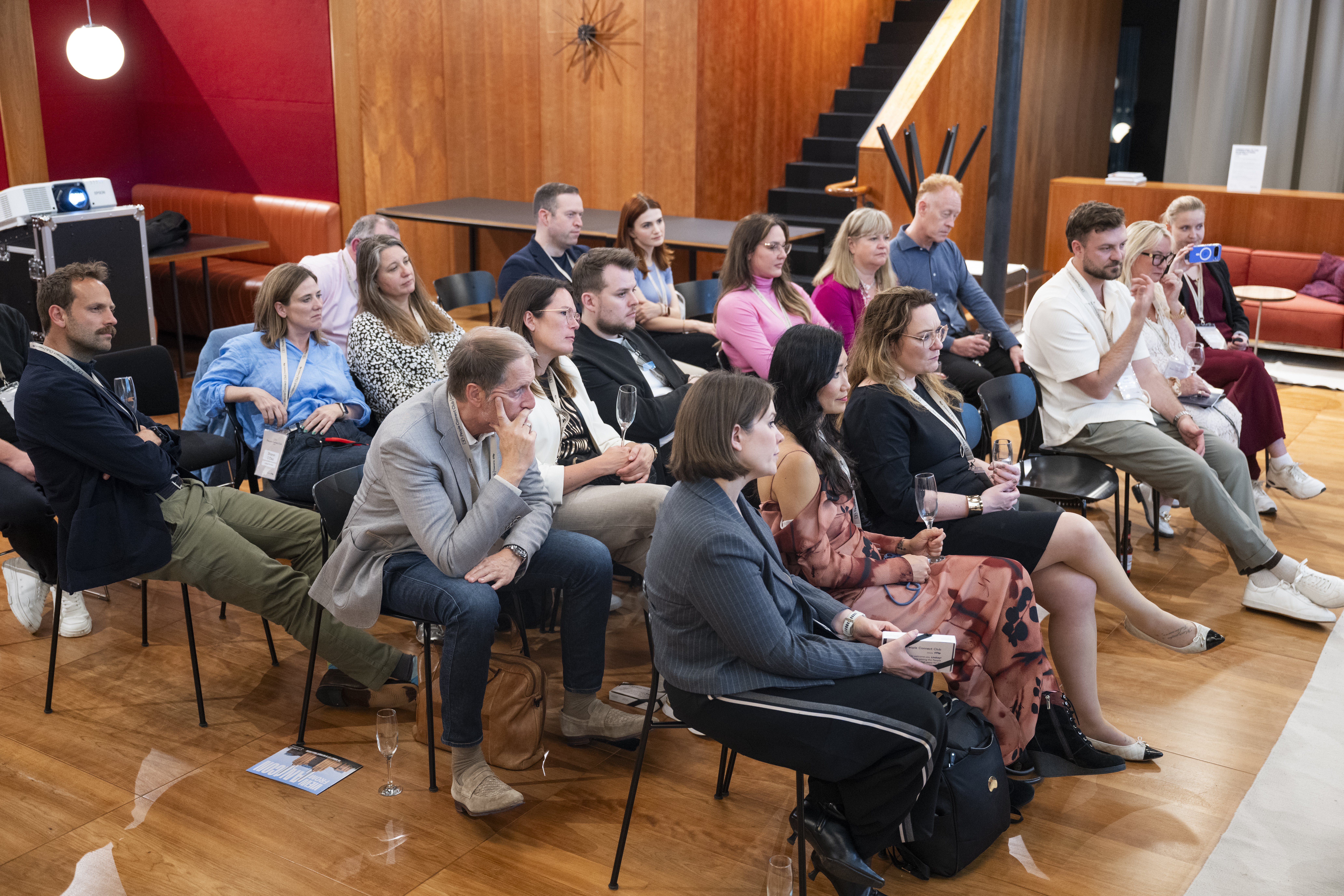
A candid press-style photo of an audience seated in a row, half-listening, half-smiling at something off-camera. In the foreground left, a woman with shoulder-length light brown hair in a bright blue linen shirt and lanyard, laughing. Next to her, a woman with long mid-brown hair greying at the temples, in a black-and-white spotted blouse, smiles softly while holding a glass of champagne, green-painted nails visible. Beyond her, a man with very short hair in a dark navy blazer looks toward the speaker, and another woman with brown hair in a grey blazer is partially visible at the far right. To the left, a man with a grey beard and glasses, in a pink shirt and lanyard, smiles toward the front. Behind them, a warm wood-panelled wall.
People Connect London, this week (photo by Flip)

Three conferences in four days, a fringe meet-up in a repurposed power station, and a city that simply does not believe in standing still. London in late May is its own weather system: every venue full, every diary triple-booked, every conversation interrupted by someone you haven’t seen in eighteen months. By Thursday I was running on coffee, adrenaline, and the stubbornness that kicks in when home is still a train, a plane, and a cab away.

One of the conferences was at Brunel — named, fittingly, after a man who built the future by paying very close attention to the present. The materials, the labour, the awkward physical realities of how things actually get made. Not, on the evidence of the rest of the week, an approach the industry around me has entirely inherited. Most of the panels I sat through were doing the opposite: confidently speedrunning to What’s Next while quietly hoping nobody asked too many questions about Now.

This week at work

Four days, three conferences, two evening events, and approximately six hundred tiny pastries consumed while standing near branded pull-up banners. I’m writing this with the very specific exhaustion only London can produce.

Monday opened at the Institute for the Future of Work’s Making the Future Work conference — Ghost of Work Future, you might say. I know every event is about AI now; that’s where the energy and the budget have gone. But this one felt particularly captured by it. Endless talk about AI adoption and value generation, and at one point it tipped fully into The Thick Of It territory, with policy wonks enthusiastically announcing something called “Tech Towns” as if we’d all agreed what problem that was solving.

The trouble being that work is actually being reshaped by a huge range of forces: demographic shifts, the long tail of deindustrialisation, post-COVID behavioural change, economic insecurity, collapsing trust in institutions. Technology is part of that picture. It is not the picture. But “AI explains everything” is a very useful narrative for people making money from AI explaining everything.

From there, across London to Brunel for the History of Internal Communication conference — Ghost of Comms Past, and honestly a needed corrective.

“The most powerful internal communications programme in history had no comms director.” That line, from Adriana Borucka on the Gdańsk shipyard uprising, has been rattling around my head ever since. One of those lines that lands harder the longer you dwell on it.

The conference is Professor Michael Heller‘s ambitious attempt to treat our profession as something with a history worth studying. Which sounds obvious until you realise how often internal comms talks as if the field began around the invention of SharePoint.

The reality is older, stranger and messier. The Prudential was publishing Ibis magazine in 1878. Shipyard workers were coordinating with each other — and with the world — in 1980, without a steering group, governance framework or employee listening platform in sight.

A few highlights from a genuinely excellent day: Marc Wright‘s closing keynote, a fond and slightly weary tour through four decades of strategy pyramids, values-on-walls and champions programmes from someone who’s watched every trend come round at least twice. Howard Krais on the shift from paternalistic to participative listening. Yağmur Gündüz on House of Fraser’s internal magazines, which became more successful as they became more personal — funny, that. And Adriana Borucka and Edyta Blachowska making the welcome point that the history of IC is not just a British story told in one accent.

Mairi Maclean’s research on worker participation in the interwar period struck a unexpectedly personal note, as my grandfather was an active trade unionist of that era. He’d talked about participating in the very employer-worker dialogues Prof Maclean talked about, or something very much like them. He’d certainly have some Strong Views on contemporary approaches to engagement as a driver of discretionary effort, expressed with the warmth and precision of vocabulary for which the Scottish working man remains justly celebrated.

What I came away with was this: most of our “new” challenges aren’t actually new. The platforms change. The jargon changes. The consultants’ slides get shinier. But the underlying question — how people make sense of where they are, what they’re doing, and whether anyone’s telling them the truth — stays remarkably consistent.

Apparently the next conference is already being discussed. Which feels promising.

Then on to the Engage Employee SummitGhost of Engagement Present. Lots of sensible conversation about trust, fragmentation, relevance, overload, and the need for more humanity at work. Mostly happening directly adjacent to a vendor floor confidently offering software-shaped answers to problems that are, on inspection, almost entirely human.

You cannot platform your way out of a trust deficit. But you can absolutely buy a licence to try.

The employee app Flip invited me to their People Connect meetup — effectively the Engage fringe event — bringing together a good chunk of the London DEX/IC crowd. Lisa Riemers had some real talk on accessibility, a subject the industry still too often treats as an optional enhancement rather than the foundation everything else should sit on.

And it was hosted at the top of the newly refurbished Battersea Power Station, with ridiculous views across London. My first time inside, despite spending most of my adult working life going past it on trains.

There’s probably a metaphor in there somewhere. A vast industrial structure, built to keep the lights on for half of London, retired when the economy shrugged and moved elsewhere, left for decades as a magnificent brick carcass, and now triumphantly reopened as a venue for parting tourists from their money in exchange for trainers and protein bowls. The shell remains familiar. The inside has been scraped out and refilled with the precise commercial sediment of our age: phone shops, athleisurewear, an artisanal something-or-other. Sir Giles Gilbert Scott did not, one suspects, draw the original plans with a Lululemon flagship in mind.

Work is doing the same thing, more discreetly. The shell looks familiar — same job titles, same offices, same Monday meetings. The interior has been quietly scraped out and refilled with something the people inhabiting it are still, in many cases, the last to notice.

In the cracks between conference sessions: client meetings, project wrangling, and the deeply unglamorous work of building the coalition of support every comms programme needs if it’s going to survive contact with reality. Internal politics by another name. No vendor sells it. No keynote celebrates it. It is, however, the bit that matters most.

Also met with a prospective new client about a project that feels like the right kind of difficult — the sort where you’re not entirely sure you can pull it off, which is usually a sign it’s worth doing.

And a surprisingly encouraging flurry of inbound enquiries on top of that. Is the market actually thawing a bit? God knows. But for now I’m choosing optimism.

Also this week

Four solid days of people-ing left very little capacity for actual life-ing. But while in London I also made it to a meet-up organised by the indefatigable Lauren Currie, bringing together female authors to swap books, launch stories, industry gossip and emotional battle scars from the publishing process.

I’ll be honest: by that point in the week I could barely form a sentence. Very glad I went anyway.

A long and genuinely nourishing conversation with Anne Ditmeyer about launch parties, hype squads and book promotion managed, briefly, to tip the balance from utterly exhausted by this entire process to actually kind of excited about it. Which, given how much of my life the book currently occupies, was probably important.

Also managed a night in the pub with friends and an inadvisable number of Neck Oils, plus a proper catch-up with my parents.

The rest of the week was the exact opposite of glamorous business travel: Uber Eats fried chicken eaten alone at a hotel desk, asleep by nine, waking up wondering why every mid-range hotel room appears to have been lit by a committee designing interrogation facilities.

The week LinkedIn never shows you.

Then home. And, as if on cue, the weather lurched directly from March into August. Last week was hats and coats; this weeknote is being written on my terrace at seven in the evening while it’s still 24 degrees outside.

Long walks. Terrace wines. The slow reinflation of a completely flattened brain. On a sunny day Amsterdam really is the best city in the world. And for once, I’m here long enough to enjoy it.

Consuming

Slim pickings this week. No time and, frankly, no remaining cognitive capacity.

The conferences and author meet-up did leave me with a small stack of books though: Rachel Miller’s Successful Change Communication, Ellen C Scott’s Working On Purpose, and a signed copy of Lauren Currie’s Be Upfront.

I’m desperate to read all three, while also increasingly aware that “desperate to read” and “actually reading” have become two entirely separate hobbies.

Otherwise: Netflix. A friend recommended Legends — the British drama series about the infiltration of the early 90s UK drug dealing scene by HMRC — with the entirely accurate pitch: “exactly the kind of mindless guff you need when your brain has stopped functioning.”

Reader, they were correct.

Sometimes the brain wants challenging cinema. Sometimes it wants men in leather jackets explaining wholesale opium logistics in Liverpool circa 1991, cut to a Stone Roses soundtrack.

Connections

A bumper week for this.

A good conversation at IFOW with Anne-Marie Imafidon, who is always considerably sharper and funnier in person than most conference formats really allow for.

The History of IC conference was slightly emotional, in a good way. Lots of reunions with people I haven’t seen in years: intranet veteran Martin White — one of the first people who made me feel welcome in this industry, which I’ve genuinely never forgotten — plus Kevin Ruck, whose IC course I took almost twenty years ago, a sentence that should probably come with some kind of safeguarding warning for my own sense of mortality.

Also Rachel Miller, Jenni Field, Cat Barnard, Suzie Robinson, Ann-Marie Blake, Howard Krais, Katie Marlow, Emma Bridger and Nicola Hearn, and several others who I’ve forgotten to mention.

One of those rare days where half the room contains people who shaped your thinking, and the other half contains people you’ve been in the trenches with.

A long-overdue Soho catch-up with former colleague Chris Harper on a ridiculously beautiful London afternoon.

Engage Employee also threw up a lovely surprise: bumping into my Reworked editor Siobhan Fagan, over from New York. Great to see Nick Crawford, Matthew Burgess and Simone Fenton-Jarvis too, plus catch up properly with teams from vendors I work with, speak to, or mildly heckle on a regular basis — Appspace, Workvivo, Interact, Blink, Flip, Simpplr and Firstup.

A useful reminder that for all the platforms, AI roadmaps and transformation jargon, this industry is still basically the same group of people repeatedly finding each other in conference venues and hotel bars.

Travel

None. Three weeks with no airports ahead of me, and honestly that currently feels less like an absence of travel and more like active luxury.

This week in photos
Weeknote 2026/20

Mirror selfie in a purple-lit spin studio with one person pulling a wide-eyed mock-shocked expression for the camera while holding a towel and water bottle, surrounded by other class members and bikes.
Back in the spin studio, and loving every moment (photo by me)

A lot of human progress is driven not by vision, but by spite.

Not the cinematic kind. Not revenge montages, power moves, or dramatically removing your glasses before delivering a devastating monologue. The quieter, more durable form: someone being told “that’s not possible”, “that’s just how it is”, or “we had no choice” — and immediately deciding to do it anyway out of sheer bloody-mindedness.

This week featured several examples. A gym rebuilt at astonishing speed after being abruptly shut down. People reconstructing careers after being chewed up and spat out by a market currently behaving like a raccoon trapped in a wheelie bin. Organisations slowly discovering that exhausted employees cannot, in fact, absorb infinite content while also surviving modern life. Even project budgeting turned out, in its own deeply unsexy way, to be a battle between reality and magical thinking.

Fuck you, watch me scales surprisingly well as a life philosophy. (One I’ve explored at some length, if you’d like the long version.)

This week at work

Spent much of this week helping a client estimate the next phase of their programme. This is always a delicate operation — not because the maths is hard, but because the temptation to round downward is enormous. Tech licensing and support are the easy bits to cost. It’s everything else — migration, content development, training, change comms — that gets shrunk to make the total number feel less alarming. We write about this in the Business Case chapter of the book: you can have a palatable number, or you can have a project that doesn’t collapse under its own weight, but you rarely get both. Underfund the non-tech side and you end up with a burned-out team lift-and-shifting an old site into a new one — same content, better UX, no improvement anyone actually notices. Better to put the scary number on the page and defend it.

Also spent some time this week looking at how communities can strengthen and deepen technology adoption — a thread that’s been running through several client conversations lately. The default assumption is still that you launch a platform, train people on the buttons, and adoption follows. It doesn’t. What drives adoption is seeing someone like you use the thing to solve an actual problem. Not ‘digital champions’. Not launch swag. Not a 45-minute webinar about where the settings menu lives. Communities give a platform a reason to exist beyond the launch email. Without them, you’ve got software. With them, you’ve got somewhere people actually want to be.

The other live project is in good shape. We had some properly lovely feedback from the client team this week. They’re happy with what we’ve produced and, more importantly, happy working with us. When you work for yourself there’s no performance review, no reassuring manager, no gold star sticker. The only meaningful metric is whether people come back. And even when clients are delighted they’re under no obligation to say so. So when it does land in your inbox, you take moment to appreciate it.

On Thursday I delivered a webinar for IABC, building out a metaphor Jon and I started kicking around earlier this year: if infobesity, or information overload, is the problem — and it really is — then what does ‘Infozempic’ look like? How do we tackle comms overload at the system level, rather than nagging individuals to send fewer emails? Had fun writing it, and the feedback was generous. If you missed it, Jon and I are running a version next month, and I’m taking it to the Heads of Comms Special Interest Group at IABC World Conference in Toronto in June.

Also this week

Monday took me to the opening of Casa Elevate, a popup gym from Rowen, one of my favourite instructors. There was an invite-only spin class. Tell me a decade ago that I’d be genuinely excited about an invite-only spin class followed by alcohol-free grapefruit electrolyte cocktails and I’d have laughed you out of the pub.

A bit of context. Velo was the spin studio near my flat that abruptly closed last month — lovely community, lovely vibe, the place where I learned that moving to music for an hour is the closest thing I’ve found to a hard reset on my brain. Gym friends. Familiar bikes. Weekend rituals. An accidental community stitched together by endorphins and loud music. A few hours a week where I wasn’t thinking about work or looking at my phone, which turns out to be something I actively needed. When it shut I was properly gutted. My remaining credits got shuffled over to a fancy chain — all the influencer-friendly aesthetic, none of the soul. Not the same.

Rowen ran her own strength and sculpt space in the same building. When Velo went down, she got similarly abrupt notice to shutter the gym she’d built from scratch. In class this morning she talked about moving from anger to frustration to focus — and then, in roughly a fortnight, finding a space, spending her own savings on spin bikes, painting the place, getting the doors open. The polite term is grit. The honest one is a sustained act of fuck you, watch me. I was honoured to be at the opening, delighted to see the community turn out in force, and — selfishly — delighted to have my spin class back. It’s not been open a week and I’ve been to four classes.

Consuming

Two reports this week, from very different angles, landing in the same place: organisations think they have a content problem, but what they really have is a human problem.

SWOOP’s SharePoint benchmarking report looked at hard intranet data across 41 organisations and found that employees have become ruthlessly selective about what they pay attention to. They’ll use content that helps them do their jobs, ignore sprawling corporate noise, and absolutely will not read your 1,200-word “exciting update”. The sweet spot is under 400 words — which should be causing visible distress among the LinkedIn thought leadership community, many of whom are currently posting 1,800 words on ‘5 Leadership Mindsets for Synergistic Excellence’.

Equilibrious CommunicationsShifting Ground report came at the same problem from the emotional side. People are exhausted, overwhelmed, and processing internal comms in the context of layoffs, AI anxiety, political instability, climate disasters and whichever fresh hell the news cycle has produced since breakfast.

One report says employees have finite attention. The other says employees have finite nervous systems. Together they make a fairly compelling case that the future of internal comms isn’t more content or more channels — it’s clarity, restraint, empathy, and designing for people who are already at capacity before they’ve even opened Outlook.

Connections

Monday: a useful chat with Kathryn Kneller, incoming chair of the IABC EMENA board. I’m on the slate for the 2026-7 board, and we spent some time walking through what the role actually involves. If it’s confirmed, I’m genuinely looking forward to getting stuck in — and I think I’ll need another project once the book is out the door.

Later in the week, a long-overdue proper chat with a seasoned comms pro I’ve known by reputation for years and met only in passing. We talked about the strange grief of a job ending badly — redundancy in her case, an abrupt walking-out in mine — and the work of processing the mix of emotions that follows. The market is brutal at the moment, but she’s landed somewhere new and is happier than she’s been in years. Always good to hear.

I’m not one for “everything happens for a reason” — I’m not spiritual, no one’s watching, the universe is indifferent — but there it is again: frustration and fuck you feeding into focus. Three for three this week.

Coverage

The Heard ran a feature this week on my annual International Women’s Day campaign, with what is comfortably the finest standfirst I’ll ever have written about me in my lifetime. NGL, I would like this on my headstone.

Screengrab of text reading "Sharon O'Dea embodies the impossible balance of caring deeply about things, while simultaneously not giving a shit"

Friday brought the first Reworked writers’ room. I’ve been writing for Reworked for years now and find it a useful place to work through an argument in public, or to agitate for doing things better when the urge takes me. Good to meet some of the other regular columnists properly. Already plotting the next piece.

Travel

Off to London first thing tomorrow for a week stuffed with events and complicated by a tube strike. I’ve booked into a couple of strike-surge-priced hotels at various far-flung corners of the city, prompting Booking.com’s marketing engine to ask “excited for Uxbridge, Sharon?” — a sentence no human has ever uttered, in any language, at any point in recorded history.

Monday: the Institute for the Future of Work’s Making the Future Work event. Tuesday: over to Brunel for the History of Internal Communications conference. Then crossing London — slowly, expensively, on foot where necessary — for two days at the Engage Employee Summit, where I’m planning to spend most of my time catching up with the key vendors in the DEX space.

If you’re at any of these, come say hi. I’ll be the one attempting to cross strike-hit London via pure force of will.

This week in photos
Weeknote 2026/19

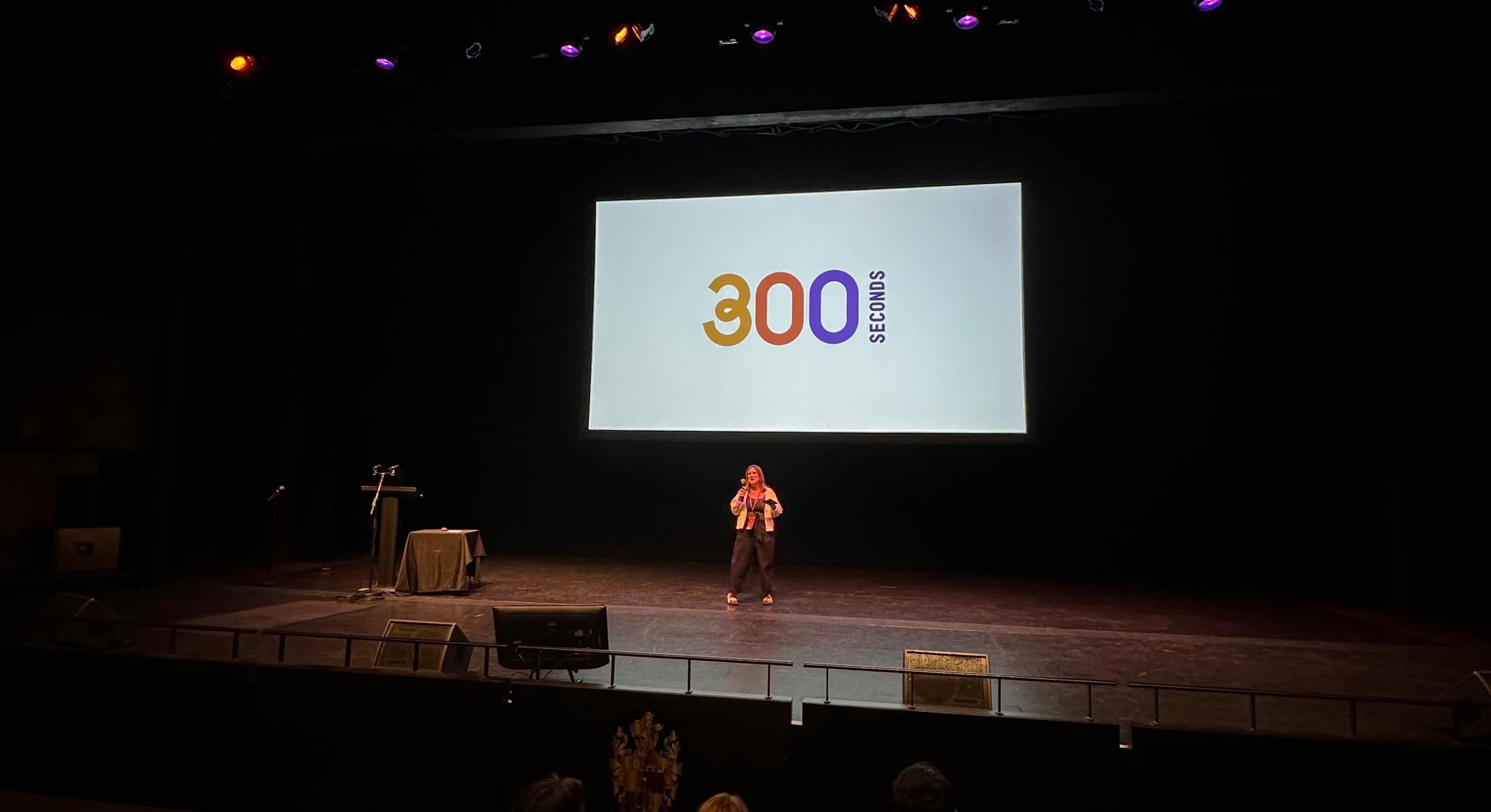
Sharon O'Dea holds a microphone on a darkened theatre stage beneath a large projected "300 SECONDS" logo in yellow, red and purple.
Me introducing 300 Seconds at Camp Digital (photo by Wedge Black)

The highlight of this week was going to visit my oldest mate, Bee. We’ve known each other since we were 11, which means she exists in my head simultaneously as a child in an oversized school jumper and NHS specs, and as the deeply competent parent she actually is now.

Over a bottle of M&S pinot grigio we concluded there are few things more humbling than being forced, at 13, to perform an interpretive dance about homelessness to the music of Phil Collins.

This happened to Bee and me during the golden age of British comprehensive education, where “the arts” often appeared to consist primarily of making toe-curlingly embarrassed children express societal issues through mime.

Thirty-five years later, we’re still friends.

(Recently, Another Day in Paradise came on while I was on a yacht in the Caribbean, which suggests the universe either has an excellent sense of humour or an unresolved administrative error somewhere.)

Anyway. It was one of those weeks that threw time into perspective: old friendships, new milestones, accidental visibility, and the increasingly strange experience of watching parts of your life become real while still feeling faintly surprised they happened at all.

This week at work

Still deep in the weeds on governance for a Viva Engage rollout at a complex, regulated organisation. I realise I bang on about governance a lot here, but that’s the inevitable consequence of working with regulated clients: when governance is bad, everybody notices. When it’s done properly, nobody has to think about it at all.

That’s exactly what we aimed for with SEFE — and, trumpet very much blown, the work picked up a Step Two award last year. The judges highlighted “a good balance between a more robust approach to governance, with a more flexible and lightweight approach, which can adapt as the company and intranet grow.” Which is gratifying, because eighteen months on, that’s precisely what’s happening: the governance is evolving alongside the platform, rather than calcifying around it.

Less than two months until the book lands now, and promotion is starting to consume most of the available oxygen. Delighted to say we’ve secured both a sponsor and a genuinely lovely venue for the launch party. Invites soon.

The flipside of all this is that my face is suddenly everywhere, which I find profoundly uncomfortable and refuse to pretend otherwise. But our new headshots from Paul Clarke came back this week and — against all odds — I actually like them. Reader, growth.

Here’s a preview:

Also prepping for an IABC webinar this week, where I’ll be using a chat about GLP-1 drugs as the route into talking about information overload at work. The basic argument: modern consumer society is an obesogenic environment, quietly engineered to encourage over-consumption while simultaneously telling individuals to exercise more self-control. Our information environment now works exactly the same way. Notifications, updates, channels, pings — too much, by design. Telling employees to “consume less information” misses the point entirely. The real answer is changing both production and consumption habits systemically.

Come watch me stretch an analogy slightly beyond structural tolerance.

Also this week

I was named in the Independent Impact 50 — fifty independent practitioners judged to be among the most innovative and influential in the industry. Genuinely chuffed, and slightly thrown by it, because I still instinctively think of myself as a behind-the-scenes person.

But ten years into the accidental career — which has somehow become the most deliberate work I’ve ever done — being recognised by peers and people I respect feels worth being slightly loud about. I wrote more about it here if you want the longer version. Huge thanks to Nigel Sarbutts and Rod Cartwright for building something that recognises independents properly.
 

Also up north for Camp Digital, where I ran the 300 Seconds session. A few weeks ago I was writing here about coaching the speakers through their nerves, and about confidence being something you learn rather than something you’re born with. This week was the payoff.

Oana Puicar, Zhen Yang, Robin Roy, Aditya Shah and James Bilham each got up and delivered five-minute talks — mostly for the first time. They were nervous. They smashed it. One of them messaged me the next morning to say she’d lost her place a couple of times, carried on anyway, and felt proud of herself afterwards.

That, right there, is why I keep doing it.

The rest of Camp Digital delivered too, as it reliably does: Rachel Coldicutt on staying hopeful about tech without kidding yourself, Candi Williams on content design as applied linguistics, Tessa Quinn on the impossible trade-offs involved in building services for Ukrainian refugees at speed, and Dan Hett closing things out by taking the room somewhere emotionally that nobody had really braced for.

Nexer Digital have built the rare tech conference that genuinely feels like it’s for the people in the room, rather than the sponsors circling around them.

Consuming

No gigs this week — simply too busy. But I did catch Project Hail Mary at the cinema. Two and a half hours of Ryan Gosling waking up on a spaceship with no memory, gradually discovering he’s a science teacher who’s effectively been press-ganged into saving the sun from microscopic space organisms. He befriends an alien. There’s a lot of zero-gravity bumbling.

Enjoyably credibility-stretching nonsense, in the grand sci-fi tradition, and Gosling continues to possess the slightly unfair ability to remain charming even when the script is doing most of the heavy lifting.

I haven’t read Andy Weir’s book, so can’t speak to the adaptation, but the film is a solid fifteen minutes too long and would have been materially improved by stopping at the first ending. It earns one genuinely lovely emotional beat near the close, then immediately piles on several more endings, each diminishing the impact slightly further.

The Lord-and-Miller instinct to send everyone home smiling ultimately won out over the better instinct to leave them just a tiny bit winded. They always think we want more. We rarely do.

Connections

Excellent call this week with Ellen Griley, who’s doing some of the most interesting work I’ve come across on trauma-informed communications — taking principles long established in healthcare and education and applying them to how organisations communicate with employees. Practical, evidence-based, overdue.

I first heard the idea articulated properly at Camp Digital last year, and it resurfaced again this year — which is one of the reasons I keep going back.

Camp Digital also once again brought together some of my favourite people in the industry, off-stage as well as on. Most of whom I only see once a year. A brilliant chance to compare notes on the market right now: the strange sensation of change happening both far too slowly and far too quickly at the same time, clients of every conceivable variety, and the growing suspicion that “everything is terrible now” may have at least some correlation with all of us getting older.

Travel

Nothing! An entire week at home.

Back in London the week after next with a diary that already looks mildly concerning, plus a Tube strike to navigate around for added flavour.

This week in photos
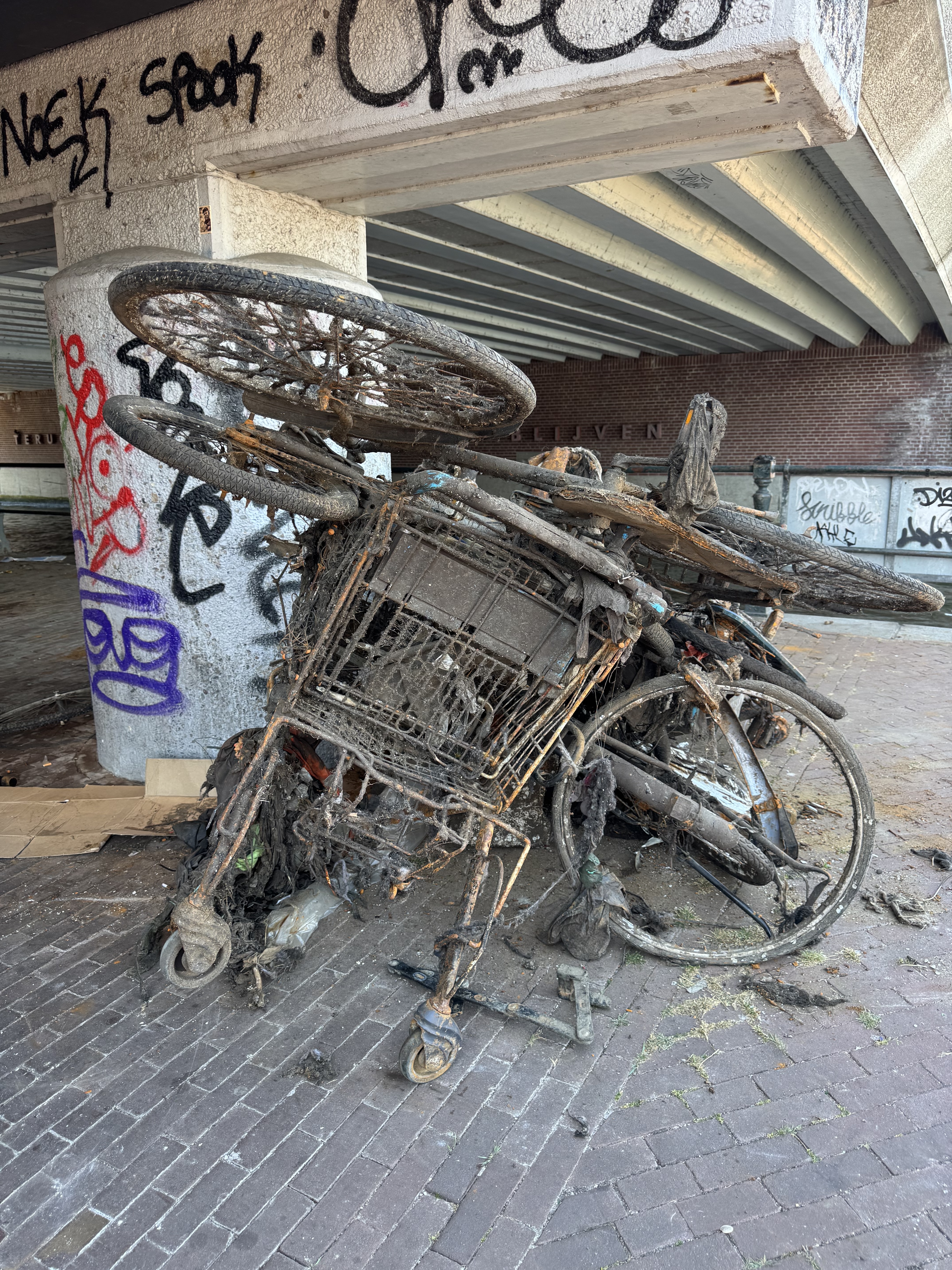
Weeknote 2026/18

Antibes harbour packed with white sailing yachts and motorboats, masts crowded together against the still water, the green hilltop and pale stone walls of Fort Carré visible in the distance.
Yachts in Antibes (photo: by me)

Weeknote 18 comes to you from a pavement café on the Côte d’Azur, killing time before my flight. Mum’s already on hers — I dropped her at the airport an hour ago, her bound for London, I’m heading back to Amsterdam this evening. There is a small carafe of something the colour of weak hay perched on my table, begging to be drunk before it’s spilled over the keyboard.

It’s been a week about being seen. At a book launch. In front of a photographer’s lens. In front of a roster of first-time speakers I’m coaching for an event next week. And (though I didn’t quite clock it at the time) looking at your work hung on a gallery wall.

Up the coast, Matisse spent his final years making some of his best work from the bed he could no longer leave, scissoring shapes out of coloured paper. I’m not saying mum is Matisse. But the voice doesn’t necessarily arrive on schedule. Confidence, like travel, turns out to be something you can work at.

This week at work

Honestly, mostly OOO. But the bits that did happen earned their keep.

Jon and I started building out a detailed governance framework for Viva Engage. The thing about platform governance — and this is the part nobody puts on a vendor slide — is that it doesn’t exist in isolation. Most of what you need is already written down somewhere else: in your content governance, your Microsoft 365 governance, your employee policies, the dusty document called Acceptable Use that nobody has opened since 2019. The job isn’t to reinvent any of it. The job is to give people clarity on how the things that already apply, apply here, in this particular context, so the platform stays useful through its lifecycle rather than degrading into the digital equivalent of a noticeboard outside an abandoned village hall.

Jonathan came to London so we could finally do a shoot with the superstar photographer Paul Clarke. We’d been meaning to for ages; the book launch turned meaning into doing. I am, on the whole, against having my picture taken (growing up with a squint does that to a person) but Paul put me at ease, narrating his choices on light and framing as he went, which felt less like being photographed and more like being let in on the trick. I can’t wait to see the pics.

A London street scene: Jonathan in a dark shirt and jeans leaning against a blue-grey brick wall, smiling, while photographer Paul Clarke (in an orange hoodie and red trousers) raises a camera to his eye.

Then to the launch of Advita Patel’s Decoding Confidence: 7 habits of confident leaders. A chance to catch up with people I don’t see nearly enough, and to celebrate the work Advita does on confidence and visibility — both of which were on my mind all week.

Timely, too, with 300 Seconds at Camp Digital coming up. I’ve been talking to our new speakers about their nerves, and sharing (hard though it may be to believe now) that I was painfully shy well into my late twenties. There’s a tendency to treat confidence and introversion as fixed properties of personality, on a par with eye colour or a tendency to lose umbrellas. They are not. Confidence is learned. It’s practised. And for those of us, like Advita and me, who didn’t grow up surrounded by mouthy public school confidence, that’s a revelation worth holding on to. 

Also this week

Also this week: a few days in France with mum. Nice, Villefranche-sur-Mer, Cannes, Antibes, Monaco (country 91 for me, ~65 for her).

Mum gave me my love of travel. She worked in the industry, and loved taking us to new places when we were small — a habit I’ve adopted in adulthood with what can only be described as excessive gusto. Now she’s elderly, getting away is harder than it used to be. Last September the family went to the Auvergne to scatter my grandmother’s ashes in the volcanic hills where she was born more than a century before. It was there we decided on another weekend together, just us, to explore the land of her (and my) forefathers. Or, more accurately and more usefully, foremothers.

Ninety countries in, and somehow there are corners of this neighbouring one I’ve never set foot in. The Côte d’Azur is as stunning as anywhere in the world; you can see why the existentialists kept washing up here. Over bottles of cheap-but-excellent rosé, mum filled me in on her childhood holidays in the Auvergne, Provence and Bordeaux, and visits to her grandparents in Paris. An extraordinarily beautiful country, full of women who, like Louise Bourgeois, came into themselves on their own schedule. I regret that I haven’t claimed more of these roots, and that my French remains the kind that makes waiters switch to English with merciful speed. I really must spend more time here.

For me, travel and confidence are hand-in-hand. Going somewhere new, alone, takes balls. It also grows them. Every time I do something past-me would have hated — navigating the unfamiliar, making friends from scratch, navigating the menu and a phobia of cheese in a language I don’t speak — I add another piece of evidence that I can. And then some.

Mum has never been particularly confident. But since retiring she’s found her voice through painting. She exhibited at a local gallery recently and sold a couple of pieces. She’s walking taller. It turns out you can find your visibility late. You can find it sideways. You can find it in your 70s, in oils and acrylics and a quiet room with the right light.

Connections

Advita’s launch was, predictably, a who’s-who of internal comms loitering around the same canapés: Trudy Lewis, Jenni Field, Katie Marlow, Darryl Sparey, Anne-Marie Blake, Janet Hitchin, Shalini Gupta, Shayoni Lynn, Andrew Hesselden, and of course Advita herself. The kind of room where you realise how many people you only ever see at other people’s book launches, and resolve, unconvincingly, to fix that.

A diary coincidence also delivered an impromptu pint with regular Lithos co-conspirator Lisa Riemers, which (as these things do) became an impromptu dinner at an excellent barbecue joint

Lisa Riemers at a barbecue restaurant table loaded with ribs, kale salad, chips and a pint of beer, mouth open mid-sentence with an animated expression.

Coverage

Cassandre Arkema’s Algorithm Witch newsletter ran a smart piece this week on video, employee advocacy, and the precise method by which platforms decide what gets seen — which is, as far as anyone can tell, a mixture of vibes, pattern-matching and witchcraft. I’m quoted on the thing I keep coming back to: employee advocacy only works when value flows both ways. The moment it tips into a one-way relationship — endless content extracted from staff, nothing offered back — it stops being advocacy and becomes the thing it’s regularly accused of being.

It picks up on the Workshop webinar I did the week before with Yanni Pappas from Workshop and Michaela McKinley of Sprout Social on employee influencers — the rare webinar I’d recommend actually watching back. Video recap here:

Published

I’m trying to write a bit more ahead of the book coming out, so there’s new post on the book site this week: The zombie stat that won’t die: why “a bad intranet costs $16 million” is the wrong argument.

You’ve seen the stat. It shuffles back into view every few months, blinking in the sunlight: a bad intranet costs millions, employees waste hours searching, multiply by salaries, gasp at the total. It’s catchy. It’s easy to repeat. It’s also a terrible way to make the case for internal comms.

The post argues that time saved isn’t cash saved, that the benchmarks behind these numbers are mostly held together with hope and a vendor deck from 2014, and that the moment finance pokes at the source the whole thing collapses like a soufflé in a slammed door. If we want internal comms taken seriously as a strategic discipline, we need to stop reaching for dramatic-but-weak calculations and start describing real business impact: cost avoidance, risk, support deflection, onboarding speed, compliance. One meaningful stat and one real story will outperform a blizzard of theoretical millions every time.

Travel

By tomorrow I’ll have swapped rosé and palm trees for a flat white in Amsterdam, and by the end of the week, Mediterranean glamour for Mancunian charm. I’m at Camp Digital in Manchester for a few days and have a bit of spare time between sessions, so if you’re in Manc and fancy a coffee, give me a shout.

This week in photos
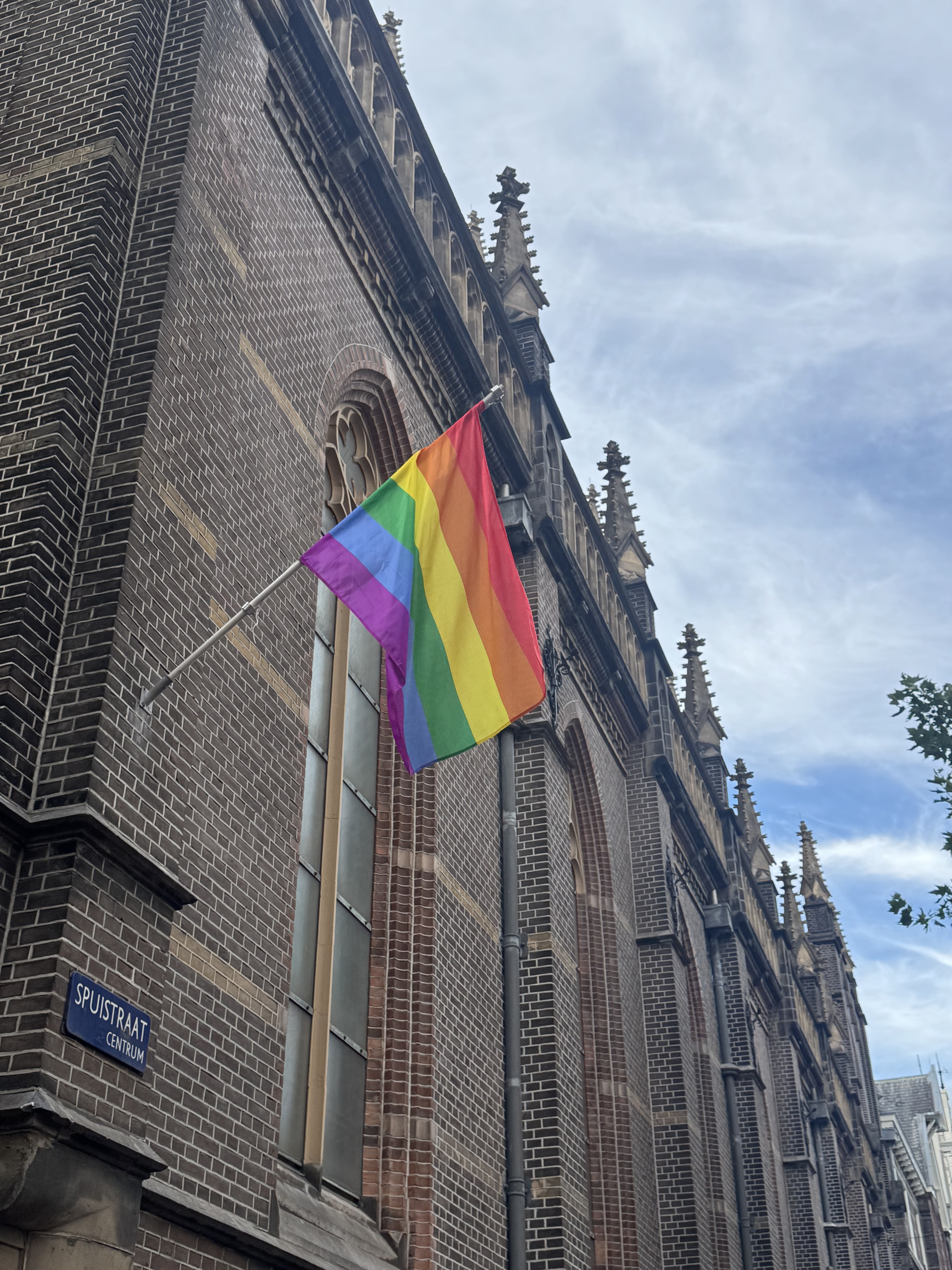
Weeknote 2026/17

White marble sculpture of reclining nude figure on draped bed/cushion, displayed against black background in museum setting.
Hermaphroditus at the Metamorphosen exhibition, Rijksmuseum (photo: by me)

I began this week at Metamorphosen at the Rijksmuseum, and Ovid’s transformations followed me everywhere afterwards.

“My purpose is to tell of bodies which have been transformed into shapes of a different kind,” he wrote. The exhibition traces two thousand years of artists grappling with his central insight: everything is in constant flux, yet nothing truly disappears. Forms shift, but essence persists. Chaos finds structure. Internal becomes external. The creator falls in love with their creation.

What struck me most was the question posed in the Chaos & Creation room: “From where does form emerge from formlessness? When does matter become animated? And is creation ever truly complete?” These felt less like ancient philosophical puzzles and more like the exact challenges I’d be wrestling with all week — helping organisations shape pilot communities from sprawling possibilities, watching AI tools cross the line from experiment to operational reality, seeing my own book transform from manuscript to physical object while readers transformed it again through their responses.

Ovid positioned himself as Arachne’s counterpart: a weaver of verses, binding everything to everything else. That’s the work, really. Taking the scattered threads — theory and practice, context and constraint, internal understanding and external expression — and weaving them into something coherent. Something that holds, resonates, delights.

But the exhibition also reminded me that not all transformation is benign. Metamorphosis, as the Jupiter and Medusa rooms made clear, can mean the loss of agency. Power often dictates who gets transformed and how. The Narcissus myth — falling in love with a reflection, “mistaking a mere shadow for a real body” — felt particularly relevant in a week spent thinking about digital literacy, social media advocacy, and the gap between what tools promise and what they actually deliver.

By week’s end, I was seeing transformation everywhere: platforms becoming pilots, internal voices becoming external influence, chaos becoming creation. Everything shifting, nothing disappearing.

This week at work

Helped an organisation plan their Viva Engage rollout — a perfect example of that Chaos & Creation question: from where does form emerge from formlessness? Right now we’re looking at what communities to include. Enough to test what we need to (governance, planning, resource, training, and impact on content/channel strategy), but small enough that it’s genuinely a pilot and not opening up to the whole company. Jon and I spent an intellectually brilliant day kicking the tyres on this one, reflecting on what we’ve experienced elsewhere, what people told us when we did the research for the book, what the theory tells us, and the context of this specific organisation and its needs. We’re both pretty happy with the rigour of the recommendations we made. And it’s stuff like this which means I’m still fascinated by this work, twenty years in.

We’re helping another organisation plan and budget for a platform proof of concept. Again, applying theory, practice and context to come up with an estimation model that we think stands up to scrutiny. The work of giving shape to the shapeless, making the invisible visible.

Spent two days at HR Tech Europe, and came away thinking about Jupiter’s transformations — gods taking on different forms to serve their own ends. The rhetoric was all about AI enabling humans, but when you dug into the actual solutions, most were designed to make HR’s life easier by pushing complexity onto employees. There were exceptions — Pandora’s Byron Clayton showed what genuine transformation looks like when you redesign work rather than just digitise it, freeing store managers from 12 hours a week of admin to get back on the shop floor — but they felt rare.

What struck me most was the ‘AI Proximity Paradox’ that Mercer presented: the more employees use AI at work, the more anxious they become about it. Getting closer to the digital reflection only to become more unsettled by what you see. Meanwhile, 42% of people don’t understand what value AI will bring them, but they’re three times more likely to adopt it when leaders communicate clearly. The bottleneck isn’t the technology. It’s us.

Did a brilliant webinar with Workshop on employee influencers — pure Arachne territory, this. The art of weaving internal understanding into external voice. Kelsey Kingdon, Yanni Pappas, Micaela McGinley and I spent an hour unpicking how internal comms is becoming external comms in 2026. How well a brand gets delivered externally depends on how well it’s understood internally. If your people don’t get your mission, vision, and values, then (as Yanni put it) you’re cooked. You can’t push for external advocacy without doing the internal work first.

People want stories, not to be sold to. And those stories come from lived experience, not from marketing. The other thing that landed: this isn’t something IC owns alone. Employee influencer programmes that work are cross-functional by design. When one team tries to own it, silos kill the programme along with it. My contribution: this stuff is inherently risky. Some things don’t land, things can go pop that you didn’t expect, and content can go viral for good reasons and bad. Employee influence is hugely powerful, but if you’re deploying it you have to be prepared to take the rough with the smooth — and support employees when it goes sideways.

Laptop screen showing Workshop webinar with four participants in video call format. Sheet music visible on piano behind laptop.

Got the endorsement quotes in for our book. I might have cried a bit reading them. It’s weird, writing a book then handing it over and seeing what people think. A bit like Pygmalion, in reverse — you create something, fall in love with it, then watch other people bring it to life in ways you never imagined.

Also this week

Tomorrow is King’s Day. Which means the drinking starts this afternoon and runs through to about 7pm tomorrow. Nobody much cares whether you’re Dutch, or whether you have any feelings about the monarchy. Wear orange. Grab a beer. You’re in. Nationalism done about as well as nationalism can be

As I mentioned, I went to Metamorphosen at the Rijksmuseum earlier in the week. If you’re in Amsterdam, catch it before it closes next month — it’s genuinely worth the trip. The way it traces transformation across two millennia of art is remarkable, and (as this weeknote attests) you’ll find yourself seeing the themes everywhere afterwards.

Consuming

Two classics over the weekend. Priscilla, Queen of the Desert, because my husband had somehow never seen it. A neat loop back to Metamorphosen and the Hermaphroditus works — though I didn’t plan that. I first saw Priscilla when it came out, when I was about fourteen. Suffice to say it lands differently now. Which is its own kind of metamorphosis: the film stays the same, but I’ve been transformed by everything I’ve encountered since. What felt like pure spectacle at fourteen now reads as something deeper about identity, belonging, the courage it takes to become who you are.

And then The Hitcher, which David watched at fourteen and I’d never seen. Also set against vast, barren desert. That is where the similarities end. Where Priscilla is about transformation as liberation — drag as metamorphosis, the road as a place where you can shed old selves and try on new ones — The Hitcher is about transformation as menace. Rutger Hauer’s character reshaping everyone he encounters, usually fatally. Same landscape, completely different mythology.

Both films reminded me of something the exhibition kept returning to: we don’t just observe transformation, we’re constantly being transformed by what we consume. Every story changes us a little. The question is whether we notice.

Connections

HR Tech Europe was as much about the conversations in the corridors as the sessions on stage. Had a particularly good catch-up with Dr Dieter Veldsman, a Rotterdam-based HR organisational scientist and author. We ended up in a proper deep dive about organisational design — his observation that every company is essentially a reflection of its history of dysfunction really stuck with me. Which, he pointed out, is precisely what makes this work so interesting. And if you’ll excuse one more Ovid insight: we are all transformed by what came before, and the shapes we take now echo the forces that shaped us.

Sharon poses with a bearded man at HR Tech Europe in what appears to be a networking area with modern conference setup.

Also met with Ruxandra-Laura Bosilca, a mainstay of the IABC down in Brussels and one of the organisers of last week’s Strategic Communication Leadership Summit. A lovely, if far too short catch-up on an Amsterdam rooftop in the spring sunshine. We covered in-house vs consultancy, what vendors get right and wrong, comms platform buyers, and much else besides.

And Workvivo treated us to a splendid dinner at MOS on a glorious spring day at the Westerdok. Big thanks to Ciaran O’Malley for the invite (and the pronunciation lesson). Good insights from Michael Nord on change communication and Ingrid Meier on IC’s role in digital workplace deployment. Nice to catch up with Leo McCauley and Natascha de Waal and put faces to more LinkedIn profiles. There’s something magical about the transformation of digital connections into actual conversation over good food and wine in the Amsterdam sunshine.

Coverage

New piece out this week in Reworked on why organizations are building digital literacy and calling it AI literacy — when they’re not the same thing at all. Pure Narcissus territory, this. In Ovid’s telling, Narcissus falls in love with his own reflection in a pool. The more he gazes, the more he’s convinced the reflection is real, until he wastes away reaching for something that was never there.

Organisations are doing much the same with AI capability. They’re enchanted by the surface — the workshops, the adoption rates, the tool proficiency — while missing what actually matters. The core argument: digital literacy is about operating tools; AI literacy is about judgment. Knowing when to trust an output, when to push back, when to close the tab and do it yourself.

But most organisations keep staring at their reflection in the digital pool (look how AI-ready we are!) while the real capability dissolves beneath the surface. Ninety percent of people already use AI at work, most without telling their employers. The problem isn’t that they don’t know how to use it. The problem is that 92% don’t check outputs for accuracy, even though they express skepticism about what AI produces. That’s not a training gap. That’s a judgment gap. And you can’t close it with a Copilot workshop.

Travel

After eleven whole days at home I’m back on the road this week. London first, for meetings and book promo, then a few days in France. It’s my first time in Nice, so recommendations welcome. Especially if they involve good food and plenty of walking.

This week in photos