
Eighty-eight per cent of the sun went behind the moon on Wednesday and it barely got dark.
That night, every star I looked at turned out to be another sun, filed down by distance to a pinprick. The moon is a rounding error next to the sun. It just happened to be closer, and in exactly the right place to block most of it.
Scale, it turns out, is extremely easy to misunderstand.
Organisations have this problem too. The bigger something gets, the more we tend to discuss it in aggregate: tens of thousands of employees, enterprise-wide adoption, transformation at scale. Eventually the people disappear altogether and you’re left moving percentages around a slide.
Over coffee this week I spent an hour talking through one person’s job. Earlier I’d been on a call about essentially the same problem across an organisation of tens of thousands. The enormous version turned out to contain exactly the same question as the tiny one: what is this person actually trying to do, and what’s getting in their way?
That’s the irritating thing about scale. To understand the big thing, you usually have to get very close to the small one.
The trouble starts when you assume it works the other way round.
This week at work
Over coffee, a friend told me her employer has been telling everyone to use AI. She’s not against it. She just doesn’t know what she’s supposed to do with it. Nobody has said what it’s for.
There is a mandate, and there is a tool, and between them a gap roughly the size of her actual job.
So I did what any normal person does to a friend on their day off and interrogated her about work for an hour.
I didn’t start by asking what she wanted AI to do. I asked what she finds difficult. What’s stopping her being as good at her job as she’d like to be?
Planning, she said.
Her industry works a long way out; she’s on Christmas 2028 at the moment, which is a boggling timescale for me, a person for whom buying food on Sunday for Wednesday constitutes advanced logistics.
The problem isn’t really making the plan. It’s holding the thing together once it exists: knowing where versions have drifted apart, where assumptions no longer match, and where six teams have all independently decided that the same fortnight would be an excellent time to do something enormous.
This is precisely the sort of work computers are annoyingly good at and human brains aren’t. So: give it the plans. Ask it to find inconsistencies, collisions and crunch points.
She said they’re so busy they tend to repeat the things they already know work. Fine. Give it the data from the last few programmes. What performed unusually well or badly? What was different? Are there patterns worth investigating?
Within about twenty minutes we’d gone from I know I’m supposed to use AI but I don’t know what for to a list of things she was genuinely excited to try.
No use-case library. No maturity assessment. No 73-slide deck entitled Unlocking the AI-Powered Future of Work.
We just talked about her job.
Her own takeaway was better than mine. She’s going to ask everyone on her team to bring one thing they’ve used AI for lately that actually made the work better or easier.
Not a strategy. Not a policy. Not a prompt library containing 400 examples nobody will ever read. Just one thing that worked, said out loud, by someone you know and trust, and not some twat from a consultancy who wears a hat indoors.
The funny part is that I’d started the week having essentially the same conversation, only with several more zeroes attached.
I’d been on a call with someone running an AI programme somewhere very large indeed, ahead of a client conversation about what adoption looks like at that scale. And scale changes the conversation surprisingly quickly. One person has a planning problem. Ten thousand people have an adoption strategy.
At organisational scale, everything acquires nouns: Adoption. Enablement. Transformation. Capability. Use cases. You can spend months discussing all of them without getting anywhere near the awkwardly specific question my friend answered over coffee:
What is hard about your job?
Same problem. More zeroes.
The technology isn’t the difficult bit. Finding the useful problem is.
You have to do that first for a person, then for a team, then somehow across tens of thousands of people. And the further you get from the actual work, the easier it becomes to replace understanding it with buying something.
Which is how you end up with an enterprise AI strategy explaining very clearly that everyone should use AI, and an employee sitting in a café saying:
Yes. For what?
Also this week
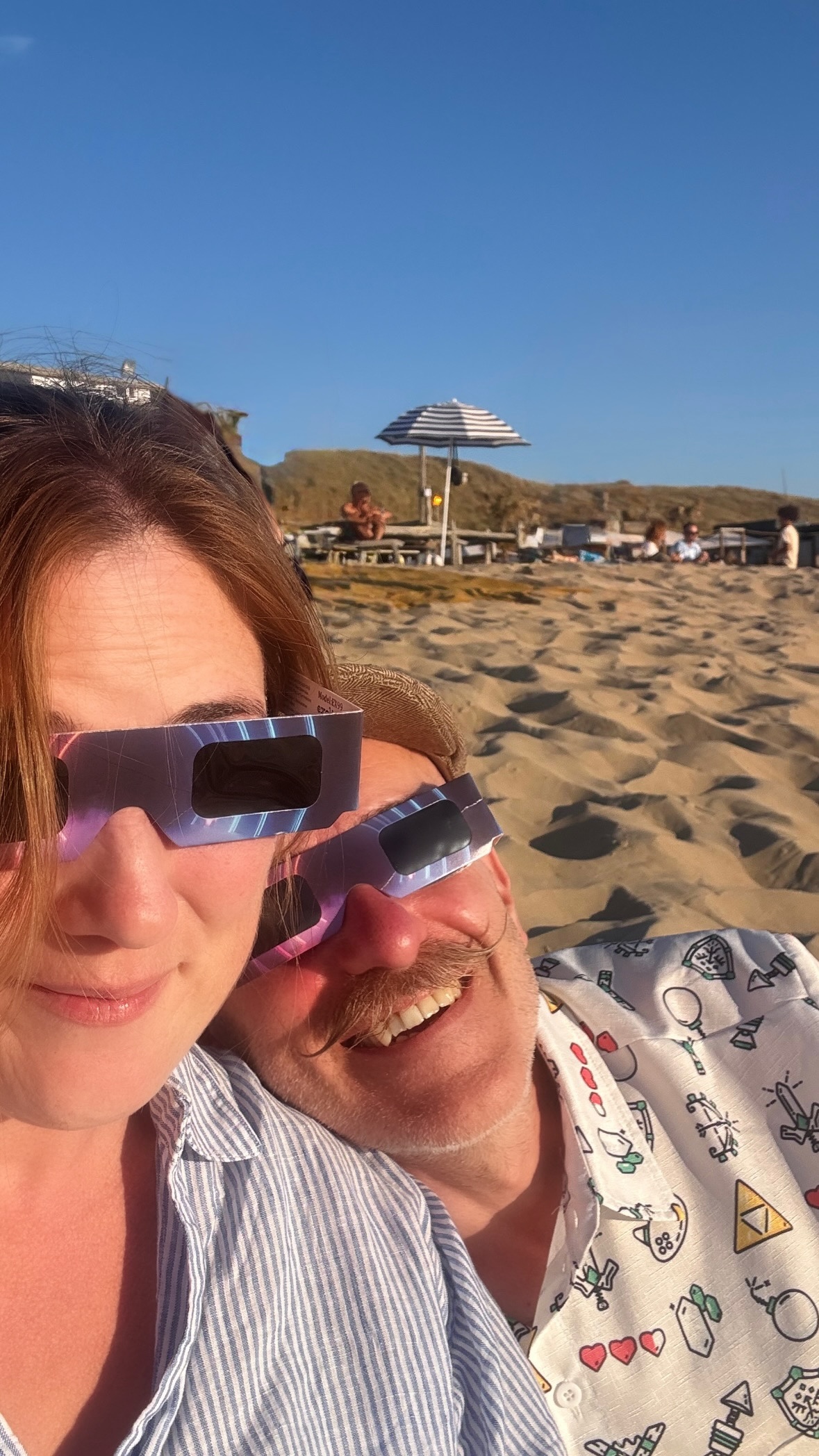
I took 24 hours off midweek and went to the coast for the eclipse.
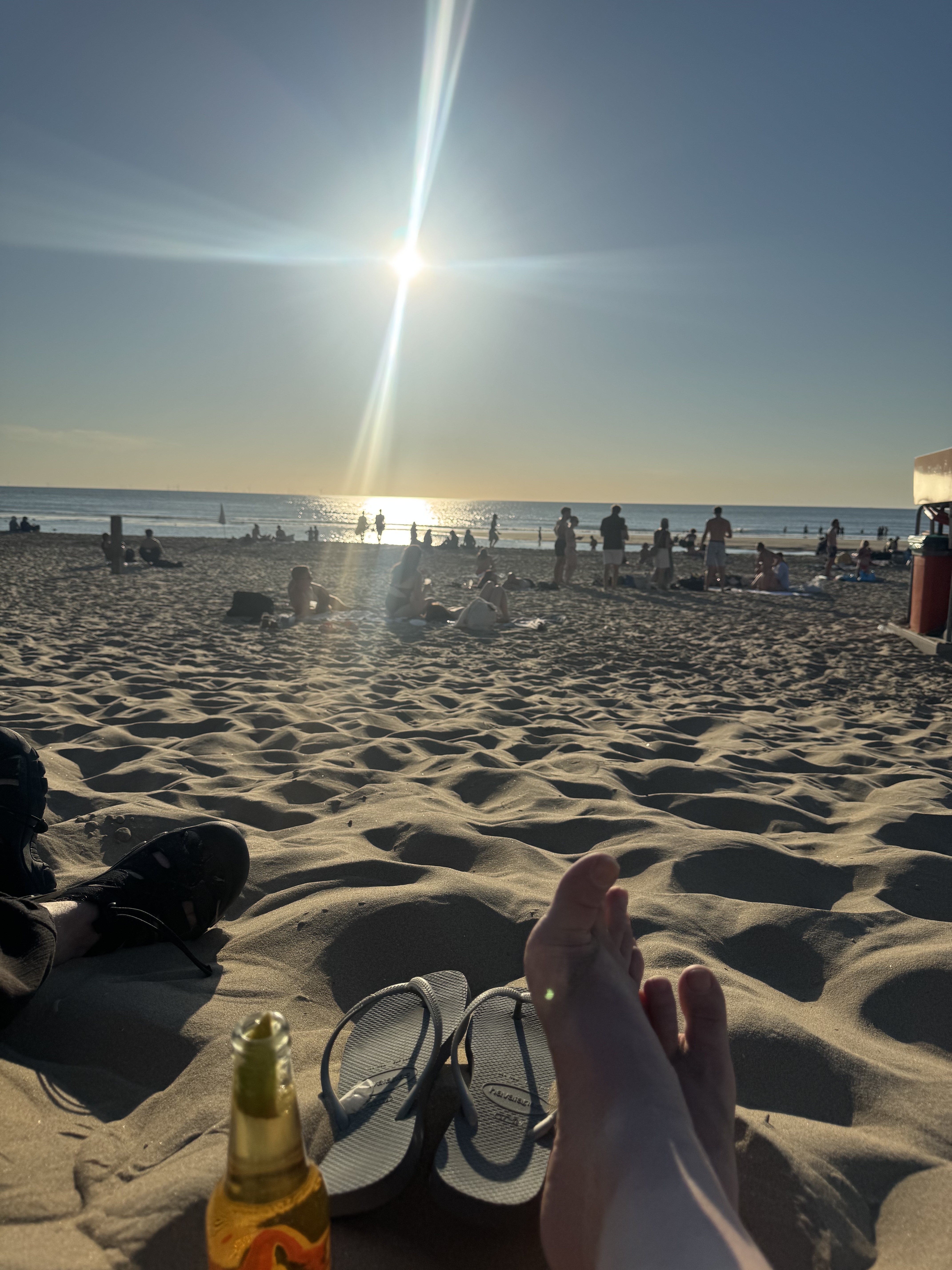
First surprise: the Netherlands has genuinely stunning beaches. Huge sweeps of powdery sand running from the dunes straight into the North Sea. The climate makes them properly usable for approximately nine afternoons a year, which may explain why the Dutch have declined to make this a central plank of the national brand.
We got one of the nine.
Past me had also had the unusual foresight to book a cabin near the coast and buy eclipse glasses back when they weren’t €20 a pair and being traded with the intensity normally reserved for Taylor Swift tickets and Class A drugs.
We took a couple of bottles of Sol down to the beach, which I’m going to present as thematic intent rather than the consequence of the bar offering a choice between that and Heineken.
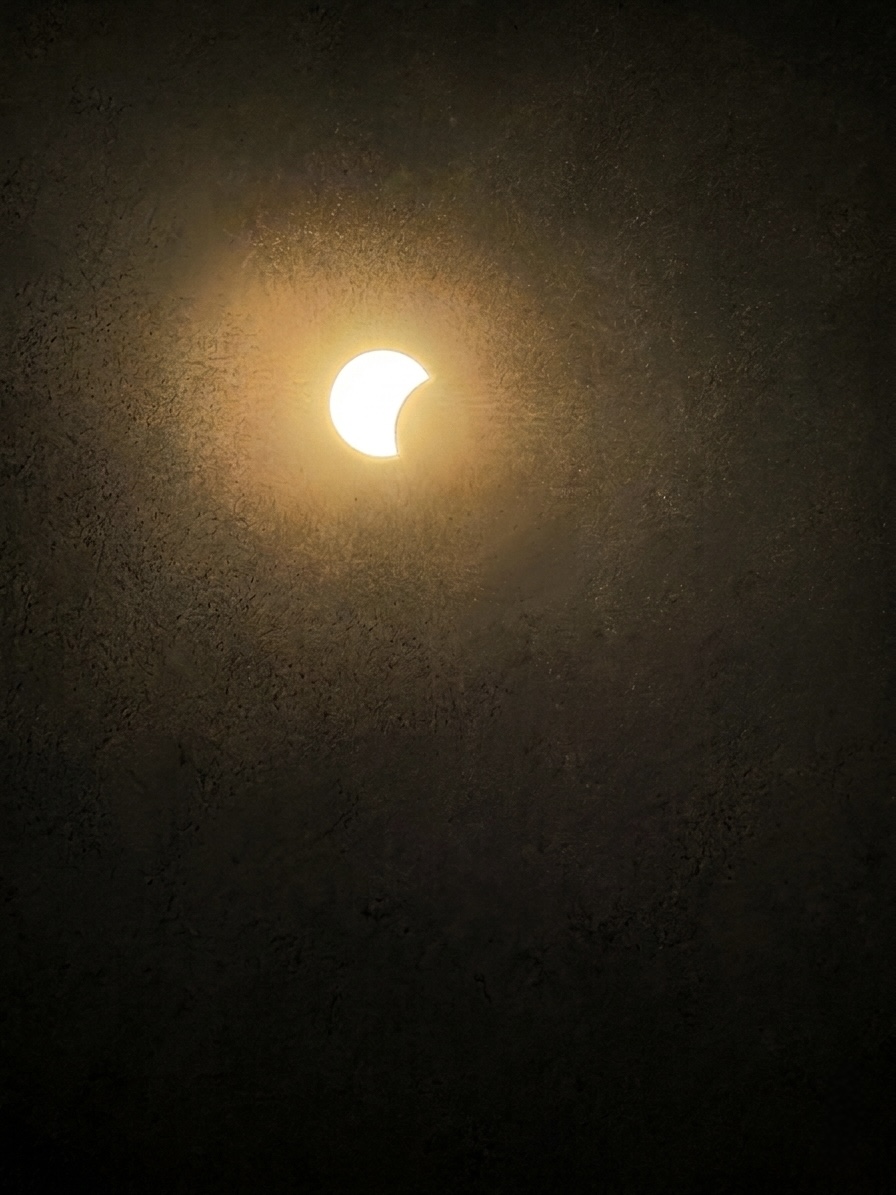
At around quarter past seven, through the cardboard glasses, the first bite of the moon appeared at the edge of the sun. Then, very slowly, it ate it.
There’s something profoundly weird about watching celestial mechanics happen in real time. You know perfectly well that the moon goes around the Earth and the Earth goes around the sun. You have presumably known this since primary school. But normally this knowledge sits in the same part of the brain as plate tectonics and the existence of Belgium: accepted as fact, rarely requiring direct confrontation.
Then you watch one enormous object physically move across another and suddenly the solar system stops being a diagram.
What I couldn’t get my head around was the arithmetic of it. The moon is enormous. The sun is so incomprehensibly much more enormous that the comparison is barely useful. And yet from one particular patch of Dutch sand, because of an absurd coincidence of distance and geometry, they looked almost the same size.
At the peak, 88 per cent of the sun was covered. It barely got dark.
That was the bit that broke my brain. You can remove nearly nine-tenths of the thing and the remaining sliver is still bright enough for the world to carry on more or less as normal. The sun, it turns out, is quite a lot of sun.
Later that night I lay in a hammock in the Kennemerland dunes waiting for the Perseids.
The advice for watching a meteor shower is blunt: no screens. Your eyes need around twenty minutes to adjust properly to the dark, and one glance at a bright phone sets you back. This isn’t mindfulness. Nobody is asking you to reconnect with your authentic self or purchase a journal. It’s optics.
So the phone went away.
I live in a well-lit city centre and almost never see stars. Properly see them, I mean. Give your eyes enough darkness and they just keep arriving. A handful becomes dozens, then hundreds, then an absolutely unreasonable number of them.
And having spent the evening staring through cardboard at our sun, I suddenly couldn’t stop thinking about what I was actually looking at.
Every one of those pinpricks is another sun.
Not a decorative light. Not a white dot conveniently provided as background scenery. An actual star: vast and violent and burning away at an incomprehensible distance, reduced by that distance to something I could cover with the tip of my finger.
Then every so often something would tear across the whole lot. A Perseid lasts perhaps a second. A streak, sometimes a flash of colour in the tail, and gone before you’ve quite finished registering it. We’d wait in the dark for another, talking quietly, then one of us would suddenly shout there at a piece of sky the other person was inevitably not looking at.
There are worse ways to spend a night.
I lay there thinking about the scale of all of it: the sun we’d watched disappear behind the moon; the other suns scattered above us; the tiny bits of comet burning up overhead; us underneath, temporarily occupying a couple of hammocks on a sand dune beside the North Sea.
The universe is offensively large.
I found this wonderful.
And then, because apparently even transcendence must eventually become professional development, I realised something mildly embarrassing about my phone.
I’ve written a book about attention and information overload. I talk about this stuff for a living. I know that phones are designed to capture attention. I know that environment beats intention. I know all the arguments.
None of that reliably stops me looking at the bloody thing.
But tell me that one glance at it will ruin my night vision and make me less able to see the meteor shower I came here specifically to see?
Phone in a drawer. For hours. No struggle whatsoever. Turns out I didn’t need better self-control. I needed an immediate and comprehensible consequence.
Design beats willpower. I really, really should know this by now.
Consuming
Two pieces by Oana Leonte, published two days apart, which have been rattling around my head ever since. The first starts with Rick Rubin, who cannot play an instrument or read music, and who told Anderson Cooper that what he’s actually paid for is confidence in his own taste. His contribution to a record is often subtraction: take that out, strip this back, do it again. He has no signature sound because a signature would compete with the judgement.
Leonte uses him to make a distinction I haven’t stopped thinking about: attention is rented; judgement is owned. Attention has to be re-earned every day and returns towards zero the moment you stop feeding it. Judgement compounds. Demonstrate good taste often enough and eventually people trust the verdict — which is why artists at the top of their careers will fly across continents to sit in a room with a man who can’t play a note. They’re not buying his output. They’re buying his judgement.
This is inconveniently at odds with how we measure most things online. We can count impressions, views, followers, clicks and frequency, so we do. Judgement is slower, fuzzier and extremely resistant to dashboards, which means it tends to sit outside the spreadsheet twiddling its thumbs while attention gets all the credit.
Then came part two, prompted by everyone asking how. And she corrects herself: invisibility isn’t the strategy, it’s a by-product. Copy the quiet without the substance underneath it and you’re not cultivating mystique, you’re just a person nobody has heard of. Queen were broke for years being too much for the rooms they were playing. Obscurity is what you pay to get good.
What actually holds is coherence — and here she draws a distinction I’m going to steal wholesale, because half my working life is spent in rooms where coherence and consistency are treated as synonyms. Consistency is surface: same logo, palette, tone, templates, everything governed until no rogue shade of blue can threaten the enterprise. It photographs as discipline and is often just rigidity with a hex code.
Coherence is the sense that the choices belong together, even when they don’t look the same. Consistency asks whether the parts match; coherence asks whether they came from the same place. You can be flawlessly consistent and mean absolutely nothing, which explains an alarming amount of corporate communication.
And then the question I’d put on a poster: would any of this still be standing if you stopped posting tomorrow?
I read all of this while planning a mailing list, a webinar and another run of book promotion, so I’m not claiming any position of moral superiority here. The most coherent thing I did all week was spend several hours in a hammock looking at objects that have existed for billions of years without once publishing a thought-leadership carousel.
Then I came home and wrote about them on the internet. The stars, presumably, remain relaxed about the competition.
Coverage
In.Comms asked five comms pros (including me) whether it’s internal comms’ job to motivate employees. Nobody said yes, which I found reassuring, because we’ve spent far too long accepting accountability for things we have almost no authority over.
Pay. Workload. Leadership. Whether the work itself is any good. Whether your manager is a prick. Motivation is downstream of all of these things, and when they’re not working, asking comms to boost engagement is applying corporate Febreze to a structural problem.
What we can do is help people understand what’s happening, why it matters and where their work fits. What we can’t do is communicate someone into being happy about a job that’s giving them perfectly good reasons not to be. My bit sits alongside Jennifer Sproul, Jo Coxhill, Adeela Warley and Rachel Miller.
Also recorded this week: Jon and I joined Nancy Goebel on DWG’s Digital Impact podcast to talk about designing channels employees actually use — the five layers, why most organisations have a coherence problem rather than a channel problem, and the intranet manager who hit an annual page-view target in 48 hours by leaving fifty browser tabs auto-refreshing.
This is both objectively funny and a near-perfect demonstration of what happens when a metric stops measuring the thing and becomes the thing. Somewhere, a dashboard was green. Everyone could go home.
Out in the autumn, at which point I’ll link it properly.
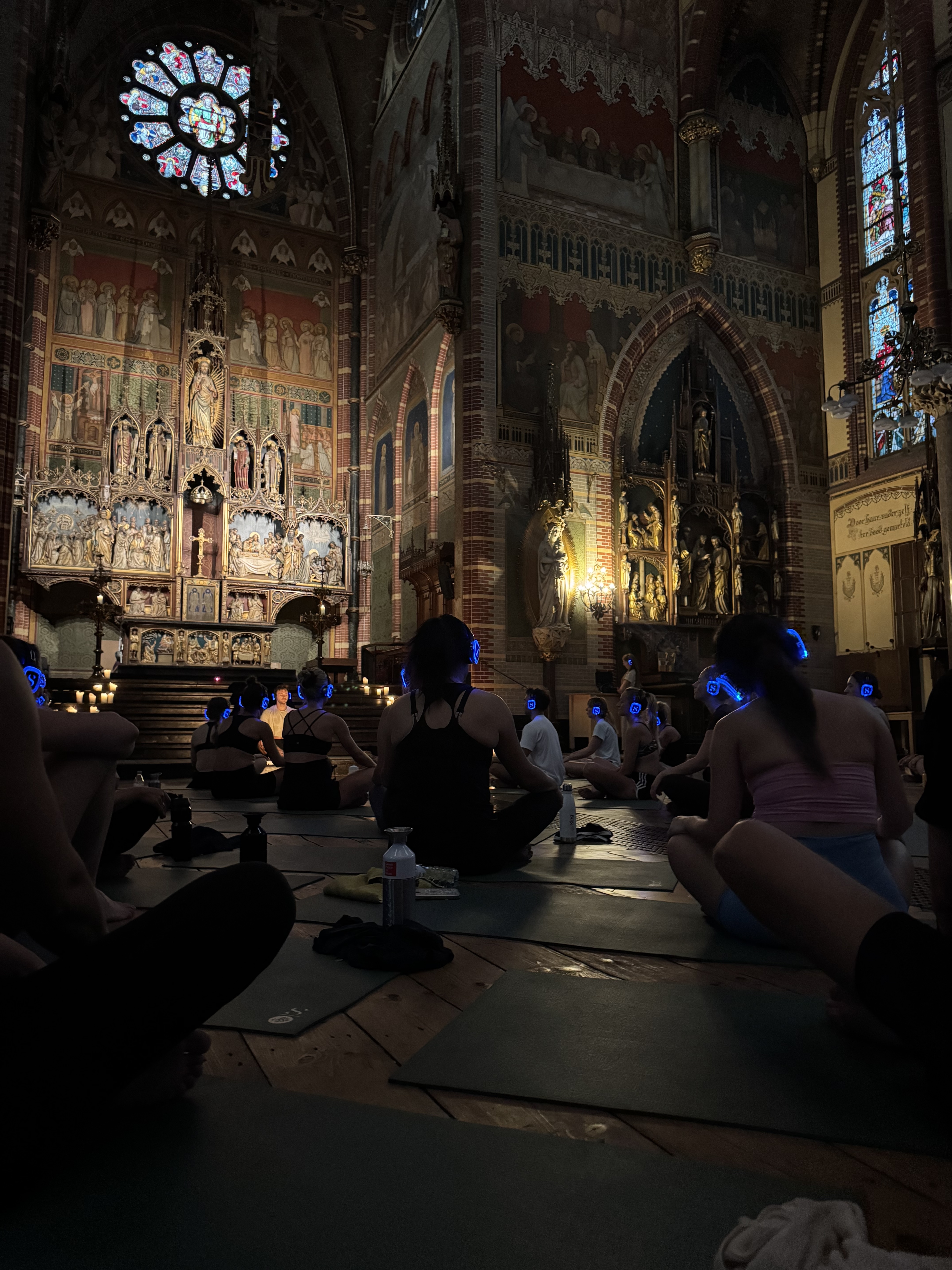
This week in photos



Pingback: Start with Discovery: how to find out what’s actually wrong with your internal comms | Sharon O'Dea