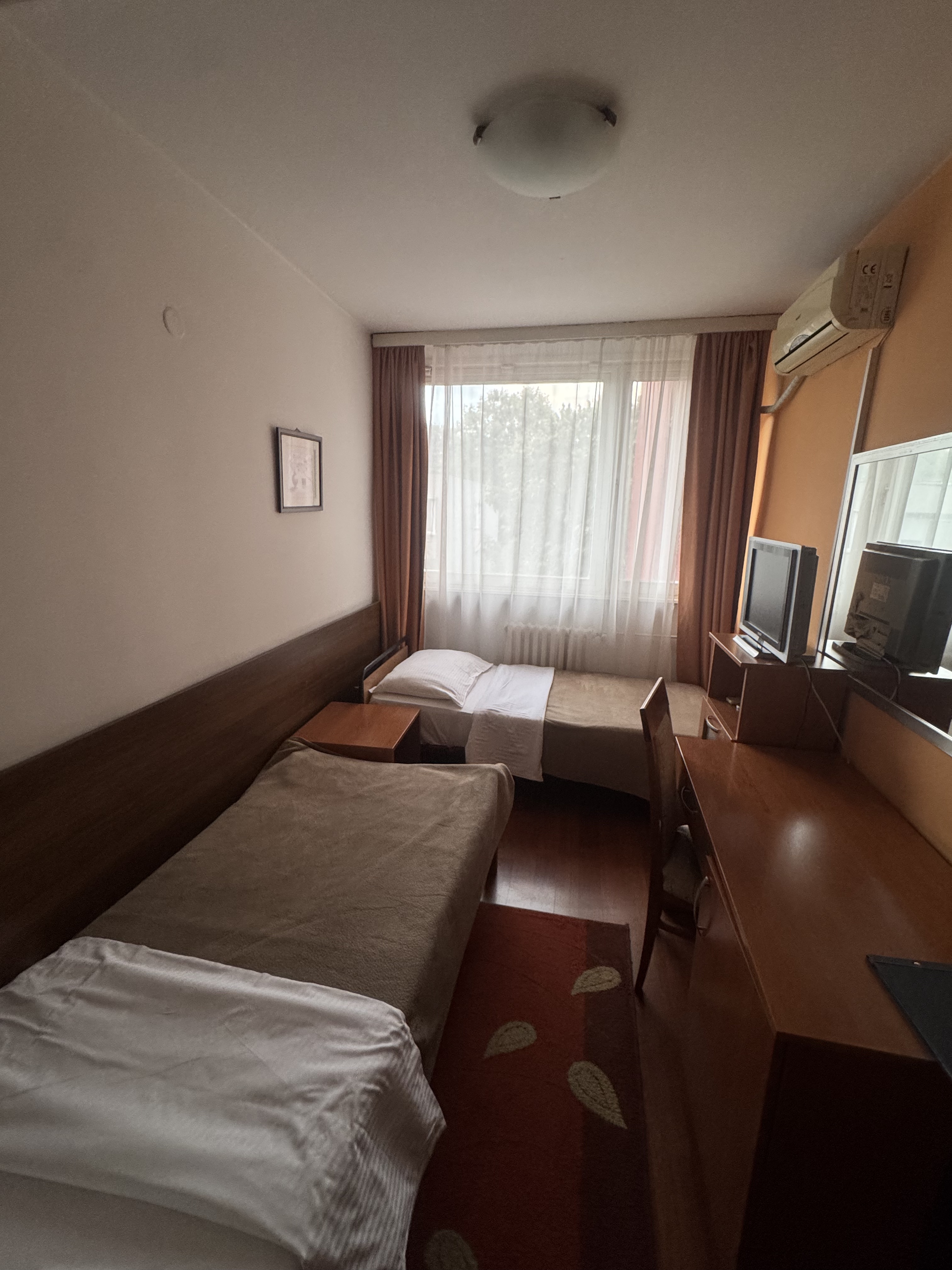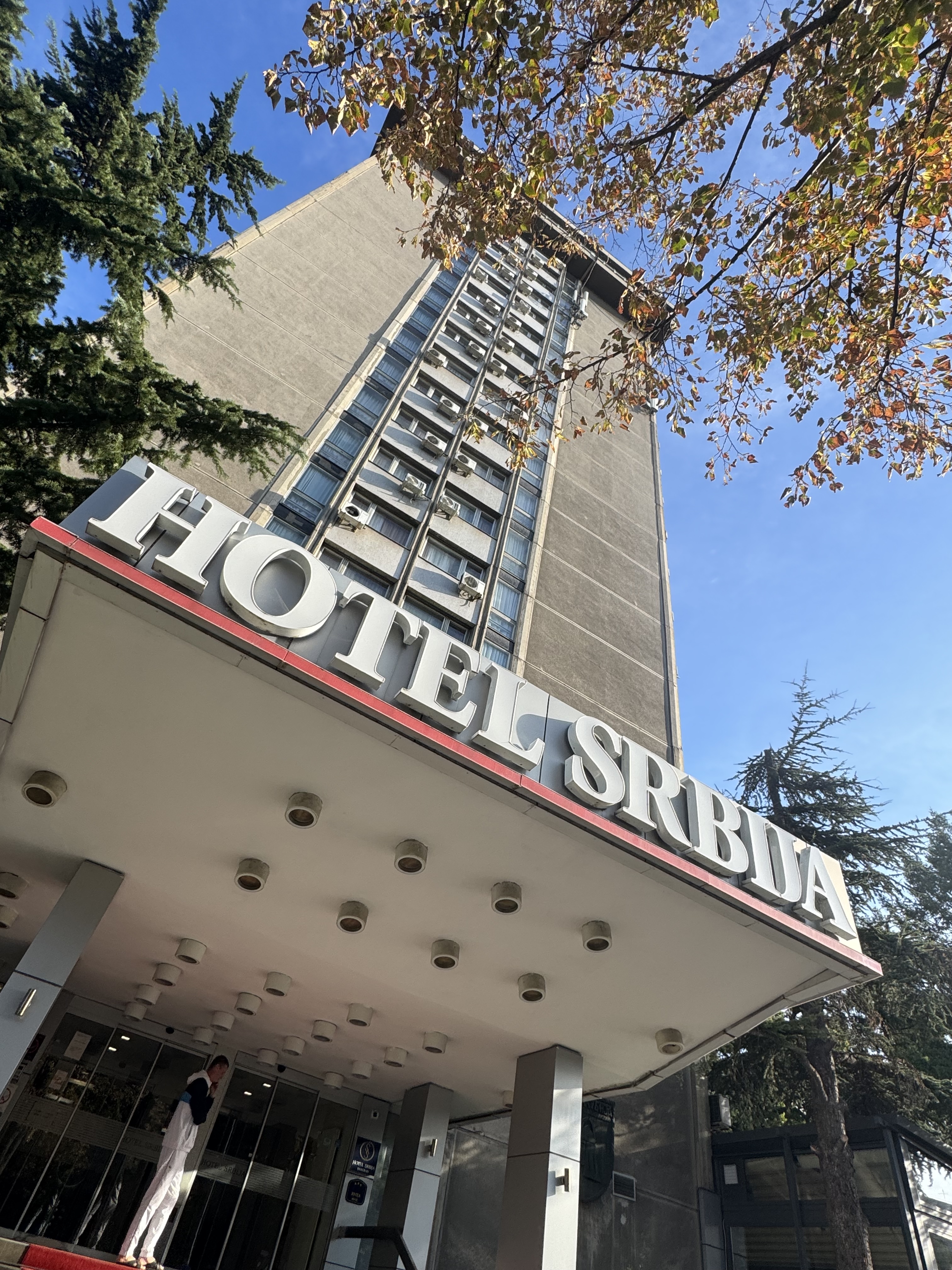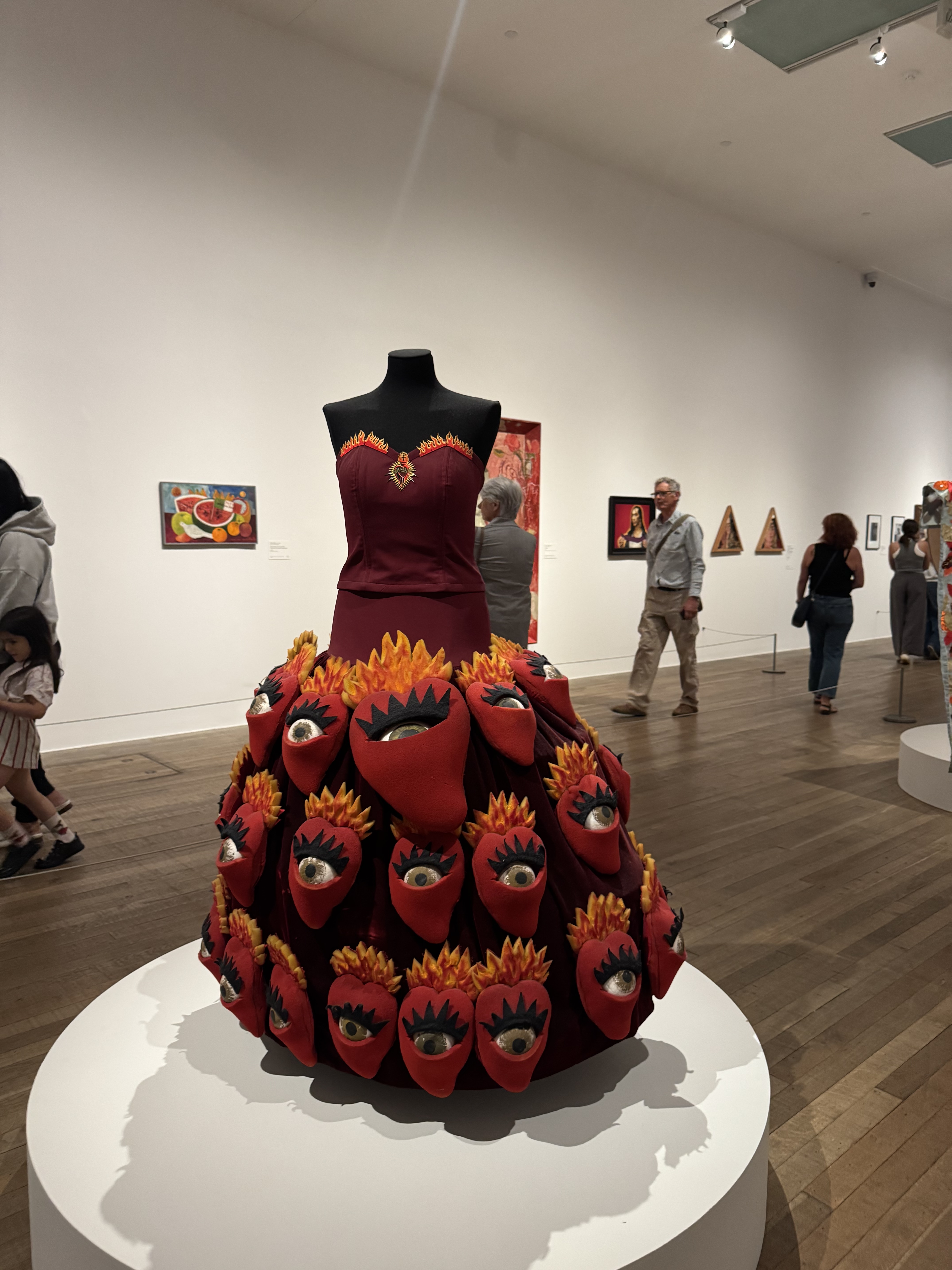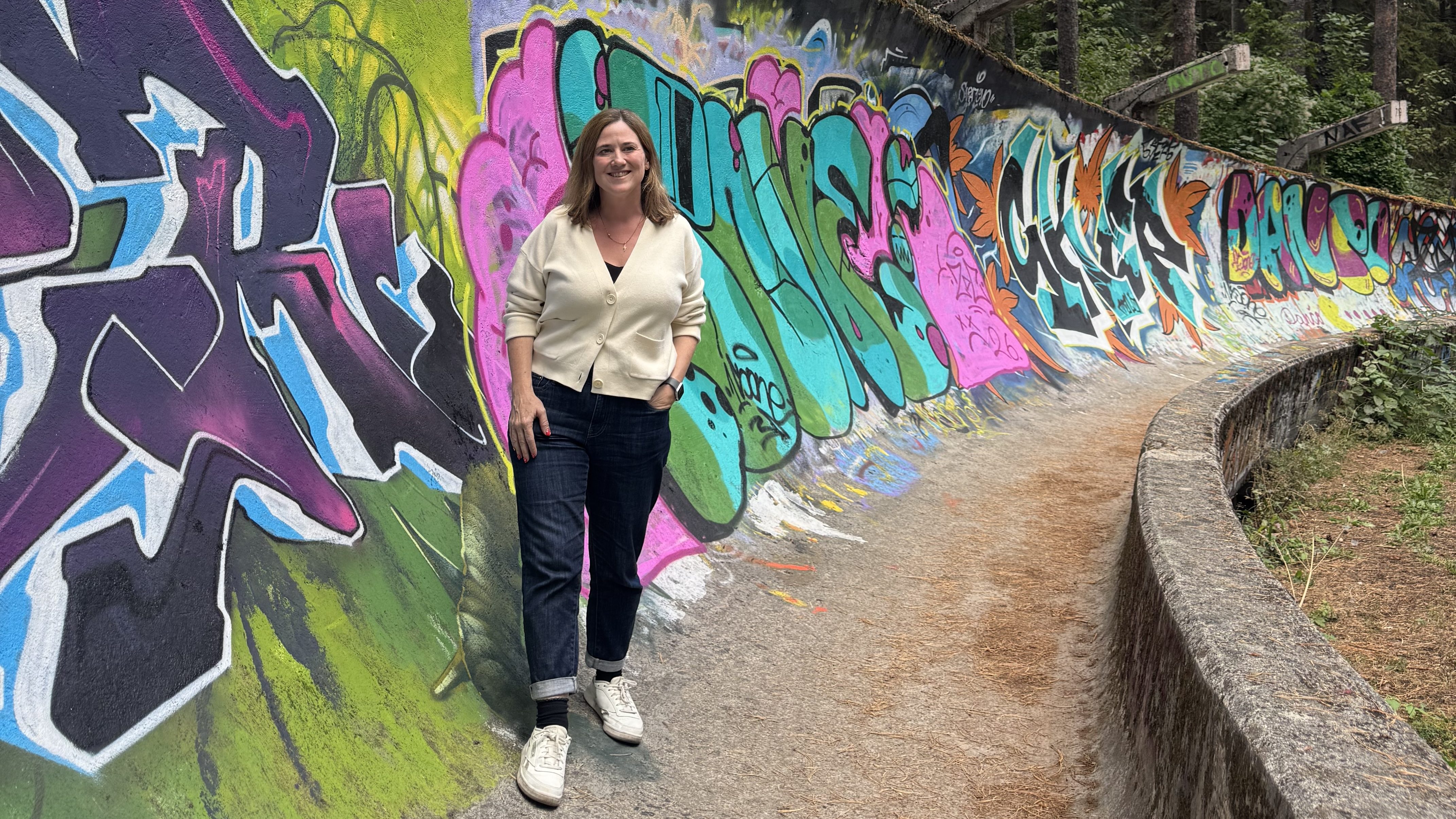
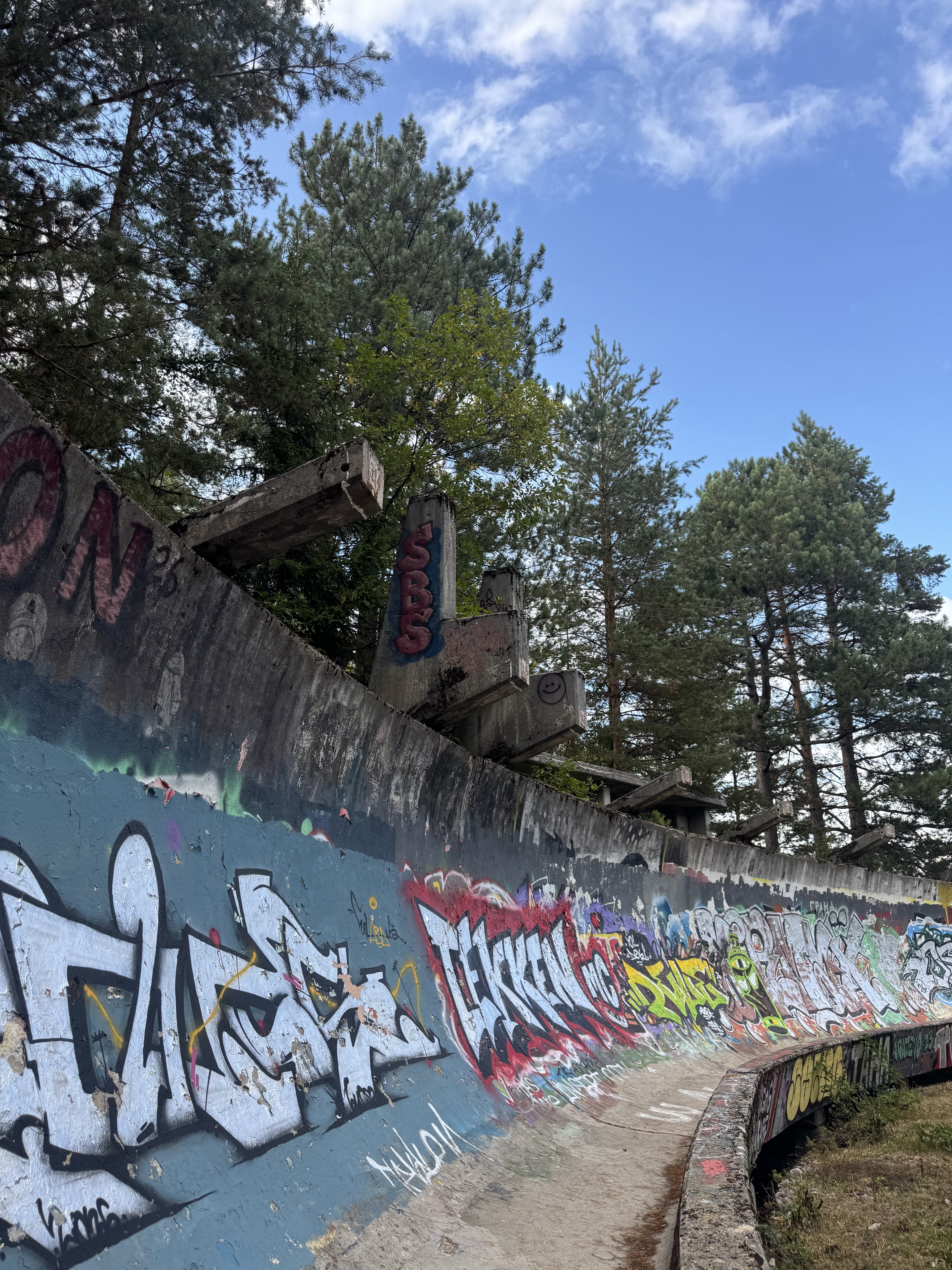
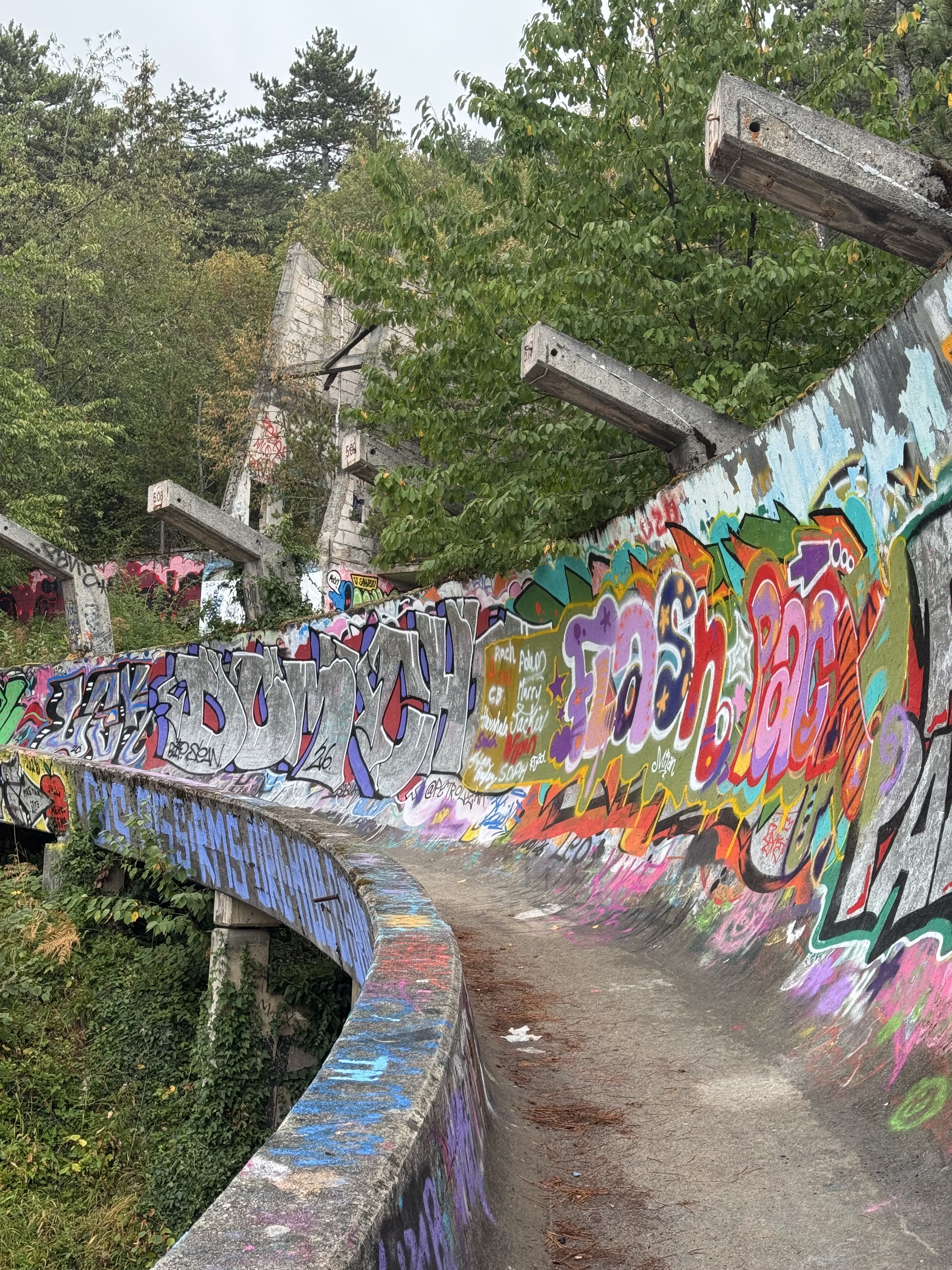
Above Sarajevo, at the top of the Trebević cable car, there’s a bobsleigh track built for the 1984 Winter Olympics. On Tuesday, I skived off work for the afternoon to walk down it.
When it opened, it was state of the art: a triumph of Yugoslav engineering, built for the country’s first Winter Games and beamed around the world as evidence of a modern, confident state that could pull off the technically difficult business of firing people down a mountain on a tiny sled at 80 miles an hour.
And it worked. That’s the important bit.
There was nothing wrong with the track. Nobody had cheaped out on the concrete or forgotten to consult the bobsleigh stakeholder group. It did precisely what it had been designed to do, extremely well.
Eight years later, the country it had been built to showcase was tearing itself apart.
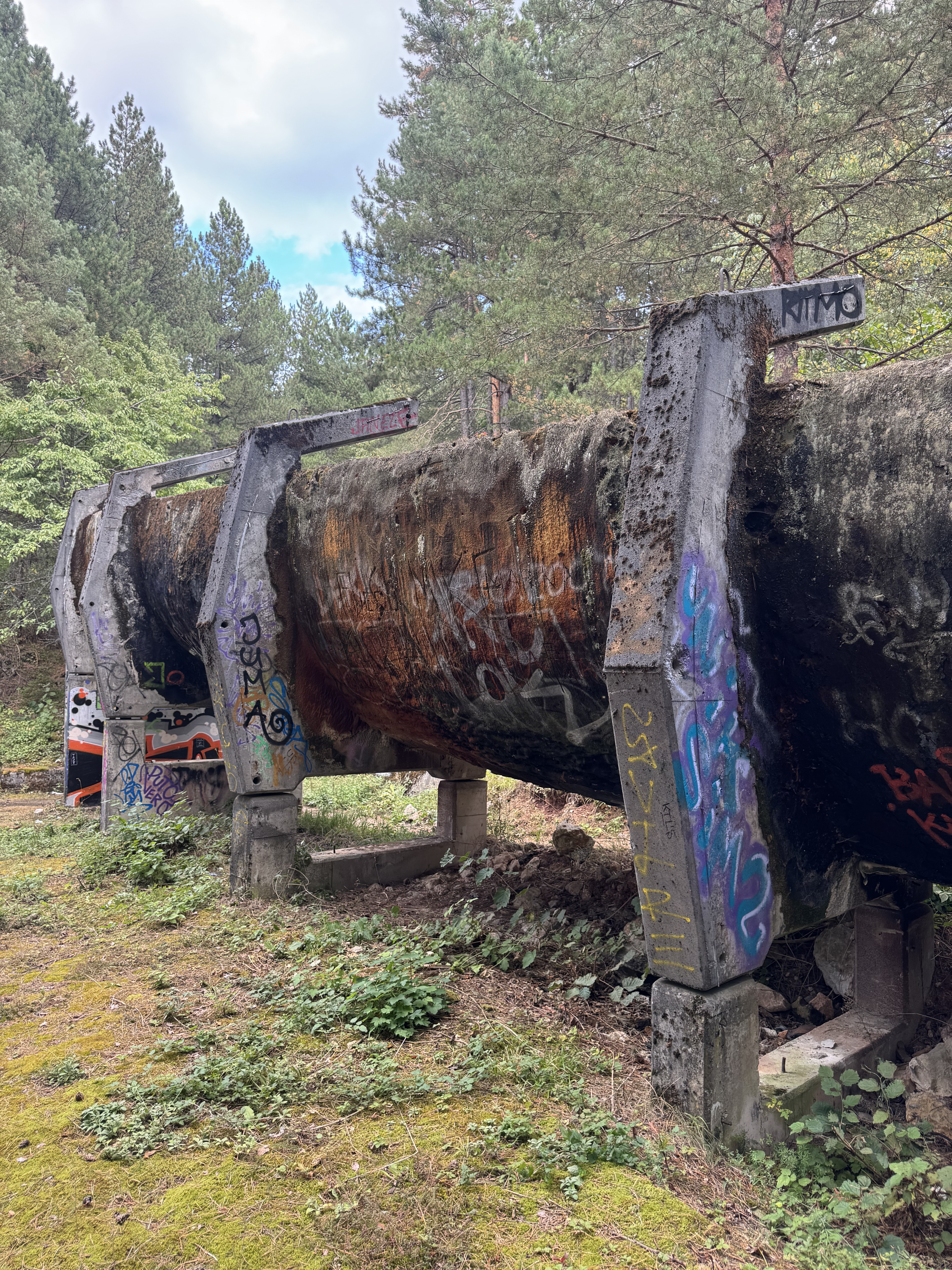
The front line ran across Trebević and the track acquired a rather different use, as an artillery position for the forces besieging Sarajevo. The curves built to shave hundredths of seconds off an Olympic run turned out to offer useful cover in a war. You can still see the bullet holes in the concrete.
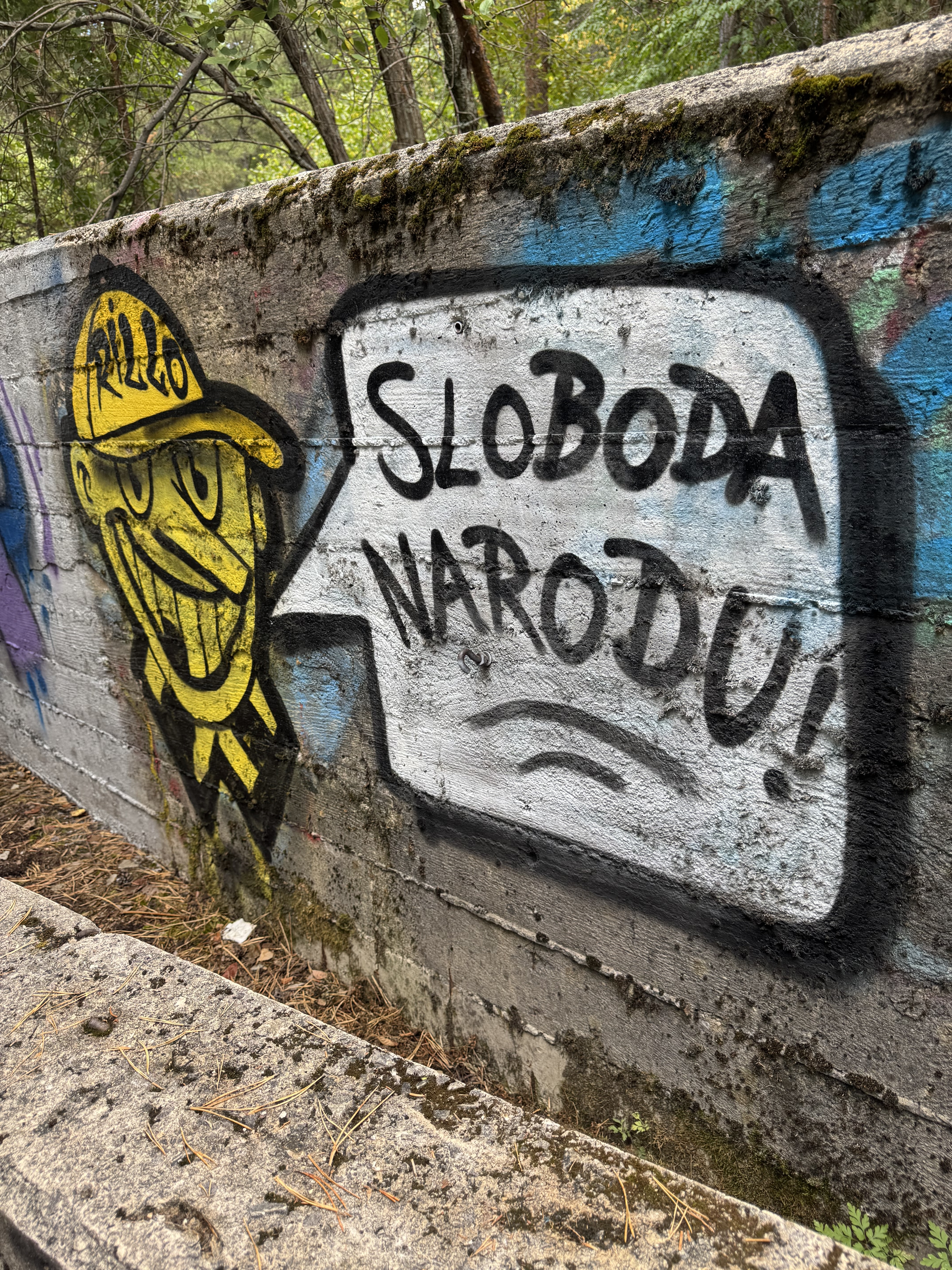
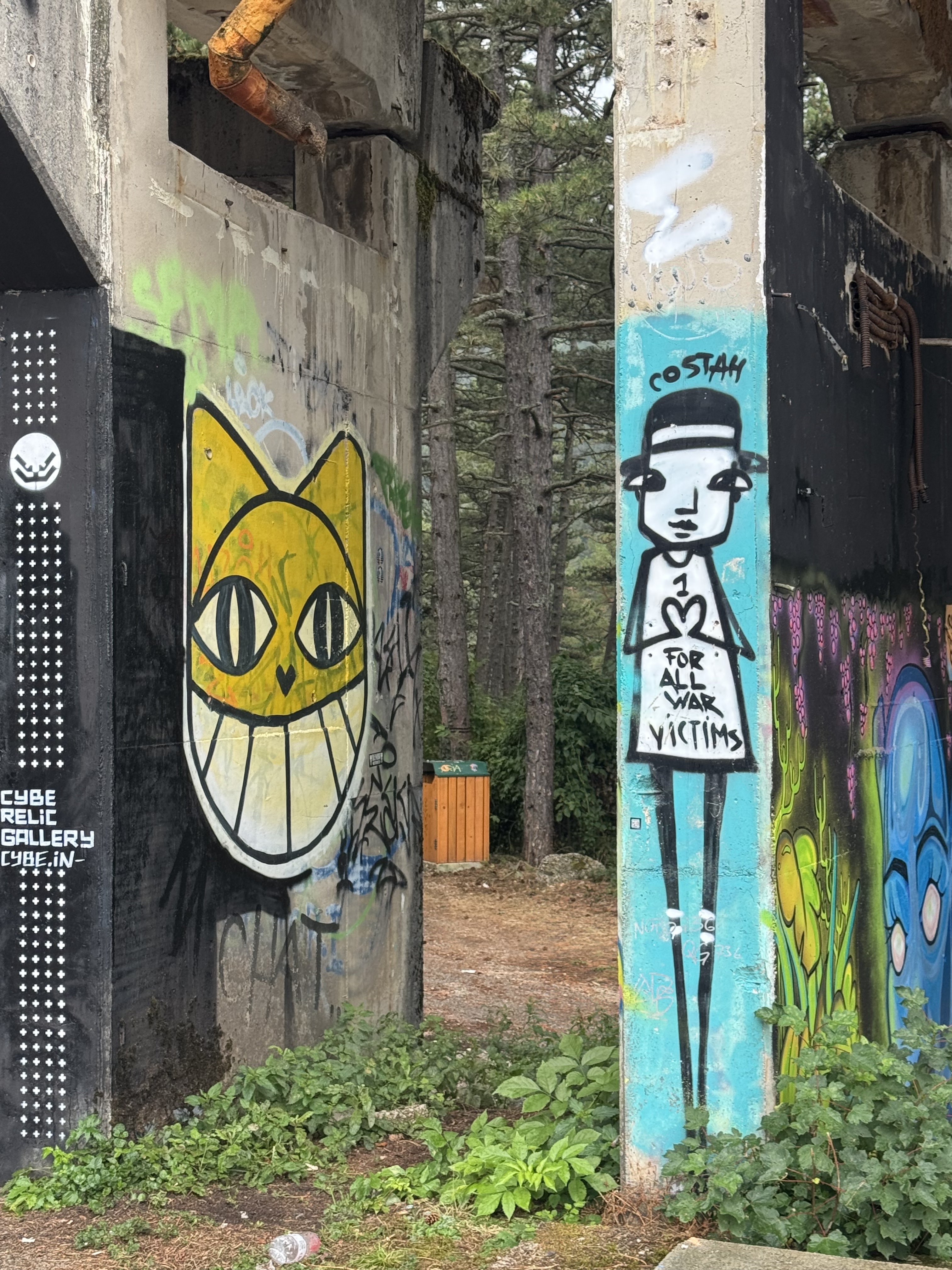
Now it’s more than a kilometre of cracked track curling through the trees. Moss grows over it. Graffiti covers almost every surface, new layers appearing over old ones. People walk it, cycle it, spray-paint it, photograph it. Nobody bobsleighs.
There’s something almost indecently neat about the timeline. State-of-the-art Olympic infrastructure. Artillery position. Ruin. Tourist attraction. All in forty-odd years. Most enterprise software doesn’t manage that many changes of purpose without a rebrand and a licensing review.
The people who designed the track weren’t wrong about what it was for. They just couldn’t design for what happened next.
I’ve been thinking about that a lot this week.
We have a habit of looking at old systems and assuming their current state tells us something about the quality of the original decision. Look at this mess. Who designed that? What idiot thought this was a good idea?
Plenty of today’s messes began as perfectly sensible answers to yesterday’s problems. The organisation changed. The technology changed. People found new routes through it. New requirements arrived; old ones developed the organisational equivalent of squatters’ rights. Somebody added a workaround, then a platform to fix the workaround, then another platform to join up the platforms, and eventually everyone forgot which bit was the workaround.
Nobody sat down with a blank sheet of paper and designed the resulting horror. It accumulated. That’s the bit we tend to miss. We judge inherited systems as if they were commissioned yesterday in their current form, rather than deposited gradually, layer by layer, by years of individually defensible decisions. Organisational geology.
Eventually you end up looking at something nobody would build today and wondering which idiot designed it like that.
Quite possibly, nobody did.
The bobsleigh track certainly wasn’t badly designed. It was exceptionally well designed for a world that ceased to exist.
This week at work
We kicked off a discovery with a new client this week. Their channel mix has grown the way most do: one thing at a time, each added for a perfectly good reason, almost nothing ever taken away. No villain. No single terrible decision. Just years of reasonable people solving the problem immediately in front of them until, collectively, they’ve created something nobody would ever design from scratch.
It works, sort of. It’s just not designed for what comes next.
Discoveries are my favourite kind of work. Many projects start with an answer: build this, launch that, write the strategy. A discovery starts with a question, and you’re being paid to take it seriously. You get to look at the platforms and the data, then at how people actually find things rather than how the org chart, governance deck and person who bought the software insist they do.
You nearly always find the thing that wasn’t in the brief.
That’s usually the thing that makes the difference..
Obviously I would say bringing in an outsider is a good idea. I run a consultancy. Please apply the appropriate discount for vested interest. But hear me out.
People inside an organisation have learned the routes. They know which channel really means it, which folder contains the actual version, which search result to ignore, and who to ask when all three fail. This knowledge is hard-won, enormously useful and almost completely invisible to the people who have it. After you’ve stepped over the same loose floorboard every day for five years, you stop thinking of the floor as broken.
An outsider walks in and immediately trips over it. That’s useful intel.
We can ask the obvious question without looking daft. We have no emotional attachment to the SharePoint site somebody spent eighteen months getting approved. People tell us things they’d never say in the meeting where its owner is sitting three seats away. And because we’ve looked inside a lot of organisations, we can tell a problem peculiar to you from one that practically everyone has.
It’s usually the second, which people find oddly reassuring.
Timing matters too. The moment to look is before the next thing gets added: the new platform, the new app, the new channel promising to tidy up all the other platforms, apps and channels. This is the workplace technology equivalent of buying another storage box because the cupboard is full.
You have not solved the storage problem, you have simply purchased more storage problem.
Another big piece of work this week sits at the opposite end of the lifecycle. This organisation’s intranet is relatively new. The paths are still clean and not many people have wandered off them yet. They’ve asked for advice on structure now, before it grows, which is rarer and smarter than it sounds.
Most organisations only ask for directions once they’re lost.
Partly this is for the humans. Increasingly, though, it’s for the machines.
Everyone wants AI that can answer staff questions. Fine. But the answer will only ever be as good as the information the machine is pointed at. Clear structure. A named owner on every page. A date somebody last checked it. An agreed source of truth, rather than six documents called FINAL_v7_USE_THIS_ONE.
None of this is sexy. Nobody is putting “we know who owns the expenses policy” on the keynote stage at an AI conference (but if you really want to, you know where I am). For years we’ve called it housekeeping, which is perhaps why organisations have been able to avoid doing it with such determination.
Now it’s AI infrastructure.
People eventually learn to stay on the paved path. They know Dave’s folder is ancient, that the policy on the old intranet is only there because nobody has the permissions to delete it, and that “FINAL” is, at best, an expression of optimism.
An AI assistant has none of this institutional scar tissue.
It will cheerfully wander off-trail, find the 2019 expenses policy in a folder everyone else knows to ignore, and read it back to you with the serene confidence of something that will never personally have to explain the rejected claim.
Also this week
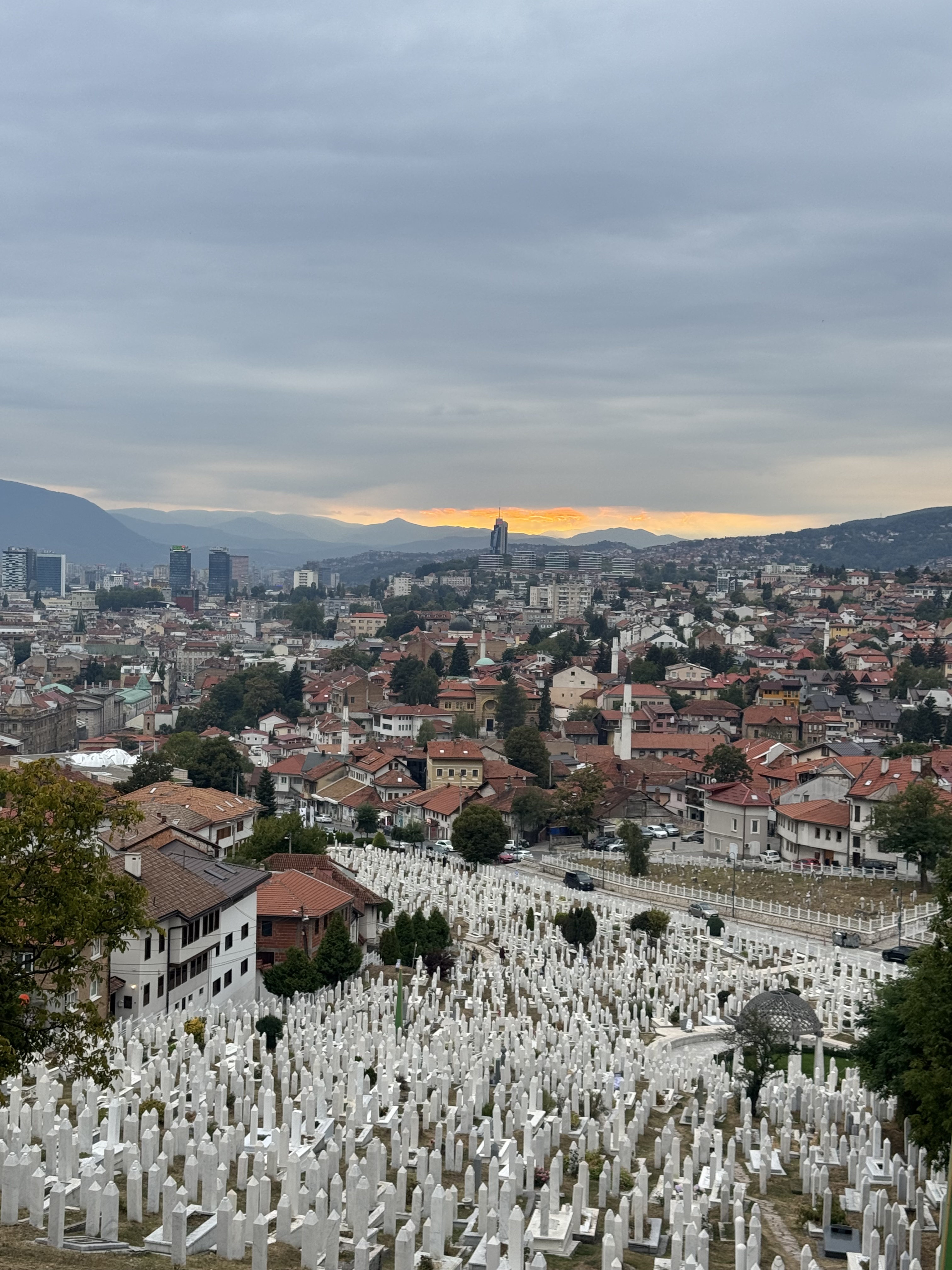
Bosnia: Mostar, then Sarajevo. Country 93.
I was eleven when the war began and fifteen when it ended, which means Bosnia occupies a very particular bit of my mental filing system: the evening news of my childhood. Sarajevo was one of those place names I knew long before I had any idea where it actually was. Mostar. Banja Luka. Srebrenica. Snipers. Siege. UN peacekeepers in blue helmets looking variously concerned.
Occasionally the war escaped the television and turned up at school, when a new kid with little English arrived from a place I’d previously only heard about from a man standing in front of some rubble on the Six O’Clock News.
Thirty-odd years later, I went to five museums about it in three days. This is, even by my standards, quite a lot of museum-based misery.
Three were in Mostar: the Museum of War and Genocide Victims, the War Photo Exhibition and the Mandate of Memory. Two were in Sarajevo. Much of what they showed looked exactly as I remembered it: grainy and grey, all mud and smoke and rubble, filmed from a distance or shot through a long lens. War as it arrived in a British living room in the 1990s, somewhere between John Major’s cones hotline and the nation’s apparently endless wait for Wet Wet Wet to relinquish the number-one spot.
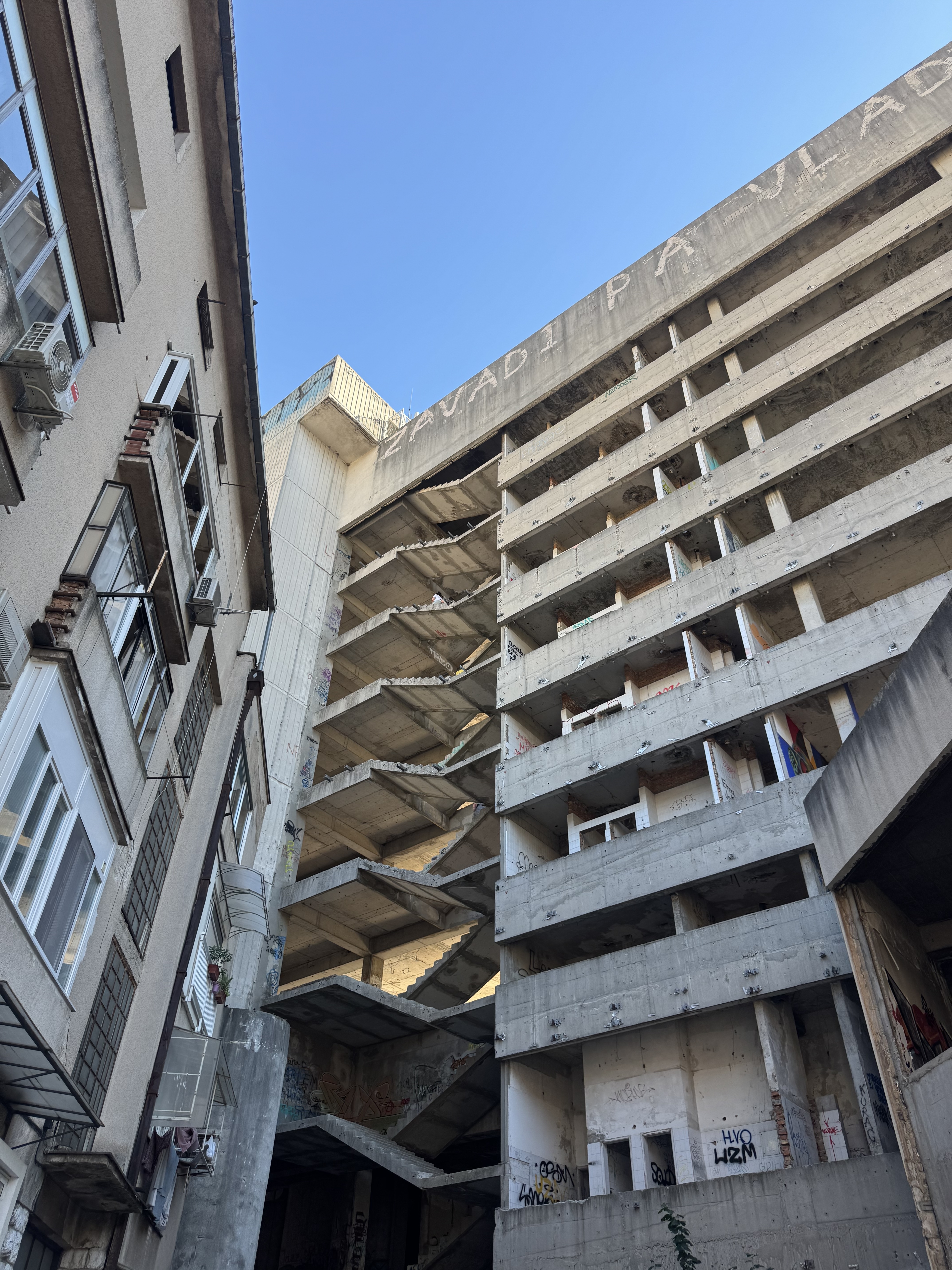
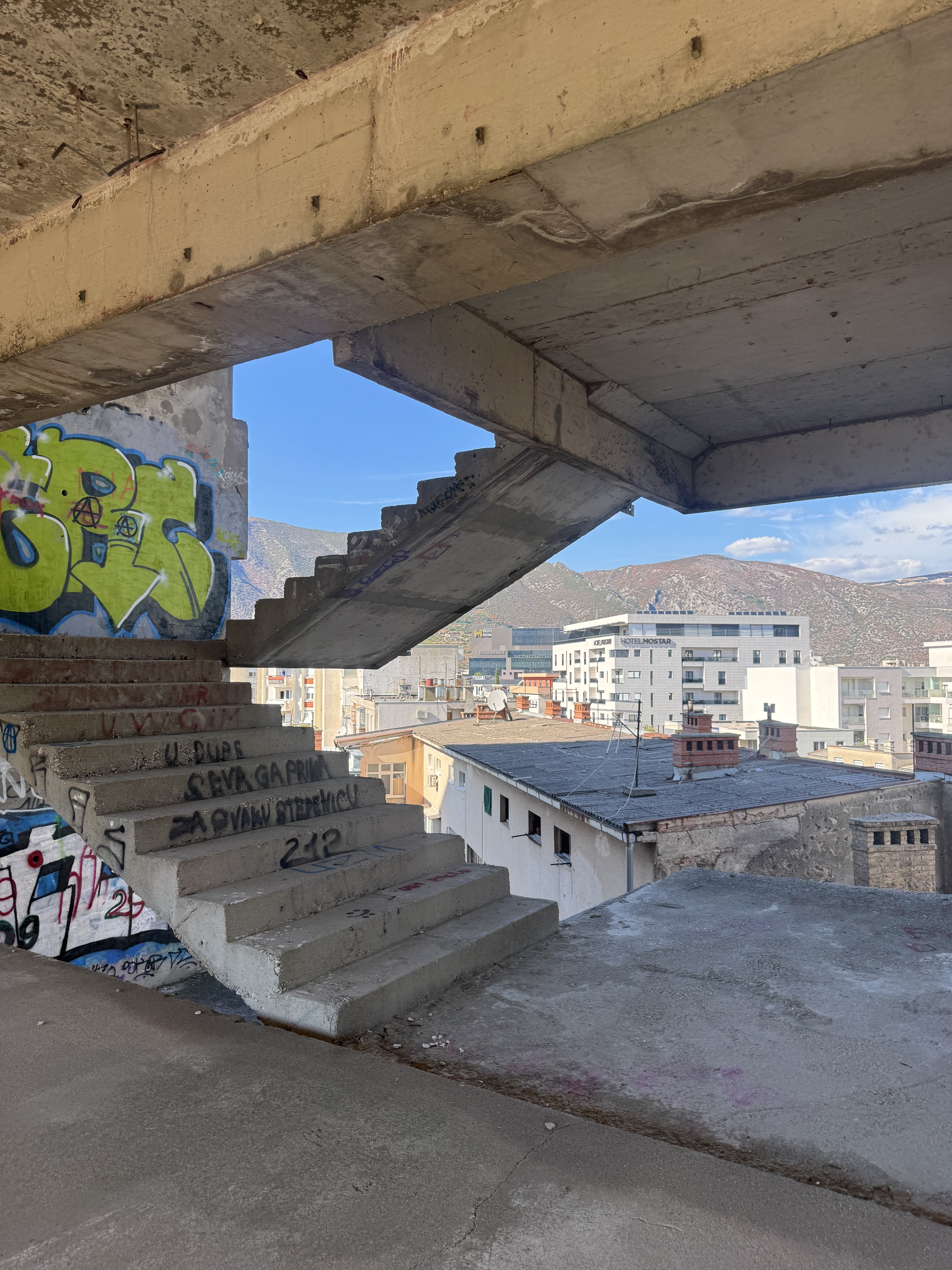
Then, early one morning in Mostar, before the day trippers arrived, I squeezed through a gap in a fence and climbed the old sniper tower.
It wasn’t built as a sniper tower. It was a bank.
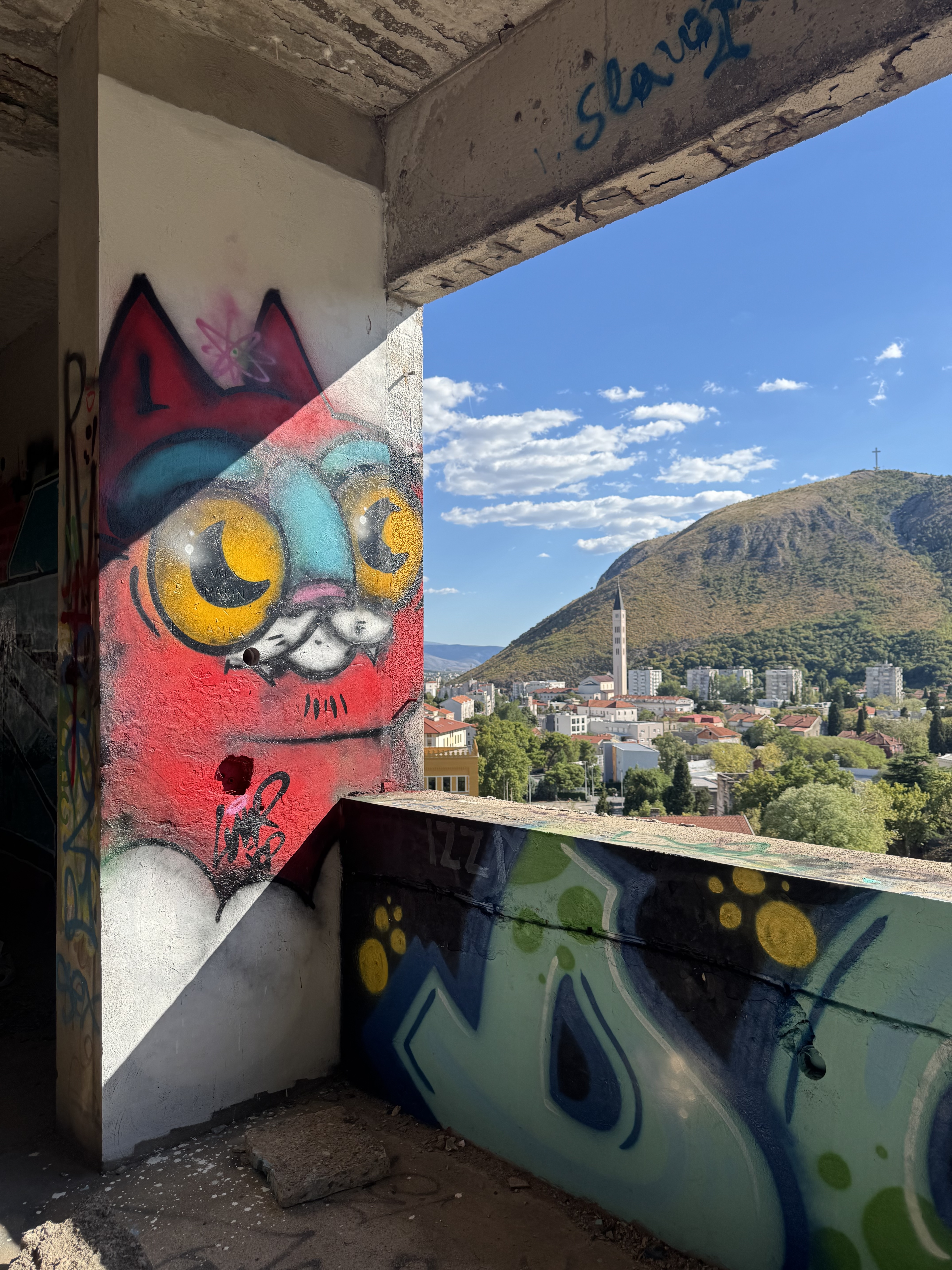
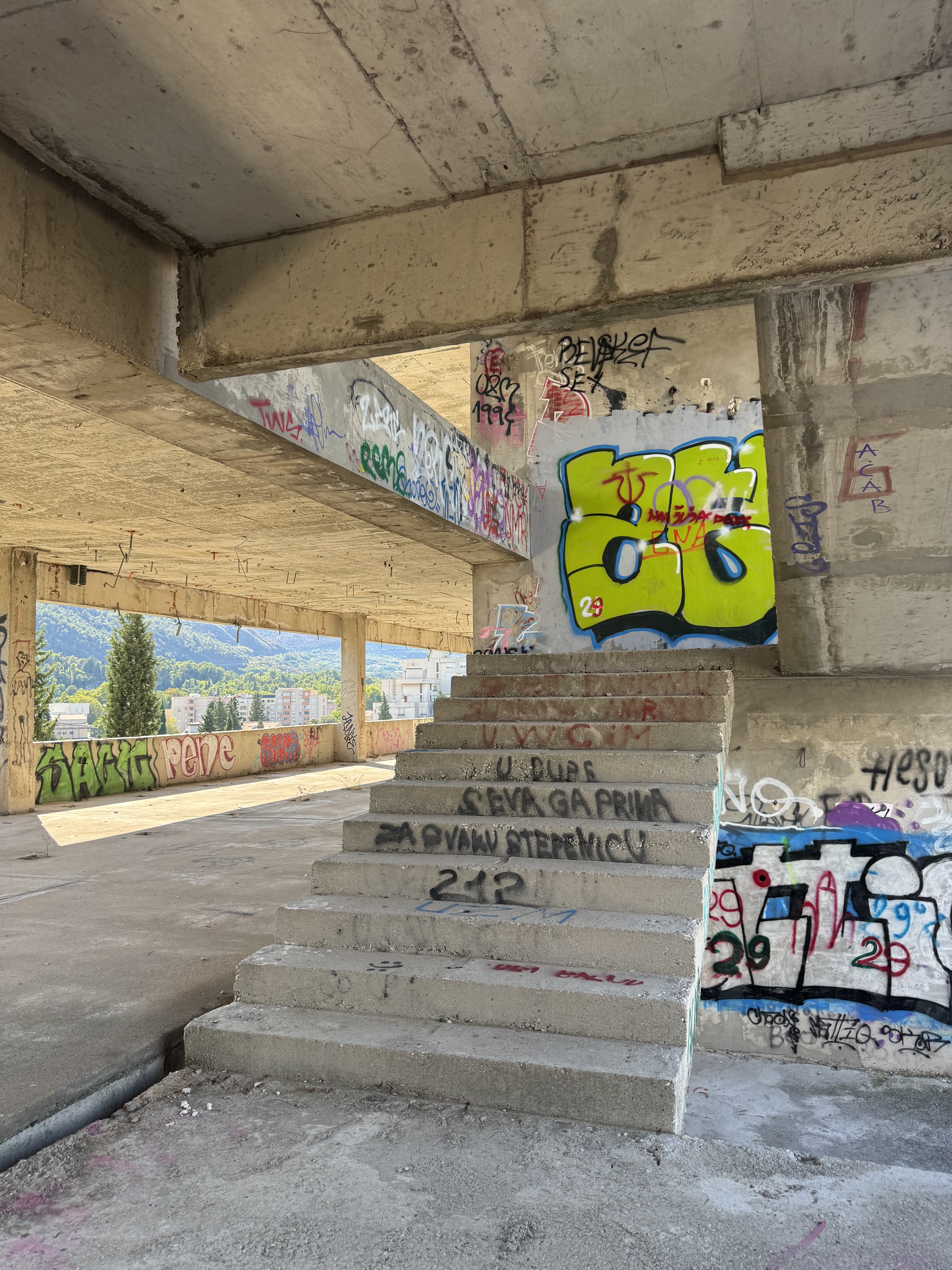
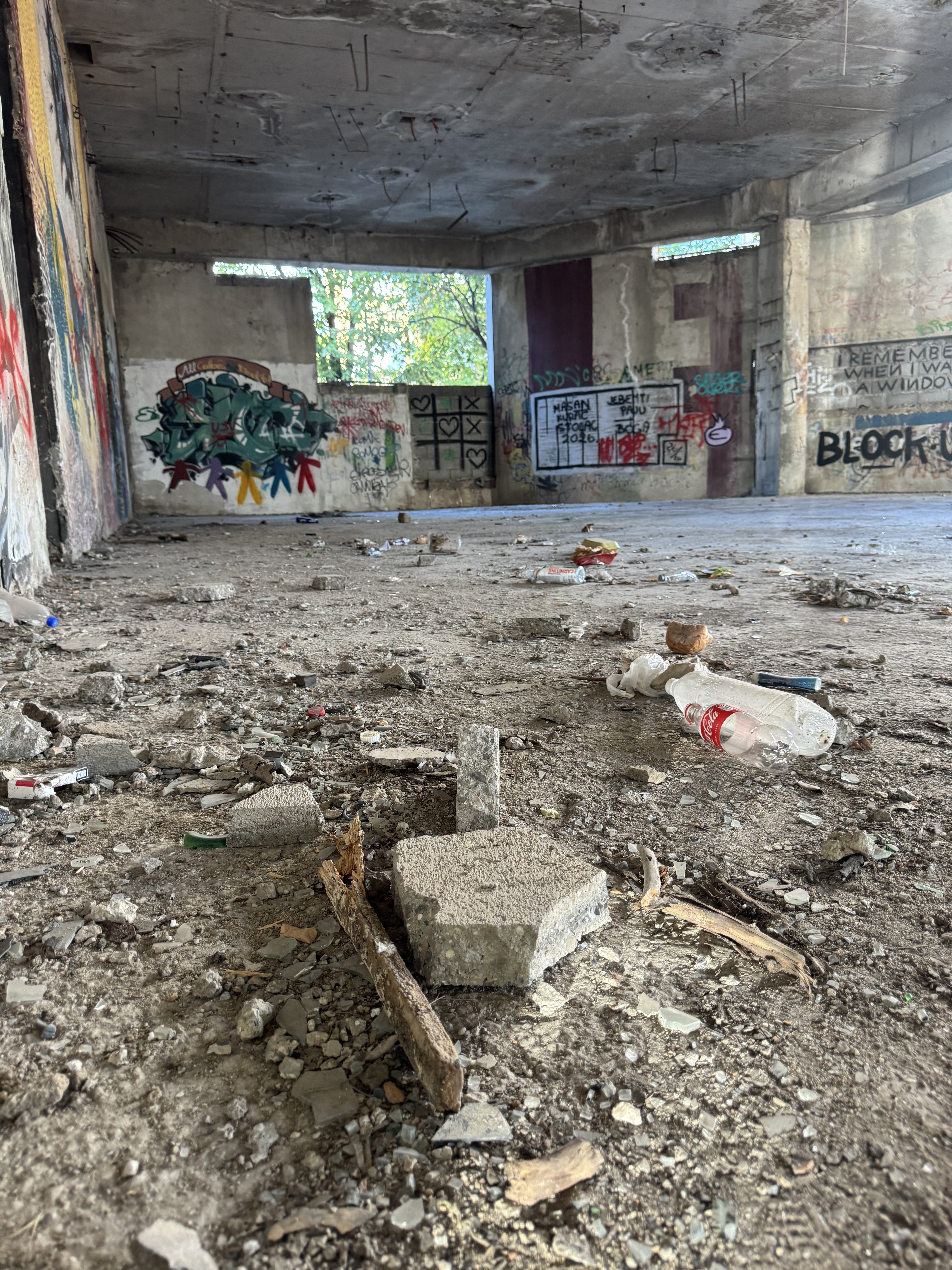
The Ljubljanska Banka building was a modern office block on what became the front line, tall enough to command a view across the city. During the war, that made it useful for something its architects presumably hadn’t included in the requirements.
Today it’s a shell: cracked concrete, exposed floors, bullet holes, broken glass. No reassuring visitor-centre arrows telling you where to stand or laminated panel explaining what you’re looking at. Getting in involves climbing through a hole in a fence, which is generally a fairly reliable indication that your travel insurer would prefer you didn’t. Mostly, these days, it’s where people with nowhere else to go end up sleeping, and using.
The whole building is covered in graffiti now. Huge, lurid, constantly changing graffiti, in colours the footage never had. At the top there was nothing between me and a perfectly clear blue sky.
I stood where the guns had been and looked down at the streets I’d watched on the news, on a beautiful sunny morning.
It was troubling in a way I still haven’t quite found the words for. Perhaps because the pictures in my head had always been grey. History had helpfully stayed there, in the grainy footage, where I’d filed it. Finding the same streets sitting under a blazing blue sky, full of people drinking coffee and going to work, made the distance between something that happened on television when I was a child and something that happened to actual people in this actual place collapse rather abruptly.

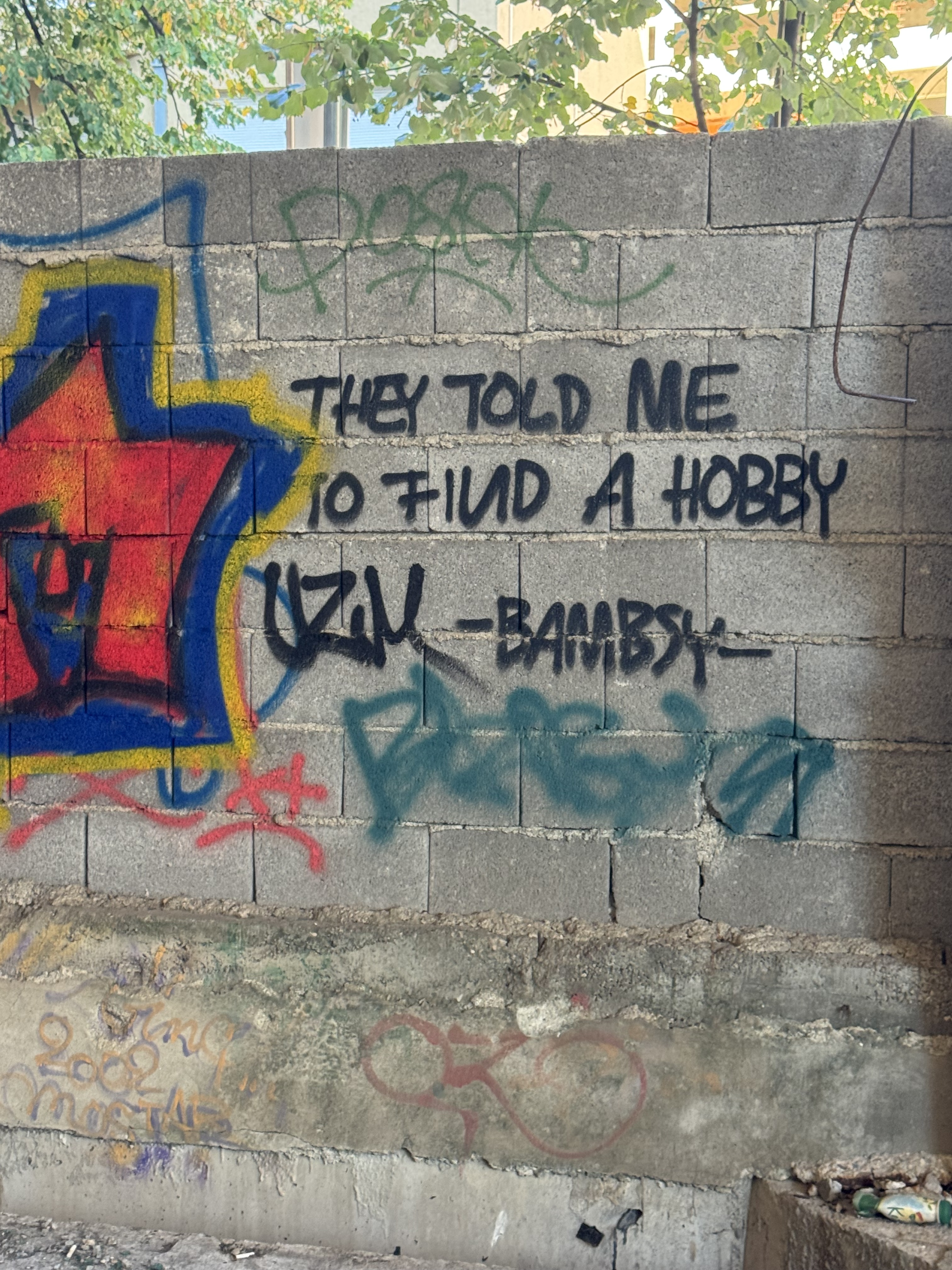
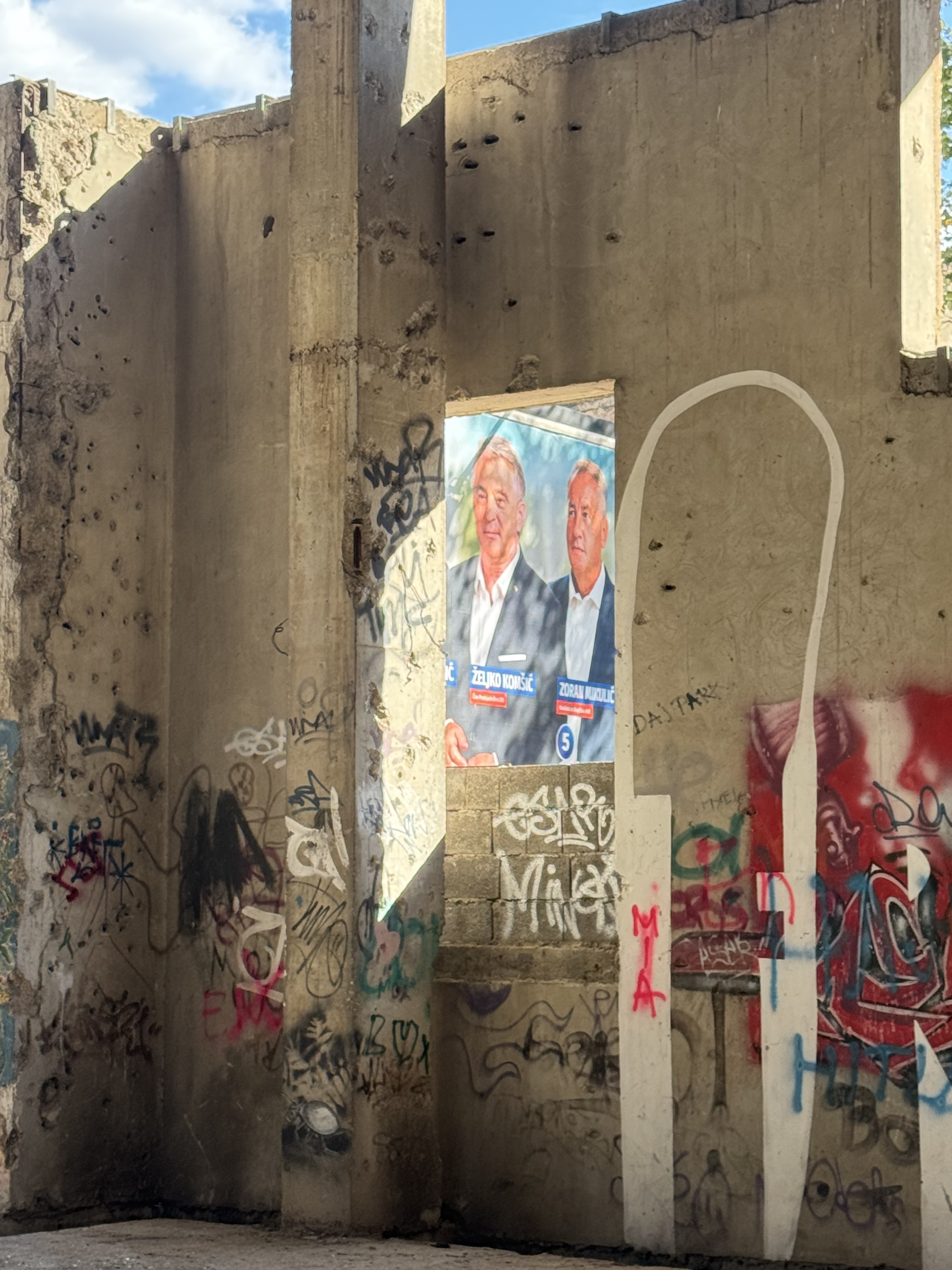
Sarajevo kept doing this to me.
The War Childhood Museum is built around objects donated by people who were children during the war, each accompanied by a few lines of their story. No grand sweep of military history. No arrows moving across maps. Just the stuff children had.
Amina was born in 1980, the same year as me. For her thirteenth birthday, in 1993, her friend Jelena made her a soft toy out of old clothes, because you couldn’t just go to a shop and buy a present. They were both too old for toys by then, Amina wrote, but she kept it somewhere she could see it. Its bright colours made the war days more beautiful.
I turned thirteen in 1993 too. I couldn’t tell you what I got.
I was holding it together until the binder clip.
Damir was younger, born in 1986. One summer he got hold of a permanent marker, which gave him a certain status among his friends. His friend Mirnes, a year older, offered to swap it for a binder clip, the way their parents swapped a bag of flour for a lamp. Before handing the marker over, Damir used it one last time to draw a smiley face on the clip.
Mirnes died a few years later.
That’s when I started crying.
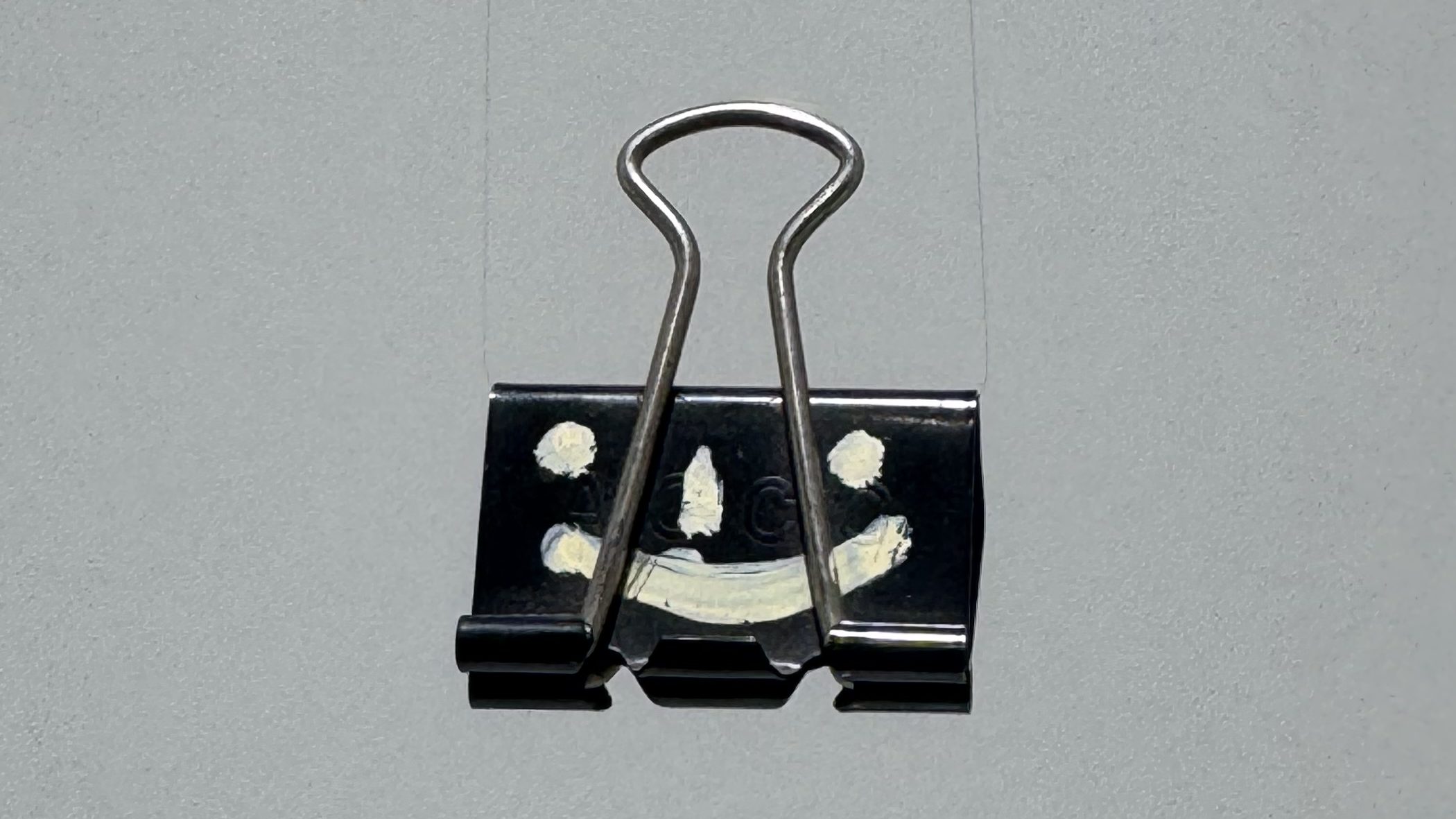
There is something particularly brutal about seeing a war through the things children decided were valuable. History deals in borders, armies, treaties and casualty figures. Children deal in permanent markers, homemade toys and the important business of whether a binder clip constitutes a fair swap.
Two days later I walked past the Genocide and War Crimes Museum and kept going. It turns out even I have a limit on misery museums.
Consuming
Whenever I travel I try to read something set where I’m going. For Bosnia, on Emma Duke’s recommendation, that was Black Butterflies by Priscilla Morris.
It’s set in Sarajevo in 1992. Zora, a painter, sends her family to safety in England and stays behind, sure it’ll all be over in a few weeks.
It isn’t.
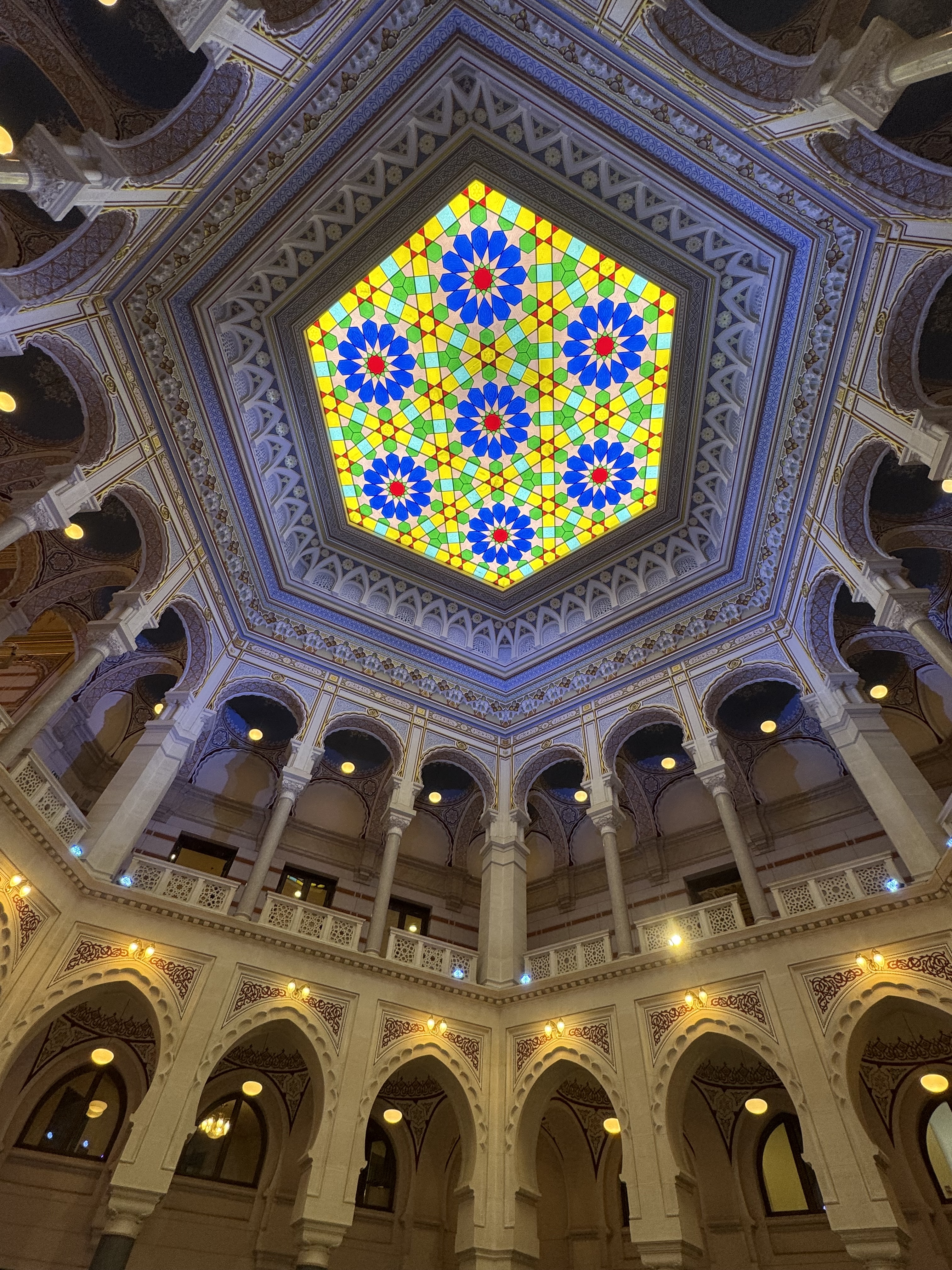
Halfway through the trip I visited Vijećnica, the old National Library, which has an exhibition about its burning and rebuilding. A few days later I reached that part of the book: the library in flames, its books drifting across the city as scraps of black paper. That’s where the title comes from.
Normally reading something set in a place gives me a better picture of it.
This time it worked the other way round. I didn’t have to imagine the room, or the building, or where it sat in the city. I’d stood there, and that hit hard.
Connections
On Tuesday I hosted an IABC EMENA session on communicating with digital nomads. Tony Stewart joined from Hong Kong, Simon Cavendish from London, and I dialled in from an apartment in Sarajevo, which felt like either excellent commitment to the premise or an elaborate tax-deductible visual aid.
The audience was a mix of people already working on the move, the nomad-curious, and communicators trying to work out what happens when someone on their team announces they’re going to spend six weeks working from another time zone.
We’d set out to make it a conversation rather than a presentation, and it was. Thanks to everyone who came and asked questions. I’ve written up what we talked about, and so has Simon.
Travel
At home this week, prepping for two talks. After that I’m heading to London for Unily Unite, then Ljubljana for Dan PR, Slovenia’s top communications conference, where I’ll be talking about building communication that holds an organisation together when the ground keeps shifting.
This week in photos