The highlight of this week was going to visit my oldest mate, Bee. We’ve known each other since we were 11, which means she exists in my head simultaneously as a child in an oversized school jumper and NHS specs, and as the deeply competent parent she actually is now.
Over a bottle of M&S pinot grigio we concluded there are few things more humbling than being forced, at 13, to perform an interpretive dance about homelessness to the music of Phil Collins.
This happened to Bee and me during the golden age of British comprehensive education, where “the arts” often appeared to consist primarily of making toe-curlingly embarrassed children express societal issues through mime.
Thirty-five years later, we’re still friends.
(Recently, Another Day in Paradise came on while I was on a yacht in the Caribbean, which suggests the universe either has an excellent sense of humour or an unresolved administrative error somewhere.)
Anyway. It was one of those weeks that threw time into perspective: old friendships, new milestones, accidental visibility, and the increasingly strange experience of watching parts of your life become real while still feeling faintly surprised they happened at all.
This week at work
Still deep in the weeds on governance for a Viva Engage rollout at a complex, regulated organisation. I realise I bang on about governance a lot here, but that’s the inevitable consequence of working with regulated clients: when governance is bad, everybody notices. When it’s done properly, nobody has to think about it at all.
That’s exactly what we aimed for with SEFE — and, trumpet very much blown, the work picked up a Step Two award last year. The judges highlighted “a good balance between a more robust approach to governance, with a more flexible and lightweight approach, which can adapt as the company and intranet grow.” Which is gratifying, because eighteen months on, that’s precisely what’s happening: the governance is evolving alongside the platform, rather than calcifying around it.
Less than two months until the book lands now, and promotion is starting to consume most of the available oxygen. Delighted to say we’ve secured both a sponsor and a genuinely lovely venue for the launch party. Invites soon.
The flipside of all this is that my face is suddenly everywhere, which I find profoundly uncomfortable and refuse to pretend otherwise. But our new headshots from Paul Clarke came back this week and — against all odds — I actually like them. Reader, growth.
Here’s a preview:


Also prepping for an IABC webinar this week, where I’ll be using a chat about GLP-1 drugs as the route into talking about information overload at work. The basic argument: modern consumer society is an obesogenic environment, quietly engineered to encourage over-consumption while simultaneously telling individuals to exercise more self-control. Our information environment now works exactly the same way. Notifications, updates, channels, pings — too much, by design. Telling employees to “consume less information” misses the point entirely. The real answer is changing both production and consumption habits systemically.
Come watch me stretch an analogy slightly beyond structural tolerance.
Also this week
I was named in the Independent Impact 50 — fifty independent practitioners judged to be among the most innovative and influential in the industry. Genuinely chuffed, and slightly thrown by it, because I still instinctively think of myself as a behind-the-scenes person.
But ten years into the accidental career — which has somehow become the most deliberate work I’ve ever done — being recognised by peers and people I respect feels worth being slightly loud about. I wrote more about it here if you want the longer version. Huge thanks to Nigel Sarbutts and Rod Cartwright for building something that recognises independents properly.
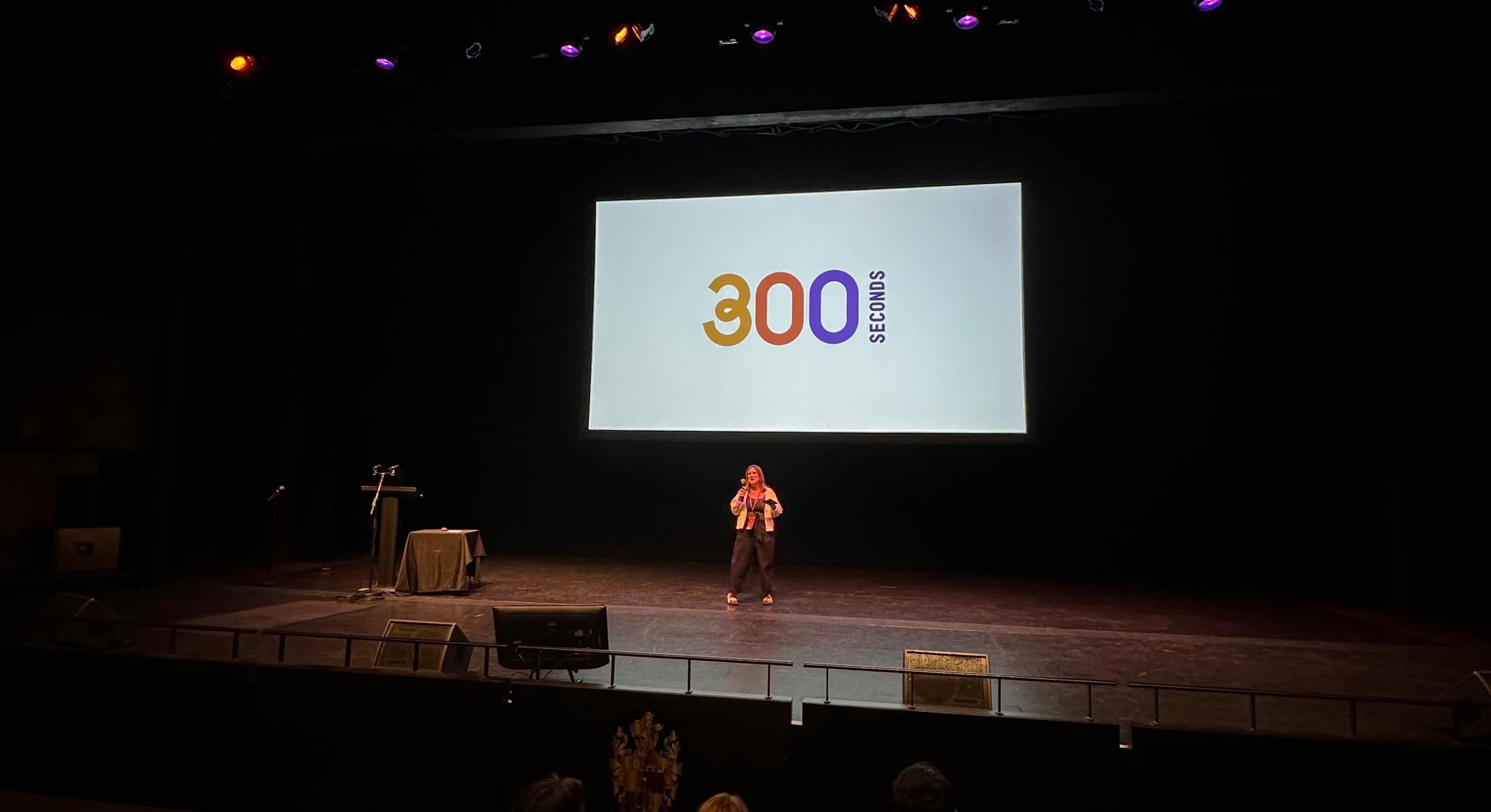
Also up north for Camp Digital, where I ran the 300 Seconds session. A few weeks ago I was writing here about coaching the speakers through their nerves, and about confidence being something you learn rather than something you’re born with. This week was the payoff.
Oana Puicar, Zhen Yang, Robin Roy, Aditya Shah and James Bilham each got up and delivered five-minute talks — mostly for the first time. They were nervous. They smashed it. One of them messaged me the next morning to say she’d lost her place a couple of times, carried on anyway, and felt proud of herself afterwards.
That, right there, is why I keep doing it.
The rest of Camp Digital delivered too, as it reliably does: Rachel Coldicutt on staying hopeful about tech without kidding yourself, Candi Williams on content design as applied linguistics, Tessa Quinn on the impossible trade-offs involved in building services for Ukrainian refugees at speed, and Dan Hett closing things out by taking the room somewhere emotionally that nobody had really braced for.
Nexer Digital have built the rare tech conference that genuinely feels like it’s for the people in the room, rather than the sponsors circling around them.
Consuming
No gigs this week — simply too busy. But I did catch Project Hail Mary at the cinema. Two and a half hours of Ryan Gosling waking up on a spaceship with no memory, gradually discovering he’s a science teacher who’s effectively been press-ganged into saving the sun from microscopic space organisms. He befriends an alien. There’s a lot of zero-gravity bumbling.
Enjoyably credibility-stretching nonsense, in the grand sci-fi tradition, and Gosling continues to possess the slightly unfair ability to remain charming even when the script is doing most of the heavy lifting.
I haven’t read Andy Weir’s book, so can’t speak to the adaptation, but the film is a solid fifteen minutes too long and would have been materially improved by stopping at the first ending. It earns one genuinely lovely emotional beat near the close, then immediately piles on several more endings, each diminishing the impact slightly further.
The Lord-and-Miller instinct to send everyone home smiling ultimately won out over the better instinct to leave them just a tiny bit winded. They always think we want more. We rarely do.
Connections
Excellent call this week with Ellen Griley, who’s doing some of the most interesting work I’ve come across on trauma-informed communications — taking principles long established in healthcare and education and applying them to how organisations communicate with employees. Practical, evidence-based, overdue.
I first heard the idea articulated properly at Camp Digital last year, and it resurfaced again this year — which is one of the reasons I keep going back.
Camp Digital also once again brought together some of my favourite people in the industry, off-stage as well as on. Most of whom I only see once a year. A brilliant chance to compare notes on the market right now: the strange sensation of change happening both far too slowly and far too quickly at the same time, clients of every conceivable variety, and the growing suspicion that “everything is terrible now” may have at least some correlation with all of us getting older.
Travel
Nothing! An entire week at home.
Back in London the week after next with a diary that already looks mildly concerning, plus a Tube strike to navigate around for added flavour.
This week in photos


