Weeknote 2026/37

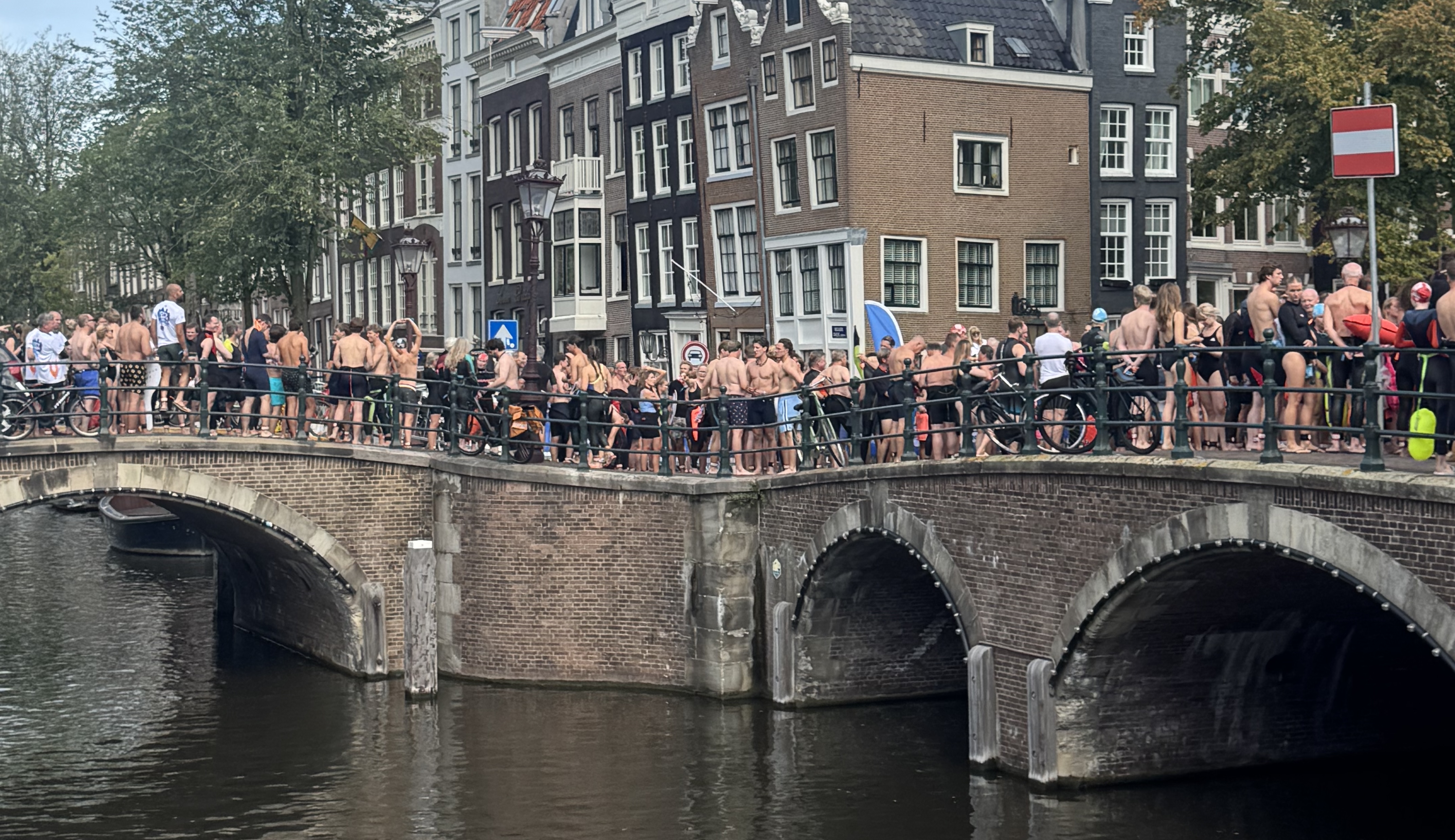
A crowd of swimmers in swimwear and wetsuits packed along an arched brick canal bridge with bikes propped against the railings, waiting to enter the water, canal houses behind.
Amsterdammers lining up to begin the City Swim (Photo: me)

We place far too much faith in the first verb.

Launch the intranet. Start the business. Join the platform. Introduce flexible working. Take off.

They’re pleasingly definite things. They have dates and project plans and announcements. You can put a tick next to them and briefly enjoy the sensation that something has been achieved.

Unfortunately, almost none of the interesting problems live there.

They live in what happens afterwards. Whether anyone can find anything on the intranet you launched. Whether the business you built ten years ago still fits the person running it. Whether the platform you joined actually rewards the kind of communication you’re trying to do. Whether “work from anywhere” still works once anywhere is seven time zones away. Whether an aircraft that took off shows any comparable enthusiasm for landing where you expected.

This has been a fortnight of second-order problems: the things that appear only after the first-order problem has been triumphantly declared solved.

Which is irritating, because those are generally the ones that require the actual work.

This week at work

Last week came and went without much time to reflect, still less to write. So this is two weeks in one. Not so much a bumper edition as the usual edition with the middle taken out.

Most of it has gone on information architecture for a client we’ve worked with, on and off, for several years. They launched a new intranet a couple of years back. It works. People still can’t find anything.

That’s less damning than it sounds. In an organisation of any real complexity, findability isn’t a problem you solve so much as a collection of compromises you choose deliberately. Ten teams have a legitimate claim on the same page. Three of them call it something different. The structure that makes perfect sense to the people who own the content is almost never the one that makes sense to the person frantically hunting for it while trying to do something else. There are no clean answers, only trade-offs — and the work is deciding which ones you can live with.

Hence card sorts. Open first, then closed.

An open sort gives people the content and no categories at all. They group it however they like, then name the groups themselves. You learn what belongs with what in their heads rather than on the org chart — and, just as usefully, where their heads disagree. The naming is the gift. Nothing exposes the alleged obviousness of a category quite like asking five people to name it and getting six answers.

The closed sort comes next, and it isn’t simply the open sort with the answers filled in. New cards this time, and the categories we’ve derived from the open sort, already named. People file content they haven’t seen before into labels they didn’t write. That’s the harder test: not whether the structure accommodates the set we happened to start with, but whether it survives contact with the next thing somebody publishes into it. Cards that land consistently are settled. Cards that scatter are contested, and those are the ones worth having an argument about.

Then a tree test, which asks the other question entirely: not where you’d put something, but whether you can find it after somebody else has put it there.

Between them, you end up knowing not just where to compromise but why — which is the difference between an information architecture you can defend and one that lasts until the first person with strong opinions, edit permissions and a free half-hour in their calendar.

The rest of the fortnight has gone on preparing for a heavy run of talking. Unite in London at the end of the month: a working clinic on attention and overload, which means building something people actually do rather than sit through while discreetly answering email. A keynote in Ljubljana for Dan PR, on building communication that holds when the ground keeps moving. And before either of them:

This Tuesday I’m doing a fireside chat for IABC with Tony Stewart on communicating with digital nomads — 12:00 UK, 13:00 CEST, 19:00 HK — with Simon Cavendish joining as a third voice.

Tony will be in Hong Kong. I’ll be in Bosnia, Simon in London. None of that should be remarkable. The fact we have to design communication differently because of it, rather than simply pretending we’re all sitting in the same office with slightly worse Wi-Fi, is very much on point. Sign up to join us here

Also this week

A trip back to London: a client catch-up, a certain amount of prospective-client schmoozing, and a long-overdue few days with my parents, which is the item that should have been top of that list and wasn’t.

Took my mum to the Frida Kahlo exhibition at Tate Modern. I’ve seen a great many Frida shows over the years — I’ve been to the Casa Azul three times — and she still hasn’t worn out on me. Familiarity doesn’t seem to do to her what it does to other artists. Perhaps because the work was so relentlessly about the same person changing underneath it.

Sharon standing in a blue dress at the foot of a huge street mural of Frida Kahlo on a brick wall, the portrait assembled from panels with a monkey, a black cat and green leaves.

Also went to an evening called Owning Our Becoming at Soho House, run by Ten with Veuve Clicquot, with Fabienne Chapot and Marthe de Groot. Fabienne started her label at 24 on instinct and not much corporate experience, took investment, and grew it from €3m to €30m in six years — then stepped down as CEO to become founder and shareholder instead, focusing on culture, storytelling, key clients and mentoring. Marthe arrived at much the same conclusion from a different direction. Their advice, distilled: everything will be okay. Just jump.
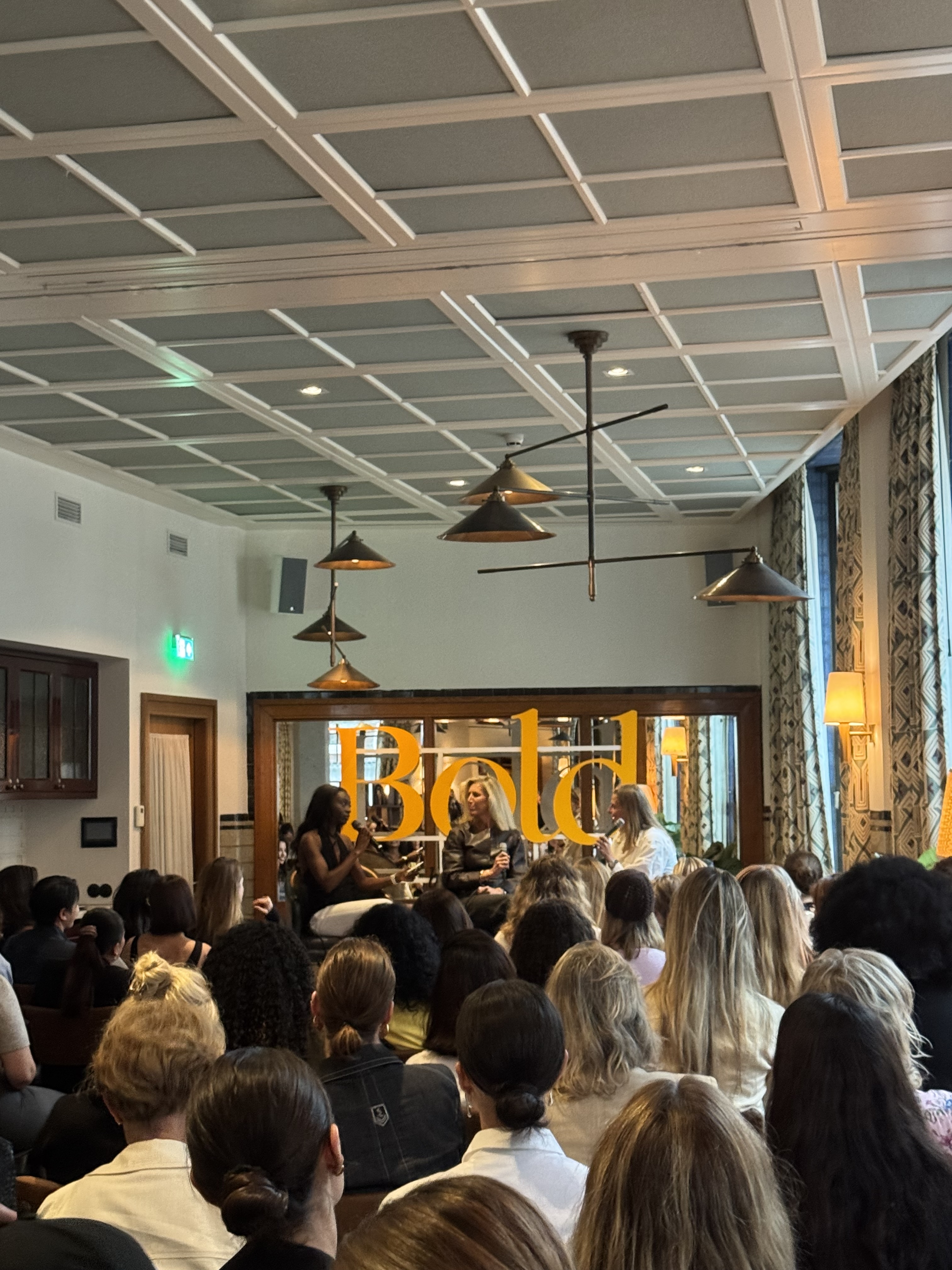
Three women with microphones seated in front of a large yellow "Bold" sign in a panelled room, speaking to a packed, mostly female audience seen from behind.

Which I did, ten years ago, though I’ve written about how little it resembled a jump at the time. I left because staying had stopped being survivable, without a plan or much of a cushion, and it took a long, unglamorous middle before any of it looked retrospectively like a brave decision rather than a sequence of things I somehow kept getting away with.

The more useful reminder was the bit after the jump. The thing you leapt to isn’t necessarily the thing you’re supposed to keep doing forever. The role you carve out for yourself when the business is new has to change as the business does, otherwise eventually you’ve just built yourself another job you’re slightly annoyed about having.

That’s more or less where I landed at the end of that series: orientation rather than arrival. Expect the ground to move; build accordingly. Easy enough to write in December. Slightly different to hear it said out loud by someone who’s just voluntarily moved the ground again.

Connections

Caught up with Ezra Butler, last seen in New York in 2019. Over brunch we covered the etymology of colour, whether Robin Hood was Jewish, and the missing pieces in the creator economy — a conversational range I’d normally spread across three separate people and at least one WhatsApp group. Seven years is too long.

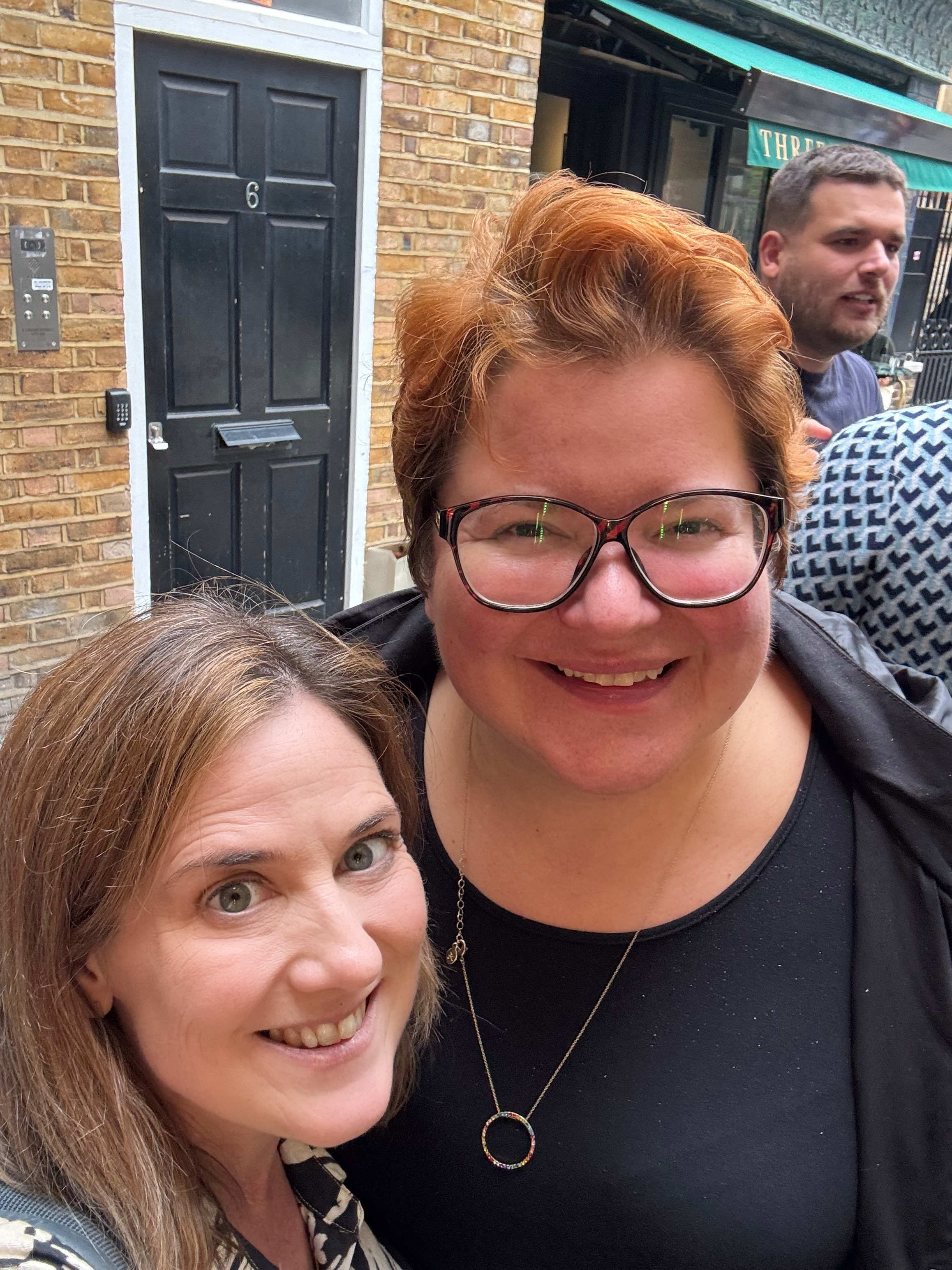
In London, I put the world to rights with Janet Hitchen over wine, and had a brief catch-up with regular co-conspirator Lisa Riemers. A last-minute let-down then turned into a spontaneous and splendidly decadent lunch with Steve Chambers, which is clearly the correct response to a cancellation and one I intend to make policy.
Coverage

Quoted in Finextra’s long read on how social media became a fintech antihero, alongside a solicitor, a market analyst and several people worrying about finfluencers. My contribution was the structural bit: organic reach has been in decline since around 2014, and social without both excellent content and paid promotion is now functionally invisible. Which makes it advertising, not conversation.

Attention is the only currency on there, and outrage and aspiration are the cheapest ways to buy it — neither of which sits particularly comfortably with products that are boring, slow, probabilistic and occasionally required by law to explain fourteen different ways you might lose your money. There is no native social format for “this is moderately sensible and, assuming several things nobody controls, may work out quite well over thirty years”.

Answering their questions shook loose rather more than would fit in a quote, so I wrote the rest of it up: The communication mismatch. Finextra’s piece is about the advice consumers get; mine is about the organisations trying to compete with it, and why they can’t.

Platforms reward speed, certainty and strong opinions. Regulated sectors deal in qualification, edge cases and several legally significant ways this might all go tits up. That’s not a gap a better copywriter closes. It’s the nature of the thing being communicated, and being bad at social might therefore be information rather than a problem to solve.

The argument I suspect will annoy the greatest number of people is that employee advocacy is an organisational trust strategy with a social media output, rather than a distribution plan with a toolkit. If your people don’t trust the organisation enough to say useful things about it in public, another webinar about optimising their LinkedIn profiles is unlikely to be the missing ingredient.

Travel

This one comes to you from Bosnia, by way of Belgrade, which was not on the itinerary.

The flight made two attempts at landing, neither of which resulted in the traditional outcome of being on the ground, and then returned to where it had started — an experience I’d describe as mildly terrifying while it was happening and extremely tedious for the subsequent 24 hours.

Country 92, therefore, ticked off in perhaps the least satisfying manner available: transit, unexpected return, then being decanted into a hotel that appeared to have been sealed in 1974 and reopened specifically for me.

The room had wood panelling to waist height and curtains the colour of weak gravy. Dinner was a buffet of such profound pallor that the chicken, mashed potato and vegetables — boiled to the outer limit of their structural integrity — were all, and I want to be absolutely clear about this, paler than me. The waiters had the manner of men serving out a sentence.

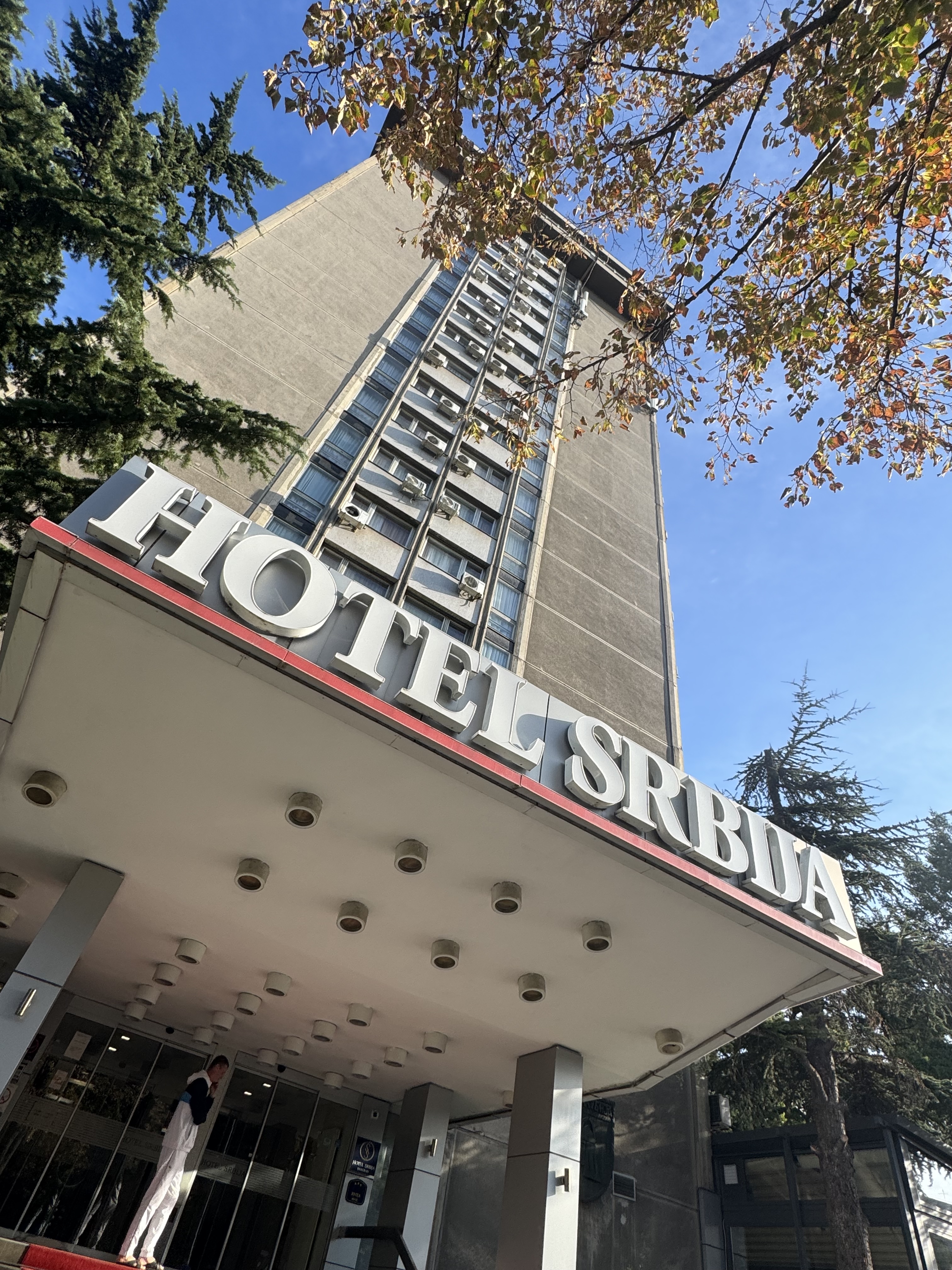
And everyone was smoking. Indoors. Everywhere. At all times. With the serene absence of self-consciousness you only see in people who have never once been asked whether they might perhaps take that outside.

I’d forgotten how much the 1980s smelled of cigarettes. Twelve hours in a Belgrade hotel and it all came flooding back, along with the light nausea and a powerful urge to watch Bergerac.

I did eventually make it to Mostar, 24 hours later than planned. More on which next week, once I’ve recovered my sense of humour and everything I own no longer smells faintly of Marlboro.

This week in photos
Weeknote 2026/35

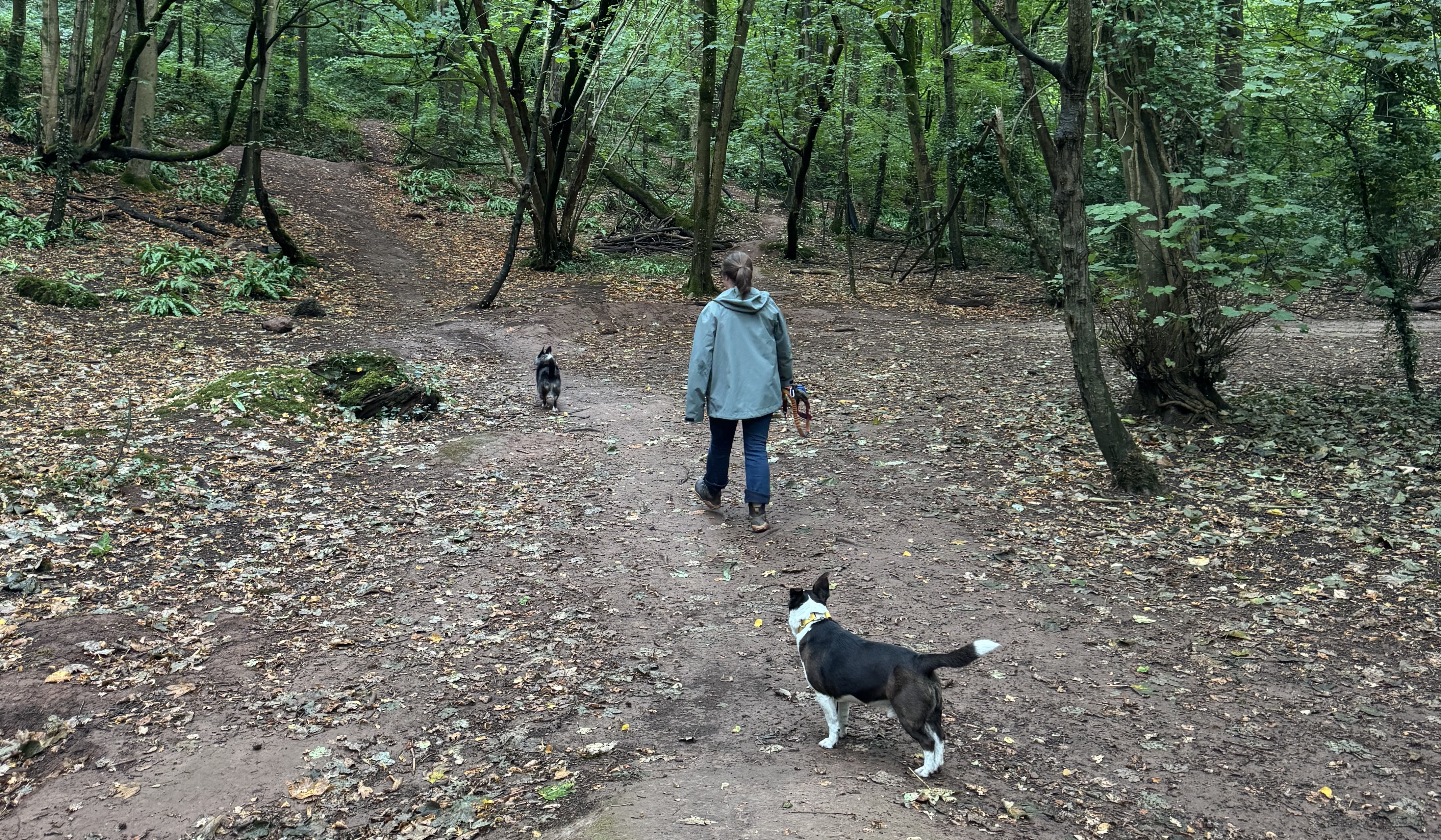
Pre-festival dog walks (Photo: me)

“If you want the rainbow, you gotta put up with the rain,” said Dolly Parton.

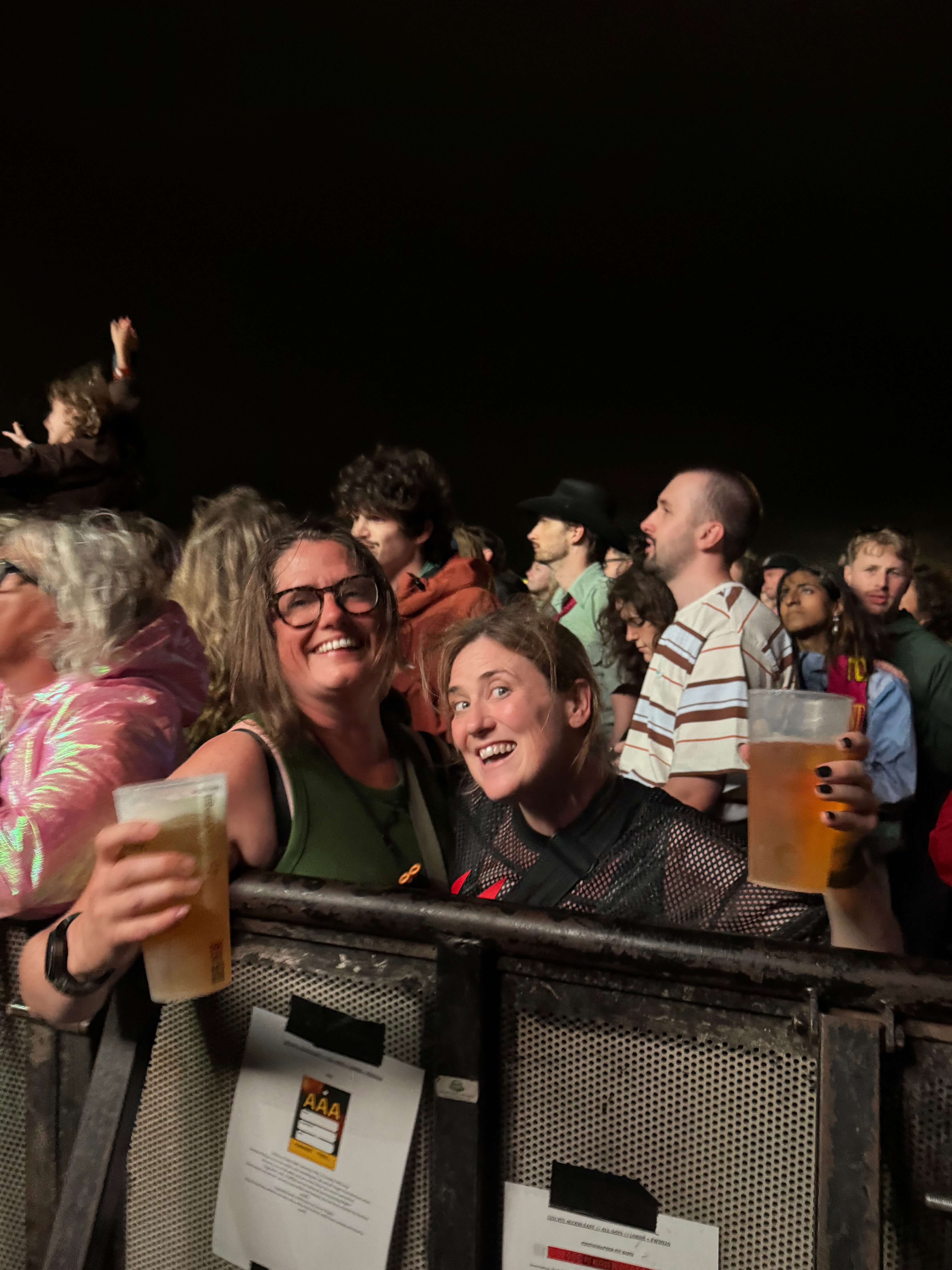
It absolutely pissed down at Forwards on Saturday.

Proper, committed rain. The sort where you spend the first twenty minutes trying to preserve some vestige of dignity before accepting that your hair is fucked, your shoes are wet and this is simply your life now. At which point, pleasingly, it becomes fun. I put my raincoat on and danced like an absolute twat and it was brilliant.

This week bought the sad news that Dolly died, and I spent much of the following two days listening to her music and having a bit of a cry. So the quote has been rattling around my head ever since.

It also turns out to be a reasonably good description of running a small consultancy.

The rainbow is the bit you get to announce: we won a new client. We ran a great session. We wrote something people wanted to read. The rain is contract negotiation, procurement portals, pitch decks for meetings that get postponed, timesheets, project plans, pipeline reviews and writing a scope annex whose principal purpose is to establish, at considerable length, all the things you are not going to do.

We tend to talk about work in terms of its outputs because those are the bits you can see. Projects delivered. Decisions made. Things launched. But underneath them is an enormous amount of preparation, negotiation, context and maintenance: the work behind the work.

Most weeks, you don’t notice it particularly.

This week, there was rather a lot of rain.

This week at work

We won a new client this week. Open tender, decision faster than expected, and we’re very pleased about it.

Winning it immediately produced a full day of contract negotiation, a scope annex written from scratch to define all the things we weren’t doing, and a compliance process that ran first into a legal team needing ten working days and then into our client contact going on annual leave. None of this is billable. All of it has to happen before the billable work can begin.

The same week, we spent two days preparing for a pitch. Deck built, case studies chosen, argument sharpened, review session with someone who knows the target organisation well. The session was postponed the day before it was due to happen. It’s been rescheduled, which is the good version of this outcome. The two days don’t come back either way.

Around that: proposal responses, project plans, timesheets, finances, contracts, and a full pass over every live and prospective piece of work on the board. All necessary. None billable.

A lot of people seem to be going independent at the moment, and the advice I keep giving them is unfortunately the least glamorous advice available: be brutally realistic about how much work you can actually do.

We’re pretty efficient at this stuff. We’ve put real effort into getting the machinery down — time tracking, project management, the pipeline board, templates for almost everything — and it works. But somebody still has to run the business. Somebody still has to make sure there’s work in three months’ time. Somebody has to negotiate the contract, write the proposal, chase the purchase order and discover that the procurement portal requires a document nobody has requested since 2009.

All of those somebodies are me.

Realistically, only about half my week is available to sell. Which means the useful calculation when you’re setting a day rate isn’t what you want to earn divided by 260 working days. It’s what you need to earn divided by the days doing work somebody might conceivably pay you for.

We also ran a session for IABC this week on discovery: how to work out what an organisation’s communication problem actually is before anyone buys something to fix it.

It went well. One attendee said he was taking our hypothesis-board approach straight into a meeting that afternoon, which is about the best feedback there is. Another asked whether all this was in the book. It is, and given that I literally wrote the thing I should probably have thought to mention that myself.

The following day we agreed a second session for a different audience, and there’s a keynote version coming in October. It’s a format we do a lot, enjoy doing, and — pleasingly — people keep asking us to do without us having to invent a funnel for it.

Also this week

Bristol again, this time for Forwards. There is still nothing better than a weekend in a field with loud music and good friends, and at 46 I think we can safely conclude I’m not going to grow out of it.

The weather did its level best. Once you’ve accepted that you look like a drowned rat and there is no longer anything worth protecting, dancing in the rain turns out to be enormous fun.

Little Simz, Wet Leg, Self Esteem and Viagra Boys all delivered. Tricky did not: weirdly quiet, strange atmosphere, and the peculiar experience of being able to hear his backing singers perfectly while the man whose name was on the poster remained largely theoretical. Princess Nokia was simply bad.

And a Rubicon crossed. For the first time in my life, I had genuinely never heard of one of the festival headliners.

I assume this is how it begins. Next year I’ll be bringing a folding chair.

Consuming

All Dolly, all week, after the news broke on Wednesday. Veering chaotically between bluegrass, the classics and Backwoods Barbie, all bought during a lengthy Dolly phase that followed a trip to Tennessee and a pilgrimage to Dollywood.

Live your life such that when you die the praise is that unanimous.

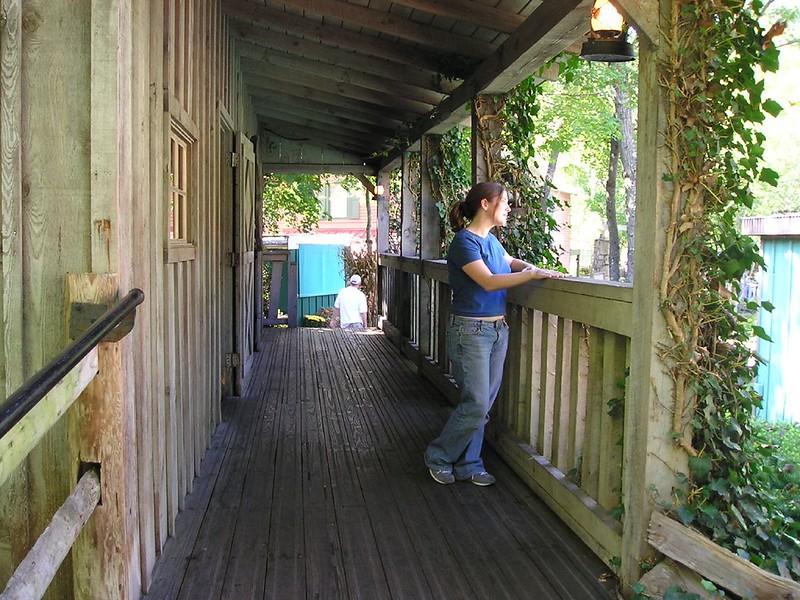
Me at Dolly’s Tennessee Mountain Home, a million years ago

Coverage

I wrote a piece for Reworked about the Spirit Airlines data sale, which is now the subject of a bidding war involving Google and a startup that builds AI agents to work inside simulated companies. A sentence that would have required considerably more explanation five years ago.

The argument, roughly: we spent a decade telling people to work out loud, on the understanding that persistence would work in their favour. Write things down. Share what you know. Leave a trail somebody else can follow.

What Spirit demonstrates is that the archive can outlive the conversation, the project, the team, your employment and, eventually, the company itself. And the first thing people stop writing down once they’ve noticed that isn’t the decision. It’s the messy reasoning behind it — the disagreement, uncertainty, context and half-formed thinking — which is the only part that was ever genuinely inheritable.

There’s a second half I expected to find harder to write than I did, about why that archive is worth twelve and a half million dollars.

Workplace software gets built by small young companies where twelve people talk to each other constantly, then sold to organisations with shift patterns, works councils, contractors, subsidiaries, six layers of sign-off and thirty years of documents nobody can find. The people building software for large organisations have surprisingly little evidence of what life inside one actually looks like.

Spirit’s archive isn’t a use case. It’s a world.

Which is why the sale is simultaneously creepy and entirely economically rational. Both things can be true at once, which is what makes it an argument rather than a lament.

The whole thing started as a paragraph in a weeknote a fortnight ago. I cut it because it was too much for the space it had. Turns out it was an essay.

Published

I’ve started putting essays on the site as well as these weeknotes. Weeknotes are chaotic by design – whatever happened that week, from day rates to a Dolly Parton deep dive. Some things need more room than that, and one subject at a time.

The first few are up:

Travel

This weeknote comes to you from a characterless, overpriced pub in Bristol Airport, which scores precisely nothing under the LoungeWanker rules.

Home for forty-eight hours, then back to the UK for client meetings.

The glamour of international consultancy remains largely theoretical.

This week in photos
Weeknote 2026/34

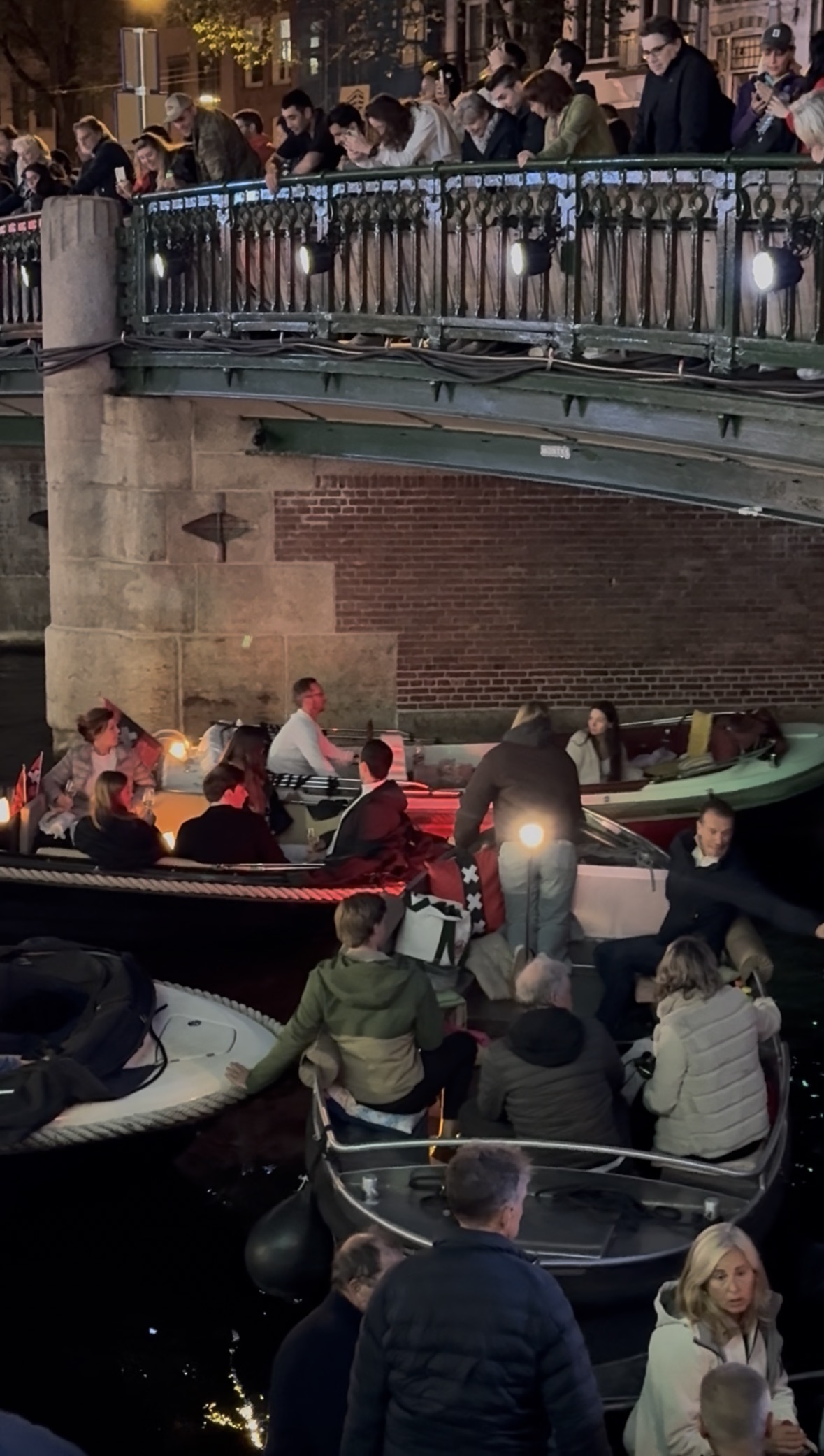
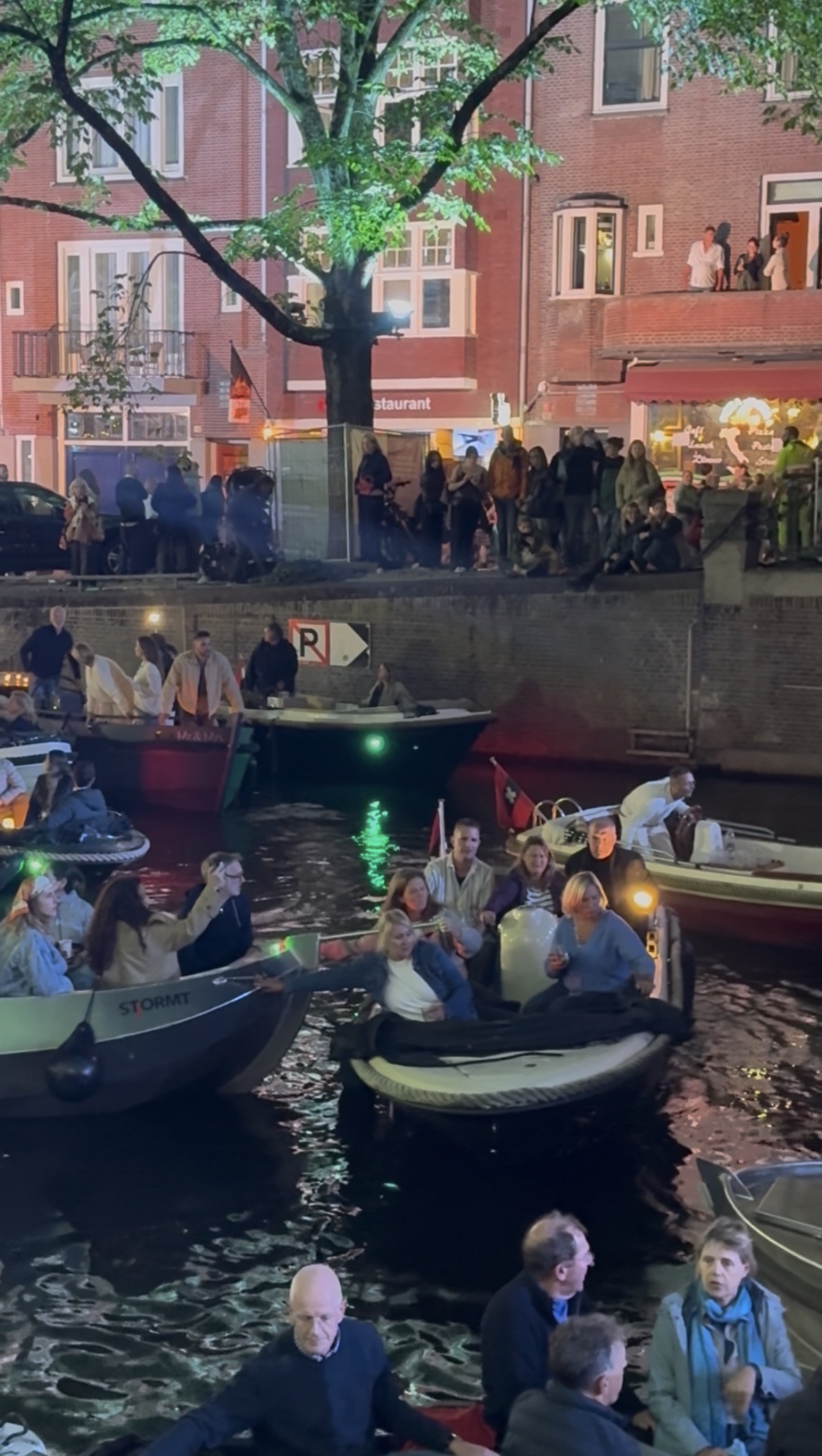
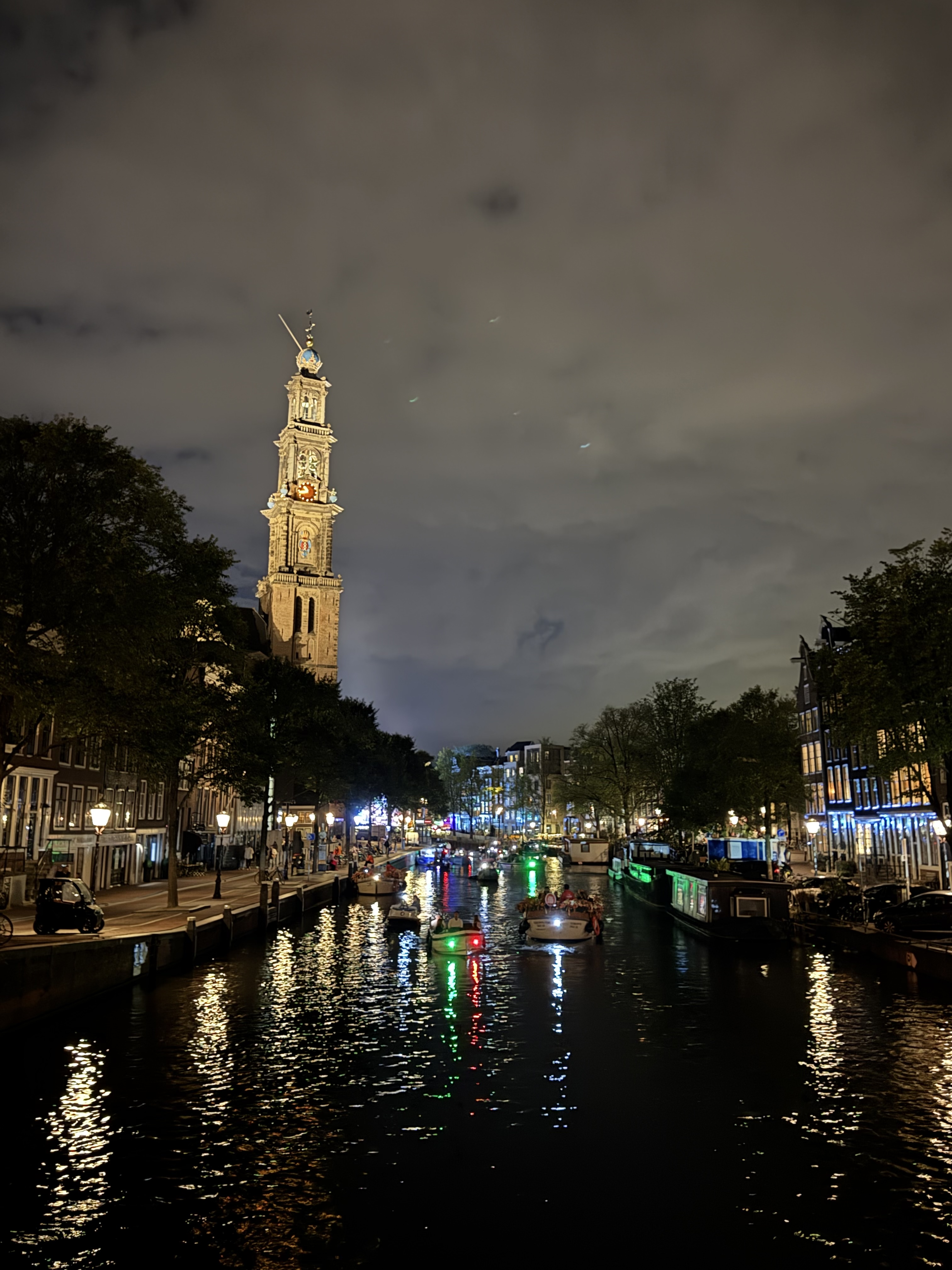
An Amsterdam canal at night, lined with lit gabled houses and a moored houseboat with flower boxes. A small open boat full of people passes under a bridge, its wake catching the reflected lamplight.
Prinsengracht after the concert (Photo: me)

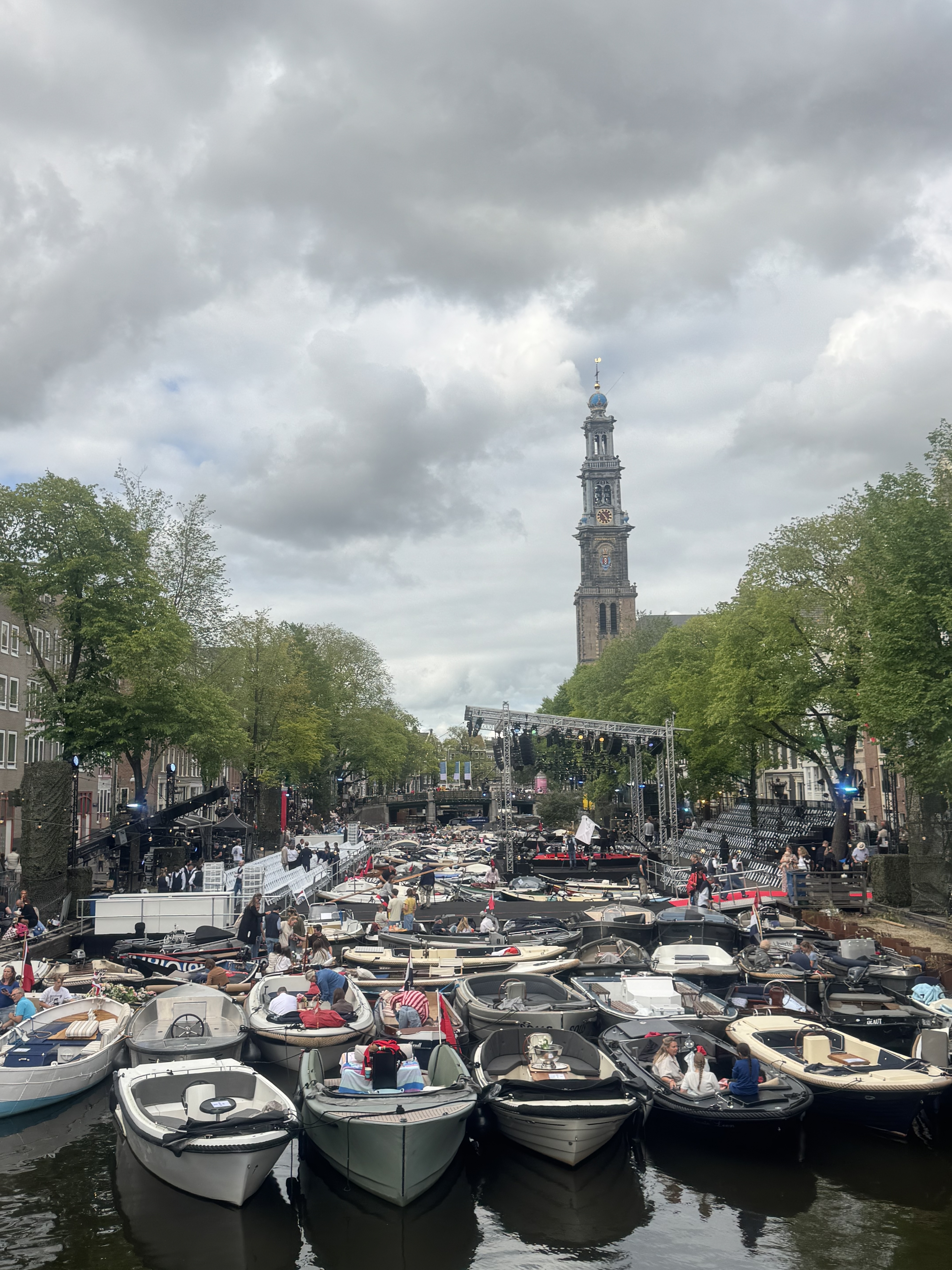
My second favourite part of the Prinsengracht Concert, after several thousand people singing Aan de Amsterdamse Grachten together, is what happens immediately afterwards.

Hundreds of boats have spent the evening crammed into the canal, several deep, wedged against one another in a configuration that suggests nobody gave much thought to the concept of leaving. Then the concert ends and, simultaneously, everyone would like to go home.

It is magnificent.

For the next half hour the Prinsengracht becomes a giant aquatic game of Dodgems. Boats reverse into gaps that don’t exist. People push off neighbouring vessels with their hands. Someone three boats away is shouting instructions to a person they have never met. Entire flotillas shuffle sideways because one tiny boat has committed to a three-point turn and apparently we’re all seeing this through now.

From the bridge, it looks like complete chaos. Except it works.

There’s a system in there. It’s just not the sort anyone would put into PowerPoint. It runs on eye contact, shouted instructions, local knowledge, mild peril and hundreds of tiny negotiations between people adjusting constantly to what everyone around them is doing. There are formal rules, obviously, but they get you only so far when you’re pointing backwards in a canal with someone’s bow six inches from your wine glass.

Organisations work rather more like the Prinsengracht at 11pm than anybody designing an operating model would ideally like to admit.

We draw the hierarchy as a pyramid, put one person reassuringly at the top, arrange everyone else underneath and call it an organisation. We map systems into boxes. We assign owners. We draw solid lines and dotted lines and spend quite a lot of money arguing about where they should go.

This is all useful, up to a point. The problem comes when we mistake the diagram for the thing it describes. Reality has an irritating habit of continuing to be three-dimensional after we’ve put it on a slide.

The mess isn’t necessarily evidence that there is no system. Sometimes the mess is the system.

This week at work

Organisations are way more complicated than their org charts.

Someone can turn up wearing one organisation’s uniform, carrying another’s lanyard, logging into a third’s systems with a password reset only the first can authorise, doing a job that half of them think belongs to somebody else.

Work runs through partners, contractors, shared services and joint ventures, and plenty of people hold more than one allegiance at once. There’s a chapter on this in the book, framed mostly around the gig economy and deskless work, but the same problem turns up anywhere separate organisations share most of a back office and almost none of a culture.

That’s a comms problem before it’s a technology one. Your channels have to fit the organisation you actually have, mess included, rather than the neat little pyramid with one person at the top and everyone else arranged obediently underneath.

This week I ran a workshop with comms and digital leaders in an organisation dealing with exactly this kind of complexity. We started with what a digital workplace actually is, and why it matters more, not less, when the organisation around it is changing.

It’s how change gets communicated, obviously. But it’s also how you unlock the value you were promised when you bought all those services in the first place. A service nobody can find is, for most practical purposes, a service you don’t have.

I introduced our graphic equaliser model: the idea that a digital workplace is a mixing desk with four faders — comms, knowledge, transactions, and community and collaboration — and every organisation runs a different mix. Some crank comms all the way up. Others lean heavily into tools and self-service. We spent time looking at where their balance sits now, and where it needs to move.

I love sessions like this because I learn as much as I share about the increasingly messy reality of how work gets done. I always say there’s no right balance, only what’s right for your organisation. What this one reminded me is that there isn’t necessarily one setting for an organisation either.

Different parts of the business need the dials in different places. Increasingly, so do individuals.

Which means the digital workplace has to flex around the organisation you actually have. That took us into the perennial question of what needs local control and what benefits from central planning.

It’s harder when there are multiple reporting lines, because budgets and approvals follow accountability, while work has the irritating habit of ignoring it. Publishing pulls hard towards shared: one system, different lenses. Discussion stays stubbornly local, because that’s where culture lives and nobody particularly wants theirs decided by committee. Planning sits awkwardly in the middle, because of course it does.

No amount of elegant architecture fixes the fact that organisations contain politics.

The dials get set by whoever holds the budget line. They get lived with by everyone else.

Also this week

I tore a hamstring in a HIIT class, which is what I get for going to HIIT classes.

It turned out to be relatively minor, but kept me out of the gym and mostly confined to the flat for the week. Last weekend I was hobbling around with a walking stick, mentally rearranging the next three months of my life around my exciting new identity as Person With Hamstring Injury. By Friday I was walking again, albeit not at my usual faintly aggressive pace.

Recovery was swift enough that I’ve decided to take personal credit for it, having contributed absolutely nothing beyond sitting still.

The one casualty was the line dancing class I’d signed up for as part of my ongoing efforts to Try New Things. I was fully prepared to attend and be heroically bad at it. Then I couldn’t go, so my potential as a line dancer remains mercifully untested.

Next time.

Saturday was the Prinsengracht Concert, one of those moments every year that makes me absurdly glad to live here. The city is both backdrop and main character: a stage built over the canal, thousands of people lining the water, boats packed in until the whole thing looks faintly impossible.

It ends, as it always does, with everyone singing Aan de Amsterdamse Grachten together — a song about how beautiful this city is and how nobody could wish for anything better than to be an Amsterdammer.

Can confirm.

Consuming

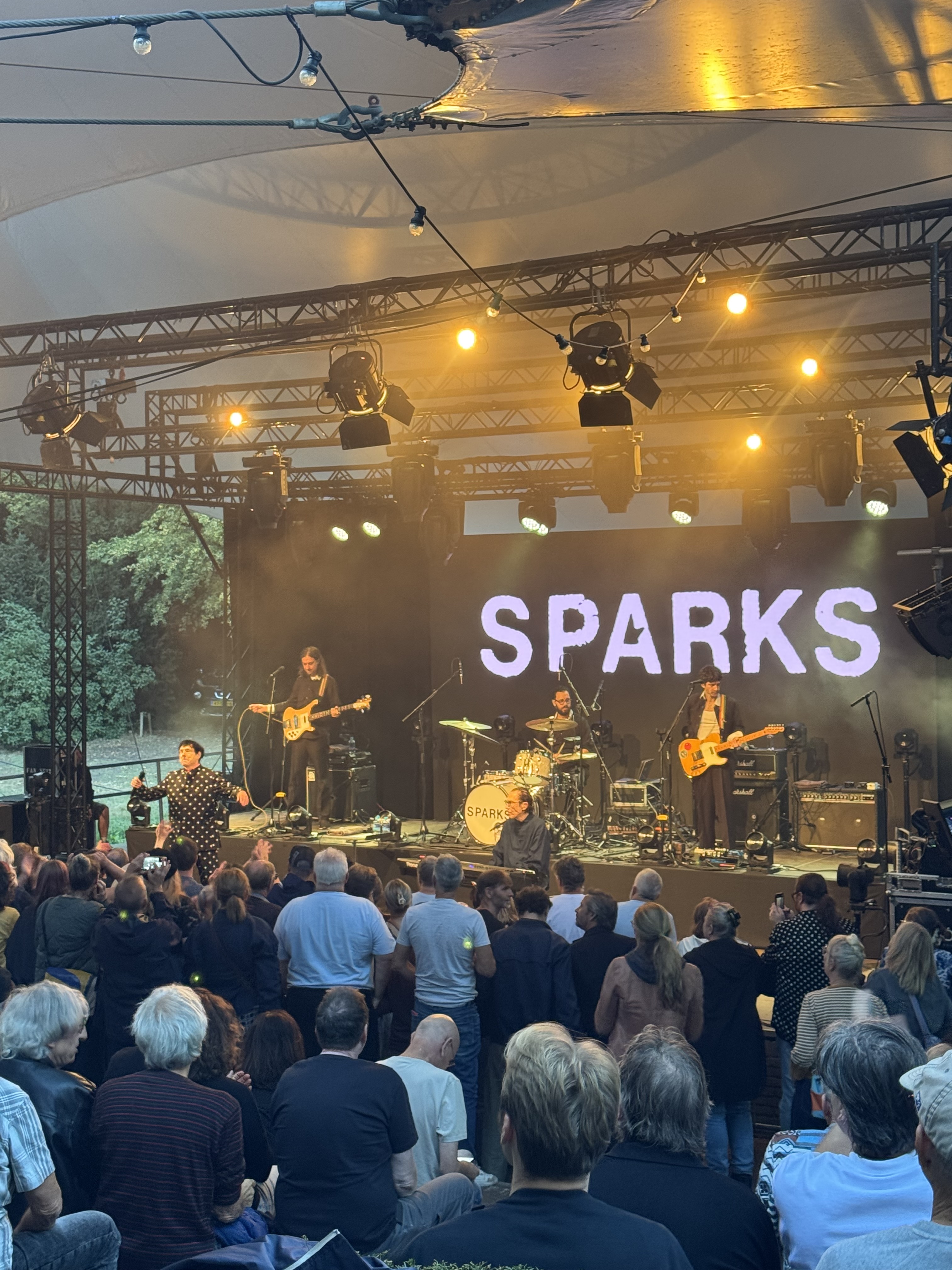
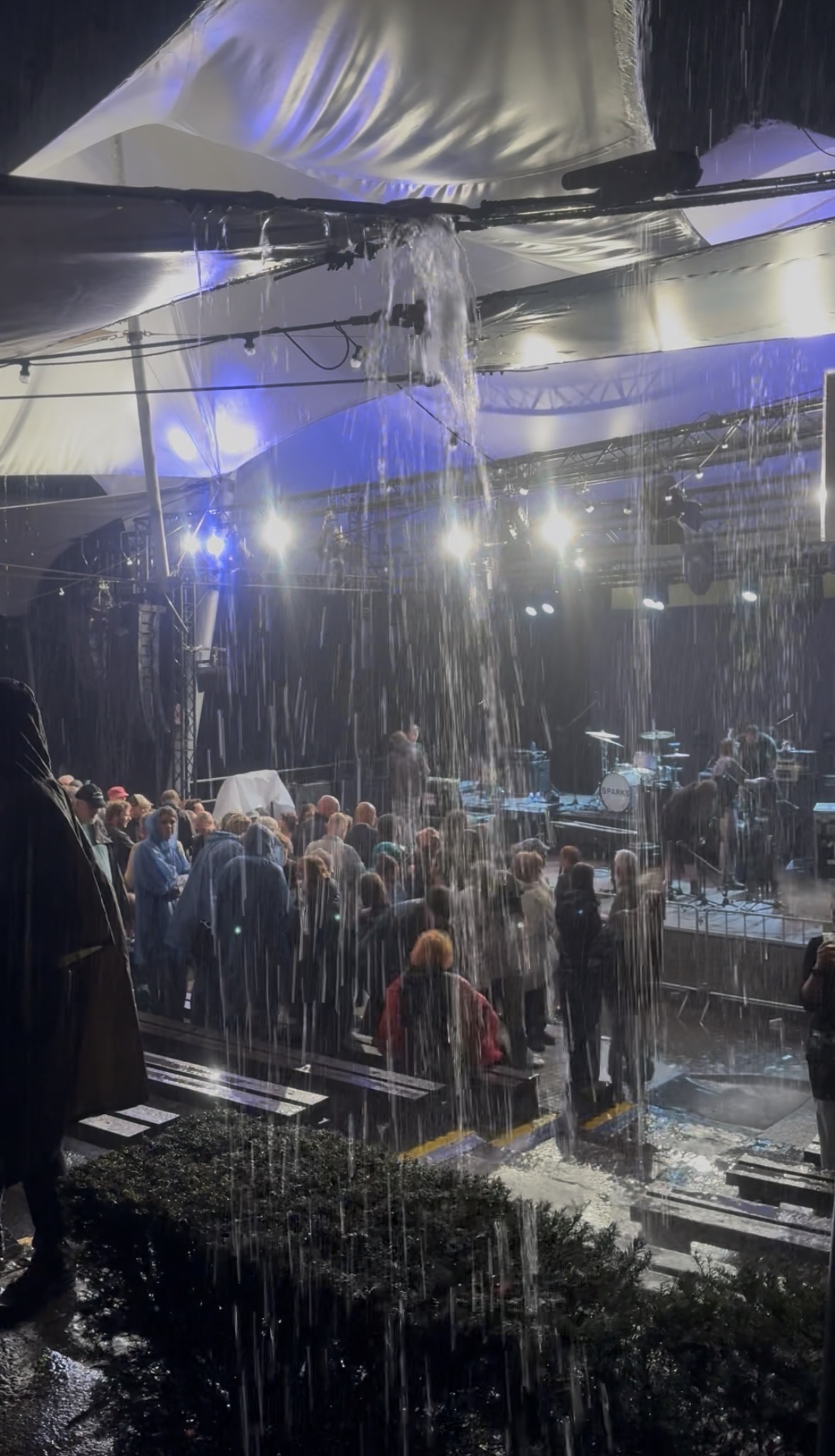
Saw Sparks in Nijmegen, for their only Dutch date this year, in a lovely outdoor theatre. We’d got ourselves in the mood the night before with The Sparks Brothers, Edgar Wright’s documentary: two and a quarter hours of people you already suspected of having excellent taste confirming that they do.

The gig was delightful right up until it wasn’t. They finished This Town Ain’t Big Enough for Both of Us and the heavens opened. They made it through Whippings and Apologies with rain sheeting off the canopies before the show was finally called off for safety.

Sixty years, twenty-odd albums, and I got about two thirds of a set. The Mael brothers have outlasted glam, disco, synth-pop, Britpop and several physical media formats, only to be defeated on Thursday night by Dutch weather.

I’ve also been transfixed by the Spirit Airlines story all week. Google has bought the bankrupt airline’s entire internal archive for $10 million: a hundred million emails, five hundred million Teams messages, seventeen million files, all to train AI on. Former employees are now in court trying to get themselves removed from the dataset.

It has absolutely everything.

What happens to how people behave at work once they realise the archive might outlive the company. The legal question of whether anything you wrote at your desk was ever really yours. Bankruptcy law colliding with data protection colliding with AI. Organisational complexity. Workplace technology. The lot.

And then there’s the bit I keep turning over, because I love nothing more than to be a contrarian, which is that this might actually make the software better.

Enterprise software has always been designed for an organisation tidier than any organisation that has ever existed. When I spoke to the Facebook team during the Workplace years, they seemed genuinely baffled that companies didn’t want information to be open in the way it was at Facebook. That openness was the product. It was also one of the reasons so many corporates couldn’t use it.

Microsoft, all these years later, still can’t cleanly accommodate someone holding multiple affiliations with one institution, never mind several institutions at once — which describes an enormous number of people I encounter through work.

Nobody has ever had a really good dataset showing how a large organisation actually functions, because all the interesting stuff is behind a firewall. The formal structure is easy. The useful bit is the messages, workarounds, accidental networks, weird permissions, duplicated effort, informal power and the seventeen people you have to ask before discovering that Sandra in Finance knows how it works.

Now, suddenly, there’s one on the open market.

The messiness is exactly what makes it valuable.

Which is also the problem. The upside depends on the data being rich, specific and human enough to reveal how work really happens. The privacy disaster is that it’s far too rich, specific and human to anonymise properly.

There’s no version where you get one without the other.

Connecting

Three this week, all people passing through.

Mark Chapman, who runs an NHS intranet, was briefly in town. I failed to have a proper conversation with him at the book launch, just as I failed to have a proper conversation with almost everyone at the book launch, so we made up for it in my local by nerding out about intranets at considerable length.

Then Chris Higham, finally, in person. Chris and I are part of a group that formed on Twitter years ago around sharing our fitness ups and downs, then migrated to WhatsApp when the platform went the way it went. It’s still one of the most supportive gangs I’m in: the rare group chat that survived the collapse of its natural habitat (I wrote about that community in 2025/49)

He was over with his family on holiday, so I got to meet all of them too.

And yesterday, a walk-and-talk with Anne Ditmeyer, a Paris-based designer and facilitator I met at the Awesome Authors meet in London in May (see Weeknote 2026/21). She was in the Netherlands for a design event, so we walked and talked about unlocking creativity. Eexactly the sort of conversation that gets better once you remove the table.

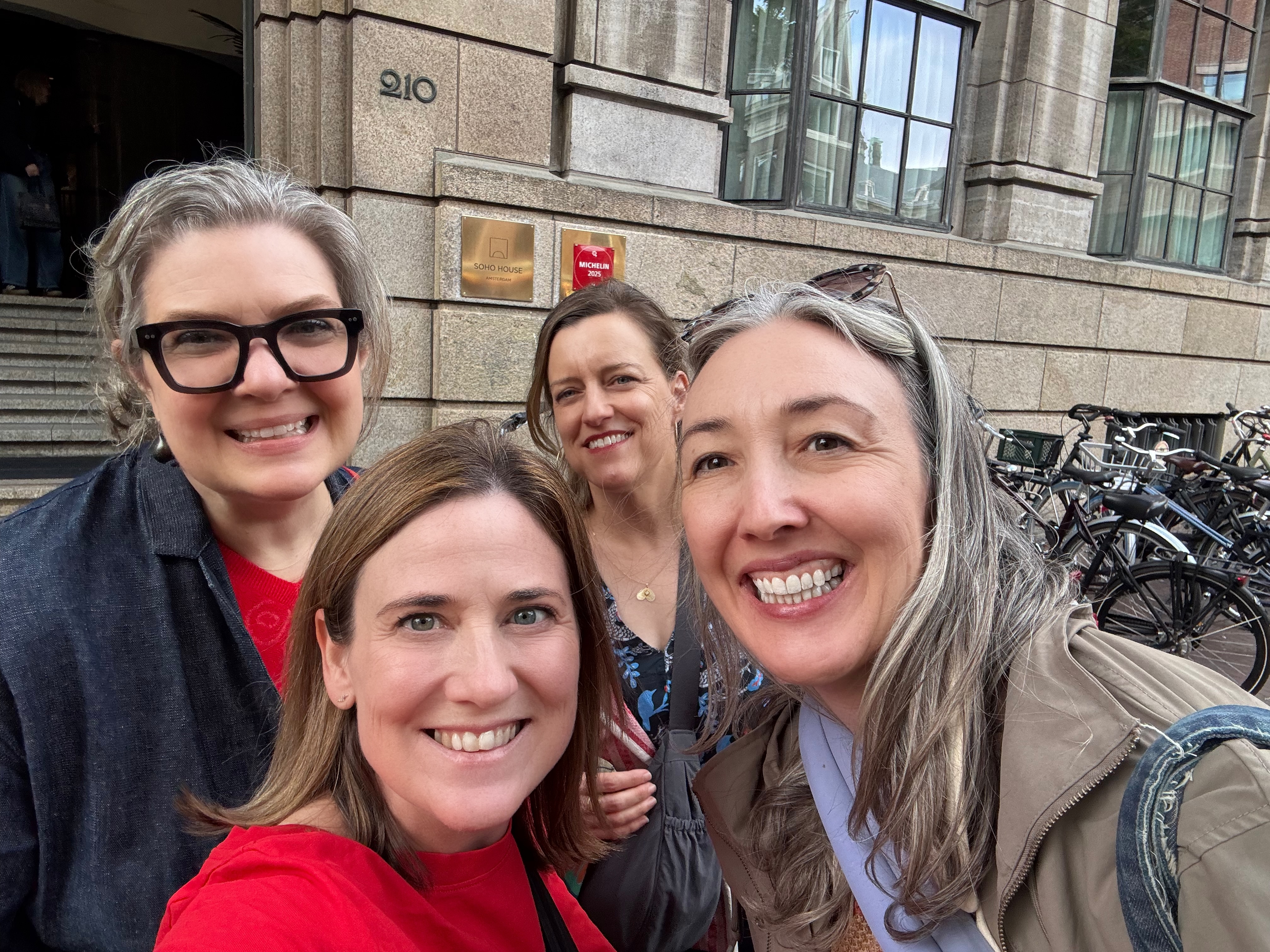
She also introduced me to Bonnie Cauble and Sarah Pedlow, both creatives based here. Amsterdam continues its long-running campaign to make everyone in the world no more than two introductions away

Travel

Autumn has been sitting ominously in the calendar for a while now.

This week it begins: a quick trip to Bristol.

This week in photos
Weeknote 25/11

On my walk home last night I managed to catch that spot at Reguilersgracht/Herengracht where you can see all six bridges, with no boats. Jackpot. Photo: me.

It’s St. Patrick’s Day, which means somewhere, someone is butchering the pronunciation of sláinte, and the world’s most tenuous Irish connections are being milked for all they’re worth.

As an actual passport-holding half-Irish person, I shall be marking the occasion by… doing what I do every week: wrangling intranets, herding stakeholders, and wondering why AI still can’t do the boring but important stuff properly.

This week at work

Back working with a client we helped launch an intranet for at the end of last year. It’s landed well—users like it, stakeholders are pleased, and now comes the next phase: shutting down the digital graveyards of legacy sites. We’re mapping what to keep, what to archive, and what to chuck in the bin.

Teams are often stunned at how little of their content is doing anything useful. Most pages get barely a glance. And while you could argue that abandoned content costs nothing, every extra page makes it harder to find the stuff that actually matters. Worse, if it’s outdated or misleading, it’s not just clutter, it’s a risk. The brutal reality is that unless you’ve had cast-iron content governance from day one, you can probably delete at least half your intranet with zero consequence. More likely, 90%.

So we’re sifting for the gold, reassuring stakeholders that most of their lovingly hoarded PDFs are no great loss, and helping the client streamline their digital estate. Fewer sites, less noise, and some actual cost savings.

Everyone in this space loves to talk about AI, but for now, it’s the unglamorous grind of governance and admin that makes the biggest difference to employee experience. (And yet, sorting the short neck of valuable stuff from the very long tail of ROTten content is exactly the sort of thing AI should be good at, and yet… isn’t. If you’re an intranet vendor with software that actually does this well, I would love to see it.)

Meanwhile, on another project, we’re developing a series of bespoke workshops. Didn’t set out to be a ‘workshop person,’ yet here we are. Apparently, we’re quite good at it too.

And since no one else is tooting our horn, I’ll do it myself. Recent feedback includes:

  • “That was the best-run workshop I’ve ever been to. I can’t believe we got through so much in a day.”
  • “Every meeting, I admired the way you managed to bring people together, even in tricky situations.”
  • “That was fantastic! Perfectly paced, and I love how you kept everyone focused.”

I do enjoy it—designing a well-paced, structured session that cuts through competing perspectives and actually gets people to a decision.

On the downside, a project we were due to start has been booted to a later budget round, so we’ve got some unexpected capacity over the next few months. If you need help untangling your communication and collaboration mess, give us a shout. Maybe you don’t quite know what you need, just that things aren’t working as well as they should. Those are my favourite projects.

In a laughably unsubtle attempt at business development, here’s my page on working with me. (And this lack of subtlety is why I don’t work in sales.)

Also this week

False spring came and went, but at least it was proof the planet is still spinning towards brighter days. News remains an omnishambles, so I’m sticking to my avoidance diet.

Quick trip to London to meet a prospective client, do some planning, and see my folks.

Consuming

👩🏻‍💻 Internetting

Anyone who’s worked on the internet for long enough will have watched the same cycle play out: bright young thing arrives to ‘shake things up,’ promptly tears everything apart, and then vanishes before the consequences hit, leaving others to clean up the mess.

So I appreciated this interview with Jennifer Pahlka, founder of Code for America and former US Deputy CTO. She lays out a case for smarter, more responsible government transformation. Her book argues that bureaucracy smothers good policy and that better internal tech capacity—rather than over-reliance on contractors—could fix it. Instead, we get sweeping, indiscriminate cuts that hurt the people who rely on public services the most.

Not that anyone in power will listen for a second.

The internet was built on cat pictures, so logically, its next evolutionary step is cat videos. Cats making burgers, to be precise.

It’s no “He’s making a mockery of you, Derry” bat video but an otter loose in the kitchen is always worth watching.

📺 Watching

I had a second attempt at watching Slow Horses, and got sucked in this time. Once you suspend disbelief at the poor OPSEC and laughably lax controls of a team supposedly working for the secret services it’s really quite enjoyable nonsense with some great performances.

I also saw the new Bridget Jones movie at the cinema. It was sold as a romcom but turned out to be a movie about grief that had me weeping from about 5 minutes in.

📚 Reading

Nowt this week

🎧 Listening

Episode three of Broken Veil cranked the creepiness up a notch.

Connections

I managed to catch up with the wonderful Lisa Riemers when I was in London. We talked, inevitably, about accessible comms. I’m looking forward to her book on the same.

This week in photos