
A lot of this week came down to vantage point.
The same road looks completely different depending on whether you drive it every day or have never sat behind a wheel in your life. The same TV show looks completely different from twenty years on — what read as entertainment then reads as something considerably darker now. Even your future self looks different depending on when you do the looking. Sometimes a stranger; sometimes, if you’re lucky, someone you recognise. This was a week for viewing familiar things from unfamiliar angles. I’m not sure I arrived at any grand conclusions. But it’s worth paying attention to when the angle shifts.
This week at work
First edits back from the production editor at Kogan Page. There’s something a bit surreal about watching a collection of documents start to look like an actual book — like, a real one, that will exist in the world and everything.
Which means it’s time to actually tell people about it. We’ve got the bones of a social media plan together, and I’ve accepted the inevitable: the algorithm demands video. I’ve invested in a lavalier mic and made my first one. I still hate it. We’ll see how that goes.
Had a great conversation with Georgia at Blink about a webinar I’m doing for them in a couple of weeks — one of those calls that left me genuinely buzzing afterwards. The talk’s on one of my favourite topics: making the business case for investment in comms.
It’s an area where communicators tend to fall into one of two traps. Either they reach for the fluffy stuff — engagement, culture, vibes — which sounds unconvincing to anyone holding a budget. Or they overcorrect and wheel out large, suspiciously precise numbers: our intranet costs $16 million in lost productivity. Credibility: also not great. What actually works is harder and more interesting — genuinely understanding what matters to the business, and being able to articulate clearly how your plans will deliver real value or solve real problems for the people you’re trying to persuade.
It’s something we go into in depth in the book, and honestly I could talk about it for hours. I only have an hour for the webinar, though — so do come and join me virtually.
Been working through a partnership project, which I always find satisfying in a slightly nerdy way. Mapping out where our respective strengths lie, how they fit together, what the overlap produces. Good work, done well, by people who complement each other. That’s the dream.
Both of our big client projects are moving. We’ve spent time on the unglamorous essentials. RACIs, communication processes, all the scaffolding nobody wants to talk about but everything depends on. With that in place, the pace has picked up noticeably.
Also this week
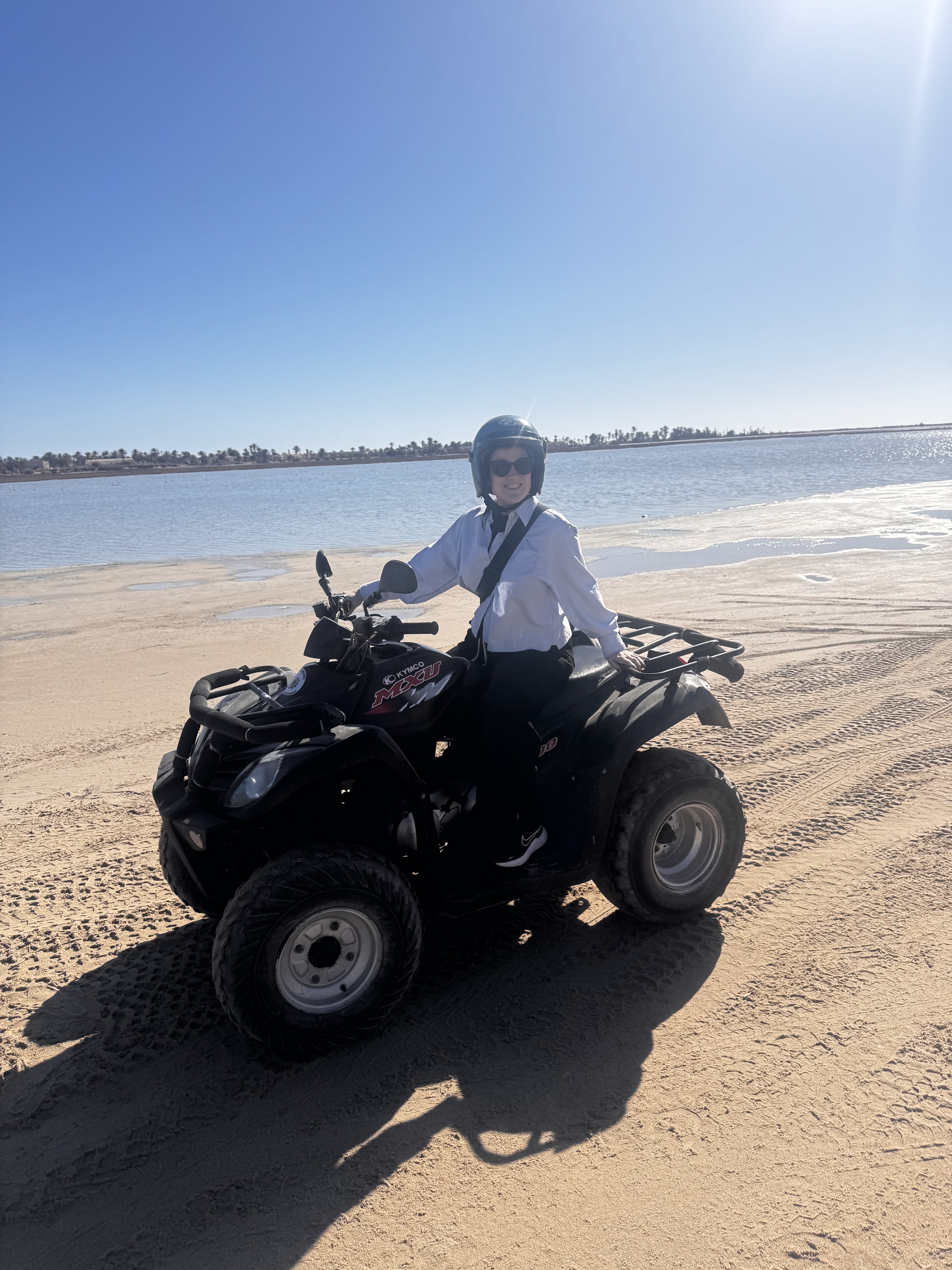
Finished off my trip to Tunisia with a morning of quad biking — threading through Djerba’s back alleys, out to the beach, and at one point, onto an actual road. Alongside actual cars. I have never had a single driving lesson in my life. It was unexpectedly, almost embarrassingly, thrilling.
It got me thinking about how something utterly ordinary to most people — something they do every day without a second thought — can feel completely novel, challenging, even a little scary, to someone else. Familiarity is so relative.
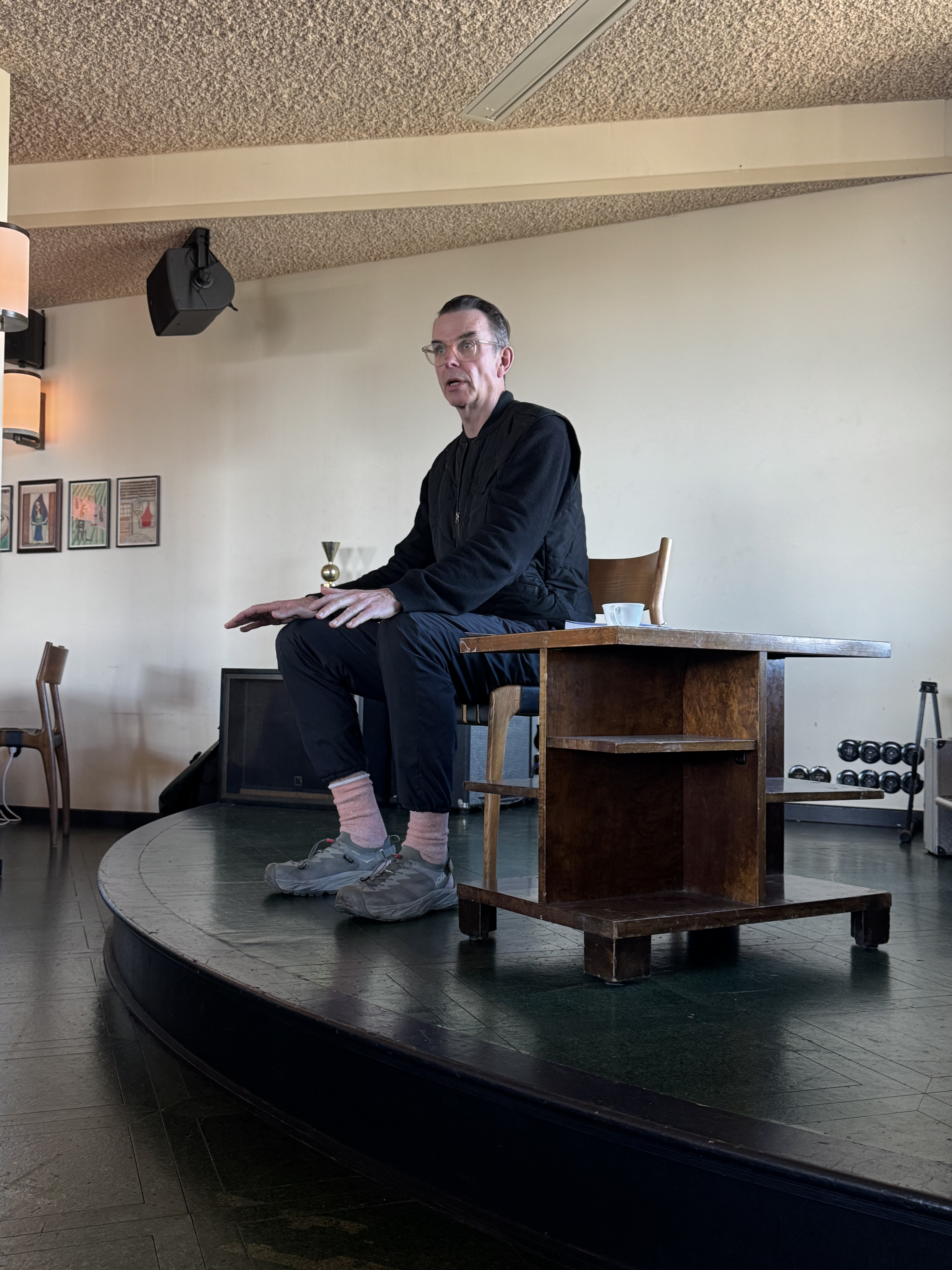
Back home, on to something more grounded: a workshop with leadership coach Neil Schambra Stevens on kindness as a tool for grounding and resilience. He made the case for being deliberately unstimulated — giving your brain space to actually think, analyse, create, rather than just react to the next notification. The science backs him up: acts of kindness at work reduce cortisol, increase serotonin. Being nice, it turns out, is good for you.
One of the exercises involved visualising your perfect day ten years from now — which reminded me of something similar I did on a Futures Thinking course with Jane McGonigal at Stanford. Jane introduced a finding I’ve never quite let go of: psychologically speaking, our future self is essentially a stranger. UCLA psychologist Hal Hershfield found that when people think about their future selves, the same brain regions activate as when they think about a stranger — someone neurologically other. We routinely make sacrifices for the people we love, and even for strangers. The one person we reliably fail to look after is our future self.
So it surprised me, doing the visualisation today, to find that my perfect day in ten years looked remarkably like now. Not identical, but recognisable. Continuous. It’s not something I could have said a decade ago. And that left me oddly reassured that the path I’m on is one I’m happy with.
Neil’s talk of digital distraction also landed close to home, given how much of my work focuses on digital employee experience. The uncomfortable truth is that digitisation too often makes the overwhelm worse — trading real relationships for mediated ones, colleagues for bots, presence for automation. Good digital employee experience should be hiding complexity, reducing context-switching, lightening cognitive load. But we also need to make the case to leaders for the value of the analogue. For the dull task that resets the mind. For boredom as a precondition for deep thinking. For understanding that a Teams presence indicator fading to amber might, just occasionally, mean someone is doing their best work.
Consuming
Finished Eve MacDonald’s Carthage: A New History of an Ancient Empire on the plane home from Tunis. A fitting end to what has become, I’ll admit, a fairly extended Punic Wars obsession. Normal service will now resume.
Which meant I arrived home ready for something more highbrow. Specifically: Netflix’s Reality Check: Inside America’s Next Top Model. A show I occasionally dipped into back in the day, apparently entirely failing to register how jaw-droppingly problematic it was. Watching it now, from a distance of twenty-odd years, is a genuinely uncomfortable experience.
The parallels with Sarah Ditum’s Toxic, which I read when it came out in 2023, are hard to miss. Ditum’s argument is that the early 2000s produced a specific, particularly vicious strain of misogyny: one that dressed itself up as entertainment, that made the humiliation of women into a spectacle, and that everyone more or less went along with because the culture said it was fine. Top Model is practically a case study. The relentless scrutiny of women’s bodies. The casual cruelty framed as mentorship. Tyra Banks telling a contestant she’s disappointed in her… for eating. What’s striking isn’t that it happened; it’s that it was primetime. That it had fans. That I was, occasionally, one of them, watching it without a flicker of discomfort.
That’s what both the documentary and Ditum’s book are really about: not just what was done, but how completely normal it seemed at the time. Which inevitably raises the question of what we’re all cheerfully consuming right now that will look equally horrifying in 2045.
Travel
Home this week and next, which is a novelty. But the diary has suddenly filled up with a fairly alarming number of trips over the coming months. I guess this is what promoting a book looks like.
This week in photos


 Sharon O'Dea