
A Wall Street Journal story caught my eye this week, showing a striking gap between how much time CEOs claim AI is saving them, and how little difference it’s making to working lives for everyone else. Which makes sense: if you’re senior enough, saved time comes back to you. If you’re not, it just creates space for more tasks to rush in and fill the gap in your to-do list.
It’s a useful test for most things we currently label as “progress”. AI. Trust initiatives. New ways of working. Not whether they sound impressive, but who actually gets the gains. This week I found myself on both sides of that equation.
This week at work
The work that actually landed this week reinforced how new doesn’t always mean shiny — and the most interesting work often happens in the gaps nobody’s quite bothered to map yet. We’ve been working with a client on preparing their internal content for an agentic-first future, which sounds like the sort of consultant waffle that should come with a health warning but actually just means: what happens when your systems stop passively sitting there like well-meaning idiots and start doing things with your content? Making decisions. Taking action. Possibly developing opinions about your governance framework. It’s been genuinely exciting to think through. The sort of work that makes you sit up slightly straighter because it feels like you’re operating at the edge of something that hasn’t quite settled yet, which is either thrilling or deeply unnerving, depending how your week’s going.
Predictably, it’s also reinforced the least fashionable truth in comms: none of this works without solid foundations. Clear content. Sensible structure. Agreed ownership. The boring stuff. The stuff that makes people’s eyes glaze over in workshops. It was never about the tools, and it still isn’t.
I also read the Edelman Trust Barometer this week, found myself increasingly irritated by the conclusions, and wrote about it for Strategic. The response suggested I wasn’t alone in my scepticism. There’s something about the annual ritual of treating a global perception survey as if it were both diagnosis and cure for trust that reliably sets my teeth on edge. Plenty of people agreed with my view that we shouldn’t be too quick to congratulate ourselves on employers being the most trusted institution: it’s only because we’re the least worst in a world where everything’s gone comprehensively to shit. Edelman’s prescription — “trust brokering” — might make communicators feel momentarily useful, like we’ve been handed a purpose and a tote bag, but we’re not in any position to fix fractured societies through great workplace facilitation and a really solid Q&A format. Lots of nodding along in the LinkedIn comments, which is always reassuring (if slightly depressing).
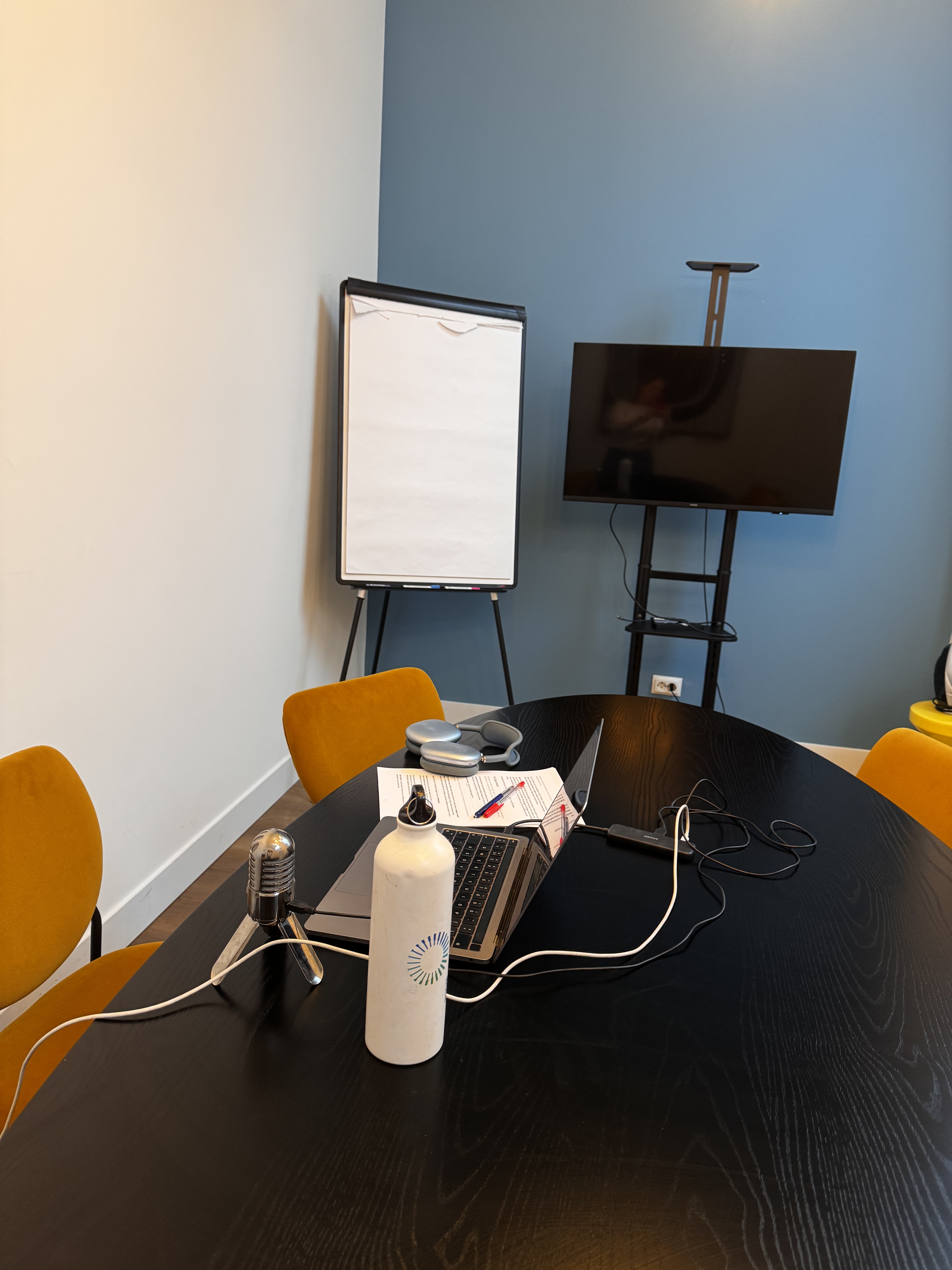
On the book promo front, I recorded a conversation with Chris Brennan from Cofenster, an AI video company for internal comms. Regular readers will know I’m something of a workplace video sceptic. A words person. A face for text. Too old for TikTok. I resent something being shoved into a one-minute video when a single sentence would do the job, sitting there in its tab demanding my undivided attention like a needy bastard. People have limited time, limited attention, and often limited reason to care — and video is a particularly demanding format if you get it wrong. Which, let’s be honest, most people do. Despite all this barely-suppressed hostility, we found ourselves agreeing on more than we disagreed on: video has a place, but only when it’s intentional, respectful of time, and actually good. AI can help with that. It can also automate the production of absolute drivel at industrial scale, so, you know.
Also this week
Off the back of the taiko drumming workshop I did in Japan, I signed up for a class here in Amsterdam. Extremely fun, deeply physical, and unexpectedly calming — all rhythm, coordination and collective focus. I will absolutely be drumming again.
I was also delighted to get confirmation that we’re bringing 300 Seconds back to Camp Digital this year. This will be our fourth outing: five-minute talks from first-time speakers, showcasing new voices and perspectives. Camp Digital is always an absolute corker — smart, thoughtful, genuinely cross-disciplinary — and I love that it consistently makes room for people who don’t usually put themselves forward for a conference stage. If you manage or mentor talented people who have something to say but might not yet see themselves as “speakers”, please nudge them in our direction.
I’m especially chuffed to see Jane Bowyer, one of last year’s 300 Seconds speakers, appearing on the main conference agenda this year — exactly the outcome this format is designed to create. Huge thanks to the Nexer Digital team for carving out space for this again. Manchester in May: firmly in the diary.
All of which put me in a suspiciously good mood — the kind that briefly convinces you you’re on top of things. Feeling unusually competent, I made the classic error of assuming this was a good moment to finally deal with my expenses.
And in a stunning personal breakthrough: I cracked them. With AI’s help. This is not a small thing. I hate admin. I am catastrophically terrible at expenses. My avoidance of them has been a recurring source of low-level stress and occasional quiet despair. The sort where you lie awake at 3am wondering if HMRC has a special category for “tax evader through sheer incompetence and avoidance.”
But this week, I finally built myself a system that works with my brain rather than against it. And for once the efficiency actually benefited me.
Some context: I am in the unfortunate position of being both dreadful at admin and having a complex financial life. Businesses and homes in two countries, multiple currencies and accounts, frequent travel. A combination that lends itself not to calm quarterly expense management but to spreadsheet paralysis and elaborate procrastination, usually involving reorganising the kitchen.
For years, the problem wasn’t the maths. It was the ‘activation energy’. Too many receipts, too many edge cases, too much scope to get something slightly wrong and then feel dreadful about it for weeks. So instead of trying (again) to “be better at expenses” — a resolution that has failed me annually since roughly 2012 — I built a system that does the thinking with me.
The result: a task I’d been avoiding for months got done in a morning, and I could stop feeling guilty and stressed about it.
And this, I think, is the bit that often gets missed in the AI efficiency conversation. AI can make us more efficient — but only if we’re allowed to keep the gains. In irritants removed. In tasks genuinely finished. In stress not carried around for weeks and keeping you awake at night. And sometimes, if you’re lucky, in the ability to take that reclaimed time or money and reward yourself with something tangible — like booking a holiday and remembering what it feels like to be slightly ahead of your life rather than chasing it.
(If you also hate doing expenses, there’s a short note at the bottom of this post on how I did this myself.)
Consuming
Like much of the UK, I have been completely gripped by The Traitors. This is the first time in years I’ve curtailed an evening out with friends on purpose so I could be home at a specific time to watch a television programme as it was broadcast. All round, it’s top-notch TV: pacey, absurd, psychologically vicious, and impeccably cast. I now have no idea what to do with my evenings now that it’s finished. I suppose I could go back and watch the first three series, which I somehow failed to get around to at the time — a rare luxury, discovering you’ve accidentally stockpiled excellent television.
At the other end of the spectrum, I read On Tyranny: Twenty Lessons from the Twentieth Century, which I picked up after hearing Timothy Snyder speak last week. It’s a short read, but a bracing one — and it feels especially urgent given events in Davos and the US this week. Not exactly comfort reading, but the sort of book that sharpens your thinking and makes it harder to wave away things you’d rather not look at too closely.
Coverage
Jonathan and I popped up on Mike Klein and Janet Hitchen’s Navigating Disruption podcast, talking about the present (and alleged future) of work. It was a genuinely refreshing conversation, mostly because it refused the usual Anglo-Saxon rut: endless RTO discourse, a light dusting of AI panic, and everyone pretending the “future of work” is being drafted in a WeWork somewhere between London and San Francisco.
This episode was recorded with me in Japan, Janet and Jonathan in two different UK cities, and Mike in Iceland — which rather made the point for us. Work is already global, hybrid, mobile and messy; the debate just hasn’t caught up. With Mike about to head to India for a study visit, we talked about demographic realities that completely reshape the problem statement: Japan’s rapidly ageing population and shrinking workforce, versus India’s surge of young people joining the workforce faster than jobs can be created. The “future of work” isn’t a singular. It’s a patchwork — and a lot of it is already happening.
We also ended up, inevitably, back in our home territory: comms and digital channels are still designed around an outdated archetype of the Western office worker, while real organisations are a mix of employees, contractors, outsourced teams, mobile workers, and people in places where the power and wifi don’t behave reliably. The challenge isn’t “how do we boost engagement?” so much as “how do we enable people to do good work, wherever and however they’re doing it?”
A note on how I finally did my expenses (without hating every second)
As mentioned above, I’ve finally cracked expenses with AI’s help. And I’m sharing the approach in case it’s useful to other admin-haters out there.
Realising that what was stopping me getting this job done was the combination of data entry and detail-orientation, I experimented with building a custom agent to do it for me.
- I used AI as a patient, non-judgemental admin assistant, not as an accountant. I fed it photos of receipts, bank statements, and my often rambling explanations, and asked it to turn those into the exact structured format I needed to submit to my accountant.
- I didn’t just dump everything in and hit go. I worked one statement at a time, sense-checking the outputs, confirming accuracy, and correcting it where needed.
- Each pass made the agent better. I tweaked the instructions as I went — clarifying rules, edge cases, VAT treatment — so it gradually learned how my finances work.
- I gave it the rules once (what counts as a business expense for me, what needs explanation, what doesn’t) and reused that context.
- I asked for very specific outputs: itemised lists, totals, and notes I could paste straight into my spreadsheet
- Crucially, I stayed responsible for the final check. It reduced the load; it didn’t absolve me of responsibility.
And doing that means a task I’d been dodging for far too long finally got done. Even the fiddly little ones I’d previously have decided weren’t worth the. effort.
The broader lesson (for me, at least) is that AI is at its most useful not when it’s doing flashy, impressive things, but when it removes friction from the tasks you dread, so they actually get done.
This week in photos








 Sharon O'Dea