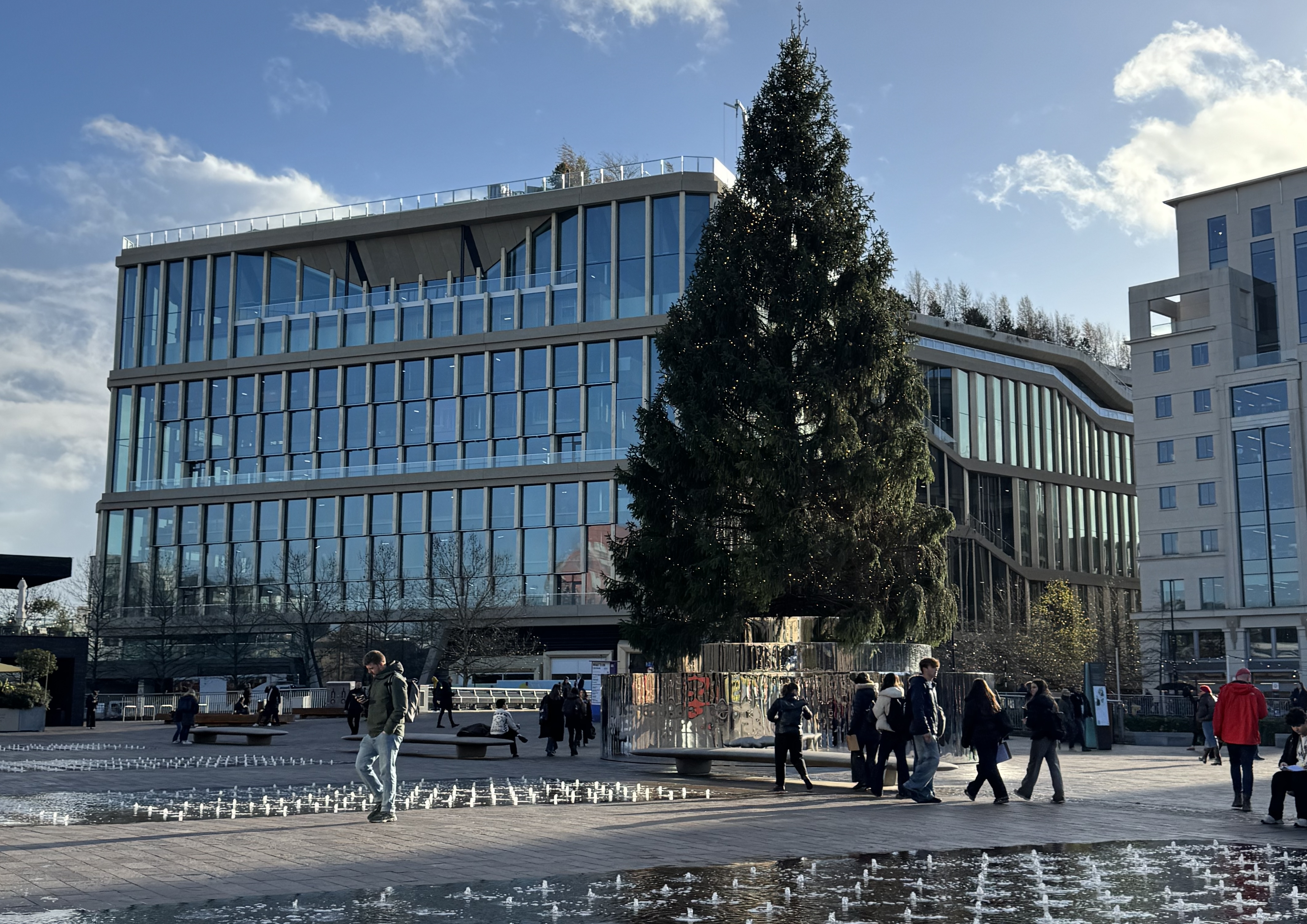
I keep coming back to the same realisation this week: the future of comms isn’t just more digital. It’s more structurally complex.
Not more tools in a tidy stack. Not smarter systems in a neat ecosystem. But messier audiences, overlapping loyalties, porous identities, and workplaces that no longer contain people in the way they once pretended to. Add AI, video overload and algorithmic confidence into the mix and you don’t get clarity. You get chaos but with single sign-on.
Consider the past few days a field experiment no one asked for but everyone participated in.
This week at work
I’m currently locked in a low-grade standoff with the final chapter of the book — the one about the future of digital internal comms — which is refusing to behave like a normal chapter and instead insisting on being part travelogue, part systems theory, part group therapy session for a profession in the middle of a long, quiet identity crisis. It keeps pretending to be a chapter while actually being an accumulation of travel, interviews, unease and an unreasonable number of open browser tabs. It is, frankly, a menace.
Midweek I was back in London for the Communicate Conference, hosted by vendor Interact. It was at an Interact event, over 15 years ago, that I met my now business partner, Jonathan. So it felt oddly cyclical to be there discussing whether intranets even exist in the future.
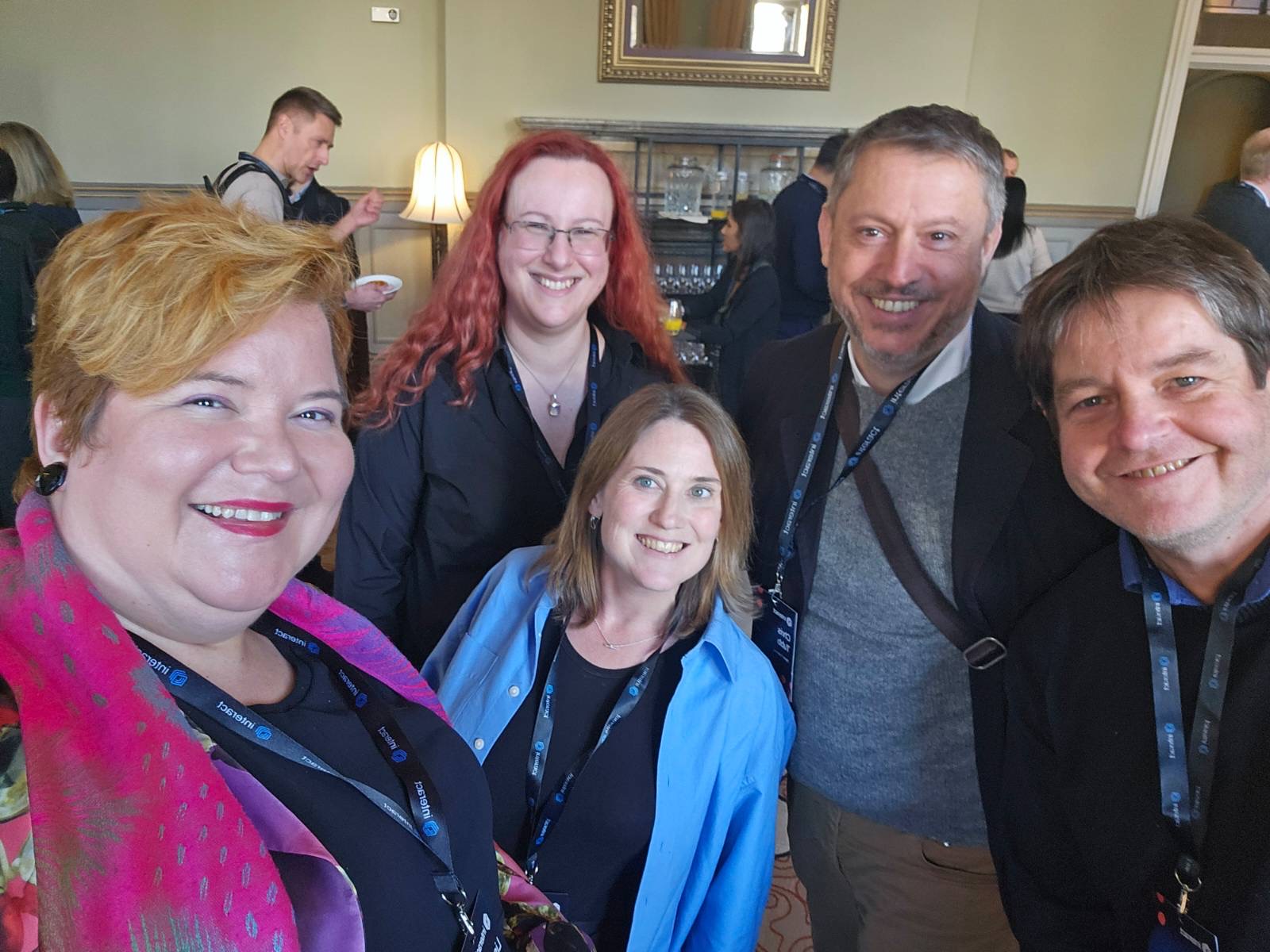
What I hadn’t fully anticipated was how many familiar faces I’d run into who’ve been in the intranet and comms world for as long as — and in some cases longer than — I have. Which led to a steady stream of conversations that start light and get surprisingly philosophical. The shared laugh was always the same one: everything old is new again. The same overblown vendor claims we heard fifteen years ago, now wearing an ill-fitting suit called AI.
Different nouns. Same promises waiting to be broken.
But running underneath the cynicism was something much more serious. The conversations quickly turned to how the organisations we’re working with now are structurally more complex than anything we dealt with a decade ago — layered supply chains, outsourcing, platforms, regulators, global delivery, blended workforces, algorithmic management. And at the same time, the pace of change has accelerated to the point where even seasoned teams feel permanently slightly behind their own reality.
It’s a strange duality: the tech rhetoric looping, while the organisational conditions it’s being dropped into are genuinely unprecedented. Which may explain why so many “this will finally fix it” moments keep… not fixing it.
A few highlights from the conference:
Allan Tanner opened with a session on AI and the digital workplace. A quick poll showed about two-thirds of the room using generative AI weekly, but early findings from the Gallagher State of the Sector report suggest one in three are using it without any oversight, and only 40% feel confident in their skills.
What surprised me wasn’t the numbers so much as the familiarity of them. You could lift this whole section almost intact from a conference two years ago and nobody would blink. In a field that insists it’s moving at hyperspeed, that’s… odd. Is the survey already ageing in dog years? Or are comms teams simply adopting more slowly than the hype suggests?
The idea of an AI agent-first future replacing intranets floated through the room — but the awkward ownership question still hung there, unresolved. Comms? IT? HR? When everyone owns it, no one really does.
Also: we have absolutely been here before with chatbots.
The exact example used was booking leave. The endlessly cited use case where, in theory, a bot should smoothly handle what currently requires checking a team calendar, emailing your boss, verifying your entitlement, and then logging it all in some separate HR system. That was the canonical chatbot demo when I was doing a whole series of talks on this… in 2017. That’s getting on for a decade ago. If this really is an easily solved problem, we’d be living in it by now. The fact that we aren’t tells you something important.
When the tech keeps changing but the outcome doesn’t, you’re not looking at a technology failure — you’re looking at a human systems failure.
Sam Bleazard followed with employer brand as the connective tissue between HR and marketing, using Fortnum & Mason as a case study in visual storytelling and employee voice.
Then came Tom Vollmer from Cofenster with the stat that properly landed: around 23 hours of internal video uploaded every week, versus about 10 minutes actually watched. The issue isn’t underinvestment — it’s saturation. We are not video-poor. We are video-exhausted.
I fear I have crossed a generational Rubicon because I now actively resent being asked to watch a video for an entire minute. A minute of looking. Nope. I want text I can skim while emotionally elsewhere. I want bullet points, headings, and plausible deniability. Video is no longer a medium; it’s an attention hostage situation.
AI can now generate highlights, scripts and even videos from PDFs, which is undeniably impressive. But it also raises a more troubling possibility: that we’re no longer just producing noise at scale — we’re now automating it at industrial volume.
And when people can’t even keep up with the volume of information being thrown at them, it’s hardly surprising they stop engaging with it. Cognitive overload is the silent assassin of communication.
Helen Bissett shared disengagement data from Gallup that was hard to ignore: 90% of UK employees feel disengaged at work, while over 80% practise mindfulness outside of work. People are repairing themselves in their own time because work no longer does.
But this is also where I felt a quiet friction forming with some of our default assumptions. Engagement is treated as the unquestioned North Star — yet I’ve just spent weeks in Japan, a country consistently cited as having low employee engagement, alongside high levels of personal life satisfaction.
It left me, once again, with a nagging sense that we may not always be chasing the right thing.
The closing case study from AMS took an 11-page PDF innovation brief and turned it into an intranet takeover with storytelling, countdowns and discussion. Strong results. But what stuck with me was structural: AMS staff often hold dual loyalty, to the company that employs them and the client organisation they sit inside. It’s a pattern on the rise: the audience for “internal” comms is often not internal at all.
Across the day, the pattern repeated: AI, video, employer brand, purpose — all accelerating. But the deeper shift isn’t technological. It’s structural. Our audiences are fragmenting, our channels are multiplying, and the idea of a single, coherent “employee experience” is becoming more theoretical than real.
Oh, and we unexpectedly landed a juicy new client. Entirely unplanned. Entirely welcome <stares at impending HMRC bill>. All systems go.
Also this week
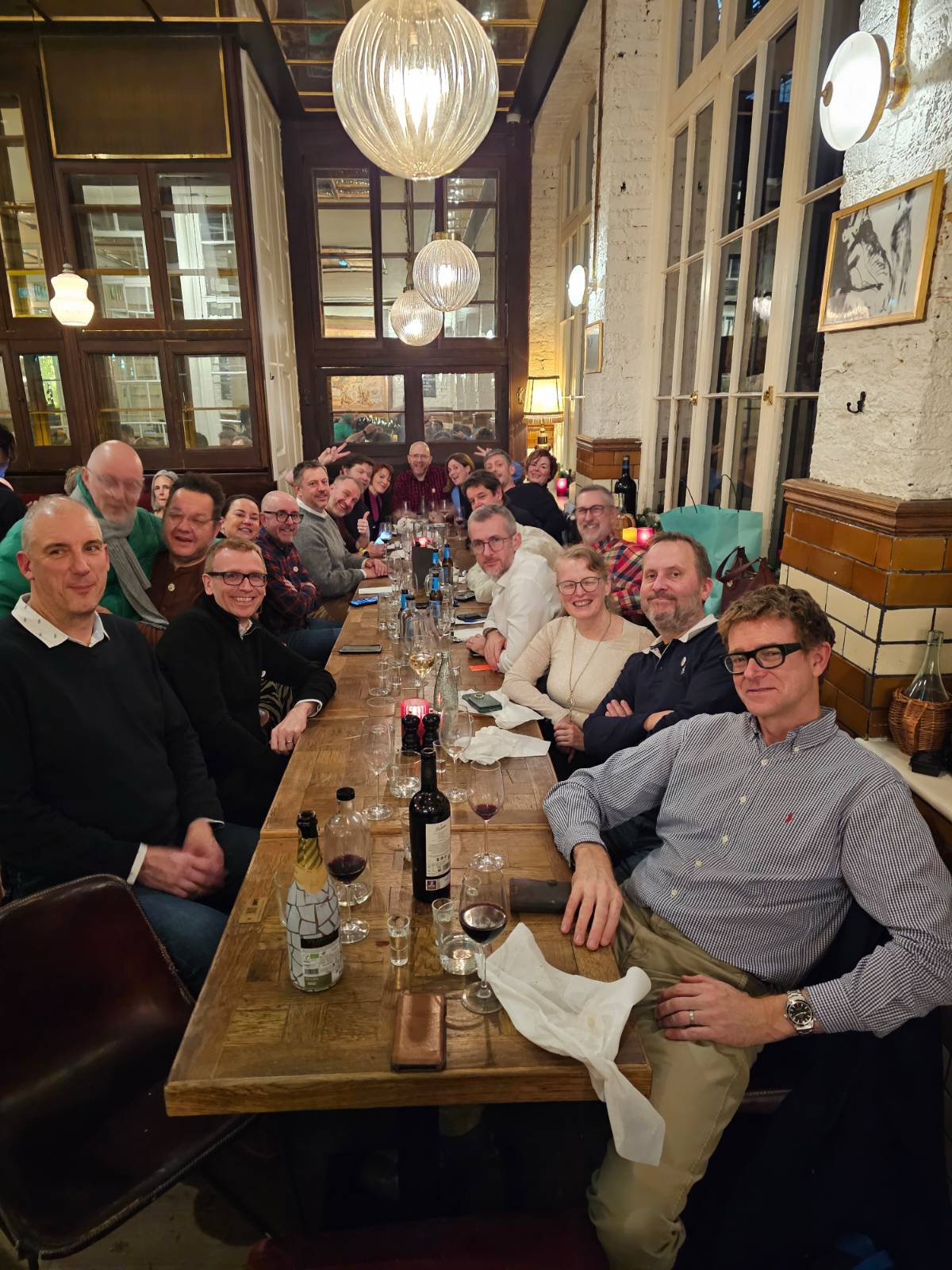
I went to the WB-40 Christmas dinner in London. WB-40 is a podcast about how tech reshapes work, with an associated Signal group that might genuinely be the friendliest place on the internet. It was lovely to see people properly, in three dimensions, after years of being avatars in each other’s phones.
And it left me with a question I can’t quite shake: what if low engagement at work isn’t always a failure? What if, in some cases, it’s a boundary?
It certainly maps, subjectively at least, to my own experience of the last decade. I haven’t had a “proper job” in years, and I don’t look to work for belonging, identity or community in the way I once did. Those needs are met elsewhere now — through friendships, networks, odd little internet corners, shared projects.
So if people can have rich lives, strong identities and real community without work being the emotional centre of gravity, is “more engagement at work” always the right thing to chase? Or are we sometimes trying to re-inflate a social and psychological role that work can no longer credibly carry?
That Japan contrast keeps needling at me. Maybe the problem isn’t that people are disengaged from life. Maybe they’re disengaging from work — deliberately.
Some of the most important people in my life mostly exist as glowing rectangles in my pocket. Which feels odd to admit, and yet it’s completely true.
Which made the next thing I went to this week land even harder: a talk on psychological safety with Ania Hadjdrowska — and instead of feeling theoretical, it felt uncomfortably operational.
Because in a world of hybrid teams, async work, platform hopscotch and digital performativity, psychological safety now shows up (or doesn’t) first in online behaviour:
- Who speaks in the channel
- Who stays silent
- Who only reacts with emojis
- Who disappears entirely
In remote and hybrid work, participation is visibility. Silence is no longer just silence. It’s interpreted as disengagement, resistance, risk, apathy. Often unfairly. Often reductively.
The classic barriers still apply:
- Fear of judgement
- Fear of exclusion
- Fear of conflict
But digital work amplifies all three. You don’t get tone-of-voice buffers. You don’t get corridor repairs. You don’t get the quiet reassurance of eye contact after a risky comment lands badly. Everything is logged, screenshot, searchable. Mistakes feel permanent. So people calculate. And then they don’t speak.
Before the rational brain catches up, the amygdala scans for threat — hierarchy, tone, uncertainty. If it detects danger, it triggers fight, flight, freeze or fawn. No one innovates when they’re being emotionally chased by a tiger. And no one meaningfully collaborates when every contribution feels reputationally risky.
Psychological safety, as defined by Amy Edmondson, is the belief that you won’t be punished or humiliated for speaking up with ideas, questions, concerns or mistakes. Not agreement, but constructive disagreement.
That matters even more when:
- Teams are distributed
- Trust is assumed rather than built
- People meet as avatars before they meet as humans
- Employment relationships are shorter, looser, more conditional
We are asking people to be brave in systems that increasingly give them no margin for error.
The line I can’t shake is still this: silence is expensive. In digital workplaces especially, it quietly drains collaboration, learning, innovation and belonging — while looking, misleadingly, like “everything’s fine.”
And that “booking leave” example kept needling at me again. Such a small task, yet it still demands procedural obedience, reputation management, tool-hopping and emotional calibration. Multiply that across a working life and you start to see why people are tired — and why AI keeps stalling on exactly the same rocks.
Layer on the social media disinhibition effect (performance, oversharing, dunking, provocation) and it doesn’t always switch off at work. When trust thins, people retreat into safer containers: private chats, external networks, side communities. Belonging migrates. Collaboration fragments. Comms gets harder.
Consuming
(Keeping this bit short this week cos I’ve wittered on above)
Like the rest of the planet, my listening week was dominated by the release of Spotify Wrapped — the global ritual in which an algorithm holds up a mirror and everyone pretends to be surprised by what’s staring back.
Once again, mine was a window into my not-so-secret pop shame. I had solemnly vowed that Taylor Swift would not dominate my Top 10 this year. And then she went and released a banger. And Lily Allen casually dropped the confessional of the decade. What’s a woman supposed to do?
Once again, I will not be sharing my list with the wider world.
Spotify also informed me that my “listening age” is 46. I am 45 and a half, thank you very much. I refuse to be aged up by an algorithm.
Connections
Staying with the theme of where community actually lives these days, I also met up with Jenny Watts — a mainstay of another of my favourite online communities, the old FitFam crowd.
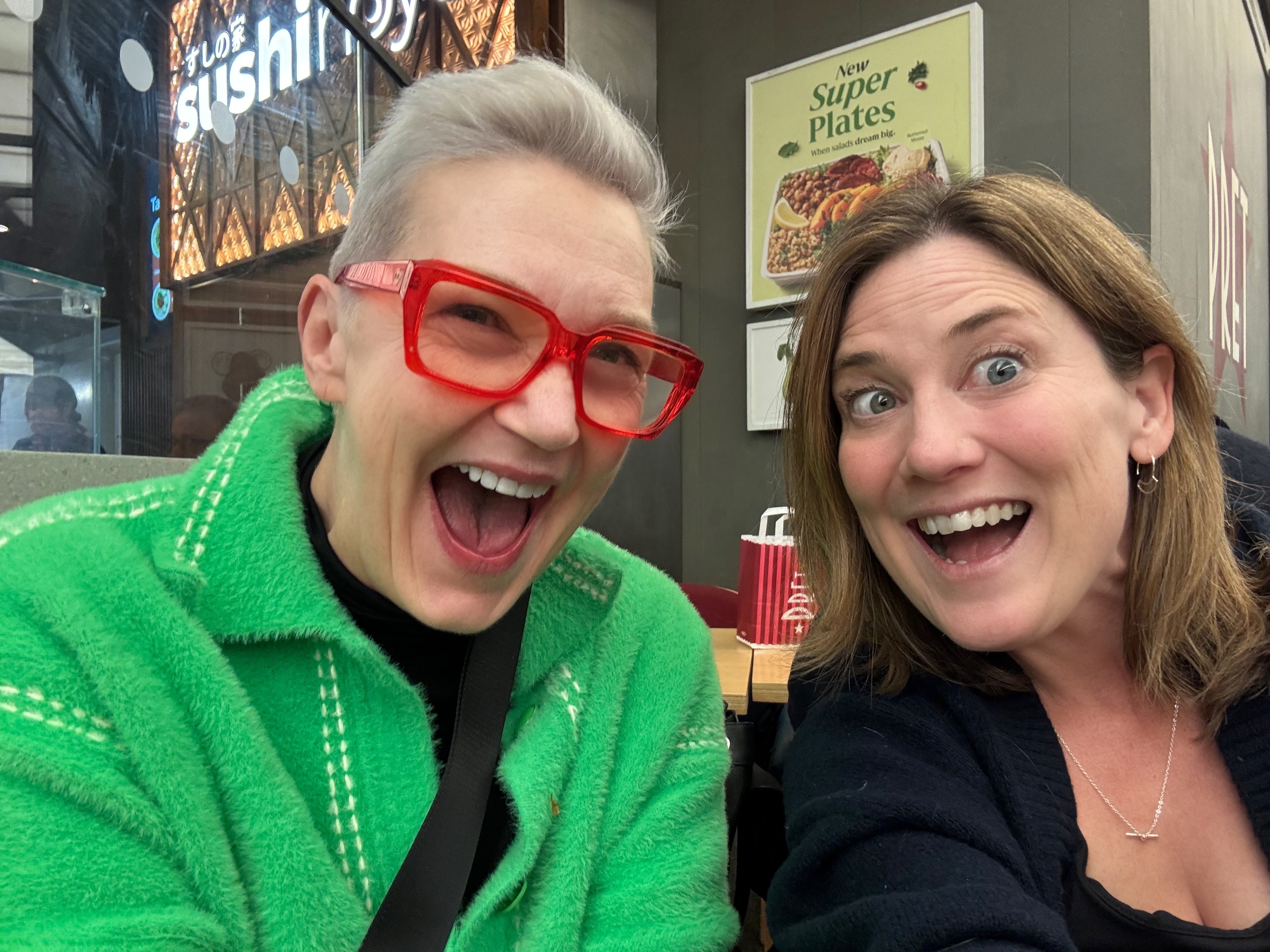
FitFam started life years ago on Twitter: a loose group of people talking about health and fitness, cheering each other on with our running times, gym attempts and “I went for a walk instead of lying face down on the sofa” victories. It was low-key, kind, and weirdly effective.
Given the descent of Twitter into a hate-filled sewer, the group’s now migrated to WhatsApp. Same people, different platform. The conversations are smaller, more honest, less performative. It’s a nice reminder that while platforms come and go, the communities that matter tend to quietly pack their bags and move together.
Another small data point in the same direction: belonging is increasingly something people build around themselves, not something work hands out with a lanyard.
Coverage
I ended up in the Financial Times this week. Which, in comms-world terms, is basically being knighted.
They shared a slice of my time in Nagasaki. Including my slightly surreal exploration of the future of work alongside a remote-controlled robot tour guide, piloted by a disabled operator elsewhere in Japan. A sentence I still can’t quite believe I get to write.
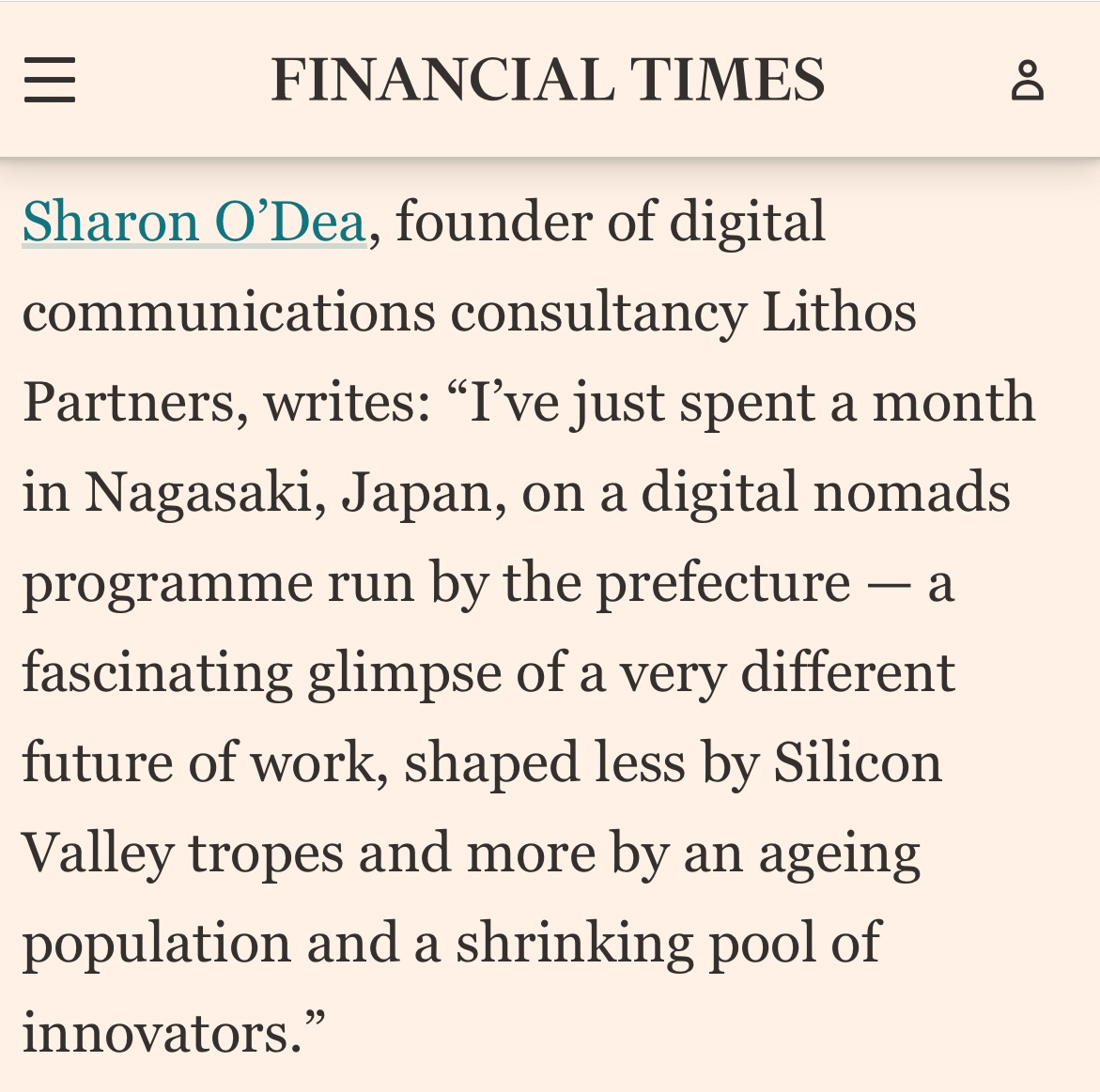
And yes, I am rightly smug about this. A positive mention in the FT is the biggest win you can get in this industry. It’s the comms equivalent of a Michelin star, an Olympic medal, and being retweeted by someone with an opinion column — all at once.
I will now be quietly unbearable about this for a while.
Travel
I’m going absolutely nowhere this week. An entire week without visiting an airport or getting up at the crack of dawn to catch a train. Bliss.
Next week, though, I’m back in London for the final time this year. I’m organising some drinks — if you’re around and would like to come*, give me a bell.
*and I actually know you
This week in photos


 Sharon O'Dea