Designing channels for complex organisations

A quiet surrealist office in muted grey tones. A woman in a grey suit stands with her back to us, facing five identical open doors. Each doorway reveals a different sky: blue and sunny, dark and stormy, warm evening light, pouring rain, and bright clouds. A sparse wooden desk and lamp sit to one side as she stands motionless, choosing none of the doors.

Somewhere in your organisation there is a person wearing one organisation’s uniform, carrying a second organisation’s lanyard, and logging into a third organisation’s systems with a password only the first can reset.

They are doing a job that at least two of those organisations believe belongs to somebody else.

They are not an edge case. Not any more.

Research by SAP and Oxford Economics, surveying 2,050 executives across more than 20 countries, found that only 58% of workforce spend goes on employees. The other 42% buys contingent workers and service providers: contractors, agencies, IT outsourcers, consultancies. More than half of those executives said their organisation couldn’t conduct business as usual without them.

And yet we still draw the organisation as a pyramid.

One person at the top, everyone else arranged obediently underneath, solid lines and dotted lines and a surprising amount of money spent arguing about where they should go. Then we design internal communications for that picture: one intranet, one all-staff email, one audience, one direction of travel.

The picture was always a simplification. What’s changed is how much of the actual organisation now sits outside it.

The organisation on the slide isn’t the organisation people work in

Real organisations are messy.

Work runs through partners, contractors, shared services, joint ventures and outsourced back offices. Two organisations can share a finance function and approximately none of a culture. A team is fully shared across two employers while HR is shared only transactionally. Someone is employed by one entity, works exclusively for another, and consequently can’t see either one’s internal communications properly.

This isn’t unusual, and it isn’t a temporary state of disrepair on the way to something tidier. It is the organisation.

In Digital Communications at Work, Jonathan Phillips and I describe today’s internal audience as including contractors, freelancers, agency staff, suppliers and partners: people who sit inside the working life of an organisation without sitting on its payroll.

The boundary around “internal” has got very fuzzy indeed.

Then add all the people your internal communication channels were never particularly good at reaching in the first place. Frontline and deskless colleagues make up around 80% of the global workforce, and many have no corporate email address and no reason to spend their working day lovingly browsing the intranet.

Access is uneven. Context is uneven. Someone who has worked there for fifteen years has a completely different map of the place in their head from someone who has worked fifteen shifts.

Enterprise software doesn’t much like any of this, because enterprise software has generally been designed for an organisation tidier than any organisation that has ever existed. Even now, major platforms struggle with someone holding multiple affiliations inside a single institution, never mind across several (working across two or more instances of Teams, for example, remains a PITA).

So we design channels for the diagram and then wonder why the people who don’t fit neatly inside the diagram aren’t using them.

This is an internal communications problem before it’s a technology one

When the channel estate isn’t working, the instinct is usually to go shopping.

New intranet. Better search. Employee app. AI assistant. Something with a reassuringly expensive implementation partner attached.

But a systematic review of 77 studies of digital internal communication found the same problem recurring: channels rolled out top-down without enough attention to whether they fitted how people actually worked.

The tool was rarely the interesting bit. The assumptions underneath it were.

And the bar for changing people’s behaviour is high. Gourville’s rule of thumb suggests people need to perceive a new system as roughly nine times better than the habit it replaces before they’ll switch.

Against an existing workaround — a WhatsApp group, a noticeboard, asking Sandra in Finance because Sandra actually knows — nine times better is a demanding standard.

Against nothing at all, the bar is practically on the floor.

Which is worth remembering before spending a year replacing something that works reasonably well for the people at the centre while leaving the people at the edges with bugger all.

Complexity doesn’t make channel design impossible. But it makes guessing impossible.

Start with what communication needs to do, not which platforms you own

The trouble with mapping your internal communications channels as a list of tools is that it tells you what you’ve bought.

It doesn’t tell you whether any of it works.

You get an inventory when what you need is a diagnosis.

The five-layer model we use in the book maps the capabilities a communication ecosystem needs rather than the products that happen to deliver them:

  • Plan: where campaigns, priorities and editorial calendars get coordinated. Invisible to employees; essential to communicators.
  • Collaborate: where content gets drafted, reviewed and signed off.
  • Publish: the source of truth. Structured, accurate and searchable.
  • Distribute: getting the right thing to the right person at the right time.
  • Discuss: dialogue, feedback and sense-making.

These aren’t five little boxes into which you must now dutifully sort Microsoft 365. They overlap. They reinforce one another. A single announcement might pass through all five.

The useful thing about thinking in layers is that the layers survive the platform churn.

Tools come and go. Names change. Products get bundled, rebranded, sunsetted and occasionally transformed into an AI assistant nobody remembers asking for. But these five jobs still need doing somewhere.

And in a complex organisation, the model lets you ask a much more useful question than should we have one intranet or several?

You can ask: what actually needs to be shared?

Shared or local? It depends what you’re sharing

Every complex organisation eventually has this argument.

Central control gives you accuracy and consistency, but can feel distant and generic. Local ownership gives you nuance, relevance and speed, but also duplication, contradiction and the occasional page last updated during the Cameron administration.

Choose entirely one or the other and you lose something you need.

At the level of “should we have one intranet or two?”, this is almost impossible to resolve because it isn’t really a technology question. It’s a question about identity, brand, budget, power and who gets to decide things, wearing a SharePoint hat.

Break it into layers and it gets much easier.

I ran this exercise recently with communications, HR, digital and transformation leaders across two organisations that shared much of a back office and very little else. The resulting pattern is one I’d expect to see in a lot of complex organisations.

Publish pulls hard towards shared.

Policy, terms, anything with legal or regulatory weight: you want one authoritative version. Copying the same information across multiple estates is how you end up with two confidently contradictory answers to the same question.

This is the layer I’d consolidate first.

AI has made this more important, not less. When an assistant starts surfacing intranet content directly, stale and duplicated pages don’t merely sit quietly being wrong somewhere nobody visits. The machine can now fetch them and be wrong on your behalf.

Discuss stays stubbornly local.

This is where culture lives. You can establish minimum standards for conduct and moderation, but you can’t centrally procure a community.

People have an irritating tendency to decide for themselves who they want to talk to.

Design this with them, not for them.

Plan sits awkwardly in the middle, because of course it does. Different leadership cycles, priorities and approval chains make fully shared planning difficult even where everyone is notionally committed to it.

Collaborate follows the work. Different brands, different style guides, different approval processes. Making all of that shared generally requires senior decisions considerably bigger than “where shall we put the Word document?”

And then there’s distribution.

Your distribution problem is really a people-data problem

Distribution is the layer that catches people out because its unit isn’t an organisation.

It’s a person.

A particular person, with a particular contract, role, location, device and set of permissions, who may work for two organisations and be properly represented in the directory of neither.

Which means distribution becomes an identity and employee-data problem long before it becomes an internal communications channel problem.

If you can’t reliably answer who is this person, what should they be able to see, and how can we reach them?, then targeting is mostly decorative.

You can spend weeks designing beautiful audience segments. If the finance officer employed by Organisation A but working full-time for Organisation B isn’t correctly represented in the underlying systems, no amount of clever channel strategy will make them magically appear on the right list.

Get identity right and all sorts of things become possible: one publishing estate with personalised views, targeted distribution that actually reaches contractors and frontline staff, and clear rules about who gets access to what.

Get it wrong and you can rebuild the intranet every three years until retirement and remain faintly disappointed by the results.

The bit of the digital workplace nobody sells you

There is a part of all this no vendor will quote for: Identity. Navigation. Search. A shared design language. The connective tissue that makes a collection of separately procured tools feel, to the unfortunate person trying to use them, like one place.

You can buy an ITSM platform, an HR system, a CMS and an employee app. You can give each of them a cheerful name and launch them with cupcakes.

But you can’t buy coherence.

The average organisation now runs well over a hundred applications, each perfectly sensible on its own terms and together producing an experience like an orchestra warming up: every instrument playing its own tune, quite competently.

In the book we describe the intranet as the wrapper, not the chocolate bar. I’d go further: the important bit isn’t any single platform. It’s the experience created at the joins.

Somebody has to own that.

Not each tool. The whole.

Because choices made in isolation get paid for at the joins, and the joins are where employees actually live.

Design an internal communications ecosystem that survives the next reorganisation

Complex organisations reorganise. It’s practically a hobby.

Shared services get created, merged, renamed and unpicked. Partners arrive and leave. Business units combine. Someone unveils a new operating model with pleasingly rounded rectangles and announces that it will make everything simpler.

If your internal communications architecture depends on the current organisation chart remaining true, start the countdown.

There are five principles I’d design around instead:

  • Adaptability: assume the organisation chart will change and the channels shouldn’t have to
  • Accessibility: including the version that means frontline, deskless and low-bandwidth access, not just WCAG compliance
  • Clarity of ownership: “who looks after this?” should be a question with an answer
  • Interoperability: content and state need to be able to leave the system they were created in.
  • Cognitive simplicity: every additional interface is a tax, and employees pay it

And I’d add a sixth, less comfortable one: mandate.

Skills you can hire. Time you can, eventually, carve out. But someone needs the authority to make decisions across the boundaries.

In a shared or complex organisation, the person responsible for the digital workplace without the authority to say no to senior stakeholders on either side owns the blame and none of the levers.

No amount of elegant architecture makes organisational politics disappear. But being explicit about who has the mandate to make decisions is usually the difference between a channel strategy that survives contact with reality and one that gets quietly negotiated into beige.

Design for the organisation you actually have

The useful shift is a small one.

Stop treating organisational complexity as a defect to be tidied away before the real design work starts. Treat it as the design constraint.

Because the mess isn’t evidence that there’s no system.

Quite often, the mess is the system.

It’s running on local knowledge, friendships, workarounds, favours, WhatsApp groups and hundreds of tiny negotiations nobody has ever written down. It’s the person everybody knows to ask. The spreadsheet somebody maintains because the official system doesn’t quite work. The contractor who’s been there eight years and still can’t open the link in the all-staff email.

Designing a beautifully logical channel architecture that ignores all of that doesn’t simplify the organisation.

It simply gives people one more thing to work around.

Nobody experiences a tool. They experience a task.

Design for the task, and for the person trying to get it done — whichever organisation’s lanyard they happen to be wearing today.

This essay draws on ideas from my book, Digital Communications at Work: Designing channels for employee engagement and experience, written with Jonathan Phillips and published by Kogan Page.

If you’re wrestling with this in your own organisation, my consultancy practice, Lithos Partners, runs discovery, designs channels and develops digital workplace strategy for organisations that don’t fit the neat diagram.

SharePoint is a box of Lego: how to choose an intranet platform

A muted, Magritte-style painting of a woman in a grey suit seen from behind, sitting at a wooden desk building a large grey Lego Star Destroyer. Loose bricks and a sorting tray are spread across the desk, with an open instruction booklet in front of her showing a different model. A brass lamp, a window onto a pale sky, and a framed painting of clouds fill the quiet grey room.

Every now and then, someone asks me what the best intranet platform is.

It’s a reasonable question. It also has no answer, which makes it an annoying one to be asked at a party. (I’m fun at parties, honestly).

There are dozens of dedicated intranet products before you get anywhere near the various flavours of SharePoint and the growing pile of employee apps. Then come the demos. The analyst reports. The comparison matrices with forty rows and an encouraging quantity of green ticks. The sales teams who each explain that their product was designed specifically for organisations exactly like yours.

Somewhere around week three, IT joins the conversation with a list of things they will never support, procurement asks a question nobody can answer, somebody discovers a security requirement that apparently existed all along, and everyone quietly forgets what problem they were trying to solve.

Which is why the first job isn’t evaluating intranet platforms. It’s deciding how you’re going to evaluate them.

Why it’s usually SharePoint

For most large organisations, SharePoint is the default before anyone has made a decision at all.

It’s bundled with Microsoft 365. IT already knows how to run it. It handles documents and permissions properly. It connects to Teams, OneDrive and Outlook without requiring an integration project, three consultants and a small blood sacrifice.

And there’s a practical reason that gets less airtime: it’s considerably easier to get approval to build something on a platform you already own than to ask for money for a new one.

Plenty of SharePoint intranets exist not because anyone chose SharePoint, but because choosing anything else required a fight nobody had the appetite for.

That’s not necessarily a bad thing. You can build genuinely excellent intranets in SharePoint. Most years, eight of the top ten in the Nielsen Norman Group Intranet Design Annual are built on it.

But in a world where everyone wants a fully formed toy, SharePoint is a box of Lego.

And as with Lego, what you end up with depends less on how many bricks you have than on your skills, imagination, time and budget.

Allow me to stretch this analogy well past the point of good taste.

Route one: the box of Lego

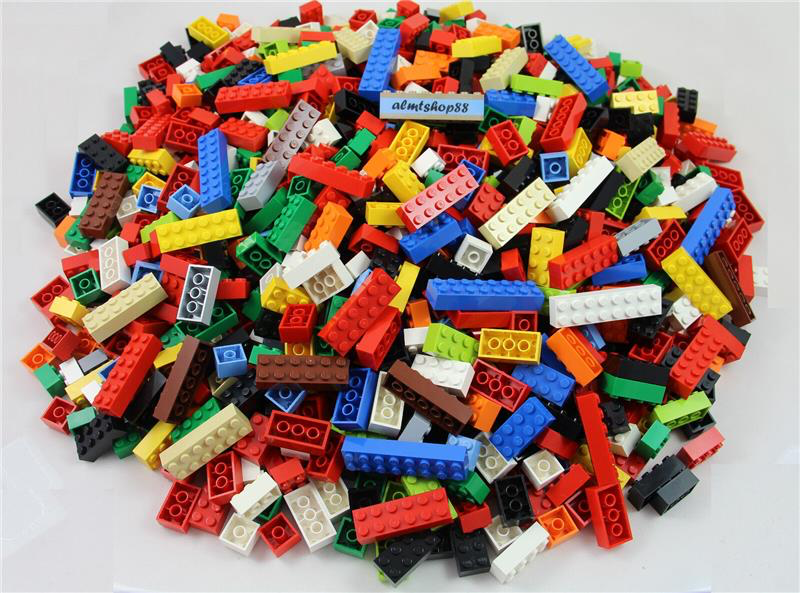
a pile of lego bricks in various colours

Native SharePoint, straight out of the box, is an effectively unlimited supply of bricks.

In theory, you can build anything. A castle. A cathedral. A working model of the Endurance.

In practice, you have a job, four other priorities and a stakeholder who wants their department’s page to be a different shade of blue.

So you build a small house with a door and two windows.

And that’s fine! It meets the brief. Everyone can get inside. It shuts people up for five minutes.

It just isn’t quite the magnificent thing everyone imagined when they heard the word flexible.

Because that’s the catch with infinite flexibility: every decision is now yours to make. And defend. And document. And remake when somebody sufficiently senior sees it for the first time six months after approving it.

You can build a spaceship.

You will spend six months arguing about where to put the rockets.

Route two: the Lego kit

A Lego main street kit, built with shops and lego figurines

Buy a Lego kit and you follow the instructions and get something genuinely impressive in an afternoon.

The intranet equivalent is an intranet-in-a-box: a product that sits on top of SharePoint and makes it behave rather more like a fully fledged content management system.

You get templates. A design system. Navigation. Governance features. Better publishing tools. Quite a lot of decisions somebody else has already made for you.

We’ve delivered one of these end to end, including all the content, in three and a half months.

The trade-off is that you’re stuck with the pieces in the box.

If you want to turn the record store into a bookshop, you’re out of luck because the kit only came with the orange and yellow storefront.

For a lot of organisations, this is exactly the right answer. In fact, the constraint is often the thing you’re paying for.

Fixed templates end the debate about page layouts before it starts. Information appears in the same place on every page. Editors don’t need to become amateur web designers. Readers don’t have to relearn the interface every time they move from HR to Finance.

Constraint can be a feature.

Expect pushback from content editors who want more control. Expect someone to ask why you’re paying licence fees for a thing that sits on top of another thing you’ve already paid for.

Both are perfectly winnable arguments if you’ve decided in advance what you’re optimising for.

Route three: make your own kit

If the standard kits don’t fit, you can have one made.

An agency builds you a set of templates, components and a design system on top of native SharePoint. You get your own box of parts and your own instructions, so teams can create consistent pages quickly without designing each one from scratch.

You end up roughly where the kit gets you, except it’s your bookshop rather than someone else’s record store.

It typically takes nine to twelve months.

And when, two years later, somebody wants the bookshop to become an airport, you go back to the agency or find someone who understands how it was built.

Again: not necessarily a problem.

But it is now a thing you own.

Customisation has a habit of being discussed as a one-off cost when it’s really a small pet you’ve agreed to feed indefinitely.

Route four: build the Millennium Falcon

a complex custom scene made of lego

With enough time, deep knowledge of every component and what amounts to a 3D printer — an in-house development team — you can build almost anything.

Some of these intranets are extraordinary. Many of them win awards.

They also take, on average, twenty-three months and a team of fifteen. That number is one of the most useful things in the whole NNg Design Annual, and it’s the bit that tends to get skipped over on the way to the screenshots.

Because screenshots travel rather better than resourcing models. If you’re a team of two with a year and no development budget, an award-winning intranet built by fifteen people over two years is not a benchmark. It’s something a completely different organisation was able to afford.

There is no useful lesson in staring at their Millennium Falcon and wondering why your box contains twelve red bricks and a little plastic tree.

And the option that isn’t Lego at all

You can, of course, leave the Microsoft ecosystem entirely.

Standalone intranet platforms often have markedly better user experience, editorial workflow and mobile support. Employee apps are mobile-first and task-focused, and they’re frequently the only serious option for reaching frontline, field or contracted staff who have never logged into a corporate laptop and never will.

If your workforce is mostly deskless, this isn’t really the alternative route. It may be the obvious one.

But now you inherit different plumbing: single sign-on, people data, integrations, syncing and the possibility of content and effort quietly duplicating across two estates.

None of this tends to be the exciting bit of the demo. All of it will be the exciting bit of year two.

Before choosing an intranet platform, decide how you’ll choose

None of the above tells you what to buy. That’s because the platform was never the first question.

Four things are.

What’s the actual mix?

Every intranet is balancing the same handful of jobs: communication, knowledge, transactions and collaboration. Every organisation weights them differently.

Jon and I call this the graphic equaliser because the sliders sit in a different place everywhere.

An intranet for lawyers and engineers has a very different job from one serving retail staff on shift. A company where the intranet is primarily a route into HR services needs something different from one where its main purpose is publishing news and knowledge.

Work out where your sliders are before you look at a single product.

Otherwise the product demo will decide your requirements for you.

Who genuinely has to use it?

Not the audience in the strategy deck.

The actual people.

The contractor who doesn’t have an email address. The warehouse worker sharing a device. The colleague in the acquired company who still has the wrong identity in Active Directory. The person who visits the intranet twice a year and absolutely will not remember what you named the expenses section.

This single question rules out more platforms than almost any feature comparison.

What are the red lines?

“It has to be SharePoint because IT won’t support anything else” is a common cry and sometimes a completely real constraint.

Fine.

Find that out on day one.

There is no prize for conducting an elegant eight-week platform selection exercise and discovering at the end that three of the four options were never actually options.

Budget can be a red line. Data residency can be one. Accessibility. Authentication. Procurement. The ability to reach people without Microsoft 365 licences.

A constraint you know about is a design input.

A constraint you discover after the preferred-vendor presentation is a massive pain in the arse.

What are you signing up to run?

This is the question most platform selection processes don’t spend nearly enough time on.

Every route has an ongoing cost in people, not just licences.

Someone has to govern it. Maintain the templates. Manage permissions. Keep the navigation coherent. Support editors. Fix the search. Challenge the director who wants a button on the homepage. Notice that 40% of the content hasn’t been reviewed since 2024.

The question isn’t simply which platform is best.

It’s which one can you realistically keep good?

You’re choosing constraints as much as features

There is no universally right intranet platform.

There is a right path for your organisation: one that balances technology, time, money, capability, what your people will actually use and whatever internal red lines turn out to exist.

And every route involves a trade-off:

  • Native SharePoint gives you flexibility, but asks you to make more decisions.
  • An intranet-in-a-box makes more decisions for you, but limits what you can change.
  • A custom SharePoint build gives you control, but creates something you have to maintain.
  • A standalone platform may give you a better experience, but adds another system to the estate.

Those aren’t flaws hidden in the small print.

They are the decision.

Most organisations don’t have unlimited time or money, so they compromise on something that’s good enough for now and meets most of what they need.

That’s not a failure of ambition. That’s just pragamtism.

What matters is being able to explain why: clearly, in a sentence, to someone who wasn’t in the room.

Ideally before the first vendor demo does the explaining for you.

Because you can build a perfectly good intranet out of almost any of these.

You just can’t build one out of a decision nobody can remember making.

This essay grew out of a weeknote from December 2024 and a conversation I keep having with clients. The Lego analogy, and a fuller breakdown of the solution paths, appears in Digital Communications at Work, written with Jonathan Phillips and published by Kogan Page.

If you’re at the start of this decision, Lithos Partners does discovery, requirements and platform selection for organisations that would rather not find out in year two.

Orientation, not arrival

A person walking along a dirt path towards a city skyline, with a signpost indicating the direction, under a clear blue sky.

This is the final piece in a three-part series reflecting on ten years of self-employment — what led me to leave my last employed role, what came after, and how I now think about work, identity, and change.

(if you haven’t read Part One and Part Two, read those first)

Ten years on, I’m not especially interested in tidy origin stories or triumphant endings.

What I have instead is orientation.

For a long time, I thought comfort meant stability: a role you could explain in one sentence, a trajectory you could sketch on a whiteboard, a sense that you were “on track”. I no longer think that. Comfort, as it turns out, isn’t the absence of change. It’s the ability to exist inside change without being overwhelmed — or taking it personally.

That distinction has taken years to learn.

Earlier in my career, I absorbed the idea that legitimacy had to be earned constantly. In the banking environment I worked in, surrounded by people who seemed far more confident, polished, and socially assured than I felt, I carried a low-level sense of being a chancer. Someone who’d slipped through a side door and needed to justify their presence.

So I worked harder. Stayed later. Took on more. Put my hand up when others didn’t. I treated exhaustion as evidence that I was doing it right. If I could just make myself indispensable enough, visible enough, useful enough, then my credentials couldn’t be questioned.

It’s not hard, in hindsight, to see where that leads.

These days, I’m better at holding uncertainty without immediately turning it into a personal failure. I don’t always get it right, but I’m quicker to notice when I’m reacting rather than responding.

That difference matters. Reaction wants certainty and closure. Response allows for partial information, for waiting, for keeping options visible. I make fewer decisions in a rush to feel safe. I’m more deliberate about what I lock in, and what I leave adjustable.

I expect the ground to shift, so I design for movement.

Being multi-hyphenated is often framed as a lack of focus. For me, it’s closer to a coping mechanism in a world that refuses to sit still. I don’t treat optionality as indecision; I treat it as resilience. I commit, but only lightly. I choose depth over novelty, without betting everything on a single version of relevance.

What I notice now, more than anything, is range — the ability to move between depth and breadth without losing my footing.

I have work that still interests me — not because it’s new, but because it’s deep. I work with people I respect, on problems that are hard in ways that matter. I have space for thinking, for writing, for changing my mind in public and in private.

I have a working life that accommodates curiosity and contradiction. One that leaves room for travel, for friendships, for health, for creative detours that don’t need to justify themselves immediately — or maybe ever. None of this arrived quickly or neatly. Very little of it could have been predicted at the outset.

But it’s a life that fits — not perfectly, but well enough.

Titles still don’t quite capture what I do. They probably never will. I’ve stopped trying to compress a complex working life into a single, tidy label. Some ambiguity is simply the price of doing work that spans systems, disciplines, and contexts. And that’s ok.

What’s changed is that I’m no longer looking for a final definition.

Writing has helped with that. It’s given me a place to be authoritative on my own terms — not by pointing at outputs, but by articulating patterns, judgement, and expertise. Over time, I’ve come to trust that credibility doesn’t only come from what you reveal. It also comes from sharing how you think.

And I’m comfortable saying this plainly: I have a bloody great life.

Not because everything worked out. Not because there was a master plan. But because enough worked out. Because the work is meaningful, the people are interesting, and the days contain more choice than they once did, and I wake up every day (well, most days) feeling like I’m making a positive difference to people’s working lives.

There wasn’t a moment of arrival. There still isn’t.

What there is, is a steadier way of standing while things move. A clearer sense of what I’m willing to tolerate, and what I’m not. The confidence that I can adjust my stance as the ground shifts — because it always will.

I’m not finished. I’m not “there”.

But I’m facing in the right direction.

And, for now, that’s enough.

The Long Middle

A surreal image of a woman standing with her back to the viewer on large stone slabs that are broken apart and floating above a reflective surface, with a wide blue sky and clouds stretching out ahead of her.

This is part two of a three-part series reflecting on ten years of self-employment — what led me to leave my last employed role, what came after, and how I now think about work, identity, and change.

(if you haven’t read Part One yet, read that first)

Leaving got me out of a toxic situation. It solved the urgent problem — but it didn’t hand me a new map.

What followed wasn’t clarity or momentum, but a long stretch of recalibration.

There wasn’t a clear trajectory. There still isn’t. What changed was my tolerance for that.

In the early years after I left, I spent a fair amount of time trying on different versions of myself. Some of this was curiosity. Some of it was necessity. And some of it was the lingering belief that “progress” ought to look like movement towards something newer, shinier, or more obviously impressive.

I flirted with adjacent worlds — product, innovation, startups — not because I was particularly drawn to them, but because they seemed to represent where the action was. In contrast, going back to intranets and the digital workplace initially felt like a step backwards. I’d internalised the office pyramid: bigger portfolios, bigger teams, broader remits. Returning to a domain I’d started in felt uncomfortably like reversing down the ladder.

At the time, I was still measuring myself by scope rather than substance. Portfolio size rather than domain authority.

That shifted once I stopped borrowing other people’s career templates.

Joining forces with my now-business partner was a turning point. Not because it suddenly clarified everything, but because working in partnership changed the texture of my working life. Ideas became conversational rather than solitary. Drafts were sharpened through debate. Momentum came not from self-discipline alone, but from shared accountability. If I promised something by the end of the day, it happened — not because of pressure, but because I’d said it out loud to someone whose judgement I trusted.

More importantly, partnership reflected my strengths back to me.

Returning fully to intranet and digital workplace work stopped feeling like retreat, and started to feel like reclaiming something I was genuinely expert in. What had once felt “unsexy” now felt deep, consequential, and hard-earned. I stopped apologising for caring about work that sits at the intersection of people, systems, governance, and power — because that’s where things actually succeed or fail in complex organisations.

One of the more disorienting parts of this period was realising that a skill I’d come to doubt was, in fact, central to my value.

In my last job, the authority to do this work — rolling the pitch, preparing the ground, building buy-in — was quietly withdrawn, and with it went my confidence. Politics was treated as something faintly embarrassing — a distraction from “real” work — rather than the environment in which real work actually happens.

After the break knocked my confidence, I lost sight of the fact that understanding how organisations function is a skill in its own right. Knowing what a project sponsor is carrying. Recognising where resistance is coming from. Being close enough to the reality of organisational life to empathise — but far enough away to offer perspective and judgement.

The first time an old colleague hired me to support them at another organisation specifically for that capability, it was a genuine eureka moment. Not because I’d suddenly acquired a new skill, but because I could finally see clearly again what I’d been doing all along.

Consultants are often accused — sometimes fairly — of proposing ideas that sound elegant in theory but collapse in the cold light of day. What I’d been led to question wasn’t a weakness. It was the craft: working with context rather than around it, acknowledging politics instead of pretending they don’t exist, and offering help that is grounded, realistic, and usable.

That balance — empathy without over-identification, distance without detachment — turned out to be the thing that makes my work stick.

That realisation didn’t instantly restore confidence. Confidence lagged behind evidence. I had to stop apologising for how I work — and that happened slowly, unevenly, over years rather than months.

Identity, meanwhile, remained unresolved. Losing a job title I’d spent a decade chasing was harder than I expected. “Head of digital comms at a bank” collapsed overnight into “freelancer”, with all the ambiguity that entails. Titles are crude, but they’re socially useful shorthand, and I missed having one that did the explanatory work for me.

Go too narrow, and you limit the range of work you’re considered for. Go too broad, and you dissolve into a sea of digital hand-waving. I still feel that tension. But I’ve stopped treating it as a problem that needs solving.

This wasn’t simplification so much as a recognition of complexity.

Another quiet shift during this period was my relationship to impact and evidence. Working for large, complex organisations means you can rarely talk openly about what you’re doing. Commercial confidentiality applied in my last role, and it still does. For a while, I struggled with that invisibility — the inability to point to outputs, launches, or neat before-and-after stories.

What helped was returning to writing. Twitter (RIP), LinkedIn, and blogging gave me a way to be authoritative without breaching confidence. I didn’t need to show the workings to demonstrate the thinking. Over time, I became more comfortable with the idea that much of my value lies not in what I produce directly, but in the choices I help organisations make — including the mistakes they avoid.

Conditions during this period were far from perfect. I still wish I’d left my last job on better terms, with a clearer plan and some savings behind me. For a long time, I was angry — not just about how it ended, but about the injustice of it all. About being made to feel like a failure by an organisation that had benefited from my willingness to stretch, absorb, and endure.

That anger was oddly clarifying.

It stripped away some of the residual self-doubt and forced a reappraisal of what I’d normalised. I could see more clearly how readily I’d equated over-extension with professionalism, and how easily I’d absorbed responsibility for failures that weren’t mine to carry.

The anger didn’t vanish quickly. It lingered. It resurfaced, often out of nowhere. For a while, it was part of how I made sense of what had happened.

But over time, it loosened its grip.

It stopped being the engine of the story and became part of the context instead — something I could acknowledge without letting it define how I saw myself or what came next.

This phase of my career wasn’t about reinvention. It was about unlearning — letting go of borrowed hierarchies, inherited measures of success, and my habit of treating uncertainty as a personal failing.

The long middle taught me to live without a script. To value depth over novelty. To accept that some careers don’t resolve into clean arcs, and that progress is sometimes a matter of stance rather than speed.

The ground kept shifting. I learned to stand differently.

Now read Part 3, Orientation, not arrival.

The Break

A surreal painting showing a woman in a dark business suit, seen from behind, stepping through an open door that leads into a blue sky filled with clouds. Behind her is a dim office interior with a desk and lamp fading into shadow.

This is part one of a three-part series reflecting on ten years of self-employment — what led me to leave my last employed role, what came after, and how I now think about work, identity, and change.

I didn’t leave my last employed role because I was brave, burned out on corporate life, or driven by some entrepreneurial calling.

I left because staying had become untenable.

By the time I quit, I was exhausted, unwell, and out of road. Not in a dramatic way — but in the slow, grinding way that comes from trying to make an impossible situation workable for too long.

For over a year, I’d been doing the work of two, arguably three people. I spent a year living in a hotel on the other side of the world to deliver a project against an unrealistic deadline, with neither enough resources nor senior support. Alongside that, I was managing two teams across eight time zones — a logistical and emotional load that never let up.

I did all of this willingly. Partly out of professional pride. Partly out of ambition. And partly because I believed (and was quietly encouraged to believe) that if I proved myself hard enough, everything would eventually resolve.

I was chasing a promotion I thought I needed, and a bonus that had been dangled just far enough ahead to keep me running. Early in that financial year, I discovered that someone in my team, with significantly less responsibility and a lighter workload, was being paid more than I was. When I raised it, I was told it couldn’t be fixed — but that it would be rectified at bonus time.

In retrospect, I was a mug.

Then came the reorganisation.

It was badly handled, driven more by internal politics than how teams actually function. My team was disbanded — a fact I didn’t learn in a meeting, or even on a phone call, but via a text message from a junior team member, because my manager had forgotten to invite me to the meeting.

Shortly afterwards, I was moved under a new manager who neither understood nor valued digital, and who had little appetite for making a success of a platform I’d spent the previous year delivering. Because it wasn’t their idea, it was quietly undermined — along with the person responsible for it.

By then, my body had already started to register what I was still trying to rationalise. I barely slept. I was constantly tense. I was ill with stress in a way I’d never experienced before. I took a few days off sick — the only sick leave I took in the whole time I worked there — and received an email from HR informing me that if I remained off, my pay would be withdrawn.

It wasn’t framed as concern. It was framed as process.

That was the moment the spell broke.

Up until then, I’d still been operating under the illusion that if I just worked harder, explained myself better, or endured a bit longer, the situation would right itself. That email made it clear this wasn’t a misunderstanding or a temporary rough patch. The system had made its position known.

I didn’t quit because I was brave. I quit because I had reached the limit of what I could reasonably absorb.

At the time, it didn’t feel like a career decision so much as a physical and emotional necessity. I didn’t leave on good terms. I didn’t have a plan or a financial cushion. I left carrying a messy mix of anger, relief, fear, and a deep sense that I’d somehow failed.

Looking back, I wish I’d been kinder to myself.

I wish I’d trusted my own signals sooner, rather than forcing my body to escalate the message. I wish I’d recognised that enduring harm isn’t professionalism, and that loyalty to a system that isn’t reciprocated is rarely rewarded.

Ten years on, I don’t romanticise that moment — but I respect it. Walking away wasn’t a career move. It was an act of self-preservation.

And everything that followed began there.

Part two, The Long Middle, is here.

Sustainable growth key to competitiveness in the new world of work

UK businesses face a perfect storm in the months ahead. The Brexit transition and pending deal means UK businesses must find their footing in a new—and currently uncertain—era of international trade. And at the same time, the crisis caused by Covid-19 shows little sign of abating, leaving a trail of economic impacts and forcing changes to the way that we live and work forever.

So firms face an almighty challenge; they must fundamentally adapt and find new ways to remain competitive at a time of unparalleled disruption. But how?

Having written about the factors businesses need to consider as they adapt previously, I was interested to see Microsoft’s latest report Creating a blueprint for UK competitiveness. This comprehensive piece of research looks at what it takes to compete in a post-COVID, post-Brexit world. 

They partnered with an independent team of economists and researchers, led by Dr Chris Brauer (Director of Innovation at my alma mater, Goldsmiths, University of London). Through extensive qualitative and quantitative research, they uncovered the need for a new model of competitiveness. 

Among the report’s recommendations, they focus on the need to shape a new world of work.  They outline two potential paths to growth, which resonated with me and the work I’ve been doing this year.

Path 1: ‘Hollow Growth’: cost reduction with missed opportunities

The first path, which the report calls Hollow Growth, is characterised by a focus on cost reduction. While a switch to distributed work presents the opportunity for huge real estate savings, if businesses focus on savings alone, they’ll miss this chance to radically reshape the business.

When it comes to future readiness, hollow growth organisations are notable for:

  • rigid organisational structures (which, as I blogged about previously, are a barrier to strategic delivery in a remote-first world)
  • minimal support for workers when it comes to adapting and re-skilling for the future
  • basing forward plans heavily on the past, for example by sticking to traditional measures of productivity and ignoring less tangible outcomes like agility, resilience and culture
  • failure to use technology to optimise individual functions and services


Path 2: Sustainable Growth (or ‘Sustainable Growth’: finding strategic advantages to bring real transformation, over cost reduction) 

As a counterpoint to the earlier short-termist approach, the report outlines an alternative, sustainable path to growth. One which:

  • focuses on organisational resilience
  • nurtures and grows the culture of trust, empowerment and inclusivity—essential to scale distributed ways of working adopts leadership defined by both empathy and decisiveness

Sustainable Growth organisations prioritise real transformation over cost reduction alone. This part of the report chimed with me, reflecting many of the points I’ve made about leadership, strategy and skills for example. 

The Sustainable Growth model the report outlines provides a useful model for organisations looking to turn flexible and distributed work into a driver of strategic advantage. With a focus on people and culture, employees are empowered to work flexibly and supported to learn new skills.

Similarly, the Sustainable Growth model takes a more mature and (small ‘a’) agile approach to digital, embedding it into the heart of the organisation. This means tools are transitioned to quickly and systemically, making the organisation fit to respond to new challenges and opportunities when they arise.

But given the uncertain-looking future, companies want and need those cost savings, as does the economy. Can the Sustainable Growth model deliver? The authors certainly think so.

The report paints a powerful picture of the benefits of taking this sustainable path. The Goldsmiths researchers calculate that if, supported by the government, every UK organisation adopted a more sustainable growth model and achieved a small, incremental increase in their competitiveness, it would deliver a boost to the national economy of £48.2 billion.

It’s clear UK businesses will be put to the test like never before in 2021. Competitiveness will be critical in the short term as businesses fight to stay afloat and remain relevant. But a laser focus on sustainable growth is essential for the long term too—yielding a long-term impact on organisational performance that’s positive for people, communities and our planet, as we grow our economy out of crisis. 

You can read the report in full here.

Written in paid partnership with Microsoft UK.

The road to remote, part 2: spaces, support and comms

Woman working at home
Photo credit: Corinne Kutz, Unsplash

The week or so since our last post has seen some major names move toward a remote-first future. Mastercard announced it expects staff to work at home until there is a vaccine, while Facebook shared their plans to shift around 50% of staff to permanent remote work.

With the landscape moving so quickly, Matt and I spent some time last week working through the remaining themes we identified as priorities for organisations that want to make remote an enabler of (rather than a barrier to) delivery of their strategy.

In our first post we looked at systems, structure, shared values, skills and roles and strategy. Take a look.

Now we turn to the final four themes

Spaces

For a long time, offices – like factories before them – where were you accessed the equipment necessary to get work done. The availability of cheap laptops and ubiquitous broadband means this hasn’t been the case for at least a decade. 

Nonetheless, offices continued to be the primary place of work because of their secondary purpose; the belief that bringing people together in the same place helped to foster collaborative working. Rows of open plan desks gave way to mixed environments offering impromptu meeting spaces to facilitate this. Even the most digital of companies such as Google and Facebook continued to encourage employees to come to the office in order to foster innovation.

Covid changed all of that, forcing all to figure out how we can work individually from home. In the past 10 weeks we’ve used collaboration tools to try re-create the in-person interactions we had while working in the physical office.

Spaces are now sitting empty, and people are wondering what we do with them next. There’s an assumption that we’ll continue to work at home for individual tasks, with offices being re-configured for more collaborative in-person working such as workshops once this is all over.

However, early indications suggest that assumption could be some way off the mark. Social distancing rules dictate that even where offices are being re-opened, meeting rooms and breakout areas need to stay out of bounds. A room that could have hosted ten is now strictly capped at two. How do you manage a group brainstorm around the whiteboard while keeping everyone two metres apart?

You don’t. You need to do what Matt and I did for this session and find ways to do this online. 

(We used Miro, a tool we’ve both become evangelical about in recent weeks, because it allows you to do things collaboratively with people in a way that you can’t do in physical space, focusing conversation yet making it possible to integrate other media. It’s what hypertext was supposed to be.)

People will need to learn how to use such tools for virtual collaboration. But putting collaborative tools into the hands of every employee democratises them and, in turn, drives up the quality of collaboration. Especially when compared with scarce physical tools such as interactive meeting room whiteboards.

And once these skills and habits have been gained, it leaves open the question of what physical workplaces are actually for.

But physical spaces serve other purposes. These include:

  • Access to specialist equipment: clearly a research scientist is not going to set up a complete lab in their spare bedroom
  • Status symbols: those big glass towers making up some of the world’s most expensive real estate in New York, London and Hong Kong send a clear message about your brand and stability
  • Proof of life: for smaller companies, a physical office is considered evidence you exist, helping to build trust with customers
  • Grounding in the community: this is especially true for local businesses, public/voluntary sector organisations or those with a longstanding connection with place

Additionally, there will always be some people who can’t – or don’t want to – work from home. For example someone living in crowded accommodation with children at home. 

So organisations shift to remote or distributed work, their use of physical space will change but not disappear. The focus will move to supporting smaller numbers of staff with specific needs for office space, and those secondary purposes listed above. Office space – and the roles supporting it – becomes a cost to be minimised. 

This has some potentially huge second-order effects for property markets and for cities. WeWork’s business model looks even more precarious than it was, as corporate tenants retrench from secondary spaces on short leases to their owned properties. At the same time, we could see the rise of local co-working hubs providing office space for those who need it without the long (and in these socially-distanced times, potentially dangerous) commute. The Irish community organisation Grow Remote provides a useful model here; they champion physical and virtual hubs to those working remotely diverse organisations benefit from connection with one another and with the communities in which they’re based.

One outstanding question is what, if anything, replaces the function of the building as a signal of prestige. What’s the digital equivalent of the client floor or the tower projecting its logo across Hong Kong’s harbour? 

Corporate communications

Organisations and their leadership need to communicate to their people about their goals, values and progress. They want to align employee action with their purpose and objectives, and keep people engaged and informed. 

In the past couple of decades the internal communications profession has moved away from a top-down distribution role to one of curator, controller and advisor. They understand what is going on in the organisation at all levels, ensuring that employees are in the loop, and facilitate two-way conversation between employees and leadership.

Covid has forced corporate communications into crisis mode. The priority has been to keep people informed about what their employers are doing to keep them safe, keep customers happy, keep people in work and ensure the business stays solvent. And at the same time, many of the most effective tools in the communicators’ armoury aren’t available, like the old-fashioned poster and digital signage.

The result has been an overwhelming shift to broadcast channels. In a straw poll during my keynote at last week’s Brussels Digital Workplace Event, 87% of attendees said they had relied especially on email and 82% on a traditional intranet to keep employees in the loop. But at the same time, organisations have had to more actively listen to what employees, using things like sentiment analysis.

As organisations shift to this New Abnormal, corporate communications can’t simply go back to what they were doing pre-Covid. Instead, they need to redesign their channel architecture and content strategy around the needs of employees who rarely come into the office.

That means:

  • Understanding employees’ need for communication, and taking a user needs focused approach to designing and delivering it
  • Offering a mix of push and pull channels, so people receive the information they need, but also have the means to find what they want and be confident it’s accurate
  • Finding ways to cut though the (now somewhat overwhelming) noise and ensure what people get is relevant and timely. This could mean borrowing techniques from digital marketing and using data to target employees effectively. But equally, it could mean looking at how messages naturally propagate within organisations – via the grapevine – and hacking that.
  • Finding the right balance between listening to employees and understanding what they want, without surveiling them

Getting this balance right means relying less on copying best practices, and rather on understanding employee needs, experimenting with new approaches, and seeing what gets cut through. All of that requires a more robust approach to measurement.

Organisational communication

Related to this – and often using the same channels – is how people within organisations communicate with one another to get work done. 

In a physically co-located team, communication is implicit. That is, you pick up on conversations happening around you. You can lean over the desk and say “Hey, Dave, are you working on this? Do you know where this file is? Can you tell me the latest on this customer?”. That communication is largely synchronous, in that it happens while you’re both in the room, and much of it is tacit; we communicate without even thinking about it, through our body language and tone.

In recovery mode we’re still working synchronously, but we’re having to work much harder to do that, and be more deliberate. But that’s exhausting. It also demands more of our energy and attention; Zoom fatigue is a very real phenomenon. 

Making this work long term means retaining that explicit, deliberate communication, but adapting it to be less time-consuming and attention-demanding by embracing asynchronicity.

That means mixing up modes and channels, using interactive channels (like Miro) or collaborative documents, rather than video feeds. 

Embracing asynchronous working has secondary benefits, too. It means more knowledge and conversation is committed to corporate memory, and allows people to work more flexibility across shifts or time zones. 

To shift to asynchronous communication and collaboration in order to become truly remote-first, organisations need to give people training, coaching and time to experiment with a flexible suite of tools.

Support

Organisations offer support to employees to get their work done – from providing transactional services to troubleshooting issues and problems with equipment, facilities, software and so on.

Traditionally this is offered on a tool-by-tool or service-by-service basis, meaning the overall support landscape is as fractured and siloed as the organisation itself.

In a traditional workplace this is augmented by informal support. People will turn to a longer serving or otherwise helpful colleague to help them resolve problems.

Shifting to home work has left employees reliant on digital channels to get work done, but often struggling to access help to resolve problems or learn new systems, as colleague support is unavailable and helpdesks overwhelmed.

For organisations to turn remote work into a strategic advantage, they need a greater focus on supporting employees to be engaged and productive. They need to understand that employees are reliant on a complex and fragmented set of tools to get work done, and when these aren’t working employees are left frustrated and productive time is lost.

This means:

  • Replacing fractured single-system help with a concierge approach focused on unblocking problems for the user quickly
  • At the same time, helping employees to build their digital skills and confidence to use the tools they have and resolve their own problems
  • Consider the overall digital employee experience and, where possible, streamline and simplify this so it’s designed around the needs of staff and not the structure of the organisation
  • Build informal support networks to help resolve issues and unblock problems, and to share advice and learning with one another as it’s learned
  • Managers understanding the role they play in unblocking barriers and creating a successful work environment – and leading by example

On reflection, it makes sense to roll this into the ‘Roles and skills’ theme we covered in the last session.

Conclusions

Across all of our themes there were some clear principles:

  • Re-thinking how work gets done rather than translating existing office-based ways of working to digital channels
  • Taking a user needs-focused approach, understanding barriers to effective distributed/remote working and how these can be ameliorated
  • Helping people build their skills in communication and collaboration so they can embrace asynchronous working
  • Trust underpins all effective remote working. Organisations must look at how this can be built and sustained at scale and for the long haul.

In his WB40 podcast, Matt talked to Dave Coplin about his recent research. Coplin found trust for managers in their employees was important, but so too was trust in peers. Managers need to know that work is being done (and done properly) and employees at all levels need confidence that their peers are pulling their weight too. 

Measuring productivity in knowledge workers is notoriously difficult. Very little work can easily be attributed to outcomes, forcing us to measure outputs and throughputs instead (particularly in public sector organisations, where there may be pressure to demonstrate value for money). But such measurement is largely inaccurate (as anyone who receives weekly emails from Microsoft’s MyAnalytics can attest) and open to being gamed. 

Striking the right balance between demands for productivity monitoring, sentiment analysis and creepy employee surveillance presents one of the first thorny challenges organisations face as they move from recovery mode to the long haul. 

The two whiteboard sessions enabled us to evolve our model a little. Here’s version 2. It’s still a work in progress and we’re keen to get your thoughts on how it can be improved. Let us know in the comments.

What’s the future of work in the New Abnormal?

Last year I did a couple of conference keynotes on the future of work. I’ve been working with intranets and digital workplaces for about 15 years; over the past 18 months or so I’ve come to realise that for digital tools to work for people – and for them to truly add value to organisations – they need to be designed not for work as it is today, but for what will be tomorrow.

My talks looked at the trends that make up Future of Work discussions. The decline of the employer-employee relationship; the rise of portfolio careers, gig working and transactional working relationships; changing demographics; and the mainstreaming of AI at work. And the end of the office as we know it as ubiquitous high speed broadband means talent can be tapped into regardless of location.

My rallying cry was: “but these aren’t trends for 10 or even 5 years time. They’re already a lived reality for millions, and they will be for you too soon, so you’d best get ready.”

Little did I realise quite how soon that would happen.

In March COVID-19 forced a sudden shift in how we work, with social distancing closing offices and schools worldwide.

Those organisations who adapted best to being ‘suddenly remote’ were those who already had the tools, culture and practices to make that shift quickly and seamlessly. Smaller organisations, and particularly startups, found this easiest. Those reliant on legacy tech – predominantly larger organisations in regulated industries – faced teething problems such as limited VPN capacity and employees shifting to shadow IT (in particular Zoom) to get things done.

But several weeks on organisations of all sizes have settled into this new way of working… and realised that it works. Assumptions about who can and can’t work remotely have been crushed in this great homeworking experiment.

While lockdowns will eventually lift, the remote work genie isn’t going back in the bottle. This briefing note from WeWork unwittingly highlights the unsuitability of office environments in an era of social distancing. It’s clear the world of work will look very different for a long while, and perhaps forever. Barclays, for example, has already announced a review of how they use office space in the future.

No alt text provided for this image

Organisations are moving on from ‘recovery mode’ and beginning to look at what their own future of work looks like. What can they learn from this period of mass, enforced home working? What do people value? What are the challenges? And, critically, what are the opportunities?

Last week Matt Bannatyne kicked off a discussion online on what the world of work could look like. We kicked around some ideas with some interested folk in a collaborative document.

Tools for remote working are standard these days, but we know from our work that the strategy, culture, and practices to make the most of them often lag some way behind.

We asked: what does work look like today? And what does it look like for organisations who are truly remote-first?

First, we identified the characteristics of work in three stages of remote working maturity:

  • Pre-lockdown: the old BAU
  • Recovery mode: building immediate capacity
  • Growing through remote: using the benefits of remote for competitive advantage

Next, we grouped these into themes, borrowing a little from McKinsey’s Seven Ss model.

  • Strategy: How the organisation plans to deliver its strategic goals
  • Systems: The platforms and tools used by the organisation and its people
  • Structure: The operating model and organisational structure
  • Shared values: The values and culture of an organisation, and how these are embodied/expressed
  • Skills: How the organisation ensures people have the skills to get work done
  • Roles: Who supports current ways of working
  • Spaces: The role physical spaces play for the organisation
  • Support: How the organisation supports people to use tools and get work done
  • Corporate communication: How the organisation communicates its goals, values and progress to its people
  • Organisational communication: How people within the organisation communicate with one another

The result is the makings of a Maturity Model for remote working and enterprise resilience.

Maturity model table - full text available in link following

Here it is as an easier-to-read spreadsheet.

We’d like to evolve this further so it can be a useful model for organisations to understand their current capacity for remote and understand what they need to do to become truly remote-first. What questions do we need to ask to assess current capacity? Are there themes we have missed?

This is a work in progress and we’re keen to get your feedback. Let me know your thoughts in the comments below.

Jamming: creating conditions for enterprise innovation

An orchestra is a bit like a well run company. All of the elements of the orchestra – the strings, the brass, the percussion – are able to come together with a visible, engaged leader to make something better than the sum of its parts.

But in the modern world, is it enough? The orchestra plays beautiful, complex music – but while they may do it brilliantly, it is still old music performed just as thousands of orchestras have done before.

To maintain competitive advantage, companies need to innovate. If banks, for example, want to be around in 20 years they need to create new and different products to complete with a host of startups.

In other words, they need to do more of this…

Musicians, jamming

Pic: travellingwithoutmoving/Flickr (Creative Commons)

Jamming is the activity of getting a few musicians together in an informal setting to do their thing, simply to see what happens. There’s a fluid coordination there, with people working together as equals. From this collaboration exciting new sounds can emerge.

Regardless of the output, the process of jamming is also a rewarding one for participants. Jamming is fun; doing it helps people to become better musicians. When they play something magic happens for the individuals, and for the group, and potentially for the wider world too.

I first became interested in the concept of Jamming last year, when I read an essay by academic Eric M Eisenberg, Jamming: transcendence through organising.

“Jamming experiences are worthy of study because they are an often ecstatic way of balancing autonomy and interdependence in organizing. As such, they offer a different route, other than reciprocal disclosure, to community.” (Eisenberg, 1999, p. 139)

It struck me that Eisenberg’s description of jamming as an organisational approach is also a perfect description of the balance we need to achieve inside organisations if we are to help employees be productive, rewarded, engaged and innovative.

Researchers overwhelmingly agree engaged employees drive innovation. Engaged employees are empowered to find ways to innovate, whether that’s developing new products, improving the customer experience, or finding more efficient ways to do things.

And, in a neat circle, innovation also drives employee engagement. Help employees innovate and they become more engaged, which makes them even more likely to innovate, and so on.

Organisations bring in Enterprise Social Networks (ESNs), ideation programmes and the like in order to deliver this virtuous circle. But few use them successfully to drive innovation because they’re focused on stopping things going wrong – not helping them go right.

Leveraging collaboration tools inside the firewall can transform communications and engagement, providing a means to break down silos and help people work better together. But concerns around risk can prevent them driving real benefits from collaboration tools – particularly in regulated industries like banking.

On the one hand, they need to ensure policies, systems and processes minimise any risks of compliance failure. On the other, too many rules create a culture of fear and inhibit people from taking the risks necessary for innovation.

For most organisations that balance tips in favour of minimising risk. And not without reason, as the financial and reputational costs of failure are huge.

But in this post I’ll argue that if organisations want to build the kind of successful innovation culture that’s essential to their future growth, they need to create the right conditions for jamming.

What is jamming?

Eisenberg noted jamming has four key characteristics:

  • Jamming is transcendent. It allows people to become part of something bigger than themselves, even if that bigger thing is just the group itself
  • Jamming embraces diversity. For it to succeed participants need to have different skillsets and knowledge that complement each other
  • Jamming is fragile. It is rare and temporary. No one can force it to happen, and participants need to go into it with an open mind about the outcome
  • Jamming is risky. When people improvise they are, by definition, venturing into the unknown. They must accept and embrace the vulnerability that comes with the potential for failure.

These characteristics don’t come about by themselves. Jamming requires a number of preconditions – skill, setting, structure and surrender.

“To facilitate jamming experiences, an organization must create a structure for surrender, within which risk is rewarded, not punished, and work groups are kept sufficiently autonomous to ensure the development and survival of novel ideas.” (Eisenberg, 1999)

In other words, jamming thrives when leaders give highly skilled people the freedom to take risks together in pursuit of common goal.

Enterprise Social Networks and innovation programmes could provide an ideal basis on which organisations can provide the conditions for jamming, if done well. Let’s look at each of these preconditions, and consider at how they can exist within the enterprise.

Skill

Once you have a reasonable level of competence you can really get stuck into – and start to enjoy – a task. We sometimes talk about being in the zone when someone is fully immersed in a feeling of energised focus and enjoyment in an activity. Mihaly Csikszentmihalyi described this as a state of flow – a highly focused and creative mental state.

Video games have perfected this flow concept, becoming more complex as the player progresses and learns. Winding your way through Dark Souls III provides both experiences of failure (from which you can learn), but also more rewarding moments of success, giving a sense of achievement. Once the player has developed sufficient understanding of the environment and controls, they can get ‘in the zone’ and really enjoy playing while being neither over- nor under-challenged.

The same is true in most collaborative contexts at work. For a group to work together effectively everyone involved needs to be unselfconscious enough about their own mastery to get on with the task. Collaboration requires a minimal level of skill at the task in hand.

So to create the conditions for jamming, organisations need to help people reflect on the skills they have and what they can bring to collaboration. This could be through your performance process, through connecting the ESN to your learning and development platform, or providing other ways for people to identify their own skill and knowledge levels.

In the context of the large enterprise – where people are collaborating as virtual or dispersed teams, it also requires a minimum level of skill at collaborating itself.

First, people need to know need to know how to use the tools provided (such as Office 365 or Jive) so this doesn’t present a barrier to collaboration.

But they also need to adapt working practices so they enable collaborative working in virtual teams – from managing linguistic and cultural differences to being able to motivate others when separated by distance.  Martin White’s paper on Managing Virtual Teams sets out some of these challenges.

To make the most of collaboration tools, organisations need to upskill their people on both the technical and cultural practices of virtual teams.

Jamming requires participants’ skill levels to be comparable. Professional footballers rarely enjoy playing with amateurs, because their inferior skills stop them scoring. A band jamming is only as good as the weakest member; a poor bassist will let the rest of the band down.

But that doesn’t mean they have to be the same. People need to have different sets of skill and knowledge that complement each other in order for it to work well. A football team needs a good striker as well as a good goalkeeper.

To create the conditions for innovation and collaboration at work, organisations must help people of comparable and complementary skills to come together.

A good people directory and people profiles that feature skills experience could support this. In the future this could be developed further to use AI to match people with comparable and complementary skills and interests and proactively suggest who they could work with toward a particular challenge.

Structure

As I said above, too many rules and too much governance close down the possibilities for innovation. Excessive structure represses creativity.

Yet structure can be liberating. Contradictions arise only where some things are inflexible. Necessity is the mother of invention. So in the workplace there are defined roles and rules – from what job you do to how you book a meeting room – but at the same time people are given freedom to approach their work as they choose.

When musicians jam they don’t make a random noise. Instead, they work within established conventions of their chosen musical genre and riff from there. So 90% of what they do is predictable; it’s the 10% that’s unpredictable that makes it all exciting.

Organisations have formal rules and processes that everyone needs to work within. In addition there will be informal ones like behavioural norms and communication conventions.

When groups form to work together, they might also wish to set their own rules of engagement – for example decide who will do what and how long they will spend on the work.  This helps people to understand what is expected of them, enabling them to feel comfortable enough to work with others.

People prefer to play by the rules. But those rules must allow enough flex and autonomy in the structure for people to be able to self-direct and take some risks.

Setting

Jamming happens best when people step away from normal life, so those involved can approach the task as equals, based on skill alone.

Eisenberg talks about the behavioural coordination that happens in jamming as being characterised by minimal disclosure. That is, that it’s because people know so little about the other participants that they perform so well.

In other words, jamming is easier with strangers. People who already know and work with one another have to work to set aside their established interactions and ways of doing things. With entirely new people it’s much harder to fall into established patterns and habits.

At work we have little reason to work with complete strangers – and are unlikely to have the time to do so. So organisations need to more proactively bring together strangers and give them the time, space and permission to try something new.

Intrapreneurial work teams need to be sheltered from normal organisational constraints and rewarded for their efforts. For innovation and creativity to happen organisations need to think differently about employee performance and reward so that seemingly unfocused collaboration is considered a valuable use of staff time – regardless of what it delivers.

Surrender

By definition jamming isn’t something that can be forced, and has no predefined outcome. To jam successfully everyone involved needs to accept a loss of some control.

That’s not to say successful jamming is entirely dependent on luck. Good preparation and innate skill are important, and it’s absolutely critical to approach this kind of unstructured collaboration with the right attitude.

That means being willing to cede control and feel comfortable with uncertainty.  This concept of surrender is particularly common in Eastern philosophy. My yoga teacher, for example, often talks about surrendering into a pose. That means just accepting that it might feel a bit odd or uncomfortable, and being ok with that.

As kids we are creative all the time; as we grow older we stop being creative as we fear being judged by our peers. To innovate we have to expose a little bit of ourselves and accept that vulnerability.

To really get value from ESNs as ways to drive innovation and new ideas, people need to surrender and accept that it might feel strange. To accept the risk that nothing might come of it in order to create the possibility that it will.

But to drive innovation, organisations need to surrender too. They need to be open to people finding new and innovative ways to use to solve problems, and in so doing deliver tangible value.

They need to accept that not every unstructured collaboration will result in something exciting, but by encouraging it they create conditions for great things to happen in time.

Structure for surrender – and innovation

To identify and develop new and innovative ideas, organisations need to provide a structure for surrender.

Enterprise Social Networks are in many ways ideal tools to do that. They enable people to identify others with comparable but complementary skills, using people search and facilitating connections. They provide a setting in which these self-organising groups can collaborate without any baggage. The organisations they support provide familiar rules and structure in which collaboration can take place.

But to take collaboration up to the next level – to really jam – means organisations need to pivot their approach, and create an environment in which risk is rewarded, not punished, and collaborating groups are given the autonomy to develop their ideas.

It’s clear collaboration presents a governance challenge for organisations; the more tightly they prescribe how a tool should be used, the more they close down the possibilities for innovation and engagement.

To enable innovation organisations need to focus less on managing risk and more on driving value. On creating the conditions for jamming so they can reap the benefits of serendipity.