
After six weeks in Japan, this week was all about timing — or more accurately, being completely out of sync with it. My body is convinced 4am is an excellent time to start the day. My inbox seems startled that I’m replying during daylight hours. And all the ideas I’d parked while sweating my way around Nagasaki chose this week to sit up in bed like startled toddlers.
Between jetlag, a chapter that staged a full rebellion, and Andreas Wagner’s talk on dormant innovations (apparently even grass needed 100 million years to get going), I’ve been reminded how much of this job is just… timing. When a client’s ready. When a chapter clicks. When the organisation finally notices the thing you’ve been politely suggesting since 2019.
Timing might not be everything, but this week it certainly felt like the main character.
This week at work
A lovely vote of confidence: We won a new piece of work with an existing client — always gratifying, always reassuring, and always a reminder that just doing good work is always the best marketing.
In my first week in Japan I ended up doing a pitch. It was 9pm where I was, but still 32 degrees. I had to duck out of a group dinner to join the call. I was sitting on the floor with a fan blowing behind me to partially avoid collapsing into a puddle of sweat. Somehow, we won the gig and we start work next week. So this week we’ve been getting ready to do just that.
The chapter that fought back: Got one of the earlier chapters back from our editor at Kogan Page. On reread, it just… didn’t sing. Too many lists, not enough soul, and absolutely none of the “why should anyone care?” that Jon and I bang on about. It was also far too long.
So I did what any reasonable author would do: took a deep breath and decided to brutally rewrite the whole thing.
What I thought would be a quick tidy-up became two solid days of editing, trimming, rearranging, despairing, and eventually emerging triumphant. By Thursday it felt like a completely different chapter — tighter, clearer, and something I’m actually happy to put my name on. But it was a slog.
With that behind me, I finally pulled together the outline for the twelfth and final chapter of the book. Can’t quite believe we’re almost there — after months of interviews, diagrams, Japan detours, and existential questions about the future of workplace comms, the end is in sight. So I spent a chunk of the week writing up insights from Japan — drones, shrinking workforces, robot tour guides — and threading the best bits into the horizon-scanning sections.
Also this week
Went to this month’s Science and Cocktails talk by evolutionary biologist Andreas Wagner, on the mystery of dormant innovations — ideas or traits that emerge long before they have any impact, sitting quietly until the environment shifts and suddenly they’re transformative.
Think grasses: they appeared, did nothing much for 100 million years, and then boom, global dominance — and the basis of most human food systems. Or bacterial genes capable of antibiotic resistance long before antibiotics existed. Or early cultural ideas and technologies that only take off when society is finally ready for them.
The tl;dr is: nature – and culture – generate far more potential than they currently need, and environments act as the “prince” that wakes these sleeping beauties when the moment is right.
It made me think about internal comms and digital workplace work: how often the “innovation” isn’t the new tool, but the dormant capability already in the organisation — the half-built governance model, the underused feature, the employee insight nobody acted on — just waiting for the right conditions, leadership, or crisis to wake it.
And, frankly, how much of my job is quietly planting seeds for things that won’t catch until the organisation shifts in the right way. A slightly humbling, slightly comforting reminder that timing is half the craft.
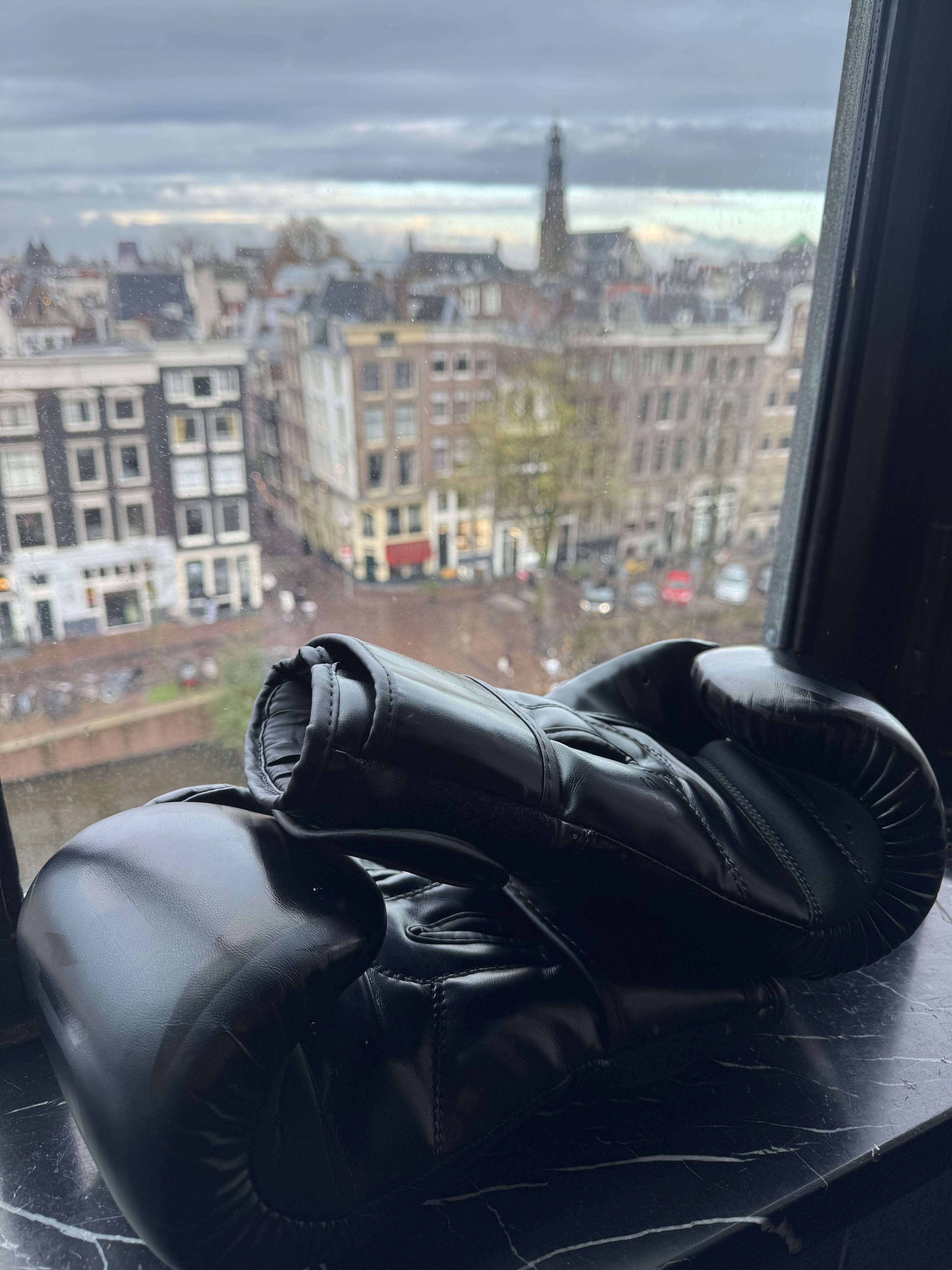
Aside from that, I had a quiet week back in Amsterdam. Woke up at 4am several times, which is perfect if you’re a monk; less so if you’re merely someone who made poor timezone choices.
Cultural re-entry has hit me at odd times, mostly when tired. I nearly bowed at multiple Dutch people, but have avoided saying arigato gozaimasu at anyone (so far).
I’m playing catch-up on socials, sorting through thousands of photos and ten times as many memories. Realised I now possess 400 photos of fruit-shaped bus stops. No plan for them. Yet.
Consuming
👩🏻💻 Internetting
Two very different takes on the future of internal comms collided in my feed on Tuesday, and the contrast was so stark it felt almost choreographed.
On one hand: Unily’s “Future of the Workplace”
On the other: Mike Klein’s “Big Shift”
Unily’s view is the one most people in big, complicated organisations will recognise: grounded, sensible, measured.
The world of incremental improvements: a bit less friction, a bit more governance, modest, polite steps toward AI, progress paced by budget cycles and risk committees. And honestly, that’s where most digital workplaces genuinely are. The average intranet of 2026 won’t look wildly different from its 2016 ancestor — and that’s fine. Evolution has value.
Klein, meanwhile, is squinting at an entirely different horizon. His lens: AI compressing decision cycles, dissolving management layers, accelerating knowledge loss, reshaping coordination itself. Less “optimise the comms plan”, more “your operating model may not survive contact with the next five years”.
The key thing, of course, is that both are true — just on different timescales.
But the bit we can’t wish away: AI isn’t a shiny add-on. Used badly, it could be a workplace bloodbath. Many people are understandably nervous about automating themselves out of relevance. And demographic change is already gnawing at the edges.
Japan hammered that home. Fewer workers, more automation, and a very immediate need to rethink how work gets done at all.
Small DEEx improvements still matter. They make the day-to-day tolerable. But they’re not the thing that will get us through the real shifts barrelling towards us.
If anything, the moment calls for more boldness — in how we use AI, how we explain it, and how we help people navigate what’s coming.
📺 Watching
Finger on the cultural pulse as always, I finally started Celebrity Traitors. I intended to watch one episode as a palate cleanser after a day of editing… and then resurfaced four episodes later, blinking at the clock like someone who has accidentally time-travelled.
It really is as good as everyone says: the camp, the scheming, the sheer operatic commitment to drama over absolutely nothing. It’s the kind of show that gives you whiplash from switching between “oh come on” and “I would absolutely betray every one of these people for £120k”.
No spoilers, obviously — but I am now fully invested, irrationally suspicious of everyone, and contemplating whether a roundtable on “psychological safety and betrayal in hybrid teams” might be a useful conference talk.
📚 Reading
My copy of Lisa Riemers and Matisse Hemel-Nelis’s Accessible Communications was waiting for me when I got home — a comforting sight after weeks with only my Kindle for reading company. I’d already had the pleasure of reading an advance copy earlier this year, but there’s something about holding a hard copy (a proper dead-tree edition) that makes the material land differently. Maybe it’s the weight; maybe it’s the guilt of knowing this will outlive all of us.
Re-reading it, I’m reminded what a genuinely important book this is for our industry. Too much accessibility advice for comms people is either painfully high-level (“write clearly!”) or so technical it requires a support animal. Lisa and Matisse manage to bridge that gap beautifully. They give you the principles and the practicalities, without ever making you feel lectured or incompetent.
What I love most is that they treat accessibility not as a compliance box to tick, but as core craft — part of what it means to be good at communication, full stop. They weave in examples, checklists, real-world scenarios, and the kinds of small, humane decisions comms people make a hundred times a day but rarely interrogate.
For anyone working in internal comms, content design, digital workplace, HR, UX, or frankly anywhere words meet humans: it’s one of those books you’ll keep within arm’s reach and quietly force on colleagues. Highly recommend.
🎧 Listening
Lily Allen’s new album has been on repeat in my ears since it dropped last month. I keep intending to listen to something else — a podcast, a serious audiobook, literally anything that would make me seem more intellectual — and then five seconds later I’m back in Lily-land, tapping away like a woman possessed. 10/10, no notes.
Travel
I’m heading to London this week for the Communicate conference. Looking forward to seeing some of my favourite intranerds in 3D. If you’re coming, say hello — or buy me a coffee if you’d like to hear about robot tour guides.
This week in photos




 Sharon O'Dea