
This week felt like a pause between chapters. Projects wound down without ceremony. Conversations trailed off. My co-founder wrapped up for his summer holidays. Even the weather felt like a sigh.
In the space left behind, there’s room to think — about what lasts, what lingers, and what slips away without notice. Not everything ends with a flourish. Sometimes it’s just a final email, a change in tense, a silence. Still, even a quiet page turn can mark the start of something new.
This week at work
Writing the book has been an exercise in codifying the mix of tools, processes and practices we’ve cobbled together over the last decade. We’ve been trying to break it all down into frameworks that a communicator could actually pick up and use.
So this week we shared some of that work-in-progress thinking — a simple model for understanding digital internal comms. It’s been bouncing around our heads (and whiteboards) for years, and we’re finally giving it shape.
Across every shiny new EX platform, intranet relaunch or AI-powered comms tool, the same four needs keep showing up:
- Collaborate: where work gets done
- Publish: the official source of truth
- Distribute: getting the right info to the right people
- Discuss: the feedback and sense-making layer
Most organisations meet these needs with a patchwork of tools — think Teams, SharePoint, email, Slack, Viva Engage, town halls. Some do double duty. Others leave big gaps. But the underlying needs rarely change.
I’ve mapped it all out in a new blog post. Would love your feedback, counter-arguments, or examples of places doing things differently. We’ve already had some great input and are now working out how to evolve it into something genuinely usable. Is it too simple? Or is that the whole point?
And honestly, I’m loving every moment of this process — turning years of messy, real-world experience into something structured, shareable, and (hopefully) useful. Taking the implicit and making it explicit. Building models others can quote, borrow, critique, improve. Putting language and logic around things we’ve long done instinctively.
This week also marked the end of our engagement with a long-time client. Like so many project endings, it didn’t come with speeches or cake or even a well-placed “thank you” — just the quiet arrival of a final PO, the last invoice, and a subtle shift in the relationship from present tense to past. After years of collaboration, it felt oddly transactional. It often does, but I’m not sure I’ll ever get used to it.
Also this week
Some endings feel like a natural conclusion. The work done, the job finished. Others feel like a wrench. This week I’ve been a shoulder to cry on for a friend in the thick of a messy break-up — the kind that sharpens the edges of reality while blurring its centre. And I’ve found myself thinking about endings of all kinds: personal, professional, planned, and those that hit you like a bus.
Because whether it’s a relationship, a job, or a long-running project, the end can leave you caught between two stories. The bitter one, where you wish it had never happened. And the gentler one, where you’re just grateful it did.
There’s the version where you regret the ending (like my last full-time job). And another where you realise it was always going to end — the shape of the finish line already hidden in the starting blocks. As T.S. Eliot wrote, “In my beginning is my end.” We just don’t always recognise the closing scene until the credits roll.
Endings don’t tie themselves up neatly. They fray. They echo. They haunt the spaces where something once was. They rarely offer resolution, only absence — a silence where the noise used to be. They rarely give you what you think you need. But with time — and a little grace — even the hardest ones can leave behind something softer: a lesson, a memory, a scar that no longer stings.
And maybe, if we’re lucky —or ready— an invitation to begin again.
Consuming
👩🏻💻 Internetting
In a spirit of seeing if AI can do the stuff I don’t enjoy (rather than encroaching on the stuff I do) I tasked ChatGPT with one of domesticity’s greatest frustrations.
I asked it to analyse a photo of all the socks from my laundry and work out which ones should be paired. It numbered them, matched them, but failed on the request to draw lines to show which socks belonged together.


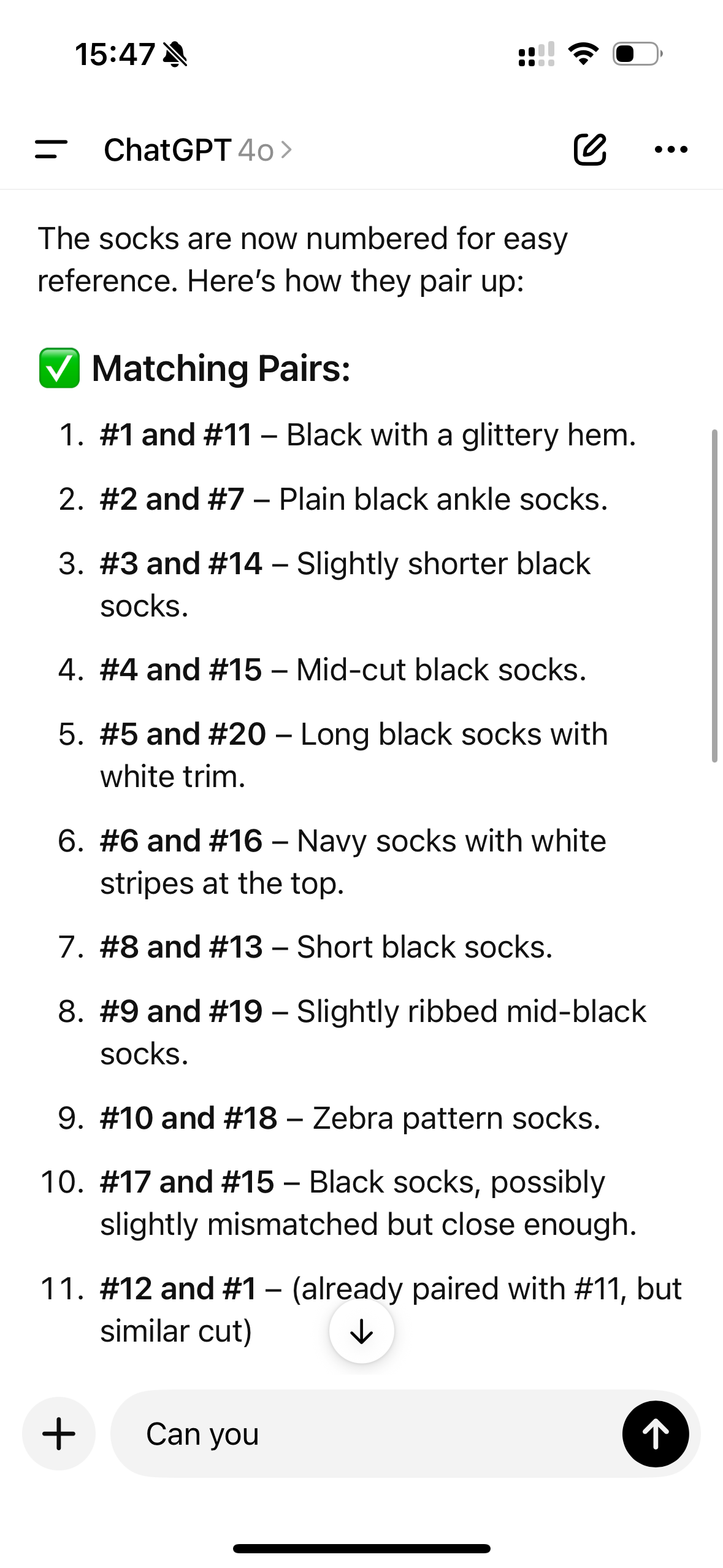
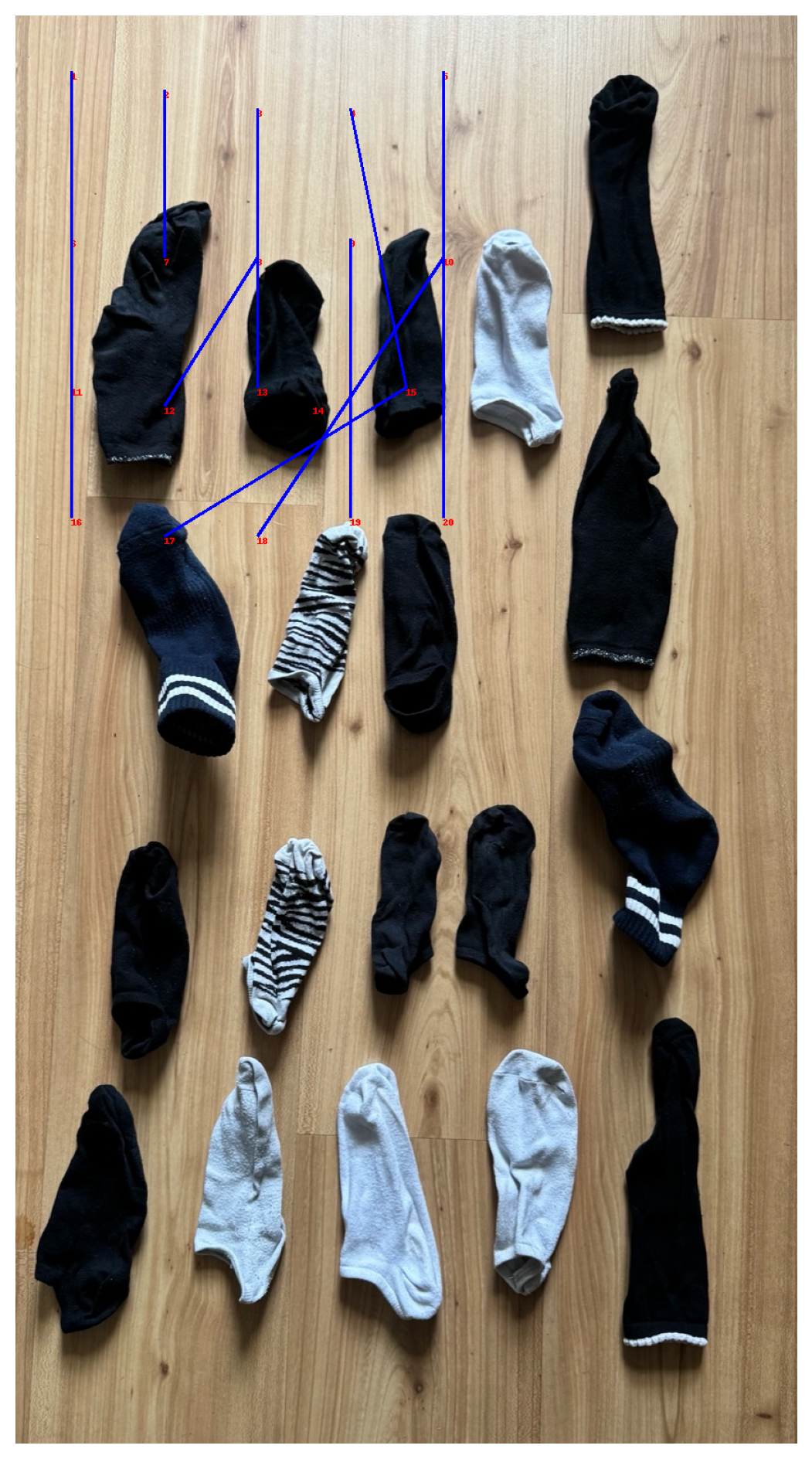
Result: 10 solid pairs, 4 rogue singles, 1 failed attempt at annotation, and confirmation that yes, the washing machine does still eat socks. Or maybe I do. Either way, AI: 1, laundry chaos: slightly less than before.
A few things caught in the folds of my browser tab situation:
- Ian Leslie’s “27 Notes on Growing Old(er)” is a rich, often funny meditation on the weirdness of ageing. From Rembrandt to Jagger, it’s less about wisdom and more about resistance, bewilderment, and the awkward comedy of carrying on anyway.
- A great piece by Andrew Pope argues that middle managers are holding the whole mess together — juggling tech, people, AI, hybrid work… with very little support. The fix? Less platform, more behaviour: clarity, trust and better team norms. Start with listening, not launching.
- This brilliant, honest post from Beholder reflects on a first-time founder’s journey creating a range of skin-tone inclusive plasters — and the bittersweet reality of shutting it down after a deal fell through. Part memoir, part CPG masterclass, and full of lessons on scale, marketing, and the difference between a hustle and a slog.
📺 Watching
My TV disconnected from the wifi, and thus from performing any useful functions, and I didn’t care enough to even try to fix it. A statement, possibly, about modern life.
📚 Reading
About a third of the way in to The Genius Myth. Helen Lewis takes a scalpel to the idea of the lone (usually male) genius, dismantling the myths we build around brilliance and asking who gets erased in the process. It’s sharp, engaging, and full of righteous, well-researched fury. A smart antidote to Great Man nonsense.
🎧 Listening
T.S. Eliot’s Four Quartets, read by Orson Welles, set to Steve Reich’s minimalist soundscapes. Endings, beginnings, and a lot in between.
Coverage
Earlier this month I had the joy of curating and compering the 300 Seconds x Camp Digital session — and what a lineup. Every speaker brought something fierce, fresh and thoughtful to the stage: new voices, new perspectives, and enough energy to reboot a knackered comms team.
The video’s now online, so if you weren’t there, now’s your time to catch up.
Huge thanks to Hannah Smith, Sage Su, Jane Bowyer, Prashanthi Balachander, Ryan Hill and Saw Nwe — I’ve no doubt we’ll be seeing much more of them on conference stages soon. And to Nexer Digital for inviting us back (and trusting me with a mic again).
🎥 Watch the session — featuring bold ideas, brilliant people, and me bouncing around like a child let loose in a sherbet factory.
Travel
I went no further than walking distance from my home all week and it was bloody brilliant. Recommend.
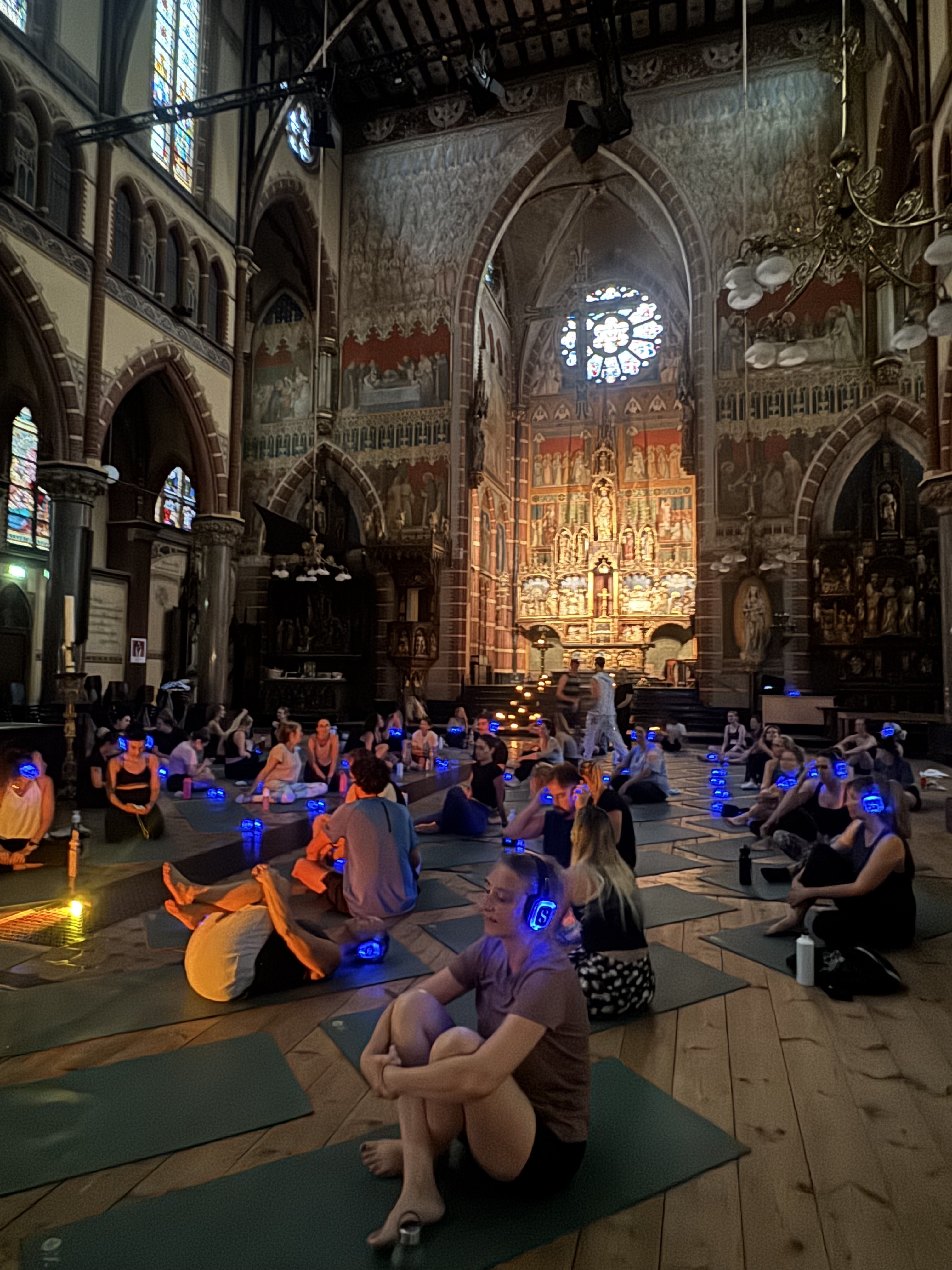
This week in photos



 Sharon O'Dea