There are few things two digital workplace consultants enjoy more than a lengthy discussion about data visualisation. Give us eight attributes to measure, a set of scales to argue over and the opportunity to debate the merits of a box-and-whisker diagram, and we’re happy as pigs in the proverbial.
Unfortunately, on Monday we had an audience.
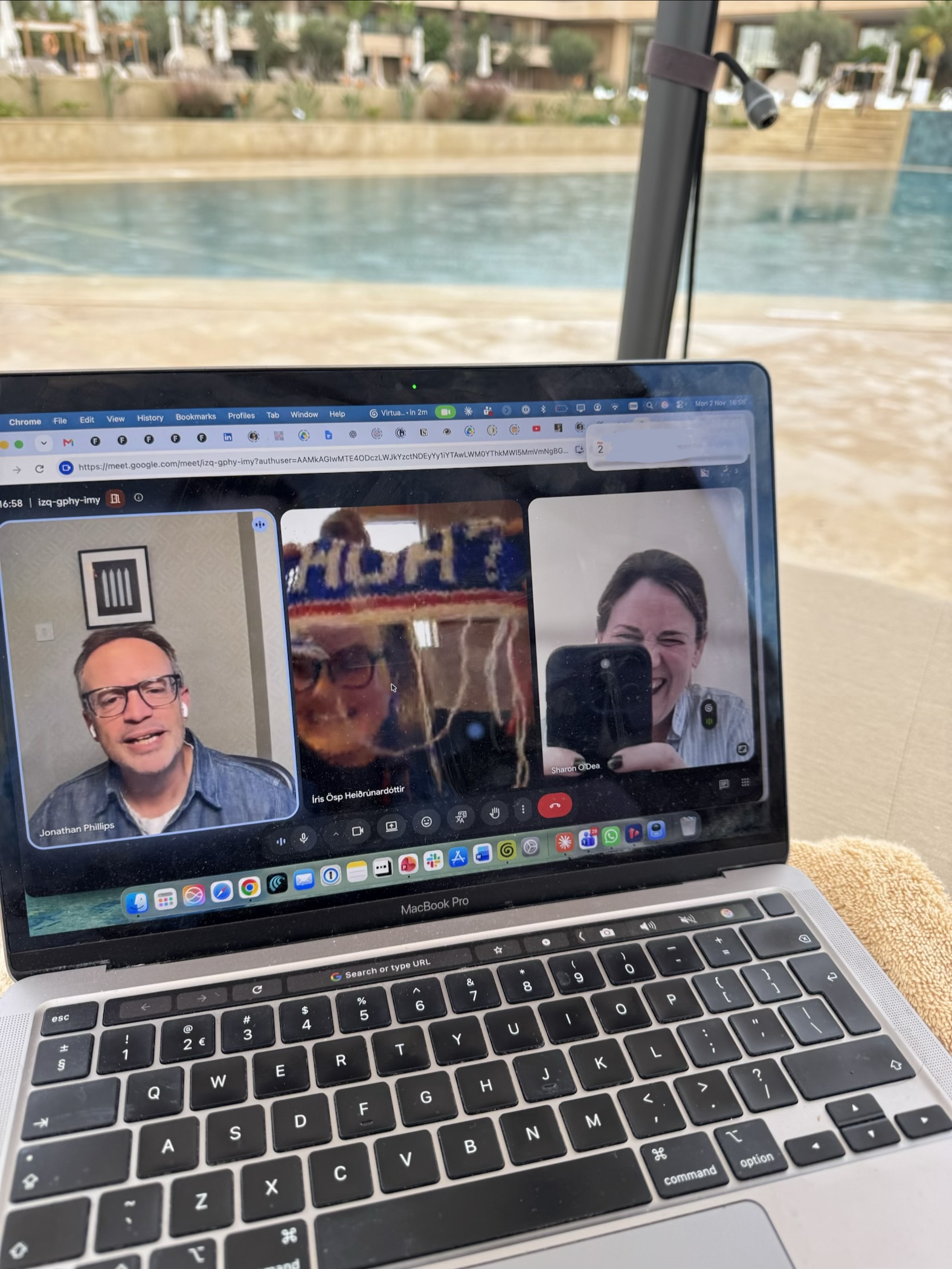
Somewhere in the Westfjords of Iceland, Íris Ösp Heiðrúnardóttir was listening to Jonathan and me develop our new channel fingerprinting model. I was beside a swimming pool in Morocco; Jon was at his desk in Bristol. Íris had been dispatched to take notes.
In wool.
She’s a Senior Knittaker, part of a gloriously inventive campaign from Visit Iceland in which real Icelandic knitters join your meetings and knit a summary while you get on with something more valuable. AI, in this case, stands for Authentic Icelandic.
I imagine Íris has attended some fairly tedious meetings in her time. But an hour of two consultants enthusiastically discussing the relative merits of different chart types must have tested even Icelandic reserves of patience.
We, meanwhile, were having a lovely time.
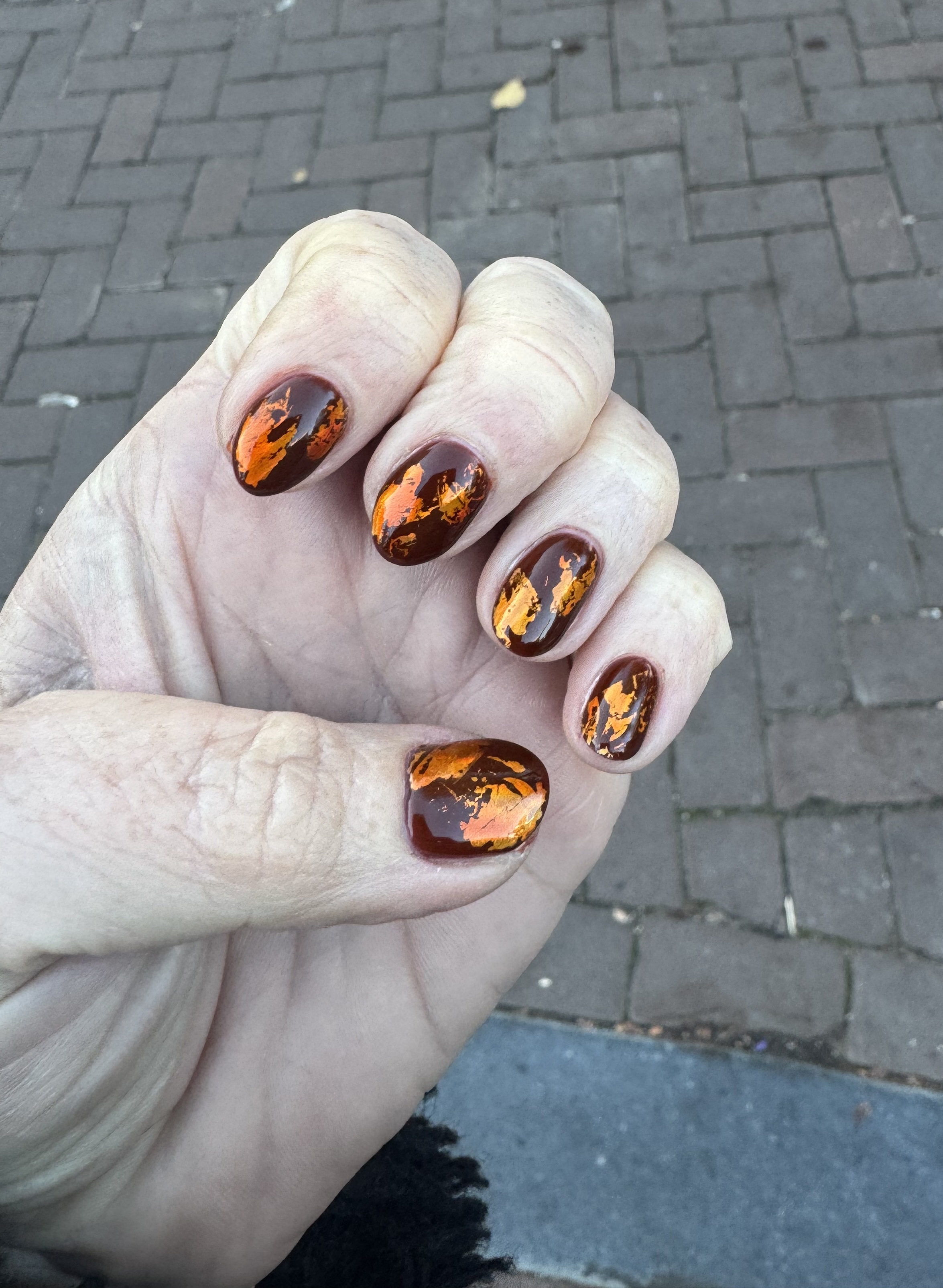
At the end of the meeting, Íris held up her finished work.
HUH?
For the first time in my professional life, I feel a meeting summary has accurately captured the experience of being in the meeting.
Bravo, Visit Iceland. Possibly my favourite marketing campaign of the year.
This week at work
HUH? wasn’t her first choice. Íris told us she’d wanted to knit ALIGN, because we’d said it so often she assumed it was the point of the meeting. She ran out of stitches.
Which is also, in my experience, what happens to most organisational alignment efforts. Everyone starts with the best intentions, then somebody runs out of patience, budget or wool.
To be fair to us, it was an alignment sort of week.
On Tuesday Jon and I presented the findings of a discovery to one client. Around the virtual table sat comms, IT, operations and senior leadership, each with a different worry.
IT wanted to know what would happen to the technical documentation. Someone who’d lived through a big reorganisation wanted a rollout that wouldn’t overwhelm teams spread across the world. Another had watched the organisation adopt hard-to-use systems before and wasn’t keen on commissioning the sequel. And the person holding the budget wanted to know how any of it would be resourced.
By the end, everyone agreed.
The next day, the client wrote to say there aren’t many meetings there that reach full alignment so quickly, and credited how “strong, convincing and practical” the assessment and recommendations were.
Lovely feedback, obviously. But there’s a point here beyond me finding an excuse to quote someone saying nice things about our work.
You can’t ask a room to align. You have to do the work that makes agreement possible before anyone walks into it.
Every hypothesis gets tested against the survey, the interviews and the analytics until it’s either validated or binned. Every recommendation has to survive the question of what it would actually mean for the people expected to implement it. And if the evidence doesn’t support your preferred answer, you need to be prepared to abandon it, however lovely the slide.
It helps when every tool you’re recommending is one the organisation already owns. That shifts the conversation away from platforms and towards the much less glamorous business of ownership.
Pages nobody maintains. Content belonging to people who left years ago. Channels that exist because somebody once set them up and nobody has since had the heart to switch them off.
A new tool without new owners will end up in exactly the same place. Just with a nicer homepage and, if you’re particularly unlucky, a three-year licence agreement.
On Wednesday, another client demonstrated why agreement sometimes means deciding not to decide.
A platform decision has been paused, sensibly, until Comms, HR and IT can agree what they want. The difficulty is that IT doesn’t yet agree with IT. One part of the department wants to stay put; another wants a proof of concept.
We came away agreeing that pausing was right, which I suppose is alignment of a kind. At least everyone now agrees that they don’t agree.
Elsewhere, the live question is who checks a request for a new online community before it goes live: the person asking for it, or the team who’ll have to tidy up after it. And at the end of the week we kicked off with a new client whose brief had already ruled out choosing any tools before we’d asked a single question.
I could have kissed them. It’s never a channels problem.
The temptation, when people disagree about technology, is to assume they need more information about the technology. Another demo, another comparison matrix, another vendor explaining how their particular collection of rectangles will transform the employee experience.
Quite often, what they need is to agree who owns what, what they’re trying to achieve and what they’re prepared to stop doing.
You can spend a great deal of money avoiding those conversations. Entire industries depend on it.
Otherwise, as Íris so elegantly put it: HUH?
Also this week
My last few days in Morocco were considerably more chilled than the first few. The first half of the trip was work: the festival, my talk, a great many conversations. The second half had no agenda at all, and for once I managed to resist the urge to give it one.
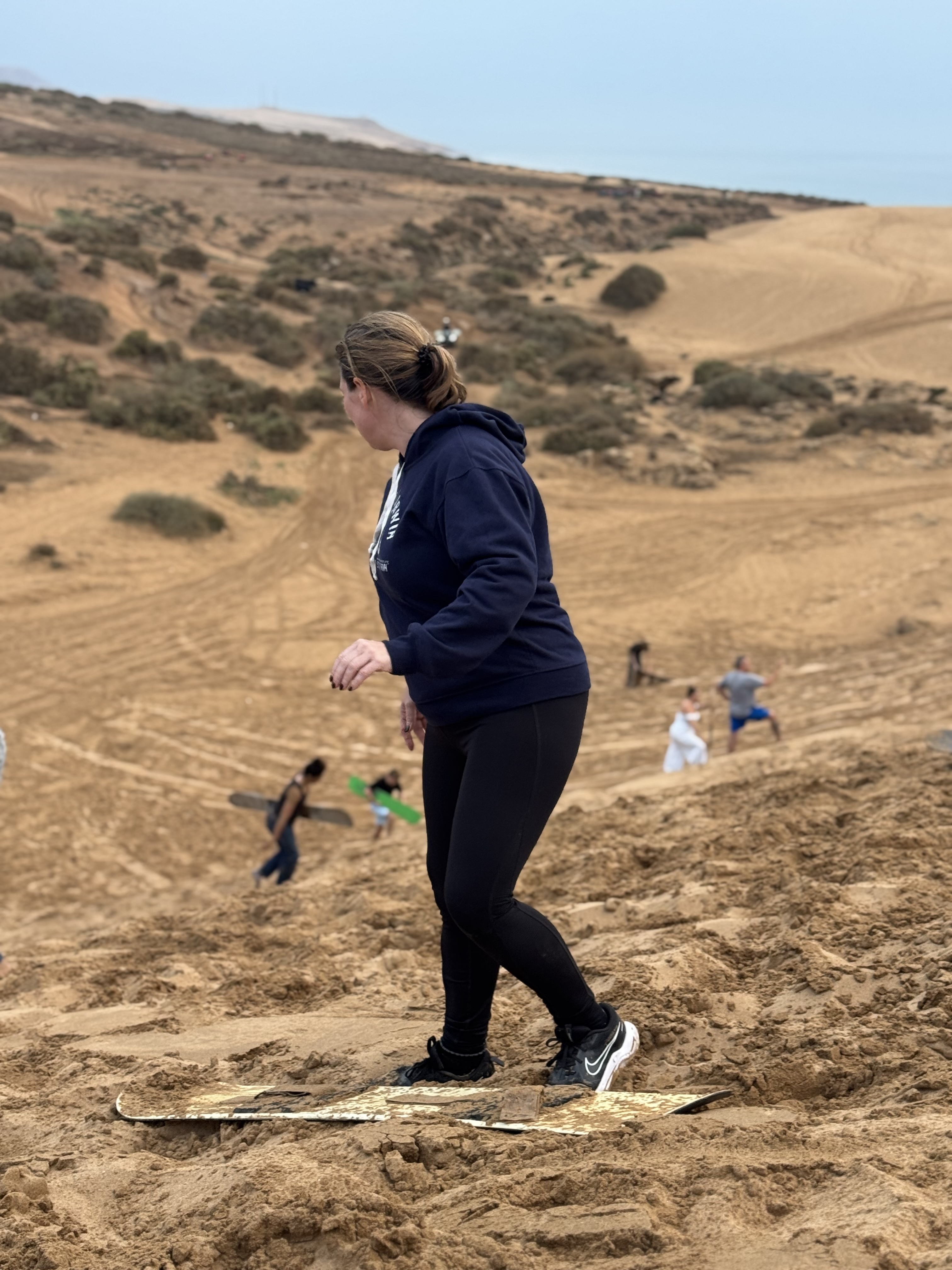
I did all the things you’d expect. Rode a camel, got pummelled in a hammam, sandboarded down some dunes, averaged about 1.3 tagines a day.
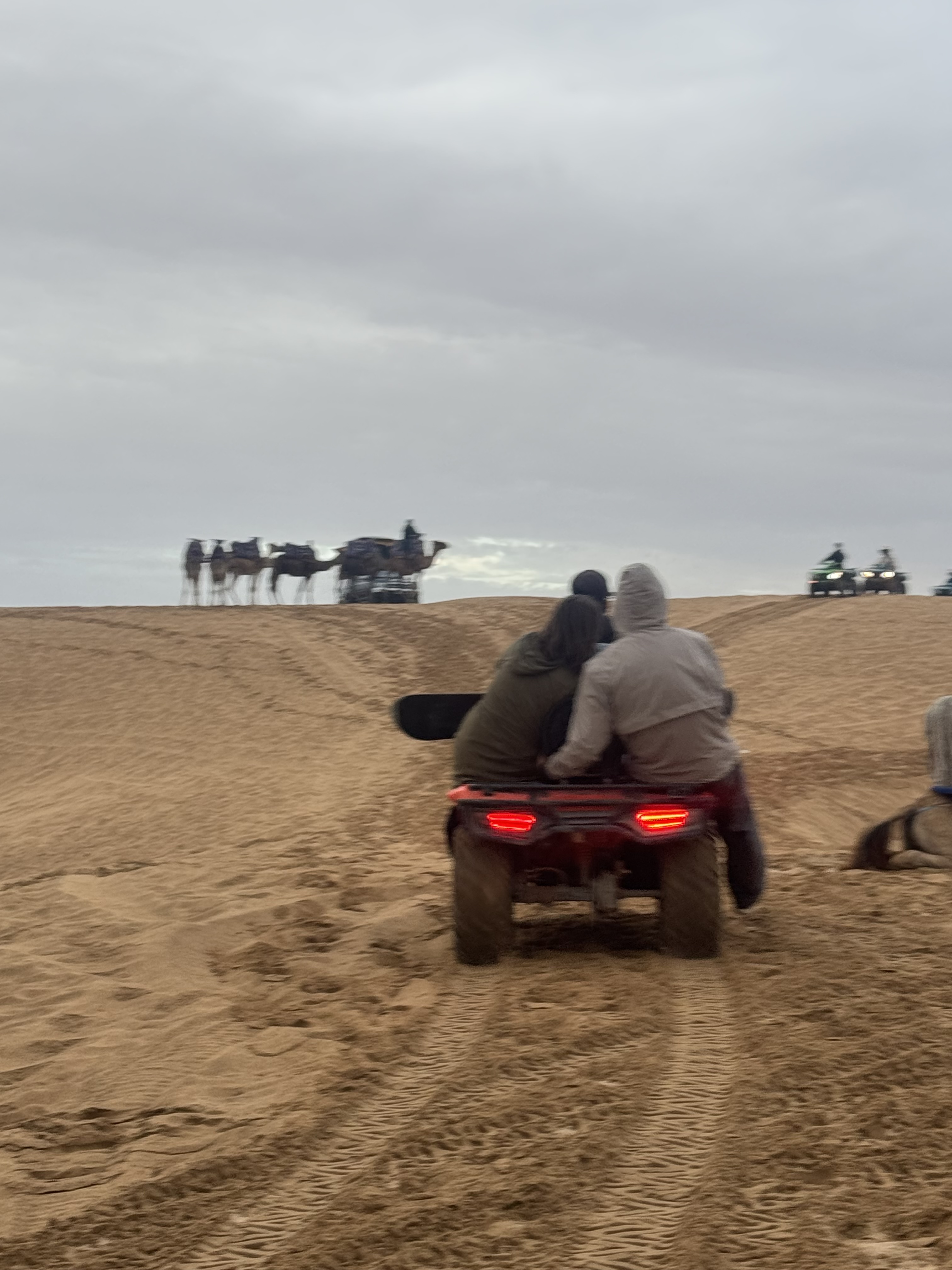
And a few I didn’t expect. Like driving through the desert in the dark, sharing a quad bike with four other people, to a bonfire party in the dunes, where we danced to Darija tunes with a wonderfully random collection of people from around the world.
Five adults. One quad bike. Night. Desert.
Somewhere, a health and safety officer woke with a start and didn’t know why.
Then home, and straight back out again: a night with my best friends to see Christopher Hall at the Comedy Cafe, with slightly more wine than is wise on a school night.
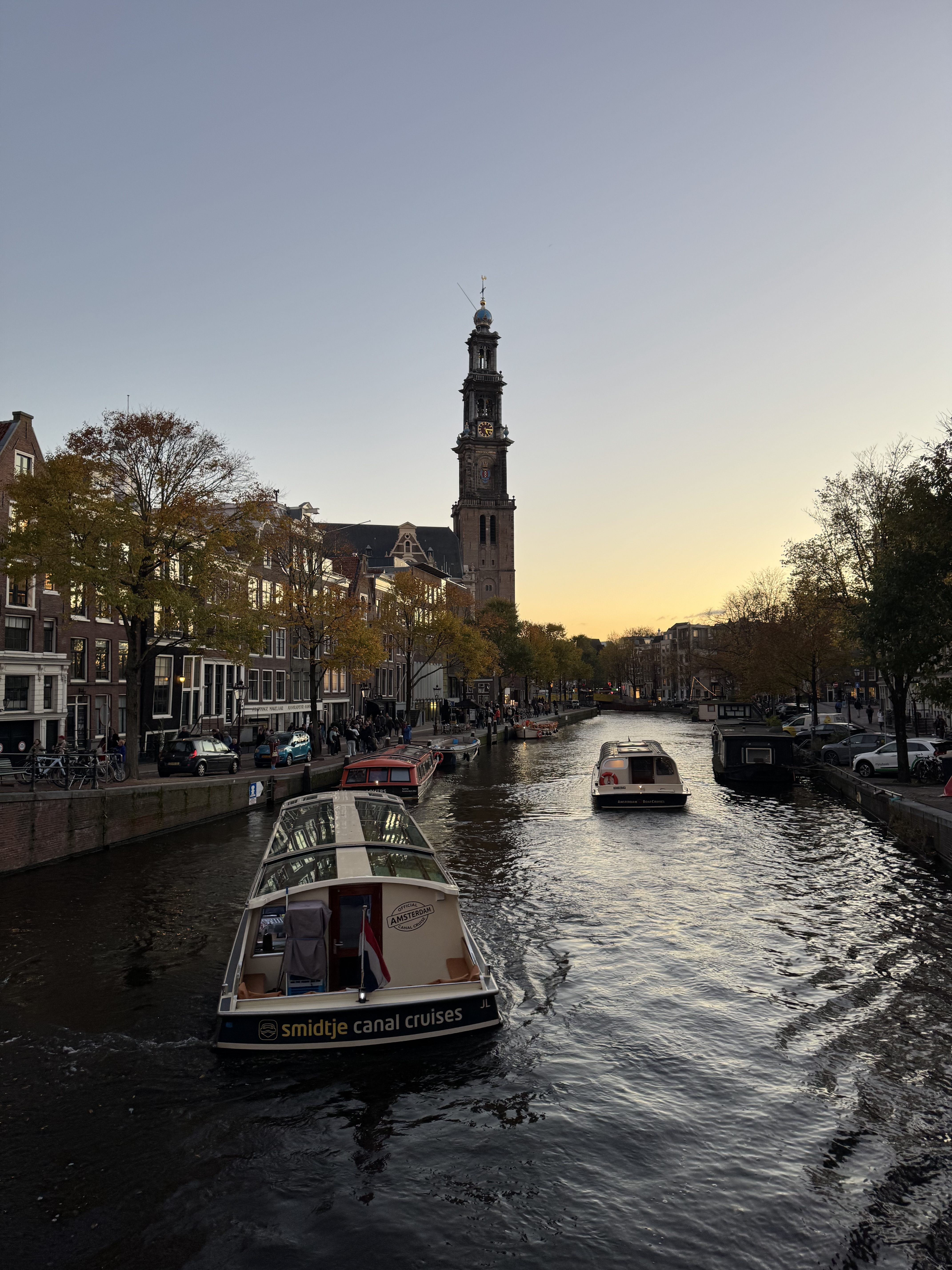
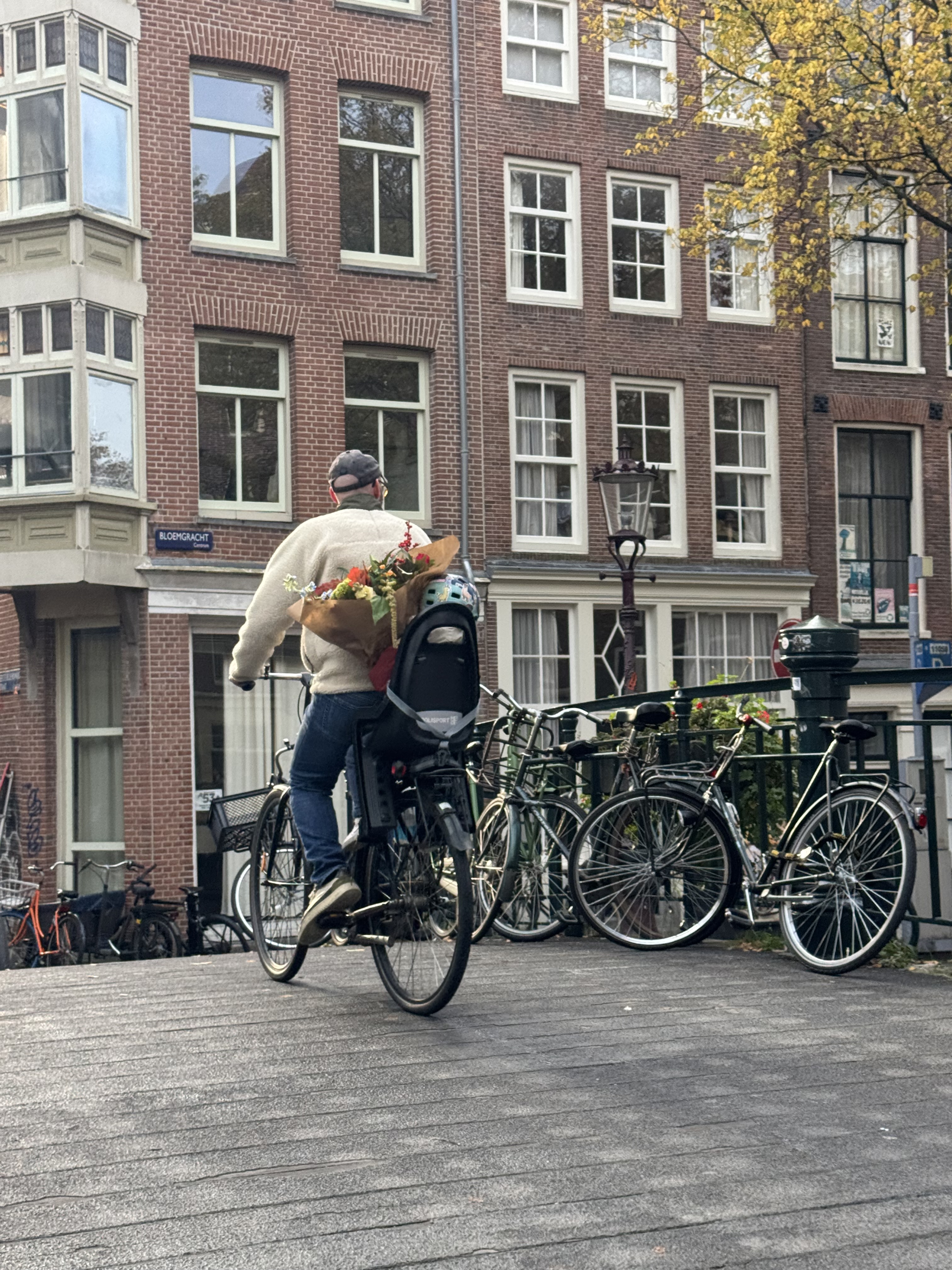
Amsterdam in autumn is a magnificent thing. The canals, the trees, the golden light on the old brick buildings. After a week of Moroccan sunshine and desert adventures, I was reminded how much I love coming home to this ridiculous, beautiful city, and to the people who make it home.
I’ve also started work on a new talk for FutuHRistIC in London later this month. Having a whole book to draw from makes the process considerably easier. It’s almost as if spending several years writing down what you think about something turns out to be useful.
Who knew?
Consuming
I watched The Social Reckoning, Aaron Sorkin’s return to Facebook. I’m already familiar with the case, which may be why I found it a bit dull. It’s hard to sit on the edge of your seat for a story you already know the ending of, however briskly everyone walks down corridors delivering exposition at each other.
Its underlying point is a fair one, though. The algorithms that decide what billions of people see aren’t designed to serve those billions. They’re designed to keep us watching, clicking and reacting, because our attention is the product being sold.
Which made for an interesting contrast with the rest of my week, a good part of which I spent joyscrolling.
Hours and hours of it, watching the US midterm results come in.
There’s something deeply satisfying about watching extraordinarily wealthy arseholes discover that spending enormous sums of money doesn’t necessarily entitle them to the result they ordered.
I appreciate the irony of celebrating this while feeding the very algorithms I’ve just complained about.
Published
You can’t comms your way out of a bad deal
Three wifi-free hours on my flight home from Morocco gave me the opportunity to indulge in one of my favourite pastimes: taking a series of increasingly vicious swings at corporate bullshit.
The result was a piece about the deteriorating deal between employers and employees, and the increasingly desperate attempts of the communications profession to make everyone feel better about it. Engagement campaigns, pulse surveys and purpose statements are all very well, but they’re not going to persuade people that a shrinking pension, stagnant pay and the creeping expectation of unpaid labour constitute an exciting employee value proposition.
I had an indecent amount of fun writing it. And judging by the response, an awful lot of people enjoyed reading it. It’s now my best-read post of the year, which suggests either that I’ve struck a nerve or that the internet has a previously undiscovered appetite for watching me take a flamethrower to an employee engagement strategy.
Possibly both.
I published it on Wednesday morning, a few hours before Canva announced its restructure. Rarely has the news cycle been so obliging.
I couldn’t have timed it better if I’d been sitting in Canva’s boardroom with a copy of the redundancy plan and a stopwatch.
Coverage
Which is presumably why, when Canva’s memo landed, Liam Moran at In.Comms asked what I made of it. Happily, I’d already spent three hours on a plane sharpening my knives.
To give Canva its due, it got more right than most. The CEO put her own name to it. The severance terms were spelled out in actual numbers, sparing employees the usual treasure hunt through phrases like “generous package” and “support during this transition”. They even get to keep their laptops, which is more than some companies manage before they’ve switched off your login and had security escort you past the pot plants.
Some 1,271 people have been told they’ll lose their jobs, change roles or be relocated, without yet knowing which. Redundancy, a different job, or a new life in Sydney? That’s quite a range of possible outcomes to leave hanging over someone’s head while the leadership team finishes rearranging the boxes on its PowerPoint.
The one thing a memo like this ought to reduce is uncertainty. Canva has instead distributed it to more than a fifth of its workforce, with a helpful note about the company’s exciting future.
And the real damage may be among everyone who isn’t on the list. The people watching their colleagues spend the next few weeks wondering whether they’ll still have a job, a manager or a postcode. They’ll keep turning up, doing their work and collecting their salaries. But they’ll also be recalculating exactly how much loyalty, goodwill and unpaid effort this particular employer has earned.
No amount of empathetic messaging, carefully calibrated leadership visibility or pulse surveys with a reassuringly high response rate can undo what people have just watched happen.
The deal is the message.
Comms reacts to Canva’s restructure announcement, In.Comms
Travel
I’m home for a few days before a trip to the UK this week, then back to London the week after for FutuHRistIC.
This kind of geographical stability makes me uneasy, so I’ve dealt with it the only way I know how: by finishing the bookings for my six remaining trips between now and the end of the year.
I’ve also started planning some bigger adventures for the first half of next year, including the first part of a birthday present to myself. It will most likely end up being my 100th country.
Given my tendency to turn perfectly enjoyable hobbies into competitive endurance events with numerical targets, I suspect reaching three figures will do absolutely nothing to discourage me.
How do I keep it all organised? I’ve built myself a travel agent in Notion and Claude. It knows my preferences, pulls my itineraries together from my emails, and helps me plan routes that make logical sense.
There’s no Iceland on the list this time. But I took up knitting last year, I’ve made two scarves, and when I go back for a fifth visit, I’ve promised Íris I’ll bring one.
She may have to settle for HUH?
This week in photos