
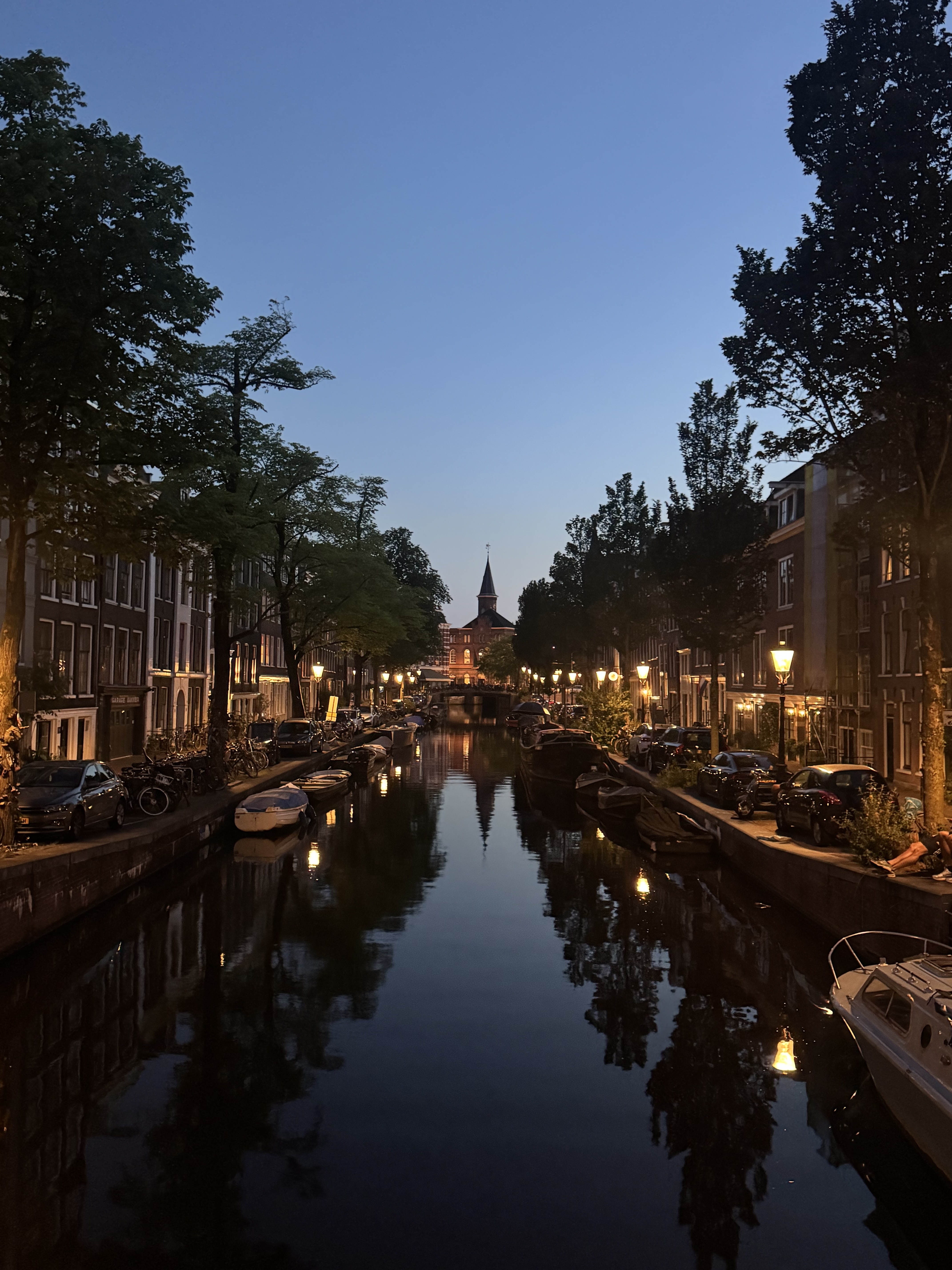
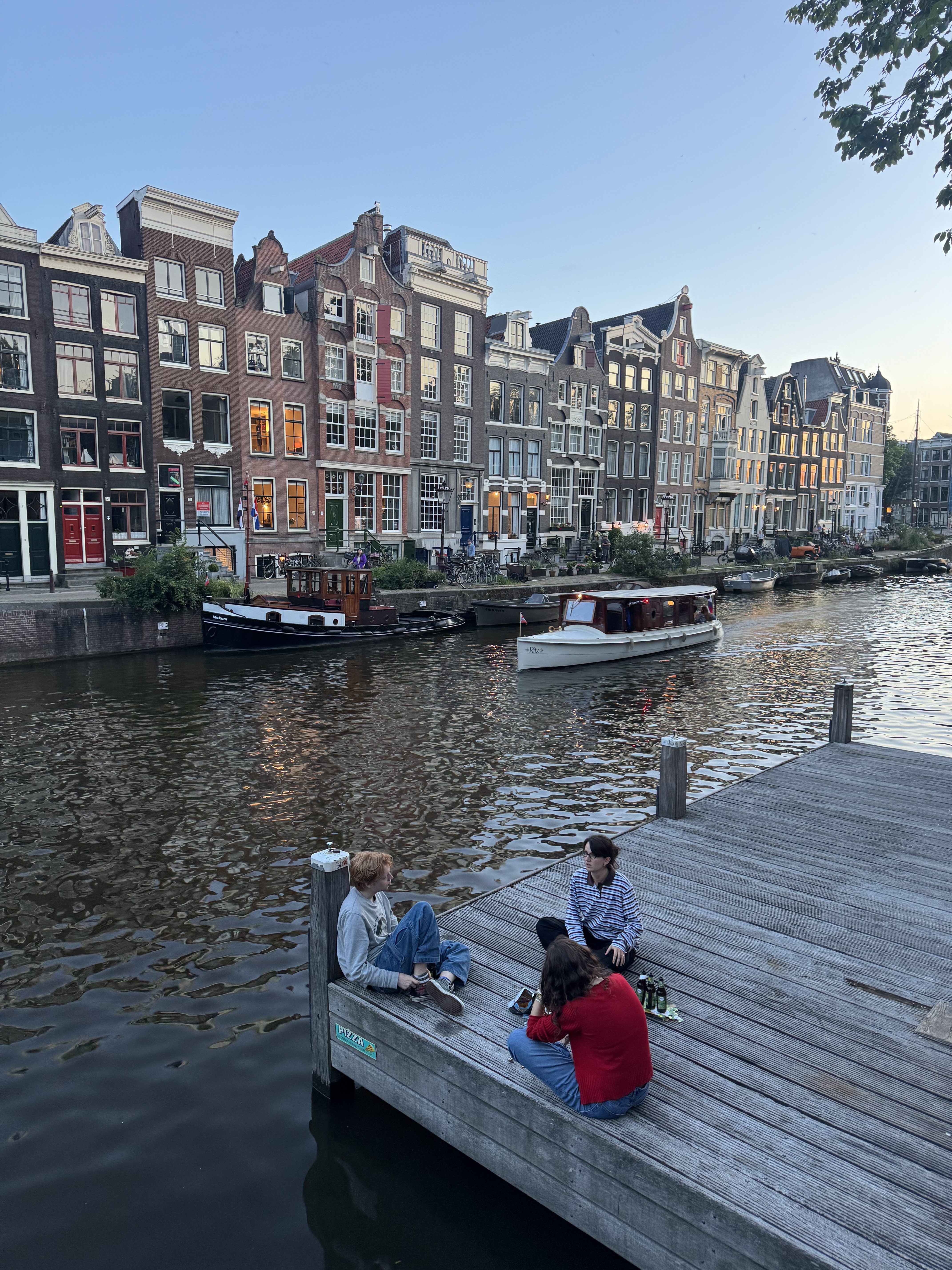
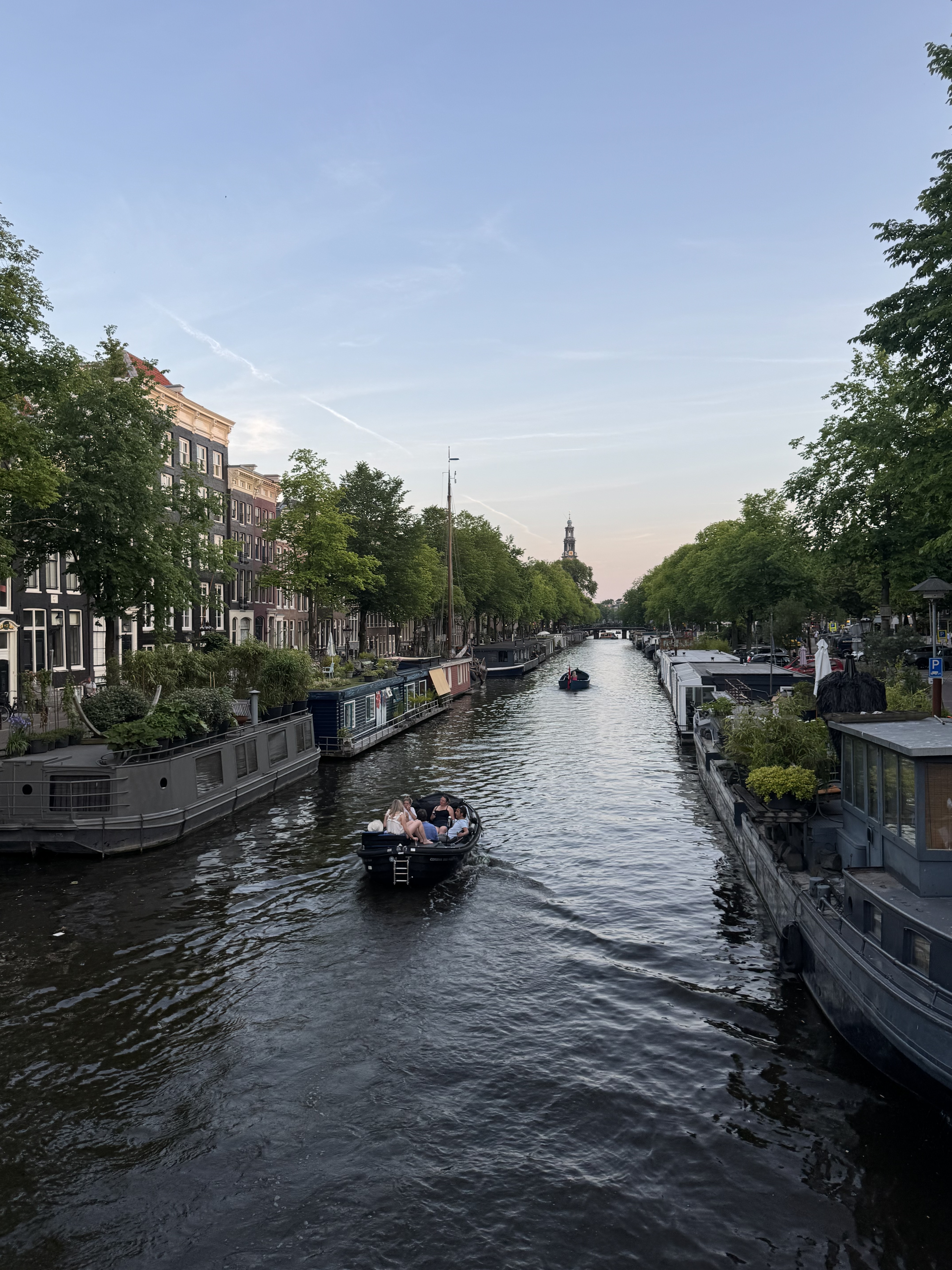
It’s midsummer. The days are long, the sun’s out, and Amsterdam is at its absolute best—golden light, lazy canal shadows, the whole city leaning into the heat. The world might feel heavy right now, but coming home to this place is something I never take for granted.
Especially this week, as Amsterdam marks its 750th birthday—with a giant street party on the ring road, naturally. Because what better way to celebrate than dancing on a motorway in full sunshine, in a city that knows exactly how to have fun without taking itself too seriously?
This week at work
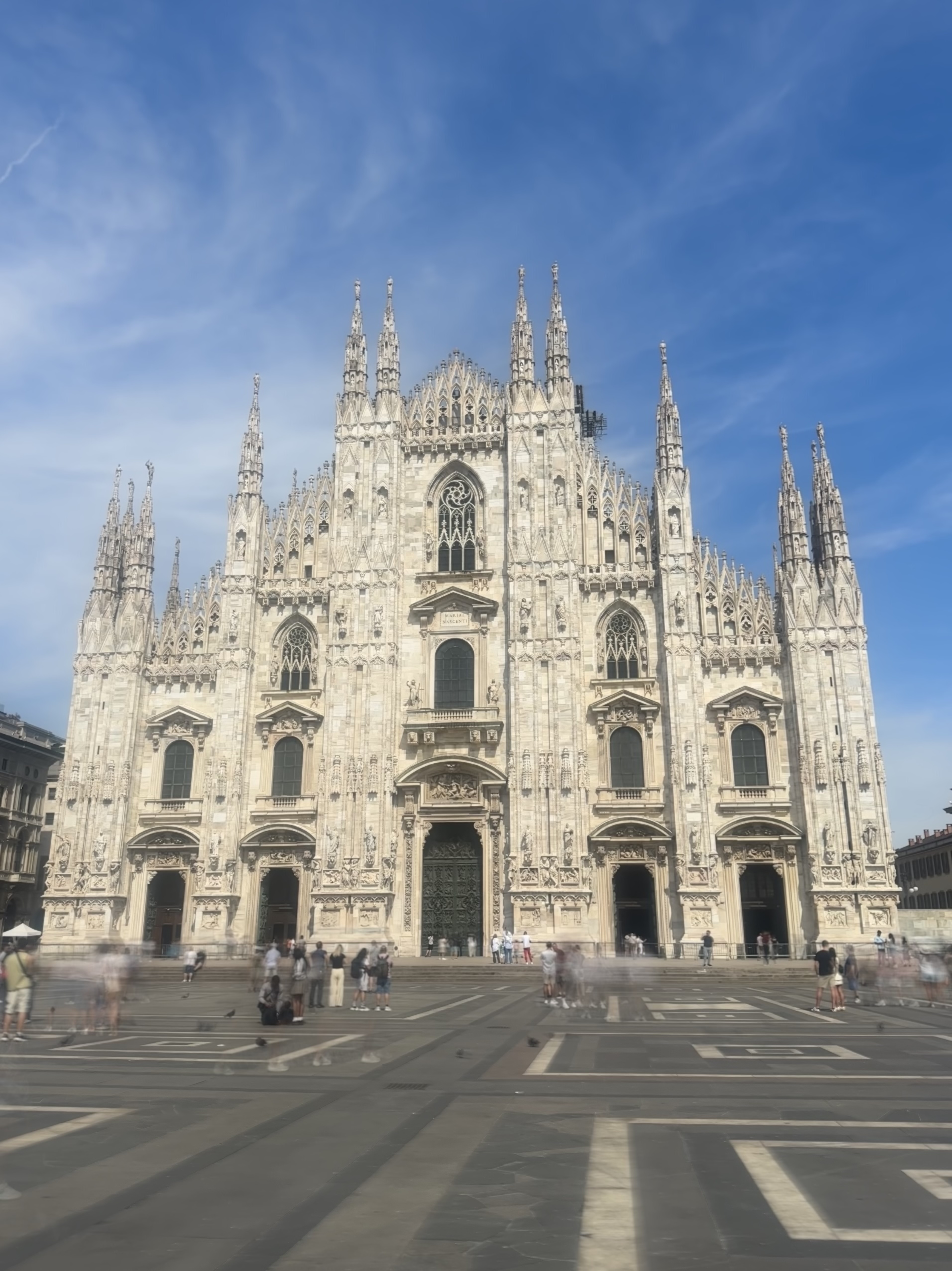
My big focus was a trip to Milan for Intranet Italia Day—a brilliant chance to connect with Italy’s intranet community and reflect on how the field is evolving.
My highlights:
- Giacomo Mason reminded us how intranets are evolving into integration hubs — one example had 40 services connected! He nailed the pace of change in intranet roles: “I used to be an internal communicator, now I’m digitalising parking spots.”
- Sam Marshall explored what intranets are really for. We’ve gone from the comms-and-info hub, to the everything-platform, to what he calls the Minimalist Intranet—a layer that helps make sense of everything else. He unpacked four key trends from ClearBox’s annual review: the push for employee experience, renewed focus on frontline workers, better comms ‘air traffic control’, and (of course) AI.
- Stefano Besana from Deloitte shared compelling thoughts on AI and the future of work. AI can boost team performance—but may flatten creativity. 94% of leaders say it’s essential; only 7% think their organisation is doing it well. A telling gap.
- Anna Kravets delivered a great talk on design on a budget. “It looked good in Figma” got a laugh, but her advice (avoid unnecessary customisation and use out-of-the-box widgets to sidestep maintenance nightmares) was spot on.
My own keynote wrapped up the day. I argued that it’s time for a new Renaissance for the intranet. We’ve built digital workplaces overflowing with content, yet employees still struggle to find what they need. The problem isn’t a lack of information—it’s the volume, and the lack of structure or purpose.
I shared the SEFE story: a client with four legacy intranets and just 100 days to build something better. We didn’t throw AI at it. We focused on clarity, consistency, and content that served a purpose, using content design to deliver value, not volume.
An intranet should be a workshop, not a dumping ground. A place of deliberate creation, not digital clutter. Like the Renaissance masters, we need to lead with standards, intent, and a commitment to quality.
Back in Amsterdam, Jon and I have been cracking on with the book. The first section—on definitions, discovery, business cases, and the platform ecosystem—is finally starting to take shape.
Also this week
My friend Lauren and I went to Science & Cocktails, a monthly lecture series with smoky drinks and surprisingly solid live bands. The theme was Power and Countervailing Power in the 21st Century, delivered by WRR researcher Haroon Sheikh.
His argument: power today isn’t just about armies or treaties. It’s embedded in chips, supply chains, social networks, even the strategic use of migration. We’re living in an age of ambient power projection, where influence is diffuse, deniable, and increasingly hard to regulate.
Democracy’s old guard isn’t built for this kind of fight. Sheikh made a compelling case for fresh thinking and new tools to counterbalance power that no longer wears a uniform or waves a flag.
Consuming
👩🏻💻 Internetting
A new study confirms what many suspected: relying on ChatGPT to write your essays doesn’t just affect the output—it rewires your brain. People who used an LLM to write essays showed weaker brain activity, worse memory, and couldn’t even recall what they’d “written” a few hours later. When asked to go back to writing without help, they struggled.
In short: using ChatGPT might make the task easier, but it makes you less mentally engaged. Like GPS for your brain—convenient, but at the cost of knowing where you are.
It’s made me reflect on thoughlessly turning to AI to speed up a task, and being more deliberate about stepping back and doing it slowly but more intentionally.
📺 Watching
I watched Grenfell: Uncovered this week, and it’s stayed with me in that way only something truly harrowing can. The series is devastating—not just in its depiction of what happened that night, but in the slow, avoidable build-up that made it inevitable. It’s forensic, unflinching, and absolutely damning.
What hit hardest, though, was the familiarity. I grew up nearby. My primary school was (literally) in the shadow of the tower and my classmates lived there. Some still did when the fire struck. The estate, the streets—they’re not anonymous cityscape, they’re places I used to walk through daily. Seeing your childhood backdrop become the site of a national tragedy is surreal. But that’s the point, really: Grenfell isn’t some abstract failure. It’s what happens when systems designed to protect people decide some lives just don’t count as much.
When I tell people I’m from Notting Hill, the reaction is often the same: ooh, fancy. People forget that Notting Hill, like much of London, is a neighbourhood of sharp contrasts and deep inequality. Gentrification didn’t replace the community; it happened around it, and not always with it. The Notting Hill I come from is the one in Grenfell, not the one in the Hugh Grant film.
I read One Kensington last year, which explores the same dynamic in meticulous, painful detail—the wilful neglect of the borough’s poorer, northern half by a council that would rather pretend it doesn’t exist.
📚 Reading
I had a sneak peek at Lisa Riemers and Matisse Hamel-Nelis’s upcoming book Accessible Communications. I’m halfway through and it’s packed with useful, practical advice on what accessibility means and how to get it right. Highly recommend.
Also knee-deep in book research. This week’s pick: Introduction to Employee Experience Platforms by Shailesh Kumar Shivakumar. It raises questions we’ve been circling for a while: what is an EXP, really? Is it different from a digital workplace or intranet—or just new branding for the same old problems.
🎧 Listening
Been deep in a Sparks rabbit hole ahead of seeing them live this week. If you don’t know them: imagine if Gilbert & George made synth-pop, or if Wes Anderson formed a band with your eccentric uncle. Still going strong after 50 years. Deadpan, operatic, and completely unbothered by what’s fashionable.
Connections
Milan was a chance to catch up with familiar faces from the intranet world—Sam Marshall, Anna Kravets—and finally meet others I’d only spoken to online.
Also squeezed in an impromptu Aperol catch-up with my old StanChart colleague Stefan Chojnicki, who I’d forgotten had moved to Milan. We hadn’t seen each other in over a decade.
Impromptu catch-ups are great. Impromptu catch-ups with Aperol in the sunshine: even better.
Travel
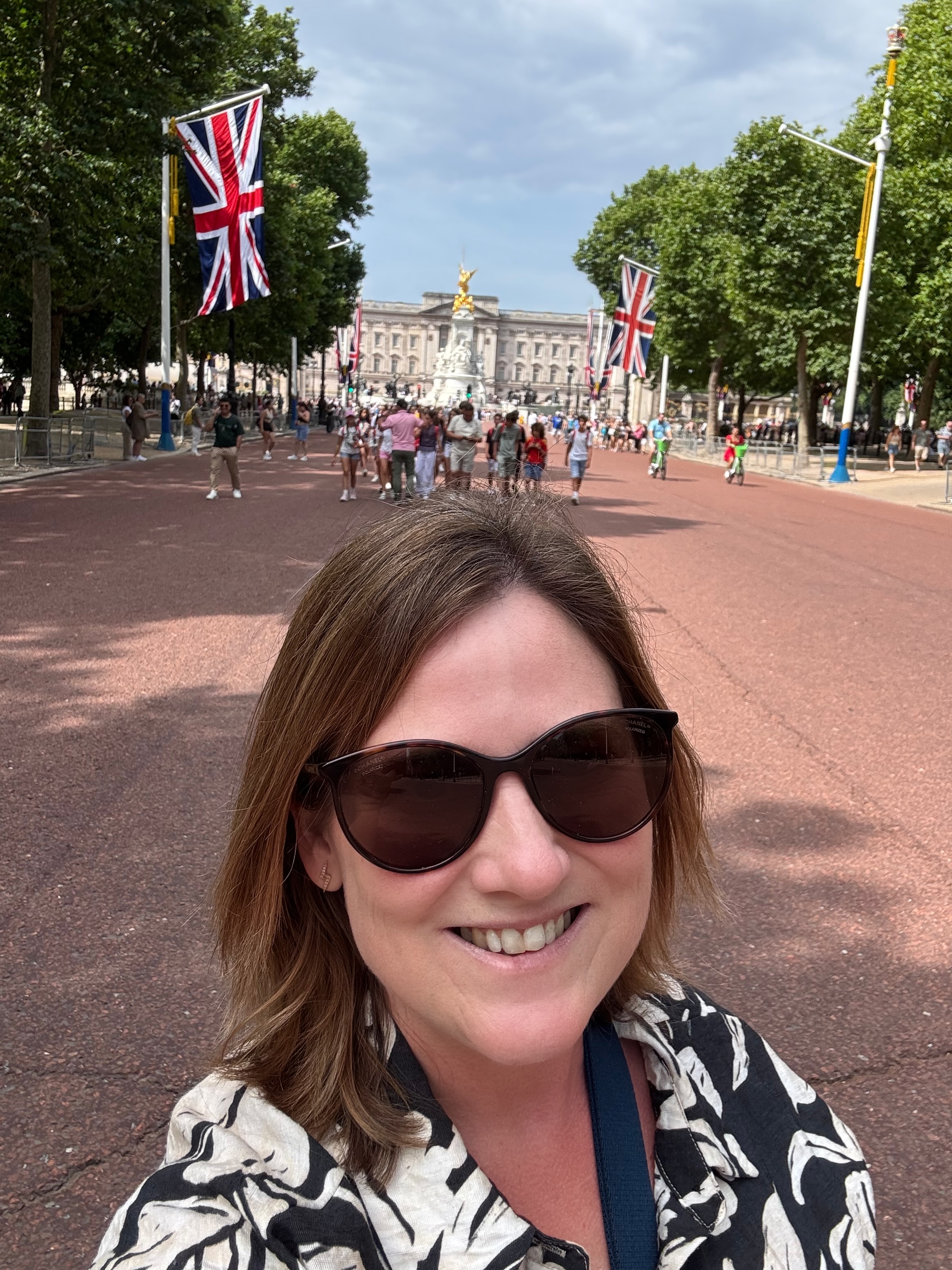
Just a short trip back to London this week for an event. More on that next week.
This week in photos






 Sharon O'Dea