
There are weeks that feel like a straight line, and weeks that feel like a series of thresholds. This one was the latter: a chain of quiet crossings, each nudging me from one state of mind to another.
Japan has physical markers for these moments: torii gates. Step beneath one and, in theory at least, you leave the human world and enter the realm of the kami. But what I’ve learned this month is that thresholds don’t have to be dramatic to matter. Sometimes they’re a shift in perspective; sometimes they’re the soft double-click of a chapter ending.
My week has been full of these liminal moments. Some planned, some unexpected, all adding up to a sense that I’ve stepped from one space in my life and work into something else. I can’t name the new thing yet, but I can feel its outline.
At the shrine where I took that torii photo, it wasn’t the gate that caught me so much as the details: the heavy shimenawa rope; the tassels; the zig-zag shide strips hanging like paper lightning. I learned they symbolise rain, renewal, and the hope for a good harvest. Not a passive hope, but an active one: may what begins here find nourishment enough to grow.
I don’t yet know what will grow out of the past month, but the soil is definitely shifting.

The first threshold of the week wasn’t spiritual, though; it was the lobby of a Fukuoka hotel, where my husband David arrived after a long flight from Amsterdam. After a month on the far edge of Japan — working odd hours, accumulating tiny cultural recalibrations — seeing him appear felt like briefly stepping back into my own life. Or at least the version of it that comes with an Irish lilt and knows how I take my tea.
But before that, Fukuoka delivered a different kind of homecoming.
I met up with my friend Tony, whom I first encountered on the intranet scene in the early 2010s, back when we were all swapping SharePoint hacks and governance war stories. It was a rooftop bar in Singapore in 2015 that shifted us from acquaintances to friends, and we’ve crossed paths in London, Berlin (their adopted home), and now, improbably, Japan.
We spent the evening eating ramen, hammering Taiko no Tatsujin in an amusement arcade, and laughing with the sort of abandon you reserve for people who have witnessed your more ridiculous professional eras. The universe also arranged for us to turn up in almost identical outfits, resulting in a “fit check” video under the glow of claw machines. I even won a Taiko plushie, prompting an entirely undignified amount of joy.
It reinforced something I keep relearning: home is, more often than not, people rather than places.
And once David arrived, Fukuoka became another kind of home. We did what we always do in a new city: walked, talked, ate too much, and tried to understand the place through its smallest details. Fukuoka is warm, open, generous — but after Nagasaki’s sleepy intimacy, even a soft re-entry into big city life was A LOT.
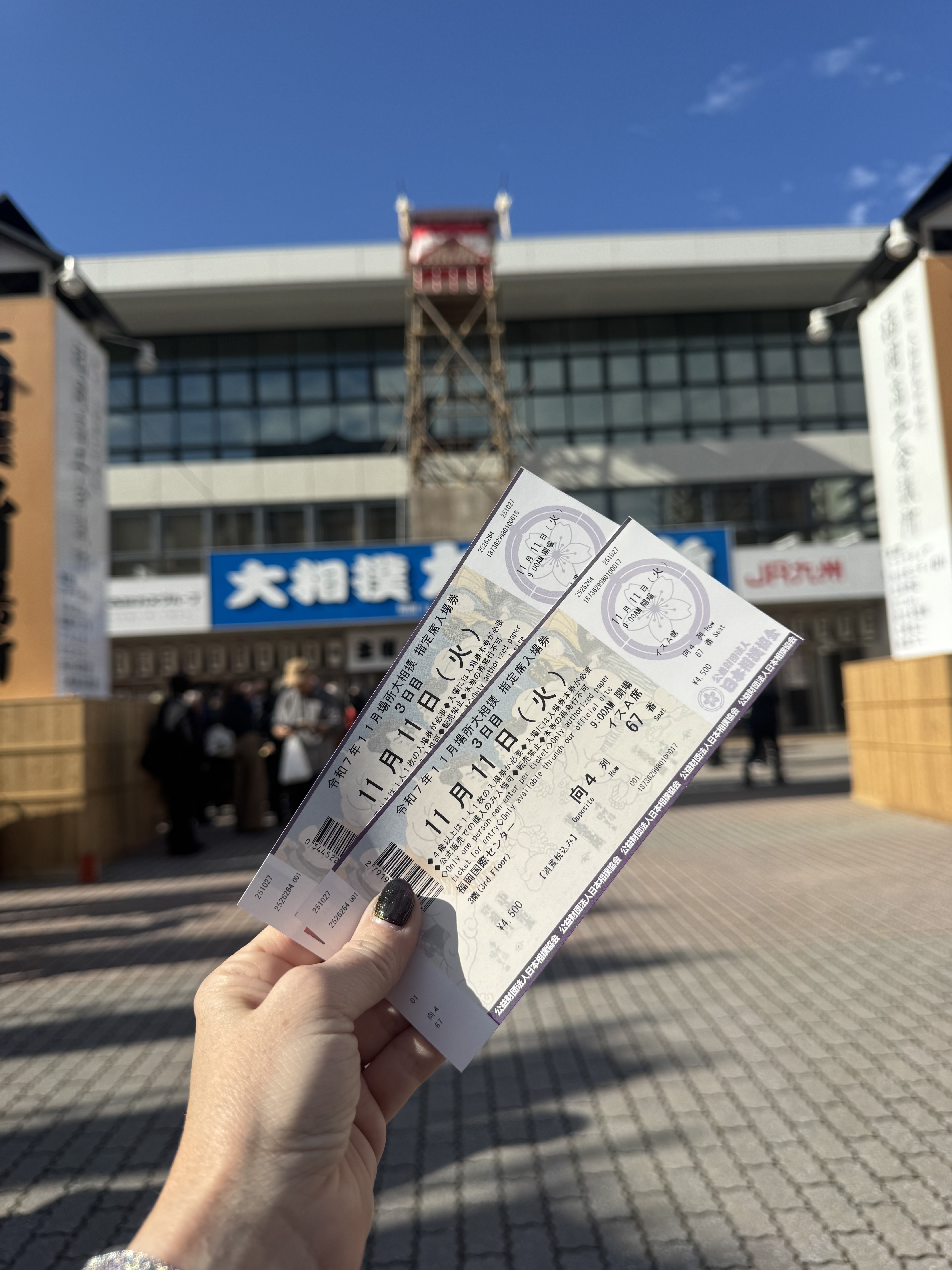
And then: sumo. I’d expected drama, ritual, weight. And I got it. But I hadn’t expected quite so much theatre. Watching the wrestlers step into the ring felt like watching a centuries-old operating system running beautifully on modern hardware. Ceremony and precision, every movement carrying the residue of repetition. The crowd swung between reverence and sudden, explosive joy. One of the most choreographed human experiences I’ve ever seen.

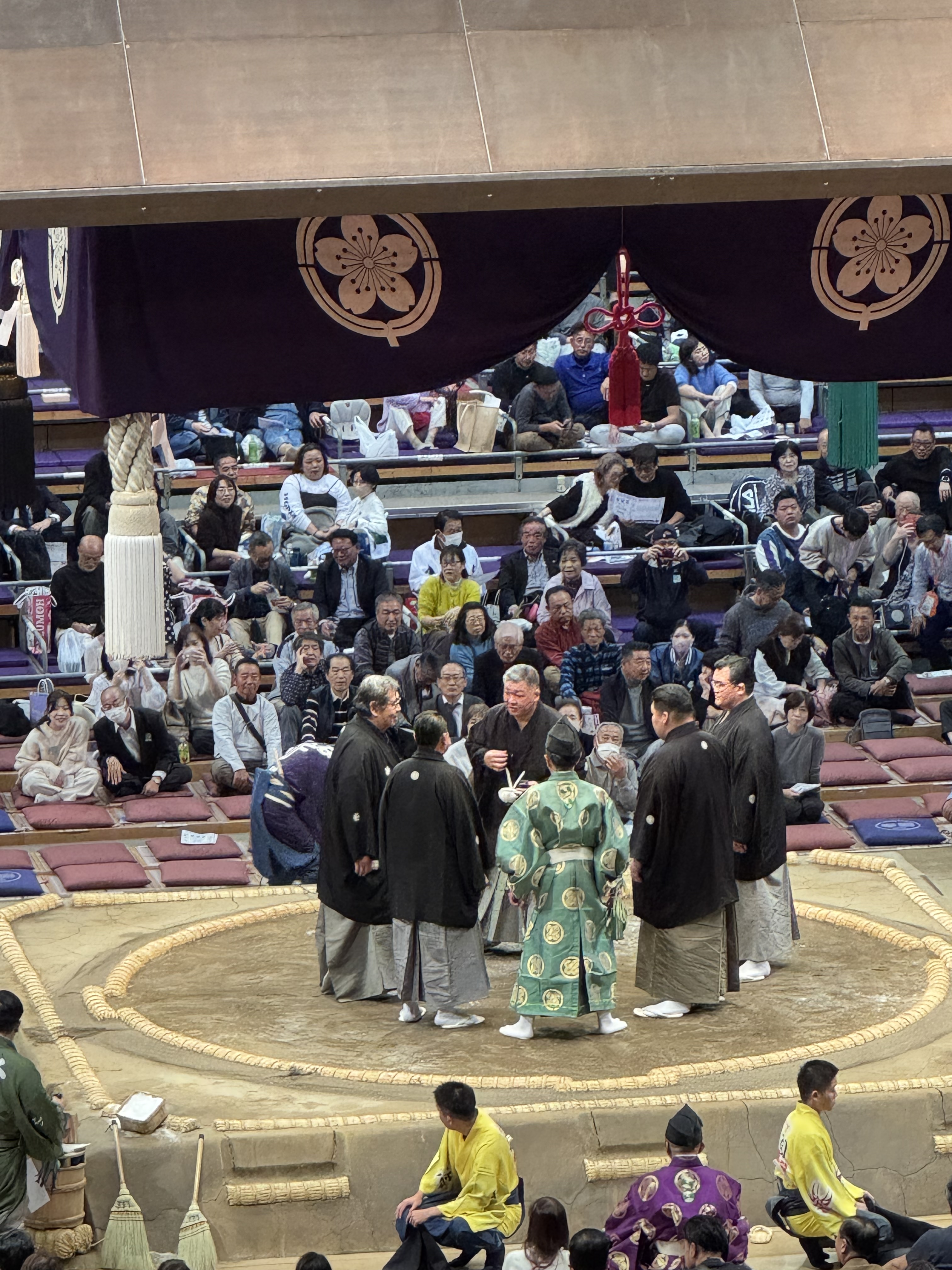

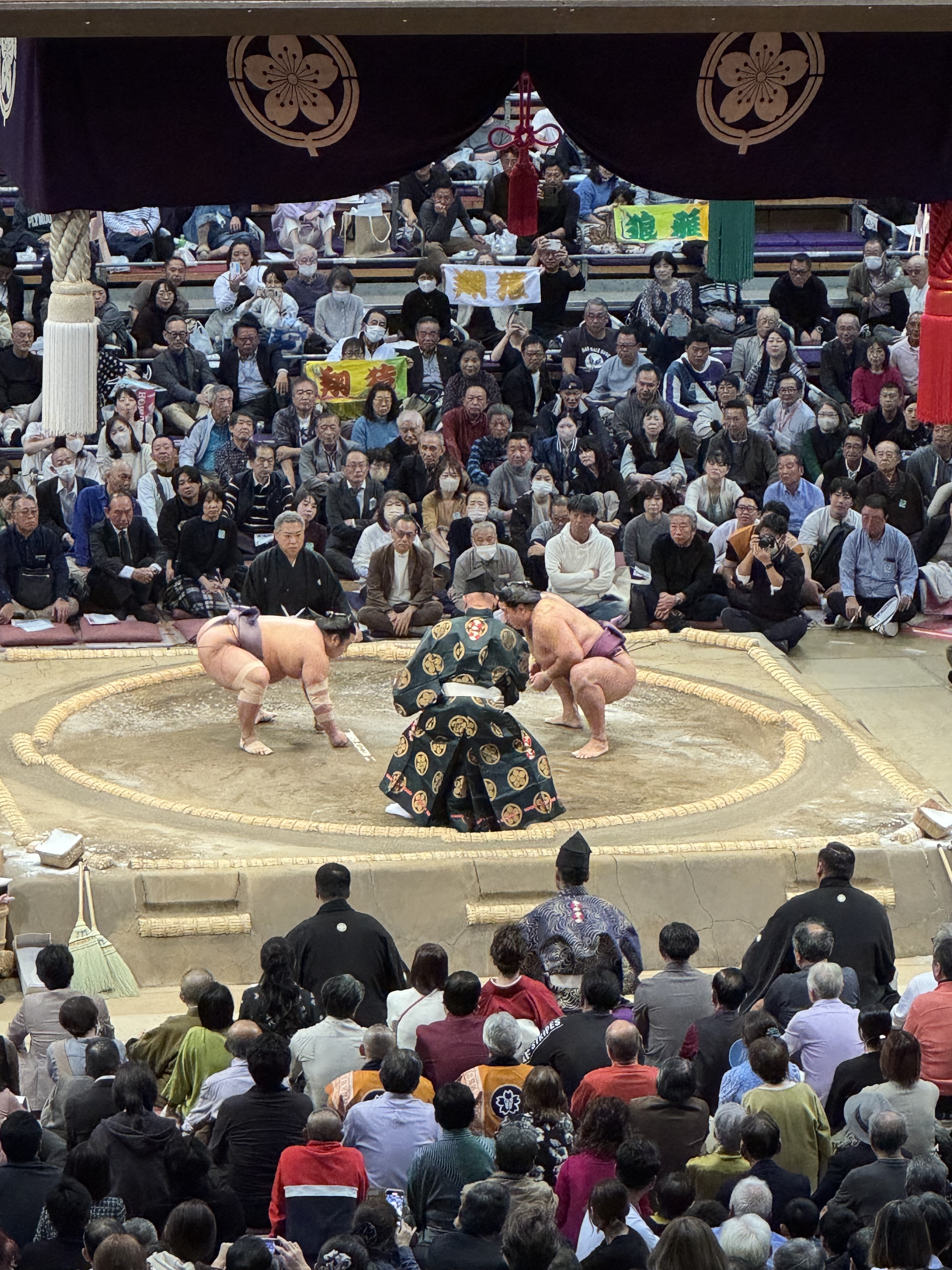

Sitting there, I realised sumo isn’t really about the moment of impact. It’s about the build-up — the stamping, the salt, the slow escalation toward inevitability.
Another threshold. A step, a breath, a brief clash.
Fukuoka reminded me that not all thresholds mark endings. Some are reunions, reconnections, or simply the recognition of who you are when you’re with the right people.
A few days later I was back on Gunkanjima — Hashima, the Battleship Island — for the second time in three weeks. The first visit had been full of big narratives: industrial rise and collapse, whole communities uprooted, the human cost of rapid change. The story you expect the island to tell (and which, indeed, I did in weeknote 45).
This time I tried to notice what doesn’t make the documentaries. The angles of collapsed staircases. Plants punching their way through concrete. The wind’s low hum as it threads through broken windows. The guide’s almost affectionate way of describing buildings on the verge of collapse. A single gull perched on the rusting rail of a former school, as if taking attendance.
Gunkanjima isn’t just a monument to abandonment; it’s also a lesson in what remains.
The first time, I saw it as a symbol of disruption — what happens when the world changes faster than people can adapt. This time, it felt like a study in endurance. Not resilience in the motivational-poster sense, but the plain, unsexy persistence of things that refuse to disappear.
The walls crumble, but the city is still legible: market square, shrine, apartment blocks. The sea eats the edges, but the island keeps its shape. Even absence has structure.
Thresholds aren’t always about stepping forward; sometimes they’re about looking again. A second reading. A different angle. A willingness to listen for the other story.
Gunkanjima, this time, wasn’t a cautionary tale. It was a reminder that endings — even violent ones — don’t erase what came before. Some places, and some experiences, leave an imprint that outlasts their usefulness.
Another threshold crossed. Not forward this time, but deeper.
And then it was time for the nomads programme to end. The final days had that familiar end-of-term energy: admin, emotion, last lunches, shared folders, and the sudden urge to squeeze in just one more conversation with people you’ve only known for a month but who now sit firmly in the rhythm of your day.
I’ve done enough programmes to know most are neatly bounded. This one wasn’t. It was lived. Embedded. Threaded through Nagasaki in a way that made leaving feel like stepping out of a parallel life.
We’d spent a month meeting city officials, entrepreneurs, artistans, students, elders watching demographic change unfold, and families who opened doors tourists never find. A decade’s worth of experiences in four weeks. Not in a TikTok bucket-list sense, but in the sense of having been allowed inside something special.
The team behind it all — industrious, warm, omnipresent without being intrusive — created a space where curiosity sparked easily. Where conversations stretched from marketing tactics to the future of urban economies without anyone blinking.
And then came the final night: a goodbye dinner with speeches — the heartfelt, slightly wobbly kind that only happen when something genuine has happened. Laughter in corners. That soft ache that sits under any meaningful ending.
In that moment, I realised we’d all adopted a very Japanese habit: the long goodbye. All month, whenever we visited workplaces or workshops, people would bow and wave until we were fully out of sight — round the corner, down the road, onto the bus, they’re still waving.
On our final night, we did exactly the same. Waving, hugging, bowing, waving again, stretching the goodbye because no one wanted it to end.
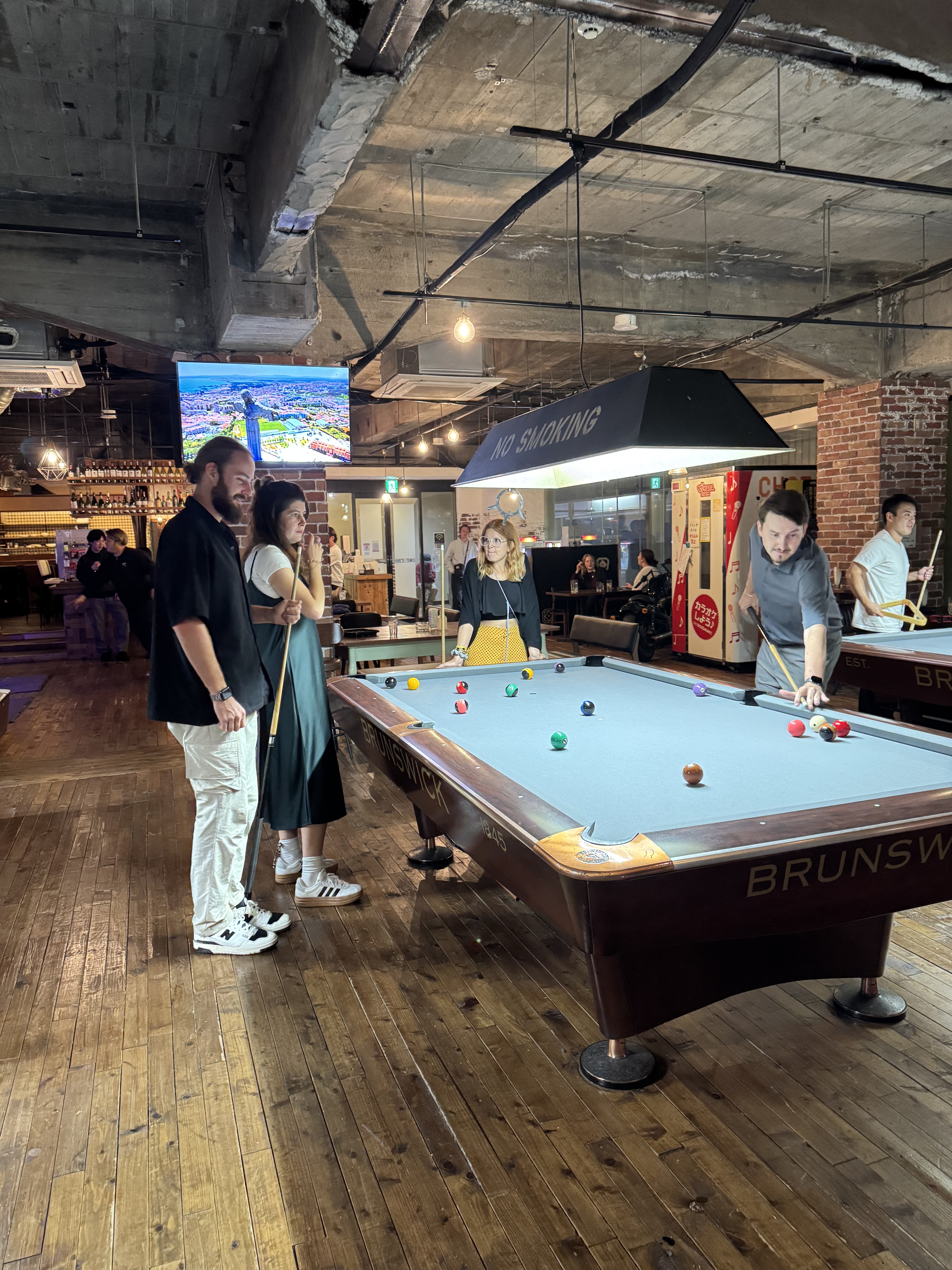
But naturally, it didn’t. Nomad cohorts don’t do tidy exits. We spilled into the night and ended up in a bar: karaoke massacred with enthusiasm, pool played with debatable competence, photos taken that we’ll be grateful for later. Messy, joyful, perfect.
These aren’t just programme peers now; they’re the sort of friends you’ll bump into again in Berlin, Bangkok, Lisbon, or some godforsaken airport you never meant to be in. Nomads orbit like that.
By the time the evening finally fizzled out — karaoke ringing in our ears, pool balls still clacking — I could see how many storylines were quietly forming. New collaborations. Ideas not quite ready to declare themselves. Questions hitching a ride into the next phase of the book.
Not outcomes. Just beginnings pretending not to be beginnings.
So yes, bittersweet. Sad to leave, of course. But I’m also carrying an inconvenient amount of… hope? Perspective? Mildly chaotic inspiration? Whatever it is, it’s coming with me.
Another threshold crossed. Not grand, but the sort that matters later.
Leaving Nagasaki for Tokyo felt like stepping out of a quiet room and straight into a speaker stack. One moment I was waving increasingly ridiculous goodbyes in a café — then crying in an airport like a woman in a low-budget travel documentary — and the next I was in Shinjuku Station trying to remember how to function in a city built entirely from escalators and LED screens.
Tokyo is always a jolt, but after a month of islands and low-rise neighbourhoods, it hit differently. Buildings stacked on buildings. Trains layered like geological strata. Enough neon to power a small European nation. My brain, still tuned to Nagasaki’s warmth, tried to cope and promptly threw an exception error.
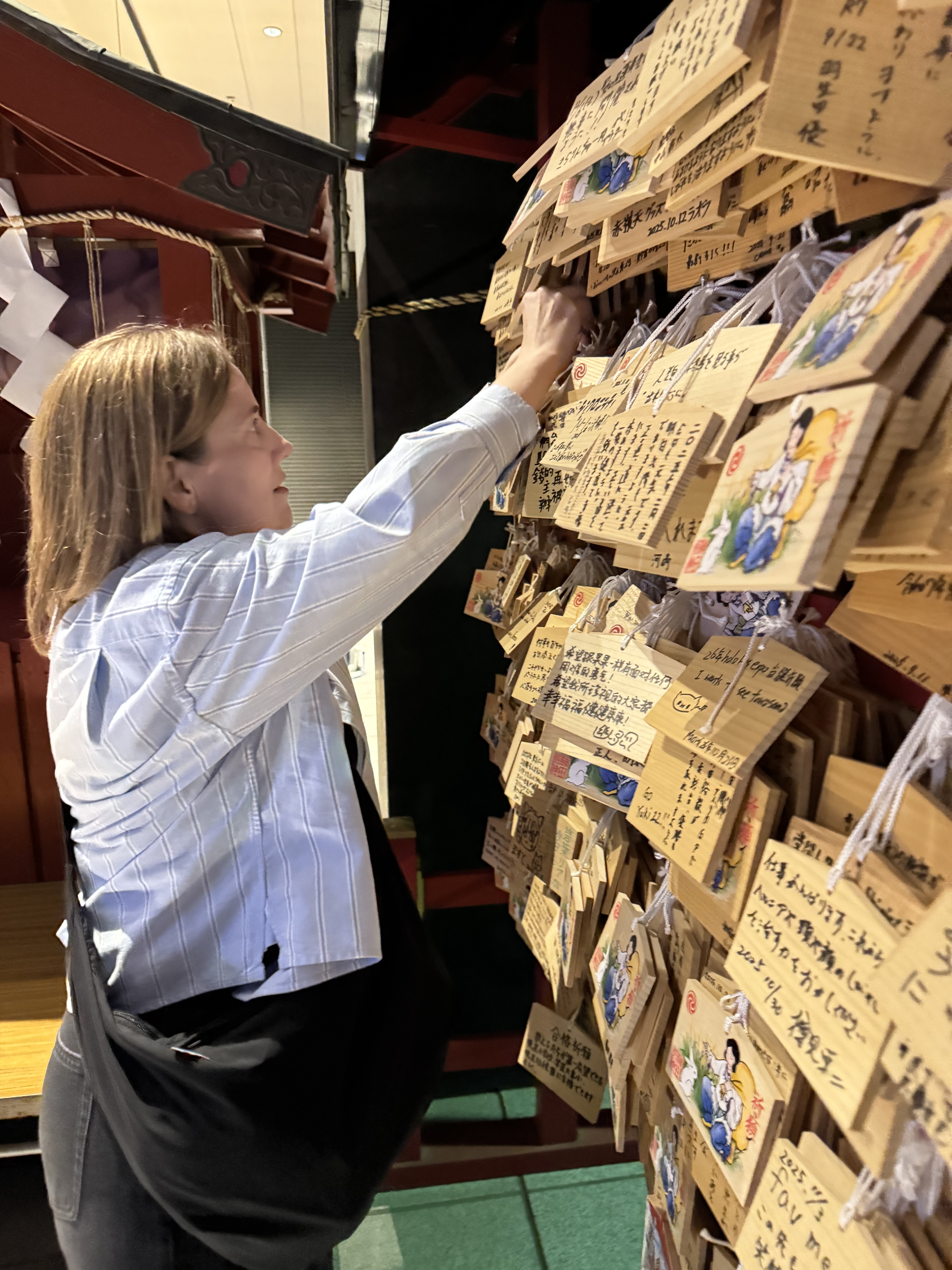
But in the middle of all that intensity was a tiny moment of calm: a visit to Kanda Myojin Shrine, where Tokyo’s tech industry goes to have its ventures blessed. In Akihabara’s chaos — all anime billboards, maid cafés, shops selling cables of brief but unquestionable necessity — I bought a charm for digital safety and asked for a blessing for my business. A thoroughly modern pilgrimage: startup meets Shinto.
Oddly grounding, too. A reminder that even in a hypermodern city, people still seek rituals to mark beginnings or ask for protection as they step into the unknown. Another threshold, just with better branding.
The rest of Tokyo unfolded as it always does: exhilarating, overwhelming, impossible to process in real time. Even buying water felt like an extreme sport. Every sign shouts. Every pavement pulses. Every crossing demands confidence you may or may not possess.
But beneath the sensory overload was something gentler. A sense that this, too, was part of the transition. If Nagasaki was the month-long inhale, Tokyo was the exhale — abrupt, glittering, impossible to ignore, but ultimately part of the same breath.
And somewhere between Shinjuku’s chaos and Meiji Shrine’s calm, I realised I wasn’t overwhelmed because Tokyo is too much.
I was overwhelmed because the past month had meant more than I’d let myself admit.
This week in photos






 Sharon O'Dea