
I began the week on a boat bound for Gunkanjima, a ghost island that was once the most densely populated place on Earth. From the deck, it looks like a floating city, a tangle of concrete blocks rising from the sea. A century ago, thousands of miners lived here, stacked in dormitories above the tunnels they worked in below. Coal fuelled Japan’s industrial revolution, and this tiny island was its engine room.
Then the coal ran out. Within months, the residents were gone, leaving behind schools, cinemas, playgrounds — lives interrupted mid-sentence. Nature has reclaimed it now: trees sprout from window frames, waves gnaw at stairwells, concrete smashed by annual typhoons. The tour guide called it “a monument to progress” though it looked more like a cautionary tale. Every industrial revolution leaves ghosts. You wonder what ours will look like. Server farms in the desert, perhaps, or data centres left humming to themselves long after we’ve moved on.
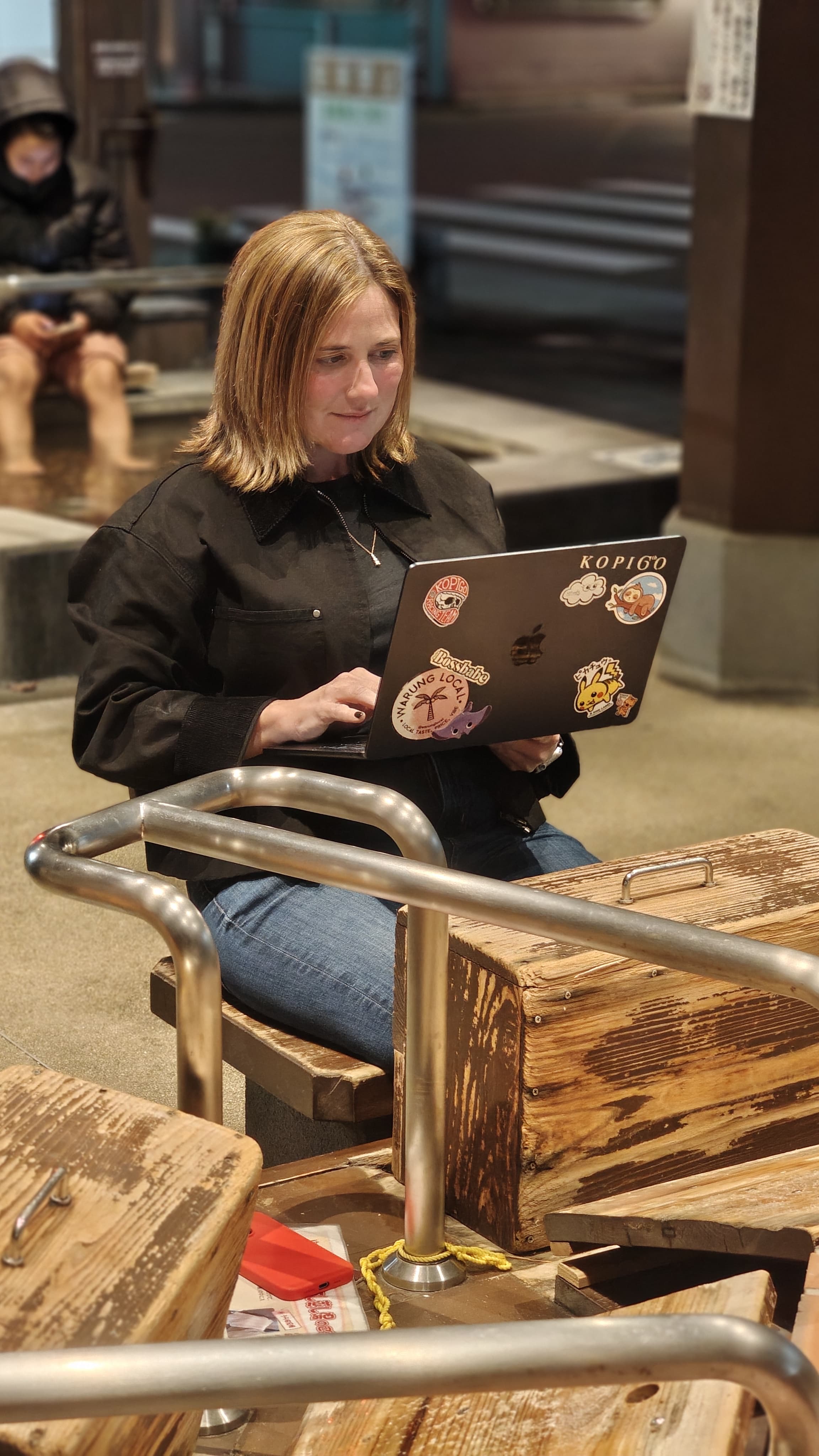
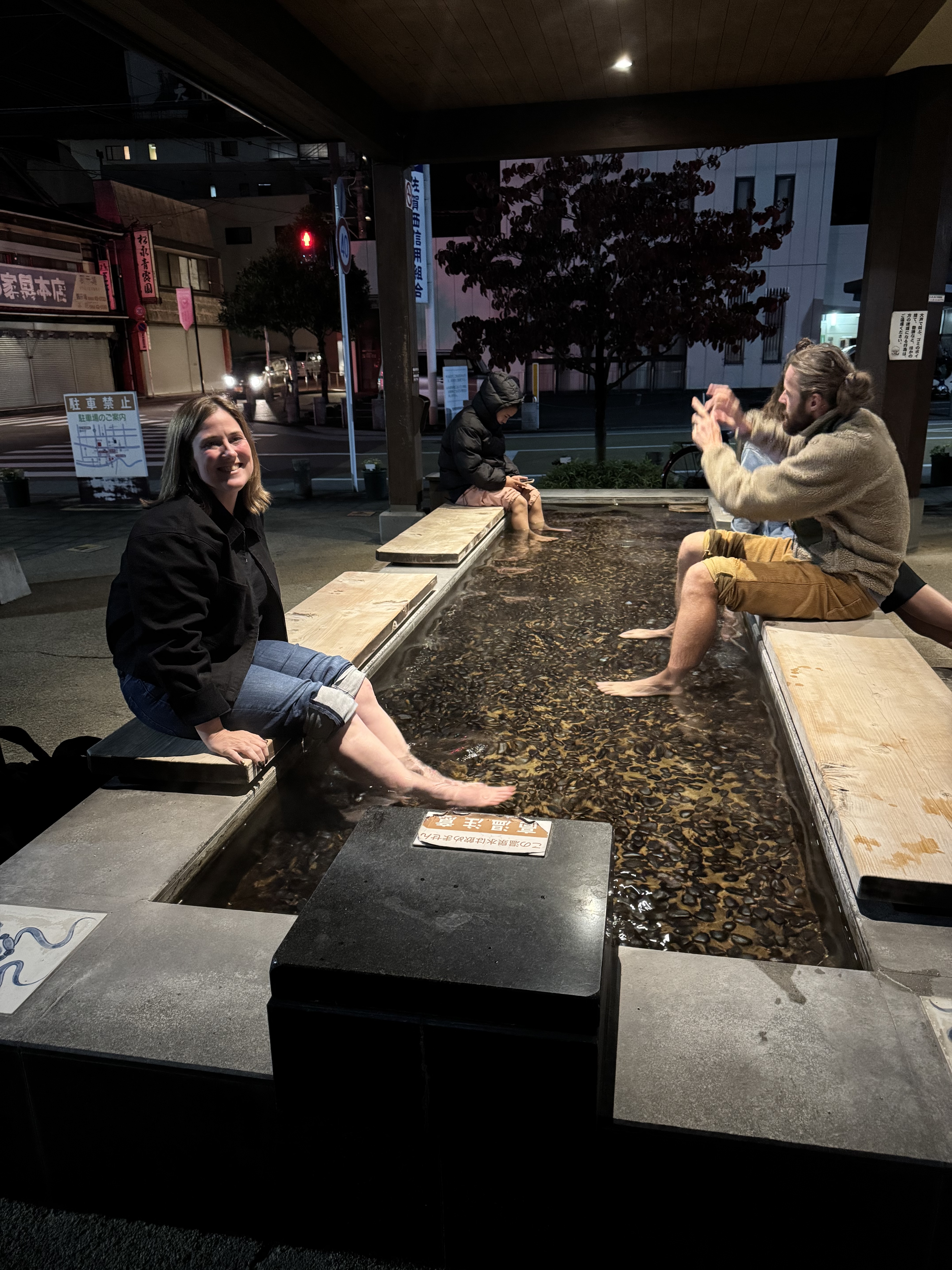
The week turned from from ruins to road trips. On Monday, on a whim, we headed north. First, the glass sand beach at Omura, the most Wes-Anderson train station imaginable glowing under a pink sky, then dinner in a tiny onsen town where hot-spring footbaths line the street. At one point I found myself perched at one with my laptop — the most literal interpretation yet of “working from anywhere.”
Finally we set off to catch the final night of teamLab: A Forest Where Gods Live, an installation we’d only discovered the day before. The exhibition had been running for months in the ancient Mifuneyama forest, but Monday was its very last evening. So we threw plans to the wind, piled into a rental car, and drove through the dark.
By the time we arrived, it was pitch dark, save for the moon hanging over the park — a vast garden of ancient stones and trees, half-swallowed by mist. teamLab had transformed it into something otherworldly: waterfalls of light cascading down boulders, azaleas blooming in digital colour as you passed, and koi fish made of pixels swimming in rippling ponds.
It wasn’t just beautiful; it felt sentient. The light shifted as you moved, responding to your presence. A trunk would glow, then fade. A rock would bloom briefly, then fall dark again. The boundary between nature and code dissolved. The forest felt alive; half divine, half designed.


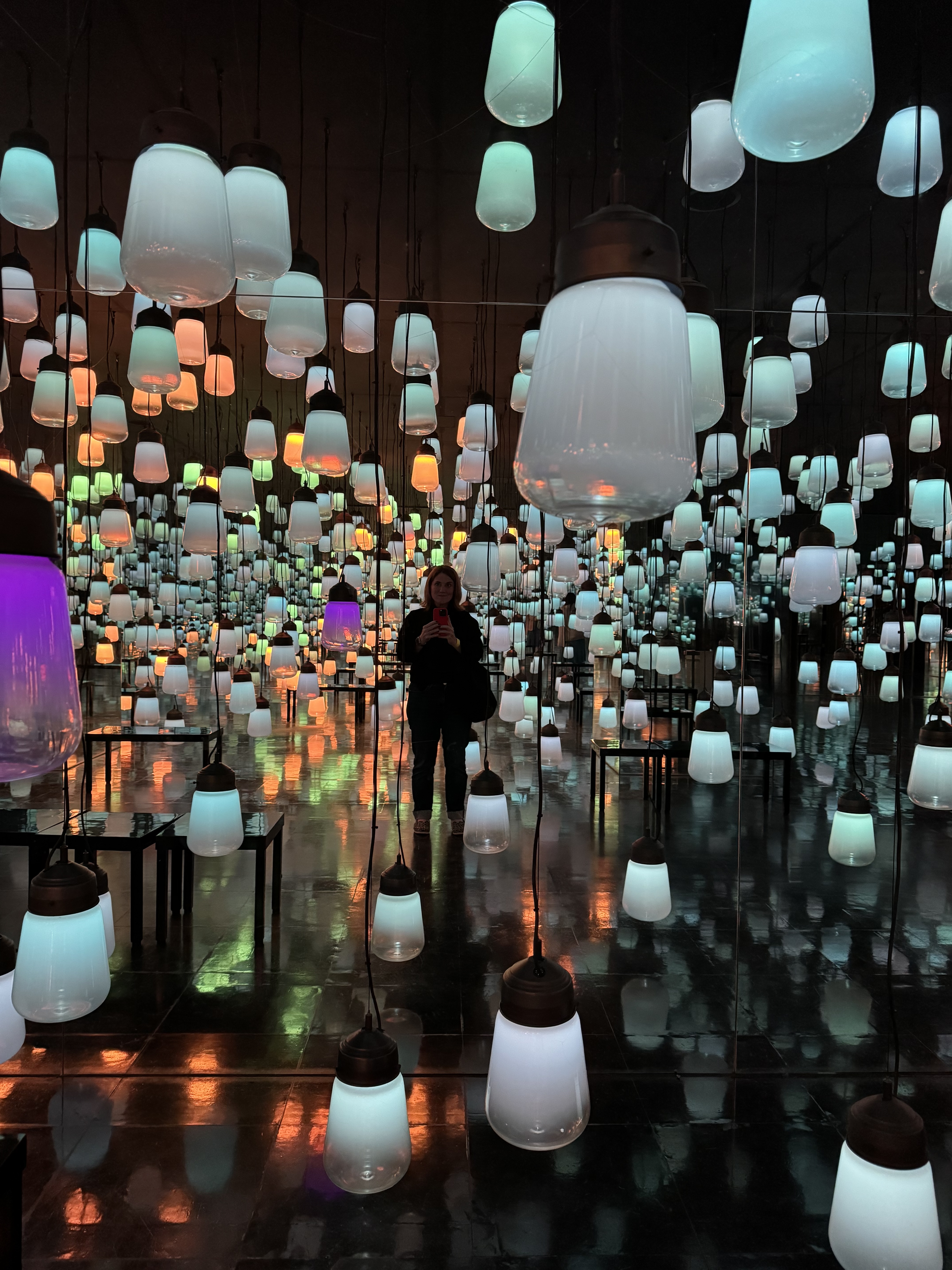

And because we’d arrived at the very end (the last night, actually the very last hours) there was an added sense of fragility. Soon it would all vanish. The lights dismantled, the cables packed away, the forest returned to its unlit self.
Tuesday brought another hidden world: a private bar tucked inside a 200-year-old house. The barman, dressed entirely in black, spoke softly through an interpreter, his enthusiasm and knowledge palpable. He talked us through his gin collection, explaining why drinks taste better from crystal glasses — not as a gimmick, but as a philosophy. I’m not entirely convinced. But each pour was deliberate, reverent even. The house itself was a work of understated beauty: all tatami mats, dark beams, and the scent of cigarette smoke and stories.
Experiences like this keep catching me off guard here. Not curated, not for show, just shared out of sheer generosity and pride. The kind that make you feel lucky to have stumbled into them.
Wednesday was back to work: an interview with a journalist from the Asahi Shimbun about global nomadism, the future of work, and this curious experiment I’m part of. Then a meeting with a digital workplace vendor (because I am, unapologetically, a massive nerd for such things) before rounding off the day at Stadium Onsen for a sauna and cold plunge. A uniquely Japanese ritual I’m fast becoming addicted to; equal parts mindfulness and mild masochism.
At a community gathering that evening, Ryota (one of the programme team) told us about okagesame: the unseen labour that allows things to happen. The work that doesn’t seek attention. The shadows that make the light visible. The concept lodged in my head and hasn’t left since.
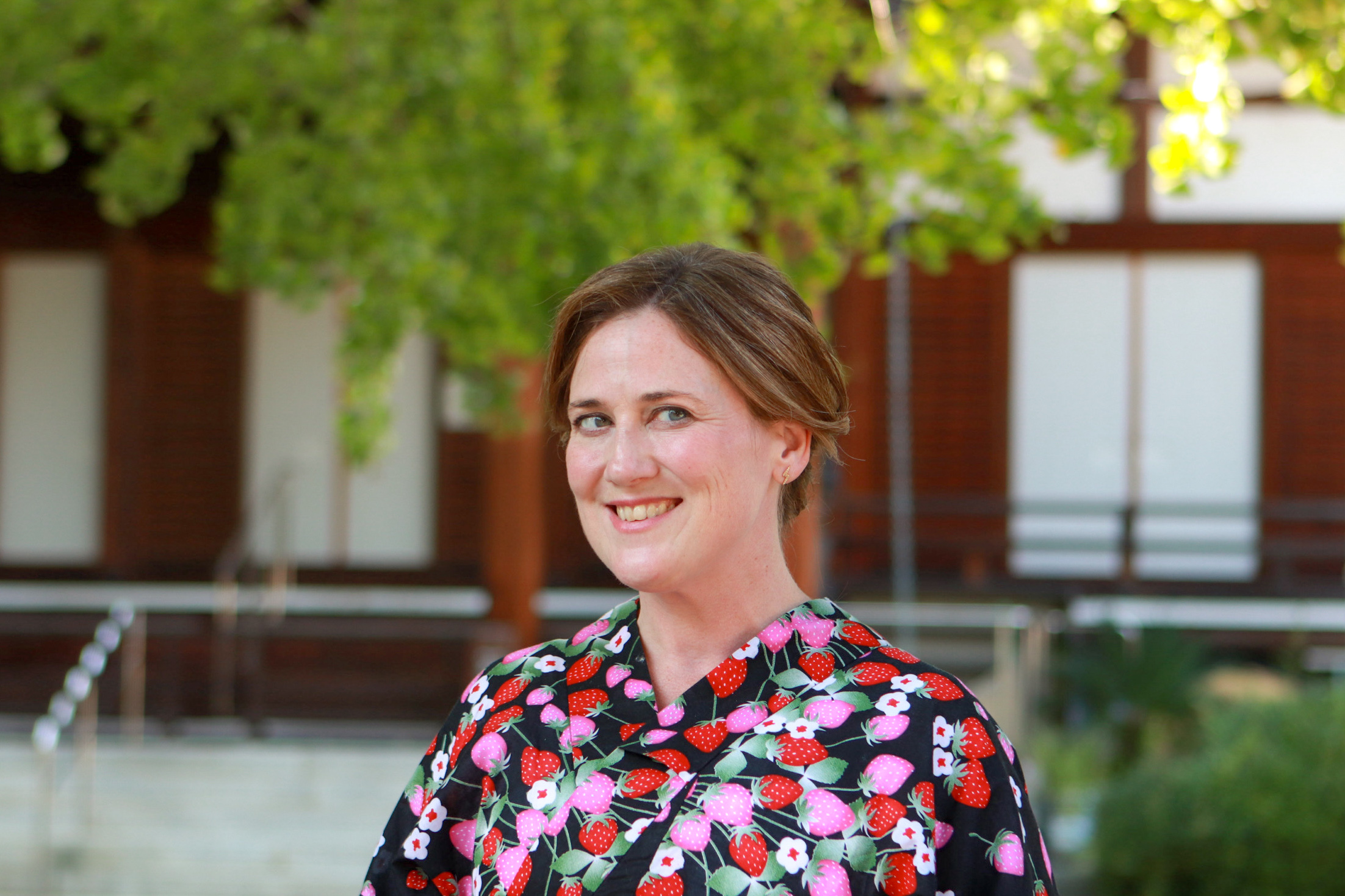
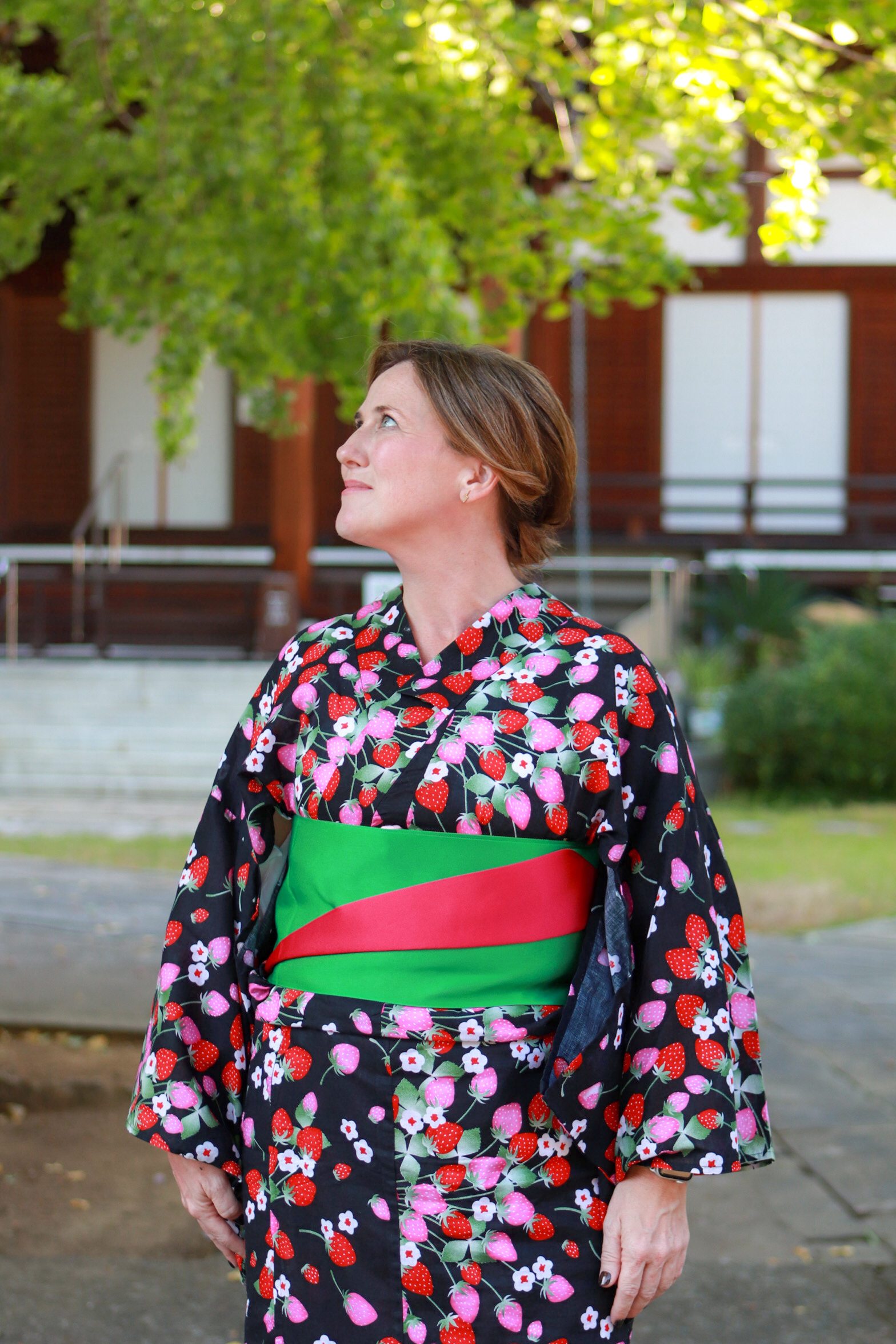
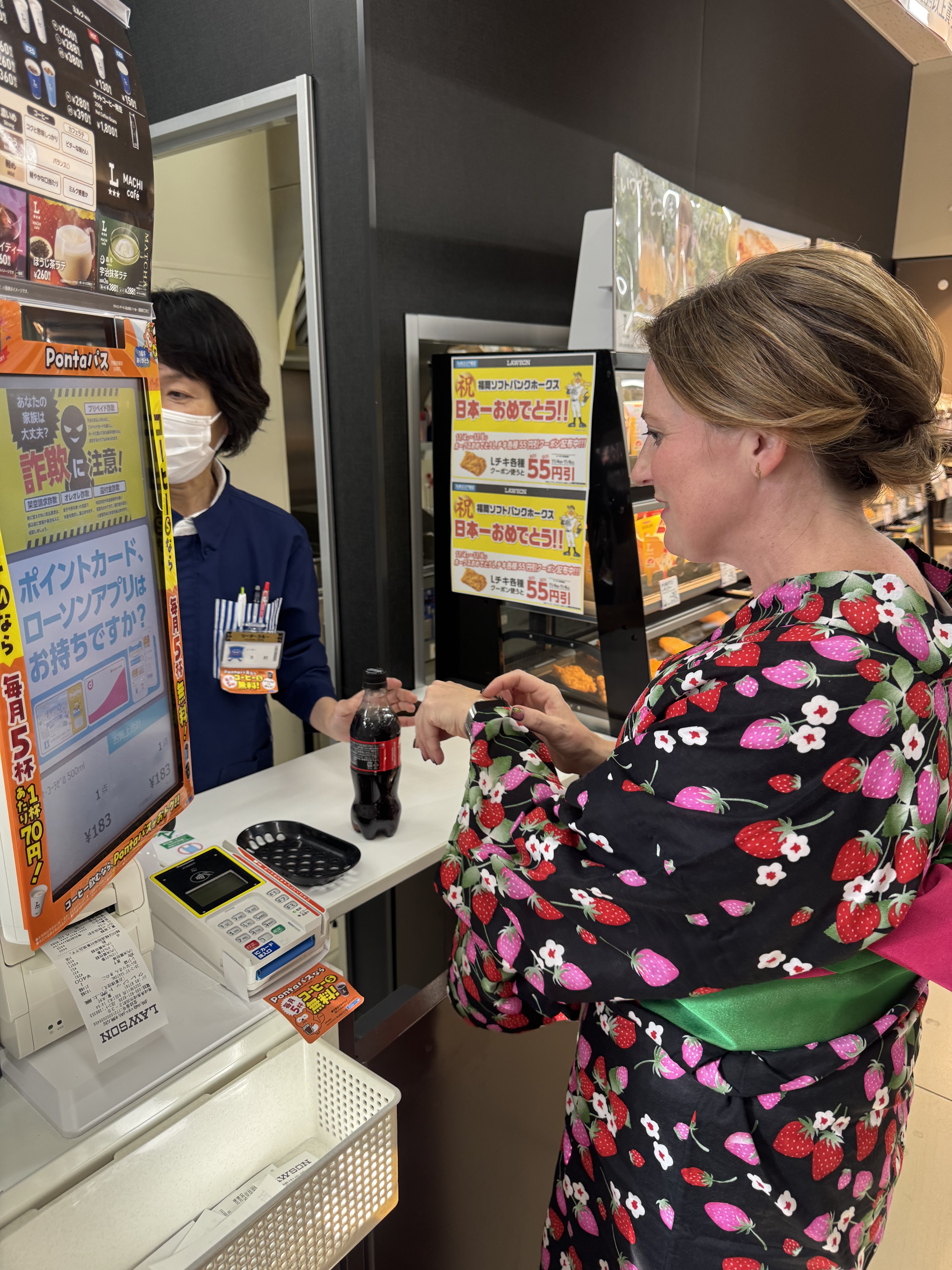
Thursday might have been my favourite day so far. A group of local women invited us to dress in yukata (lighter, day-wear kimonos) and even did our hair before taking us on a photo walk around town. There’s something special about seeing a place through someone else’s eyes, especially when they’re so proud to share it.
I did find myself wondering, briefly, whether this edges into cultural appropriation. Everyone here insists it doesn’t, but no one can quite explain why. Perhaps context matters: who’s offering, who’s receiving, and whether the exchange is rooted in pride or parody. Either way, it felt genuine.
I felt radiant for once. And, having weighed myself at the onsen the day before and realised I’d quietly hit my target weight, it was nice to see a photo of myself and not immediately wince. Small victories.



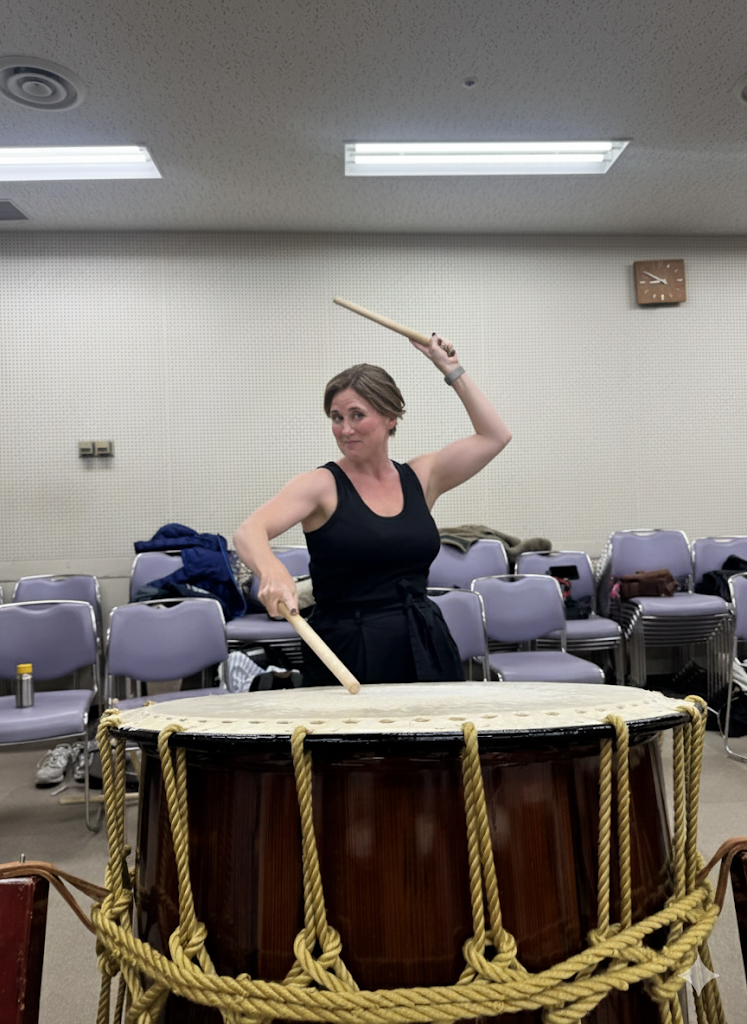
That evening we drove back to Omura for a taiko drumming workshop. Loud, joyful, and communal. You can’t play taiko alone: it’s about rhythm and synchronicity, trust and timing. Again, that theme of unseen coordination. The collective effort that makes something beautiful look effortless.
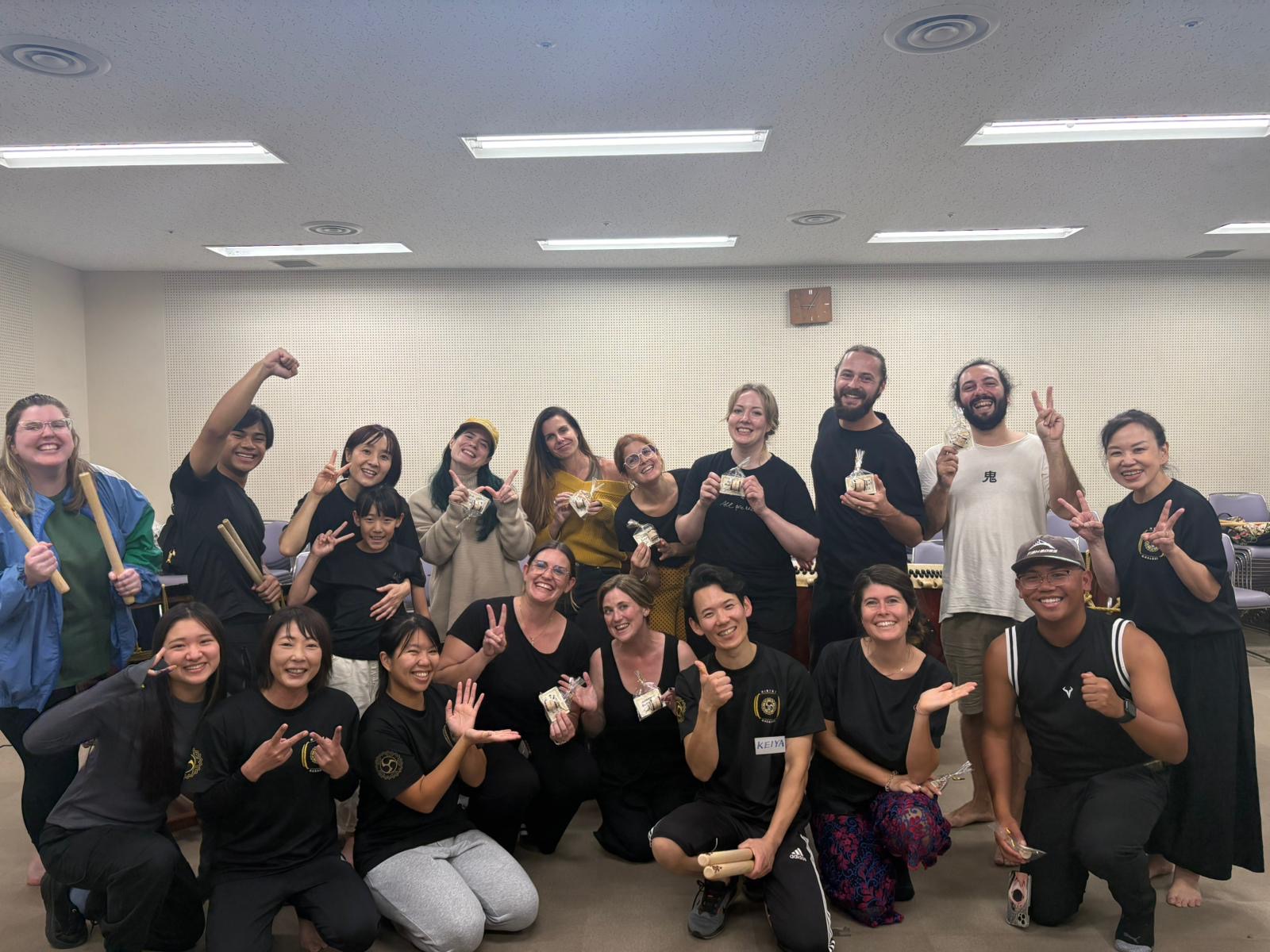
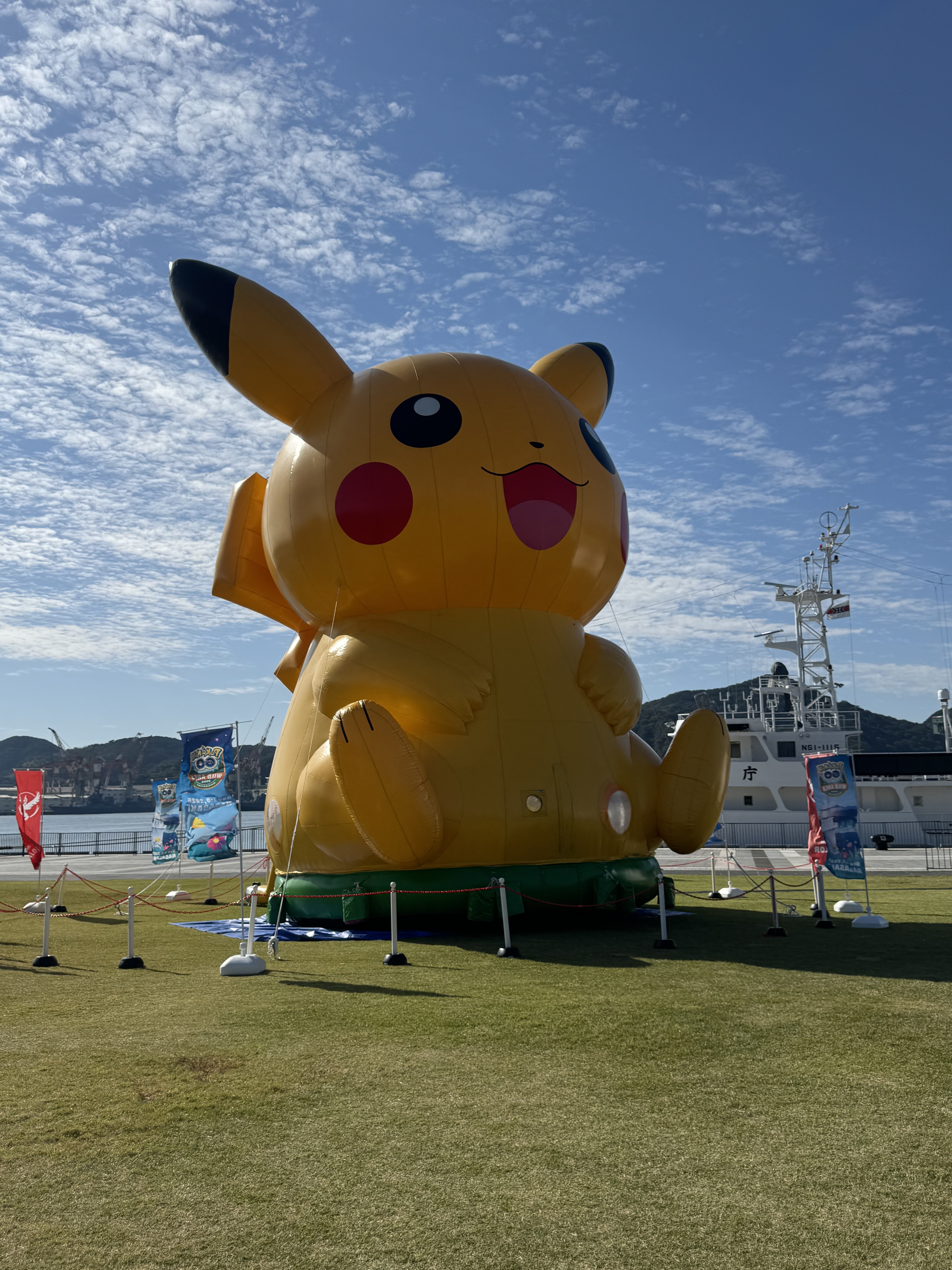
By Friday, Nagasaki had been overrun by Pokémon Go players. Thousands had flown in for an in-game event, chasing digital creatures through real streets. I didn’t have a ticket, but it was fun to watch the city buzz with people of all ages.
That night, a “quick drink” with my fellow digital nomads — people I’ve only known a couple of weeks — turned into a late night out, which turned into ramen at 3am. Connection happens fast here. Different languages, different backgrounds, but the same impulse to stay up too late laughing and being heroically bad at darts. Proof, maybe, that even in a world intently staring at its phone, what we crave most is still human connection.
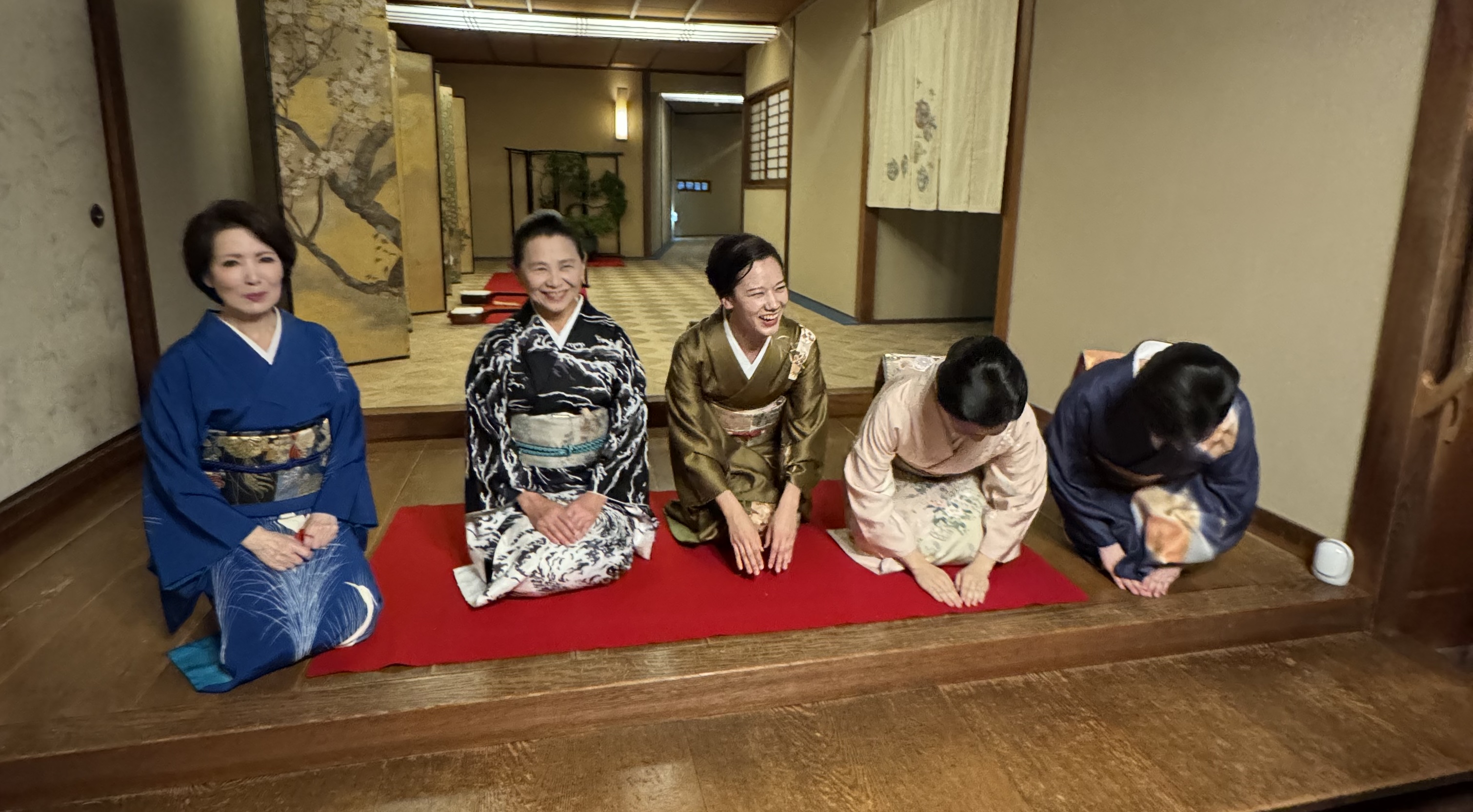
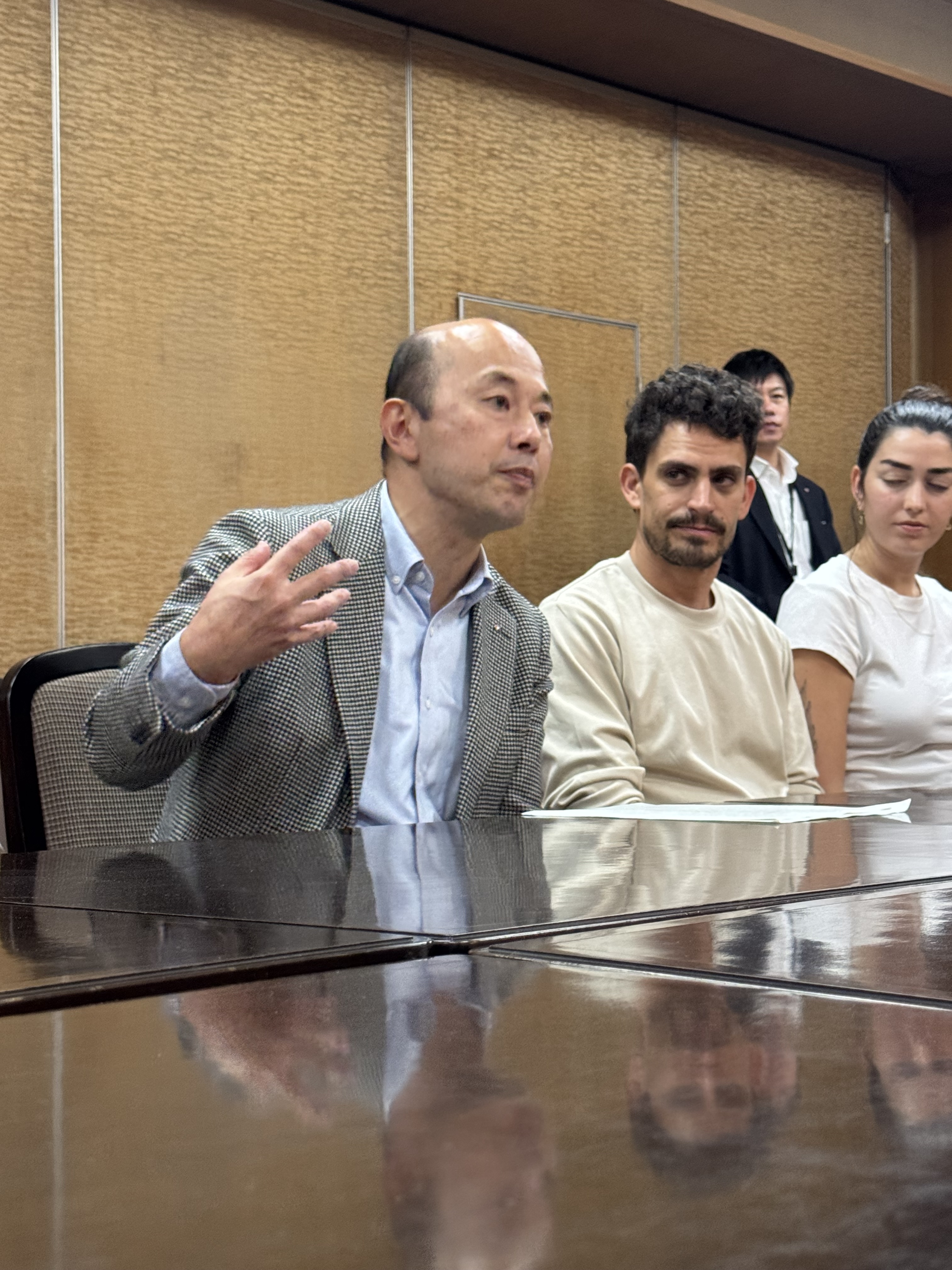
Saturday unfolded in two acts: a morning of small, personal triumph (I bought my first pair of UK size 8 jeans in about twenty years and cannot stop smiling), then a remarkable evening. Our group met the Mayor of Nagasaki to share feedback on making the city more nomad-friendly — the visible, civic part of this grand experiment — before heading to dinner hosted by kenban, Nagasaki’s geisha. The food exquisite, the music ethereal, the laughter unguarded. A glimpse of a world few Japanese people ever see. Another gift, freely shared.

Now, as I write this, I’m on the shinkansen slicing across Kyushu, fields and mountains blurring past, heading to Fukuoka to meet my husband for our anniversary. I’m thinking about how much of life — and work — runs on okagesame. The invisible scaffolding. The people who hold things up without ever being seen. From the miners who built Gunkanjima to the engineers who built TeamLab’s dreamscape; from the barman who polishes crystal glasses to the local women who tie silk sashes just so; from the quiet work of Ryo, Shelly, Tam, Nanami, Doy-Chan and the Nagasaki Nomads team to the simple pleasure of a shared meal, everything depends on what’s hidden.
It’s funny, really. You come halfway across the world to think about the future of work, and end up learning from a miner, a barman, and a forest full of lights. Turns out the future isn’t an app. It’s appreciation.
This week in photos




 Sharon O'Dea
Pingback: Weeknote 2025/46 | Sharon O'Dea
Pingback: Weeknote 2026/04 | Sharon O'Dea