Weeknote 2025/36

Panoramic view of a lush green valley - the Les roches Tuilière et Sanadoire - surrounded by rocky cliffs under a partly cloudy sky.
Les roches Tuilière et Sanadoire. Photo by me.

This week I travelled to the Auvergne to scatter my grandmother’s ashes, close to the village where she was born more than a century ago.

In her last years she painted from memory a scene of her childhood: a forest road, two great rocks, then suddenly a clearing — the valley opening up below. “It was a wonderful sight I would always remember,” she wrote.

On Friday I stood in that same spot, saw the same view she carried with her for a lifetime, and laid her to rest in the ground she loved. A return, of sorts, to her beginnings.

Nan’s life stretched far beyond that valley. She lived through occupation in Paris, celebrated its liberation in a shower of tricolores, trained as one of the few women engineers of her generation, raised a family in a new country, and never stopped campaigning for the values she believed in: liberty, equality, fraternity.

But she was also the woman who knitted us jumpers, made extraordinary birthday cakes, and whose cooking remains unmatched. She juggled logic and creativity — designing a trigonometry-inspired cushion one day, writing poetry the next.

Being back in the volcanic hills where she was born, I kept coming back to this thought: our origins matter. The places we start from, the people who shape us, the values we inherit. Even if we take a different path, we carry those beginnings with us.

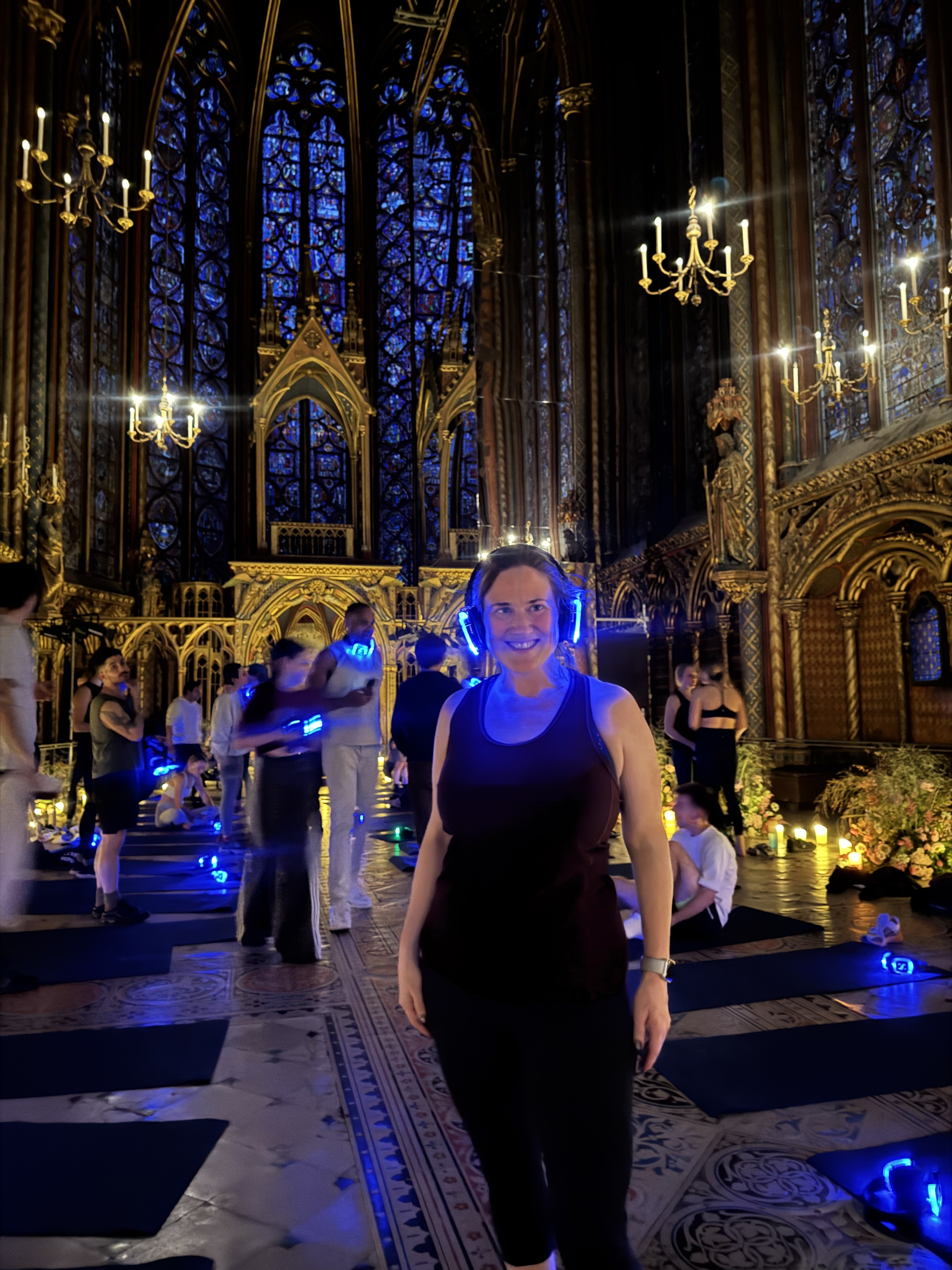
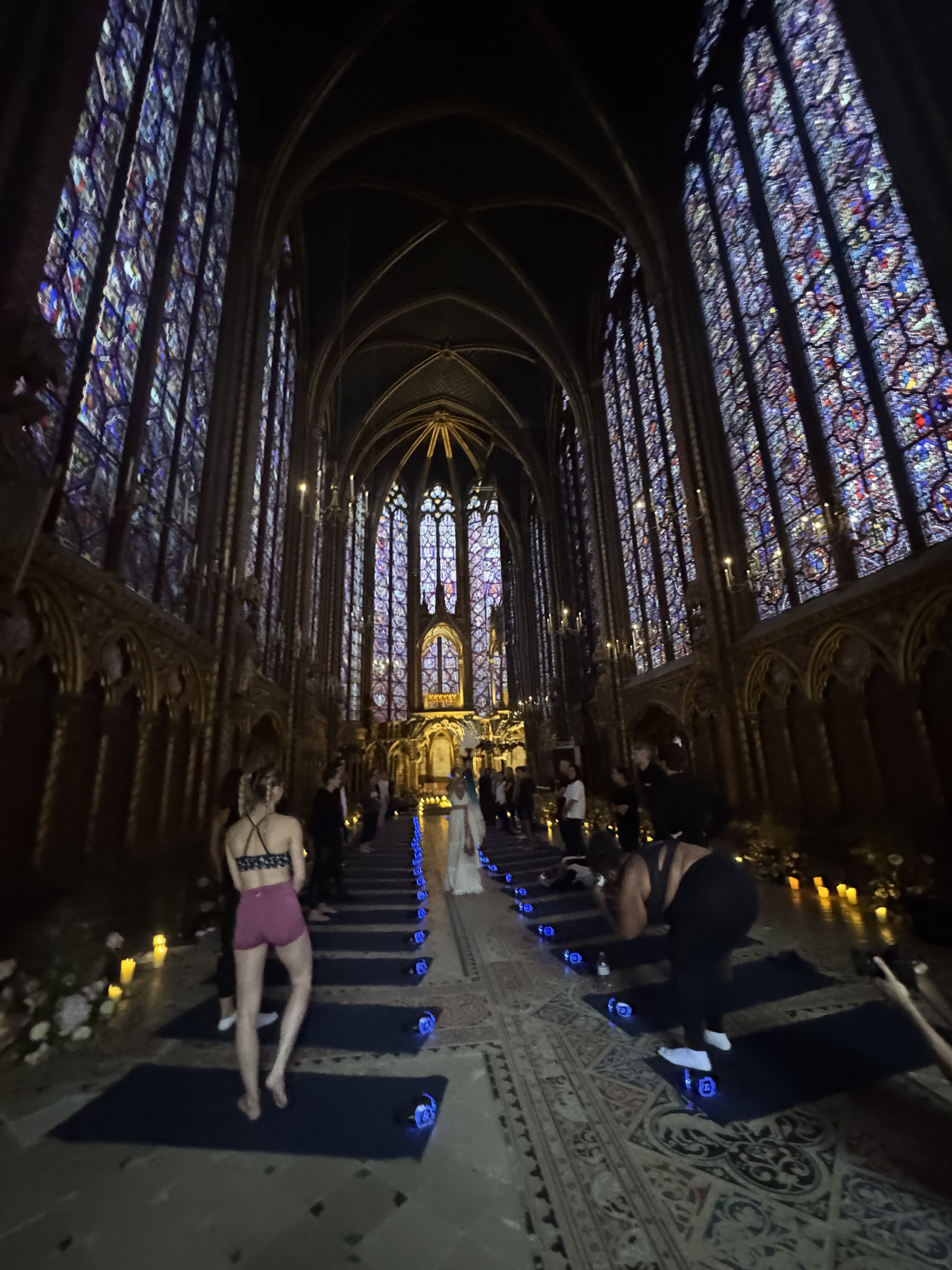
That theme ran through the rest of my week too. A conversation with Cathryn, who was a formative influence on me as a teenager. And then my gym instructor, during a Sanctum class — which, if you’ve not had the dubious pleasure, is essentially a wellness cult disguised as a workout. Picture a candlelit room full of beautiful people in Lululemon, bouncing in silent-disco headphones to pounding techno, somewhere between burpees and interpretive dance. It’s like Berghain meets a yoga retreat, only designed to be an Instagrammable Experience.

In the middle of this fever dream, the instructor delivered his pep talk about looking back at who you were five years ago. Normally I’d have rolled my eyes so hard I’d need medical attention. But, landing as it did at peak pre-menstrual sensitivity, I found myself ugly-crying into my wireless headphones while influencers around me humped the ether like it was a path to enlightenment. A spiritual awakening via techno squats.

And I couldn’t help but wonder what my Nan (practical, principled, sharp as a tack) would have made of it all. Probably a raised eyebrow, then a wry laugh at the strange, circuitous ways we find meaning.

So that’s this week’s reflection: on beginnings, origins, returns — and remembering to be proud of the journey as much as the destination.

This week at work

After a quiet summer, the inbox has suddenly remembered we exist. A flurry of new business signals came through, so this week was largely about shaping proposals. One’s already had a tentative yes — the best kind of feedback — and I’m looking forward to getting started. The others are out in the world now, hopefully working their magic.

On the book front, Jonathan and I made good progress on the next two chapters: one on the people and skills needed for digital comms at work, the other on content. We’re finding our co-writing rhythm — passing drafts back and forth, layering in ideas, editing each other’s words until we’re not quite sure who wrote what. It’s satisfying, collaborative, and occasionally a little disorienting.

But even as the chapters take shape, I can hear the sound of deadlines approaching fast, like distant thunder that’s getting louder every day.

Also this week

I climbed up the Dek van de Stad, a temporary platform built on top of the Nieuwe Kerk. The views were spectacular — a chance to look down on Dam Square and Amsterdam’s rooftops from a height you don’t normally get. Equal parts breathtaking and mildly vertigo-inducing.


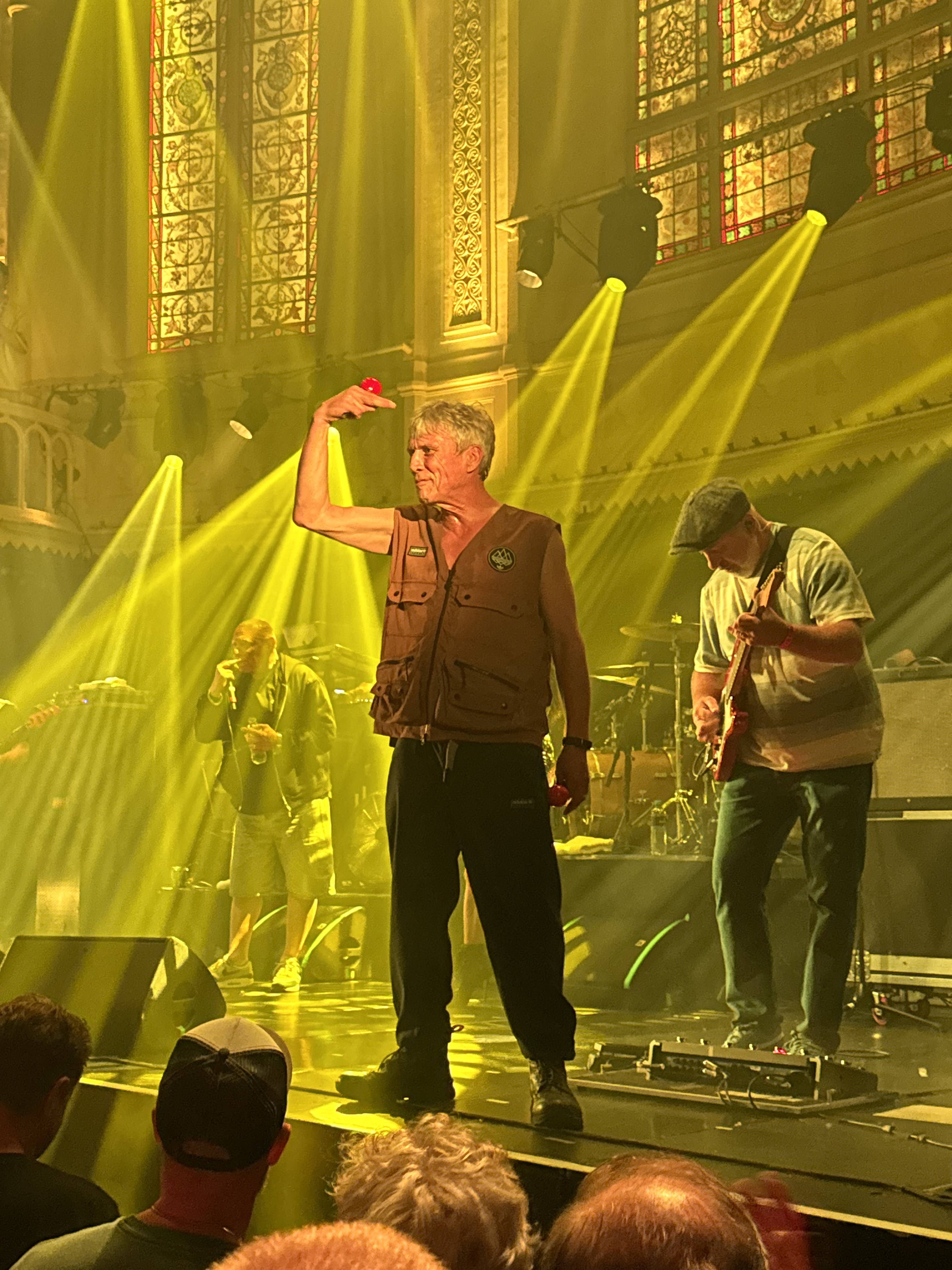
And then straight back down to earth (and into chaos) at Paradiso, where I saw Kneecap. Security was tight, the crowd was raucous, and it’s still mad to me that less than two years ago I saw them in what was basically the upstairs of a pub. Now they’ve got a sold-out Paradiso bouncing in unison, two nights in a row. The rise has been meteoric, the energy relentless — right through to the crowd singalong to Come Out Ye Black And Tans after they went off stage.

Consuming

👩🏻‍💻 Internetting

News this week that the UK Department for Business and Trade’s three-month trial of Microsoft Copilot found… no real productivity boost. Emails and meeting summaries sped up a bit, but anything more complex actually slowed people down or spat out lower-quality work. So much for the hype cycle.

Does that reflect a lack of proper strategy and training, or just cold, hard reality? Probably both. In my experience, some people and roles naturally click with AI tools while others flounder when left to get on with it. Curiosity, persistence, confidence — and the time to experiment — all matter. Without those, adoption lags.

There’s clearly a lot we need to do to help people level up with AI at work. But I can’t say I was surprised. My own encounters with Copilot have been… underwhelming. Let’s just say it’s not yet living up to the billing of “revolutionary productivity tool” — more “expensive intern who occasionally remembers to attach the file.”

📺 Watching

Marking 50 years since its release, we re-watched Jaws. Still the ultimate advert for staying on dry land. Half a century on, the special effects remain gloriously ropey, the mayor still deserves a prison sentence for crimes against public safety, and John Williams’ two-note score is still the best thing ever written about imminent death by fish.

It’s amazing how Jaws manages to be both a tense thriller and a camp comedy, depending entirely on how rubbery the shark looks in a given scene. And yet it still works: a masterclass in making you terrified of something that looks like it escaped from a theme park gift shop. Just the thing I need before a holiday that involves boats.

📚 Reading

Continued with The Albanians: A Modern History, but have only got as far as the Ottoman Empire. Hoping to nudge my knowledge closer to the 20th century by the time I get there.

🎧 Listening

Driving around with my brother this week introduced me to Cheekface, an LA indie trio who specialise in anxious brain dumps set to catchy riffs. Imagine Lou Reed or Jonathan Richman talk-singing about late capitalism, social awkwardness and existential dread.

They’re smart, deadpan and gloriously uncool, with songs that turn modern malaise into shout-along anthems. Start with I Only Say I’m Sorry When I’m Wrong Now or Listen to Your Heart. If you like those, welcome to the cult of Cheekface.

Coverage

My Red Hot Opinion Department was working overtime this week.

For Strategic, I looked at the noticeable chill in corporate culture — how empathy has slipped off the agenda, and what that means for leaders trying to engage their people when the mood music is getting distinctly frostier.

And over at Unleash, I turned a jaw-droppingly bad comms experience into something more useful: practical advice on governance, sequencing, and the role internal comms can play in making difficult moments a little less painful.

Connections

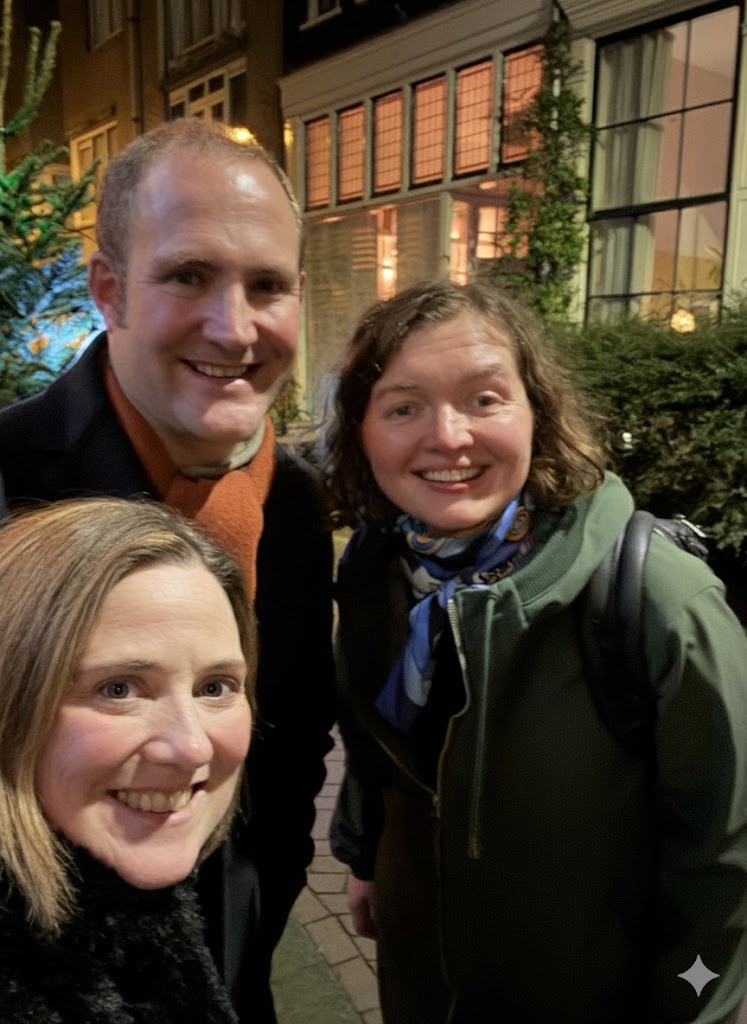
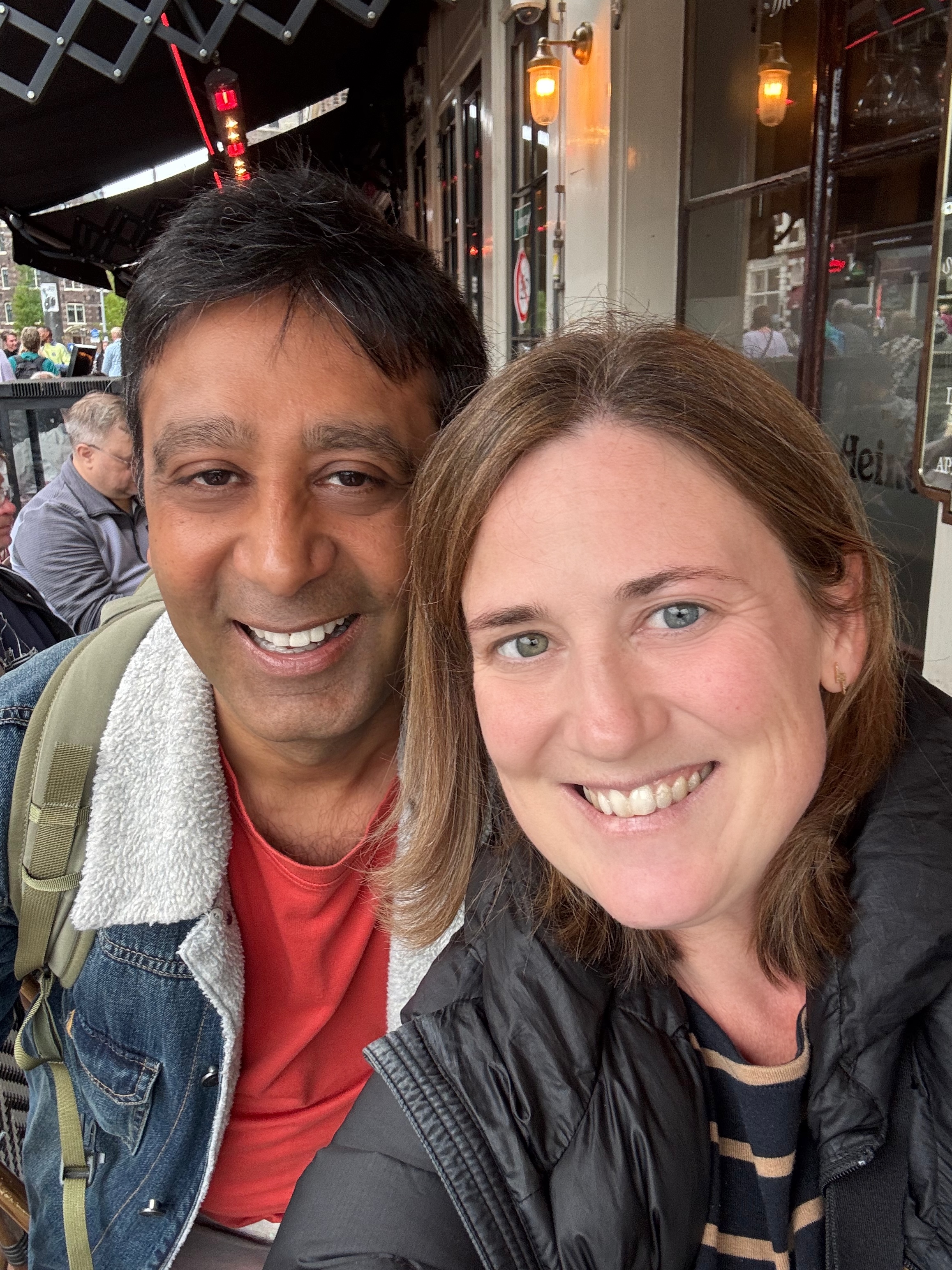
Earlier in the week I had a long Teams chat with Cathryn Atkinson, who led the youth journalism project I was involved in as a teenager (which I mentioned back in Weeknote 33 — and which prompted this catch-up). The last time I saw her she had a baby strapped to her in a harness; that baby is now in his late 20s and about to get married. Safe to say we had plenty to catch up on.

I also met with Cai Kjaer, CEO of Swoop Analytics, who was in Amsterdam for meetings. We talked about the looming launch of their Information Overload Calculator, the Viva Engage Benchmarking Report, and the uncomfortable truth that while tech platforms — and now AI — make it easier than ever to publish, people’s bandwidth hasn’t magically expanded to cope. My line on this: internal comms needs to focus on orchestrating flows and making sure messages land safely. Hyper-personalisation will be key, but that comes with its own challenges.

A smiling woman and man posing for a selfie on a staircase with stained glass windows in the background.

Travel

I’m off on an adventure tomorrow — Albania, Kosovo and North Macedonia, all firsts for me and all a little off the usual tourist trail.

Next weekend I’ll be hiking in the gloriously named Accursed Mountains (because why not tempt fate on holiday?), and there’ll be a few boats involved too. Which, having just re-watched Jaws, feels like impeccable planning. So there won’t be a Weeknote 37 — unless I’m writing it from the belly of a shark.

This week in photos
Weeknote 2025/35

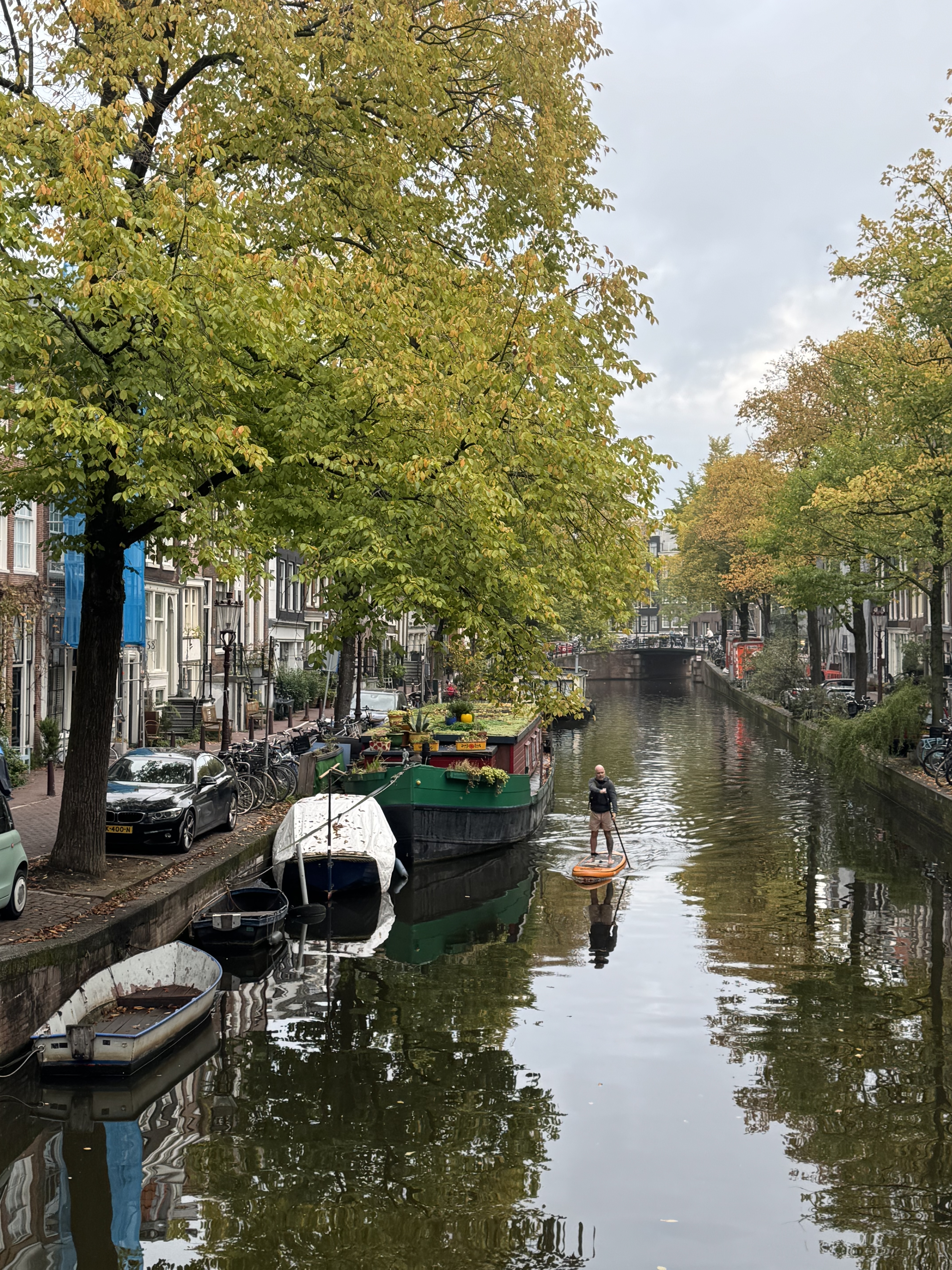
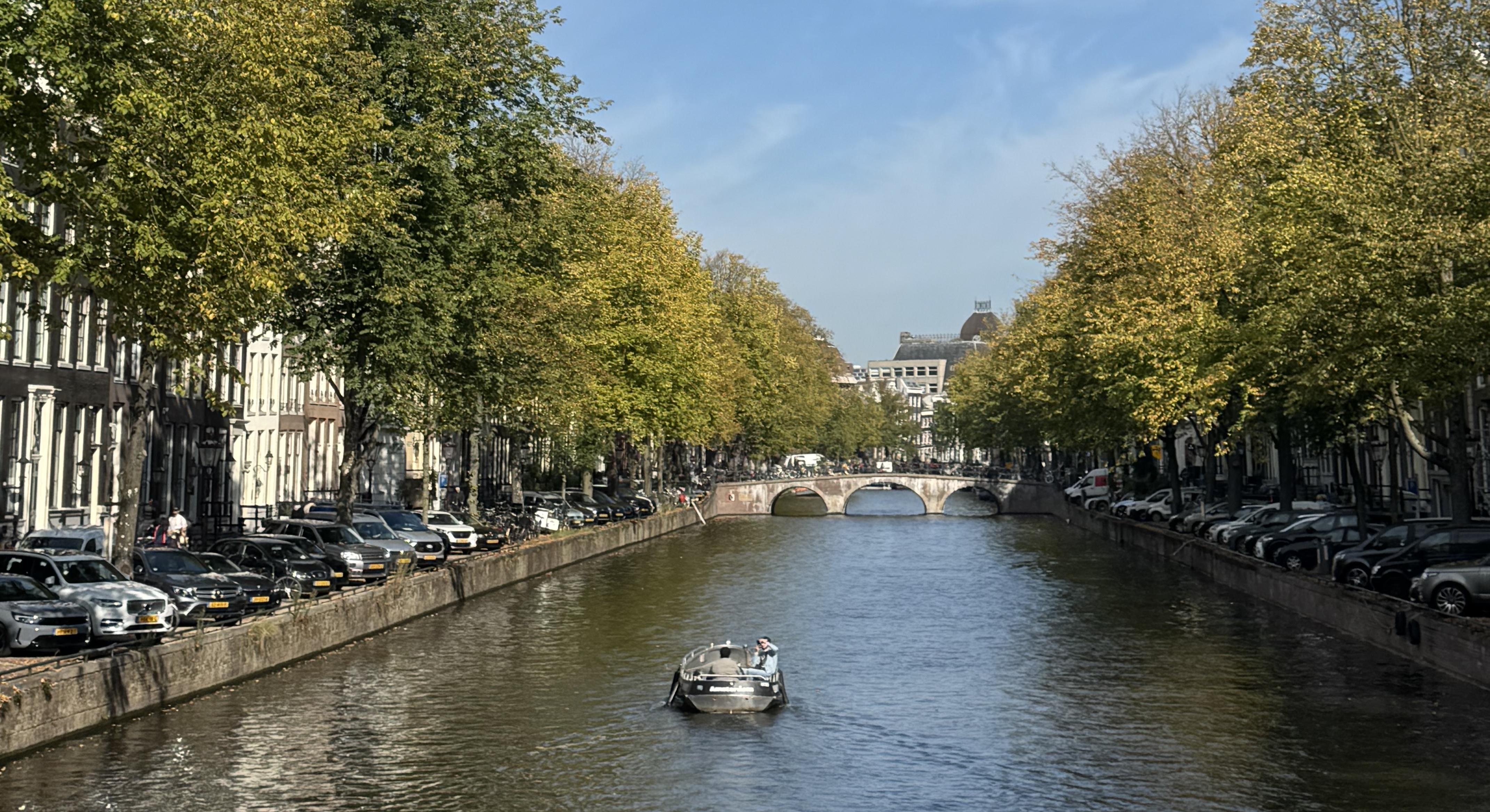
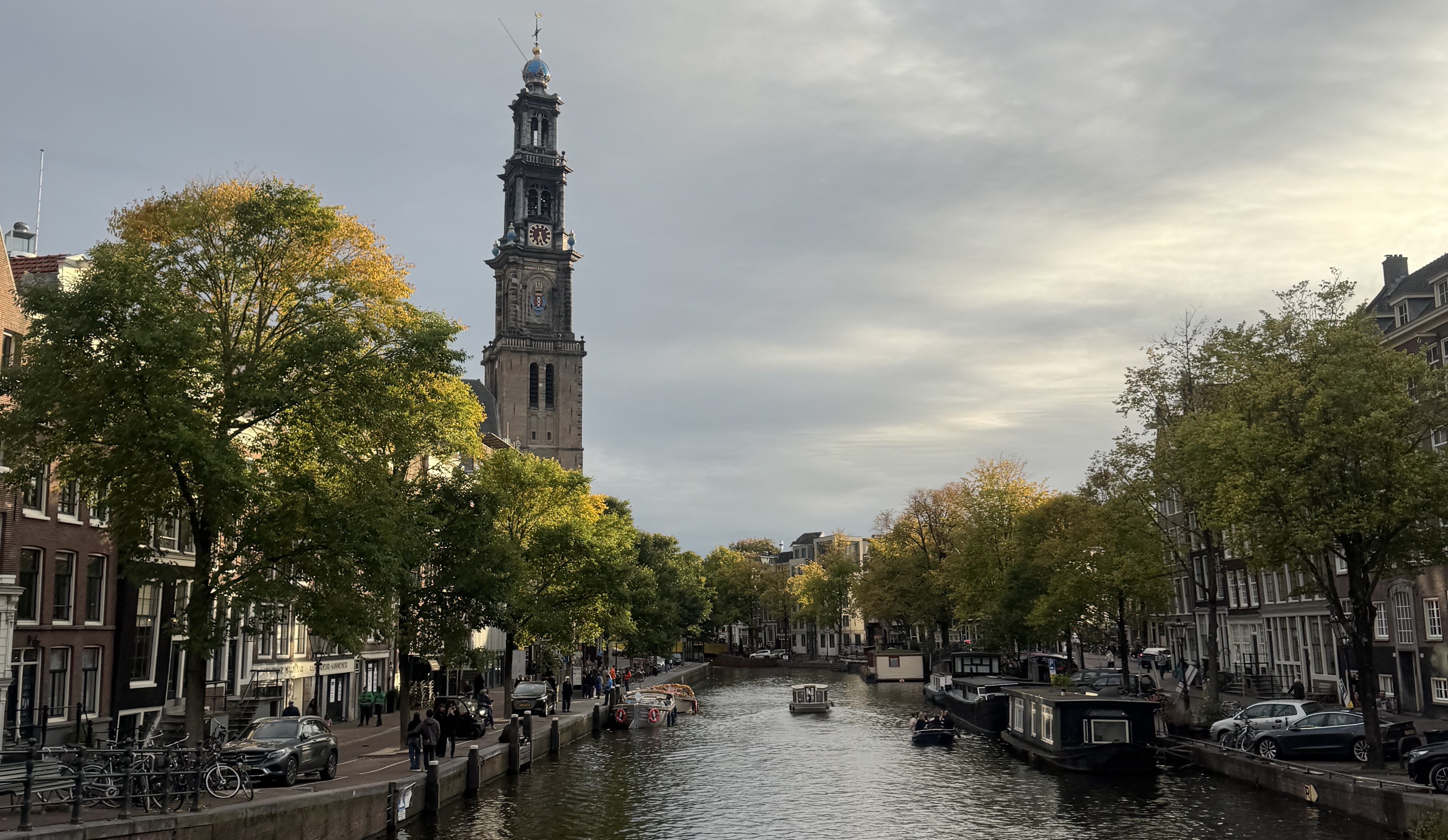
A tranquil view of a canal in Amsterdam, lined with trees and colorful buildings, reflecting in the water under a clear blue sky.
A last blast of summer in the city. Photo by me.

Six years ago tomorrow I packed up my London life into two suitcases and moved to Amsterdam.

In previous years I’ve marked the date by listing lessons: how to get lost (a lot), how to start again, how to build a life from scratch armed with nothing but Google Maps, a bicycle with no brakes, and one magic Dutch ID number that unlocks everything from taxes to library books.

But this year feels different. This year, I feel settled.

I’ve found my gang. I’ve got my groove.

It took a while to get here. The pandemic didn’t help. Two years suspended, the streets quiet, friendships impossible to spark. Loneliness isn’t dramatic; it just seeps in, until you look up and realise the only stranger you’ve spoken to in weeks is the cashier at Albert Heijn. Add the Dutch weather and the joy of navigating Belastingdienst paperwork, and it sometimes felt like a long audition for a very niche endurance sport.

And then, gradually, things shifted. The map filled in with people and places. Now there’s the crew I go to gigs with, shouting lyrics into the night. Local WhatsApp groups that point me to the freshest dahlias or the new season herring hitting the kraam. Gym buddies who somehow make turning up at 8am almost fun. The barista who knows my order before I open my mouth. Dining companions who linger long after the plates are cleared, conversations spiralling into politics and philosophy. A neighbour with my spare keys and another who’ll lend me a sander. Friends who water the plants when I’m away, sending sheepish updates about the ones that didn’t make it. The impromptu neighbourhood borrel that starts with “just one drink” and ends, inevitably, with bikes wobbled home in the rain. The late-night ping of a meme, answered instantly with another. And a friend who says, simply, “Pop by on your way home — I’ll put the kettle on.”

Small things, maybe. But they’re the everyday glue of belonging; the tiny threads that weave a city around you until it feels like home. Things I never really had in London, but here I’ve somehow found.

It turns out that moving countries isn’t really about geography. It’s about patience and persistence, and the slow magic of weaving yourself into the fabric of a place. Until one day you look up and realise the unfamiliar city has become familiar. The strange has become ordinary. And you somehow quietly belong.

I came here with two suitcases. What I’ve gained is a home, and a community.

This week at work

A productive stretch on the book front: we submitted three new chapters, and resubmitted another three we’d reworked to make the flow more logical. Feels good to see the pile growing and the structure sharpening up.

Tiny green shoots are popping up online too — the book quietly sprouting on pre-order pages for the exceptionally keen. A strange but thrilling sight: proof it’s starting to become real.

At work, the same theme of belonging surfaced in conversations with a client about how they use Viva to build connection, and what to do when those bonds fray. It struck me that the process is the same: digital spaces can be where colleagues find their gang and their rhythm. Because belonging at work isn’t really about tools or systems. It’s about that moment when you realise you’re part of something bigger.

Otherwise it’s been a deliberately quiet spell before the next project kicks off. We’ve used the breathing space to wrangle business admin and finally give our website some overdue attention.

Over at Statement, it’s been live for a week now. We’ve got a steadily growing number of people signing up, using it, and (crucially) giving us feedback. The team have been busy fixing things behind the scenes, while I’ve been working on comms to answer questions about how it all works. Early days, but exciting ones.

Also this week

The carillon of the Westerkerk, just across from my house, played a concert of Amsterdam-themed songs on Friday. I’d like to think it was for me personally, but I suppose it’s possible it’s in honour of the city’s 750th birthday. Either way, I was treated to a very Dutch soundtrack, including a rousing rendition of Tulips From Amsterdam. Hope you enjoy it as much as I did.

Tulips From Amsterdam played on the carillon of the Westertoren, filmed from my front window.

Consuming

👩🏻‍💻 Internetting

This week I was struck by Emma Parnell’s piece on living abroad and returning home.  She writes beautifully about the dislocation of overseas life — how it’s not always the big things that unsettle you, but the small absences, like the sound of owls in the morning. And about how moving back, supposedly the “easy” part, can feel just as alien: friendships moved on, milestones missed, the nagging sense you’ve fallen behind.

What I loved most was the ending. Ten years on, she’s not only rooted again but surrounded by people she loves — proof that the feeling of “home” is less about geography and more about connection.

It resonates with my own experience of moving abroad (and back, and abroad again): that moving countries isn’t only about the logistics of visas and flat-hunting, but about patience, persistence, and the slow work of building community until one day you realise you belong. You’re home.

📺 Watching

I finally made it to Amsterdam’s oldest cinema, The Movies, and watched The Roses. Essentially a British remix of the 80s American classic The War of the Roses, but with upgraded swearing. Benedict Cumberbatch and Olivia Colman play a couple whose marriage unravels in increasingly petty and chaotic ways. I love both actors, the narrative was charming, and Colman’s wardrobe was iconic.

It’s not winning any prizes, but as a stylish way to pass a couple of hours it does the job. Come for Colman’s shirts, stay for the creative insults. A solid 6/10.

📚 Reading

I’ve just started The Albanians: A Modern History ahead of my holiday there in a couple of weeks. Albania’s a country I know embarrassingly little about, so it’s time to learn my Enver Hoxhas from my Mother Teresas. Looking forward to seeing how what I read on the page stacks up against what I find on the ground.

🎧 Listening

Been on a CMAT tip this week. Big choruses, sharp lyrics, country-pop with a wink. The kind of soundtrack that makes late-summer evenings feel like they’ve got a bit of eyeliner and a sense of humour.

Travel

Off to the Auvergne later this week. Volcanoes, valleys, villages, and the chance to dust off my GCSE-level French.

This week in photos
Weeknote 2025/34

A busy scene on the water during a festival, with various boats and people enjoying the event under a partly cloudy sky.
Sail Amsterdam was chaotic and wonderful. Photo by me.

This was one of those weeks that makes me sound far more impressive than I actually am: shiny award, marathon of book research, and — for reasons that presumably made sense once — launching a social network. From the outside: overachiever. From the inside: mostly caffeine, bad posture, and a browser with 147 tabs open.

Aristotle said excellence is a habit*. Personally, I’ll settle for a week that pinballed between dusty footnotes and the App Store. Hardly the Nicomachean Ethics, but it kept me out of trouble.

* actually he didn’t, it’s misattributed to him, but let’s roll with it.

This week at work

Some weeks crawl by with all the excitement of a damp Weetabix. Then there are weeks like this one: I won a big shiny award and launched a social network — while allegedly “writing a book” in my spare time. IKR? Truly, I contain multitudes (and also have no free evenings).

First up: the intranet we delivered for German energy company SEFE bagged a Step Two Intranet & Digital Workplace Award. This matters because, unlike so many industry awards these aren’t pay-to-win baubles dished out to whoever coughed up for a table at the gala dinner. They actually recognise… excellence. Imagine!

And this project was exactly that. We turned around an entire intranet in 100 days: config, IA, content, training, the lot. In an age where everyone is trying to duct-tape ChatGPT onto their mess and call it strategy, we did the radical thing: used humans. Actual, qualified humans, working with subject matter experts to create content that was both new and correct. Wild, I know. We binned the outdated sludge, rebuilt the lot (in two languages), and put governance in place so it doesn’t immediately rot again. Is it sexy? No. Does it work? Yes. And frankly, that’s what counts.

Bonus humblebrag: between Jon and me, that’s now three Step Two Awards. At this point we may need a bigger shelf.

Meanwhile, I spent much of the week haunting London’s university libraries like some over-caffeinated academic poltergeist. Goldsmiths, my alma mater, has somehow become a library with almost no books. Which feels a bit like opening a pub that’s mainly vibes.

One afternoon I even wandered back to my old haunt: the 5th floor of Senate House, same desk, same view, same faint eau-de-dust. In a world of absolute batshit chaos, it’s oddly reassuring that one corner has politely refused to move on since 1976.

And because nothing says “healthy work-life balance” like juggling flaming chainsaws, I also launched a whole new social network. The big idea: Instagram and TikTok are increasingly full of shit, so how do you prove something actually happened? Simple. Your bank statement.

Enter Statement: Strava, but for your wallet. You securely connect your bank account, pick a transaction, and share it. It’s a social network powered by proof.

Yes, it’s early days. Yes, it’s missing about nine hundred features we’d like to add. But it looks good, it works, and it’s live in the US app stores. We’ve got a small band of early adopters making Statements and sending us feedback. If you’ve got a US iTunes account, go on, download it. Because nothing says fun like letting your friends know you really did make that 3am drunk eBay purchase.

Also this week

I landed back in Amsterdam just in time for the last couple of days of Sail — the floating festival where hundreds of ships gather on the IJ and the entire city decides to throw a party on the water. It’s meant to happen every five years, but thanks to You-Know-What the last one was cancelled, so this was my first. And honestly, it was magical. We hopped on a boat to get up close, which turned out to be like playing Mario Kart with actual consequences: hundreds of little vessels jostling for space, glasses clinking in the sun, the whole city afloat and slightly tipsy.

As if that wasn’t enough, last night was the Prinsengracht Concert — the annual tradition where a stage is built on the canal by my house and everyone piles into boats to watch. It closes with Aan De Amsterdamse Grachten, sung by hundreds of people swaying and belting it out across the water.

Between the tall ships and the canal choirs, this weekend was Amsterdam at peak Amsterdam: chaotic, beautiful, and just a little bit smug about how lovely it all is.

Consuming

👩🏻‍💻 Internetting

Stumbled across e-mail.wtf this week — a quiz on allowable formats for email addresses. Turns out the answer to “is this valid?” is almost always “yes, unfortunately.” You can have an address that starts with an exclamation mark, or one that’s just a single letter. Fun little distraction, and also a reminder that the internet is basically held together with duct tape and regret.

📺 Watching

Not a thing.

📚 Reading

This week I mainlined close to 100 journal articles. Anything even vaguely relevant from the International Journal of Organisational Analysis, Public Relations Review, Review of Management Literature, and everything in between. Footnotes, citations, abstruse diagrams: give me the lot. And you know what? I loved it. Apparently “spending a week buried in academic journals and calling it fun” is my kink. Maybe a PhD isn’t such a terrible idea after all.

🎧 Listening

News just dropped that Belle and Sebastian are touring next year for their 30th anniversary. And yes, I immediately bagged tickets for both nights. Obviously. Cue me tumbling headfirst into one of my periodic B&S rabbit holes, where I remember all over again that no one does wistful indie quite like them. Some people binge Netflix; I binge flutes and wryly observed teenage melancholy.

And the timing was spot on: I’d just spent the week buried in my old university libraries, right where I used to listen to them on my OG iPod while reading books on media theory. Full circle moment, soundtrack included.

Connections

A week in London meant the rare treat of seeing a bunch of people I’ve not caught up with in yonks. Highlights included coffee with my old colleague Nic Wilson, scheming with my regular co-conspirator and accessibility wizard Lisa Riemers, swapping stories with comms legends Janet Hitchin and Anne-Marie Blake, and a long-overdue reunion with governance guru Steve Way — who I somehow hadn’t seen in a full decade. Proof, if nothing else, that time really does bend in strange ways.

Coverage

My recent post on whether corporate culture is shifting — and what comms needs to do about it — was picked up by Jenni Field and Chuck Gose on their Frequency podcast. Always nice when your musings escape LinkedIn and make it into other people’s conversations.

Travel

Nothing for two whole weeks! I barely recognise myself. No airports, no 5am alarms, no half-packed suitcase glaring at me from the corner of the room. Just the novelty of staying put — which, frankly, feels almost decadent.

But let’s be honest: it’s the calm before the storm. September has me ricocheting across five countries in two weeks, all while trying to crank out the next three chapters of the book. So I’ll enjoy the rare luxury of my own bed and my own coffee machine while I can… before life turns back into one long game of suitcase Tetris.

Here’s hoping for a quieter week ahead. Though given recent form, I’ll probably accidentally launch a space programme by Thursday.

This week in photos
Weeknote 2025/33

Moi moi, Helsinki. See you next year.

Writing this from the Eurostar, rattling towards London and attempting to wrestle with the train’s wifi, which is so weak it’s essentially connectivity homeopathy. Between the Chunnel and the capital it fades in and out like the Shipping Forecast at 3am — present, then gone, leaving you wondering if you imagined it.

So while this weeknote is being written at 300km/h, the chances of publishing it before I reach my hotel are roughly the same as Liz Truss winning Come Dine With Me.

Which feels about right for the week: a mix of progress and interruptions, abrupt disconnects, nostalgia trips and pop-culture distractions, and just enough signal to piece it all together.

This week at work

Mostly the book, which at this stage is less “writing” and more “wrestling a many-headed hydra of Word documents, where every sentence I cut seems to sprout two more.” Some chapters are coming together nicely; others still resemble the digital equivalent of a teenager’s bedroom, all half-finished thoughts and discarded drafts lurking under the bed with a feint yet troubling pong.  I’ve spent most of the week coaxing the mess into something resembling structure — deleting, rewriting, then deleting again, until the only thing growing is my word count of expletives.

Writing a book is good practice for life: you don’t always get the response you want, and sometimes whole sections end up on the cutting room floor.

I’ve been playing around with what I’ve started calling Jessica’s Law (blame too much Murder, She Wrote as a student). Every episode hinged on Means, Motive, Opportunity — and it turns out the same applies to comms. Instead of starting with a channel audit (“what do we already provide?”), we begin with Discovery: do people actually have the means to get messages, the opportunity to pay attention, and the motive to care? Get that right, then audit channels against reality, not the other way round. Or, as Jessica Fletcher would put it: you don’t catch the culprit by counting the guns in the cupboard.

Client work was quieter, which is probably just as well: fewer calls, more time to wrestle with sentences that stubbornly refuse to line up in the right order. It doesn’t look glamorous from the outside — mostly it’s me in front of a screen muttering like a minor Shakespearean villain — but progress is being made. Slowly.

Also this week

I spent a couple more days in Finland, including a wander round the fortress island of Suomenlinna — all cobbles, cannons and salt air. The highlight came as a vast ferry sliding improbably through a narrow channel on its way to Tallinn, a floating hotel edging past the old battlements with inches to spare. Standing there, you get a sense of how the island has always been a stage for comings and goings — invaders, traders, and now overnight-trippers in search of cheaper alcohol, all passing through the same strait.

Back in Amsterdam, it was one of those rare, lovely weeks where every evening seemed to fall gently into place with friends. A cup of tea at a friend’s house on my way home from the airport. A couple of casual gezellig nights in the local pubs. Nothing grand, just the kind of easy evenings that make a week feel full without being hectic. Having friends nearby — cobbling them together into a sort of substitute family — is a vastly underrated life hack, and one I’m very grateful for.

On Friday I caught up with my old friend Senab, in town for a gig (she’s now a professional singer, which is exactly as glamorous as it sounds). We first met as teenagers thanks to one of those ridiculous sliding-doors moments. Picture it: I’m 14, stuck at home on a rainy Saturday, half-watching Channel 4 when a short documentary about a youth journalism programme in New York comes on. At the end, they announce they’re running a London pilot. Applications available… by stamped addressed envelope. Peak 90s.

Weeks later I’m in the Guardian’s Farringdon offices, learning how to interview from real journalists. By the end of the summer I’d blagged my first byline. More importantly, I’d fallen in with a group of people who blew my world wide open: different backgrounds, different aspirations, different everything. It gave me confidence, a social circle that wasn’t just girls from school, and the audacity to think journalism (or something like it) might be for me.

Senab and I talked about how that one project sent so many of us off on entirely new paths — she onto stages, me into whatever this is. Others have ended up as academics, authors, artists and CEOs. Proof, not that any is needed, that sometimes your whole life pivots on the price of a 2nd-class stamp.

Consuming

👩🏻‍💻 Internetting

This week’s standout read was Shared Narratives by my friend Lauren Razavi. A gorgeous, layered essay about the private codes we build with people, and what happens when those codes spill out into the public. She drifts from playlists as love letters, to walking routes as relationship metaphors, to graffiti as a kind of intimacy that’s both public and secret.

What struck me most was her point that not everything needs to be spelled out. Some things are obvious, others are hiding in plain sight for those who know how to read the code.

📺 Watching

I watched Fit For TV, Netflix’s documentary series  about The Biggest Loser. A grim time capsule from the early 2000s, when humiliating people on screen somehow counted as primetime entertainment. Contestants were starved, screamed at, pushed to collapse, all packaged as “inspiration.” Two decades on, the fallout is painful: lasting health problems, disordered eating, and the scars of being chewed up for ratings.

Midway through my own weight loss journey (why yes I do look great, thanks for noticing), it made for difficult viewing. The extremes on screen couldn’t feel further from what I’m doing — but it was a stark reminder of how easily health gets twisted into punishment when there’s an audience involved.

📚 Reading

Nothing, unless you count the thousand-odd articles, reports and blog posts I’ve been mining for book references. After a week of scanning PDFs until the words stopped meaning anything, I couldn’t face opening an actual book. Making up for it next week, promise.

🎧 Listening

The Taylor Swift news this week sent the internet into a frenzy, and me straight back into my Swiftie playlists. Say what you like, but no one commercialises petty grievances and messy drafts of their personal life quite like Taylor. If I could monetise my deleted paragraphs the way Taylor monetises her exes, I’d be writing this weeknote from a yacht. Instead I am zipping through Kent, relying on a Taylor playlist and my noise-cancelling cans to block out the sound of a toddler kicking off.

Coverage

This week my latest piece for Reworked went live: a look at what AI intranets mean for internal comms.

Once upon a time, our big worry was whether Q3 results sounded better as “steady performance” or “poised for growth.” Now the real challenge is making sure that update doesn’t get mangled into a beige push notification by a bot that can’t parse sarcasm.

AI intranets are here, which means your carefully crafted content won’t stay in one neat format. It’ll be sliced, summarised, translated and pushed out in ways you can’t always predict. The job of comms isn’t disappearing — it’s shifting. From writing the perfect headline to orchestrating the whole ecosystem: tagging, structuring, and making sure the meaning survives the journey.

Far from replacing us, this is AI politely shoving us up the value chain and making the job more interesting.

Travel

I’m in London all week, swapping Amsterdam canals for campus libraries. I’ll be holed up at Goldsmiths (where I did my undergrad) and at Senate House, where I wrote my dissertation two decades ago. Looking forward to a bit of student nostalgia — the long days in the stacks, the smell of old books, and the faint sense I should probably be revising for something (and yet choosing to knock off and meet friends for wine instead) This time, at least, the deadlines are self-inflicted.

This week in photos
Weeknote 2025/32

Hello from Helsinki

This weeknote comes to you from Finland, where at the weekend they marked Tove Jansson Day. Fitting, as I seem to be living my own Moomin arc: part wandering, part nesting, occasionally hiding from the drama of the wider world.

A quiet week of admin, book-wrangling, and a festival… with just enough adventure to justify another lonkero.

This week at work

A pretty quiet one on the consulting front, which meant I could catch up on all the unglamorous-but-necessary stuff: clearing the admin backlog, wrangling receipts for the accounts, and making a dent in planning for the next quarter. The kind of work that never makes the highlight reel, but keeps the lights on.

The book continues its slow, steady march forward. This week was less about sprinting through word counts and more about wrestling with structure, reshuffling chapters, and chasing down examples that will actually hold up in print. Still counts as writing, even if a lot of it was moving things around rather than adding new paragraphs.

Also submitted a proposal for a potentially interesting project. It’s early days, but if it comes off, it’ll be one of those “clear the decks” pieces of work. Fingers crossed.

And somewhere in between, I’ve been inching along on the side project, in that oddly satisfying stage where it’s all post-it notes, loose ends, and the occasional “ooh, that could work” scribble in the margins.

Also this week

I adore visiting new places. Getting lost down unfamiliar streets, trying things I can’t pronounce, seeing the world through someone else’s lens. Which is why it’s slightly odd that I keep finding myself back in Finland.

This is my fourth summer here, lured by music, food, and the friends I’ve somehow collected along the way. For someone who’s ticked off 83 countries and counting, coming here feels less like an adventure and more like pulling on a favourite jumper — familiar, cosy, and just the right fit.

Turns out even wanderlust likes a regular haunt.

This week also brought the sad news that my former colleague and friend, Raphaelle Heaf, passed away at the far-too-young age of 42. She was smart, kind, and endlessly curious. One of those people who made work better simply by being there. She’ll be very much missed.

Consuming

👩🏻‍💻 Internetting

A few things I’ve read this week have me thinking about a hardening of workplace culture — and what that means for comms.

The headlines aren’t exactly warm and fuzzy. AT&T’s CEO told 100,000 employees: come back to the office five days a week, or consider whether you still belong here. Chevron’s CEO opened his cost-cutting era by telling staff to be less nice to each other. The tone from the top is getting frostier; culture more clinical. Empathy is out, efficiency is in.

And it’s not just leadership. On TikTok, Gen Z are pushing back hard — clear-eyed about boundaries, unromantic about “work family,” and entirely unwilling to play along with performative loyalty.

That leaves internal comms somewhere in the middle. We used to be the warm hug of the organisation; now we’re the polite bouncer at the door. More often than not, our job is to deliver messages that boil down to “shape up or ship out,” but dressed in a way that won’t tank the Glassdoor score.

Enterprise social — once the place for connection — now feels riskier. Less community, more caution. Fewer conversations, more calculation. And if that’s the cultural weather, we have to ask: how should our tone, channels, and role adapt? If the rules of the game have changed, the storytellers need to catch up too.

📺 Watching

Picked Slow Horses back up. River Cartwright’s continued survival is starting to feel like it belongs in the Marvel Cinematic Universe, but it’s still an enjoyable watch. All grubby espionage, sharp dialogue, and Gary Oldman looking like he’s just rolled out of a bin.

📚 Reading

Picked up Powerful by Patty McCord this week, on Ed Greig’s recommendation. McCord, Netflix’s former Chief Talent Officer, makes the case for ditching the comforting fictions of corporate life — like “we’re a family” — in favour of radical honesty, accountability, and treating employees as adults. It’s about building high-performing teams by being crystal clear on expectations, constantly developing skills, and letting go when the fit’s no longer right.

In the current cultural weather (with CEOs swapping empathy for efficiency and employees setting firmer boundaries) it reads less like a provocation and more like a playbook. McCord’s world is one where trust comes from transparency, not perks; and where directness is seen as respect, not rudeness. Which, if we are indeed in a cooling climate, might be the reality comms has to get comfortable communicating.

🎧 Listening

Over the weekend I went to my second festival of the year, Helsinki’s Flow Festival. It’s a completely different vibe to last month’s Down The Rabbit Hole. Less woodland whimsy, more post-industrial chic, set on an old power plant site just a short metro hop from the city centre.

Highlights:

  • FKA Twigs: part art installation, part acrobatics, part fever dream
  • Little Simz: razor-sharp, commanding, and somehow making a massive crowd feel intimate
  • Burna Boy: pure charisma and unstoppable rhythm; had the whole place moving
  • Underworld (yes, again): euphoric nostalgia, still as thrilling as the first time
  • Fontaines DC: brooding, punchy, and gloriously loud
  • Charli XCX: pop chaos in the best possible way

Disappointments:

  • Khruangbin: gorgeous on record, but live it drifted into background music territory
  • Air: Moon Safari nostalgia trip derailed by dodgy sound for the first few songs, and no Beth Hirsch vocals, which left it all feeling a bit flat

Travel

A few more days in Helsinki, then home briefly before a whole week in London — which, for me, counts as practically moving in. I’ll be hiding out in the Goldsmiths and Senate House libraries wrestling with the book, but I can be lured out with the promise of caffeine. If you’re around 17–22 August, let’s plot, gossip, or just complain about the Northern line.

Look for the person mainlining coffee and passive-aggressively guarding a plug socket.

This week in photos
Weeknote 2025/31

The 2025 Amsterdam Pride Canal Parade (photo: me)

That odd late-summer energy, where everything feels like it’s waiting for something. Cooler air. Colleagues to return. Deadlines to reappear in your inbox like mushrooms after rain. It’s not quite the calm before the storm, more the pause where you realise the storm is the work.

But in the gaps, the good stuff happens. Chapters get reshuffled and start to make more sense. Side projects move from vague idea to actual thing. And outside your window, the city throws a rainbow-drenched street party in celebration and defiance.

Today also marks four years since my accident. The physical scar has faded, and so has the sharpness of the memory. What’s left is something quieter: a growing understanding that loving my body isn’t about how it looks, but knowing — deeply — that it is good, just as it is.

Quietly productive. Occasionally reflective. Very August.

This week at work

With Jon away, I’ve been holding the fort — though it’s been more sleepy outpost than raging battlefield. We got our first round of feedback from the publishers, and while writing the next batch of chapters, had a lightbulb moment: the narrative works better in a different order. Cue much cutting, pasting, and swearing at my laptop.

Caught up with two employee experience vendors this week. We stay vendor-neutral at Lithos, but I like knowing what’s out there — especially as the market’s evolving at speed. Blink and there’s a new acronym.

Plus big leaps forward on The Secret Side Project. Getting tantalisingly close to something I can actually share, and I cannot wait.

Also this week

Amsterdam Pride took over the city this weekend — and my neighbourhood especially — with its usual mix of celebration, protest and glitter. The Canal Parade floated along the Prinsengracht, just metres from my home, inflatables aloft, sound systems booming and buzzing with joy and dance.

There’s something properly magical about how the city transforms for Pride: rainbow flags on balconies, bars, bridges… and this year, even the sky played along, with the rain clearing just in time for the parade.

The theme was Love, and around 80 floats represented everyone from LGBTQ+ refugees to queer judges. It all felt less corporate than previous years — and all the better for it.

With LGBTQ+ rights under threat in so many places (and the Netherlands hardly immune to the shift), it’s worth remembering that Pride is still a political act. I’m glad to live in a city that doesn’t just celebrate queer joy, but continues to defend the right to live it, 25 years after leading the world on equal marriage

Consuming

👩🏻‍💻 Internetting

I’ve been rabbit-holing into how to make your brand findable in an AI-driven world — and these two pieces offer some of the clearest thinking I’ve seen.

Jo Eyre lays out the emerging discipline of AI Optimisation (AIO): not gaming the algorithm, but making sure your organisation shows up when someone asks ChatGPT a question. Think SEO, but for large language models. It’s about clarity, credibility, and showing up in sources AI trusts — and it puts comms firmly in the driving seat.

Nick Gold, meanwhile, reminds us that reputation isn’t just something you manage — it’s something you live. In an age of AI synthesis, fake reviews and always-on scrutiny, consistency between what you say and what you do is what gets noticed — by people and by machines.

Tl;dr: If you’re not on the page, you’re not in the answer. And the page is built from trust.

📺 Watching

Caught the new Superman film at the cinema. It’s enjoyably silly in all the right ways: big set pieces, earnest speeches, and the kind of comic-book logic where gravity and plausibility take a back seat. Not everything lands, but it doesn’t really matter. It’s capes, chaos, and a decent time at the movies.

📚 Reading

Somehow I didn’t have the mental bandwidth this week

🎧 Listening

Saw the legendary Brazilian psych-rock band Os Mutantes at Tolhuistuin and still can’t quite believe it. Pioneers of the Tropicália movement in the 60s, they mashed up fuzz guitars, samba, and sheer surrealism long before it was cool. Weird, wild, and utterly joyous. What a treat to see them live after all these years.

Coverage

When Natasha Plowman invited me on her podcast Cutting Through, I jumped at the chance — mostly for a long-overdue natter. But in this half hour, we talk about how everything old is new again, just with added complexity and risk.

I also joined Egyptian leadership expert Fady Ramzy for a second LinkedIn Live. I’d planned to talk about what internal comms can learn from marketing, but we ended up digging into what audiences really need — and what CEOs could learn from McDonald’s obsession with selling more milkshakes. You can watch it back here.

Finally, I’ve joined Strategic’s global columnist network, where I’ll be sharing thoughts on communication leadership and cutting through the digital hype.

Travel

Another blissful week at home. Next week sees my annual trip to Helsinki for friends, music and saunas.

This week in photos
Weeknote 2025/30

Summer hangs on my street (photo: me)

This week felt like a pause between chapters. Projects wound down without ceremony. Conversations trailed off. My co-founder wrapped up for his summer holidays. Even the weather felt like a sigh.

In the space left behind, there’s room to think — about what lasts, what lingers, and what slips away without notice. Not everything ends with a flourish. Sometimes it’s just a final email, a change in tense, a silence. Still, even a quiet page turn can mark the start of something new.

This week at work

Writing the book has been an exercise in codifying the mix of tools, processes and practices we’ve cobbled together over the last decade. We’ve been trying to break it all down into frameworks that a communicator could actually pick up and use.

So this week we shared some of that work-in-progress thinking — a simple model for understanding digital internal comms. It’s been bouncing around our heads (and whiteboards) for years, and we’re finally giving it shape.

Across every shiny new EX platform, intranet relaunch or AI-powered comms tool, the same four needs keep showing up:

  • Collaborate: where work gets done
  • Publish: the official source of truth
  • Distribute: getting the right info to the right people
  • Discuss: the feedback and sense-making layer

Most organisations meet these needs with a patchwork of tools — think Teams, SharePoint, email, Slack, Viva Engage, town halls. Some do double duty. Others leave big gaps. But the underlying needs rarely change.

I’ve mapped it all out in a new blog post. Would love your feedback, counter-arguments, or examples of places doing things differently. We’ve already had some great input and are now working out how to evolve it into something genuinely usable. Is it too simple? Or is that the whole point?

And honestly, I’m loving every moment of this process — turning years of messy, real-world experience into something structured, shareable, and (hopefully) useful. Taking the implicit and making it explicit. Building models others can quote, borrow, critique, improve. Putting language and logic around things we’ve long done instinctively.

This week also marked the end of our engagement with a long-time client. Like so many project endings, it didn’t come with speeches or cake or even a well-placed “thank you” — just the quiet arrival of a final PO, the last invoice, and a subtle shift in the relationship from present tense to past. After years of collaboration, it felt oddly transactional. It often does, but I’m not sure I’ll ever get used to it.

Also this week

Some endings feel like a natural conclusion. The work done, the job finished. Others feel like a wrench. This week I’ve been a shoulder to cry on for a friend in the thick of a messy break-up — the kind that sharpens the edges of reality while blurring its centre. And I’ve found myself thinking about endings of all kinds: personal, professional, planned, and those that hit you like a bus.

Because whether it’s a relationship, a job, or a long-running project, the end can leave you caught between two stories. The bitter one, where you wish it had never happened. And the gentler one, where you’re just grateful it did.

There’s the version where you regret the ending (like my last full-time job). And another where you realise it was always going to end — the shape of the finish line already hidden in the starting blocks. As T.S. Eliot wrote, “In my beginning is my end.” We just don’t always recognise the closing scene until the credits roll.

Endings don’t tie themselves up neatly. They fray. They echo. They haunt the spaces where something once was. They rarely offer resolution, only absence — a silence where the noise used to be. They rarely give you what you think you need. But with time — and a little grace — even the hardest ones can leave behind something softer: a lesson, a memory, a scar that no longer stings.

And maybe, if we’re lucky —or ready— an invitation to begin again.

Consuming

👩🏻‍💻 Internetting

In a spirit of seeing if AI can do the stuff I don’t enjoy (rather than encroaching on the stuff I do) I tasked ChatGPT with one of domesticity’s greatest frustrations.

I asked it to analyse a photo of all the socks from my laundry and work out which ones should be paired. It numbered them, matched them, but failed on the request to draw lines to show which socks belonged together.

Result: 10 solid pairs, 4 rogue singles, 1 failed attempt at annotation, and confirmation that yes, the washing machine does still eat socks. Or maybe I do. Either way, AI: 1, laundry chaos: slightly less than before.

A few things caught in the folds of my browser tab situation:

  • Ian Leslie’s “27 Notes on Growing Old(er)” is a rich, often funny meditation on the weirdness of ageing. From Rembrandt to Jagger, it’s less about wisdom and more about resistance, bewilderment, and the awkward comedy of carrying on anyway.
  • A great piece by Andrew Pope argues that middle managers are holding the whole mess together — juggling tech, people, AI, hybrid work… with very little support. The fix? Less platform, more behaviour: clarity, trust and better team norms. Start with listening, not launching.
  • This brilliant, honest post from Beholder reflects on a first-time founder’s journey creating a range of skin-tone inclusive plasters — and the bittersweet reality of shutting it down after a deal fell through. Part memoir, part CPG masterclass, and full of lessons on scale, marketing, and the difference between a hustle and a slog.

📺 Watching

My TV disconnected from the wifi, and thus from performing any useful functions, and I didn’t care enough to even try to fix it. A statement, possibly, about modern life.

📚 Reading

About a third of the way in to The Genius Myth. Helen Lewis takes a scalpel to the idea of the lone (usually male) genius, dismantling the myths we build around brilliance and asking who gets erased in the process. It’s sharp, engaging, and full of righteous, well-researched fury. A smart antidote to Great Man nonsense.

🎧 Listening

T.S. Eliot’s Four Quartets, read by Orson Welles, set to Steve Reich’s minimalist soundscapes. Endings, beginnings, and a lot in between.

Coverage

Earlier this month I had the joy of curating and compering the 300 Seconds x Camp Digital session — and what a lineup. Every speaker brought something fierce, fresh and thoughtful to the stage: new voices, new perspectives, and enough energy to reboot a knackered comms team.

The video’s now online, so if you weren’t there, now’s your time to catch up.

Huge thanks to Hannah Smith, Sage Su, Jane Bowyer, Prashanthi Balachander, Ryan Hill and Saw Nwe — I’ve no doubt we’ll be seeing much more of them on conference stages soon. And to Nexer Digital for inviting us back (and trusting me with a mic again).

🎥 Watch the session — featuring bold ideas, brilliant people, and me bouncing around like a child let loose in a sherbet factory.

Travel

I went no further than walking distance from my home all week and it was bloody brilliant. Recommend.

This week in photos
Weeknote 2025/29

Valetta, Malta. Photo: me.

A week of three — maybe four — halves.

Monday was a write-off. After a weekend of small disasters, culminating in a panicked and fruitless search for my AirPods (and facing the horrifying prospect of having to listen to other people breathe), the news landed that a piece of work we thought was in the bag… wasn’t. I got that email while enduring a terrible pedicure: someone badly applying nail polish while I sat there, too British to object, knowing full well I’d be coughing up for another within days. A perfect metaphor, frankly.

That evening I took myself off to Malta. A few days of ancient streets, gelato, wine and reading by the sea did the trick. Somewhere between the waves and the wine, I made some plans. Started a couple of things. Ditched a couple more.

The AirPods turned up, inside a shoe in my suitcase. My fears about the pedi proved correct, mind; it was chipped by Tuesday afternoon.

By Friday I was back delivering good work and talking to a potential new client. I know it sounds mad given how much I travel, but a few days out really can be the reset you didn’t know you needed. Like turning it off and on again, but for your entire personality.

This week at work

We’ve submitted the first three chapters of the book. Suddenly it all feels very real. The next four are underway and — surprisingly — I’m feeling pretty good about it.

This first section is all about discovery, which has turned out to be… discovery about our own discovery. A chance to properly review, analyse, synthesise and test what we actually do — not just what we tell ourselves we do.

It’s been a good moment to reflect. Jon and I have worked together for a decade, honing our methods and toolkits. Writing the book’s been part codifying that, part stress-testing it against research, and against the perspectives of others in the field.

We’ve been lucky to talk to some brilliant comms consultants. Let’s be honest: they’re also competition. But this is a small industry, and there’s no space for giant egos. We’ve all read the same books, combined that with experience, and built our own ways of working. When people let us in on theirs, it’s a privilege.

Less cheerfully, a client who’d been all set to extend a contract had a change of mind. Budget pressures, shifting priorities — nothing we could have done differently, but disappointing all the same. Now to find something to fill that gap. (Shout if you’ve got a Sharon-shaped project in mind.)

In the meantime, cracked on with other client work in an unremarkable, steady-as-she-goes kind of way — until Friday, when something new and promising landed in my inbox. Funny how these things even out.

Also this week

Malta, then. Visited because it’s somewhere I’d not yet been, and I had a Ryanair flight credit burning a hole in my inbox that would take me there for just thirty pounds. Hardly a considered travel strategy, but it worked.

And what a delight. Six thousand years of history crammed onto a handful of rocky outcrops, layered like a very hot mille-feuille of temples, fortresses, baroque excess and British leftovers. Plus cheap wine, reliable sun, and the deeply satisfying pastime of pootling around ancient harbour walls dodging a religious parade to the sound of canonballs being fired into the sea.

By Wednesday I was diving off a boat into the southern Mediterranean. I’m not a beach person — fuck sand — but there’s something about a boat, a cove, the wind in my increasingly feral hair, and the slap of sea water after jumping off the side.  Sheer, unadulterated, child-like joy.

More than that, it was the reset I didn’t know I needed. The past couple of months have been relentless, and it turns out that a change of scene, sea air, and an inadvisable number of pastizzi will, temporarily at least, unbreak your brain.

Consuming

👩🏻‍💻 Internetting

Mark Wilson has written a cracking piece on the slow, grinding enshittification of the app economy. He tried to book a taxi via Bolt while on holiday — it never showed. Uber? Same. Slick interface, utterly useless service.

He describes the familiar tech trajectory: prioritise growth, then profit, then slash costs until the customer is left holding the bag, doing all the work themselves. Like some kind of gig economy but for basic competence.

If you’ve tried getting to the airport lately, you’ll know the drill: the app promises a car in two minutes, then as soon as you order it’s fifteen, then the driver cancels because Mercury is in retrograde or whatever. What began as a convenience is now a con — higher prices, worse service, and no humans in sight when it inevitably goes wrong. Also no alternatives, because the platforms nuked the competition for LOLs.

📺 Watching

Absolutely nothing. Haven’t even turned my TV on all week. And I’ve enjoyed that.

📚 Reading

My break gave me the chance to read Paris 44, a brilliantly told account of the city under occupation — and the joy, chaos and reckoning that came with liberation. Easily one of the best things I’ve read this year.

It made me think a lot about my grandmother, who lived in Paris at the time. She rarely talked about the war. Like many of her generation, the past was something you carried, quietly. But there’s something both moving and faintly surreal about reading history that runs so close to your own family’s untold stories.

Every mention of battles in the streets of the 16e arrondissement made me wonder what she’d seen or heard from the balcony of the family apartment on Rue Leconte de Lisle. The jostling for power between the Gaullists and the Communists — my family were firmly in the latter camp. It makes me wish I’d asked more, though I suspect she wouldn’t have said much.

A book, Paris '44, by Patrick Bishop, is on a table with a glass of white wine. It is dark.
Reading a book with the wind in my hair and the sound of the waves below. My happy place.

It kept bringing me back to A Certain Idea of France, Julian Jackson’s brilliant de Gaulle biography I read last year. That book described how de Gaulle memed his way into the top tier of Allied leaders, despite Churchill and Roosevelt doing everything short of changing the locks to keep him out. He wasn’t even invited to Yalta, but by the time Paris was liberated, he’d made himself unavoidable.

Jackson gives you the sweeping, statesman’s-eye view; Paris 44 keeps you at street level — the hunger, reprisals, infighting, and the sudden visibility of women in public life. I remembered the handful of stories my Nan told me of the treatment of women who’d practiced horizontal collaboration with the enemy. It shows just how close France came to civil war as factions jostled for power. De Gaulle’s real genius wasn’t just getting France a seat at the top table — it was imposing order at home, consolidating power and quickly rewriting the official story as one of unity and resistance.

History always looks tidy from a distance. Up close, it’s a lot messier.

🎧 Listening

My friend Lauren introduced me to Spotify’s Blend feature — a daily playlist stitched together from the shared tastes of you and whichever poor souls you’ve roped in. Like Discover Weekly, but with the added jeopardy of other people’s terrible taste. And yet it’s weirdly brilliant. The algorithm can take a ragtag bunch of us from Iran, Sweden, the UK, the Netherlands and Thailand, and somehow find the musical Venn diagram we can all tolerate.

Big Tech may be broadly malevolent, but Spotify remains the one service where surrendering your data feels like a fair — if Faustian — trade.

Travel

I got home on Thursday evening, and now face the exciting prospect of spending over a fortnight at home. I’m giddy with joy.

This week in photos

Weeknote 2025/28

With the brilliant 300 Seconds speakers at Camp Digital in Manchester

It’s been two weeks since my last weeknote, but I feel like I’ve aged six months. Three trips to the UK, one conference, one festival — all while trying to keep the day job, the book, and the side project moving. I’m knackered.

I’m writing this from a hotel room in Manchester. Weekend plans didn’t quite come together — poor timing, crossed wires, and the quiet disappointment of being let down by someone. Maybe it’s just as well. I probably needed the space to stop and catch my breath.

This fortnight at work

Camp Digital was a bright spot — a brilliant event and a reminder that there are still good humans working in digital, design and comms. Our 300 Seconds lightning speakers smashed it. Fresh ideas, fresh perspectives, a healthy amount of swearing: the holy trinity of a good event. Roll on next year.

I’ve been working with one of our partners on some new opportunities — nothing I can share yet but fingers crossed. If it comes off, it’ll be fun.

The book is coming along; the first chapters are due to the publisher this week, so the mild panic is entirely justified. I am flitting wildly between ‘this is fine’ and ‘I should go and hide.’

And we’ve started experimenting with AI agents for communicators. Not the generative AI that everyone’s wanging on about, but actual agentic tools that can plan campaigns, track outcomes, and crunch numbers. The boring stuff no one in comms actually wants to do. The hope is that if the machines can take care of the drudgery, we can get back to the good bit: the human side of work.

Also this week

I have spent a ridiculous amount of time on the road. Cancelled flights, last-minute rebookings, 3am airport taxis, and that bleak routine of going home just long enough to unpack, shove everything through the wash, and pack again. I’m over it.

I mostly enjoy the rhythm of travel — airport rituals, playlists, good intentions to write en route. Now it’s just departure gates, bad coffee, and the creeping sense my suitcase sees me more than my friends do.

Meanwhile, I’ve been quietly chipping away at a side project. It’s killing me not to share more, but I promise it’ll be worth it. Or at least mildly interesting. We’ll see.

Consuming

👩🏻‍💻 Internetting

Matt Jukes posted the full script of his Camp Digital talk, The Power, Peril and Privilege of Working in the Open. It’s brilliant, funny, and painfully honest — basically a roadmap of what two decades of blogging, tweeting and weeknoting does to a person.

I related to a lot of it. Like Matt, I’ve been writing in public for over a decade, and I’ve got the bruises to show for it. He captures why openness is both exhilarating and exhausting — the opportunities, the random connections, the whisper networks and the weirdos.

If you’ve ever wondered why some of us keep putting our messy selves on the internet, this is the best explanation I’ve seen.

📺 Watching

I watched Attack on London: Hunting the 7/7 Bombers on Netflix, in the one day I spent at home this week (cheerful, I know). A tough but compelling four-part documentary marking 20 years since the London bombings. That number still doesn’t feel real — like most Londoners, that day is burned into my memory.

The series does a solid job of telling the story without sensationalism. The attacks, the huge investigation, the botched operation that led to the killing of Jean Charles de Menezes. It’s all there, plus reflections from survivors and first responders.

It’s honest, unsparing, and a reminder of how much that day reshaped the city and the people in it.

📚 Reading

Trips back to the UK meant a chance to stock up on actual books. I picked up The Genius Myth by Helen Lewis. I’ve barely scratched the surface, but so far: yes, this is for me.

🎧 Listening

Spent last weekend at Down The Rabbit Hole, a charming little festival in the east of the Netherlands. Big enough to get good acts, small enough that you’re not spending the whole time schlepping between stages. Plus, swanky glamping — I am absolutely past the point of roughing it.

Highlights: Patti Smith, still a force of nature. Underworld, euphoric as ever. Iggy Pop, Japanese Breakfast, Beth Gibbons, Bloc Party — all excellent. Massive Attack? Bit meh.

This one’s special for me, It was at Down The Rabbit Hole six years ago that I decided I wanted to move to the Netherlands. So in a roundabout way, this festival changed my life. Or at least my postcode.

Travel

Off to Malta on Monday for a quick solo break — a plan that seemed like a great idea when I booked it, and now feels like yet more admin. But then: two solid weeks at home. Thank Christ.

This week in photos
Weeknote 2025/26

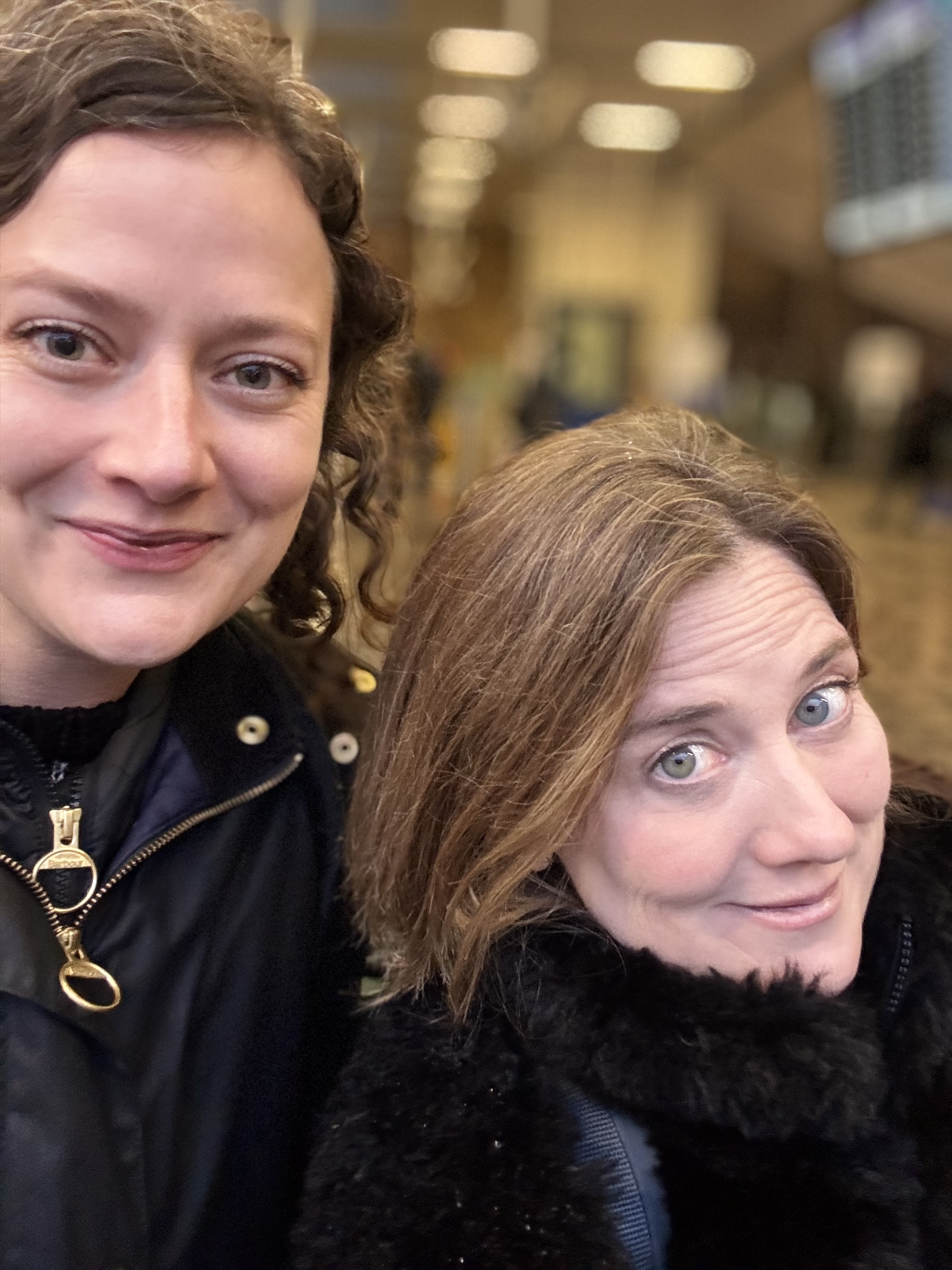
With some of my fellow 40 Over 40 in London this week
This week I was named one of Women in PR’s 40 Over 40 — and then, 24 hours later, I found myself weeping quietly at an Alanis Morissette concert.
Blame the hormones, the humidity, or the overwhelming realisation that somehow, improbably, I’ve made it here.

She was singing Hand in My Pocket, the song that lived on every mixtape of my teenage years. Back then, I clung to those lyrics like a lifeline:

I’m broke but I’m happy / I’m poor but I’m kind / I’m short but I’m healthy, yeah…

A catalogue of contradictions, sung with defiance and grace. It felt like someone finally understood what it meant to be a mess in progress.

Nearly 30 years later, I’m still a walking contradiction. Still figuring it out, still a bit of a mess. But maybe that’s the point.

Because I wasn’t supposed to end up on any kind of power list. I was the weird kid, the shy one, the late bloomer who couldn’t tie her shoelaces until she was ten. I didn’t finish university until 27. I didn’t have a ‘five-year plan’. Christ, I barely had a five-day one.

And yet here I am. Still learning, still growing, still a bit of a shambles — and now, somehow, a Woman in PR with Power(ish).

Alanis was right. What it all comes down to is that everything’s gonna be quite alright.

So this week, I’m feeling grateful. For the path I took, however winding. For the people who walked some of it with me. For the chance to be recognised not despite my messiness, but alongside it.

And for the reminder — courtesy of Alanis — that sometimes, having one hand in your pocket and the other giving a peace sign is exactly where you’re meant to be.

This week at work

This week we’ve been helping an organisation finally switch off their old intranets. A sentence that sounds simple until you realise the average corporate intranet is less a communications tool and more an archaeological dig site.

As ever, replacing ancient systems was the easy part. It’s the switching them off that sparks existential dread. People cling to old content like it’s the Magna Carta — even though they openly admit they haven’t looked at it since 2014 and wouldn’t know where to find it if their job depended on it (and sometimes it does).

We did the usual: combed through analytics, talked to stakeholders, did a full content audit to identify anything vaguely useful, and rebuilt what mattered using content design principles that mean people can actually use the thing. The new site went live earlier this year and has been met with widespread relief, bordering on joy. And still, no one wants to press the off switch on the old ones.

So we went back to the business case. We helped the team show the real costs of keeping ghost sites alive “just in case”: confused users, conflicting policies, and enough licensing fees to make your CFO reach for the scotch.

Because sunsetting old systems isn’t just a technical task; it’s grief management, version control, and low-key therapy. This week, we gave people the reassurance (and receipts) they needed to finally let go. The content has been saved. The users are happy. The money is waiting to be saved. All that remains now is to find someone brave enough to push the big red button.

Also this week

I also headed back to London for the Women in PR 40 Over 40 Power List reveal event. Yes, I’ve mentioned it already — and yes, I’m going to bang on about it again. I’m incredibly proud.

I was honoured, thrilled and all the other cliches to be included.  And even better, I got to celebrate it in a room full of brilliant, bold, and inspiring women who prove that purpose, power and possibility don’t peak at 30. 

Yes, we celebrated. But we also had honest conversations about the challenges women face in reaching and staying in senior roles, and what needs to change. The night was a reminder of how much talent, insight and leadership our industry already has. The real challenge is keeping it, growing it — and making space for more.

Massive thanks to the effervescent Nishma Patel Robb for MCing with style and sparkle, and the powerhouse panel—Effie Kanyua, Gavin Ellwood, Jo Patterson and Kate Hunter—for insights, data, and real talk, particularly on intersectionality, and how age and gender are just two of many barriers that people experience. And of course, huge credit to the amazing Women in PR team for pulling off a wonderful and important event.

And to the four speakers — Daniela Flores, Tanya Clarke, Shalini Gupta and Sarah Lloyd—you moved me, inspired me, and reminded me why I love this industry.

Full list of the amazing honourees here

Consuming

👩🏻‍💻 Internetting

This week marked nine years since the Brexit referendum, and someone resurfaced that piece by Daniel Hannan, written in June 2016, breathlessly predicting the glorious future awaiting us this week.

Needless to say, on 24 June 2025, we did not mark Independence Day. No fireworks. No street parties. No soaring national pride. Just the dull hum of a country quietly reckoning with the cost of a fantasy sold by snake oil salesmen.

The UK didn’t thrive. The only thing that prospered was Hannan himself—rewarded for his mendacity with a lifetime seat in the House of Lords, where he now enjoys a taxpayer-funded perch to opine on the ruins he helped create. If Brexit is a cautionary tale, his article is the ur-text: a case study in intellectual dishonesty, wishful thinking, and the staggering lack of accountability in British public life.

📺 Watching

This week I saw David Attenborough’s Ocean on the big screen — a stunning, sweeping, and frankly soul-pummelling reminder that humans really are the worst houseguests the planet’s ever had. Shoals shimmered, whales sang, coral reefs pulsed with life… and then came the horror: plastic bags doing their best jellyfish impressions, bleached reefs that look like ghost towns, and enough trawler-fishing ecological devastation to make you want to walk straight into the sea (while apologising profusely).

But because it’s Attenborough, there’s still a glimmer of hope buried under the guilt. Nature, it turns out, is astonishingly good at bouncing back… if we stop actively making things worse every five minutes. The film offers glimpses of recovery: marine sanctuaries teeming with life again, species reappearing like they’ve been hiding from us (fair), and communities putting things back together with patience and care. I left feeling both furious and faintly hopeful.

📚 Reading

Reading around for book research but didn’t get stuck into anything in depth this week.

🎧 Listening

Wednesday was Alanis at the Ziggo Dome: cathartic, emotional, and a reminder that she still has the range — vocally and spiritually. My mate and I were already crying before she even sang a note, undone by a montage of systemic gender discrimination (as one is). Then came the bangers, the acoustic interlude two metres from us, and a room full of women scream-singing You Oughta Know like it was a TED Talk. 10/10, no notes.

Alanis popped up at the sound desk right in front of us for a few acoustic numbers

Thursday I popped over to Haarlem for Sparks, who were gloriously weird and wonderfully theatrical, and made me regret not discovering them earlier. Also: PHIL is a lovely venue and I will be demanding to see all future gigs there, ideally while sipping their house IPA.

Sparks at PHIL in Haarlem

Coverage

The 40 Over 40 Power List got picked up by PR Week, meaning the whole thing is now official, on the record, and cannot be undone.

I also had another thinkpiece out in Strategic, this time on performative listening. If nothing else, it gave me the rare joy of citing Zygmunt Bauman for the first time since my undergrad dissertation. (You never forget your first postmodern sociologist.)

Travel

Next stop: Manchester for Camp Digital, where I’m once again hosting 300 Seconds, our lightning talks for new voices in tech. It’s our third time at the conference, and somehow I’m still surprised each year when a speaker drops out the week before. Nature is healing.

After that, I’m off to a festival. What kind? Who knows. Ask me next Monday. There won’t be a Weeknote 27 because I’ll be in a field, probably crying to something with banjos.

This week in photos