Weeknote 2026/01

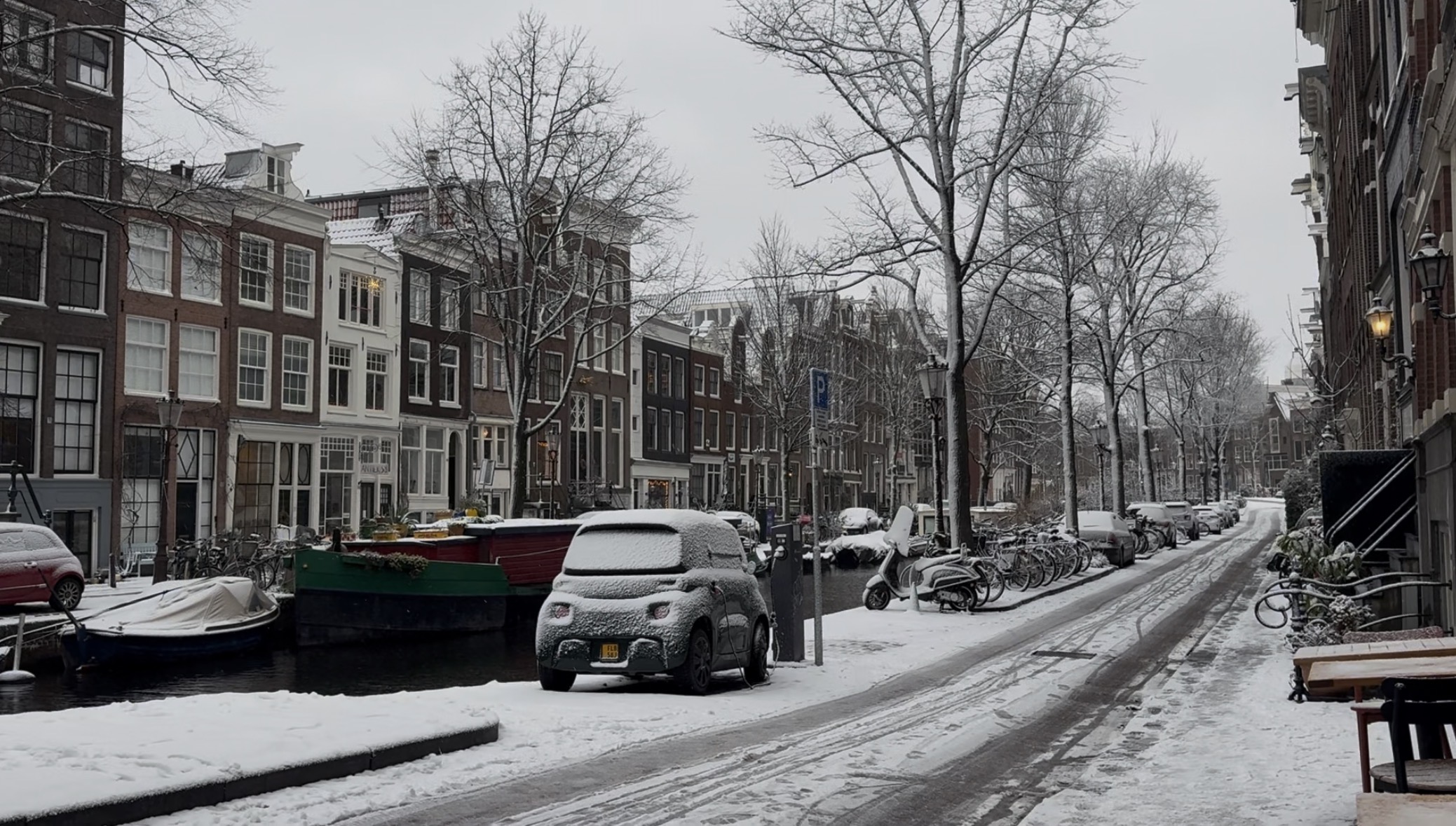
Snow-covered street in Amsterdam featuring traditional Dutch architecture, parked cars, bicycles, and a canal lined with boats.
Snowy Amsterdam this week (photo: Sharon O’Dea)

Amsterdam was briefly hit by snow this week, which meant Schiphol ground to a halt and the city centre instantly transformed into an ice rink — if ice rinks also had surprise downhill sections and the occasional canal waiting to claim you. Crossing bridges became a daily exercise in risk assessment, dignity management, and knowing when not to rush.

It turns out this was a fairly accurate metaphor for the rest of the week: a lot of careful progress on unstable ground, a strong urge to keep control, and the uncomfortable realisation that at some point you have to stop edging forward and just… let go.

This week at work

A week largely spent hovering around the finish line, circling it like someone who suspects there might be a trap if they actually cross.

On the book, we made what are, on paper, the final edits to the last three chapters before re-submitting. Final in the technical sense, if not the psychological one. At the same time, we’ve been working with a designer to redraw all the diagrams, replacing our pedestrian PowerPoint efforts with something professional and consistent. There’s something faintly unsettling about seeing ideas you’ve kicked about for years rendered cleanly and decisively, in a way that suggests permanence. These are no longer drafts. They are artefacts.

We also met with our editor to talk about what happens next, which turns out to be the moment where the existential weight really lands. I could keep editing forever. There’s always a word that could be better, a paragraph that could be tightened, a clarifying sentence that could be added to pre-empt a reviewer who exists solely in my imagination. Letting go doesn’t feel like confidence so much as surrender — an acceptance that at some point clarity has to trump completeness, if only for my sanity.

There’s also the uncomfortable realisation that once it’s out there, it’s no longer for us. People will read it in contexts we can’t control, bring their own histories and irritations to it, misunderstand parts, skim sections we laboured over, and quote back lines we barely remember writing. This is, I’m told, normal. It does not make it easier.

Finishing a book isn’t a clean, triumphant moment. It’s a long, slow uncoupling from something you’ve been holding very close. You don’t stop because it’s perfect. You stop because at some point you have to say: this is as good as I can make it, for now. Then you step away and hope it does something useful in the world.

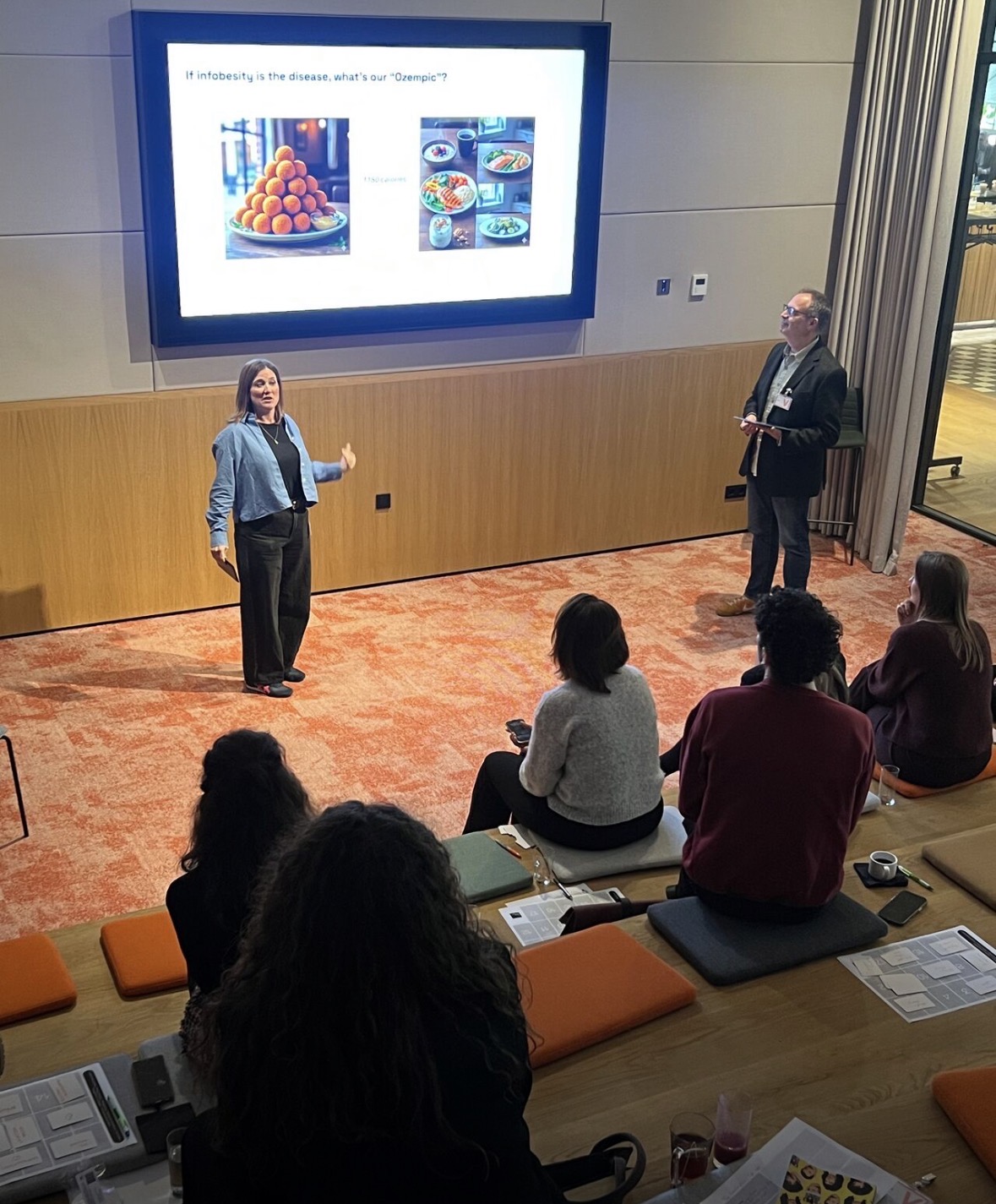
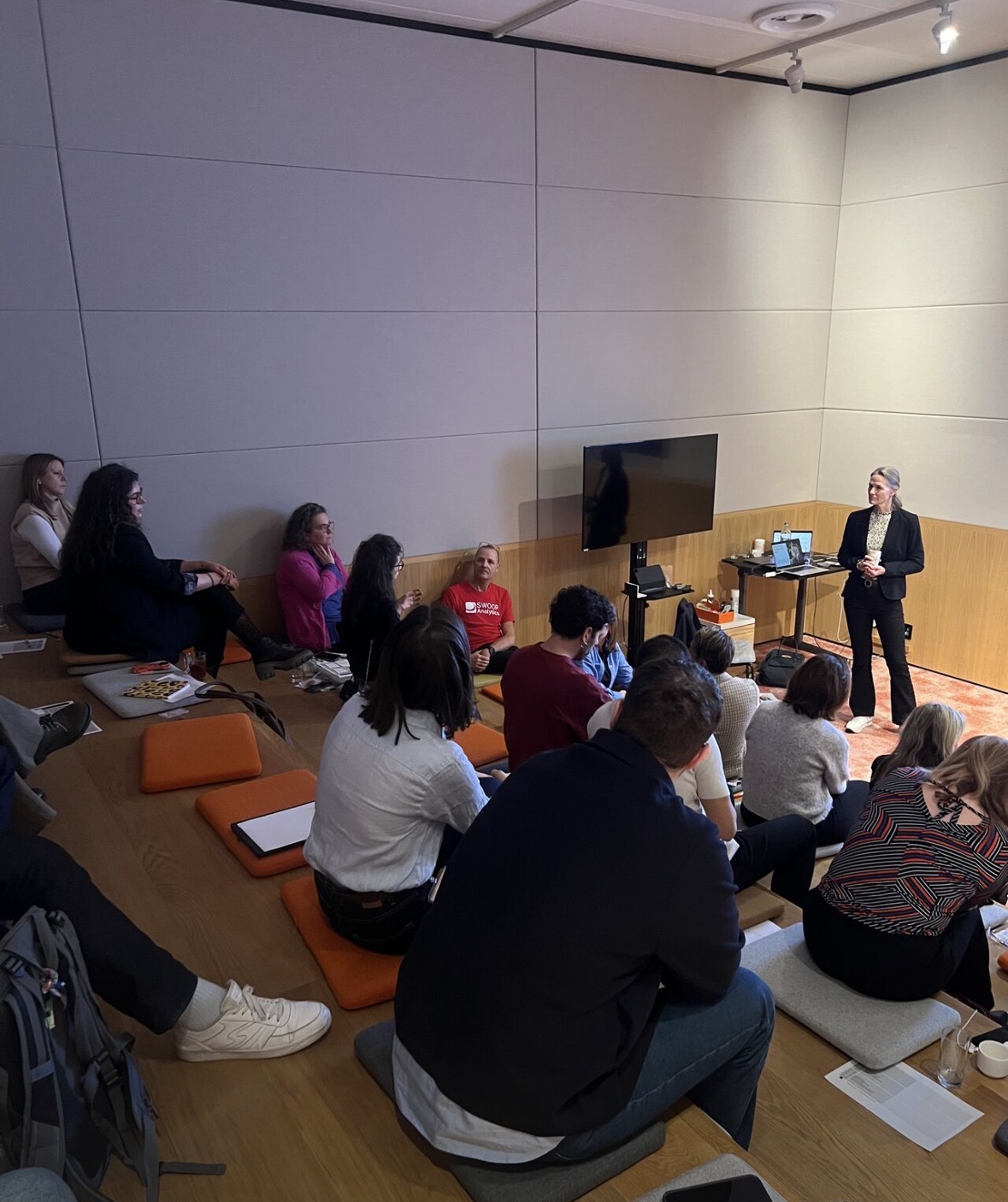
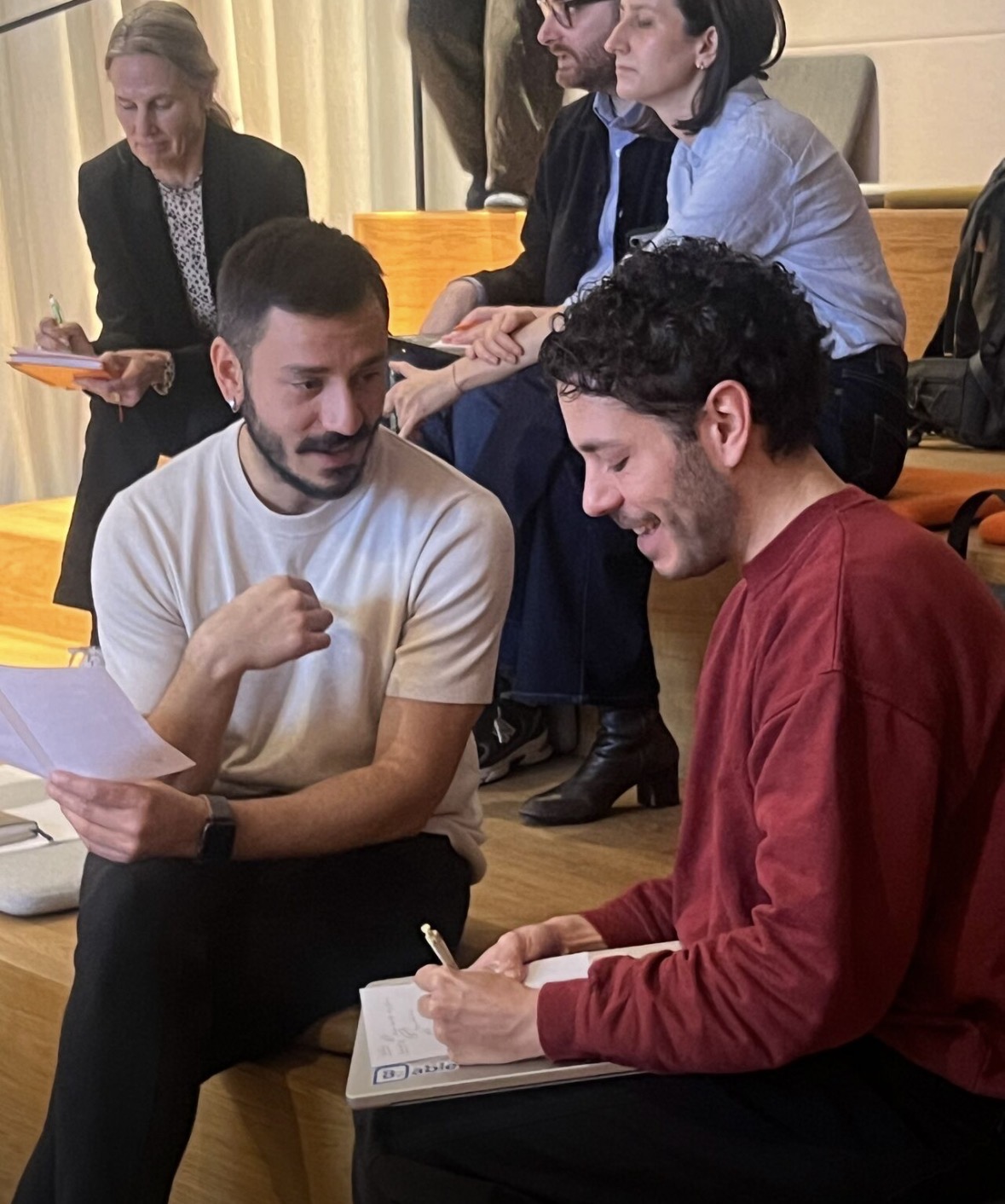
Alongside all that emotional restraint, Jon and I are running an in-person workshop with senior internal communicators next week, so we spent a couple of days working through the mechanics and flow. I love this part: pitching to the right level of seniority, designing something people can genuinely take back to their teams, and making the most of the energy and dynamics of a room rather than pretending workshops are just slide decks with chairs. We also started playing around with a new model which we’re going to preview.

We hope people like it. We hope we still like it once it’s been stress-tested by a room full of smart, sceptical people.

We’ve also had a few sniffs of new business, which meant a couple of quick-turnaround proposals. I always underestimate how much work these take, despite all available evidence. We don’t do rinse-and-repeat proposals, which is the right thing intellectually and the worst possible decision from a time-management perspective. Each one eats at least half a day: thinking properly, costing honestly, and tailoring it to the actual problem rather than the imaginary one the client thinks they have.

This work then disappears into the void, where it may return as a polite rejection, a prolonged silence, or — in the best-case scenario — a win that arrives just late enough for me to have emotionally written it off. I am currently choosing to believe this week’s efforts will not go down in history as some of my finest examples of beautifully formatted disappointment.

Also this week

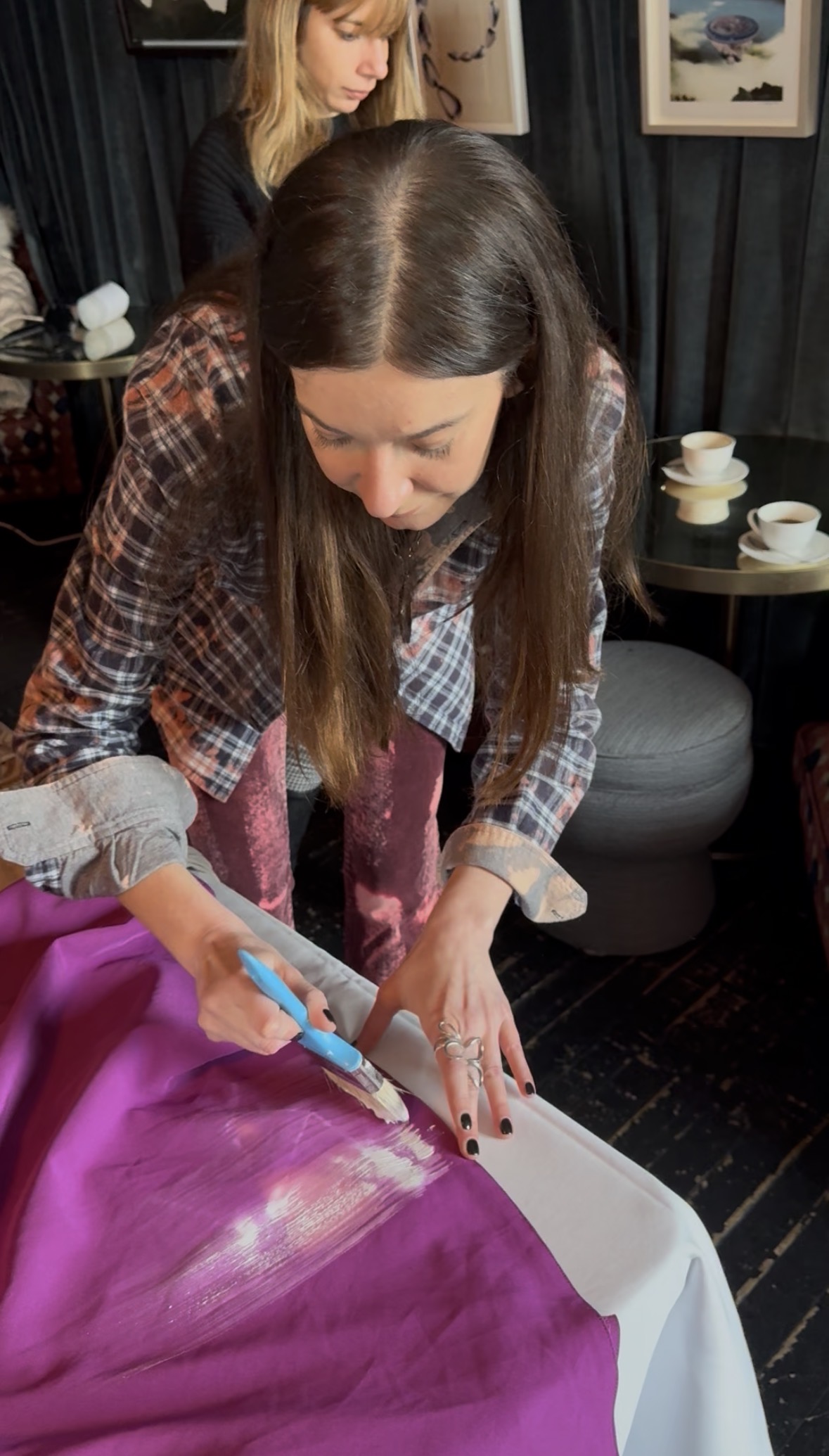
Several years ago I bought a gorgeous dress for a friend’s wedding. Somehow, while it sat at the bottom of the laundry basket waiting to be hand-washed (for months), it acquired a bleached-out patch — a stain impossible to hide or remove. What followed was a familiar pattern: two further years of sincere promises to take it to a repair café or a tailor, immediately broken by doing absolutely nothing.

Then I spotted an upcycling workshop and signed up. Partly because I’m trying to do more things this year that don’t involve staring at my phone. Partly because I’m committing to buying less fast fashion and dealing more honestly with the clothes I already own.

And so I spent two hours painting my dress.

It was genuinely fun. Meditative, even. I’m not entirely sure the end result is something I will ever wear in public, but it does now exist as a different thing — rescued from the purgatory of I’ll deal with that later.

I remain available for events that feel emotionally robust enough to cope with a hand-painted frock.

Consuming

I am now fully, unashamedly hooked on The Traitors, to the point that I am cancelling other plans when it’s on, as if it were a non-negotiable diplomatic engagement rather than a reality TV show involving cloaks, candlelight, and breakfast-based psychological warfare. This week’s Rachel/Fiona clash alone was worth rearranging my life for. Emerging victorious, Rachel not only survived but materially raised the reputation of Heads of Comms everywhere: calm under pressure, forensic with language, and quietly letting the other person talk themselves into a hole. A masterclass in stakeholder management, reputational defence, and the art of saying very little while meaning everything. It remains a perfect study in group dynamics, overconfidence, and the human tendency to mistake confidence for competence — all set in a Scottish castle and edited like a gothic thriller. I remain obsessed and will not be taking questions at this time.

I also caught Nuremberg at the cinema, which is exactly my sort of thing: a psychological thriller wrapped in historical drama. Russell Crowe is surprisingly compelling as Göring — likeable in a way that is deeply unsettling and psychologically awkward to experience as a viewer. You’re constantly aware that this is wrong, that you’re being pulled into the charm, intelligence and humanity of someone who absolutely should not be humanised — and that tension is arguably the film’s most interesting achievement. Richard E Grant is reliably excellent. A slightly hammy performance from Rami Malek tips parts of it into unintended absurdity, which is a shame, because the Crowe-led psychological unease deserved a steadier hand. Still, I was entertained, albeit in a slightly morally conflicted way.

On Saturday afternoon, my pal Lauren and I went to see It’s Never Over, Jeff Buckley, an achingly beautiful retrospective of a beautiful man. The film is patient and unsensational, refusing the usual shortcuts of myth and tragedy. Instead, it assembles Buckley slowly — through archive footage, answering machine messages, and the intensity of people who clearly loved him — allowing his sensitivity and seriousness about the work to surface in their own sweet time. It’s exactly as he deserves.

It dismantled a lot of what I thought I knew about him Yes, he was Tim Buckley’s son, but Buckley Senior was an absent dad. And no, Jeff Buckley did not die as part of the cursed “27 Club”. What’s left is not a doomed-prodigy narrative, but a portrait of someone still figuring things out. The film sent me straight back into a Grace rabbit hole — an album I played on repeat in my teenage bedroom — and listening now, older and theoretically wiser, I’m struck by how much we smooth artists into symbols once they’re gone, and how much more painful it is to meet them again as people.

That same recalibration landed again this week, ten years exactly since David Bowie died. He released Blackstar on his birthday and then, days later, performed what may be the most David Bowie manoeuvre imaginable: he died and retroactively changed the album’s entire meaning. Overnight, something wilfully strange and opaque snapped into focus as a controlled exit. Not just an album, but a final piece of stagecraft.

I’d forgotten how destabilising that shift felt — how every lyric suddenly became a clue, every image a message delivered late. On the walk from the nail bar to work, sporting these frankly epic Bowie-inspired nails, I put Lazarus on for the first time in years. Which is how I ended up crying in the street. Not because it’s clever or iconic, but because meaning has a habit of arriving late, and without checking whether you’re ready for it.

A close-up of neatly manicured hands displaying a variety of nail designs, including a shiny silver, black with a star, and a white nail featuring a red and blue lightning bolt.
My David Bowie-tribute nails. Design by Magda at Lakwerk.

Coverage

Reworked published a piece this week, showcasing me as one of their Contributors of the Year, which is a very generous way of saying: she has a lot of thoughts and keeps writing them down.

I’ve really valued having Reworked as a home for my writing. The discipline of a regular outlet forces me to finish thoughts rather than letting them linger as half-formed LinkedIn posts that should, frankly, have been paragraphs — or occasionally not posted at all. Writing is partly my job, but mostly it’s how I make sense of an industry that keeps promising salvation via tools, platforms, and dashboards, while quietly making everyone more tired.

I also work largely on my own, so publishing is a useful alternative to standing in my kitchen muttering about governance, notifications, and why “engagement” continues to do an implausible amount of conceptual heavy lifting. I’m grateful to Reworked for giving those thoughts a place to land — and to everyone who reads, disagrees, or sends a message that begins with “this made me feel less mad”, which remains one of the highest forms of professional praise.

An excuse — not that one was needed — to keep writing in 2026. See you next week.

This week in photos

Weeknote 2025/36

Panoramic view of a lush green valley - the Les roches Tuilière et Sanadoire - surrounded by rocky cliffs under a partly cloudy sky.
Les roches Tuilière et Sanadoire. Photo by me.

This week I travelled to the Auvergne to scatter my grandmother’s ashes, close to the village where she was born more than a century ago.

In her last years she painted from memory a scene of her childhood: a forest road, two great rocks, then suddenly a clearing — the valley opening up below. “It was a wonderful sight I would always remember,” she wrote.

On Friday I stood in that same spot, saw the same view she carried with her for a lifetime, and laid her to rest in the ground she loved. A return, of sorts, to her beginnings.

Nan’s life stretched far beyond that valley. She lived through occupation in Paris, celebrated its liberation in a shower of tricolores, trained as one of the few women engineers of her generation, raised a family in a new country, and never stopped campaigning for the values she believed in: liberty, equality, fraternity.

But she was also the woman who knitted us jumpers, made extraordinary birthday cakes, and whose cooking remains unmatched. She juggled logic and creativity — designing a trigonometry-inspired cushion one day, writing poetry the next.

Being back in the volcanic hills where she was born, I kept coming back to this thought: our origins matter. The places we start from, the people who shape us, the values we inherit. Even if we take a different path, we carry those beginnings with us.

That theme ran through the rest of my week too. A conversation with Cathryn, who was a formative influence on me as a teenager. And then my gym instructor, during a Sanctum class — which, if you’ve not had the dubious pleasure, is essentially a wellness cult disguised as a workout. Picture a candlelit room full of beautiful people in Lululemon, bouncing in silent-disco headphones to pounding techno, somewhere between burpees and interpretive dance. It’s like Berghain meets a yoga retreat, only designed to be an Instagrammable Experience.

In the middle of this fever dream, the instructor delivered his pep talk about looking back at who you were five years ago. Normally I’d have rolled my eyes so hard I’d need medical attention. But, landing as it did at peak pre-menstrual sensitivity, I found myself ugly-crying into my wireless headphones while influencers around me humped the ether like it was a path to enlightenment. A spiritual awakening via techno squats.

And I couldn’t help but wonder what my Nan (practical, principled, sharp as a tack) would have made of it all. Probably a raised eyebrow, then a wry laugh at the strange, circuitous ways we find meaning.

So that’s this week’s reflection: on beginnings, origins, returns — and remembering to be proud of the journey as much as the destination.

This week at work

After a quiet summer, the inbox has suddenly remembered we exist. A flurry of new business signals came through, so this week was largely about shaping proposals. One’s already had a tentative yes — the best kind of feedback — and I’m looking forward to getting started. The others are out in the world now, hopefully working their magic.

On the book front, Jonathan and I made good progress on the next two chapters: one on the people and skills needed for digital comms at work, the other on content. We’re finding our co-writing rhythm — passing drafts back and forth, layering in ideas, editing each other’s words until we’re not quite sure who wrote what. It’s satisfying, collaborative, and occasionally a little disorienting.

But even as the chapters take shape, I can hear the sound of deadlines approaching fast, like distant thunder that’s getting louder every day.

Also this week

I climbed up the Dek van de Stad, a temporary platform built on top of the Nieuwe Kerk. The views were spectacular — a chance to look down on Dam Square and Amsterdam’s rooftops from a height you don’t normally get. Equal parts breathtaking and mildly vertigo-inducing.


And then straight back down to earth (and into chaos) at Paradiso, where I saw Kneecap. Security was tight, the crowd was raucous, and it’s still mad to me that less than two years ago I saw them in what was basically the upstairs of a pub. Now they’ve got a sold-out Paradiso bouncing in unison, two nights in a row. The rise has been meteoric, the energy relentless — right through to the crowd singalong to Come Out Ye Black And Tans after they went off stage.

Consuming

👩🏻‍💻 Internetting

News this week that the UK Department for Business and Trade’s three-month trial of Microsoft Copilot found… no real productivity boost. Emails and meeting summaries sped up a bit, but anything more complex actually slowed people down or spat out lower-quality work. So much for the hype cycle.

Does that reflect a lack of proper strategy and training, or just cold, hard reality? Probably both. In my experience, some people and roles naturally click with AI tools while others flounder when left to get on with it. Curiosity, persistence, confidence — and the time to experiment — all matter. Without those, adoption lags.

There’s clearly a lot we need to do to help people level up with AI at work. But I can’t say I was surprised. My own encounters with Copilot have been… underwhelming. Let’s just say it’s not yet living up to the billing of “revolutionary productivity tool” — more “expensive intern who occasionally remembers to attach the file.”

📺 Watching

Marking 50 years since its release, we re-watched Jaws. Still the ultimate advert for staying on dry land. Half a century on, the special effects remain gloriously ropey, the mayor still deserves a prison sentence for crimes against public safety, and John Williams’ two-note score is still the best thing ever written about imminent death by fish.

It’s amazing how Jaws manages to be both a tense thriller and a camp comedy, depending entirely on how rubbery the shark looks in a given scene. And yet it still works: a masterclass in making you terrified of something that looks like it escaped from a theme park gift shop. Just the thing I need before a holiday that involves boats.

📚 Reading

Continued with The Albanians: A Modern History, but have only got as far as the Ottoman Empire. Hoping to nudge my knowledge closer to the 20th century by the time I get there.

🎧 Listening

Driving around with my brother this week introduced me to Cheekface, an LA indie trio who specialise in anxious brain dumps set to catchy riffs. Imagine Lou Reed or Jonathan Richman talk-singing about late capitalism, social awkwardness and existential dread.

They’re smart, deadpan and gloriously uncool, with songs that turn modern malaise into shout-along anthems. Start with I Only Say I’m Sorry When I’m Wrong Now or Listen to Your Heart. If you like those, welcome to the cult of Cheekface.

Coverage

My Red Hot Opinion Department was working overtime this week.

For Strategic, I looked at the noticeable chill in corporate culture — how empathy has slipped off the agenda, and what that means for leaders trying to engage their people when the mood music is getting distinctly frostier.

And over at Unleash, I turned a jaw-droppingly bad comms experience into something more useful: practical advice on governance, sequencing, and the role internal comms can play in making difficult moments a little less painful.

Connections

Earlier in the week I had a long Teams chat with Cathryn Atkinson, who led the youth journalism project I was involved in as a teenager (which I mentioned back in Weeknote 33 — and which prompted this catch-up). The last time I saw her she had a baby strapped to her in a harness; that baby is now in his late 20s and about to get married. Safe to say we had plenty to catch up on.

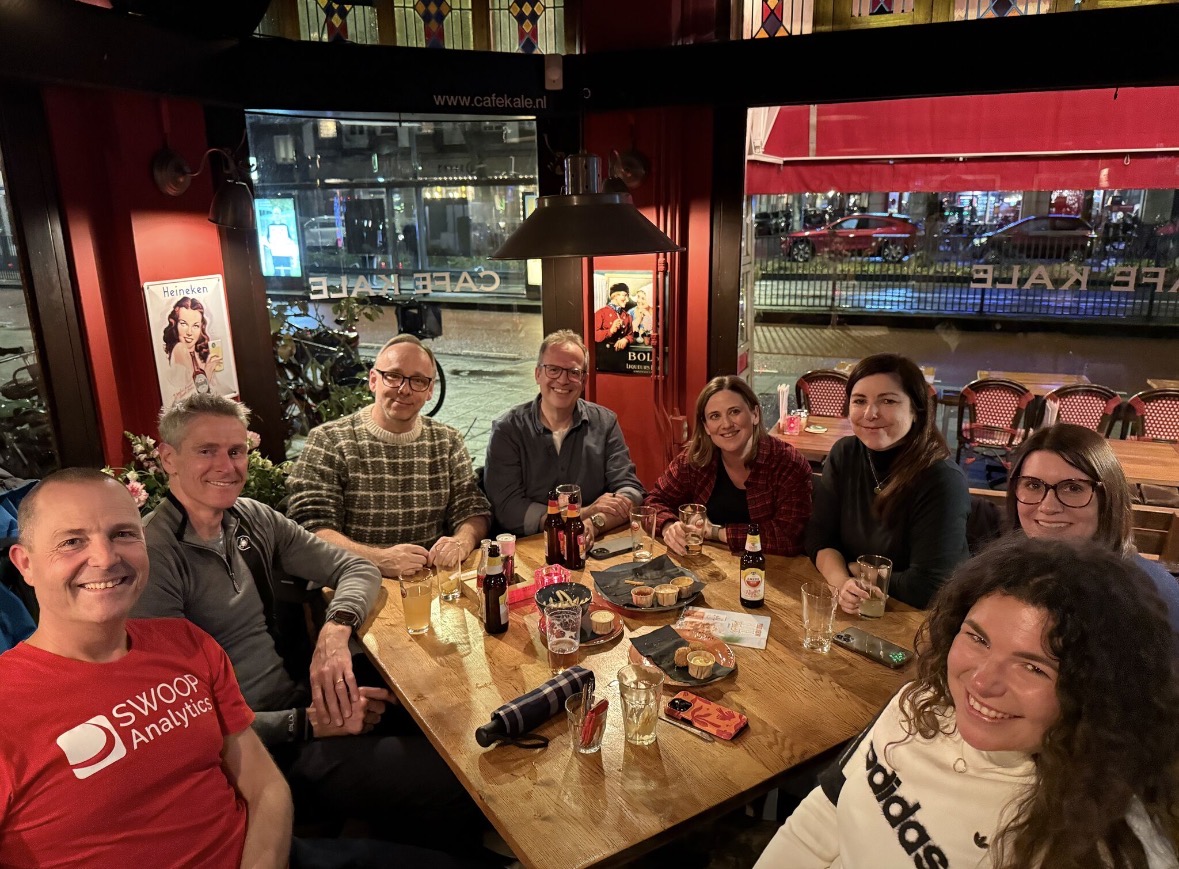
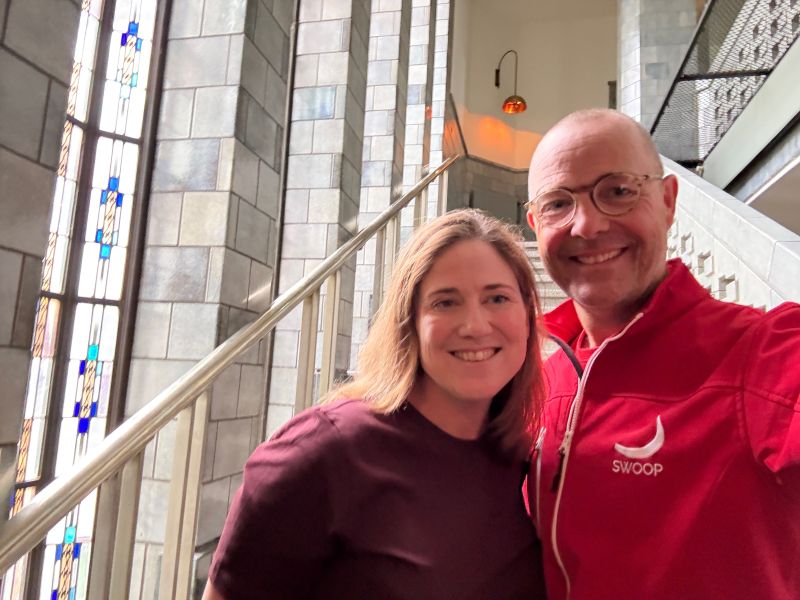
I also met with Cai Kjaer, CEO of Swoop Analytics, who was in Amsterdam for meetings. We talked about the looming launch of their Information Overload Calculator, the Viva Engage Benchmarking Report, and the uncomfortable truth that while tech platforms — and now AI — make it easier than ever to publish, people’s bandwidth hasn’t magically expanded to cope. My line on this: internal comms needs to focus on orchestrating flows and making sure messages land safely. Hyper-personalisation will be key, but that comes with its own challenges.

A smiling woman and man posing for a selfie on a staircase with stained glass windows in the background.

Travel

I’m off on an adventure tomorrow — Albania, Kosovo and North Macedonia, all firsts for me and all a little off the usual tourist trail.

Next weekend I’ll be hiking in the gloriously named Accursed Mountains (because why not tempt fate on holiday?), and there’ll be a few boats involved too. Which, having just re-watched Jaws, feels like impeccable planning. So there won’t be a Weeknote 37 — unless I’m writing it from the belly of a shark.

This week in photos

Weeknote 2025/35

A tranquil view of a canal in Amsterdam, lined with trees and colorful buildings, reflecting in the water under a clear blue sky.
A last blast of summer in the city. Photo by me.

Six years ago tomorrow I packed up my London life into two suitcases and moved to Amsterdam.

In previous years I’ve marked the date by listing lessons: how to get lost (a lot), how to start again, how to build a life from scratch armed with nothing but Google Maps, a bicycle with no brakes, and one magic Dutch ID number that unlocks everything from taxes to library books.

But this year feels different. This year, I feel settled.

I’ve found my gang. I’ve got my groove.

It took a while to get here. The pandemic didn’t help. Two years suspended, the streets quiet, friendships impossible to spark. Loneliness isn’t dramatic; it just seeps in, until you look up and realise the only stranger you’ve spoken to in weeks is the cashier at Albert Heijn. Add the Dutch weather and the joy of navigating Belastingdienst paperwork, and it sometimes felt like a long audition for a very niche endurance sport.

And then, gradually, things shifted. The map filled in with people and places. Now there’s the crew I go to gigs with, shouting lyrics into the night. Local WhatsApp groups that point me to the freshest dahlias or the new season herring hitting the kraam. Gym buddies who somehow make turning up at 8am almost fun. The barista who knows my order before I open my mouth. Dining companions who linger long after the plates are cleared, conversations spiralling into politics and philosophy. A neighbour with my spare keys and another who’ll lend me a sander. Friends who water the plants when I’m away, sending sheepish updates about the ones that didn’t make it. The impromptu neighbourhood borrel that starts with “just one drink” and ends, inevitably, with bikes wobbled home in the rain. The late-night ping of a meme, answered instantly with another. And a friend who says, simply, “Pop by on your way home — I’ll put the kettle on.”

Small things, maybe. But they’re the everyday glue of belonging; the tiny threads that weave a city around you until it feels like home. Things I never really had in London, but here I’ve somehow found.

It turns out that moving countries isn’t really about geography. It’s about patience and persistence, and the slow magic of weaving yourself into the fabric of a place. Until one day you look up and realise the unfamiliar city has become familiar. The strange has become ordinary. And you somehow quietly belong.

I came here with two suitcases. What I’ve gained is a home, and a community.

This week at work

A productive stretch on the book front: we submitted three new chapters, and resubmitted another three we’d reworked to make the flow more logical. Feels good to see the pile growing and the structure sharpening up.

Tiny green shoots are popping up online too — the book quietly sprouting on pre-order pages for the exceptionally keen. A strange but thrilling sight: proof it’s starting to become real.

At work, the same theme of belonging surfaced in conversations with a client about how they use Viva to build connection, and what to do when those bonds fray. It struck me that the process is the same: digital spaces can be where colleagues find their gang and their rhythm. Because belonging at work isn’t really about tools or systems. It’s about that moment when you realise you’re part of something bigger.

Otherwise it’s been a deliberately quiet spell before the next project kicks off. We’ve used the breathing space to wrangle business admin and finally give our website some overdue attention.

Over at Statement, it’s been live for a week now. We’ve got a steadily growing number of people signing up, using it, and (crucially) giving us feedback. The team have been busy fixing things behind the scenes, while I’ve been working on comms to answer questions about how it all works. Early days, but exciting ones.

Also this week

The carillon of the Westerkerk, just across from my house, played a concert of Amsterdam-themed songs on Friday. I’d like to think it was for me personally, but I suppose it’s possible it’s in honour of the city’s 750th birthday. Either way, I was treated to a very Dutch soundtrack, including a rousing rendition of Tulips From Amsterdam. Hope you enjoy it as much as I did.

Tulips From Amsterdam played on the carillon of the Westertoren, filmed from my front window.

Consuming

👩🏻‍💻 Internetting

This week I was struck by Emma Parnell’s piece on living abroad and returning home.  She writes beautifully about the dislocation of overseas life — how it’s not always the big things that unsettle you, but the small absences, like the sound of owls in the morning. And about how moving back, supposedly the “easy” part, can feel just as alien: friendships moved on, milestones missed, the nagging sense you’ve fallen behind.

What I loved most was the ending. Ten years on, she’s not only rooted again but surrounded by people she loves — proof that the feeling of “home” is less about geography and more about connection.

It resonates with my own experience of moving abroad (and back, and abroad again): that moving countries isn’t only about the logistics of visas and flat-hunting, but about patience, persistence, and the slow work of building community until one day you realise you belong. You’re home.

📺 Watching

I finally made it to Amsterdam’s oldest cinema, The Movies, and watched The Roses. Essentially a British remix of the 80s American classic The War of the Roses, but with upgraded swearing. Benedict Cumberbatch and Olivia Colman play a couple whose marriage unravels in increasingly petty and chaotic ways. I love both actors, the narrative was charming, and Colman’s wardrobe was iconic.

It’s not winning any prizes, but as a stylish way to pass a couple of hours it does the job. Come for Colman’s shirts, stay for the creative insults. A solid 6/10.

📚 Reading

I’ve just started The Albanians: A Modern History ahead of my holiday there in a couple of weeks. Albania’s a country I know embarrassingly little about, so it’s time to learn my Enver Hoxhas from my Mother Teresas. Looking forward to seeing how what I read on the page stacks up against what I find on the ground.

🎧 Listening

Been on a CMAT tip this week. Big choruses, sharp lyrics, country-pop with a wink. The kind of soundtrack that makes late-summer evenings feel like they’ve got a bit of eyeliner and a sense of humour.

Travel

Off to the Auvergne later this week. Volcanoes, valleys, villages, and the chance to dust off my GCSE-level French.

This week in photos

Weeknote 2025/34

A busy scene on the water during a festival, with various boats and people enjoying the event under a partly cloudy sky.
Sail Amsterdam was chaotic and wonderful. Photo by me.

This was one of those weeks that makes me sound far more impressive than I actually am: shiny award, marathon of book research, and — for reasons that presumably made sense once — launching a social network. From the outside: overachiever. From the inside: mostly caffeine, bad posture, and a browser with 147 tabs open.

Aristotle said excellence is a habit*. Personally, I’ll settle for a week that pinballed between dusty footnotes and the App Store. Hardly the Nicomachean Ethics, but it kept me out of trouble.

* actually he didn’t, it’s misattributed to him, but let’s roll with it.

This week at work

Some weeks crawl by with all the excitement of a damp Weetabix. Then there are weeks like this one: I won a big shiny award and launched a social network — while allegedly “writing a book” in my spare time. IKR? Truly, I contain multitudes (and also have no free evenings).

First up: the intranet we delivered for German energy company SEFE bagged a Step Two Intranet & Digital Workplace Award. This matters because, unlike so many industry awards these aren’t pay-to-win baubles dished out to whoever coughed up for a table at the gala dinner. They actually recognise… excellence. Imagine!

And this project was exactly that. We turned around an entire intranet in 100 days: config, IA, content, training, the lot. In an age where everyone is trying to duct-tape ChatGPT onto their mess and call it strategy, we did the radical thing: used humans. Actual, qualified humans, working with subject matter experts to create content that was both new and correct. Wild, I know. We binned the outdated sludge, rebuilt the lot (in two languages), and put governance in place so it doesn’t immediately rot again. Is it sexy? No. Does it work? Yes. And frankly, that’s what counts.

Bonus humblebrag: between Jon and me, that’s now three Step Two Awards. At this point we may need a bigger shelf.

Meanwhile, I spent much of the week haunting London’s university libraries like some over-caffeinated academic poltergeist. Goldsmiths, my alma mater, has somehow become a library with almost no books. Which feels a bit like opening a pub that’s mainly vibes.

One afternoon I even wandered back to my old haunt: the 5th floor of Senate House, same desk, same view, same faint eau-de-dust. In a world of absolute batshit chaos, it’s oddly reassuring that one corner has politely refused to move on since 1976.

And because nothing says “healthy work-life balance” like juggling flaming chainsaws, I also launched a whole new social network. The big idea: Instagram and TikTok are increasingly full of shit, so how do you prove something actually happened? Simple. Your bank statement.

Enter Statement: Strava, but for your wallet. You securely connect your bank account, pick a transaction, and share it. It’s a social network powered by proof.

Yes, it’s early days. Yes, it’s missing about nine hundred features we’d like to add. But it looks good, it works, and it’s live in the US app stores. We’ve got a small band of early adopters making Statements and sending us feedback. If you’ve got a US iTunes account, go on, download it. Because nothing says fun like letting your friends know you really did make that 3am drunk eBay purchase.

Also this week

I landed back in Amsterdam just in time for the last couple of days of Sail — the floating festival where hundreds of ships gather on the IJ and the entire city decides to throw a party on the water. It’s meant to happen every five years, but thanks to You-Know-What the last one was cancelled, so this was my first. And honestly, it was magical. We hopped on a boat to get up close, which turned out to be like playing Mario Kart with actual consequences: hundreds of little vessels jostling for space, glasses clinking in the sun, the whole city afloat and slightly tipsy.

As if that wasn’t enough, last night was the Prinsengracht Concert — the annual tradition where a stage is built on the canal by my house and everyone piles into boats to watch. It closes with Aan De Amsterdamse Grachten, sung by hundreds of people swaying and belting it out across the water.

Between the tall ships and the canal choirs, this weekend was Amsterdam at peak Amsterdam: chaotic, beautiful, and just a little bit smug about how lovely it all is.

Consuming

👩🏻‍💻 Internetting

Stumbled across e-mail.wtf this week — a quiz on allowable formats for email addresses. Turns out the answer to “is this valid?” is almost always “yes, unfortunately.” You can have an address that starts with an exclamation mark, or one that’s just a single letter. Fun little distraction, and also a reminder that the internet is basically held together with duct tape and regret.

📺 Watching

Not a thing.

📚 Reading

This week I mainlined close to 100 journal articles. Anything even vaguely relevant from the International Journal of Organisational Analysis, Public Relations Review, Review of Management Literature, and everything in between. Footnotes, citations, abstruse diagrams: give me the lot. And you know what? I loved it. Apparently “spending a week buried in academic journals and calling it fun” is my kink. Maybe a PhD isn’t such a terrible idea after all.

🎧 Listening

News just dropped that Belle and Sebastian are touring next year for their 30th anniversary. And yes, I immediately bagged tickets for both nights. Obviously. Cue me tumbling headfirst into one of my periodic B&S rabbit holes, where I remember all over again that no one does wistful indie quite like them. Some people binge Netflix; I binge flutes and wryly observed teenage melancholy.

And the timing was spot on: I’d just spent the week buried in my old university libraries, right where I used to listen to them on my OG iPod while reading books on media theory. Full circle moment, soundtrack included.

Connections

A week in London meant the rare treat of seeing a bunch of people I’ve not caught up with in yonks. Highlights included coffee with my old colleague Nic Wilson, scheming with my regular co-conspirator and accessibility wizard Lisa Riemers, swapping stories with comms legends Janet Hitchin and Anne-Marie Blake, and a long-overdue reunion with governance guru Steve Way — who I somehow hadn’t seen in a full decade. Proof, if nothing else, that time really does bend in strange ways.

Coverage

My recent post on whether corporate culture is shifting — and what comms needs to do about it — was picked up by Jenni Field and Chuck Gose on their Frequency podcast. Always nice when your musings escape LinkedIn and make it into other people’s conversations.

Travel

Nothing for two whole weeks! I barely recognise myself. No airports, no 5am alarms, no half-packed suitcase glaring at me from the corner of the room. Just the novelty of staying put — which, frankly, feels almost decadent.

But let’s be honest: it’s the calm before the storm. September has me ricocheting across five countries in two weeks, all while trying to crank out the next three chapters of the book. So I’ll enjoy the rare luxury of my own bed and my own coffee machine while I can… before life turns back into one long game of suitcase Tetris.

Here’s hoping for a quieter week ahead. Though given recent form, I’ll probably accidentally launch a space programme by Thursday.

This week in photos