Intranets need to be a bit more fabulous

Last week I had the pleasure of visiting the Beauty Project, a celebration of all things beautiful at London’s Selfridges department store. There I listened to beauty columnist Sali Hughes talk to a panel of women about their experiences of – and different attitudes to – beauty.

While many deride the beauty industry as frivolous and superficial, for others make-up instills chameleon-like superpowers, giving them the confidence to go into any new context knowing they look the part.

As I returned to work the next day, it struck me what a depressingly under-appreciated quality beauty is in online experiences, and particularly in intranets. And how because we don’t apply make-up to our standard intranet faces, they suffer the fate of appearing unglamorous, dowdy and frequently unloved.

For a couple of years now I’ve been collecting intranet screenshots in a Pinterest board – over 230 so far. There are some great examples, but a lot of bad ones too.

It got me thinking: wouldn’t intranets be better if, like this weekend’s Eurovision winner Conchita Wurst, they were just a little bit more fabulous?

Ugly sister

Intranets have historically been the poor cousin of the organisation’s website. They’re utilitarian things. Intranets often began life as a little side project, put together by someone in IT, built using clunky old tools. They served a purpose, but they didn’t do it very elegantly.  That purpose was usually communication, resulting in dense, ugly pages of text.

If you were really lucky, you’d get some icons. But these early intranets were no fun – they were serious stuff, and they had the rugged bad looks to show for it. These early intranets were managed, painfully, using tools like FrontPage and LotusNotes.

Early intranets were no lookers

Creating and managing intranets became easier with the widespread adoption of content management systems. Unfortunately, this often meant Sharepoint. Sharepoint is packed with functionality, but left a lot to be desired when it came to visual design. At the same time, few organisations gave much thought to the need for strong graphic design on an intranet. After all, it’s not like you’ll look anywhere else, is it? (Remember, at this time many organisations still routinely blocked web access for staff).

Over time, intranets got a little better, with text communications giving way to other content. Early attempts were made to try and engage users with more than just text, with the use of banners.

As intranets evolved, they began to provide a route through to key services, like HR, IT or room booking.  Problem was, these services were often designed by HR or IT people who didn’t give a great deal of thought to user experience, still less to visual design.

Text-heavy and dull, but early attempts were made to use imagery

Now intranets aren’t on the web, but they are of the web. And as websites became clearer and more engaging, so too – eventually – did intranets. Slowly.

Intranets began to be aligned more closely with an organisation’s brand, using more imagery, bolder fonts, and embracing the use of white space rather than trying to pack every available pixel with more internal communications.

Cinderella moment

But no intranet manager can escape the march of progress. In the first decade of this century, Apple emerged from its doldrums to become one of the dominant forces in technology. And it did this through making products that didn’t just do more, but also looked better than their rivals.

Functional and beautiful became the order of the day. And people loved it. The web stopped being a nerd’s hobby and became a way of life for almost everyone.

In just a few short years, we had a revolution in our hands. Almost all of us now has more powerful technology in our pockets than we do on our desktops. The consumerisation of IT made us all more demanding – we wanted better functionality, faster pages, but we demanded better visual design too. The ugly web just wasn’t good enough anymore.

Intranets have responded to the changing demands of their users with intranets that offer utility as well as communication, in a form that approaches some of the cutting-edge cross-platform design we see on the wider web. This means offering communication and services that don’t just work, but also engage.

Intranets have begun to learn from the best of website design

Embracing the power of imagery

Once freed from the shackles of slow connection speeds, the web has quickly become more visual as brands began to recognise the power of imagery.

We process visuals 60,000 times faster than text, and because of that  images have become the currency of social media. They can instantly inform, intrigue, inspire, delight or capture the imagination of those that engage with them.

That’s because they affect us in two ways: cognitively, they expedite and increase our level of comprehension, recollection and recognition. But they also work emotionally, enhancing or affecting an emotional response.

And they do that in the blink of an eye. Following the lead of websites and social media, more intranets are making the most of visual assets to inform and engage, and tell their brand story.

Reaping the rewards 

And that’s because there are strong business drivers to do so. Organisations have long realised the impact an ugly office has on morale and productivity. Studies have shown that a well designed work environment improves productivity by anything up to 50%, increases job satisfaction by 24%.

Organisations invest time and money in making their offices look good, even if they’re not client-facing, because they know it makes business sense. But as the digital workplace becomes the place where we got to get work done, it follows that the same is true in our online environments too.

If the primary place that you do your work is online, then making that digital workplace one that people want to work in will have huge benefits in productivity and engagement.

As more of us work flexibly supported by a digital workplace, then the intranet becomes the primary way that we experience and understand our employer brand.

By connecting employees with the organisation’s brand and vision using both content and design, good-looking intranets create more engaged employees. Better looking intranets can have a big impact on their business outcomes.

The times, they are a-changin’

It’s encouraging, then to see intranets finally embracing the power of beauty. This year’s My Beautiful Intranet competition, the Digital Workplace Group’s annual intranet beauty parade,  is already seeing a steady stream of entries – and they’re a million miles away from the out-of-the-box ugliness that’s plagued the industry for two long.

Dense blocks of text, tiny images and 1990s styling has been replaced with big, blod and on-brand design on par with some of the best web sites around.

The competition is still open for entries – take a look, vote for your favourites or submit your own. I’m on the judging panel this year, and am looking forward to seeing more.

Is there more to life than being really, ridiculously good looking?

Of course a great intranet can’t just be about form over function. But by combining form and function, pairing great functionality with an interface that functions well and looks good, we create intranets that have a huge impact on engagement and productivity – and are really loved by our users.

Will QR codes help consumers get cheaper energy?

man scanning qr code

Energy Secretary Ed Davey yesterday announced that in future all energy bills will carry QR codes, which will allow consumers to quickly see where they can get a cheaper deal.

Announcing the move, Davey added that forcing providers to add codes to bills would give people “quick, straightforward way to compare the best deal for them with a simple swipe of their phone”.

And in doing so, he revealed he’s probably never used a QR code. If he did, he’d realise that it isn’t simply a case of swiping one’s phone at all; they’re actually not that simple to use, which is why they’ve failed to take off with the general public, and why this move is unlikely to help many people switch provider.

Here’s how I can look up a QR code on my iPhone:

  • Put in pin code on phone
  • Open up QR app (which, like most people I don’t have on my phone, but let’s assume I did)
  • Scan code, usually more than once
  • Redirected to browser
  • Browser takes me to page

Which is at least two steps longer than just opening up a browser and going to a website using a clean URL. In that time, the user’s attention is lost – moved on to checking Facebook, or texting their mum.

QR codes have a reputation problem. They’ve been around for 18 years, and for about seven as the supposed saviour of conversion marketing, as a mechanism for getting people to click through from physical things to URLs. Problem is, the overwhelming majority of implementations have been woeful. So where people have used one to access content, they’ve been disappointed, and so been put off doing so again. As they experience more and more bad implementations, their patience for trying again has worn thin.

An even greater proportion of people haven’t even got that far. To less digitally-inclined smartphone users, the QR code itself, with its futuristic look, could be offputting – which makes them precisely the wrong mechanism to target a group who have already shown they’re not willing or able to use a comparison website or switch to paperless billing in order to get cheaper prices.

Emotion is important in communication, and an unfamiliar mass of black-and-white pixels can elicit fear and confusion rather than delight and engagement in people who already lack confidence online (and that’s before we even touch on the bigger issue of the 6.7m adults in the UK who have never been online at all – because IT literacy is so intimately bound up with social exclusion and reading literacy)

The most recent research I can find says that just 10.8% of UK smartphone owners have ever used a QR code. Other research shows that while smartphone ownership continues to grow, QR code usage has remained flat, suggesting use is limited to a small group of technophiles.

Technology, rather than user behaviour, is at the heart of the problem here. Neither Apple nor Android phones come with a native QR reader – meaning 94.5% of smartphone users need to download an app in order to use them, creating further barriers to usage. You can’t just wave a phone over it and go. The user has to recognise it’s a QR code, know what to do with it, be convinced to do so, and then take action.

I conducted an informal survey on Twitter, asking how many times people had scanned a QR code in the last month. Here are the results:

qr bar graph

Number of times people have used a QR code in past month.

Column 2 (once in the past month) includes one person who “only did it to prove how rubbish they are”. And bear in mind that regular Twitter users are already more likely to be a regular, confident smartphone user than someone who gets a paper gas bill.

As I’ve blogged about before, QR codes are all too often thought a simple solution for bridging the online-offline marketing divide, with littleconsideration given to the logistical and emotional barriers to successful usage. They do have some uses, and some commentators suggest their use in mobile payments may revive QR.

Efforts to signpost people toward information on better pricing are to be applauded. But I’d suggest QR codes on bills aren’t the answer here, because of the logistical, emotional and confidence barriers that prevent people using them, and because trust in QR codes has been eroded through years of marketing misuse.

tl;dr version: will QR codes help people get cheaper energy? No, I doubt it.

Photo credit: Tramell Hudson (Flickr, Creative Commons)

Edit: Terence Eden has responded to the challenge and come up with the argument for QR codes. His post is well worth reading.

#ukvotecamp: an update

attendees at the first ukvotecamp meetup

My last post, on the idea for an unconference aimed at increasing voter turnout, generated a lot of attention and conversation. It feels like there’s a groundswell of interest in, and concern about the impact of low voter turnout.

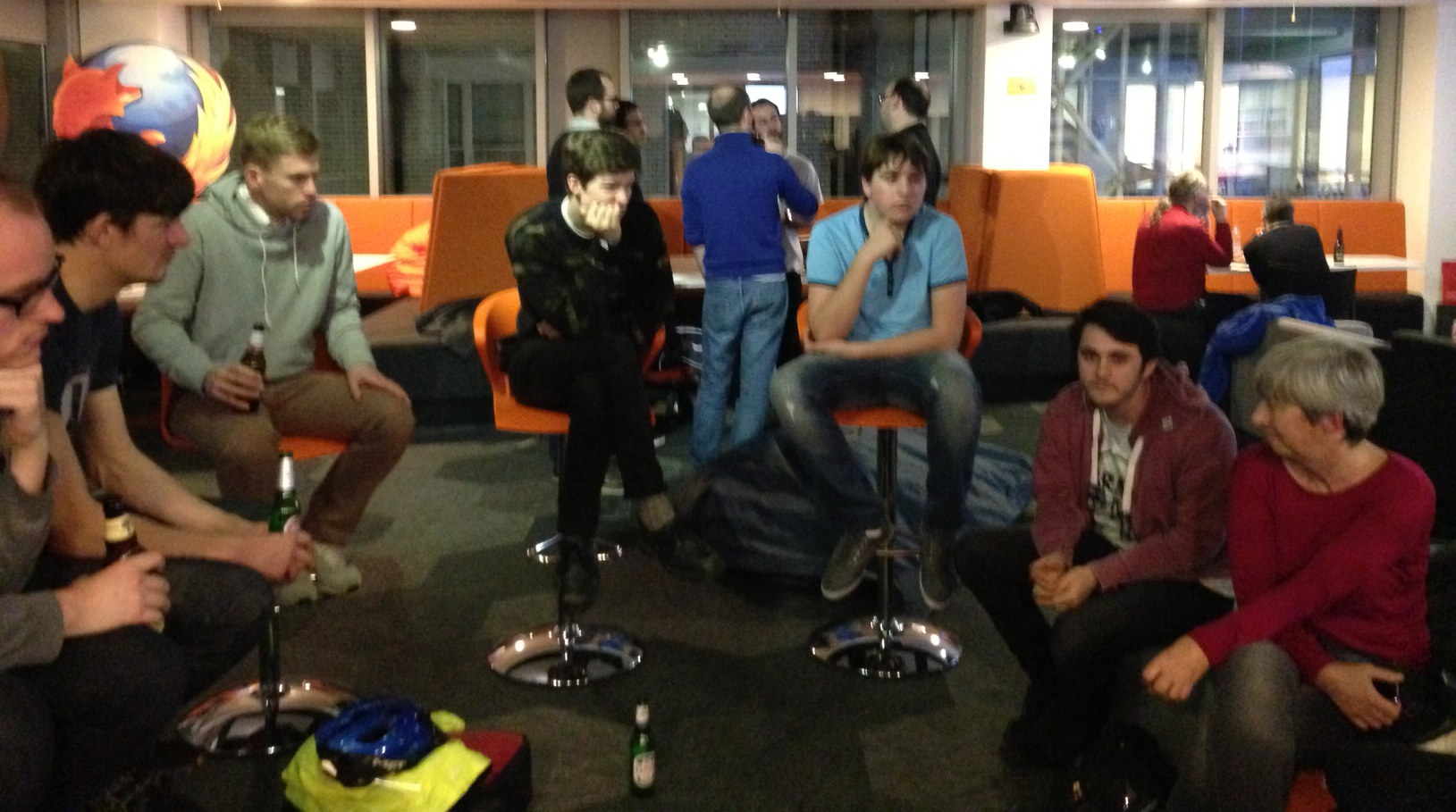
Around 15 people turned up to our first brainstorming/planning session (picture above); a mixture of digital democracy old hands and new faces. I was particularly pleased to see there were some actual young people joining the conversation (although it later turned out they were there by mistake, having turned up for MySociety’s regular hack night).

The conversation covered a lot of ground. Everyone felt low youth turnout was problematic, but had widely varying opinions on what the reasons for this were, and what can be done about them.

One theme was a belief that one’s vote isn’t worth all that much. This is of course true, but as this clever app from the most recent parliament hack shows, collectively the votes of all the young people who don’t normally turn out could return a very different House of Commons. So there is a job to be done to convince the non-voting public of their collective theoretical power.

This is tempered by the voting system that we have – a vote in a swing seat is worth more than one in a marginal. But short of a revolution, to change the system you need first to engage with it, and that means voting – and then doing more than voting, but campaigning and helping to shape the policy agenda.

And that brings me neatly on to the next theme – that civic engagement is about more than turning up once every five years. The focus on elections alone is part of the problem, so efforts at voter engagement need to be sustainable, and aim to keep people informed and engaged about the ways they can participate in-between general elections.

The young people who attended talked about how they and their peers weren’t registered to vote – some because they weren’t sure how, and others because they believed registering would make them liable for council tax. With the introduction of individual voter registration from June this year, this could become even more confusing, so there’s work to be done to let people know why and how they should register. Because if you’re not registered, you can’t take part at all – it’s like a civic bouncer telling you “if your name’s not down, you’re not coming in”.

And there’s simply a lack of excitement. Voting isn’t sexy, and nor are most of the candidates on offer. Unlike the older generation, none of us have lived through a time when democracy was ever under threat, and perhaps we take it for granted. So we need to find ways to make democracy interesting again.

That, however, is a big ask. There’s a lot more we need to understand about what would make participation more appealing.

I’ve since spoken with a handful of organisations about how we can take this work forward, and we’re busy putting together a plan for first a research phase (exploring the reasons why engagement is low) and a means of getting people together to identify and develop some solutions.

The next step is to take this idea to a bigger group of people. James, Alex and I will be holding a session at UKGovCamp this Saturday, 24 25 January where we’ll aim to make this a more solid plan. Come along, join the debate via Twitter or the live blogs, or leave your thoughts in the comments below.

Can we fix democracy? #ukvotecamp

Following the latest in a series of policy announcements which favour the old (who vote) over the young (who don’t), this morning I wondered: what we can do to engage non-voters? If the people who don’t currently vote turned out, how different would our policy choices be?

It’s clear many of us care about democracy and the need for mass participation, yet too many of us feel it’s just not delivering in its current form. Too many of us think it’s not worth us taking part, or aren’t sure what we can do to engage people with politics. So I asked:

The reaction on Twitter was overwhelmingly positive. It’s always best to strike while the iron’s hot, so I briefly caught up with James Cattell and Alex Blandford after work, and together we came up with a vague plan for UK Vote Camp – an initiative aimed at increasing participation in the 2015 General Election.

The idea, in a nutshell: We believe that by bringing policymakers, geeks and citizens together, we can better understand why democratic participation is low, and find ways we can use technology, online engagement and other strategies to engage people with the democratic process.

We’re proposing a series of unconference-type sessions in the year leading up to the 2015 general election, with the end goal of increasing turnout amongst those groups who generally don’t normally come out and vote.

So how do we do that?

I don’t know. That’s kind of the point. I care so much about voting that I honestly skipped down to the polling station to vote for the first time in the European Elections 1999. Yeah, really. But I’ll concede I’m atypical, and I can totally understand the reasons why someone might not turn out. Some of them are structural; in a constituency based system someone might legitimately feel their vote doesn’t count. Short of reforming the voting system, there not much I can do about that. But there are plenty of people who simply feel the current system could somehow be better. Plenty of people who feel that if they had something to vote for, or better understood why their vote mattered, then maybe they would. That, I think, we can do something about.

Can we help people understand the power of their own vote? Can we improve democracy? I reckon we can.

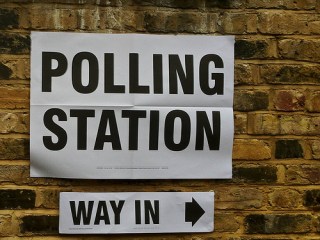
polling station sign

So let’s talk

First, we need to understand what it is that makes people think it’s not worth turning out. Some issues are to do with our voting system. Others are to do with improving understanding of what we vote for, when  and why. Data could help; insight into voter turnout could help people see the potential impact that those who previously didn’t vote could potentially have. Voter engagement matters, too. There’s plenty we can learn from successful peer engagement campaigns like Obama’s.

I’m proposing we kick off with a day to discuss why participation is low, and what we can do about it.

Then let’s make some stuff

Once we know why people don’t vote, let’s use our collective talents to try and bridge some of those gaps so voting becomes a more worthwhile proposition for more people. Not with a lets-bring-the-tech-we-already-built-to-show-it-off hack day, but by defining some requirements and working together to make one or more things – apps, sites, engagement programmes, whatever – that help people to understand why voting matters.

Once we’ve made stuff, let’s iterate it. Let’s use what we know, and what we hear from others, to make democracy better, meeting every few months to improve what we’ve done. We have over a year until the general election – that’s enough time to make a real difference.

No, I don’t think it’s the answer to all the reasons why voter turnout is low, but we have to start somewhere. And if that somewhere is bringing together clever people who give a shit to come up with some decent ideas that we can iterate from, then imho that’s an excellent place to start.

Interested? Good. Come to the MySociety open hack this Wednesday, 8 January, at MOZldn at 5.30pm and let’s talk ideas. If you can’t come then, give me a shout – you can find me all over the internets.

Photo credit: secretlondon123

300 Seconds in London and Manchester

It’s hard to believe we came up with the idea of 300 Seconds just a few months ago, as a way of helping women in digital to gain confidence and experience in speaking in public. We hoped that by giving speakers the opportunity to gain experience and develop their skills, we could help to tackle the lack of diversity at tech events. 

Our first two events were amazing, packed with great new speakers confidently and articulately sharing their stories and experiences on a wide range of subjects – proving that there’s a vast well of talent out there for conference organisers to tap into. We’re blown away, too, by the individual success stories we hear from our participants – of gaining confidence, of going on to present to big crowds, of new jobs gained.

So we’re absolutely stoked to be hosting not one but two 300 Seconds events this week. This week is Internet Week Europe, a week-long celebration of Europe’s thriving digital industry, and what better way to celebrate than to share stories and successes in our trademark quick-fire format?

Shoreditch

Just a fortnight ago I met up with Rosa Birch, one of the women behind Ada’s List, a new online community for women in tech, and together we hatched a plan to bring 300 Seconds to the first ever Ada’s List meetup. So we set ourselves the challenge of organising our biggest event yet in under two weeks.

The Ada’s List and 300 Seconds teams have been working hard to bring together a line-up of speakers that meet our mission: giving women in tech a platform to showcase their skills and a space to share stories, advice, tips and knowledge. We’re also really lucky to have Internet Week’s Festival Director Caroline Waxler, who will be over from New York, open the event for us.

Tickets are free and I’m pleasantly surprised at the number of people who have signed up. Men are most welcome too. If you’d like to join us, there’s still time to RSVP via Eventbrite.

Our speakers have been confirmed and are:

We’ve managed to get some great sponsors too, so huge thanks to them: AccentureDXWMade by ManySleepio, and Swiftkey.

Other details are:

When: 12th November, Tuesday, from 6.30pm to 10pm
Where: The Village Hall, Shoreditch Works, 33 Hoxton Square, London N1 6NN

Read more about the Women in Tech meetup

Manchester

At the same time, Ann and I have been busy since the summer planning our first 300 Seconds outside London. BBC R&D’s Ian Forrester had been looking for ways to improve diversity at tech events for some time, and invited us to bring 300 Seconds to Media City in Salford.

They said: “Working with BBC North, BBC R&D are proud to be part of an initiative that aims to give support and a voice to those who find it a challenge to make themselves heard, and to promote the role of women in the digital community.  We know that the north-west is home to some fantastic talent, and we’re excited to welcome them to MediaCity to share their ideas and insight with us.”

Read more on the BBC R&D blog.

Our speakers are:

Details:

When: 14 November, from 6pm
Where: MediaCityUK, Salford

A handful of tickets are still available.

Read more about the Manchester event.

Social media, serendipity and the power of trivia

For most of us – and certainly anyone reading this blog – social media plays a significant role in our lives. We keep track of our friends’ lives through Facebook updates, message them on Twitter, see what they’re up to on Foursquare, and ‘like’ their photos on Instagram. I do this more than most, since social media is a big part of my job; my friend Richard commented that he doesn’t need to ring me anymore as he can find out exactly what I’m doing, thinking and feeling by looking at my various updates online.

A couple of weeks back my colleague Keith wrote an interesting blogpost, wondering if this stream of minutiae is bad for us, akin to obesity for the mind. He asked “is it possible that we have filled our brains with information, images, adverts, arguments, thoughts, news, features, blogs and opinions, to the extent that our brains aren’t functioning as they used to?”

The stream of updates about unimportant things, from lunchtime burritos to Daily Mail click-bait, are thought by many to be distracting us from the reading of improving books or forging of real-life relationships.

thinking man

Keith certainly isn’t the first person to ask if the sharing of trivia is affecting the way that we think. Plato argued the technology of writing would destroy humans’ ability to remember. 17th century lecturers complained that their students spent too much time in coffee shops catching up on news and gossip. Even the walls of Pompeii featured graffiti from Roman Jamie Olivers exclaiming ‘I baked bread today’.

As Tom Standage argues wonderfully, the sharing of tidbits of information in a peer-to-peer way is by no means a 21st century development, and nor either is the suggestion that this has a negative impact on wellbeing.

I’m an internet optimist. Sure, the internet gives us plenty to be worried about, from privacy worries to the impact on older industries and the economy. But in my lifetime the 20th century model –  in which mass-produced media were piped at us, to be passively consumed at a set time via a small number of TV or radio channels – has been completely transformed. The 21st century has seen a diversification in media in which has given us access to a wider array of information sources than we’ve ever had before.

While some may argue that this overwhelms people, I’d argue that on balance being informed via a wider range of sources is a good thing. The web gives us access to more information than we even knew existed, as well as the power to publish ourselves. Yet far from overwhelming us with a torrent of news, the amount of time younger people spend consuming news has gone down. It’s been suggested that we’re simply becoming more efficient, able to learn more in less time.

Yet it’s also wrong to say the web hasn’t had an impact on the way we think. When I’m talking to a friend or colleague and we’re not sure of a specific point, one or other of us will reach for our smartphone and settle the argument immediately. I don’t remember; I research.

On the one hand there’s a large body of evidence which suggests that the increasing complexity of the media we consume is leading to increased cognitive capacity and rising IQ scores. But there’s also a healthy academic debate taking place over how our behaviours are adapting to the changing information environment.

Just as printing put paid to the one-valued skill of memorising entire books, communications technology is changing what we choose to commit to memory.  For example, studies have shown that regular users of GPS devices begin to lose some of their innate sense of direction. It would seem we’re putting our faith in external storage, and reallocating our mental energy.

This is the same phenomenon Socrates described, in which writing will implant forgetfulness in their souls: they will cease to exercise memory because they rely on that which is written, calling things to remembrance no longer from within themselves, but by means of external marks.”

What’s different is the ease of access to these external marks, such that it’s available to anyone with a smartphone in seconds. The question is whether this reliance on external storage and recall (‘exomemory’) is such a bad thing. What Socrates failed to see was the incredible opportunity created by access to knowledge greater than that our own heads can hold. As Amanda Palmer noted, we can only connect the dots we can collect. The out-housing of our collective intellectual capital has exponentially grown those collections of dots.

Having a network of information sources creates greater opportunities for serendipity. Some of the most useful things I’ve learned in recent years are bits of digital lint in my browser’s belly button.

Euan Semple made an interesting comment on Facebook today about location updates. Seen by many as a social media irritant, the ambient knowledge of knowing when someone’s in town also facilitates the arranging on real-life meetings. Similarly. the answering of questions about where to find lunch creates bridging capital, which helps us to establish trust in others.

The internet’s not going away; it’s speeding up, and growing at frightening speed. With the web being the gateway to our collective hive-mind, the ability to access and analyse information from the sources it provides has become an essential skill.

It’s said that in the West our environment is obesogenic – that food is so readily available that it encourages overeating. But just as you don’t have to eat everything, you don’t need to read everything you see either. The problem is not that we have too much information at our fingertips, but that we haven’t fully developed the tools and behaviours to help us manage it effectively.

Yet it’s the very technologies that cause the problem – search engines and social networks – that are also the solution.  Through knowing and using a wide range of sources, effective searchers are quickly able to sort the wheat from the chaff in our exomemory.  By establishing a network of trusted sources, I can quickly find a person or organisation who can give me the answer I need. By sharing and reading just the right amount of trivia, we create trusted connections – and learn what to scroll past.

Socrates argued that, exposed to writing, people would become “hearers of many things, and will have learned nothing; they will appear omniscient and will generally know nothing”.

The harsh light of history has shown this to be wrong. The human mind is a wonderful thing; by freeing up those synapic connections that might previously have been used to remember bus timetables or phone numbers, or discuss the 1989 first division football scores, we can put them to better use creating or connecting in ways that open up new possibilities for us all.

In the footsteps of Ada: Seven women who inspired me

Today is Ada Lovelace Day, an annual celebration of the achievements of women in science, technology, engineering and maths named after the first computer programmer. In honour of the occasion, here are seven women who inspired me to work in digital:

1) My grandmother

My grandmother Marguerite was born in 1923, just a few short years after her father returned from the trenches of WW1. She studied engineering at the Ecole Polytechnique in Paris, and not long after graduating met and married a young Scottish man. Sadly the marriage was short-lived. There were few engineering jobs for women in those days, still less a single mum with a young child, but her technical knowledge and perfect written English meant she found work as a technical translator.

Proving you really are never too old to learn, she took a computer course at 89, and took to it like a duck to water. She got a tablet for her 90th birthday back in January, which she uses every day. She’s not tweeting yet, but I wouldn’t write it off.

2) My mum

My mum Cathie is not a techie by trade, but a travel agent – one of the first industries to embrace computing from the back office right to the front line. She’s been using computers for work since the early 70s, and was quick to realise they’d go on to disrupt nearly every industry. She understood this would be a skill everyone will need, and so she bought us our first family computer, the Amstrad CPC464. I did my first programming on this; I never got much better at it.

She was completely right about digital disrupting the travel  trade; while the big high street chains are in decline, she now runs her own travel business from home, working with online tools and systems.

3) My year 9 IT teacher

She realised I had an interest in, and aptitude for, working with computers, and let me tinker away in the computer room whenever I liked. It was thanks to her that I got my first modem and got on the Internet for the first time, in 1993. I haven’t been offline since. She unknowingly changed my life and career. It’s a little embarrassing, then, that I’ve forgotten her name*.

* if any Maria Fidelis alumna are reading this and can remember her name, it would be great if you’d jog my memory

4) Mary McKenna

Mary was one of the first people off Twitter that I met in real life. She founded Learning Pool, an e-learning business based on open source. Female entrepreneurs are a rare breed in tech, but Mary’s ambition and no-nonsense attitude set her apart, and in a few short years she’s turned it into a successful global business.

Mary also proves that you don’t need an asymmetric haircut and skinny jeans to be a successful dotcom entrepreneur. She champions and supports other women in tech, with excellent blog posts like this one on negotiating your salary.

5) Sue Black

Dr Sue Black is an award-winning computer scientist, researcher, consultant and advocate of women in computing. She’s best known for her (successful) campaign to save Bletchley Park. In 2011 she set up the <goto> foundation, to to change public perception of, and increase participation in, computer science.

Sue had an atypical route into computer science, moving into it by studying as a mature student with two small children. Her story, which she’s written at length on her blog, is truly inspirational. Through tech education Sue was able to bring her family out of poverty, earn a decent living and create a better future for them all. She knows first hand what a difference education and confidence with technology can make and now wants to give that opportunity to other mums – so she founded SavvyTechMums, which delivers intensive,  hands-on workshops to help mums become tech savvy.

6 & 7) Hadley Beeman and Ann Kempster

Hadley and Ann are two of my firmest friends in the field. We got to know each other via the gov tech circuit, at events like Teacamp.

Frustrated by the lack of women we saw speaking at tech events, we talked about the reasons why this might be the case. Eventually we realised that we’d better stop talking and do something about it, and together we hit upon the idea of 300 Seconds, our series of lightning talks which aim to raise the profile of women in digital.

Hadley and Ann are both tremendously hard-working, clever, capable and endlessly curious. None of us would have got 300 Seconds off the ground alone, but they helped me realise that by working with brilliant people, and being creative and persistent, we can change the world.

This list could have been extended to 100 or more without much difficulty. On Ada Lovelace Day, people all over the world are celebrating those women in science and technology who have inspired them.

Who are the women who have inspired you?

Reflections on UX Camp London (#uxcl13)

I recently heard user experience described as the “joy of use”. But all too often, that’s tolerance at best – and more often, discontentment.

Marshall McLuhan famously wrote the medium is the message. In digital, the message – content – is inseparable from the full experience of using the site, the medium. However good the content, the end user’s impression is how both the content, and the medium that delivered it, made them feel. That means there’s a symbiotic relationship between content and the structure, design, information architecture, navigation, and anything that contributes to the joy – or otherwise – of interacting with a site.

So this weekend I took myself along to UXCampLondon, a one-day unconference for those interested in user experience.

UX Camp London

Here’s my highlights:

Bringing human emotions into habitual micro-interactions

The two brothers behind Brighton-based agency Ribot kicked off with an opening keynote on habitual micro-interactions – those regular online habits, which give some type of reward (such as Facebook or Foursquare checkins).

These are often of limited appeal, mostly to Quantified Self nerds like me, who see the data itself (and associated bragging rights) as reward enough. But for an app to gain traction, it needs to offer the user more – it needs to recognise the value of human emotion.

Antony Ribot began by talking about the Nike+ Fuel Band, a personal activity tracker that he’s clearly a big fan of. It rewards the user with praise and recognition when they achieve successive episodes of above-target activity. But as Ribot pointed out, when you need feedback from the app is not when you’re already doing well, but when you’re close to failing, and need a reminder to spur you on to meet your goal.

While Nike+ is a great app, by focusing only on success, it fails you when you need it most. Ribot noted that when he missed a day, the app didn’t remind him. It simply re-set, as if his successful streak had never happened. He was back to square one, sending him into a kind of Nike+ tantrum, disengaged with both the app and his exercise regime.

This was a funny (if long-winded) reminder that the focus of user experience design is not design, but users – real humans with real emotions and foibles.

So Ribot made human emotion central to the iOS app they’ve created for coffee chain Harris + Hoole. This loyalty app allows users create a profile, including uploading a photo and details of their favourite coffee (‘my usual’).

When the user checks in using their handset at a branch of H+H the server will identify them in the queue from their photo, be able to address them by their first name and ask  “your usual?”.  Users can collect loyalty points via the app, and there are plans afoot to add payment functionality.

Aside from the obvious concerns about this being creepy and overfriendly, what’s interesting about this app is that the technology supports – but takes a back seat to – customer experience. The app provides something more than the social currency of a Facebook checkin, by layering this in to real-life customer interaction that feels warmer and more personal.

Whatever your thoughts on sharing your name, photo, location and coffee preferences with an ‘independent’ chain that’s 49% owned by Tesco, the H+H app is an impressive example of how to inject better emotional design into apps and online experiences.

This set the tone for the rest of the day, a fascinating insight into the many and varied elements that contribute to the joy (or pain) of using a website.

Simplifying the UI to improve conversion

Paola began by describing a familiar problem; an e-commerce design that’s expanded rapidly finds they have a lack of consistency in page elements, like buttons and labelling. In fact, on this site half of the front page elements were for SEO purposes only, and they have multiple product managers and departments managing the page.

There followed a textbook example of how to do a UX redesign.

  • Had 40 multivariant tests running on the homepage at all times
  • Did an audit of the site. Printed screenshots of inconsistent elements and showed the sheet volume to stakeholders to highlight the extent of the problem
  • Created a persona. Lucy represented different customer ‘modes’, such as researching, price comparing, booking, etc. Lucy was frequently referred to in workshops (“what about Lucy? All she wants to do is book”)
  • Developed a plan setting out how create consistency on buttons, next steps, location of information, etc

Once Paola had scoped the problem and solution, she sold the need for simplification to the business by emphasising the benefits in simplifying updates as well as improving customer experience (in turn, increasing conversion).

…or rather, it would have been a textbook example, if hotels.com had implemented the changes. But they haven’t yet, because of the way the site is managed. And that, my friends, is why getting your site governance right is essential.

Redesigning the comic book for the digital native form

A chance corridor conversation led me to attend a session on comics next. To say this is an unlikely choice for me is an understatement; I just don’t get the appeal of comics.

I’m very glad I did. Katan led a a fascinating discussion on reinventing the comic book for the digital age. Comics are currently where sales catalogues were in 1999, with producers putting barely-changed versions of their print design online.

That, explained Katan, is a huge missed opportunity. Digital native display of sequential art should not mean animation of flat art. To truly embrace the potential of the online form, they need to move to a display which is multi-layered and non-linear, taking full advantage of hypertextuality to give a richer experience of going back and forth in time, or between elements of the story.

Katan is working on an ambitious project, called CAPOW, which creates both a workflow system for the various artists who contribute to a comic, and a content management system that will allow for a responsive reflow of panels across screen sizes, and enable better publication of non-linear visual stories (what Scott McCloud calls the “infinite canvas”)

While I’m still not likely to buy a comic, I found this a really inspiring session; it’s left me thinking about other publications which are trapped in a presentation form from a pre-digital age, and how they can be reinvented.

Sketchnoting workshop

Sketchnoting is a style of visual note-taking that has become hugely popular at tech conferences in the past few years. I first became aware of it when I spoke at Intranatverk earlier this year, where Francis Rowland did sketchnotes of each of the talks, including mine.

Sketchnoting

I’ve seen a bunch of other sketchnotes since, but not been tempted to begin using the technique myself as I cannot draw (At all. Really, I’m terrible at it). But when I spotted there was a workshop on it at UXCamp, I was keen to go along and find out more about it.

The session was led by Information Architect Boon Yew Chew, who uses sketchnoting as a regular technique in his work. He gave an overview of the key tools and techniques, including how to capture the key points and (usefully for me) why an inability to draw need be no barrier to taking sketchnotes.

He then challenged us to give it a go, taking notes on a short TED talk.  The photo above shows my efforts. It turned out better than I expected, and is a technique I’m going to practice a little. Boon gave me a copy of Mike Rohde’s Sketchnoting Handbook, which I’m already using to try and learn the techniques and structures.

Overall impressions

This was the first time I’ve been to UXCamp London, and overall found it worthwhile and useful event, with a good mix of talks on widely varying topics.

It could have done with more people running sessions, as at a couple of points there were only two or three to choose from, which were very overcrowded as a result. But it was very refreshing to see that women made up around half of those attending, and running sessions. And at only a tenner including lunch, it was remarkably good value too.

I’d encourage anyone with an interest in UX to attend in future years (or months – there’s a UX Camp Brighton coming up in November).

In praise of web anonymity

The Twitter rape threat row shows no signs of abating, as many users pledge to take a one-day break from the site this Sunday, August 4th. Author and columnist Caitlin Moran says she’s taking a 24-hour ‘trolliday’ from the site “because it will focus minds at Twitter to come up with their own solution to the abuses  of their private company”.

Twitter have already caved in to demands for a ‘report abuse’ button – which, as I argued earlier this week, is likely to cause as many problems as it solves. But many commentators claim this doesn’t go far enough, and are calling for an end to anonymous accounts on social network sites like Twitter.

Writing in the Guardian, Simon Jenkins claims that the internet has become a masked ball, “whose concealed dancers may be corporations or governments, paedophiles or rapists, weirdos or fools”, demanding that “it must be regulated”.

Jenkins echoes the online disinhibition effect, “a loosening (or complete abandonment) of social restrictions and inhibitions that would otherwise be present in normal face-to-face interaction during interactions with others on the Internet”. Anonymity, it’s suggested, is itself the cause of so much anti-social behaviour online.

Although I would certainly never condone the type of abuse that Moran describes, we need to be wary of losing the enormous benefits that anonymity on the web brings all of us.

Anonymity can be a wonderful thing. Many of those commenting on blogs and forums are doing so from beneath a pseudonym, so they can speak freely on the issues that concern them without it being part of their Google footprint, drawing scorn from real-life friends and family.

internet-anonymity

Anonymity can be a powerful force for good online

Anonymity allows us to practice having different points of view; we can be a more conservative or liberal version of ourselves in online discussions, which helps us to form our own opinions and arguments.

And it’s there where the spectrum of trolling begins. At one end you have someone taking a contrary opinion in order to get a rise out of someone. This kind of anonymous trolling can be a noble art, and we saw a fine example of such this week, when Pukkah Punjabi trolled the ‘racist van’.

At the other end of the spectrum you have people shouting vile abuse at strangers. This is clearly wrong, and rightly illegal. What one woman might be willing to ignore, or consider a joke, another might find scary and threatening, especially when received as frequently as some high-profile women do.

Where trolling ends and abuse begins is difficult to define, but we should exercise caution so we don’t lose the benefits of anonymity in our rush to rid the web of abuse.

MIT academic Sherry Turkle has written extensively about the value of the anonymous web in allowing people to experiment with different facets of their personality and opinions, in order to develop our sense of self and identity. In Life on the Screen: Identity in the Age of the Internet, Turkle talks about how the internet allows us to engage in new ways of thinking about evolution, relationships, politics, sex, and the self.

As an example, someone who is coming to terms with their sexuality might participate in online discussions in LGBT forums. Being able to do so without risk of disapproval from friends or families can prove a vital lifeline for a young person to develop their identity and sexuality.

Anonymity can bring benefits in everyday situations. For example, when I was last looking for advice on finding a new job, I was much more comfortable doing so in the knowledge that my boss at the time couldn’t look it up.

But anonymity can equally be an issue of personal safety. I have one friend who will only comment online under a pseudonym as they have been a victim of real-life stalking.

For others, anonymity is a matter of life and death. Twitter is widely thought to have played a key role in galvanising the Arab Spring, but that was only possible because people felt they could use it anonymously, without fear of reprisals.  We should be very mindful of the implications of ending web anonymity in those parts of the world where speaking publicly can have serious consequences.

Padraig Reidy, blogging in response to Caitlin Moran, hit the nail squarely on the head:

“The web is wonderful, and possibly the greatest manifestation of the free speech space we’ve ever had, but it’s also susceptible to control. Governments such as those in China and Iran spend massive resources on controlling the web, and do quite a good job of it. Other states simply slow the connection, making the web a frustrating rather than liberating experience. Some governments simply pull the plug. The whole of YouTube has been blocked in Pakistan for almost a year now, because something had to be done about blasphemous videos.”

The web is far less anonymous than it used to be. When I first started using it, everyone was anonymous, all the time. Then, as now, there were a handful of idiots who would abuse that anonymity in order to get attention.

In the two decades since, the web has opened up communication and ideas in ways few dreamed possible. As a tool which enables people to speak freely with others all over the world, putting thousands of information sources at our fingertips, the web has fueled revolutions and overthrown governments.  But through providing anonymity, it’s also been revolutionary for individuals, allowing people to discover their sense of self, to find a partner, to form and change opinions, and much else besides.

While more can be done to streamline the process of reporting and preventing abuse, we should all be very wary of losing the real and valuable benefits anonymity can bring in a knee-jerk reaction to a small but vocal group of idiots.

(Photo credit: Stian Eikeland on Flickr)

A ‘report abuse’ button on Twitter will create more problems than it solves

Twitter today responded to calls to make it easier for people to report abusive messages received through its service, pledging to introduce a ‘report abuse’ button.

This follows a weekend of controversy for the platform as feminist campaigner Caroline Criado-Perez faced a deluge of hundreds of vile tweets, including threats to rape and kill her, after she successfully campaigned for a woman’s picture to be put on a new banknote.

Criado-Perez refused to be silenced and took to both traditional and digital media to name and shame those who’d made the threats. Twitter drew criticism from politicians on all sides. Shadow Home Secretary Yvette Cooper described their response as “weak” and “inadequate”, while the Police’s social media lead called for the company to make further changes to the platform to prevent abuse.

In the past three days, over 50,000 people have signed the petition calling for the introduction of a ‘report abuse’ button. These tens of thousands will no doubt be pleased to hear Twitter has heeded their demands, and included this functionality in the latest release of their iPhone app, with other apps and sites to follow.

But we should be careful what we wish for. A button will not, alone, rid Twitter (or the wider world) of mysogyny and abuse. These are complex issues that will take more than a button to resolve. But ‘report abuse’ buttons have been known to be widely abused on other networks, an introducing this to Twitter will create new and complex problems for individuals and brands online.

Abuse buttons are easily abused

Back in 2010 I wrote about the case of a magazine which disapppeared from Facebook after falling victim to misuse of the report button. They found their page – and the personal accounts of all the admins – disappeared overnight, with no recourse to appeal.

After writing that piece, I heard similar stories from social media specialists of pages shut down and valuable content lost through malicious reporting, commercial rivalry, or simply mischief-making. Community managers and social media managers have found disappearing content to be a depressingly regular occurrence. It only takes a handful of reports to have content removed automatically – putting campaigns and content at risk of malicious removal, and putting the personal accounts of the admins at risk of deletion.

Facebook has long since made it simple to report different kinds of abuse, from breaches of terms of service to copyright violation, but provides no means by which brands and organisations can appeal when this is misused.

facebook-reporting

More recently Facebook introduced the concept of ‘protected accounts’, where pages are protected from automatic shut-down – but this isn’t a service they publicise, and is largely only available to paying advertisers.

Introduction of a similar mechanism on Twitter ironically creates a whole new means by which trolls can abuse those they disagree with. The report abuse button could be used to silence campaigners, like Criado-Perez, by taking advantage of the automatic blocking and account closure such a feature typically offers. In that way, it could end up putting greater power in the trolls’ hands.

A report feature could also be used by campaign groups to ‘bring down’ brands or high-profile individuals (such as MPs) through co-ordinated mass reporting.

The abuse button will do little to prevent abusive messages

It’s not at all clear that an abuse button will do much to prevent the use of abusive and threatening language on Twitter, either.

Unlike Facebook – which these days makes it quite difficult to register a new account, and in storing so much of your life history creates implicit incentives toward good behaviour as users truly fear having accounts deleted – the barriers to entry on Twitter are low. All you need to create a Twitter account is an email address; you can be up and running in under a minute. If users are blocked or banned for abuse, they can – and will – simply create new IDs and keep on going.

The introduction of a report button could simply create a tedious game of cat and mouse in which the immature and misogynistic simply treat being reported and banned as a wind-up to be ignored.

Button-pushing mechanisms rarely create real change

To create real change, and really tackle the issue of abuse on Twitter (and indeed, mysogyny in the wider world) we have to recognise it’s s complex problem which can’t be resolved by giving people a button to press and make it go away.

Abuse is sometimes clear-cut, but often it’s subjective. What someone may regard as a joke or sarcasm, others could see as abuse and threatening language – as the Twitter Joke Trial proved all too well.

Threats of violence and rape are, rightly, against the law (the Malicious Communications Act 2003 outlaws electronic communications which are “grossly offensive” or threatening). Writing for the Guardian, feminist writer Jane Rae argues more could be achieved by applying these existing laws.

It’s encouraging to see the UK police have already made one arrest over the threats against Criado-Perez, because seeing people being prosecuted for what is a serious crime sends a far stronger message to trolls than having their Twitter account blocked. I, for one, hope the police take action against more of those who have threatened violence.

A report button is an ineffectual knee-jerk response to the issue. But that it’s been introduced in a hurry – leaving no time to ensure it’s properly thought through, resourced, or supported by processes created through discussion with law enforcement agencies – means this is a move that’s likely to do little to tackle abuse on Twitter, but rather create new ways for people and brands to be abused.

UPDATE: Several bloggers have expressed reservations about this too, thinking more about some of the problems with trying to automate the process of identifying and tackling abuse. Here are some posts worth reading: