I’ve been in Japan for a week, but it feels like at least three already — the kind of week that’s so full it bends time a little. So, I’m abandoning my usual weeknote format and just trying to catch the highlights before they blur together completely.
I’m here for a month on a Digital Nomads programme in Nagasaki, living and working alongside a small United Nations of place-independent entrepreneurs, founders and freelancers. We’re here to explore new ways of working. Or at least that’s what the brochure said. In reality, it’s a mix of workshops, late-night chats, questionable karaoke, and the occasional existential crisis about Wi-Fi speeds.
It’s been equal parts exhilarating and exhausting: a reminder that throwing yourself into something completely new is as disorienting as it is energising.
Somewhere between shaking off the jetlagged fug and learning to navigate Nagasaki’s trams, I found myself at a welcome dinner with local founders and civic leaders. I ended up deep in conversation with a financial-services comms exec who told me that while Japan was once the global gold standard for employee engagement — with workers showing legendary commitment — it now ranks among the lowest.
That chronic low engagement, they said, reflects deep cultural, structural and managerial issues rather than any lack of worker motivation. To tackle it, the government has launched a series of work style reforms (働き方改革) since 2019 — ramped up again this year — aimed at modernising corporate culture and improving well-being.
Among those efforts are initiatives like the one I’m on, inviting nomad workers to spend time in Japan and share new perspectives on work, innovation and entrepreneurship.
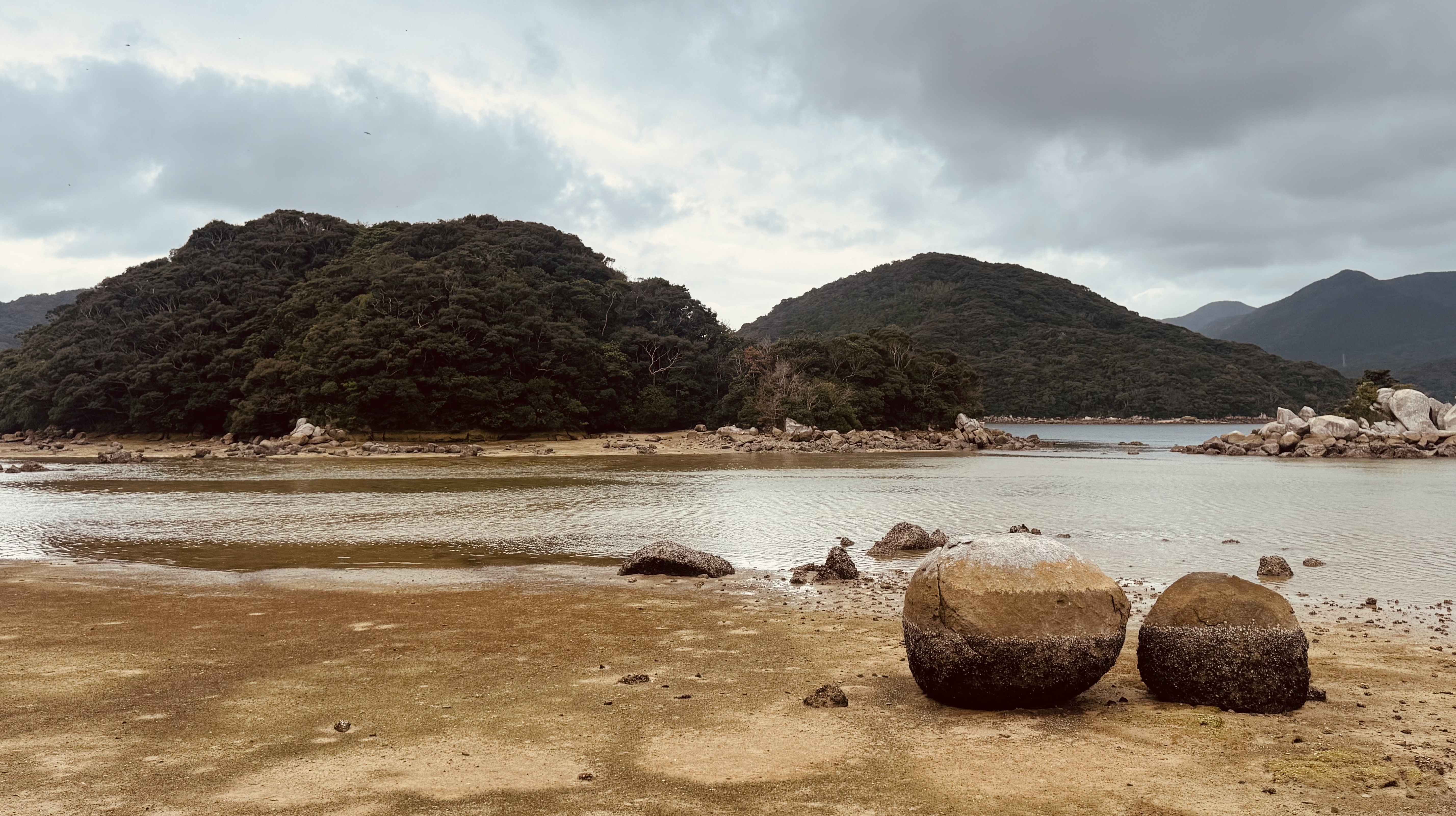
Two days in, our group boarded a ferry bound for the Goto Islands — a scatter of green peaks rising out of the Japan Sea, two hours off the coast of Kyushu. It’s the kind of place that makes you lower your voice without quite knowing why: quiet fishing villages where boats creak gently in the tide, camellia flowers nodding in the wind, the air scented faintly with salt and cedar.



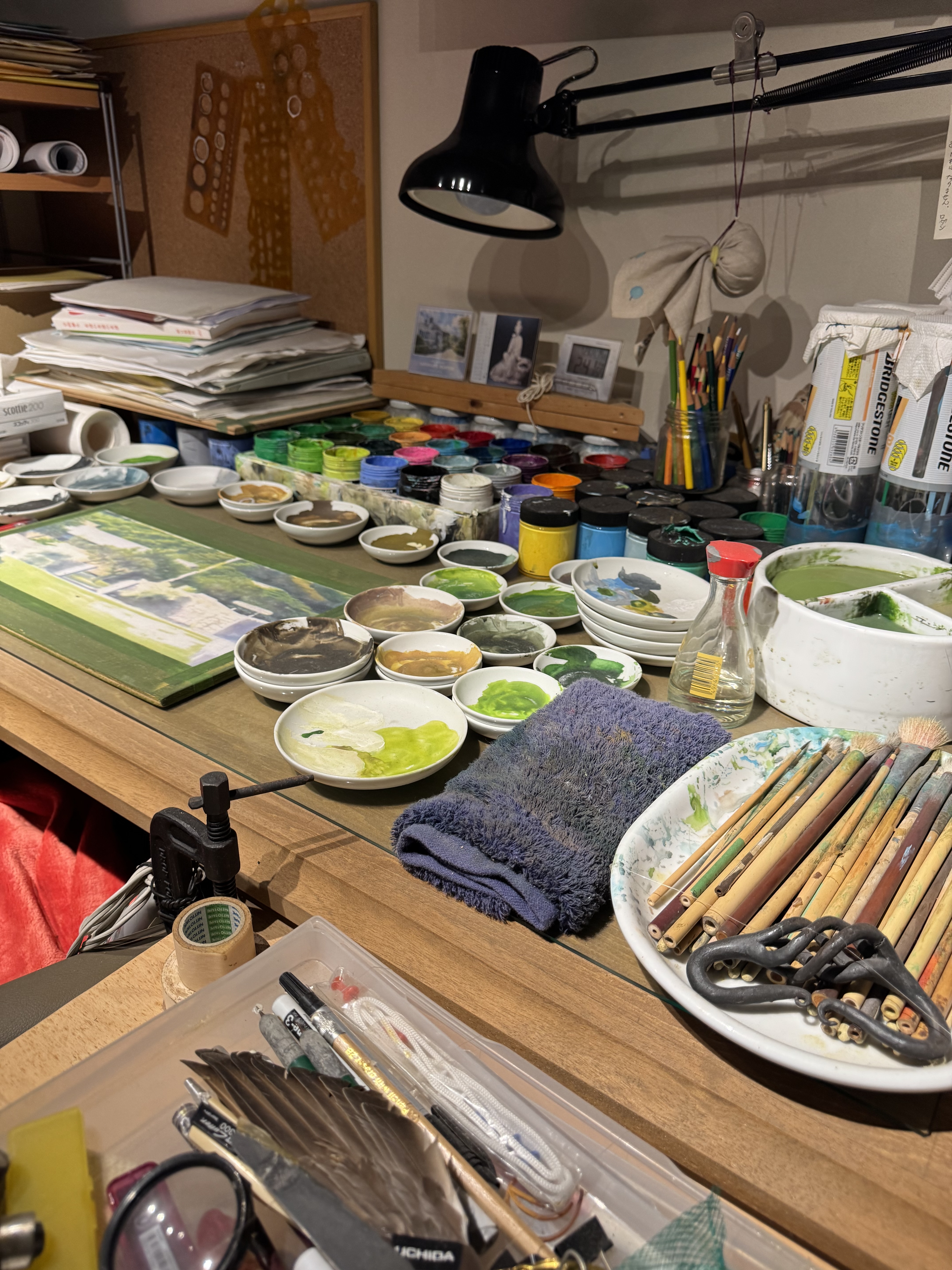
Nizo Yamamoto, the artist behind Studio Ghibli’s most iconic painted backgrounds, was born here. One of his final projects was a series of a hundred landscapes of these islands — misty forests, fishing harbours, weathered temples — all rendered in his delicate, dreamlike style. Being here feels a little like stepping inside one of them; like living in the set of Princess Mononoke.
We explored an ancient castle, ate dinner in a local izakaya, then I ducked into The Pier coworking space to join calls with colleagues and clients in the UK, Spain and Bangkok. Truly putting the “remote” in remote work.

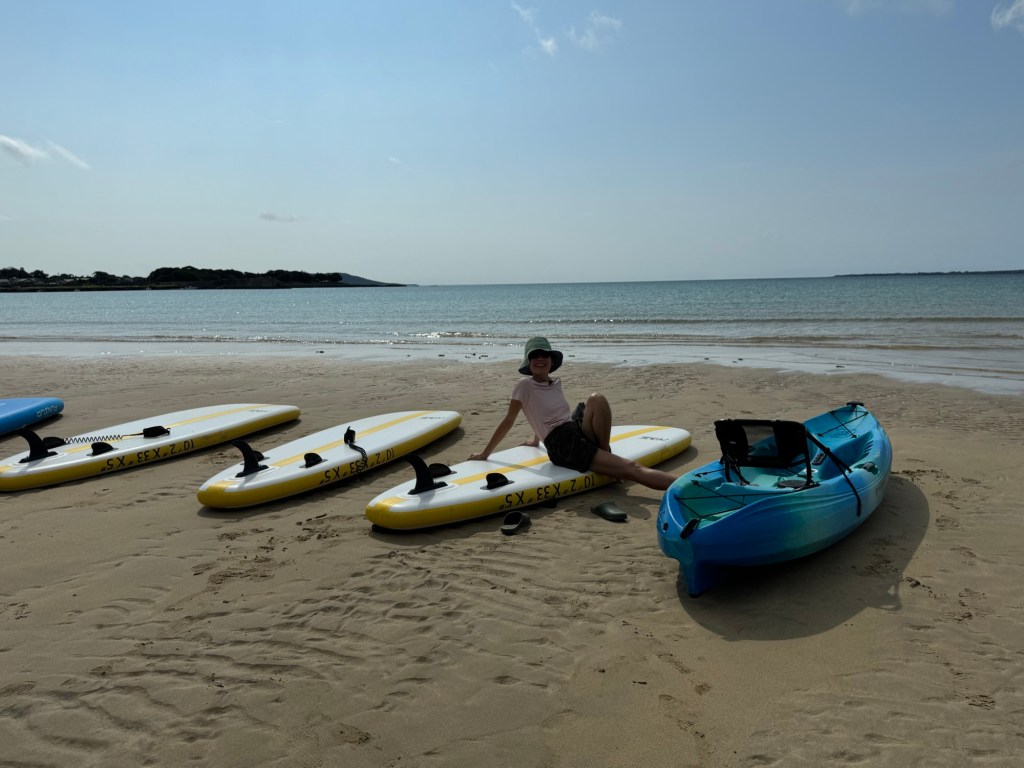
The next morning began with a swim off a completely deserted beach — the kind of stillness that makes you hyper-aware of your own breathing. The water was clear and just the right level of cold, the sand so fine it squeaked underfoot.
Afterwards we popped into to a tiny community library built from villagers’ three favourite books, donated. Inside, the shelves were uneven, the labels hand-written, the air carrying that faint, papery scent of places built for love rather than profit. We chatted to the owner about his plans to publish nice things — a beautiful coffee-table periodical paean to local design and craft — in English and distribute it overseas.


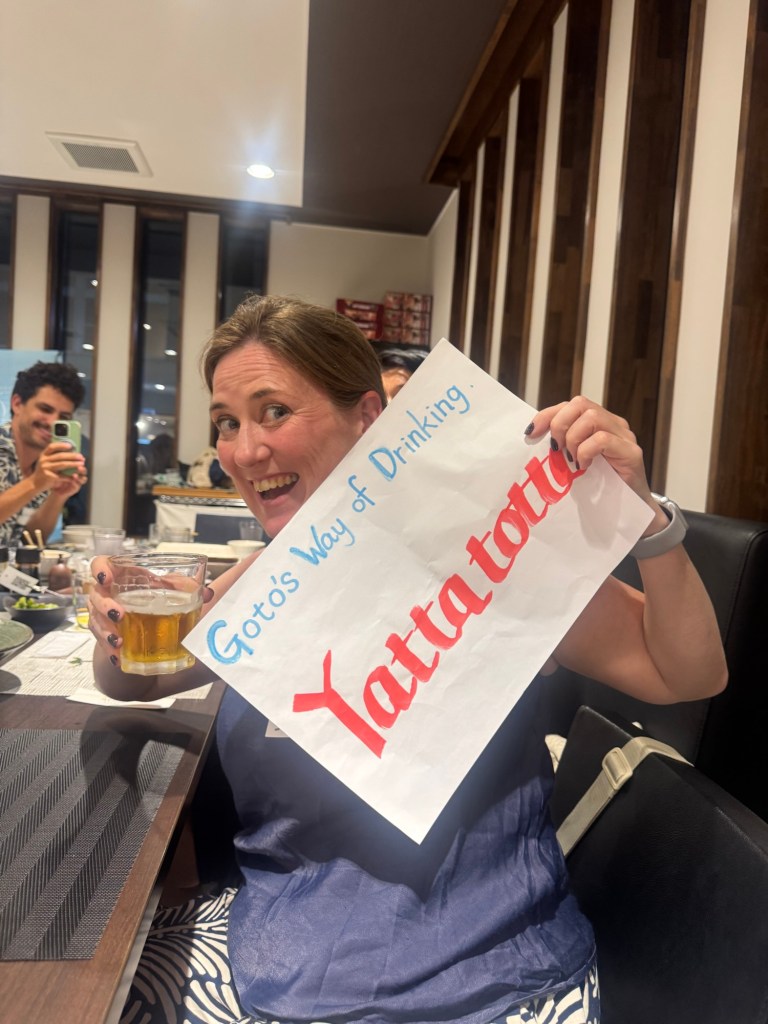
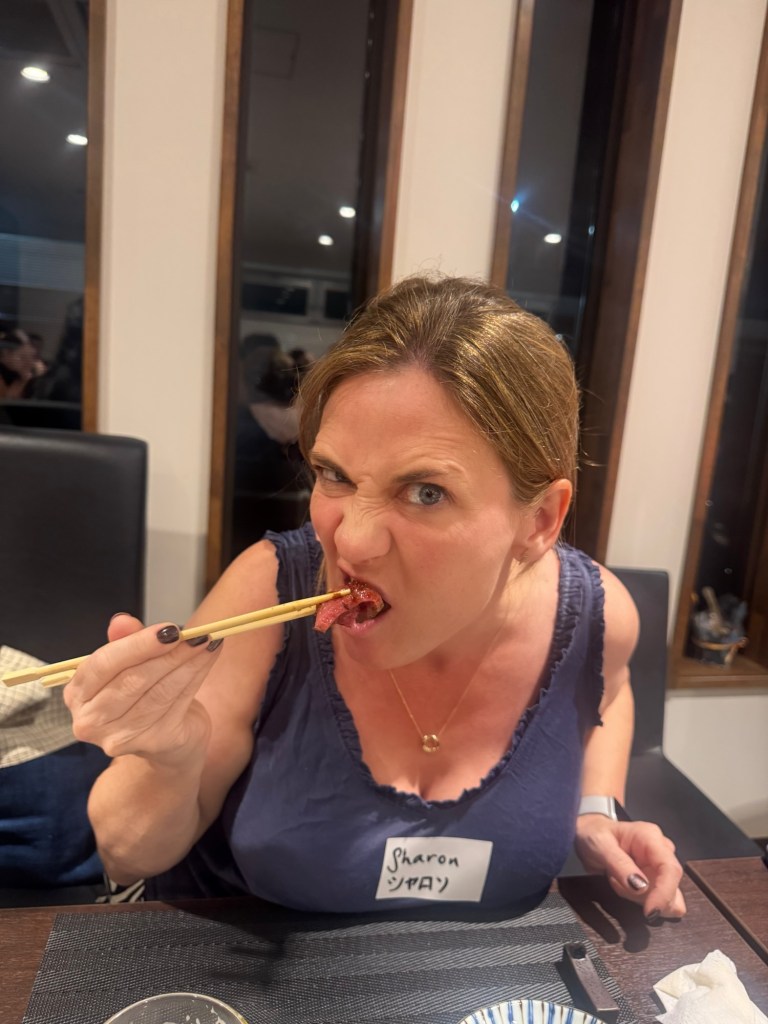
A welcome dinner taught me how to correctly accept a drink from someone else, then pour them one in return, in traditional Goto Islands style. A skill I soon put to use in a karaoke bar, where our group and another of Japanese salarymen took turns to murder western pop hits and anime theme tunes.

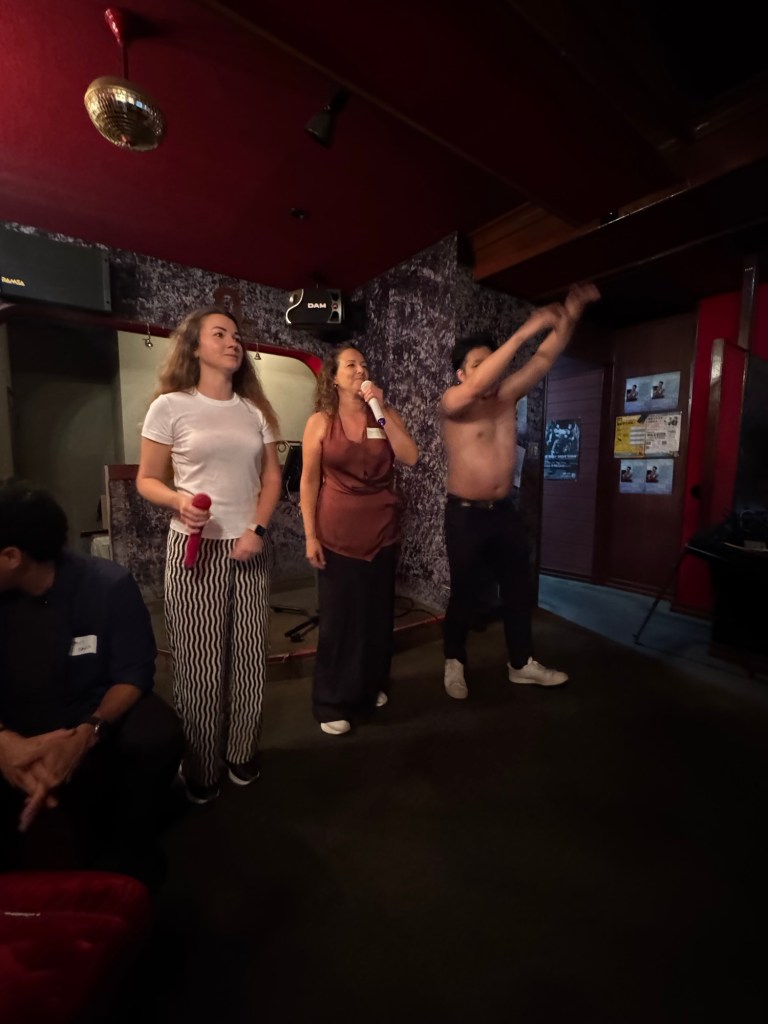
I’m fairly sure Bohemian Rhapsody has never been sung with quite that level of enthusiasm or linguistic uncertainty.
The next morning we swapped chopsticks for circuitry. A handful of us boarded a boat to visit a local wind turbine, before heading inland to meet a drone-delivery startup. From a small base on the largest island, a three-person team at Sora-iina fly medicines to pharmacies and hospitals scattered across the archipelago — cutting journeys that once took a day by sea to under an hour. It’s a fascinating glimpse into how automation and demographics are quietly reshaping work and logistics in real places.
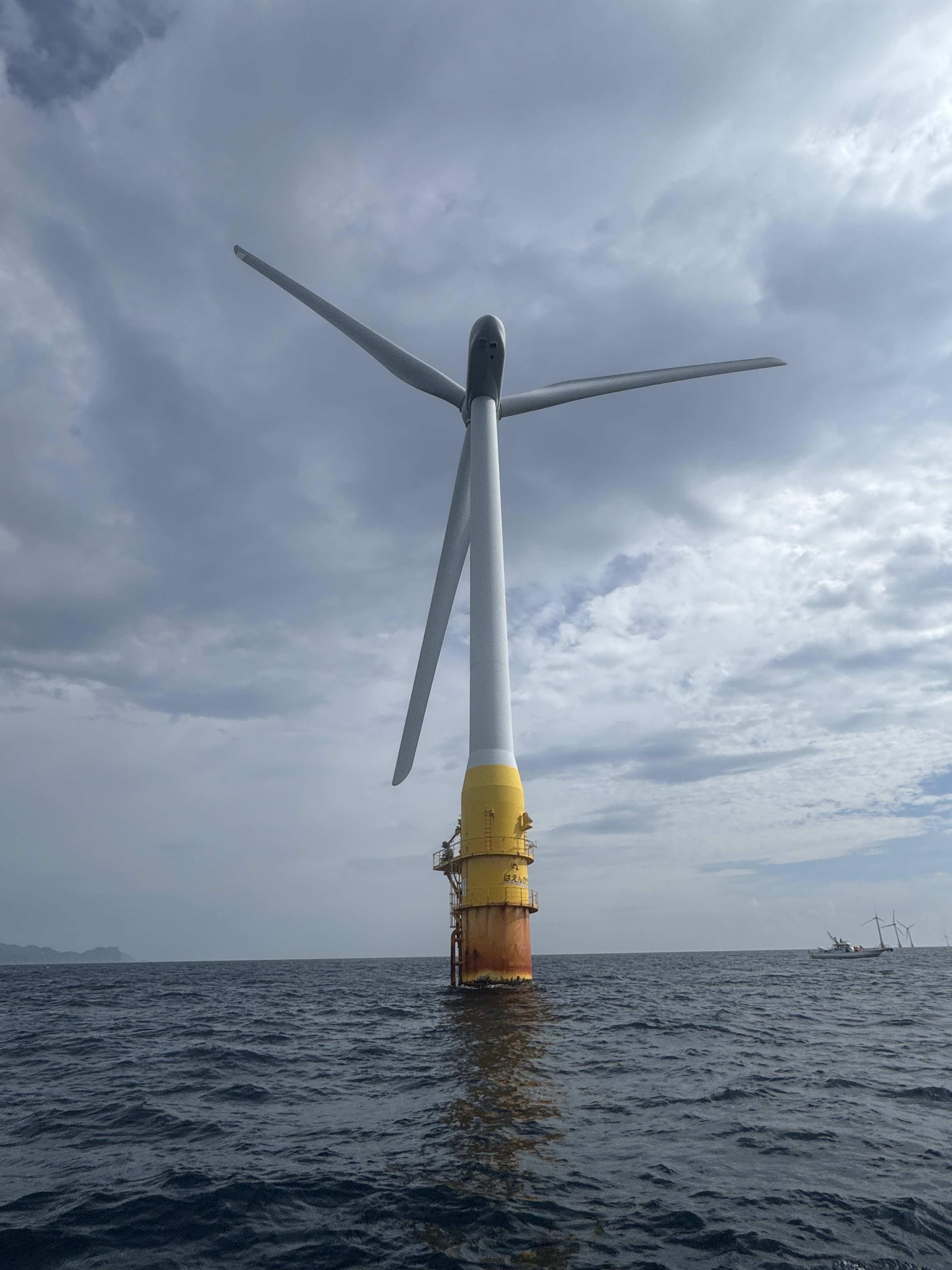


I even made a short video about it — my first real attempt at doing this kind of thing for social. Be kind! I’m just learning!
While my co-founder Jonathan was presenting our recent SEFE case study at IntraTeam in Stockholm, I was visiting a local blacksmith to see traditional metalworking, tapping away at Teams in the background while avoiding stray sparks. A call later that day saw our Japan-Sweden collaboration expanding to a four-way including folks in the UK and Iceland.
An Israeli couple in the group offered to cook dinner for everyone — my first Shabbat dinner, unexpectedly hosted in a far-flung corner of Japan. They improvised with whatever they could find in the local supermarket, and somehow managed to conjure a proper feast.
There was homemade challah, baked in a rice cooker(!), soaking up stews made from recipes carried in memory rather than written down. We passed dishes, poured wine, and shared stories about where we’d come from and what had brought us here, and some of the places we’ve seen along the way. Each of us on our own version of a journey, all momentarily paused in the same place.
It struck me how food is the great leveller and connector: you don’t need a shared language or background to break bread, just a willingness to sit down together. In that tiny corner of Japan, between the sound of waves outside and the hum of conversation, it felt like we’d built a small, temporary home. The kind that only exists when people choose to show up and share.
The next few days blurred into a mix of work, wandering and wonder. Long walks through the Ghibli-esque landscapes — all misty hills, moss-covered walls and winding lanes — where it’s easy to imagine forest spirits just out of sight. Bowls of ramen at tiny counters where the steam fogs your glasses. Even more baffling visits to convenience stores that somehow manage to sell everything from umbrellas to octopus on a stick.
Each day brings a small surprise, a reminder of how far from home I am, yet how familiar human rhythms are everywhere. Eat, talk, laugh, work, repeat.
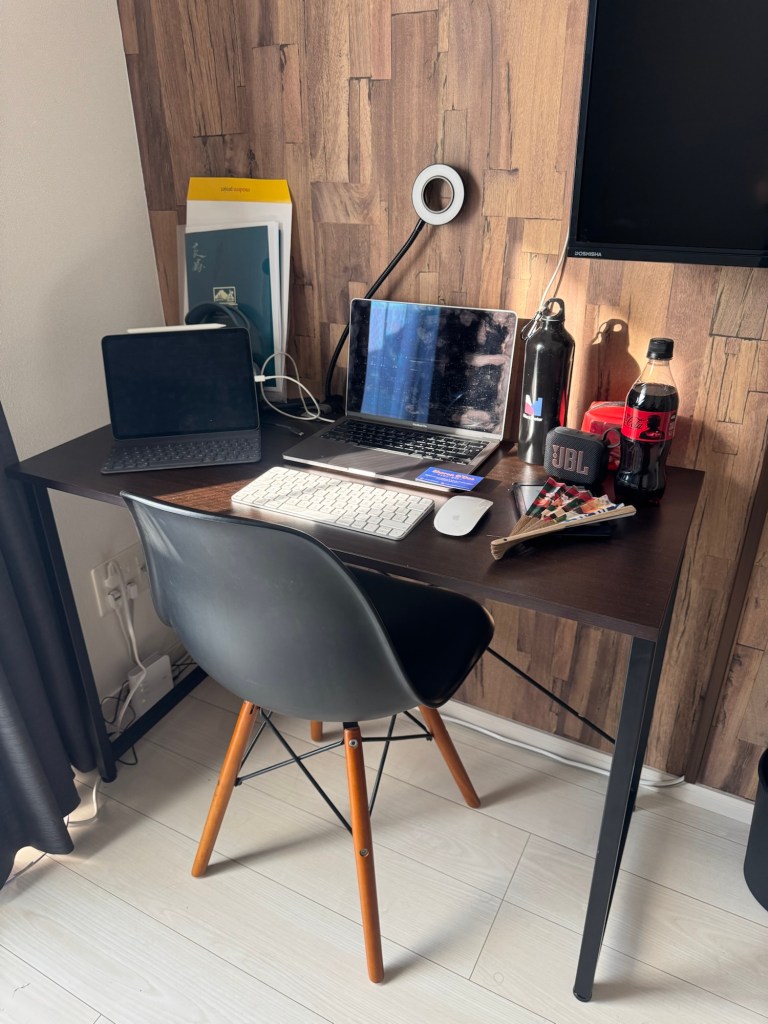
But it’s not all ’gram-worthy hotels and beaches. Working like this isn’t without its challenges. I’m struggling with timezones — trying to join calls late in the evening because I’m eight hours ahead. Working from sub-optimal setups (my MacBook + iPad Sidecar combo is no match for the optimised, three-screen standing-desk setup I have at home). And there’s the constant need to reassure clients that I am, in fact, working here and not on some kind of extended holiday.
No routine anchor either. Without a stable base, habits like workouts, meals and focus blocks fall apart easily (I haven’t worked out since that epic one in Paris, nine day ago, and I miss it).
And the environment whiplash is real: one day you’re in a serene co-working space, the next you’re hunched over a kitchen table with a wobbly chair and bad lighting, getting eaten alive by mosquitoes during stand-up.
Still, it’s worth every moment — and every insect bite — for the change of pace, the conversations with people building weird and wonderful things, and the chance to see work and life from a completely different angle.
Somewhere between the sea breeze, the stand-ups and the sake-fuelled karaoke, I’ve remembered why I love this work. It keeps the world feeling big, keeps me curious, and reminds me that the edges of the map are the places worth exploring.
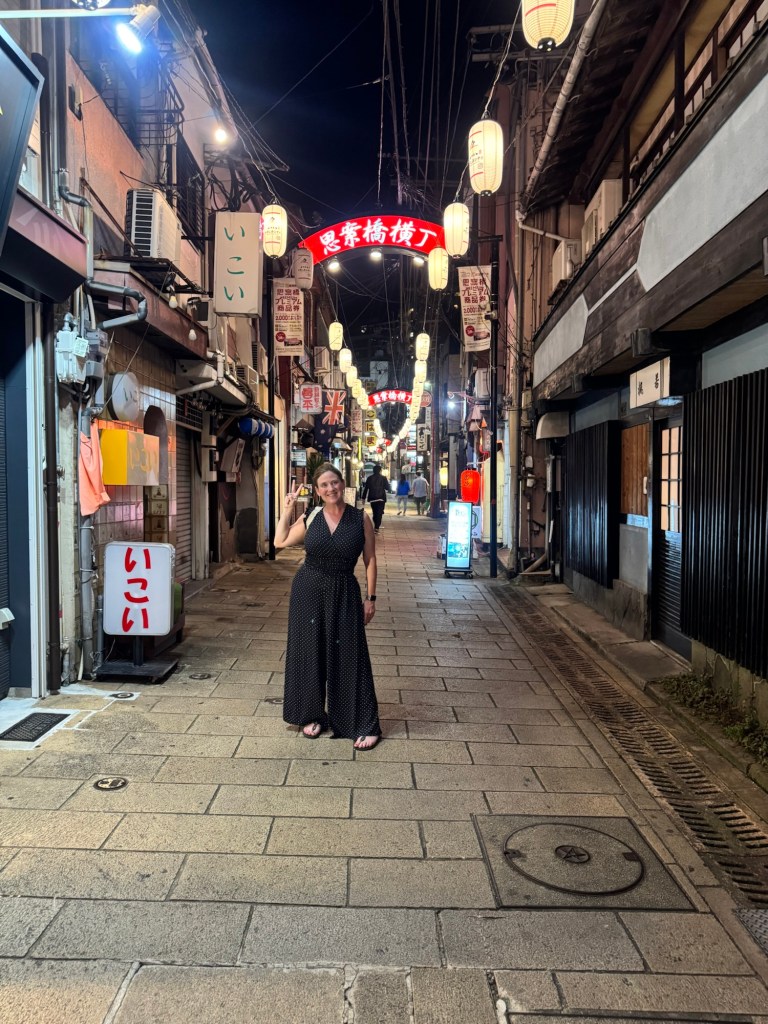
This week in photos



 Sharon O'Dea