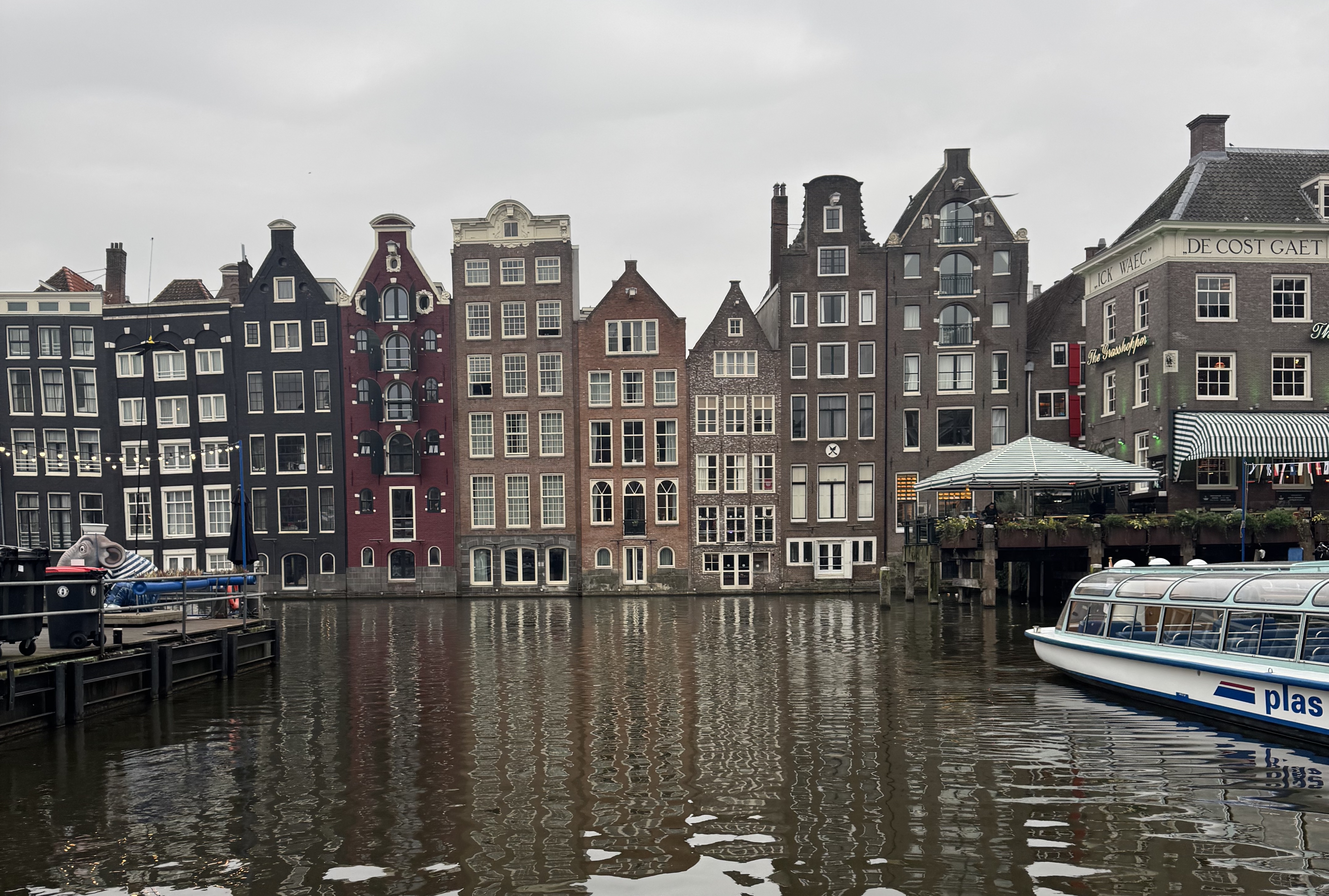
This is a bumper two-week edition as I didn’t get around to writing last week. The clocks have gone back, and clouds have come in, and a gloriously sunny autumn has turned quite suddenly into a dark and grey winter.
And then there’s events across the pond, so it feels like this is a winter that could be especially dark, and last for four years.
Work-wise It’s been a packed couple of weeks.
On one project – where they’ve opted for an ‘intranet in a box’ approach – we’ve made rapid progress. We’re so deep in the weeds on the detail that we need to remember to stop and take stock now and again. In the last month or so we’ve delivered a working platform, all the associated governance and processes, a good volume of great, user-focused content (in two languages), and a bunch of assets for support and launch. We’ve got an ace team on this and they’ve done a cracking job. The finish line is in sight now and I’m so proud of the work we’ve done.
Over on our other big project, they’re taking a different approach, using native SharePoint as the intranet foundation. There are plenty of advantages to that – not least saving on subscription costs long term – but the delivery path is typically much slower. You gain flexibility, but that comes with a greater admin overhead, with the intranet team having to devote a good chunk of time to managing the site.
There are pros and cons to both paths (which In shan’t bore you with here).
Our focus this week was to crystalise a recommended approach and scope for the future SharePoint site, finding the right architecture and a set of templates that balances consistency and usability for users against the flexibility that content creators want – while at the same time keeping a laser focus on the tight, immovable deadline all of this needs to be delivered by.
Balancing all of those competing priorities means we had a lot of healthy debate among the team. But that was reflected in a solid, well-considered approach that landed well with the client team. Once again I’m proud of a job well done and can move into the next phase of work confident in our plans and approach.
A big part of our work at Lithos Partners is helping our clients choose the right comms and collaboration platforms, and to configure and use them to deliver business value. More often than not that’s Microsoft (either on its own or with an IIAB layer, as in the projects above). But they’re not the only game in town. As a massive collaboration nerd I love to know what all the main vendors are offering and how best-in-class firms are using these tools to gain an edge.
And so I popped along to Slack‘s City Tour when it rode in to Amsterdam this week.
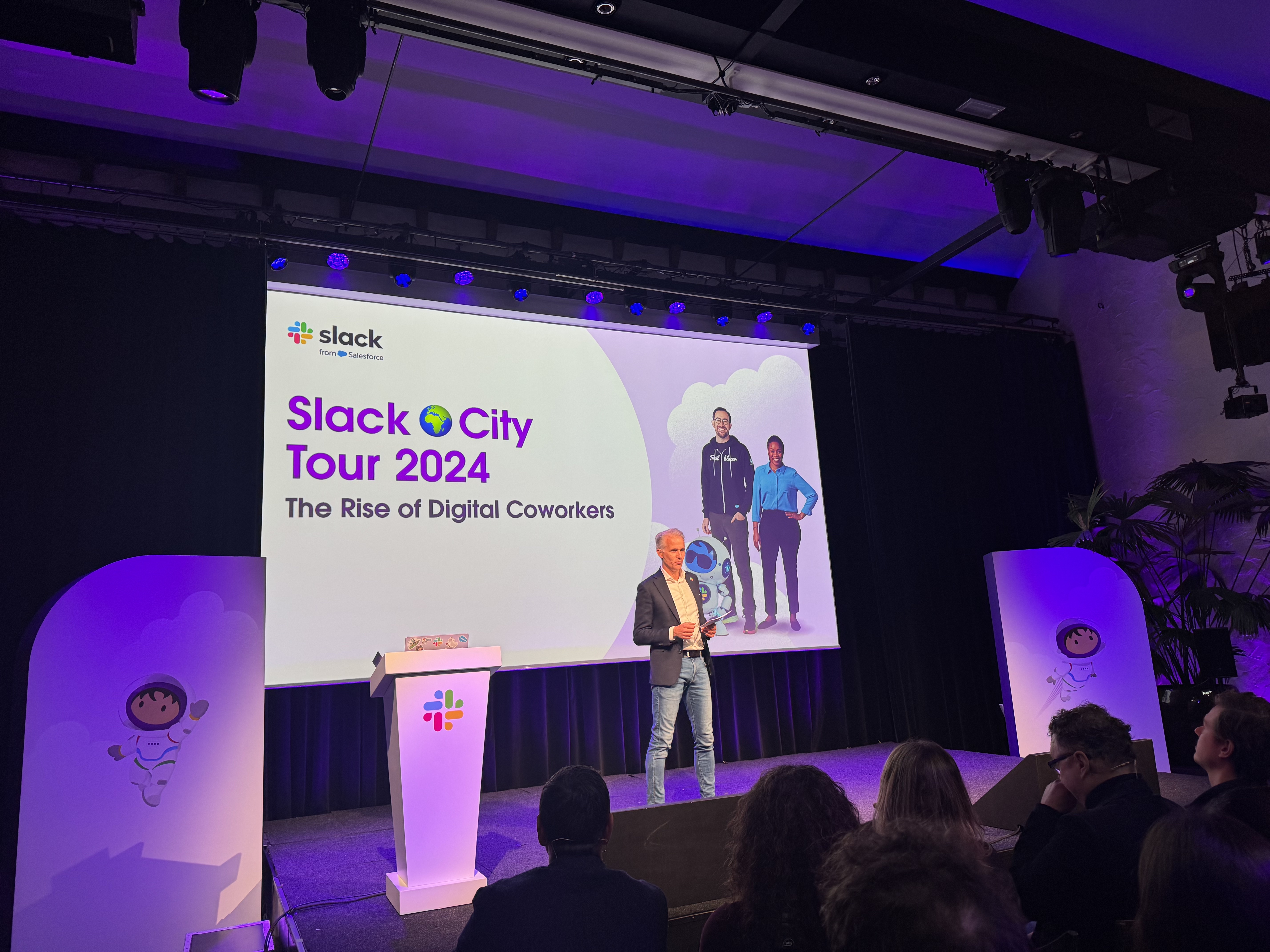
The key themes that stuck out to me were:
🤖 A predicted rise in ‘digital co-workers’ (AI agents to pick up drudge work or enhance what we’re doing). As I’ve said many times on here and elsewhere, this all has huge potential, but it’s never simply about the tech. The speaker highlighted the need to consider barriers to adoption and success, such as developing the necessary skills, ensuring our data is accurate (every organisation is littered with old docs creating new risks in the context of Gen AI), and ensuring our AI investment delivers real value – focusing on tangible benefits (which leaders care about), not marginal time savings (which they don’t).
👩🏻💻 The value of employee experience. The number of applications employees are forced to use is mushrooming, and that’s combined with a shift in admin work away from dedicated teams to individual workers (think self-service HR). We’re spending more time on the admin of work than ever before. It’s annoying and exhausting, contributing to growing levels of burnout. We can and should do more to streamline and simplify the experience of work, so people can get on with the things they came to work to do.
I also met some great folk from Slack and some of the big tech firms headquartered here in Amsterdam and geeked out on collaboration chat.
Non-work things

Last week I went to an interesting breakfast event on DEI in the creative industries, moderated by the brilliant Kerrie Finch. Here’s my takeaways:
🇳🇱 The Netherlands is a little behind the curve on DEI compared to other markets, but with the country attracting talent from across the globe, we can all do more to learn from and adopt best practices and successful programmes from elsewhere
📈 Show the value. At a time when DEI is getting pushback from tech bros and a rising political right wing, we must not forget that diverse teams and perspectives make our work better. We’re not championing this because it’s cool, but because it’s good for the bottom line. We must measure and demonstrate that.
😊 We need to create a culture of psychological safety in our organisations, where we respect different backgrounds and make space for conversations that might sometimes be uncomfortable.
🌻 With my digital pro hat on, it was good to hear several mentions of the need for representation and accessibility at the heart of what we do
The conversation touched on AI – what panel doesn’t these days? – but I feel like we need to get DEI more involved in our industry discourse on AI, given its potential to drive progress on diversity, equity and inclusion into reverse.
This evening I watched new historical drama Blitz. It’s visually brilliant, but felt like it was trying to bring a bunch of new angles to the WW2 movie genre, while not really doing any one of them justice.
It was refreshing, for example, to see working class East Enders shown as more complex than the usual downtrodden-yet-sentimental stereotypes. One plotline highlights the little-acknowledged phenomenon of looting and corpse-robbing that happened in the bombsites. Kathy Burke and her grizzly gang would have stolen the show if only this storyline had been given enough room to breathe.
On a lighter note, this week I saw Dutch-American comedian Derek Scott Mitchell’s live show, Double Dutch. His act was a delightful mix of the wry observations on Dutch language and culture I’ve seen him do on Instagram, and reflections on being an immigrant, where you exist in a kind of grey area of never quite fitting in where you live, while growing increasingly distant from the place you’re from.
What I’m reading
With my finger on the pulse as always, I finally got around to reading Salman Rushdie’s 1981 novel, Midnight’s Children. The story follows the life of Saleem Sinai, born at the exact moment India gained independence in August 1947. Saleem and other children born close to midnight have supernatural abilities, symbolising the dreams, challenges and identity struggles of the newly independent nation. Saleem’s life is marked by historical upheaval, family tensions, and a complex relationship with his own identity and heritage.
What stuck with me was Saleem’s concept of “chutneyfication,” which the character uses to describe his attempt to preserve memories, much like you’d preserve food as chutney. Personal and national histories are blended, spiced and bottled over time. Saleem’s “chutneyfication” distils India’s history in a mix of flavours, textures, and contradictions, capturing the essence of a nation shaped by its diversity and its history.
Reading this I found myself reflecting on Derek Scott Mitchell’s words about grey areas and that liminal migrant existence. As immigrants we’re making our own mental chutneys, keeping the places we’re from and where we live in physchological jars of memory and culture. Pindakaasification doesn’t have the same ring to it, mind.
Connections
The news is too depressing to watch, so I’m making a conscious effort to scroll less and see real people more.
My old pal Josephine Grahl was in town last weekend, which gave me the opportunity to catch up for the first time in maybe seven years. We had a lot to catch up on.
This week I met marketer Martina Lipp for coffee and a long chat about AI in marcomms.
Travel
Heading to London next week. My diary’s pretty chocka but if we’ve been meaning to catch up and haven’t worked something out yet, then let’s try and grab a coffee before the year’s out.
 Sharon O'Dea