
We’re approaching the finish line on both of our main projects.
On one, that means we’re in the peak period of coordinating stakeholders, content and publishing, while looking after training, testing and generally tidying up. At the same time we’re helping the in-house team get ready to manage and iterate the site themselves. This must be what it feels like having your kid do their A-levels, knowing that in just a few weeks time they’ll be off to university and you’ll be at home alone.
The other project is more of a detailed scoping exercise, but we’re now at the point where we’ve got to turn the big conceptual decisions into every tiny detail on the structure, architecture, planning and resourcing needed to turn these ideas into a reality so we have a solid, costed plan and business case.
Intranet business cases are frequently underfunded. In fact, in my experience, the majority of teams asking for budget get it wrong—sometimes badly wrong. The focus is often on what’s needed to get a site up and running for Day 1, rather than what’s needed to make it useful, usable, and valued. Teams also tend to underestimate the effort required to overcome organisational barriers to delivery.
Based on the 50 or so intranet projects I’ve worked on over the years, these are the areas of work that are most commonly underestimated:
- Stakeholder engagement: Securing buy-in is critical; without it, delivery will take far longer than planned. The time and effort needed to align stakeholders is often overlooked
- Site and template setup: This is particularly challenging in SharePoint. However many SharePoint admins you think you’ll need, budget for at least one more
- Support for individual teams: Teams will need significant help to get their sections ready. This is nobody else’s job but yours—either you provide the support, or you sit around waiting while they eventually find the time
- Initial content development: It’s often assumed this will be straightforward or that it can be entirely devolved to business units without central coordination. It can be, but the result will be a disorganised mess
- Legacy content transfer: Moving content from old systems to a new intranet is a huge task. Auto-migration tools rarely produce usable pages without extensive manual clean-up
- Search, taxonomy, and metadata: These are critical for helping users find information but are frequently underestimated or treated as afterthoughts
- Training and support: Employees need training to use the new intranet effectively, yet this is often left out of the budget
- System integration: People use intranets to get things done. Sustained adoption depends on integrating key systems. Fail to invest in integration, and you’ll miss that opportunity
- UX and design: An intuitive, user-friendly interface is essential for adoption, but it requires time and expertise, both of which are often undervalued
Intranet projects are often led by communications or HR teams who focus on content and employee engagement but lack technical expertise. Without close collaboration between IT, HR, legal, and end users, it’s easy to overlook how these elements—technical, adoption, compliance—interact. Teams also frequently miss how vital non-comms, non-technical work will be done.
Vendors don’t help matters. Their claims about how quickly software can be deployed or how intuitive it is are often wildly unrealistic. To close deals, they underplay challenges such as legacy system integration, complex organisational workflows, and the time needed for proper data migration and testing. Vendors rarely include post-launch enablement, support, or training in their scope, leaving organisations to manage these on their own.
There’s also an element of wishful thinking. To secure funding, teams often downplay risks and costs, assuming they’ll figure it out later. While this can sometimes get a project started, it often means that essential work for a successful digital workplace is never properly funded. As a result, the intranet fails to deliver its intended benefits.
Fortunately, this client is keen to avoid these pitfalls. They’ve given us their full support to develop a detailed plan that covers everything necessary for success. This week we’re bringing all of that together. It’s equal parts satisfying and daunting.
A few changes in the Lithos team. We onboarded a new member of the team, a multi-lingual content designer supporting us with content creation. But our delivery manager, Nic, left last week when his contract wrapped up. He was our first hire in a delivery role, and made a huge impact in a short time. Jon and I are good at self-managing, but project management isn’t a strength of either of ours. We’d been winging it for way too long as our business grew and took on multiple, complex projects. Nic helped us to get the processes in place we need to up the game in what’s now a fast-growing little business.
That was reflected in the end-of-phase wrap-up with one client team. They went out of their way to praise our professionalism and our “relentless optimism”. I’ll take that.
I was the token non-HR person on the panel at an HR Tech Europe event in Amsterdam. I took that provocateur role seriously and used my platform to remind everyone that no one aside from HR goes to work to do HR. It’s part of the admin overhead of having a job that we do, reluctantly, because we have to.
In a room full of people talking about user adoption and usability I no doubt I lost friends by pointing out that the best thing AI can do to improve HR tech is to make HR go away as far as is possible for ordinary employees.
Non-work things
My best friend, Katy, visited for the weekend, and we did an escape room for the very first time. It was great fun and I guess I’m one of those people who makes doing escape rooms my entire personality now.
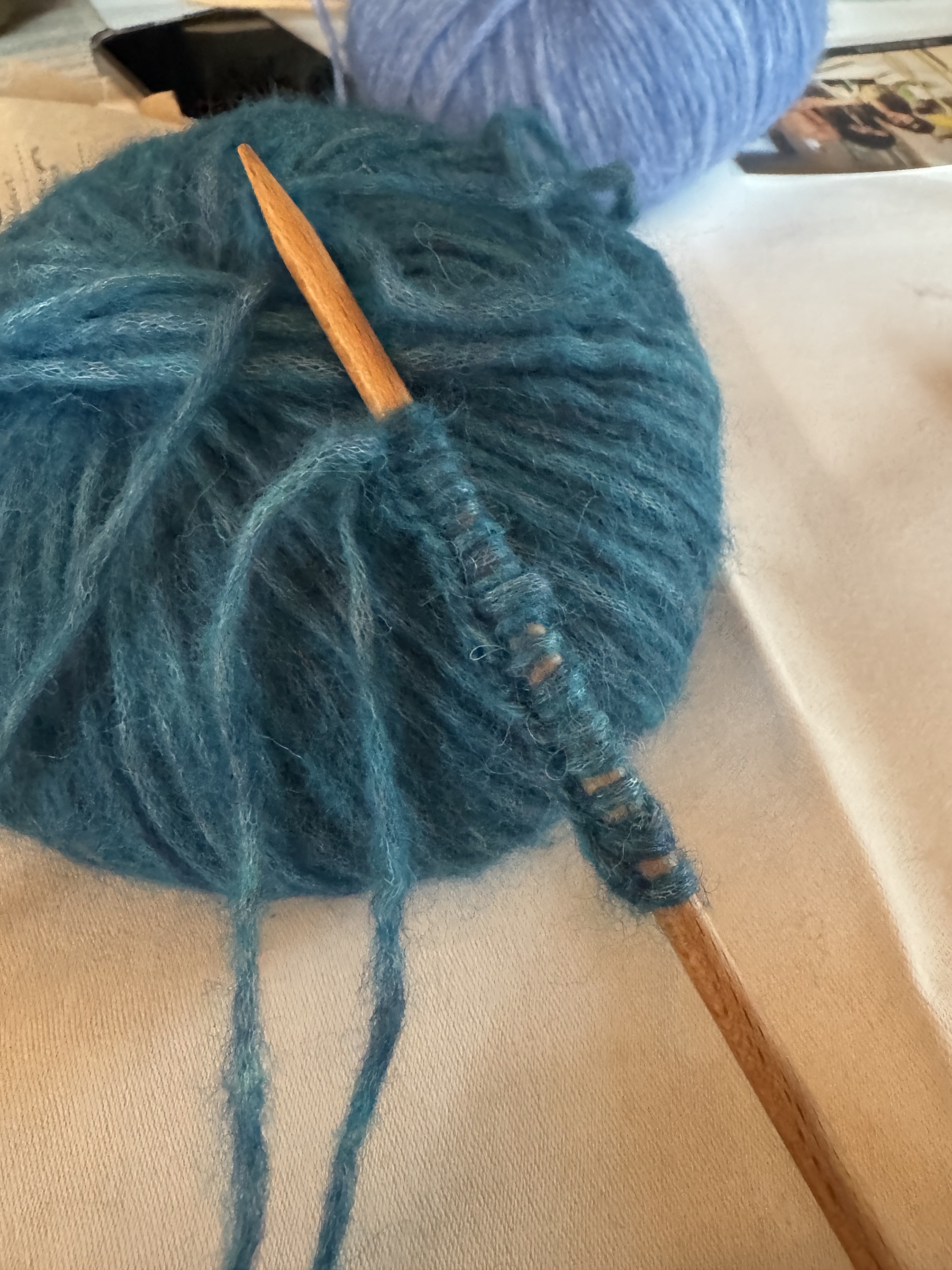
I’ve been toying with learning to knit for a while, partly inspired by Tom Daley’s words on using knitting to manage anxiety, and partly in an effort to keep well clear of the news and scroll my phone less. I signed up for a scarf-knitting workshop with De Steek.
My first effort was terrible, but I tried again when I got home and I think I’ve got the hang of it. It’s strangely satisfying, getting better at something in real time. I now have about 20cm of chunky scarf and my phone screen time was down 18%.


Connections
With the end of year approaching, and in an effort to scroll less and offline more I signed up to a professional networking app. The irony is not lost on me. It’s called The Breakfast and it’s supposed to connect people to meet in-person over breakfast.
I’ve been on it for about three weeks now and so far have been ghosted twice and had two approaches that had kind of creepy vibes. But I persisted and this week met my first Breakfaster, a Russian software developer. We had a perfectly nice chat about moving to a new city and I was introduced to an excellent coffee place I hadn’t been to before.
I’m going to try a few more Breakfasts before making a judgement on whether the app is for me.

The HR tech event gave me an opportunity to reconnect with Debbie French and Luciana Popescu, then go for dinner with the other panellists and the HR Tech Europe team.
Last week WB40 host and inveterate people-gatherer Matt Ballantine was in town, so we met for a pint and a chat about workshops, consultancy, covid-era weirdness and meeting people. Like me, Matt borrowed Mary McKenna‘s 100 People concept, putting his own spin on it with a target to have 100 coffees with 100 people in 2023. Unlike me he managed to hit and exceed his target.
Matt put me in touch with his Equal Experts colleague James Donovan, who has his own spinoff 50 Coffees target. We chatted about employee value propositions, aligning incentives in distributed teams and how hiring it broken. We also had an excellent chocolate, ginger and speculaas cake at De Bakkerswinkel.
Coverage
Back in the summer I recorded a podcast with Stephen Parkins and my old colleague David Semmens. Called Culturedge, this series looks at driving innovation in and outside of the corporate world, and the episode with me came out this week.
We talked about driving innovation in complicated organisations, where so much of the work is about building support for change rather than delivering it.
Making digital transformation work in complex organisations is a looooooong process of stakeholder engagement, navigating risk-averse budget holders and making people comfortable with ambiguity in structures that demand certainty.
And when you DO manage to make a change, it will only deliver value if you bring people with you by building capability, confidence and enthusiasm. Investment in tech is only realised when that technology is used by people to deliver value.
In a phrase I borrowed from Ann Kempster and now use *all the time* technology is easy, people are hard.
🎧 It’s available on all your favourite podcatchers. Listen in, let me know what you think.
Travel

I was in London last week, sorting out my flat there, and failed to meet anyone.
So I’m back next week and would love to catch up with a few folks and nudge closer to my 100 people target (I am at 51 for this year, must try harder next year).
Give me a shout if you’re in London 3-6 December and wanna grab a coffee; my diary’s pretty flexible.
 Sharon O'Dea