Weeknote 2025/15

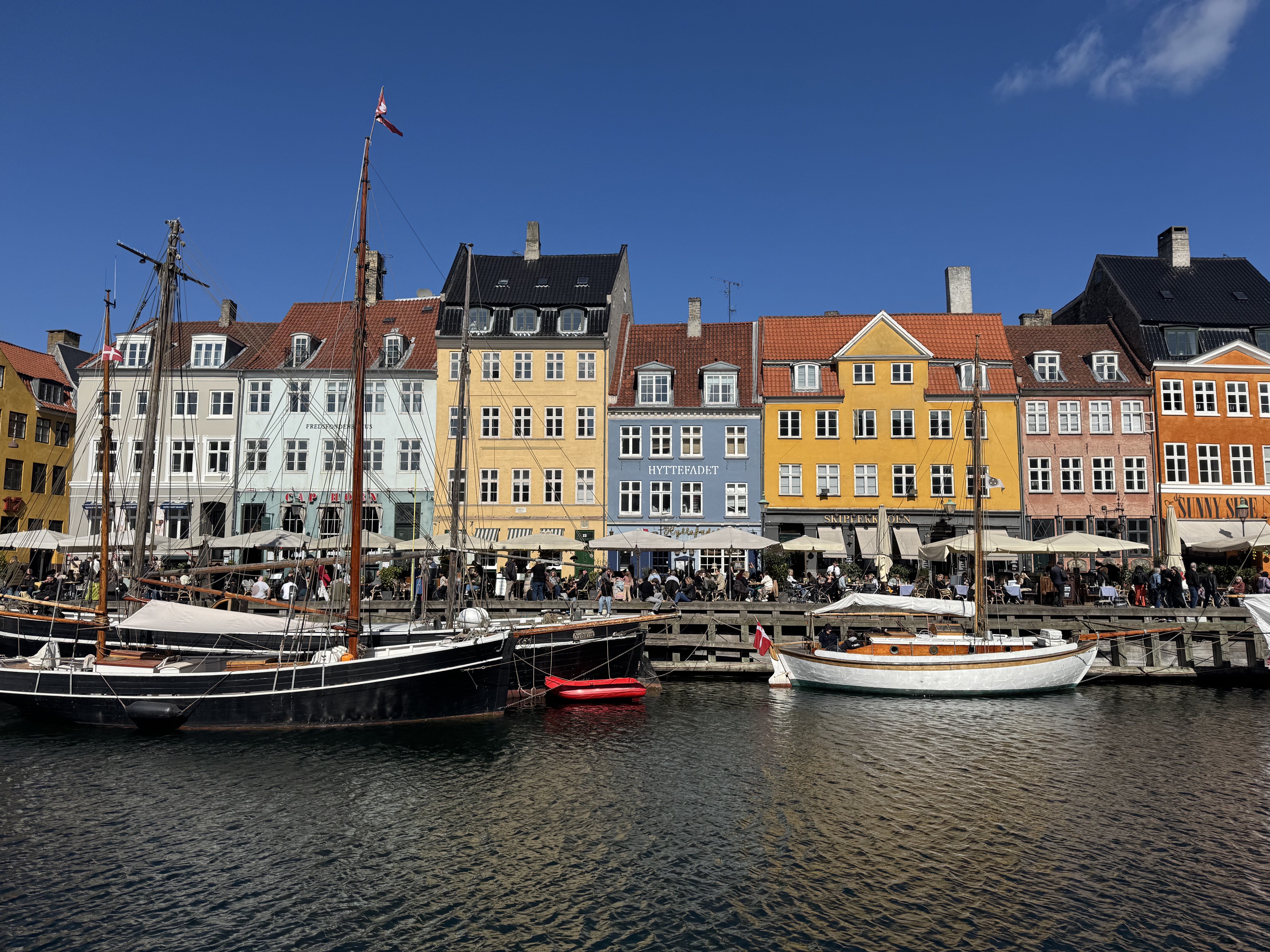
Obligatory touristy shot of Nyhavn, Copenhagen. Photo: Sharon O’Dea

There’s something about spending time with your nerd tribe that hits the reset button in the best way. After a few days in Denmark talking shop with the digital workplace faithful—followed by a gloriously sunny weekend back in Amsterdam—I’m feeling that perfect combination of knackered and energised. The kind of tired that comes not from burnout, but from doing work that matters, with people who get it.

This week at work

Huge week. Monday brought excellent news about a new project I can’t tell you about yet (and keeping it a secret is killing me). But rest assured, the moment the NDA drops, I’ll be shouting about it from the nearest rooftop.

Tuesday saw me hopping over to Copenhagen for the IntraTeam Event. My annual pilgrimage to the temple of digital workplace nerdery. I’ve been going since 2011, and it remains one of the few conferences that doesn’t just skim the surface. No hype, no fluff, just solid, detail-rich sessions with people who’ve done the work on complex, interesting digital workplaces.

My Lithos colleague Jonathan took to the stage with Sabine Arnold from our client SEFE Securing Energy for Europe, talking about how we delivered a content-first intranet in just 100 days. No generative AI in sight, just good, old-fashioned content design done properly, in two languages and at a frankly indecent speed. We didn’t stop at launch either: we built in training, governance, and community spaces so the thing can grow without collapsing under its own weight.
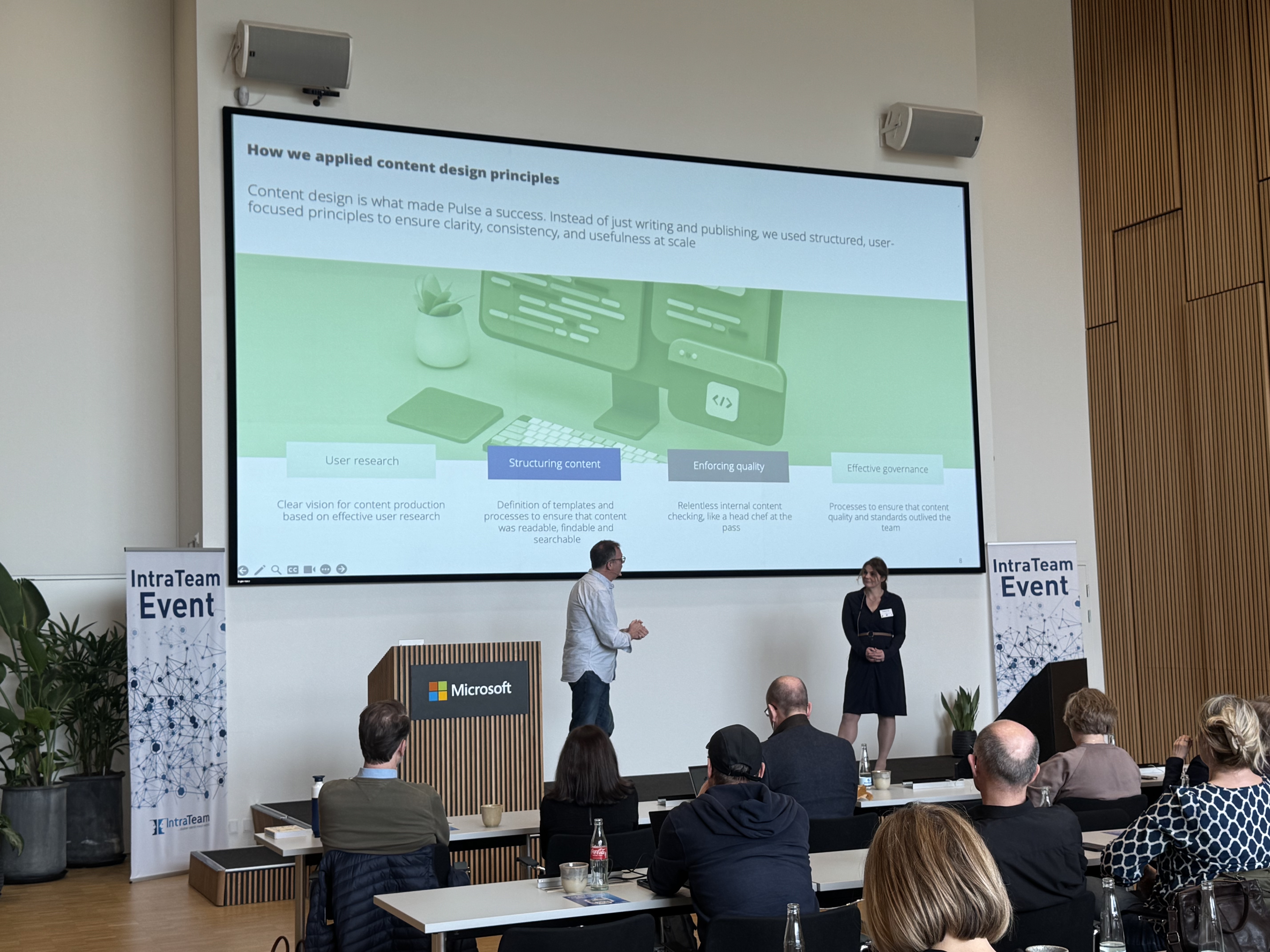
Jonathan Phillips and Sabine Arnold on stage at IntraTeam
Lithos Partners’ Jonathan and SEFE’s Sabine Arnold at IntraTeam

As ever, the real value came from conversations in corridors. Susan Hanley’s SharePoint insights were especially useful (though, as someone about to dive into a new SP project, they also induced mild heart palpitations). Copilot agents are showing promise (but as ever the biggest challenges are in the human factor side of implementation), intranet governance is still the wild west, and the best strategy remains doing less, better.

After the main event, IntraTeam’s Kurt gathered a gang of us “invited experts” to discuss where the industry’s going. I wasn’t sure what to expect, but it turned out to be the most valuable day of all. No slides, no sales pitches, just actual grown-up debate with some of the smartest people in the game.

And then, in an odd bit of narrative whiplash, I got blocked on LinkedIn.

Someone posted one of those “a bad intranet costs millions of dollars a year” type takes, based on the McKinsey stat about people spending 1.8 hours a day searching for information. You know the one. It did the rounds again, complete with some back-of-the-napkin maths and sweeping statements about the cost of poor digital experiences.

If you’re going to make the case for a better digital workplace, “time saved” isn’t going to cut it. Telling the CFO you’re saving five minutes a day is like telling a doctor you feel vaguely better. It’s not a diagnosis. It’s not a business case. Time spent searching is a symptom, not an outcome. Want to be taken seriously? Show how poor findability leads to risk, compliance failures, attrition.

So I said so. Politely. Succinctly. Then followed the LinkedIn prompt and turned my comment into a post. Got a ton of engagement—likes, nods, DMs… and then, boom. Blocked.

And interestingly (depressingly?), it’s not the first time. A few weeks ago another industry “influencer” responded to a (very polite) build I’d offered on one of their posts by… quietly deleting it. Poof. Gone. Not because I’d been rude or even really challenged their post, just because I’d dared to expand the conversation beyond a narrow comms focus.

And look, it’s their feed, they can do what they want. But if your response to professional critique is “lalala can’t hear you,” we have a problem. Our field doesn’t move forward by clapping along to every fluffy take.

If we’re not willing to have grown-up conversations about what good looks like (and doesn’t) then we don’t get to complain when we’re not seen as a business-critical function.

We do our industry a disservice when we treat criticism or challenge as a personal attack. If our default mode is cheerleading and groupthink, we’re not growing, we’re just echoing.

Disagreement isn’t disrespect. And blocking someone for calling out lazy thinking isn’t strength—it’s fragility.

Also this week

I also managed a quick visit to the Ocean exhibit at the Louisiana Museum of Modern Art. A stunning, immersive look at our relationship with the sea, blending science, art and activism in a way that somehow made me feel both awestruck and vaguely guilty.

Tonight’s the night: PowerPints, the PowerPoint-based comedy show. I submitted my slides Monday and promptly panicked about learning the thing. Enter ChatGPT, which turned out to be an unexpectedly brilliant rehearsal partner. Its dictate function can’t hear tone or pace, but it will sit quietly while I mumble at my screen for 10 minutes and offer some surprisingly helpful prompts to help me memorise my script.

Feeling ready. I’ll report back next week (unless I bomb spectacularly, in which case let’s all pretend this paragraph never happened).

(Still a few tickets left. If you’re in Amsterdam, come witness the chaos.)

Consuming

👩🏻‍💻 Internetting

I’m glad people are out there asking the important questions about emerging technologies. Such as “why DO so many AI company logos look like bumholes?

📺 Watching

I’ve been too busy to watch anything this week, which has helped me manage the FOMO of knowing the final series of Handmaid’s Tale is out across the pond.

📚 Reading

Hallie Rubenhold’s The Five was brilliant, so I’ve leapt straight into her latest, Story Of A Murder. Only a few pages in, but I’m already hooked.

🎧 Listening

Delighted with the new Pulp single, like bumping into an old mate in a pub and realising they’re still cool as fuck.

Connections

IntraTeam was full of excellent humans, but the people-ing didn’t stop there. I caught up with UX designer Eugene (from The Breakfast) for coffee, had dinner with two of my Colombia travel crew in Copenhagen’s achingly hip Meatpacking district, and squeezed in a drink with Hiveonline’s Sofie Blakstad before my flight. 10/10 week for chats.

Flash Pack Colombia reunion

Travel

Nowhere next week. A rare and beautiful thing. But after that, it’s all systems go: London, Chicago, Toronto, Glasgow.

If you’re local to any of those, let’s grab a cuppa. Or a gin. I’m not fussy.

This week in photos

Making sense of SharePoint with out-of-the-box intranets

It’s reckoned that 70% of intranets run on Microsoft SharePoint. It’s been the lead in the Gartner quadrants for enterprise content management and enterprise social for as long as either has been around. It’s perhaps surprising, then, that only once in my decade-long career as an intranet practitioner have I actually recommended to an organisation that they choose it.

That’s because while it’s packed with features and eternally popular with IT departments, it remains painfully difficult to deliver a simple, usable intranet with it. While it improves with every new edition – and 2016’s offering has made considerable steps forward in usability – the complexity and flexibility of this hydra of a product too often results in intranets that are over-complicated, ugly and hard to use.

The search continues to suck, the branding and customisation options limited, and the analytics it offers lags behind its rivals. Sure, it offers a lot of functionality – but much of it is stuff that few organisations want or need, merely making the intranet harder to use.

More often than not SharePoint intranets are an afterthought tacked on to any Office upgrade or rollout rather than actively chosen as a tool to deliver a best-in-class digital workplace and intranet. Where user research and planning does happen, and real investment is made in design, user experience and content, SharePoint can – and does – deliver truly great intranets.

Nine of the 10 intranets named as the world’s best in this year’s Neilsen Norman intranet design annual were SharePoint-based, as were around half of Intranet Innovation Awards winners. What sets these organisations apart is that they’ve invested planning and resources in really making a success of SharePoint – focusing on user needs, design and usability. But for everyone else this almost never happens.

So what do you do if you don’t have these resources and for whatever reason you’re stuck with SharePoint?

The last five years or so has seen the development of a wide range of products built on SharePoint that claim to quickly transform it into a useful, usable and fully-functioned intranet.

I was delighted to be given the opportunity to look more closely at a number of these products, as one of the team of reviewers for the second edition of SharePoint Intranets-in-a-Box, from Clearbox Consulting.

unnamed.png

The report looks at 26 of these products in all. They each had a slightly different focus and approach, but almost all delivered significant improvements in usability compared to a standard implementation. Some so much so that you hardly knew you were using SharePoint at all. Some products built on the SharePoint platform to deliver key transactional functionality for intranets, like HR or IT, while others had a heavier focus on enhancing and streamlining SharePoint for internal communications and engagement.

What they all had in common was the speed and ease of implementation. While the NNg award winners took an average of 1.3 years to deliver their intranets, out-of-the-box solutions can be up and running in days – or even hours. This makes it possible to deliver a decent intranet on top of SharePoint even with a limited budget and few development resources.

The SharePoint Intranets-in-a-Box report is out now. It’s packed full of practical advice and honest reviews (bad as well as good), and gives a useful overview of the available options at-a-glance. Between the team we’ve done over 200 hours of research to help you choose the right product for your requirements and budget.

Confession: I’d probably still recommend organisations starting from scratch consider alternatives. But as a self-confessed SharePoint Skeptic I’m delighted to see vendors come to the rescue for those who are tied into the Microsoft ecosystem, doing the hard work to make SharePoint suck less, so you don’t have to.

If you’ve read this far, reward yourself with 10% off the purchase price using my discount code IIAB2CBOX10.

Other blogs about Sharepoint Intranets-in-a-Box:


Intranets need to be a bit more fabulous

Last week I had the pleasure of visiting the Beauty Project, a celebration of all things beautiful at London’s Selfridges department store. There I listened to beauty columnist Sali Hughes talk to a panel of women about their experiences of – and different attitudes to – beauty.

While many deride the beauty industry as frivolous and superficial, for others make-up instills chameleon-like superpowers, giving them the confidence to go into any new context knowing they look the part.

As I returned to work the next day, it struck me what a depressingly under-appreciated quality beauty is in online experiences, and particularly in intranets. And how because we don’t apply make-up to our standard intranet faces, they suffer the fate of appearing unglamorous, dowdy and frequently unloved.

For a couple of years now I’ve been collecting intranet screenshots in a Pinterest board – over 230 so far. There are some great examples, but a lot of bad ones too.

It got me thinking: wouldn’t intranets be better if, like this weekend’s Eurovision winner Conchita Wurst, they were just a little bit more fabulous?

Ugly sister

Intranets have historically been the poor cousin of the organisation’s website. They’re utilitarian things. Intranets often began life as a little side project, put together by someone in IT, built using clunky old tools. They served a purpose, but they didn’t do it very elegantly.  That purpose was usually communication, resulting in dense, ugly pages of text.

If you were really lucky, you’d get some icons. But these early intranets were no fun – they were serious stuff, and they had the rugged bad looks to show for it. These early intranets were managed, painfully, using tools like FrontPage and LotusNotes.

Early intranets were no lookers

Creating and managing intranets became easier with the widespread adoption of content management systems. Unfortunately, this often meant Sharepoint. Sharepoint is packed with functionality, but left a lot to be desired when it came to visual design. At the same time, few organisations gave much thought to the need for strong graphic design on an intranet. After all, it’s not like you’ll look anywhere else, is it? (Remember, at this time many organisations still routinely blocked web access for staff).

Over time, intranets got a little better, with text communications giving way to other content. Early attempts were made to try and engage users with more than just text, with the use of banners.

As intranets evolved, they began to provide a route through to key services, like HR, IT or room booking.  Problem was, these services were often designed by HR or IT people who didn’t give a great deal of thought to user experience, still less to visual design.

Text-heavy and dull, but early attempts were made to use imagery

Now intranets aren’t on the web, but they are of the web. And as websites became clearer and more engaging, so too – eventually – did intranets. Slowly.

Intranets began to be aligned more closely with an organisation’s brand, using more imagery, bolder fonts, and embracing the use of white space rather than trying to pack every available pixel with more internal communications.

Cinderella moment

But no intranet manager can escape the march of progress. In the first decade of this century, Apple emerged from its doldrums to become one of the dominant forces in technology. And it did this through making products that didn’t just do more, but also looked better than their rivals.

Functional and beautiful became the order of the day. And people loved it. The web stopped being a nerd’s hobby and became a way of life for almost everyone.

In just a few short years, we had a revolution in our hands. Almost all of us now has more powerful technology in our pockets than we do on our desktops. The consumerisation of IT made us all more demanding – we wanted better functionality, faster pages, but we demanded better visual design too. The ugly web just wasn’t good enough anymore.

Intranets have responded to the changing demands of their users with intranets that offer utility as well as communication, in a form that approaches some of the cutting-edge cross-platform design we see on the wider web. This means offering communication and services that don’t just work, but also engage.

Intranets have begun to learn from the best of website design

Embracing the power of imagery

Once freed from the shackles of slow connection speeds, the web has quickly become more visual as brands began to recognise the power of imagery.

We process visuals 60,000 times faster than text, and because of that  images have become the currency of social media. They can instantly inform, intrigue, inspire, delight or capture the imagination of those that engage with them.

That’s because they affect us in two ways: cognitively, they expedite and increase our level of comprehension, recollection and recognition. But they also work emotionally, enhancing or affecting an emotional response.

And they do that in the blink of an eye. Following the lead of websites and social media, more intranets are making the most of visual assets to inform and engage, and tell their brand story.

Reaping the rewards 

And that’s because there are strong business drivers to do so. Organisations have long realised the impact an ugly office has on morale and productivity. Studies have shown that a well designed work environment improves productivity by anything up to 50%, increases job satisfaction by 24%.

Organisations invest time and money in making their offices look good, even if they’re not client-facing, because they know it makes business sense. But as the digital workplace becomes the place where we got to get work done, it follows that the same is true in our online environments too.

If the primary place that you do your work is online, then making that digital workplace one that people want to work in will have huge benefits in productivity and engagement.

As more of us work flexibly supported by a digital workplace, then the intranet becomes the primary way that we experience and understand our employer brand.

By connecting employees with the organisation’s brand and vision using both content and design, good-looking intranets create more engaged employees. Better looking intranets can have a big impact on their business outcomes.

The times, they are a-changin’

It’s encouraging, then to see intranets finally embracing the power of beauty. This year’s My Beautiful Intranet competition, the Digital Workplace Group’s annual intranet beauty parade,  is already seeing a steady stream of entries – and they’re a million miles away from the out-of-the-box ugliness that’s plagued the industry for two long.

Dense blocks of text, tiny images and 1990s styling has been replaced with big, blod and on-brand design on par with some of the best web sites around.

The competition is still open for entries – take a look, vote for your favourites or submit your own. I’m on the judging panel this year, and am looking forward to seeing more.

Is there more to life than being really, ridiculously good looking?

Of course a great intranet can’t just be about form over function. But by combining form and function, pairing great functionality with an interface that functions well and looks good, we create intranets that have a huge impact on engagement and productivity – and are really loved by our users.

Declining trust defines new role for intranets

Trust

The 2012 Edelman Trust Barometer, published last week, finds a deepening sense of distrust in governments, businesses and institutions. The annual global study, which questioned 30,000 people in 25 countries, reveals a dramatic shift in the value people place in information sources – which, in turn, has some interesting implications for communicators and intranet managers.

Across the globe, blame for the financial and political chaos of 2011 landed at the doorstep of government, as trust in that institution fell nine points to 43 per cent. In seventeen of the 25 countries surveyed, government is now trusted by less than half to do what is right. In twelve, it trails business, media and non-governmental organizations as the least trusted institution.

The private sector fared slightly better: trust in business fell from 56 percent to 53 percent, with countries like France and Germany, in the heart of the Eurozone economic crisis, experiencing double-digit decreases.

“Business is now better placed than government to lead the way out of the trust crisis,” said CEO Richard Edelman. “But the balance must change so that business is seen both as a force for good and an engine for profit.”

One of the biggest changes over the past year is the decline in trust in CEOs, which fell by 12 points. Faith in government officials fell like a stone too this year, down 14 points to just 29 per cent. It’s not unreasonable to assume this is reflected inside organisations too, so many will want to look again at CEO blogs as a means of increasing visability and trust in senior leadership. Over on Intranetizen, Jonathan gives some sterling advice on making executive blogs work.

Employee advocacy could be one way out of the mire. The survey found that credibility in average employees rose dramatically this year, so they are now the most trusted resource within an organisation. To capitalise on this, organisations must work harder to ensure their employees are informed and engaged – and then trust them to talk on the company’s behalf. This approach – what Edelman call radical transparancy – empowers employees to drive the conversation amongst their peers.

But to do this, organisations and leaders need to trust their employees first; companies which block access to social networks are preventing their employees from advocating on their behalf, and so missing a huge opportunity to engage with customers.

The barometer found people need to hear the same information about a company three to five times before they will believe it. This emphasises the importance of a proper communciations strategy which mixes on and offline channels to ensure the message gets out there. 

At the same time, trust in social networks as sources of information grew  by 75 per cent over the past year. Smart companies, then, will take advantage of this and embrace the value of conversations (by employees and the public) as a means of establishing identity and trust.

One corollary of this is that the growth in use of social networks, both internally and externally, means news travels fast. Employees can easily find information about their own company online, and all too often will hear (and believe) news from external sources before they do from their own manager.

This has huge implications for company transparency; corporate communciations structures need to keep pace with the changes. A good, social intranet – and improved access to these from a range of devices – gives organisations the means by which they can get their message to staff before they hear it from elsewhere. But this isn’t just a case of building it – leadership buy-in, and changes to the way corporate comms work with social intranets are essential to make it work.

Edelman’s report sets out long- and short-term approaches to rebuilding trust. In the short term, trust in a business is firmly tied to the bottom line. But future trust is more strongly linked to softer, societally-focused factors such as business ethics, placing customers ahead of profits and treating employees well. In the current environment, informed, engaged employees are best placed to communicate that message to the public – and intranets have a vital role to play in building that engagement.

Photo credit: Thorinside on Flickr

The (anti) social intranet at #ukgc12

Social intranet session

While UKGovCamp overwhelmingly focuses on how we use digital to engage with the public and improve public services, I firmly believe that to make that happen we also have to make public authorities themselves work better. So I was keen to have a session on intranets.

Fortunately, so was Stuart Murdoch of Surevine. It turned out to be a popular topic – so much so that we had to get a much bigger room. Stuart’s take on things was rather different from mine; he’s introduced social intranets at many organisations, and is a firm believer in social to make a better digital workplace.

Whereas I’m more critical of social for social’s sake, and feel the real value for intranets over the next 3-5 years is in transactional, making the intranet deliver real business value and helping people to do their jobs better. So this made for quite a lively debate, and we all had plenty to say.

Stuart contends that people are the most important part of intranets. I’d agree that the focus is fast moving away from documents and policies; content is no longer king, and the intranet is no longer simply a vast repository of HR documentation. Nor, the group felt, was the primary role of the intranet to push information at people.

A couple of people talked about the value of building a community around information. It’s one thing publishing hundreds of pages of HR policies, but barely anyone will be bothered to look for them. The social intranet could enable people to ask questions, and get answers from internal experts, who can then signpost them to information or resources they need.

One person suggested that “social can help you find the people in your organisation who can help you do your project”.

However, this is based on a simple fallacy; that these people want to be found. In almost all cases, in large organisations people are heavily silo-ed. An individual’s objectives relate entirely to the team or department they work in. Their performance will be measured on this, and in many companies (particularly in financial services) individuals will get financial rewards based on the value they deliver to their own team and projects – not anyone else’s.

If you work in Group Risk and someone rings you up out of the blue, having spotted that you speak Russian in the company expertise finder, you have no particular incentive to drop what you’re doing and help, do you?

Next we moved on to the question of what the intranet is and who it’s for. This isn’t as straightforward as it once was. Local authority intranets, for example, deliver content to council employees. But as departments are being merged into cross-borough shared services, and private firms and voluntary sector firms take on the role of service delivery, the simple question of who is the audience for an intranet isn’t at all clear-cut.

In such a diverse landscape, the one-size-fits-all intranet is no longer sufficient. Dan Harrison suggested we move beyond the idea of the intranet; the internet includes millions of sites, so why should the workplace web have only one? The answer is the heterogenous intranet, comprised of a variety of sites and services that meet the diverse needs of users.

Another participant gave the example of the RAF, which has different levels of intra- and extranet sites with different groups given access to each according to user need, blurring the boundaries between internal and external sites.

On the Twitter backchannel, Alex Manchester suggested the city as a metaphor for the digital workplace, with different suburbs and neighbourhoods that people visit for different reasons. Think of the corporate front page news as Piccadilly Circus, collaboration as Shoreditch, and the HR policy pages as Pinner.

We moved on to the question of how you encourage people to participate in social intranets. Most were, like me, pretty cynical about gamification, asking what value it delivers for either the individual or the organisation.

A few participants noted bottom-up, grassroots solutions often had more traction than corporately imposed ones. One example given was where a Yammer pilot was replaced with a corporate (Sharepoint) tool that quickly fell flat.

But bottom-up solutions often exist for a reason; where people find the tools they’re given at work aren’t up to the job, they’ll find their own – whether that’s using their Gmail due to tiny inbox sizes, or starting a Yammer network to collaborate on a project.

The key difference with grassroots solutions and small-scale pilots is that they are allowed to quietly fail. This process of trial and error enables people to find the right solutions that marry technology to organisational culture – a process that a big Sharepoint project is rarely able to go through.

A big variable here is organisational demographics; different solutions are needed for organisations full of knowledge workers and those with a high proportion of workers out on the coalface. But for both types (and all those in-between), the question of whether social functionality is what people actually want or need should really be asked before top-solutions are imposed.

Social is not an outcome. Making the organisation work better should be the desired outcome (measured in money saved, projects completed more quickly, enquiries dealt with, etc.). Social functionality can be part of the solution, but should fit alongside redesign of processes to make the intranet deliver real business value and efficiency.

You shape your intranet. Thereafter, it shapes you.

In his book Understanding Media: The Extensions of Man, Marshall McLuhan said “we shape our tools. Thereafter, they shape us”.

McLuhan’s focus was language; he argued that language doesn’t describe that which is in the world, but rather, we can only see the world through the medium of language. Language is limiting; our tools don’t let us do whatever we want, but instead limit and often dictate what we do.

His thesis is that while the way we work, think and communicate have led to tools being designed the way they have, once this design is finalised it closes the loop and that tool influences how you think or behave.

To take an offline example, albums are around an hour long simply because this was how much music would fit on a vinyl record. But this persisted long after the physical media was replaced with one where length was no longer so constrained; the shared understanding remains that the art form of the album is “a collection of approximately an hour’s worth of music”. Even after the arrival of the MP3 player, the concept of the ‘album’ remains, with the download market set up so music can be sold in two sizes: single songs, or ‘albums’. An arbitrary decision about vinyl production has shaped the listening habits of four generations.

The same is certainly true online. It’s years’ worth of your reading and searching habits which determine the priority Facebook gives to updates from your friends. But this quickly becomes circular, so that in time you no longer see updates from some friends, and they’re filterered out of your life, while others get more of your attention. In the early days of Facebook, it was us – as consumers – who shared our updates, uploaded our pictures and moaned every time a new feature was rolled out.

But here we are years later, with Facebook serving us up a homogenised diet of updates (in a feed feature no one seems to like), stalking us across the Internet, and auto-tagging us in pictures – and we just suck it up. Because, well, what choice have you got? You’ve got to be on Facebook these days, don’t ya? etc.

As on the Internet, so in the enterprise. In its infancy, it’s the organisation that shapes the intranet, designing it around the needs of internal users. Or at least, that’s the theory. In truth, organisations get the intranet they deserve, with flaws and compromises and sometimes just bad decisions.

But thereafter, it’s the business that has to live with this, and it’s the people within it who have to suffer the consequences. The decisions you make at the design stage will affect the way employees work every single day, for years.

The language used on your intranet – from labelling to tone of voice – both reinforces and shapes company culture. So, too, does visual design, technology and content; all of these things say something about the type of organisation you are. They impact on engagement and retention. Claims to be a hyper-efficient organisation working at the forefront of technological change cut little ice with the workforce when they still need to download a form in Word, print it, sign it and post it to apply for remote access to your network.

Intranet design shapes the way the business works. Done well, social functionality can break down silos, enable people to work more effectively and support flexible working. Done badly, design costs money – in reduced productivity, disengaged staff, abandoned processes and channel shift. A badly designed form might be a necessary compromise right now, but it’s a big bundle of irritation that could be annoying colleagues long after you’ve left.

What do we do about it?

  1. Don’t make your intranet bad in the first place. This seems obvious, but it happens all too often. I’ve lost count of the times I’ve heard intranet managers describe the latest feature on their intranet as “well yes, I know it’s a terrible idea, but the CEO’s insisting on it”. Time invested in getting all your senior stakeholders to sign up to the principles of User Centred Design early on will pay dividends later on as it gives you the option to suggest any Bright Ideas are user tested (and changed) before being bolted on to your intranet.
  2. Identify your fail points and make the business case for making changes. Got a bit of functionality that everyone hates? Find out why, work out what it’s costing (not necessarily in cash terms – task completion time, or numbers of abandoned transactions are all powerful arguments for change) and sort it out.
  3. Design for the organisation you want to be, not the one you used to be.
  4. Focus on making things work the best way they can, not replicating offline formats or existing practices on the intranet. I’m yet to experience a single instance where anyone loves a printed document so much that they’d rather have a PDF than a page properly formatted for web.
  5. Improve, all the time. All too often, intranets are seen as a project, to be overhauled over the course of a few months then left for another five years until it’s once again woefully out of date. Good intranets continue to innovate, adding on new functionality to support changing needs and deliver organisational goals.

It was McLuhan who coined the phrase the medium is the message. Your intranet is your medium; what message does it convey to your organisation?

Silly season

We’re all familiar with the concept of silly season in the media. With the World Cup well and truly over, politicians on recess, schools on holiday and the courts shut for a few weeks, the papers are left scratching around for something to fill what the Germans call sommerloch – the summer [news] hole.

And so, too for internal communicators. With so many colleagues away, decisions aren’t being made and there’s a dearth of campaigns, updates or announcements. This means publications are unfilled and intranet pages reek of last week.

But while the papers have an endless supply of celebrity trivia and the annual parade of attractive a-level students picking up their results, corporate communicators have no such luxury. So how do we deal with slow news days?

Catch up with old news. With some space and time to spare, have a look back at the past few months and think about projects or initiatives which didn’t get as much attention as they deserved at the time. Are there any updates? Can you report on progress? You might earn a few brownie points by giving them some publicity now.

Recognition. Hertzberg’s work on motivation found a significant proportion of people are motivated to work because of the recognition they get for it. With budgets tightening and under-inflation payrises talked about for many, now’s the time to focus on those non-financial rewards and motivations. By taking the opportunity to recognise the hard work our colleagues have been putting in, we can better motivate them to say, stay and strive.

Admit defeat. Silly season is an international phenomenon – one familiar in offices around the globe. With so many colleagues – especially those with children – away, making significant changes or announcements is always going to prove difficult; any important communications made now might be missed by those colleagues who are away.

Why not take some time to focus on some housekeeping tasks, to make sure your intranet is running smoothly, ready to hit the ground running in September (I’m tidying up our A-Z, which is proving more interesting than it sounds!)

How do you deal with slow news days on your intranet? Does it even bother you? Post your comments.

Peering behind the firewall

Ok, so I’ve been a bit rubbish at keeping up with the blog lately. I’ve been kinda busy, you know, with that whole election thing. And launching a new intranet. So nothing important or anything…

Now things have calmed down a little I’m looking at where we go next. Now we have a proper platform in place the options are – while not exactly unlimited – certainly wider than before. But where to start?

One of the (many) difficult things about intranets is that they’re behind closed doors. With websites you can just take a look at what other organisations are doing and nick all their best ideas build on best practice. With intranets, it’s not that simple – but it’s certainly possible.

I’ve been making a real effort to do this lately. First up was IBF24, a 24-hour live webcast from the Intranet Benchmarking Forum. This blended interviews with industry leaders with live intranet tours from some of the world most prestigious companies, including British Airways, Ernst & Young, Thompson Reuters and the BBC.

This was an ambitious but hugely successful event, with over 700 practitioners joining in from 16 countries. According to IBF, around 100 questions were asked (though imho this number would have been a lot bigger if they’d engaged the Twitter stream more actively from the start).

Then last week I attended the Mastering Intranet Management course run by industry experts Melcrum. This was an excellent two-day event covering some of the key issues for intranet managers today, from building a business case to creating a governance model, and from communications planning to evaluation. It was delievered by Sam Marshall from Clearbox Consulting and John Baptista, a professor  of Information Systems at the University of Warwick. My only criticism was that it tried to fit too much into two days, but that’s perhaps inevitable given the wide scope of intranet management work.

Fellow delegates came from a broad range of public and private sector firms in the UK and abroad – and once again a highlight was the chance to take a look at other intranets and ask questions of those managing them.

At both IBF24 and the Melcrum course, a key theme was the need to tailor your intranet offering to your organisational culture. The intranets I took a peek at offered widely varying functionality and style – but each were successful as they met the needs of the company. So Clifford Chance‘s expertise finder and Ernst & Young‘s dynamic org chart people were both impressive pieces of kit, but not at all suitable for my own organisation (or, most likely, in each other’s).

Another frequent discussion was the evolution of the intranet. There was a strong feeling amongst many taking part that the term ‘intranet’ may not be sufficient anymore, with the scope of our work now encompassing collaborative workspaces, transactional services and much else besides.

IBF’s Paul Miller suggested that the intranet is on the way out, to be replaced by a broader ‘digital workplace’.

Whilst it’s true that intranets continue to evolve beyond their original one-way communication function, it’s probably too early to say the intranet is dead. Again, culture is king; in some organisations the digital workplace brings significant competitive advantage, but in others it’ll be a long time before online collaboration replaces old methods and face-to-face meetings.

The role of the intranet manager is to look at business objectives and organisational culture, and work to implement technologies that suit both.

It’s this marrying of technology and culture that makes looking at other intranets so interesting

I’ll be walking the talk tomorrow, presenting my own workplace intranet at IBF’s Intranets Live along with people from UNHCR and Oracle. Join us live online, and follow the Twitter stream – I’m guessing the hashtag is #IBFLive. (EDIT: wrong! It’s #intranetslive)

I’m following that up next week by taking my turn to present at Intranetters, a small regular gathering of London-based intranet types, and have arranged a few reciprocal show-and-tells with intranet teams in other companies.

Intranet management can be a solitary occupation; most organisations have one (or fewer) people with responsibility for the intranet, and even the biggest firms have only a small team. But by networking with other intranet managers and sharing ideas, problems and strategies we can all learn a little to take back to our own organisations.

Intranets are key to recovery in 2010, say surveys

Each January, Jakob Neilsen’s annual intranet design annual is released. This showcases the top ten intranets of the year, and is a good indicator of trends in intranet design and usability.

This year’s Neilsen report found intranets are becoming a higher priority for organisations, intranet teams are growing in size, and increasing numbers feature mobile accessibility and social networking.

On the face of it, the improved functionality comes as no surprise. Mobile internet and social media has grown exponentially over the past few years. Our experience of using the web creates expectations of the kind of content and functionality we want at work too; as we rely on our iPhones to do everything for us when we’re out and about, we expect to be able to use our intranet on it too.

That intranet budgets and teams have continued to grow despite the long recession reflects a growing realisation that intranets can deliver real return on investment for organisations.

Significant and measurable returns can be made by making information easier to find – quite simply, less time spent searching for things is more time people can spend doing something worthwhile. Functionality like self-service HR can see sizable reductions in administration costs.

Less easy to measure, though, is the value of the intranet in improving engagement. Last year’s MacLeod Review on Employee Engagement (from the Department of Business, Innovation and Skills) found that more widespread adoption of employee engagement approaches could impact positively on UK competitiveness and performance, and meet the challenges of increased global competition.

Good intranets not only make life a little easier for colleagues, they improve communication, facilitate collaboration, enable people to connect and have their say, and help workers feel part of their organisation. This, in turn, encourages employees to say, stay, and strive.

Another study out this month, from communication research specialists Melcrum, would suggest organisations have heeded Macleod’s call for greater focus on engagement.

In the survey of 2,212 senior communicators, 40% said the business case for social media within internal communication was clear and that there is visible return on investment, while 53% of those who responded said they were planning to increase investment in their organisation’s intranet in 2010.

The results of this study show that not only are organisations investing in good intranet design, but also in functionality and content. When asked about channels used for internal communication, the intranet ranked as the most effective channel by 73% of senior communicators worldwide, with a clear majority believing webcasts and video would grow in importance in 2010.

Respondents highlighted a wide range of business benefits from investment in internal social media. These included improved levels of employee engagement (21%), better communication with remote workers (16%), knowledge management and collaboration (25%), improving employee feedback (20%) and making business leaders more visible and accessible (14%).

Both the Neilsen and Melcrum studies show intranets are maturing. Increasingly they’re moving away from being a simple repository of information and becoming instead a platform for communication, collaboration and engagement.

Victoria Mellor, CEO of Melcrum said: “There is a fundamental shift happening with how information flows inside an organization. Peer-to-peer online networks are enabling real-time feedback from employees to inform decision-making, not to mention facilitating collaboration between remote workers.”

With budgets tight, the pressure is on for organisations to demonstrate value for money. But with growing evidence of the business benefits of investment in intranets and internal social media, it’s clear they’ll play an even more important role in 2010.