
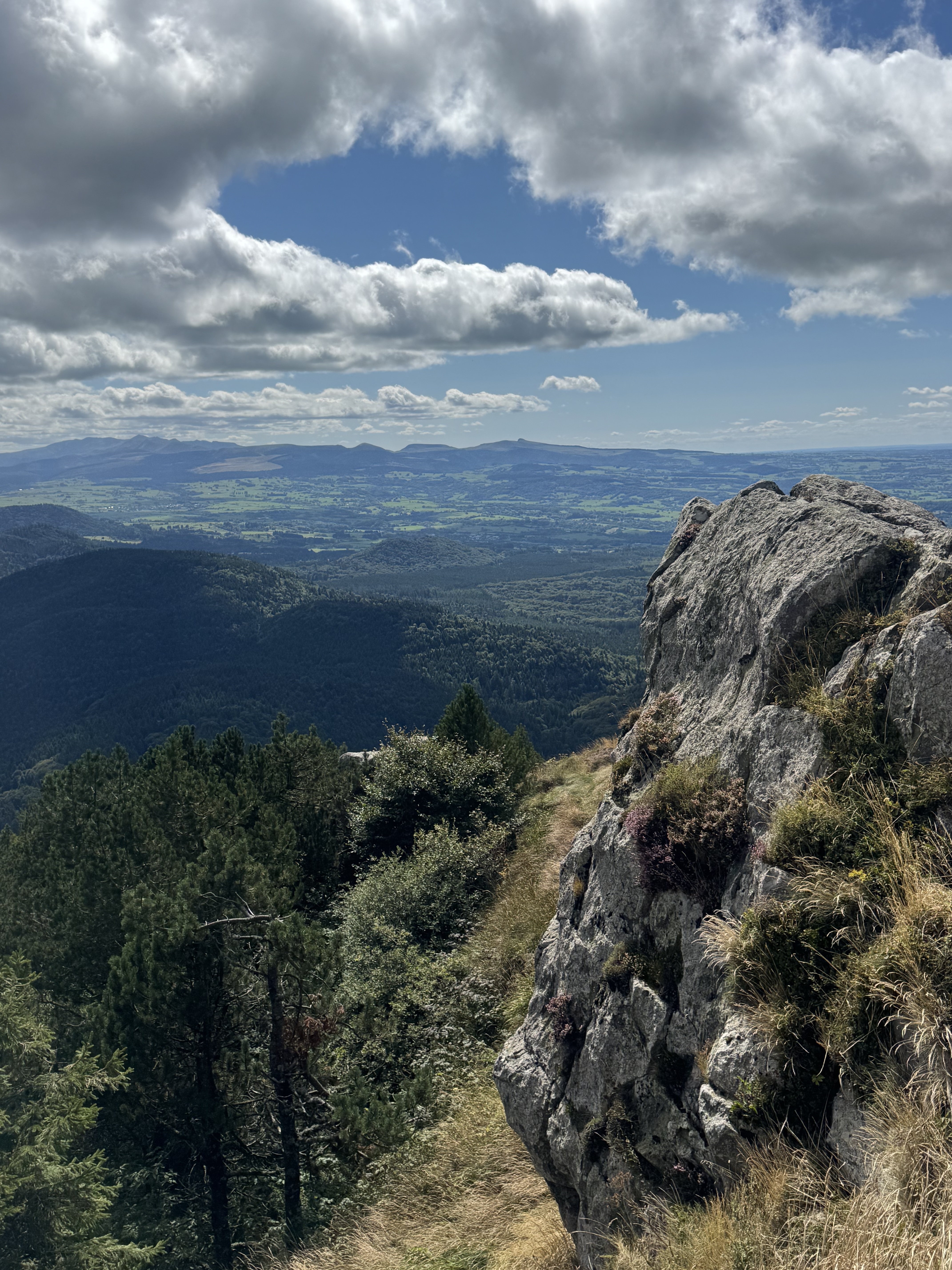
This week I travelled to the Auvergne to scatter my grandmother’s ashes, close to the village where she was born more than a century ago.
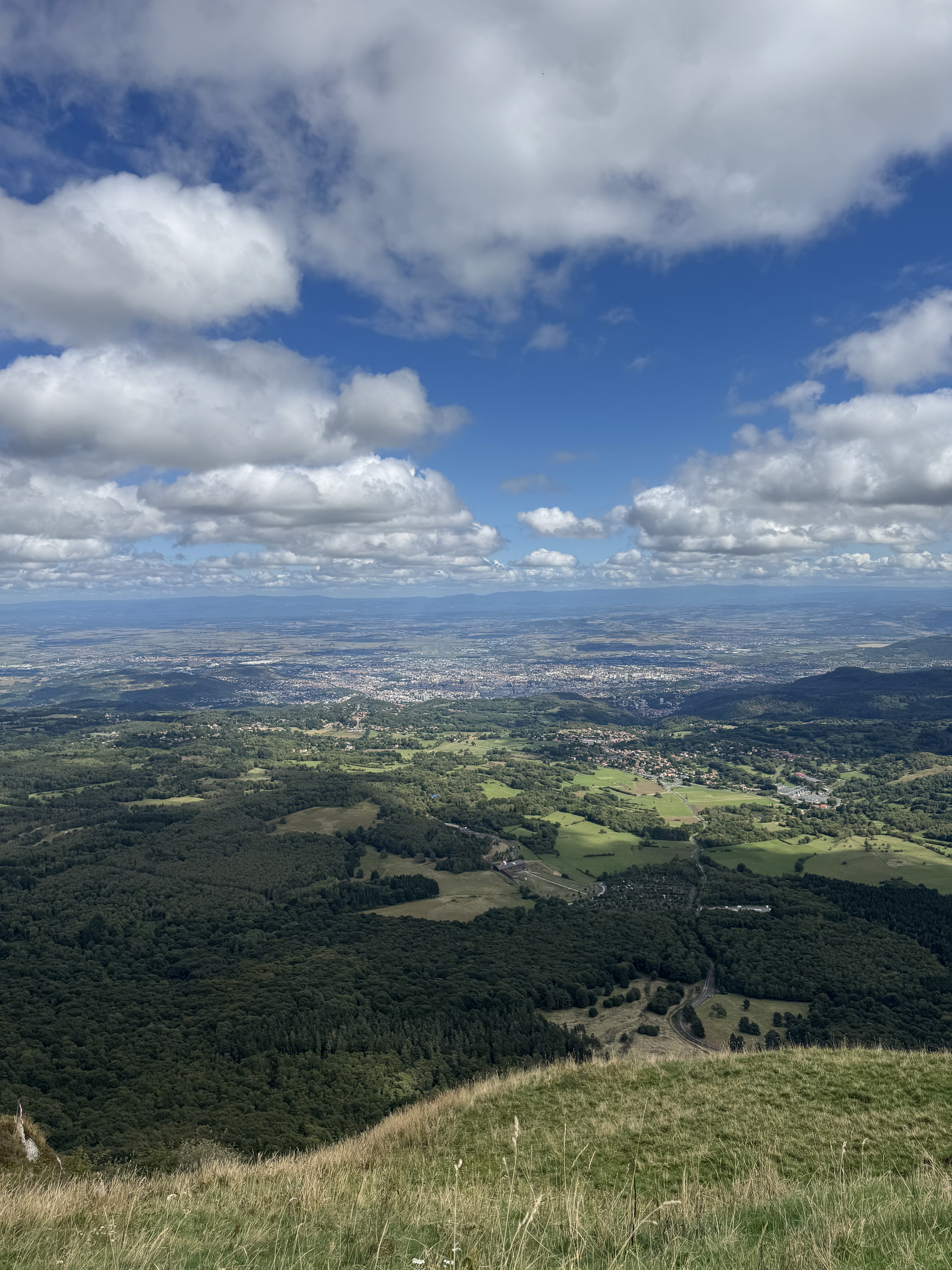
In her last years she painted from memory a scene of her childhood: a forest road, two great rocks, then suddenly a clearing — the valley opening up below. “It was a wonderful sight I would always remember,” she wrote.
On Friday I stood in that same spot, saw the same view she carried with her for a lifetime, and laid her to rest in the ground she loved. A return, of sorts, to her beginnings.
Nan’s life stretched far beyond that valley. She lived through occupation in Paris, celebrated its liberation in a shower of tricolores, trained as one of the few women engineers of her generation, raised a family in a new country, and never stopped campaigning for the values she believed in: liberty, equality, fraternity.
But she was also the woman who knitted us jumpers, made extraordinary birthday cakes, and whose cooking remains unmatched. She juggled logic and creativity — designing a trigonometry-inspired cushion one day, writing poetry the next.
Being back in the volcanic hills where she was born, I kept coming back to this thought: our origins matter. The places we start from, the people who shape us, the values we inherit. Even if we take a different path, we carry those beginnings with us.
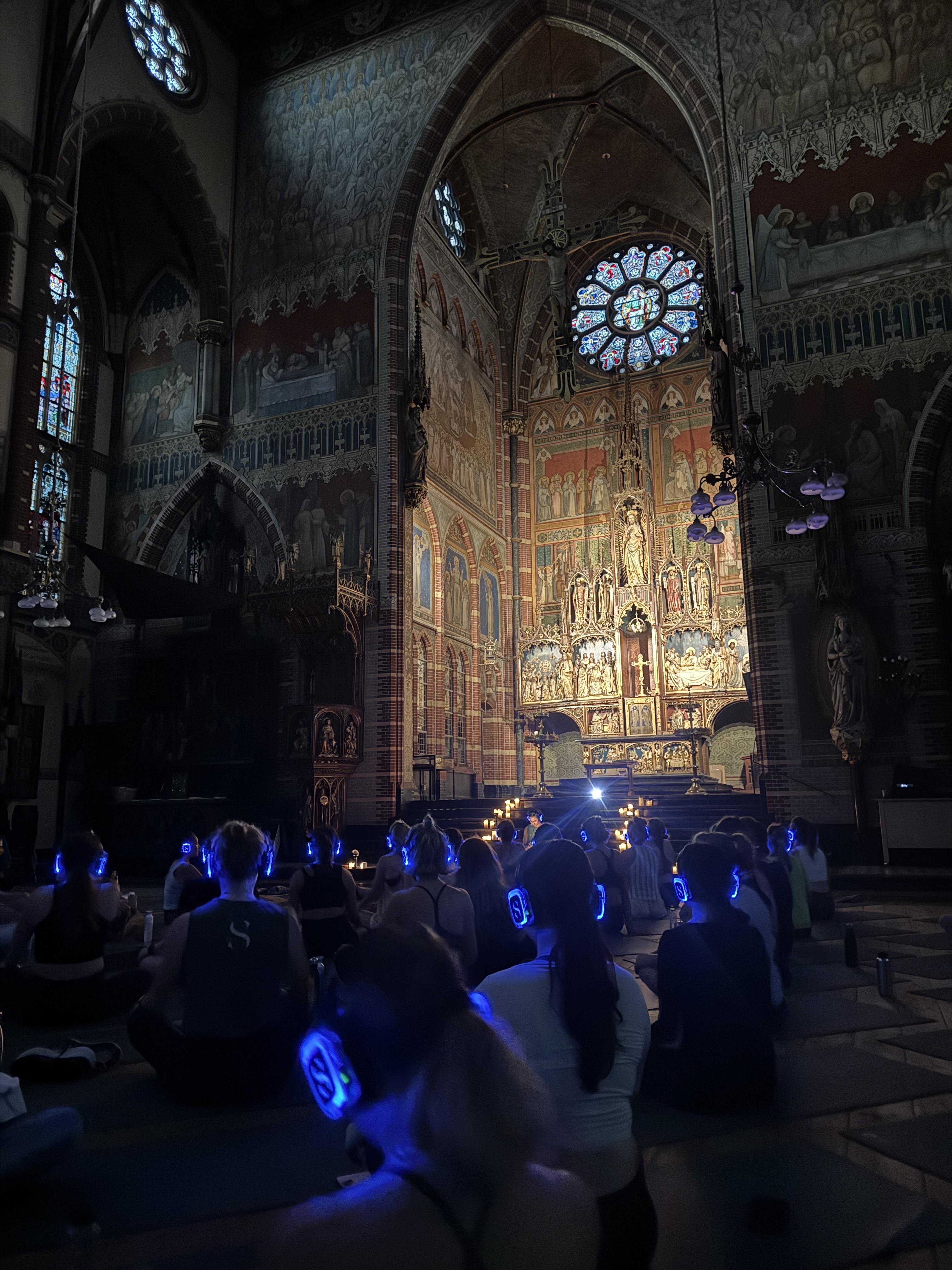
That theme ran through the rest of my week too. A conversation with Cathryn, who was a formative influence on me as a teenager. And then my gym instructor, during a Sanctum class — which, if you’ve not had the dubious pleasure, is essentially a wellness cult disguised as a workout. Picture a candlelit room full of beautiful people in Lululemon, bouncing in silent-disco headphones to pounding techno, somewhere between burpees and interpretive dance. It’s like Berghain meets a yoga retreat, only designed to be an Instagrammable Experience.
In the middle of this fever dream, the instructor delivered his pep talk about looking back at who you were five years ago. Normally I’d have rolled my eyes so hard I’d need medical attention. But, landing as it did at peak pre-menstrual sensitivity, I found myself ugly-crying into my wireless headphones while influencers around me humped the ether like it was a path to enlightenment. A spiritual awakening via techno squats.
And I couldn’t help but wonder what my Nan (practical, principled, sharp as a tack) would have made of it all. Probably a raised eyebrow, then a wry laugh at the strange, circuitous ways we find meaning.
So that’s this week’s reflection: on beginnings, origins, returns — and remembering to be proud of the journey as much as the destination.
This week at work
After a quiet summer, the inbox has suddenly remembered we exist. A flurry of new business signals came through, so this week was largely about shaping proposals. One’s already had a tentative yes — the best kind of feedback — and I’m looking forward to getting started. The others are out in the world now, hopefully working their magic.
On the book front, Jonathan and I made good progress on the next two chapters: one on the people and skills needed for digital comms at work, the other on content. We’re finding our co-writing rhythm — passing drafts back and forth, layering in ideas, editing each other’s words until we’re not quite sure who wrote what. It’s satisfying, collaborative, and occasionally a little disorienting.
But even as the chapters take shape, I can hear the sound of deadlines approaching fast, like distant thunder that’s getting louder every day.
Also this week
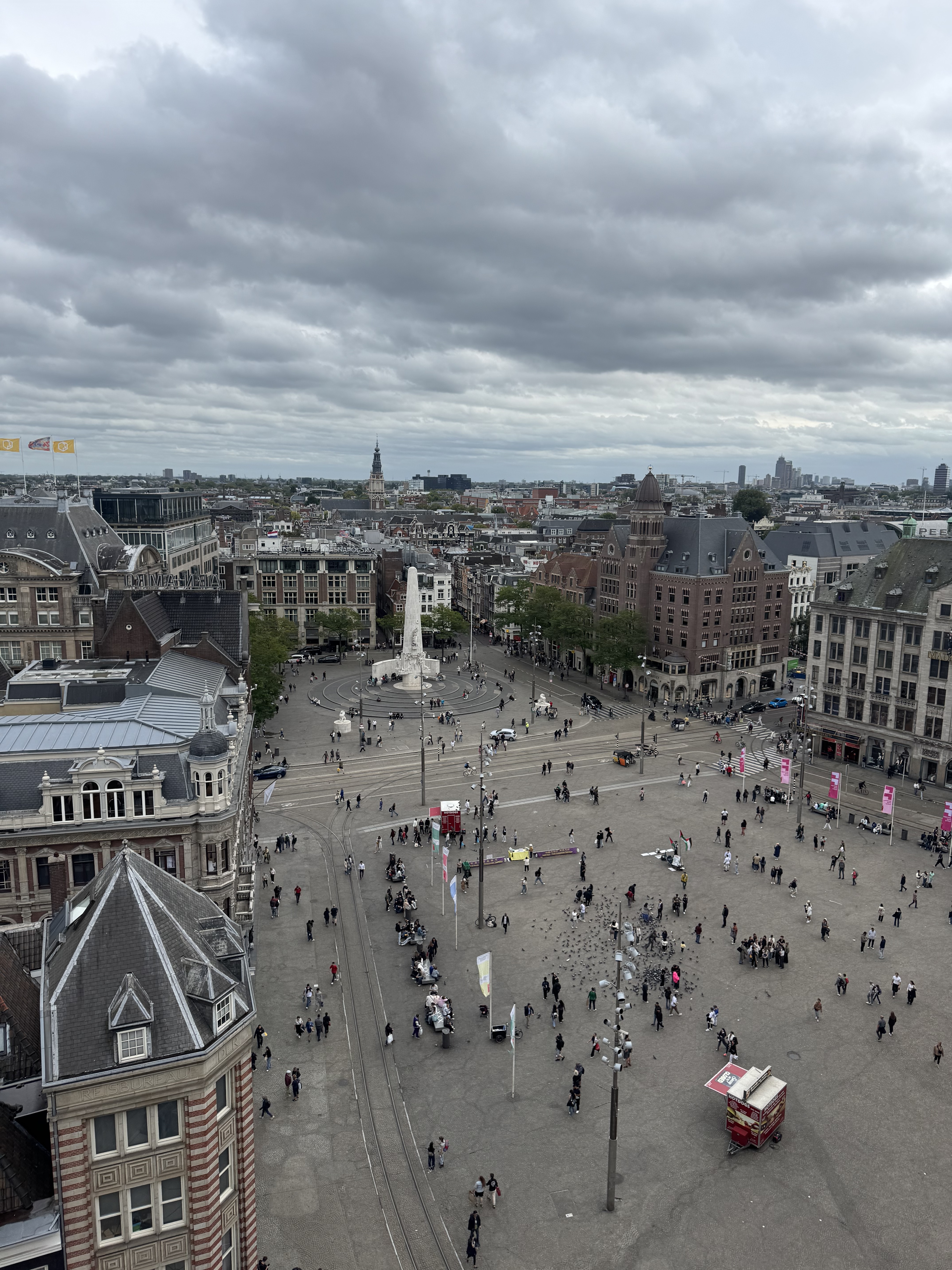
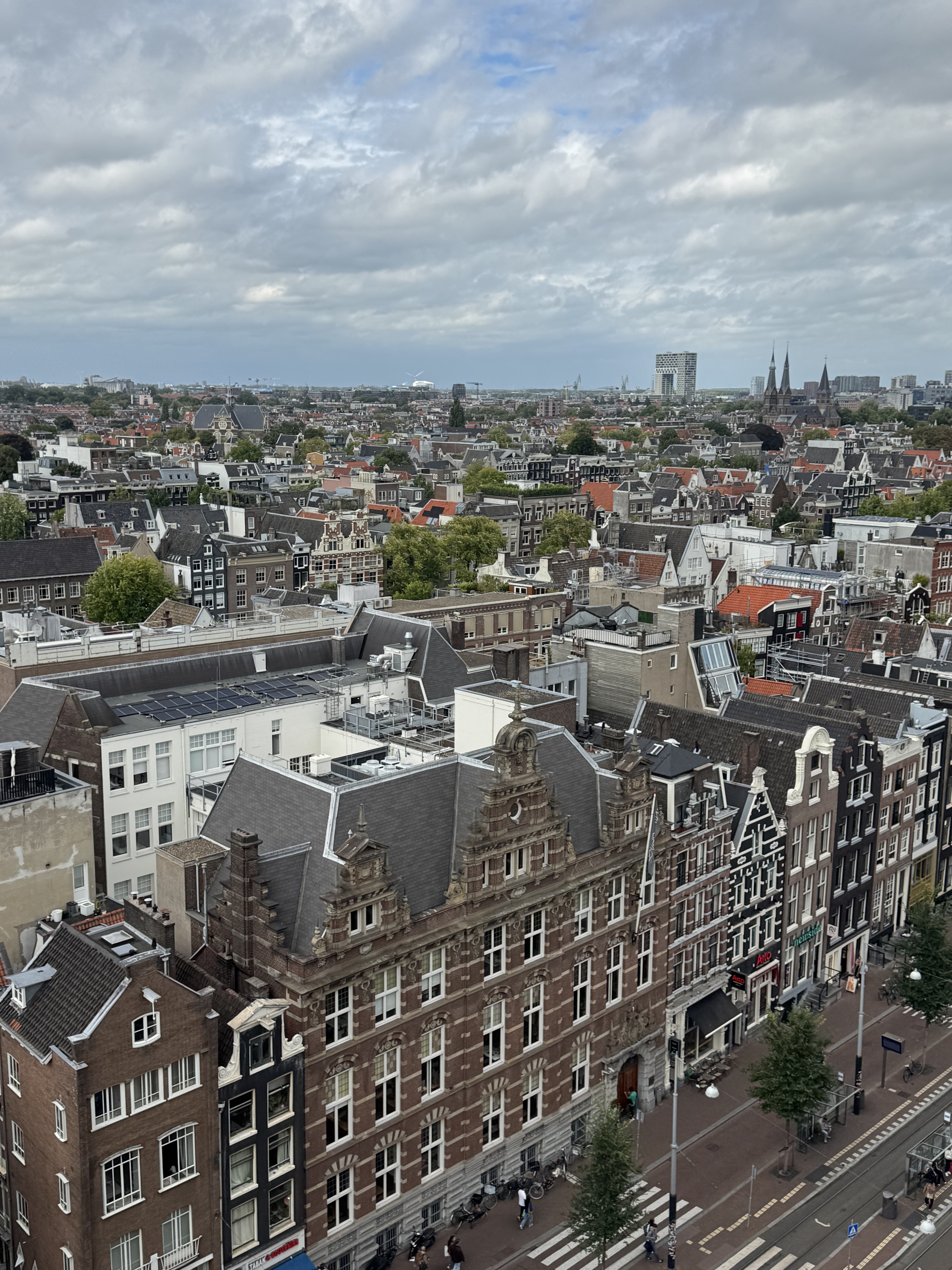
I climbed up the Dek van de Stad, a temporary platform built on top of the Nieuwe Kerk. The views were spectacular — a chance to look down on Dam Square and Amsterdam’s rooftops from a height you don’t normally get. Equal parts breathtaking and mildly vertigo-inducing.
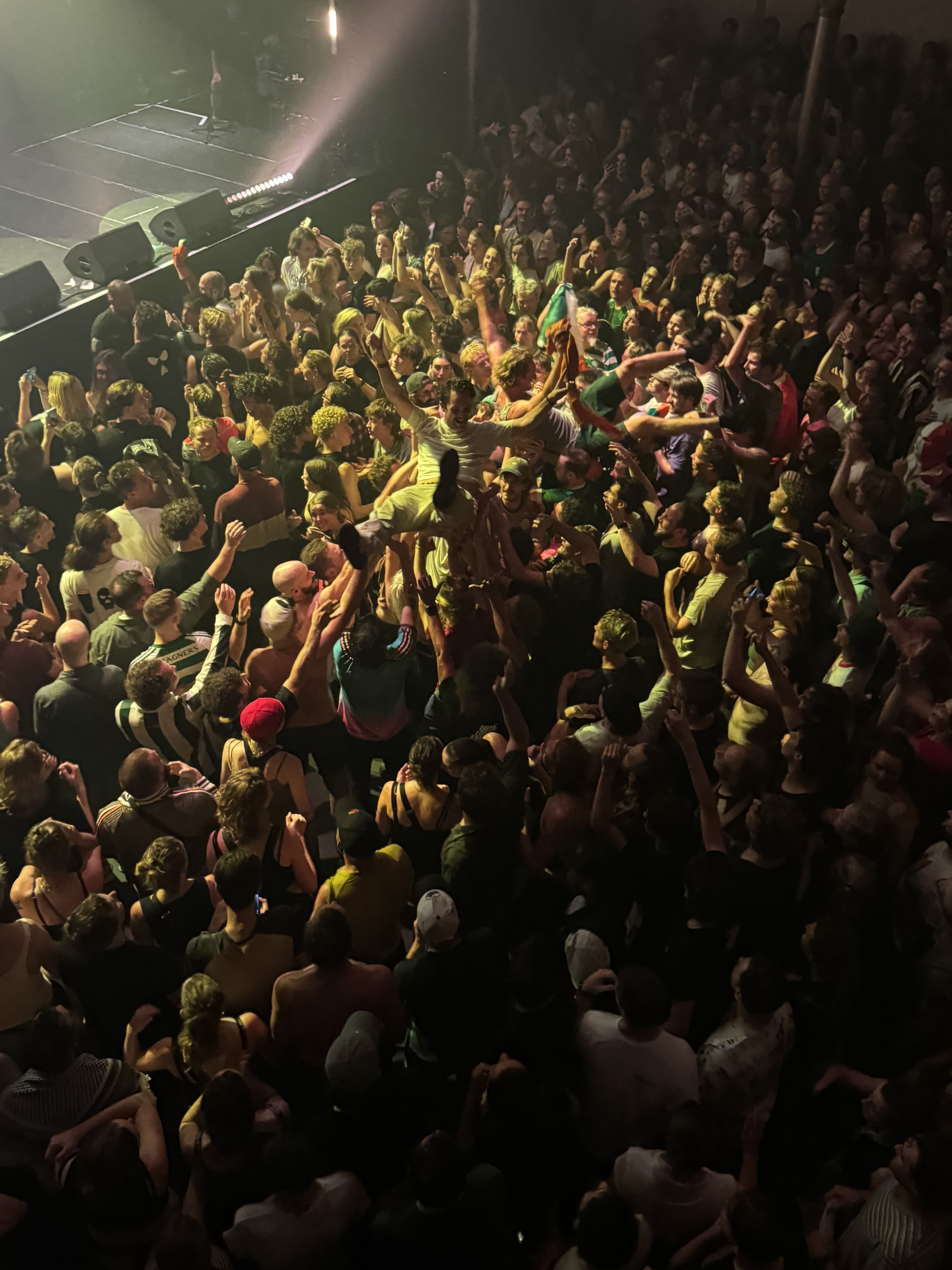
And then straight back down to earth (and into chaos) at Paradiso, where I saw Kneecap. Security was tight, the crowd was raucous, and it’s still mad to me that less than two years ago I saw them in what was basically the upstairs of a pub. Now they’ve got a sold-out Paradiso bouncing in unison, two nights in a row. The rise has been meteoric, the energy relentless — right through to the crowd singalong to Come Out Ye Black And Tans after they went off stage.
Consuming
👩🏻💻 Internetting
News this week that the UK Department for Business and Trade’s three-month trial of Microsoft Copilot found… no real productivity boost. Emails and meeting summaries sped up a bit, but anything more complex actually slowed people down or spat out lower-quality work. So much for the hype cycle.
Does that reflect a lack of proper strategy and training, or just cold, hard reality? Probably both. In my experience, some people and roles naturally click with AI tools while others flounder when left to get on with it. Curiosity, persistence, confidence — and the time to experiment — all matter. Without those, adoption lags.
There’s clearly a lot we need to do to help people level up with AI at work. But I can’t say I was surprised. My own encounters with Copilot have been… underwhelming. Let’s just say it’s not yet living up to the billing of “revolutionary productivity tool” — more “expensive intern who occasionally remembers to attach the file.”
📺 Watching
Marking 50 years since its release, we re-watched Jaws. Still the ultimate advert for staying on dry land. Half a century on, the special effects remain gloriously ropey, the mayor still deserves a prison sentence for crimes against public safety, and John Williams’ two-note score is still the best thing ever written about imminent death by fish.
It’s amazing how Jaws manages to be both a tense thriller and a camp comedy, depending entirely on how rubbery the shark looks in a given scene. And yet it still works: a masterclass in making you terrified of something that looks like it escaped from a theme park gift shop. Just the thing I need before a holiday that involves boats.
📚 Reading
Continued with The Albanians: A Modern History, but have only got as far as the Ottoman Empire. Hoping to nudge my knowledge closer to the 20th century by the time I get there.
🎧 Listening
Driving around with my brother this week introduced me to Cheekface, an LA indie trio who specialise in anxious brain dumps set to catchy riffs. Imagine Lou Reed or Jonathan Richman talk-singing about late capitalism, social awkwardness and existential dread.
They’re smart, deadpan and gloriously uncool, with songs that turn modern malaise into shout-along anthems. Start with I Only Say I’m Sorry When I’m Wrong Now or Listen to Your Heart. If you like those, welcome to the cult of Cheekface.
Coverage
My Red Hot Opinion Department was working overtime this week.
For Strategic, I looked at the noticeable chill in corporate culture — how empathy has slipped off the agenda, and what that means for leaders trying to engage their people when the mood music is getting distinctly frostier.
And over at Unleash, I turned a jaw-droppingly bad comms experience into something more useful: practical advice on governance, sequencing, and the role internal comms can play in making difficult moments a little less painful.
Connections
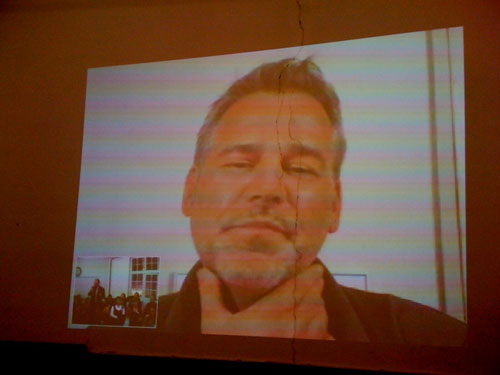
Earlier in the week I had a long Teams chat with Cathryn Atkinson, who led the youth journalism project I was involved in as a teenager (which I mentioned back in Weeknote 33 — and which prompted this catch-up). The last time I saw her she had a baby strapped to her in a harness; that baby is now in his late 20s and about to get married. Safe to say we had plenty to catch up on.
I also met with Cai Kjaer, CEO of Swoop Analytics, who was in Amsterdam for meetings. We talked about the looming launch of their Information Overload Calculator, the Viva Engage Benchmarking Report, and the uncomfortable truth that while tech platforms — and now AI — make it easier than ever to publish, people’s bandwidth hasn’t magically expanded to cope. My line on this: internal comms needs to focus on orchestrating flows and making sure messages land safely. Hyper-personalisation will be key, but that comes with its own challenges.

Travel
I’m off on an adventure tomorrow — Albania, Kosovo and North Macedonia, all firsts for me and all a little off the usual tourist trail.
Next weekend I’ll be hiking in the gloriously named Accursed Mountains (because why not tempt fate on holiday?), and there’ll be a few boats involved too. Which, having just re-watched Jaws, feels like impeccable planning. So there won’t be a Weeknote 37 — unless I’m writing it from the belly of a shark.
This week in photos











 Sharon O'Dea
