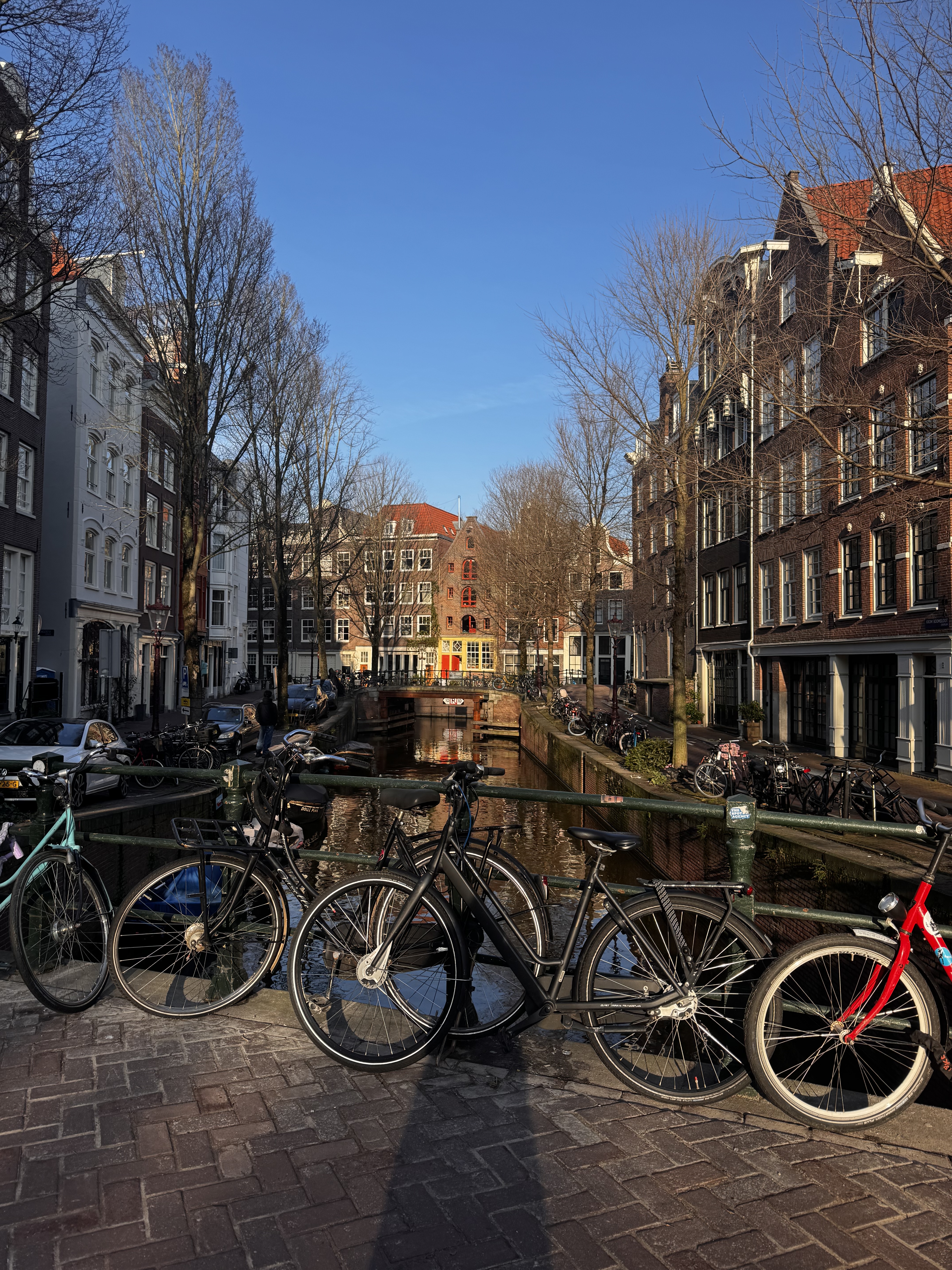
Weeknote 2025/50

A collection of vinyl records displayed on a shelf, featuring album covers from various artists including Sepultura and Suicide Silence.
Amsterdam Vinyl Club this week Photo by me.

This week had a strong clearing space energy to it.

Not in the sense of bold new beginnings or fresh starts, but in the quieter, less Instagrammable way: finishing things, tidying edges, and letting go of what no longer needs to be carried forward. Less about acceleration, more about reduction.

French writer and fellow airport departure lounge regular Antoine de Saint-Exupéry wrote that perfection is achieved not when there is nothing more to add, but when there is nothing left to take away. That line kept resurfacing for me this week, not as an abstract ideal, but as a practical reality. Editing rather than drafting. Removing rather than accumulating. Accepting that some things have done their job.

Some of that showed up as work. Some of it looked suspiciously like procrastination. Some of it was simply recovery after intensity. All of it, in one way or another, was about making space.  Mentally, professionally, and occasionally quite literally.

This week at work

We submitted the final three chapters of Digital Communications at Work. After months of living with these ideas — in offices, airports, trains, hotel rooms, borrowed desks, co-working spaces, OneNote thought-dumps, half-finished Notes apps, a thousand Teams chats, Slack messages, voice notes, screenshots of whiteboards, comments in Word, comments on comments, and the occasional “I’ll remember this later” (I did not) — the moment of pressing send on the email to the publisher was an odd mix of momentous and underwhelming.

The chapters focus on the unglamorous but decisive end of the digital workplace lifecycle:

  • Launching channels — not as a moment, but as a process. How organisations communicate value, build habits, and avoid the familiar post-launch fade where “new” quietly becomes “ignored”.
  • Measurement and management — moving beyond vanity metrics and zombie stats towards evidence that actually helps teams make better decisions, course-correct, and earn trust over time.
  • What’s next — less about shiny tools, more about the slow forces reshaping work: demographic change, automation, trust erosion, and what all of that means for internal communication as a profession.

The book is no longer hypothetical. It exists now as something that has to survive editing, disagreement, and the uncomfortable process of being read by people who weren’t in my head when I wrote it.

Also this week

With a book deadline looming, I indulged in a familiar form of productive procrastination and cleared out my wardrobe.

It’s a decade since I left my last corporate job. The pandemic killed off the corporate suit for me and, it appears, consulting more generally. And yet some things had been hanging in there for years — not because I wore them, but because of what they might one day be for.

Maybe I’d go back into corporate. Maybe future-me would finally be that person.

On the floor lay the ghosts of a life past… and a few imagined futures that never quite happened.

There was also something telling about how easy it was to part with things that are now too big — a decisiveness I notably did not show in the opposite direction.

Undeniably work avoidance, yes.  But also an oddly appropriate companion to a week spent finishing a book about legacy, change, and what we choose to carry forward.

Consuming

📺 Watching

After a week of intense writing, thinking, and deadline-brain, I deliberately switched my higher functions off and let television do its thing.

I watched the entire second series of Welcome to Wrexham and became genuinely, embarrassingly invested in the fortunes of a football team in a town I’ve never visited and, realistically, probably never will. It’s an object lesson in narrative engineering: take stakes, characters, time, and a sense of shared jeopardy, and you can make anyone care about anything. Football is almost incidental.

And like any good Swiftie, I watched the first two episodes of the The End of an Era docuseries released on Disney+ on Friday. I was caught off guard by how emotional it made me, reliving a tour that already feels oddly historic. There’s something about watching collective experience back through a screen — tens of thousands of people moving in sync, night after night — that hits harder in retrospect than it does in the moment.

I also started knitting again — largely while watching all of the above. I’m still objectively terrible at it, but it turns out keeping my hands occupied is an effective way to stop myself doom-scrolling through the credits. Parallel processing, but make it wool.

🎧 Listening

In a similar spirit, my listening was entirely functional rather than aspirational. A heady mix of cheerful pop and various flavours of ADHD Focus Music on Spotify — deployed less for deep work than for emotional regulation. Not taste so much as task support.

Connections

Earlier in the week, I met up with my old mate Peter Morley, now Head of Communications at AI infrastructure darling Nebius. He filled me in on life inside a company in genuine hypergrowth; I filled him in on the correct way to eat bitterballen.

Peter also introduced me to a former Nebius colleague, Anna Fedosova, who’s now building an HR startup tackling an achingly familiar problem: keeping policies and compliance current across multiple geographies and fast-changing legislation.

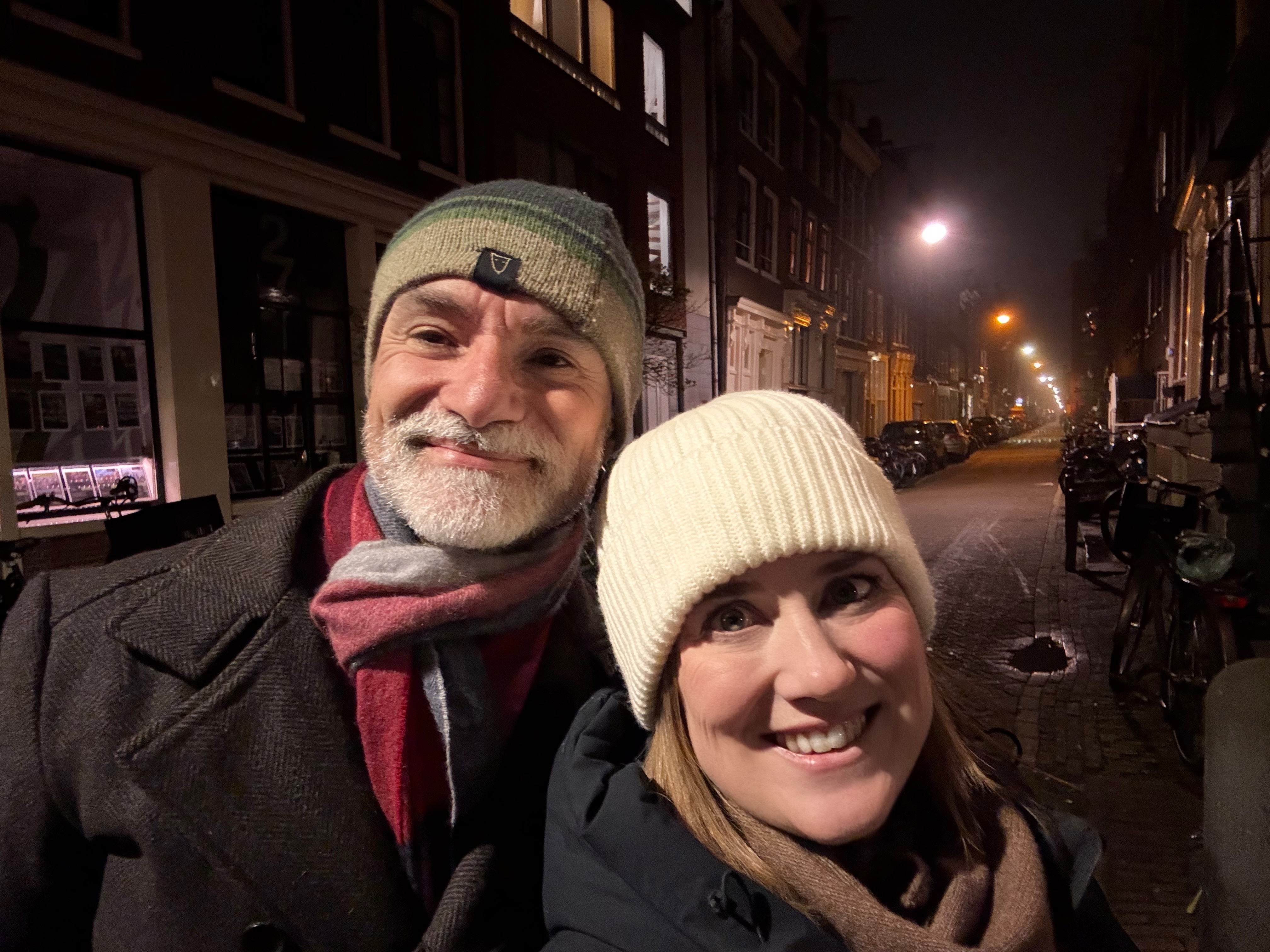
I took a selfie afterwards but, in my haste, failed to check whether my eyes were actually open in it. In retrospect, a fairly accurate metaphor for the week ahead.

Three friends smiling for a selfie in a warmly lit urban setting with holiday decorations.
Peter, Anna and me (with my closed eyes fixed by Google Gemini with a surprising degree of competence)

Coverage

I appeared in two industry publications this week, both circling a familiar theme: cutting through noise.

In InComms, I shared practical advice on making LinkedIn work for you without becoming beholden to the algorithm — focusing on voice, format, and visibility that serves real professional goals rather than platform theatrics.

And in HR Grapevine, I contributed to a piece looking beyond the usual AI-heavy trend forecasts for 2026, arguing instead for closer collaboration between HR and internal communications, and for designing change that people can actually understand and act on.

Travel

I was home all week, which felt not just pleasant but extremely necessary. No trains, no airports, no tactical packing.

This coming week I’m heading to London for a couple of meetings — my final trip of the year. I’ve got a little slack in the diary, so shout if you’re around and fancy a cuppa.

This week in photos

Weeknote 2025/49

A modern building with large glass windows and a surrounding plaza, featuring a prominent evergreen tree. People are walking around the area under a partly cloudy sky.
London trying its best to look festive this week. Photo by me.

I keep coming back to the same realisation this week: the future of comms isn’t just more digital. It’s more structurally complex.

Not more tools in a tidy stack. Not smarter systems in a neat ecosystem. But messier audiences, overlapping loyalties, porous identities, and workplaces that no longer contain people in the way they once pretended to. Add AI, video overload and algorithmic confidence into the mix and you don’t get clarity. You get chaos but with single sign-on.

Consider the past few days a field experiment no one asked for but everyone participated in.

This week at work

I’m currently locked in a low-grade standoff with the final chapter of the book — the one about the future of digital internal comms — which is refusing to behave like a normal chapter and instead insisting on being part travelogue, part systems theory, part group therapy session for a profession in the middle of a long, quiet identity crisis. It keeps pretending to be a chapter while actually being an accumulation of travel, interviews, unease and an unreasonable number of open browser tabs. It is, frankly, a menace.

Midweek I was back in London for the Communicate Conference, hosted by vendor Interact. It was at an Interact event, over 15 years ago, that I met my now business partner, Jonathan. So it felt oddly cyclical to be there discussing whether intranets even exist in the future.

A group of five professionals posing for a photo at an event, smiling and wearing lanyards, with a background featuring a stylish interior.
Intranerds assemble! L-R: Lisa Riemers, Suzie Robinson, me (Sharon O’Dea) looking like I’ve been Photoshopped in at the wrong scale, Chris Tubb, Steve Bynghall. Photo by Lisa Riemers.

What I hadn’t fully anticipated was how many familiar faces I’d run into who’ve been in the intranet and comms world for as long as — and in some cases longer than — I have. Which led to a steady stream of conversations that start light and get surprisingly philosophical. The shared laugh was always the same one: everything old is new again. The same overblown vendor claims we heard fifteen years ago, now wearing an ill-fitting suit called AI.

Different nouns. Same promises waiting to be broken.

But running underneath the cynicism was something much more serious. The conversations quickly turned to how the organisations we’re working with now are structurally more complex than anything we dealt with a decade ago — layered supply chains, outsourcing, platforms, regulators, global delivery, blended workforces, algorithmic management. And at the same time, the pace of change has accelerated to the point where even seasoned teams feel permanently slightly behind their own reality.

It’s a strange duality: the tech rhetoric looping, while the organisational conditions it’s being dropped into are genuinely unprecedented. Which may explain why so many “this will finally fix it” moments keep… not fixing it.

A few highlights from the conference:

Allan Tanner opened with a session on AI and the digital workplace. A quick poll showed about two-thirds of the room using generative AI weekly, but early findings from the Gallagher State of the Sector report suggest one in three are using it without any oversight, and only 40% feel confident in their skills.

What surprised me wasn’t the numbers so much as the familiarity of them. You could lift this whole section almost intact from a conference two years ago and nobody would blink. In a field that insists it’s moving at hyperspeed, that’s… odd. Is the survey already ageing in dog years? Or are comms teams simply adopting more slowly than the hype suggests?

The idea of an AI agent-first future replacing intranets floated through the room — but the awkward ownership question still hung there, unresolved. Comms? IT? HR? When everyone owns it, no one really does.

Also: we have absolutely been here before with chatbots.

The exact example used was booking leave. The endlessly cited use case where, in theory, a bot should smoothly handle what currently requires checking a team calendar, emailing your boss, verifying your entitlement, and then logging it all in some separate HR system. That was the canonical chatbot demo when I was doing a whole series of talks on this… in 2017. That’s getting on for a decade ago. If this really is an easily solved problem, we’d be living in it by now. The fact that we aren’t tells you something important.

When the tech keeps changing but the outcome doesn’t, you’re not looking at a technology failure — you’re looking at a human systems failure.

Sam Bleazard followed with employer brand as the connective tissue between HR and marketing, using Fortnum & Mason as a case study in visual storytelling and employee voice.

Then came Tom Vollmer from Cofenster with the stat that properly landed: around 23 hours of internal video uploaded every week, versus about 10 minutes actually watched. The issue isn’t underinvestment — it’s saturation. We are not video-poor. We are video-exhausted.

I fear I have crossed a generational Rubicon because I now actively resent being asked to watch a video for an entire minute. A minute of looking. Nope. I want text I can skim while emotionally elsewhere. I want bullet points, headings, and plausible deniability. Video is no longer a medium; it’s an attention hostage situation.

AI can now generate highlights, scripts and even videos from PDFs, which is undeniably impressive. But it also raises a more troubling possibility: that we’re no longer just producing noise at scale — we’re now automating it at industrial volume.

And when people can’t even keep up with the volume of information being thrown at them, it’s hardly surprising they stop engaging with it. Cognitive overload is the silent assassin of communication.

Helen Bissett shared disengagement data from Gallup that was hard to ignore: 90% of UK employees feel disengaged at work, while over 80% practise mindfulness outside of work. People are repairing themselves in their own time because work no longer does.

But this is also where I felt a quiet friction forming with some of our default assumptions. Engagement is treated as the unquestioned North Star — yet I’ve just spent weeks in Japan, a country consistently cited as having low employee engagement, alongside high levels of personal life satisfaction.

It left me, once again, with a nagging sense that we may not always be chasing the right thing.

The closing case study from AMS took an 11-page PDF innovation brief and turned it into an intranet takeover with storytelling, countdowns and discussion. Strong results. But what stuck with me was structural: AMS staff often hold dual loyalty, to the company that employs them and the client organisation they sit inside. It’s a pattern on the rise: the audience for “internal” comms is often not internal at all.

Across the day, the pattern repeated: AI, video, employer brand, purpose — all accelerating. But the deeper shift isn’t technological. It’s structural. Our audiences are fragmenting, our channels are multiplying, and the idea of a single, coherent “employee experience” is becoming more theoretical than real.

Oh, and we unexpectedly landed a juicy new client. Entirely unplanned. Entirely welcome <stares at impending HMRC bill>. All systems go.

Also this week

I went to the WB-40 Christmas dinner in London. WB-40 is a podcast about how tech reshapes work, with an associated Signal group that might genuinely be the friendliest place on the internet. It was lovely to see people properly, in three dimensions, after years of being avatars in each other’s phones.

And it left me with a question I can’t quite shake: what if low engagement at work isn’t always a failure? What if, in some cases, it’s a boundary?

It certainly maps, subjectively at least, to my own experience of the last decade. I haven’t had a “proper job” in years, and I don’t look to work for belonging, identity or community in the way I once did. Those needs are met elsewhere now — through friendships, networks, odd little internet corners, shared projects.

So if people can have rich lives, strong identities and real community without work being the emotional centre of gravity, is “more engagement at work” always the right thing to chase? Or are we sometimes trying to re-inflate a social and psychological role that work can no longer credibly carry?

That Japan contrast keeps needling at me. Maybe the problem isn’t that people are disengaged from life. Maybe they’re disengaging from work — deliberately.

Some of the most important people in my life mostly exist as glowing rectangles in my pocket. Which feels odd to admit, and yet it’s completely true.

Which made the next thing I went to this week land even harder: a talk on psychological safety with Ania Hadjdrowska — and instead of feeling theoretical, it felt uncomfortably operational.

Because in a world of hybrid teams, async work, platform hopscotch and digital performativity, psychological safety now shows up (or doesn’t) first in online behaviour:

  • Who speaks in the channel
  • Who stays silent
  • Who only reacts with emojis
  • Who disappears entirely

In remote and hybrid work, participation is visibility. Silence is no longer just silence. It’s interpreted as disengagement, resistance, risk, apathy. Often unfairly. Often reductively.

The classic barriers still apply:

  • Fear of judgement
  • Fear of exclusion
  • Fear of conflict

But digital work amplifies all three. You don’t get tone-of-voice buffers. You don’t get corridor repairs. You don’t get the quiet reassurance of eye contact after a risky comment lands badly. Everything is logged, screenshot, searchable. Mistakes feel permanent. So people calculate. And then they don’t speak.

Before the rational brain catches up, the amygdala scans for threat — hierarchy, tone, uncertainty. If it detects danger, it triggers fight, flight, freeze or fawn. No one innovates when they’re being emotionally chased by a tiger. And no one meaningfully collaborates when every contribution feels reputationally risky.

Psychological safety, as defined by Amy Edmondson, is the belief that you won’t be punished or humiliated for speaking up with ideas, questions, concerns or mistakes. Not agreement, but constructive disagreement.

That matters even more when:

  • Teams are distributed
  • Trust is assumed rather than built
  • People meet as avatars before they meet as humans
  • Employment relationships are shorter, looser, more conditional

We are asking people to be brave in systems that increasingly give them no margin for error.

The line I can’t shake is still this: silence is expensive. In digital workplaces especially, it quietly drains collaboration, learning, innovation and belonging — while looking, misleadingly, like “everything’s fine.”

And that “booking leave” example kept needling at me again. Such a small task, yet it still demands procedural obedience, reputation management, tool-hopping and emotional calibration. Multiply that across a working life and you start to see why people are tired — and why AI keeps stalling on exactly the same rocks.

Layer on the social media disinhibition effect (performance, oversharing, dunking, provocation) and it doesn’t always switch off at work. When trust thins, people retreat into safer containers: private chats, external networks, side communities. Belonging migrates. Collaboration fragments. Comms gets harder.

Consuming

(Keeping this bit short this week cos I’ve wittered on above)

Like the rest of the planet, my listening week was dominated by the release of Spotify Wrapped — the global ritual in which an algorithm holds up a mirror and everyone pretends to be surprised by what’s staring back.

Once again, mine was a window into my not-so-secret pop shame. I had solemnly vowed that Taylor Swift would not dominate my Top 10 this year. And then she went and released a banger. And Lily Allen casually dropped the confessional of the decade. What’s a woman supposed to do?

Once again, I will not be sharing my list with the wider world.

Spotify also informed me that my “listening age” is 46. I am 45 and a half, thank you very much. I refuse to be aged up by an algorithm.

Connections

Staying with the theme of where community actually lives these days, I also met up with Jenny Watts — a mainstay of another of my favourite online communities, the old FitFam crowd.

Two women smiling and posing together in a casual setting, wearing colorful clothing. In the background, a sushi restaurant sign is visible.
Jenny Watts and me

FitFam started life years ago on Twitter: a loose group of people talking about health and fitness, cheering each other on with our running times, gym attempts and “I went for a walk instead of lying face down on the sofa” victories. It was low-key, kind, and weirdly effective.

Given the descent of Twitter into a hate-filled sewer, the group’s now migrated to WhatsApp. Same people, different platform. The conversations are smaller, more honest, less performative. It’s a nice reminder that while platforms come and go, the communities that matter tend to quietly pack their bags and move together.

Another small data point in the same direction: belonging is increasingly something people build around themselves, not something work hands out with a lanyard.

Coverage

I ended up in the Financial Times this week. Which, in comms-world terms, is basically being knighted.

They shared a slice of my time in Nagasaki. Including my slightly surreal exploration of the future of work alongside a remote-controlled robot tour guide, piloted by a disabled operator elsewhere in Japan. A sentence I still can’t quite believe I get to write.

Screenshot of an article from the Financial Times featuring Sharon O'Dea discussing her experiences in Nagasaki, Japan, and insights on the future of work.
Screenshot

And yes, I am rightly smug about this. A positive mention in the FT is the biggest win you can get in this industry. It’s the comms equivalent of a Michelin star, an Olympic medal, and being retweeted by someone with an opinion column — all at once.

I will now be quietly unbearable about this for a while.

Travel

I’m going absolutely nowhere this week. An entire week without visiting an airport or getting up at the crack of dawn to catch a train. Bliss.

Next week, though, I’m back in London for the final time this year. I’m organising some drinks —  if you’re around and would like to come*, give me a bell.

*and I actually know you

This week in photos

Weeknote 2025/48

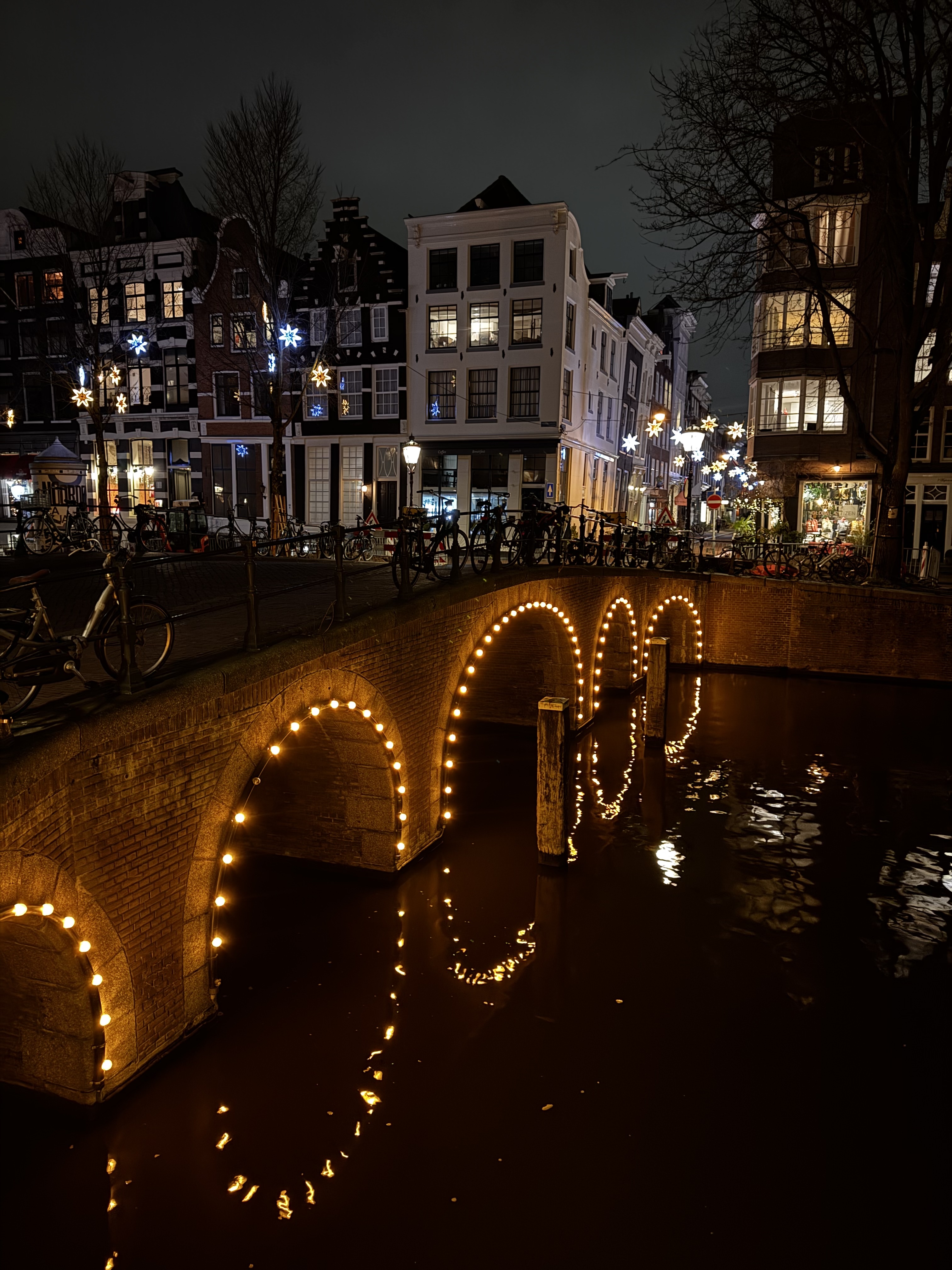
A illuminated sign on a building in Amsterdam that reads 'THE LIGHT YOU SEE IS PAST.' with bicycles parked nearby.
Amsterdam Light Festival.

After six weeks in Japan, this week was all about timing — or more accurately, being completely out of sync with it. My body is convinced 4am is an excellent time to start the day. My inbox seems startled that I’m replying during daylight hours. And all the ideas I’d parked while sweating my way around Nagasaki chose this week to sit up in bed like startled toddlers.

Between jetlag, a chapter that staged a full rebellion, and Andreas Wagner’s talk on dormant innovations (apparently even grass needed 100 million years to get going), I’ve been reminded how much of this job is just… timing. When a client’s ready. When a chapter clicks. When the organisation finally notices the thing you’ve been politely suggesting since 2019.

Timing might not be everything, but this week it certainly felt like the main character.

This week at work

A lovely vote of confidence: We won a new piece of work with an existing client — always gratifying, always reassuring, and always a reminder that just doing good work is always the best marketing.

In my first week in Japan I ended up doing a pitch. It was 9pm where I was, but still 32 degrees. I had to duck out of a group dinner to join the call. I was sitting on the floor with a fan blowing behind me to partially avoid collapsing into a puddle of sweat. Somehow, we won the gig and we start work next week. So this week we’ve been getting ready to do just that.

The chapter that fought back: Got one of the earlier chapters back from our editor at Kogan Page. On reread, it just… didn’t sing. Too many lists, not enough soul, and absolutely none of the “why should anyone care?” that Jon and I bang on about. It was also far too long.
So I did what any reasonable author would do: took a deep breath and decided to brutally rewrite the whole thing.

What I thought would be a quick tidy-up became two solid days of editing, trimming, rearranging, despairing, and eventually emerging triumphant. By Thursday it felt like a completely different chapter — tighter, clearer, and something I’m actually happy to put my name on. But it was a slog.

With that behind me, I finally pulled together the outline for the twelfth and final chapter of the book. Can’t quite believe we’re almost there — after months of interviews, diagrams, Japan detours, and existential questions about the future of workplace comms, the end is in sight. So I spent a chunk of the week writing up insights from Japan — drones, shrinking workforces, robot tour guides — and threading the best bits into the horizon-scanning sections.

Also this week

Went to this month’s Science and Cocktails talk by evolutionary biologist Andreas Wagner, on the mystery of dormant innovations — ideas or traits that emerge long before they have any impact, sitting quietly until the environment shifts and suddenly they’re transformative.

Think grasses: they appeared, did nothing much for 100 million years, and then boom, global dominance — and the basis of most human food systems. Or bacterial genes capable of antibiotic resistance long before antibiotics existed. Or early cultural ideas and technologies that only take off when society is finally ready for them.

The tl;dr is: nature – and culture – generate far more potential than they currently need, and environments act as the “prince” that wakes these sleeping beauties when the moment is right.

It made me think about internal comms and digital workplace work: how often the “innovation” isn’t the new tool, but the dormant capability already in the organisation — the half-built governance model, the underused feature, the employee insight nobody acted on — just waiting for the right conditions, leadership, or crisis to wake it.

And, frankly, how much of my job is quietly planting seeds for things that won’t catch until the organisation shifts in the right way. A slightly humbling, slightly comforting reminder that timing is half the craft.

Aside from that, I had a quiet week back in Amsterdam. Woke up at 4am several times, which is perfect if you’re a monk; less so if you’re merely someone who made poor timezone choices.

Cultural re-entry has hit me at odd times, mostly when tired. I nearly bowed at multiple Dutch people, but have avoided saying arigato gozaimasu at anyone (so far).

I’m playing catch-up on socials, sorting through thousands of photos and ten times as many memories. Realised I now possess 400 photos of fruit-shaped bus stops. No plan for them. Yet.

Consuming

👩🏻‍💻 Internetting

Two very different takes on the future of internal comms collided in my feed on Tuesday, and the contrast was so stark it felt almost choreographed.

On one hand: Unily’s “Future of the Workplace”

On the other: Mike Klein’s “Big Shift”

Unily’s view is the one most people in big, complicated organisations will recognise: grounded, sensible, measured.

The world of incremental improvements: a bit less friction, a bit more governance, modest, polite steps toward AI, progress paced by budget cycles and risk committees. And honestly, that’s where most digital workplaces genuinely are. The average intranet of 2026 won’t look wildly different from its 2016 ancestor — and that’s fine. Evolution has value.

Klein, meanwhile, is squinting at an entirely different horizon. His lens: AI compressing decision cycles, dissolving management layers, accelerating knowledge loss, reshaping coordination itself. Less “optimise the comms plan”, more “your operating model may not survive contact with the next five years”.

The key thing, of course, is that both are true — just on different timescales.

But the bit we can’t wish away: AI isn’t a shiny add-on. Used badly, it could be a workplace bloodbath.  Many people are understandably nervous about automating themselves out of relevance. And demographic change is already gnawing at the edges.

Japan hammered that home. Fewer workers, more automation, and a very immediate need to rethink how work gets done at all.

Small DEEx improvements still matter. They make the day-to-day tolerable. But they’re not the thing that will get us through the real shifts barrelling towards us.

If anything, the moment calls for more boldness — in how we use AI, how we explain it, and how we help people navigate what’s coming.

📺 Watching

Finger on the cultural pulse as always, I finally started Celebrity Traitors. I intended to watch one episode as a palate cleanser after a day of editing… and then resurfaced four episodes later, blinking at the clock like someone who has accidentally time-travelled.

It really is as good as everyone says: the camp, the scheming, the sheer operatic commitment to drama over absolutely nothing. It’s the kind of show that gives you whiplash from switching between “oh come on” and “I would absolutely betray every one of these people for £120k”.

No spoilers, obviously — but I am now fully invested, irrationally suspicious of everyone, and contemplating whether a roundtable on “psychological safety and betrayal in hybrid teams” might be a useful conference talk.

📚 Reading

My copy of Lisa Riemers and Matisse Hemel-Nelis’s Accessible Communications was waiting for me when I got home — a comforting sight after weeks with only my Kindle for reading company. I’d already had the pleasure of reading an advance copy earlier this year, but there’s something about holding a hard copy (a proper dead-tree edition) that makes the material land differently. Maybe it’s the weight; maybe it’s the guilt of knowing this will outlive all of us.

Re-reading it, I’m reminded what a genuinely important book this is for our industry. Too much accessibility advice for comms people is either painfully high-level (“write clearly!”) or so technical it requires a support animal. Lisa and Matisse manage to bridge that gap beautifully. They give you the principles and the practicalities, without ever making you feel lectured or incompetent.

What I love most is that they treat accessibility not as a compliance box to tick, but as core craft — part of what it means to be good at communication, full stop. They weave in examples, checklists, real-world scenarios, and the kinds of small, humane decisions comms people make a hundred times a day but rarely interrogate.

For anyone working in internal comms, content design, digital workplace, HR, UX, or frankly anywhere words meet humans: it’s one of those books you’ll keep within arm’s reach and quietly force on colleagues. Highly recommend.

🎧 Listening

Lily Allen’s new album has been on repeat in my ears since it dropped last month. I keep intending to listen to something else — a podcast, a serious audiobook, literally anything that would make me seem more intellectual — and then five seconds later I’m back in Lily-land, tapping away like a woman possessed. 10/10, no notes.

Travel

 I’m heading to London this week for the Communicate conference. Looking forward to seeing some of my favourite intranerds in 3D. If you’re coming, say hello — or buy me a coffee if you’d like to hear about robot tour guides.

This week in photos

Weeknote 2025/41

Interior view of the Sainte-Chapelle in Paris, featuring intricate stained glass windows and ornate architectural details.
Sainte-Chapelle, Paris. Awe-inspiring, literally.

A week of motion and mixed emotions: gratitude, nerves, excitement. Paris one day, Japan the next. I keep catching myself thinking how lucky I am — and then immediately worrying I sound insufferable for saying so.

The truth is, I am grateful. I get to do things my younger self could never have imagined. But I’m also anxious, tired, feeling guilty and slightly overwhelmed. Big changes always come with a wobble, even the good ones.

This week at work

Still a quiet one. Began the final tranche of chapters for the book. Prepped for Japan. Did some thinking about (organisational) transformation.

Spent some time with an firm doing a discovery in a complex, multi-national setup, helping them to make sense of what they’ve seen and heard. Like many such organisations, they’re trying to find the right balance between central control, consistency and governance — and giving local teams the freedom and flexibility to create relevant content and experiences. In our experience, good governance balances both: standards set centrally, freedom within a framework. And an acceptance that, much as you’d like to, sometimes it’s best to control the things you can change and accept the things you can’t.

We also started ramping up work on a project that’s kicking off soon. Less positively, another proposal got bounced. The market’s pretty tough for everyone right now, I know, but I’m really feeling it right now.

Also this week

I went all the way to Paris for an exercise class. Which is, however I spin it, a ridiculous thing to do. The bonkers class I go to in Amsterdam announced a one-off special at Sainte-Chapelle — that extraordinary 13th-century jewel box of stained glass, in the city my grandmother called home. So I blagged a ticket and went.

I danced to Florence and the Machine in silent-disco headphones, gazing up at the kaleidoscope of light and thinking of all the history those windows have witnessed. During the meditation at the end, I lay on my back listening to Alan Watts’ Dream of Life speech:

“Then you would get more and more adventurous and you would make further and further-out gambles as to what you would dream. And finally you would dream where you are now — the dream of living the life that you are actually living today. That would be within the infinite multiplicity of choices you would have.”

Somewhere between Paris and Tokyo, that line landed hard. What was once a dream really is the life I get to live — and I’m grateful for every improbable, ridiculous bit of it.

Consuming

📺 Watching

Rewatched Princess Mononoke to get in the Japan mood (after last week’s Silence misery-fest). Looking forward to seeing some Ghibli-esque landscapes in the Goto Islands this week.

📚 Reading

Made some slow progress on Blood in the Machine. Still grimly fascinating. A reminder that every technological revolution, from the Luddites to AI, comes with winners, losers and a lot of noise in between.

🎧 Listening

Still have Life of a Showgirl on repeat, but after hearing Alan Watts in the Sanctum class I’ve been deep-diving into more of his speeches on Spotify. Here’s the playlist — perfect plane-listening for big thoughts somewhere over the ‘stans.

Coverage

Had a flurry of messages this week telling me that a provocative LinkedIn post I wrote a few months back — asking if enterprise social networks are over — was being used by Kim England to open her talk at the Unite conference in Nashville.

When you send things out into the internet, you’re never quite sure if you’re sparking debate or just belming into the void. So it’s lovely to hear when something actually lands — and even better when it sparks thoughtful replies and reflection months later.

Turns out being a twat on the internet isn’t a total waste of time after all.

Connections

Met up with campaigner and growth hacker Pranay Manocha as he was passing through Amsterdam this week. We talked Brexit, passport privilege, growth, social media toxicity (and balanced it all out with a few Amsterdam beers).

A smiling man and woman taking a selfie outdoors, with a cafe ambiance in the background.

Travel

I’m writing this 39,000 feet over Asia, midway through a 24-hour, three-flight travel day. I’ll land in Tokyo in four hours and be in Nagasaki by the afternoon. My bag’s still in Paris, so I’m reluctantly piloting a minimalist approach to packing. Wish me luck. I fear I will need it.

Aside from that, looking forward to exploring my new city and meeting the other nomads on the trip, starting with a ferry to the Goto Islands.

Excited to explore, learn, get lost and find something new. Or, at the very least, buy some clean clothes. I’ll share it all here.

This week in photos

Weeknote 2025/40

Autumnal Amsterdam. Photo: Sharon O’Dea

Some weeks feel like a hinge — the quiet click between what was and what comes next. This was one of them. Projects paused, others reignited, the to-do list reshuffled yet again. A reminder that most progress doesn’t look like momentum; it looks like waiting, adjusting, packing, planning.

Autumn’s fully arrived in Amsterdam, ushered in by the season’s first storm, Amy. All wind, rain, and sideways bikes. Bleak, but bracing. There’s a certain kind of forward motion in the colder air: the sense that the year’s winding down, and it’s time to get things finished, filed, or flung into motion before winter properly settles in.

The trees along the canals have started to turn, the light’s gone soft and golden, and the air smells faintly of woodsmoke and deadlines. It feels like the season for tying up loose ends — wrapping edits, clearing decks, and sketching out what’s next.

For me, that’s Japan. It’s suddenly just days away: a shift in season, continent, and perspective all at once. The perfect point, perhaps, to pause and take stock before the next chapter properly begins.

This week at work

A quieter one, though not without its twists. Two proposals we’d been hopeful about got knocked back — not lost to anyone else, just shelved as client plans shifted. Always frustrating when work evaporates for reasons outside your control, but that’s consulting life: sometimes you’re sprinting to meet a deadline, sometimes you’re rearranging the post-its and waiting for the next wave to break.

Happily, another project that wasn’t due to start until next year has come roaring back into view, so the pendulum swings both ways. If there’s a lesson in all this, it’s that flexibility isn’t just a virtue in this job — it’s survival.

Between that and chipping away at edits for the book (slowly, steadily, like a glacier), I’ve been getting ready for the Japan trip; finalising logistics, lining up interviews, and reaching out to people I’ll be speaking with while I’m there. It’s shaping up to be a fascinating few weeks of research, conversations, and new perspectives — and, hopefully, a bit of inspiration to carry back home.

Also this week

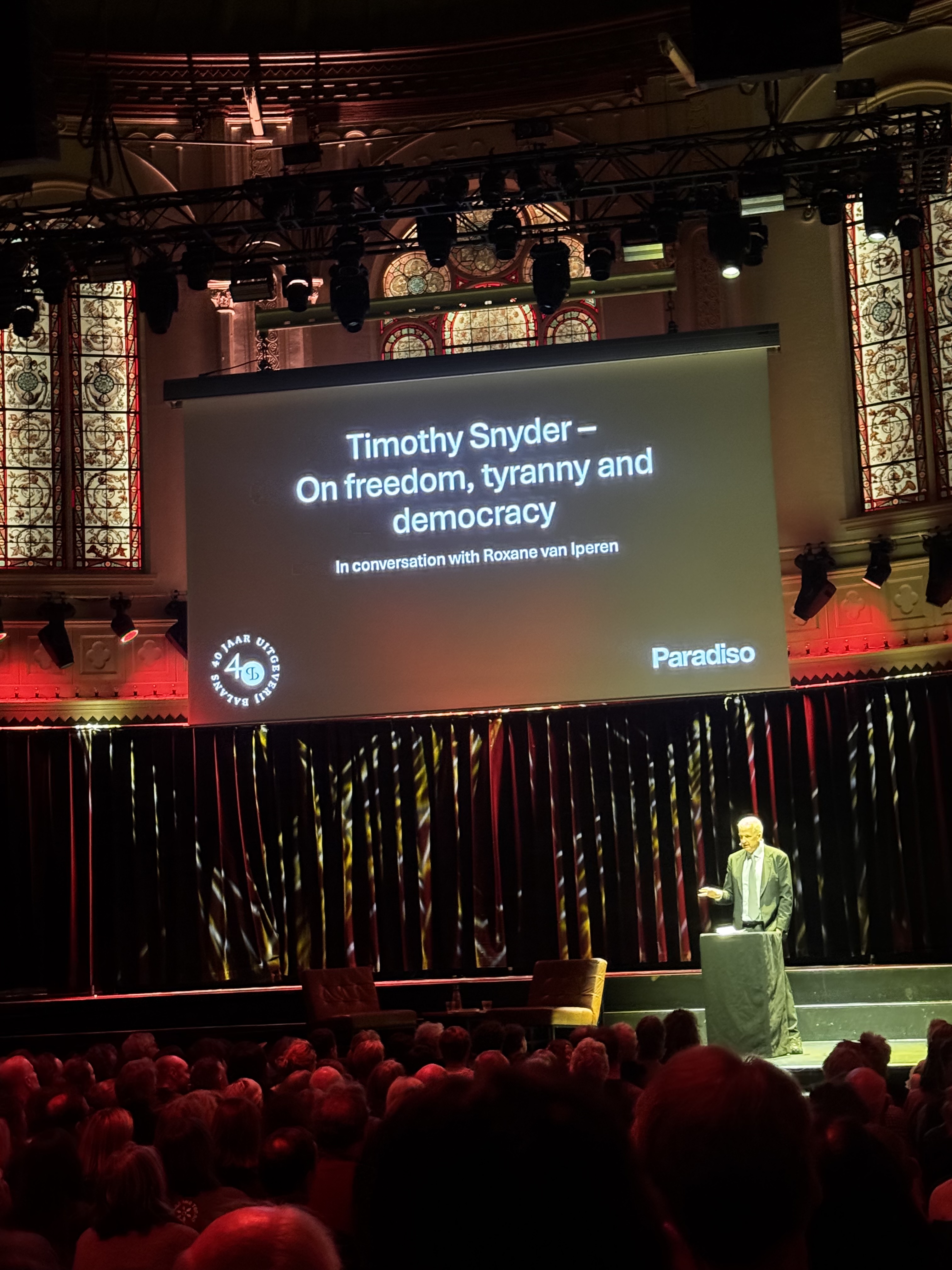
I went to a Science & Cocktails talk at Paradiso on the emergence of a post-growth society, given by Derk Loorbach. It was one of those evenings that quietly rewire your brain a little.

He spoke about how societies evolve not through steady progress but through short, chaotic bursts — moments when old systems destabilise and new ones start to take shape. The idea of “transitions” was framed as both inevitable and hopeful: collapse as transformation, not just destruction.

There were plenty of sharp takeaways: that our economy’s dependence on perpetual growth is fundamentally unsustainable; that our obsession with technological “fixes” is often an implementation illusion masking the need for deeper change; and that the real barrier is not resources or technology, but imagination — we’ve forgotten how to picture alternatives to extractive growth.

The phrase that stuck with me most: “Transition is a more hopeful form of collapse.” A useful lens, perhaps, not just for climate policy but for any complex system — from organisations to the digital workplace.

Also, I can confirm that lectures are vastly improved when preceded by smoky cocktails and a funk band.

Consuming

📺 Watching

With less than a week to go until I head to Nagasaki, I thought I’d give Silence — Martin Scorsese’s 2016 film about the Christian missionaries who came to Japan in the 17th century — a go. That was an error.

It’s a punishingly joyless three hours of mud, martyrdom, and men staring meaningfully into the middle distance while being slowly crushed by the weight of their own faith (and, occasionally, actual rocks). It’s beautifully shot, of course (Scorsese can’t help himself) but it’s the cinematic equivalent of flagellation: grim, ponderous, and utterly devoid of warmth or light.

By the end I wasn’t enlightened; I just wanted someone, anyone, to shout, “Cut! Enough suffering, lads!” I suspect the real silence here was my will to live slipping quietly away.

If the goal was to get me in the mood for Japan, it failed spectacularly — though it did make me grateful for central heating, antibiotics, and the fact that nobody’s currently boiling Christians in Nagasaki Bay.

📚 Reading

After listening to a podcast about the Levellers — the 17th-century political movement, not the 90s crusty band — I picked up Blood in the Machine by Brian Merchant. It traces the parallels between the early industrial revolts of the Luddites and today’s tech-driven upheavals, arguing that resistance to automation isn’t anti-progress but a fight for dignity and agency.

I’m about a third of the way through and impressed so far. It’s well-researched, surprisingly pacey, and full of eerie echoes: the concentration of power, the myth of innovation as inherently good, the way workers’ rights get trampled in the name of efficiency. You could swap the textile mills for data centres and the rhetoric would barely need editing.

It’s one of those books that makes you glance uneasily at your laptop and wonder which side of history you’re really on.

🎧 Listening

On Thursday my bestie and I caught the sold-out final show of Little Simz at AFAS — the North London rapper, actor, and all-round force of nature. She was magnetic: precise, powerful, utterly in command, with a crowd that sang every word back in adoration.

But the week’s real soundtrack belonged to Taylor Swift, whose much-anticipated new album dropped on Friday. I devoured it immediately. Unconvinced at first, but by the time of writing it had properly lodged itself under my skin — the kind of slow-burner that keeps revealing new layers every listen.

Saturday morning saw me at a special “Swiftie Saturday” spin class — 66 of us belting along on stationary bikes like a pop-powered peloton — and by evening I was at the cinema for the album launch film. Immersion therapy, basically.

It’s not a cult. It’s a group of like-minded individuals engaging in synchronised cardio and light emotional processing.

Connections

I had the pleasure of catching up with Amsterdam-Canadian communicator Cassie Jorgensen this week. We chatted about the challenges of building a professional network as a blow-in from another country and the merits of agency vs in-house.

Travel

Six days till Japan (and two of those involve a side-quest to Paris). Packing lists are being honed, chargers located, adapters counted, and contingency plans made in case the airline decides my suitcase needs a longer layover than I do.

This trip has come around quickly, but it feels like the right moment for it: the book nearing its final stretch, work shifting gears, the season turning. If this week’s talk on transitions had a message, it’s that change rarely happens neatly — it’s messy, unpredictable, often inconvenient — but also full of possibility if you keep your eyes open.

I’ll be spending the first week between Nagasaki and the Goto Islands, talking to people about how work, technology, and community are evolving in Japan — a country that’s long been living the future the rest of us are only now stumbling towards.

More on that next week, from the other side of the world.

This week in photos

Weeknote 2025/39

A scenic view of a canal in Amsterdam, featuring trees with autumn foliage, a clock tower in the background, and boats floating on the water.
Autumn in Amsterdam. Photo: Sharon O’Dea

Some weeks are about routine, others about momentum. This one was about spotting opportunities and grabbing them before they slip past.

As Seneca put it: “Luck is what happens when preparation meets opportunity.” I’ve never been much for masterplans — my career has been more patchwork than roadmap — but I’ve learned that when the right thing comes along, you say yes and work the rest out later.

And while there’s a bigger adventure brewing in the background, the week itself had plenty to get stuck into closer to home.

This week at work

The book keeps marching forward, as has the season. Amsterdam has taken a sudden autumnal turn, the light thinner, the mornings chillier. The shift feels like a metaphor: the year heading into its final quarter just as the book does. Another week, another chunk wrangled into something that (hopefully) resembles prose. This time I’ve been working on the chapters that shift from platforms to messy and unpredictable people, which means wrestling both with frameworks and with the practical realities of how organisations actually operate. Let’s just say it’s one thing to cite the Barcelona Principles, it’s another to translate them into something a harried comms team can actually use on a Tuesday afternoon.

I’ve also been thinking a lot about multilingual content. European Day of Languages was a neat reminder that we default far too often to the assumption that “everyone speaks English.” They don’t, and even when they do, it’s rarely the language of the heart. For intranets and employee comms that aspire to feel genuinely inclusive, that means more than slapping machine translation on your news pages—it means designing governance, content types, and workflows that respect linguistic diversity from the outset. I’ve blogged about that here.

Back from holiday I’ve also thrown myself back into Statement, focusing on the narrative and comms. The app’s core idea — authenticity through verified transactions — is resonating, but the story around it needs to land as strongly as the product itself. So I’ve been sharpening the positioning, and working out how to talk about Statement in a way that’s both clear and compelling.

Towards the end of the week I virtually sat down with Jack Aspden from The Company You Keep to talk about my career.  Which will never not be funny to me, as (as I wrote about in Week 28) I’ve been working for over a quarter of a century and am still to have anything close to a plan. My career is less a trajectory and more a Jackson Pollock spray-painted across a life. A series of (occasionally good) decisions and some sheer dumb luck. We spoke for over an hour, a conversation that felt more like a session with a therapist at times. I wish him the best of luck editing that into something resembling useful career advice. As Helen Keller said, “Life is either a daring adventure, or nothing at all.”

Finally, proposals. We have a couple on the go, in that place where we kick them back and forth between us and the client until the shape of the project feels right. This where I get excited about the work itself and slightly queasy about the potential workload if they all land at once. It’s the consultant’s eternal dilemma: complain about the pipeline being too quiet, then panic when it starts filling.

Also this fortnight

Remember back in Weeknote 38 when I said I had some big news? Here it is: I’m off to Japan.

Starting next month I’ll spend a few weeks living and working there as part of a digital nomads programme with the Prefecture of Nagasaki. It’s a proper experiment in how regions can attract and support place-independent workers — and for me, a live case study in the future of work.

Japan is already grappling with challenges others are only just waking up to: ageing populations, shrinking talent pools, automation, AI, and the redesign of work for wellbeing and productivity. Those forces shape our comms, processes and platforms — the digital workplace is just a mirror of that reality, and the reflection is shifting fast.

I’ll be based mainly in Nagasaki (with some time on the Ghibli-esque Goto Islands) before wrapping up in Tokyo. I’ll keep client work ticking along (just seven hours in the future), while also writing, researching, and learning from innovators, business leaders and fellow nomads.

The future of work is being written everywhere. For a few weeks, my chapter will be from Japan.

If you know of anyone doing interesting things in the comms, collaboration or future of work space in Japan or the broader APAC region, I’d be grateful for an intro.

Consuming

👩🏻‍💻 Internetting

Unusually for this section, a podcast. WB40 is a long-running show about tech, but what makes it special is the community around it: regular listeners who are collaborative, generous, and always up for sharing advice.

This week’s episode features my friend — and occasional Lithos Partners associate — Lisa Riemers, talking about her new book Accessible Communications. I was lucky enough to get an advance copy, and I love how she and her co-author Matisse Hamel-Nelis not only make the case for accessibility in comms, but show how achievable it can be.

Listen in… and then go and buy the book.

📺 Watching

I dipped into Alice in Borderland on Netflix, partly to whet my appetite for all things Japan. It started off promising — stylish, intriguing, Tokyo-as-character — but it veered into Squid Game territory faster than I expected. Not sure yet if I’m hooked or just mildly traumatised.

📚 Reading

Somehow didn’t have much of a book mojo this week.

🎧 Listening

Bret McKenzie’s new album turned out to be an unexpected treat. Best known as one half of Flight of the Conchords, he’s gone solo here with something warmer and more musically layered. I put it on out of curiosity and ended up staying for the melodies — witty, yes, but also surprisingly tender. Proof there’s more to him than business time.

Travel

Nothing at all this week, and ngl I’m delighted about that.

This week in photos

Weeknote 2025/38

Group of five hikers posing triumphantly at the summit, with rugged mountains and a clear blue sky in the background.
My pals and I at the peak of the Valbonë-Theth Pass in Albania, this week

Bumper two-week note: I spent ten of the last fourteen days adventuring around the Balkans. So this one’s light on work and heavy on holidays. I’m not apologising.

Two themes stuck with me: who shows up, and what happens when they do. At the IABC summit Mike Klein dropped the line “the world is run by the people who show up” (sometimes credited to Ben Franklin, who probably didn’t say it but would’ve if he’d had LinkedIn).

Then in Albania I learned how a tiny communist party basically turned up, seized power, and held the country in a half-century headlock. Proof, if you needed it, that history isn’t written by the best ideas; it’s written by the people who managed to get a room booked and never gave back the keys.

In politics, as in comms, it’s never the smartest who win. Just the ones who had the audacity to pull up a chair and refuse to sod off.

This week at work

Book progress continues: three new chapters in draft. People, on the skills and roles that actually make digital comms work. Content, the stuff employees actually come for, and what shapes their real user experience. And Communities, why they’re not fluffy side projects but strategic assets in the comms mix.

I drafted mine in a bar in Tirana while Jon hammered his out in a Bristol home office. Then we swapped, edited, iterated. That’s our system: one of us gets words down, the other makes them better, and the time zones/weird schedules do the heavy lifting.

Back from holiday, I went straight into the IABC Strategic Communication Leadership Summit. Blissfully free of the usual death-by-panel (aka “three senior leaders carefully saying nothing for 45 minutes”) or the kind of platform case study where a vendor insists their intranet launch was “seamless” and everyone claps politely while knowing full well it wasn’t.

Instead: an unconference. Fifty comms leaders from 30+ countries, fifteen sessions, zero sponsor pitches, and actual conversations about the real stuff — strategy, frontline and middle managers, the impact of AI, the future of the profession. I even left with a notebook full of scrawls that might translate into something useful, rather than the usual bingo card of buzzwords. If I can read my own writing, that is.

The big theme: Leadership in comms isn’t about craft or channels. It’s about showing up, making space, and keeping the profession credible, vibrant and tied to business goals.

Huge thanks to Mike, Natasha, Ruxana and Monique for pulling it together. I left buzzing with ideas — and reminded that this job is at its best when we stop presenting at each other and start working with each other.

Also this fortnight

But for most of the past two weeks I’ve been blissfully offline, on a proper adventure in Balkans. Some people spend two weeks horizontal on a beach. But  apparently my idea of a holiday is “exhaust yourself in three different countries, climb a mountain, then fly straight to a strategy summit.”

Kosovo first. Europe’s newest country, where Tony Blair is such a national hero that people have named their children after him. (Yes, Tonibler is an actual given name. No, I didn’t meet a little Gordonbrown.)

A stop in the capital Pristina, with its monuments to Mother Teresa and Madeline Albright. Prizren was next: Ottoman bridges, minarets, mountain views — basically Türkiye on decaf.

Then North Macedonia: home of the Cyrillic alphabet, Alexander the Great, and views so good they should come with subtitles. That also makes it my 86th country. I promised myself that’s the last new one this year, but let’s be honest: my willpower is about as strong as Balkan WiFi.

Speaking of which, Tirana. Bunkers, boho bars, bonkers architecture. The whole vibe reminded me of backpacking in South America in my 20s — nothing works how you expect, yet everything somehow does. Bring patience. And raki.

Then things got really good: a farm on the edge of Lake Koman, a place as beautiful as any I’ve ever seen, accessible only by boat, where we swam, kayaked, ate food that had been growing approximately five minutes earlier, and slept under a million stars. Basically an Instagram advert for “disconnecting” that, for once, was actually worth it.

And then: the Valbonë–Theth trail. 16km, 1100m of climb, endless switchbacks. My lungs and thighs staged a coup about halfway up, but the views shut them right up. There’s something oddly satisfying about doing hard things — like hiking a mountain or checking your inbox after a week offline.

And then, as if to prove I have range: Tirana airport, shorts and hiking boots still on, headed straight to a Brussels for the conference. From mountains to meeting rooms in 72 hours. Wouldn’t have it any other way.

Consuming

👩🏻‍💻 Internetting

CIPR’s new report An Age-Old Problem confirms what most of us already knew but the industry prefers to pretend isn’t happening: PR has an ageism problem. If you’re young, you’re “too green to lead”; if you’re older, you’re “out of touch”. The sweet spot, apparently, is being exactly 32, fluent in TikTok dances and miraculously free of childcare or eldercare responsibilities.

The report calls for common-sense fixes: make age part of DEI, stop sneering at colleagues across generations, build careers that don’t fall off a cliff at 40, and measure progress instead of writing another report about it in five years’ time. Reverse mentoring even gets a mention (because god forbid we admit that both a 23-year-old and a 57-year-old might know useful things at the same time).

In short: if comms wants to be taken seriously as a profession, it needs to stop treating people’s date of birth as more important than their talent. Otherwise, the only thing ageing gracefully in this industry will be the clichés.

📺 Watching

Didn’t turn a TV on for two weeks. Turns out the world keeps spinning (and the scenery’s better).

📚 Reading

Finished The Albanians: A Modern History while trundling around the country. I like to read the history of wherever I land, and in this case it was much-needed: I knew shamefully little about Albania beyond bunkers and Enver Hoxha. The book filled in the blanks — a crash course in how a small, beautiful country endured decades of isolation and is still shaking off the aftershocks at speed. Makes wandering its chaotic, charming present-day streets feel a lot less baffling.

And yes: turns out there’s more to Albania than Taken 2 and handing out pity points at Eurovision.

🎧 Listening

Nothing in particular — except discovering that Boney M’s Ma Baker is bizarrely popular in Albania. No idea why, but it seemed to follow me everywhere. Answers on a postcard (or a disco beat) please.

Connections

The IABC event was basically a high-end school reunion: catching up with old comms friends and finally confirming that the people I’ve known online for years do, in fact, have legs.

Also managed a Breakfast App meet-up with Rita, an academic visiting from California (proof that occasionally the internet serves up something more useful than ads for AI tools). And Brussels gave me the bonus of a catch-up with Anthony and Jane Zacharewski — because apparently I can’t set foot in a European capital without turning it into a networking opportunity.

Travel

Made it home yesterday and, for a fleeting few hours, thought I might actually have no travel booked for the rest of the year. Cute idea. Obviously didn’t last. Now there’s something very exciting in the diary… but you’ll have to wait for Weeknote 39 for the reveal. Consider this the cliffhanger no one asked for

This week in photos

Weeknote 2025/36

Panoramic view of a lush green valley - the Les roches Tuilière et Sanadoire - surrounded by rocky cliffs under a partly cloudy sky.
Les roches Tuilière et Sanadoire. Photo by me.

This week I travelled to the Auvergne to scatter my grandmother’s ashes, close to the village where she was born more than a century ago.

In her last years she painted from memory a scene of her childhood: a forest road, two great rocks, then suddenly a clearing — the valley opening up below. “It was a wonderful sight I would always remember,” she wrote.

On Friday I stood in that same spot, saw the same view she carried with her for a lifetime, and laid her to rest in the ground she loved. A return, of sorts, to her beginnings.

Nan’s life stretched far beyond that valley. She lived through occupation in Paris, celebrated its liberation in a shower of tricolores, trained as one of the few women engineers of her generation, raised a family in a new country, and never stopped campaigning for the values she believed in: liberty, equality, fraternity.

But she was also the woman who knitted us jumpers, made extraordinary birthday cakes, and whose cooking remains unmatched. She juggled logic and creativity — designing a trigonometry-inspired cushion one day, writing poetry the next.

Being back in the volcanic hills where she was born, I kept coming back to this thought: our origins matter. The places we start from, the people who shape us, the values we inherit. Even if we take a different path, we carry those beginnings with us.

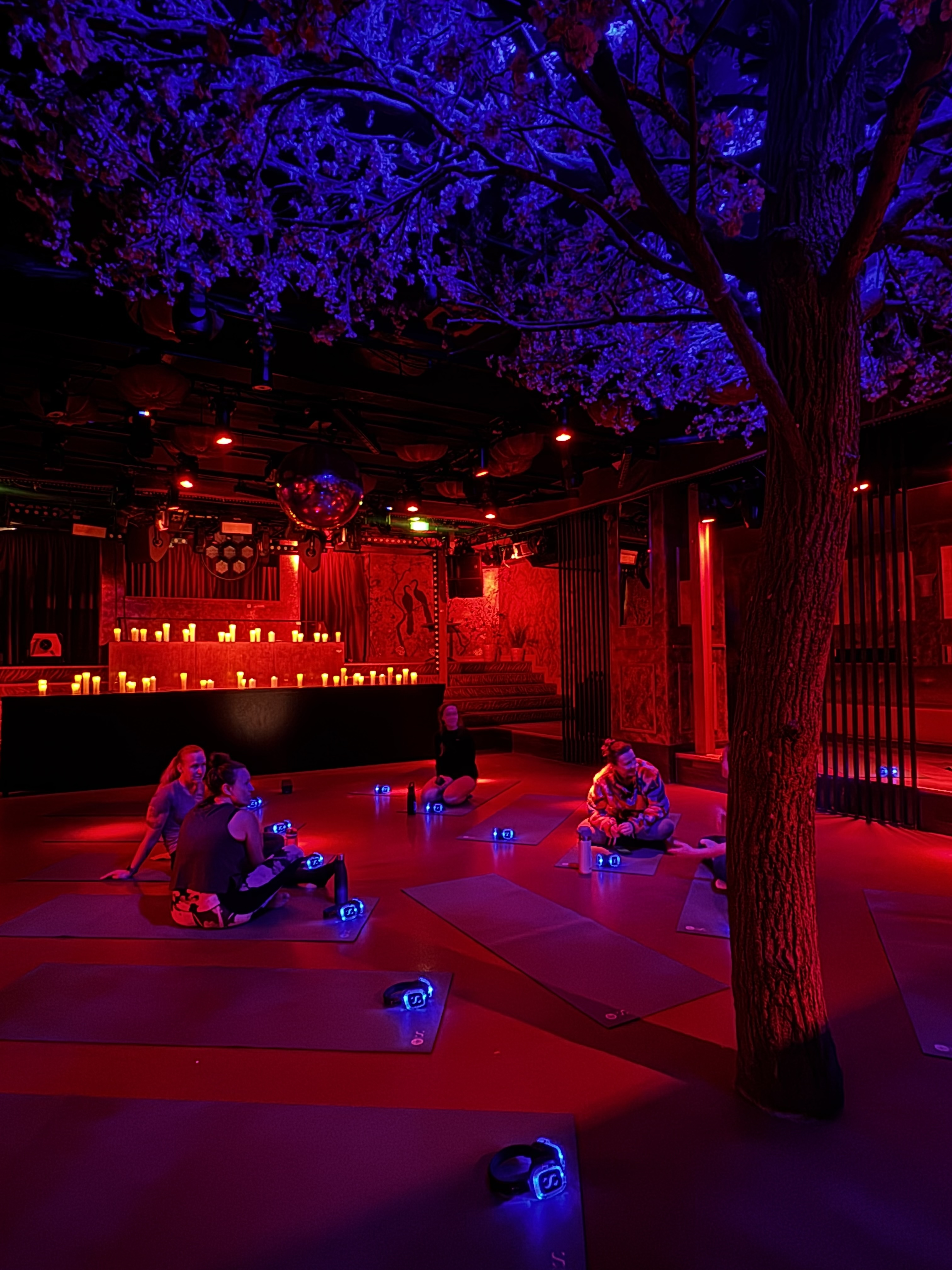
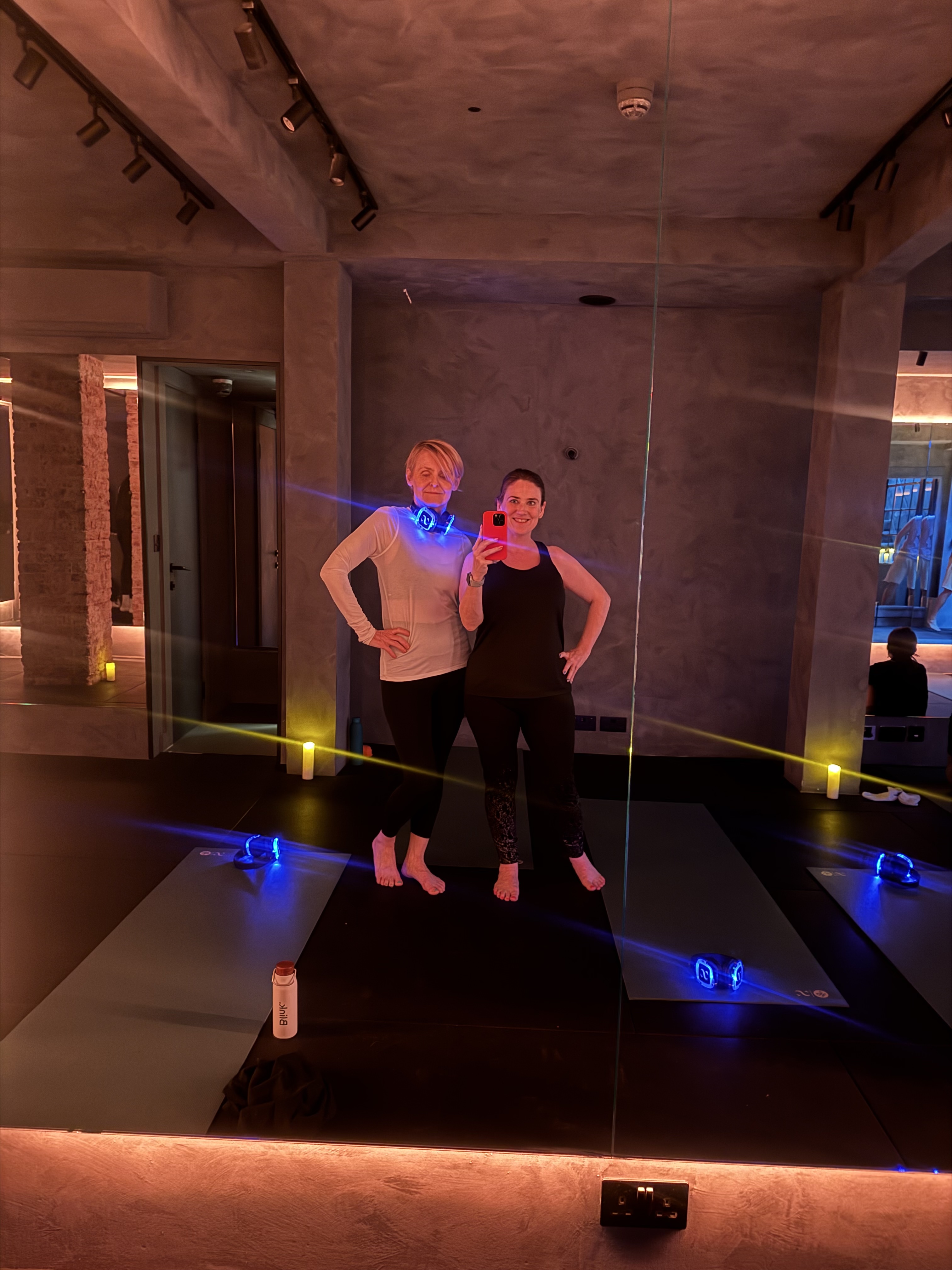
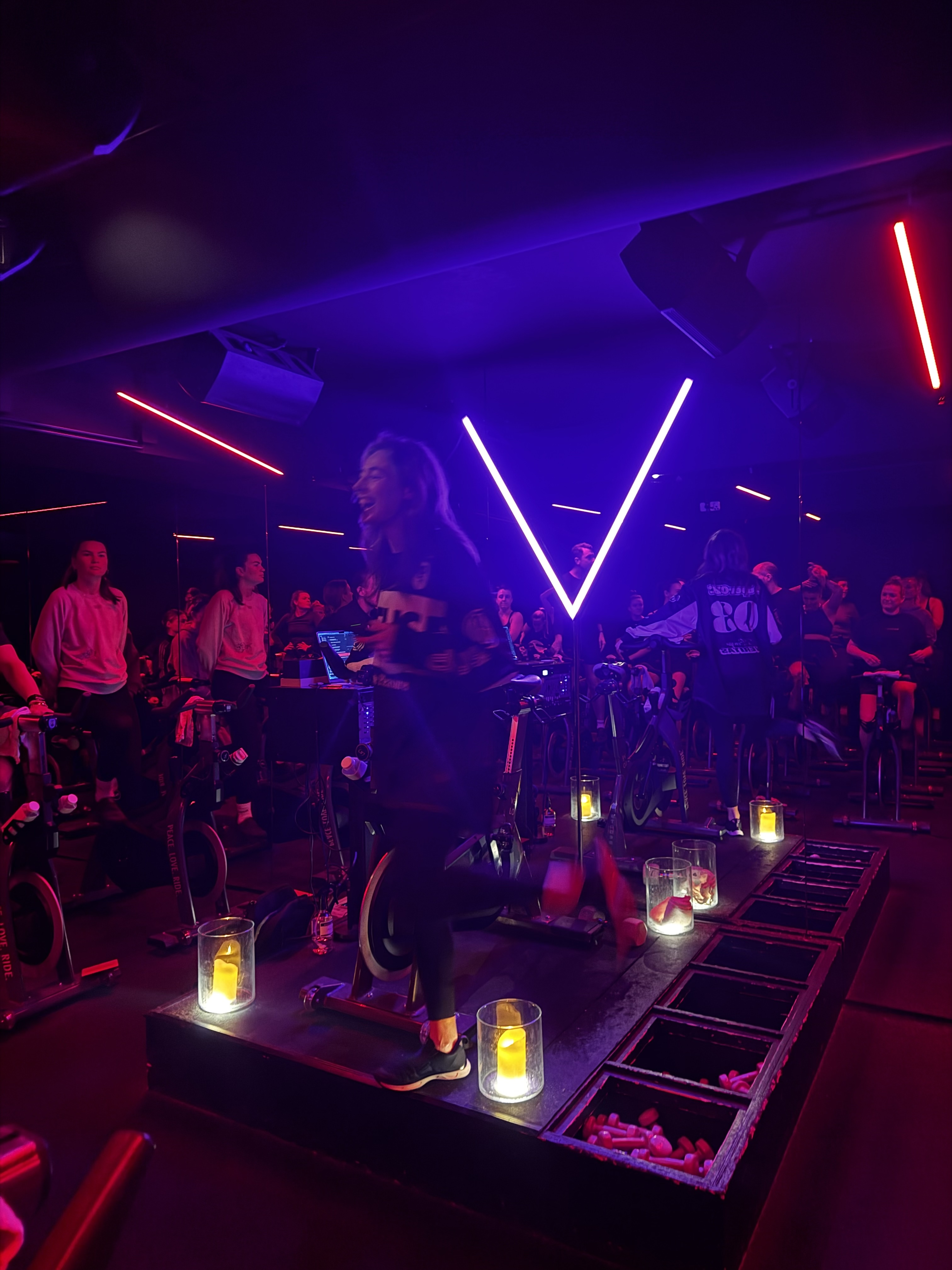
That theme ran through the rest of my week too. A conversation with Cathryn, who was a formative influence on me as a teenager. And then my gym instructor, during a Sanctum class — which, if you’ve not had the dubious pleasure, is essentially a wellness cult disguised as a workout. Picture a candlelit room full of beautiful people in Lululemon, bouncing in silent-disco headphones to pounding techno, somewhere between burpees and interpretive dance. It’s like Berghain meets a yoga retreat, only designed to be an Instagrammable Experience.

In the middle of this fever dream, the instructor delivered his pep talk about looking back at who you were five years ago. Normally I’d have rolled my eyes so hard I’d need medical attention. But, landing as it did at peak pre-menstrual sensitivity, I found myself ugly-crying into my wireless headphones while influencers around me humped the ether like it was a path to enlightenment. A spiritual awakening via techno squats.

And I couldn’t help but wonder what my Nan (practical, principled, sharp as a tack) would have made of it all. Probably a raised eyebrow, then a wry laugh at the strange, circuitous ways we find meaning.

So that’s this week’s reflection: on beginnings, origins, returns — and remembering to be proud of the journey as much as the destination.

This week at work

After a quiet summer, the inbox has suddenly remembered we exist. A flurry of new business signals came through, so this week was largely about shaping proposals. One’s already had a tentative yes — the best kind of feedback — and I’m looking forward to getting started. The others are out in the world now, hopefully working their magic.

On the book front, Jonathan and I made good progress on the next two chapters: one on the people and skills needed for digital comms at work, the other on content. We’re finding our co-writing rhythm — passing drafts back and forth, layering in ideas, editing each other’s words until we’re not quite sure who wrote what. It’s satisfying, collaborative, and occasionally a little disorienting.

But even as the chapters take shape, I can hear the sound of deadlines approaching fast, like distant thunder that’s getting louder every day.

Also this week

I climbed up the Dek van de Stad, a temporary platform built on top of the Nieuwe Kerk. The views were spectacular — a chance to look down on Dam Square and Amsterdam’s rooftops from a height you don’t normally get. Equal parts breathtaking and mildly vertigo-inducing.


And then straight back down to earth (and into chaos) at Paradiso, where I saw Kneecap. Security was tight, the crowd was raucous, and it’s still mad to me that less than two years ago I saw them in what was basically the upstairs of a pub. Now they’ve got a sold-out Paradiso bouncing in unison, two nights in a row. The rise has been meteoric, the energy relentless — right through to the crowd singalong to Come Out Ye Black And Tans after they went off stage.

Consuming

👩🏻‍💻 Internetting

News this week that the UK Department for Business and Trade’s three-month trial of Microsoft Copilot found… no real productivity boost. Emails and meeting summaries sped up a bit, but anything more complex actually slowed people down or spat out lower-quality work. So much for the hype cycle.

Does that reflect a lack of proper strategy and training, or just cold, hard reality? Probably both. In my experience, some people and roles naturally click with AI tools while others flounder when left to get on with it. Curiosity, persistence, confidence — and the time to experiment — all matter. Without those, adoption lags.

There’s clearly a lot we need to do to help people level up with AI at work. But I can’t say I was surprised. My own encounters with Copilot have been… underwhelming. Let’s just say it’s not yet living up to the billing of “revolutionary productivity tool” — more “expensive intern who occasionally remembers to attach the file.”

📺 Watching

Marking 50 years since its release, we re-watched Jaws. Still the ultimate advert for staying on dry land. Half a century on, the special effects remain gloriously ropey, the mayor still deserves a prison sentence for crimes against public safety, and John Williams’ two-note score is still the best thing ever written about imminent death by fish.

It’s amazing how Jaws manages to be both a tense thriller and a camp comedy, depending entirely on how rubbery the shark looks in a given scene. And yet it still works: a masterclass in making you terrified of something that looks like it escaped from a theme park gift shop. Just the thing I need before a holiday that involves boats.

📚 Reading

Continued with The Albanians: A Modern History, but have only got as far as the Ottoman Empire. Hoping to nudge my knowledge closer to the 20th century by the time I get there.

🎧 Listening

Driving around with my brother this week introduced me to Cheekface, an LA indie trio who specialise in anxious brain dumps set to catchy riffs. Imagine Lou Reed or Jonathan Richman talk-singing about late capitalism, social awkwardness and existential dread.

They’re smart, deadpan and gloriously uncool, with songs that turn modern malaise into shout-along anthems. Start with I Only Say I’m Sorry When I’m Wrong Now or Listen to Your Heart. If you like those, welcome to the cult of Cheekface.

Coverage

My Red Hot Opinion Department was working overtime this week.

For Strategic, I looked at the noticeable chill in corporate culture — how empathy has slipped off the agenda, and what that means for leaders trying to engage their people when the mood music is getting distinctly frostier.

And over at Unleash, I turned a jaw-droppingly bad comms experience into something more useful: practical advice on governance, sequencing, and the role internal comms can play in making difficult moments a little less painful.

Connections

Earlier in the week I had a long Teams chat with Cathryn Atkinson, who led the youth journalism project I was involved in as a teenager (which I mentioned back in Weeknote 33 — and which prompted this catch-up). The last time I saw her she had a baby strapped to her in a harness; that baby is now in his late 20s and about to get married. Safe to say we had plenty to catch up on.

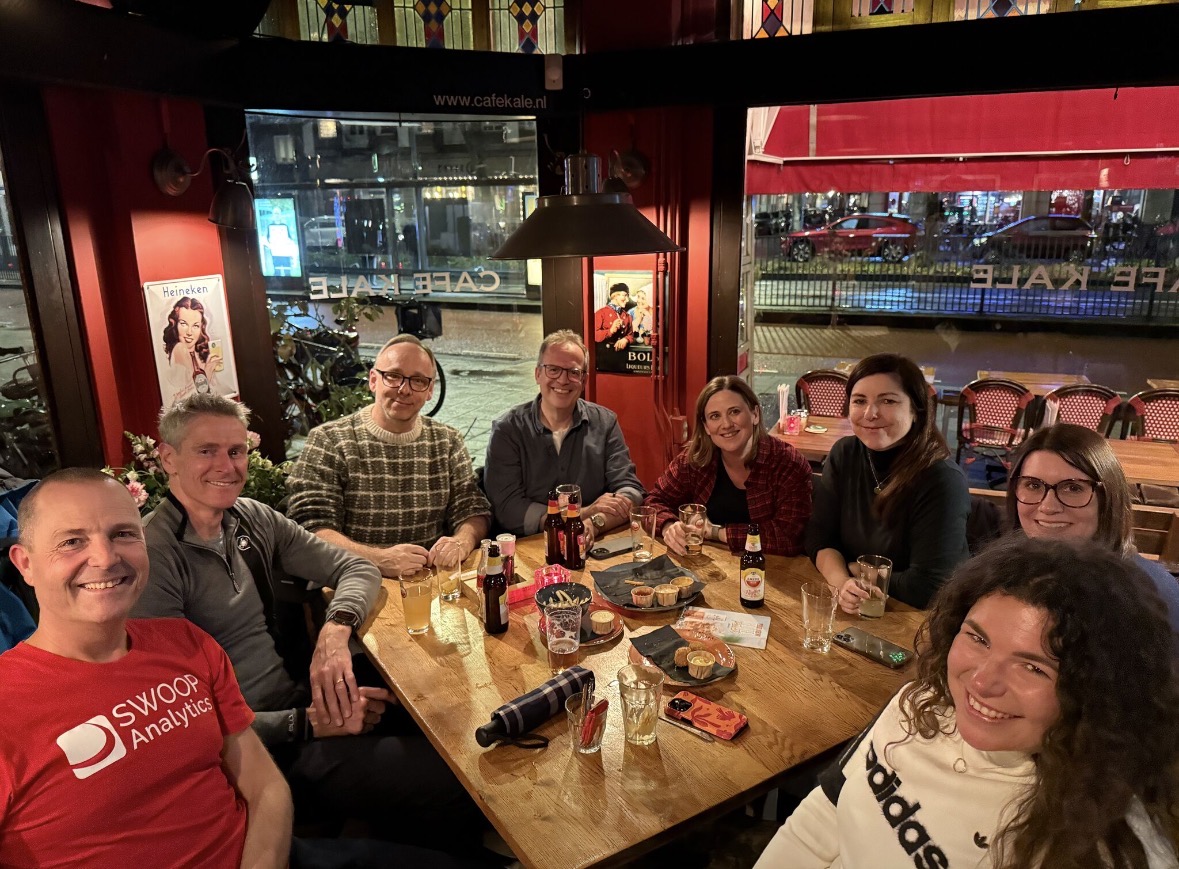
I also met with Cai Kjaer, CEO of Swoop Analytics, who was in Amsterdam for meetings. We talked about the looming launch of their Information Overload Calculator, the Viva Engage Benchmarking Report, and the uncomfortable truth that while tech platforms — and now AI — make it easier than ever to publish, people’s bandwidth hasn’t magically expanded to cope. My line on this: internal comms needs to focus on orchestrating flows and making sure messages land safely. Hyper-personalisation will be key, but that comes with its own challenges.

A smiling woman and man posing for a selfie on a staircase with stained glass windows in the background.

Travel

I’m off on an adventure tomorrow — Albania, Kosovo and North Macedonia, all firsts for me and all a little off the usual tourist trail.

Next weekend I’ll be hiking in the gloriously named Accursed Mountains (because why not tempt fate on holiday?), and there’ll be a few boats involved too. Which, having just re-watched Jaws, feels like impeccable planning. So there won’t be a Weeknote 37 — unless I’m writing it from the belly of a shark.

This week in photos
Weeknote 2025/35

A tranquil view of a canal in Amsterdam, lined with trees and colorful buildings, reflecting in the water under a clear blue sky.
A last blast of summer in the city. Photo by me.

Six years ago tomorrow I packed up my London life into two suitcases and moved to Amsterdam.

In previous years I’ve marked the date by listing lessons: how to get lost (a lot), how to start again, how to build a life from scratch armed with nothing but Google Maps, a bicycle with no brakes, and one magic Dutch ID number that unlocks everything from taxes to library books.

But this year feels different. This year, I feel settled.

I’ve found my gang. I’ve got my groove.

It took a while to get here. The pandemic didn’t help. Two years suspended, the streets quiet, friendships impossible to spark. Loneliness isn’t dramatic; it just seeps in, until you look up and realise the only stranger you’ve spoken to in weeks is the cashier at Albert Heijn. Add the Dutch weather and the joy of navigating Belastingdienst paperwork, and it sometimes felt like a long audition for a very niche endurance sport.

And then, gradually, things shifted. The map filled in with people and places. Now there’s the crew I go to gigs with, shouting lyrics into the night. Local WhatsApp groups that point me to the freshest dahlias or the new season herring hitting the kraam. Gym buddies who somehow make turning up at 8am almost fun. The barista who knows my order before I open my mouth. Dining companions who linger long after the plates are cleared, conversations spiralling into politics and philosophy. A neighbour with my spare keys and another who’ll lend me a sander. Friends who water the plants when I’m away, sending sheepish updates about the ones that didn’t make it. The impromptu neighbourhood borrel that starts with “just one drink” and ends, inevitably, with bikes wobbled home in the rain. The late-night ping of a meme, answered instantly with another. And a friend who says, simply, “Pop by on your way home — I’ll put the kettle on.”

Small things, maybe. But they’re the everyday glue of belonging; the tiny threads that weave a city around you until it feels like home. Things I never really had in London, but here I’ve somehow found.

It turns out that moving countries isn’t really about geography. It’s about patience and persistence, and the slow magic of weaving yourself into the fabric of a place. Until one day you look up and realise the unfamiliar city has become familiar. The strange has become ordinary. And you somehow quietly belong.

I came here with two suitcases. What I’ve gained is a home, and a community.

This week at work

A productive stretch on the book front: we submitted three new chapters, and resubmitted another three we’d reworked to make the flow more logical. Feels good to see the pile growing and the structure sharpening up.

Tiny green shoots are popping up online too — the book quietly sprouting on pre-order pages for the exceptionally keen. A strange but thrilling sight: proof it’s starting to become real.

At work, the same theme of belonging surfaced in conversations with a client about how they use Viva to build connection, and what to do when those bonds fray. It struck me that the process is the same: digital spaces can be where colleagues find their gang and their rhythm. Because belonging at work isn’t really about tools or systems. It’s about that moment when you realise you’re part of something bigger.

Otherwise it’s been a deliberately quiet spell before the next project kicks off. We’ve used the breathing space to wrangle business admin and finally give our website some overdue attention.

Over at Statement, it’s been live for a week now. We’ve got a steadily growing number of people signing up, using it, and (crucially) giving us feedback. The team have been busy fixing things behind the scenes, while I’ve been working on comms to answer questions about how it all works. Early days, but exciting ones.

Also this week

The carillon of the Westerkerk, just across from my house, played a concert of Amsterdam-themed songs on Friday. I’d like to think it was for me personally, but I suppose it’s possible it’s in honour of the city’s 750th birthday. Either way, I was treated to a very Dutch soundtrack, including a rousing rendition of Tulips From Amsterdam. Hope you enjoy it as much as I did.

Tulips From Amsterdam played on the carillon of the Westertoren, filmed from my front window.

Consuming

👩🏻‍💻 Internetting

This week I was struck by Emma Parnell’s piece on living abroad and returning home.  She writes beautifully about the dislocation of overseas life — how it’s not always the big things that unsettle you, but the small absences, like the sound of owls in the morning. And about how moving back, supposedly the “easy” part, can feel just as alien: friendships moved on, milestones missed, the nagging sense you’ve fallen behind.

What I loved most was the ending. Ten years on, she’s not only rooted again but surrounded by people she loves — proof that the feeling of “home” is less about geography and more about connection.

It resonates with my own experience of moving abroad (and back, and abroad again): that moving countries isn’t only about the logistics of visas and flat-hunting, but about patience, persistence, and the slow work of building community until one day you realise you belong. You’re home.

📺 Watching

I finally made it to Amsterdam’s oldest cinema, The Movies, and watched The Roses. Essentially a British remix of the 80s American classic The War of the Roses, but with upgraded swearing. Benedict Cumberbatch and Olivia Colman play a couple whose marriage unravels in increasingly petty and chaotic ways. I love both actors, the narrative was charming, and Colman’s wardrobe was iconic.

It’s not winning any prizes, but as a stylish way to pass a couple of hours it does the job. Come for Colman’s shirts, stay for the creative insults. A solid 6/10.

📚 Reading

I’ve just started The Albanians: A Modern History ahead of my holiday there in a couple of weeks. Albania’s a country I know embarrassingly little about, so it’s time to learn my Enver Hoxhas from my Mother Teresas. Looking forward to seeing how what I read on the page stacks up against what I find on the ground.

🎧 Listening

Been on a CMAT tip this week. Big choruses, sharp lyrics, country-pop with a wink. The kind of soundtrack that makes late-summer evenings feel like they’ve got a bit of eyeliner and a sense of humour.

Travel

Off to the Auvergne later this week. Volcanoes, valleys, villages, and the chance to dust off my GCSE-level French.

This week in photos
Internal Comms Teacamp 2 – Evaluation
For this second Internal Comms Teacamp we settled on the thorny topic of evaluation. With budgets being squeezed, we’re all under increasing pressure to demostrate the value of what we do, so this was a popular subject and we all had plenty to say.
With the summer holidays in full swing this was a smaller group than the first time around, but included a mix of internal communications professionals from the public, private and voluntary sectors keen to share ideas on the challenges we all face in our line of work.

Camilla West from Royal Bank of Scotland kicked things off with a short presentation on the work she’s doing to develop measurable KPIs for internal comms which link to wider business objectives. This turned out to be a common theme in the ensuing discussion; how we move away from simplistic measurement of click-throughs and measuring outputs towards a more meaningful evaluation of the impact comms has on achieving outcomes for the business.

The discussion moved on to KPIs. We all need to report our performance regularly to our management boards, but all too often this focuses on outputs (such as numbers of intranet visits) rather than outcomes (such as numbers staff who signed up to a training course). The difficulty we all seem to have is demonstrating what impact comms had on any single outcome; generally success or otherwise is determined by a number of organisational functions and variables, of which communications is just one.

While staff surveys can be useful in measuring staff engagement and objective satisfaction with communications channels, they’re far from a perfect means of measuring the performance of an organisation’s communications function. The group strongly felt these were often given far more attention than they deserve, so surveys should be followed up with additional research such as focus groups to gain a better understanding of communications effectiveness and identify points of failure.

This led nicely on to a discussion about the extent to which internal comms can be responsible for organisational objectives around staff engagement and morale. Many public sector organisations are noticing a dip in engagement scores at the moment, which is unsurprising given the headcount reductions and budget cuts so many are going through. This means that even where communications is working well, it performs badly in surveys as staff are cheesed off for myriad reasons beyond the control of comms.

Everyone in attendance emphasised the need to evaluate the effectiveness of campaigns and specific communications activities as well as employee satisfaction with communications. This needs to be an honest review of what works and what didn’t work as well, rather than simply trumpeting success stories.

In summary, it’s clear that evaluation is essential, but it’s not easy. Different methods of evaluation will be needed for different activities, and we need to combine this with regular reporting on our own performance to demonstrate the value of internal communications spend –  linked to financial performance where possible.

The next Internal Comms Teacamp will be on 21 September from 4pm-6pm. We’ll be discussing Internal Comms and Hard to Reach Audiences, so I’ll be talking about the work I’ve been doing to bring intranet content to smartphones and iPads for Members of Parliament. For more information contact me and I’ll add you to our email list.

Not sure what Internal Comms Teacamp is? Here’s an introductory blogpost.