Weeknote 2025/02

Sunset behind a tropical beach in Zanzibar. There are outlines of the shore, palm trees, a boat and people swimming in the sea. The sky is a gorgeous orangey-pink.
I started the year here and, you know what, it could have been a lot worse. Photo: Sharon O’Dea

It’s a fortnight into the year and I’ve only just got around to weeknoting.

I’ve not really been busy. Rather, I’ve deliberately been busy not being busy. I didn’t write my ins and outs for 2025, make any look-ahead predictions, become a marketing ninja, level up my AI skills, write my social media plan, choose a word for the year, or any of that jazz.

Instead, I leaned in hard to the whole being-on-holiday thing. And it was great. I spent three and a half weeks pootling about East Africa, and it was brilliant in every way.

After a couple of years running Lithos Partners I realised that absolutely nothing happens between mid December and mid January. So the best thing I can do is take a proper break (and after a very full-on 2024 I needed one too!)
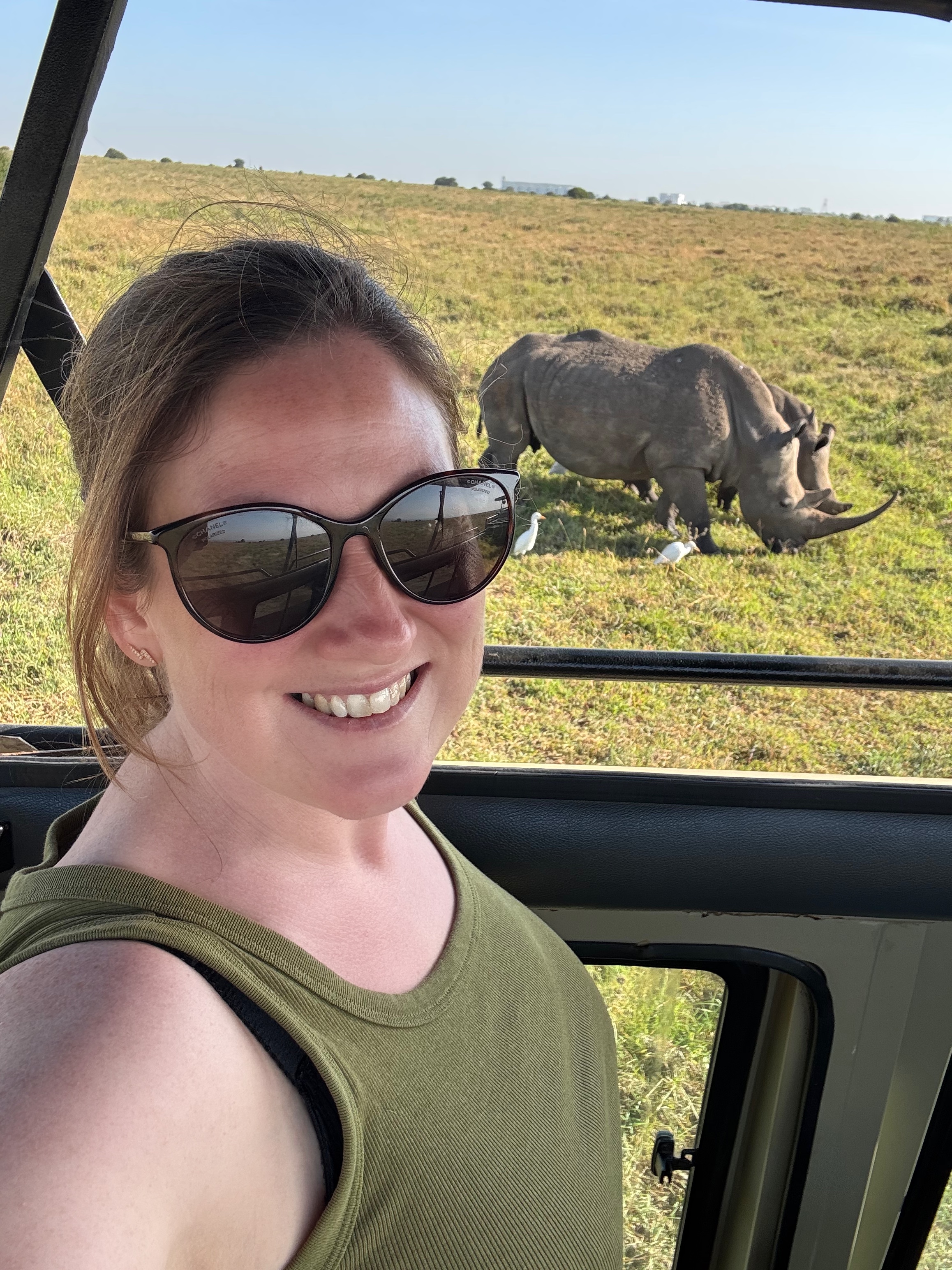
After my primate-based antics in Weeknote 52, I headed to Tanzania where I hiked (just the bottom bit of) Kilimanjaro and saw in the new year with fireworks and a dance around a swimming pool. Then flew over to dreamy Zanzibar for some chill time, before heading to Kenya, where final few safari drives gave me the opportunity to level up my pointing-at-things skills.

(If my accountant is reading this, does this count as tax-allowable professional development for a PowerPoint jockey? 😉)

A quick look back at 2024

In quant:

10 projects
7 clients
6 conferences spoken at
2 podcasts featured on
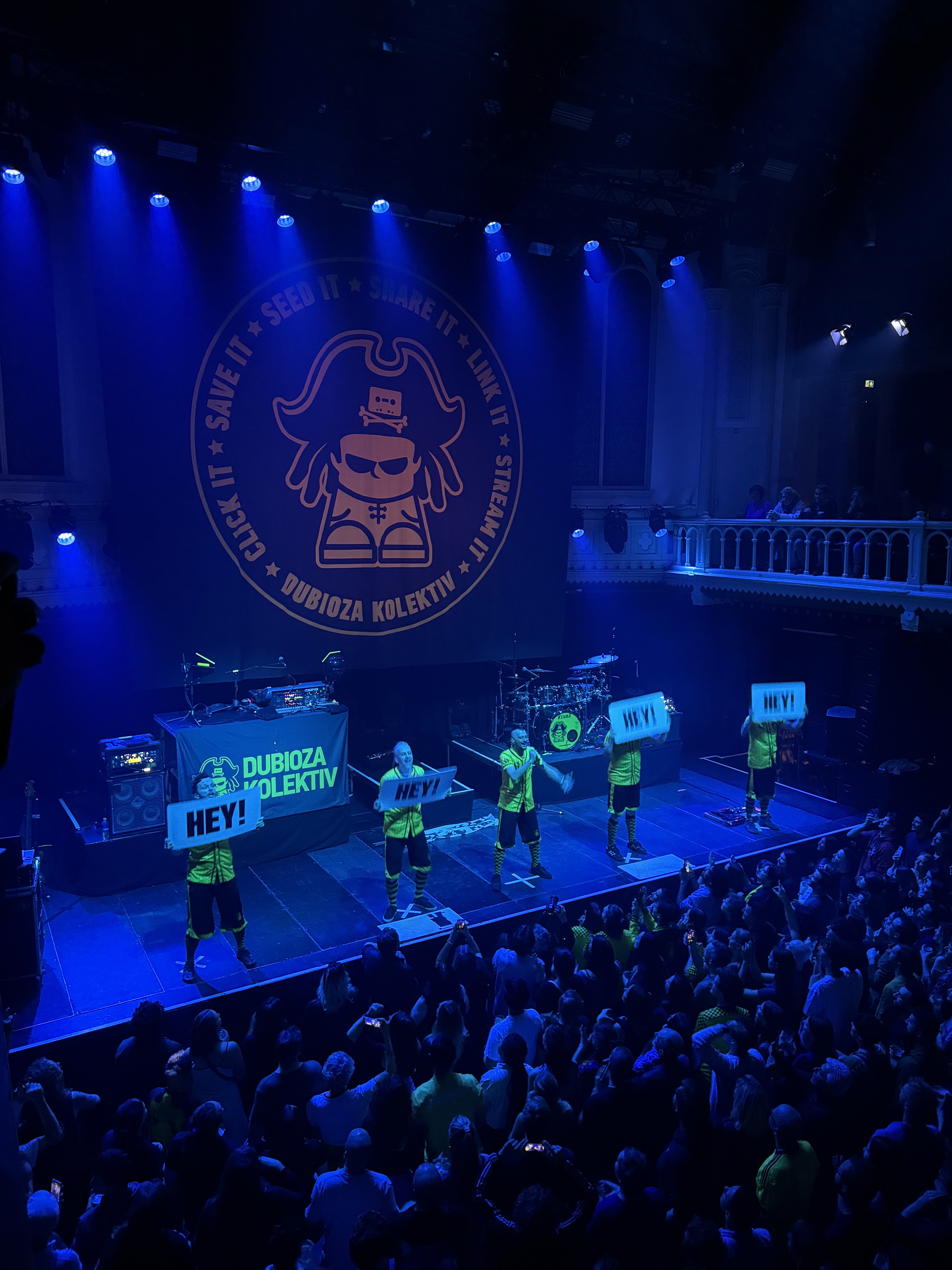
22 gigs (but only one of them was the Eras Tour)
26 books (all but one non-fiction)
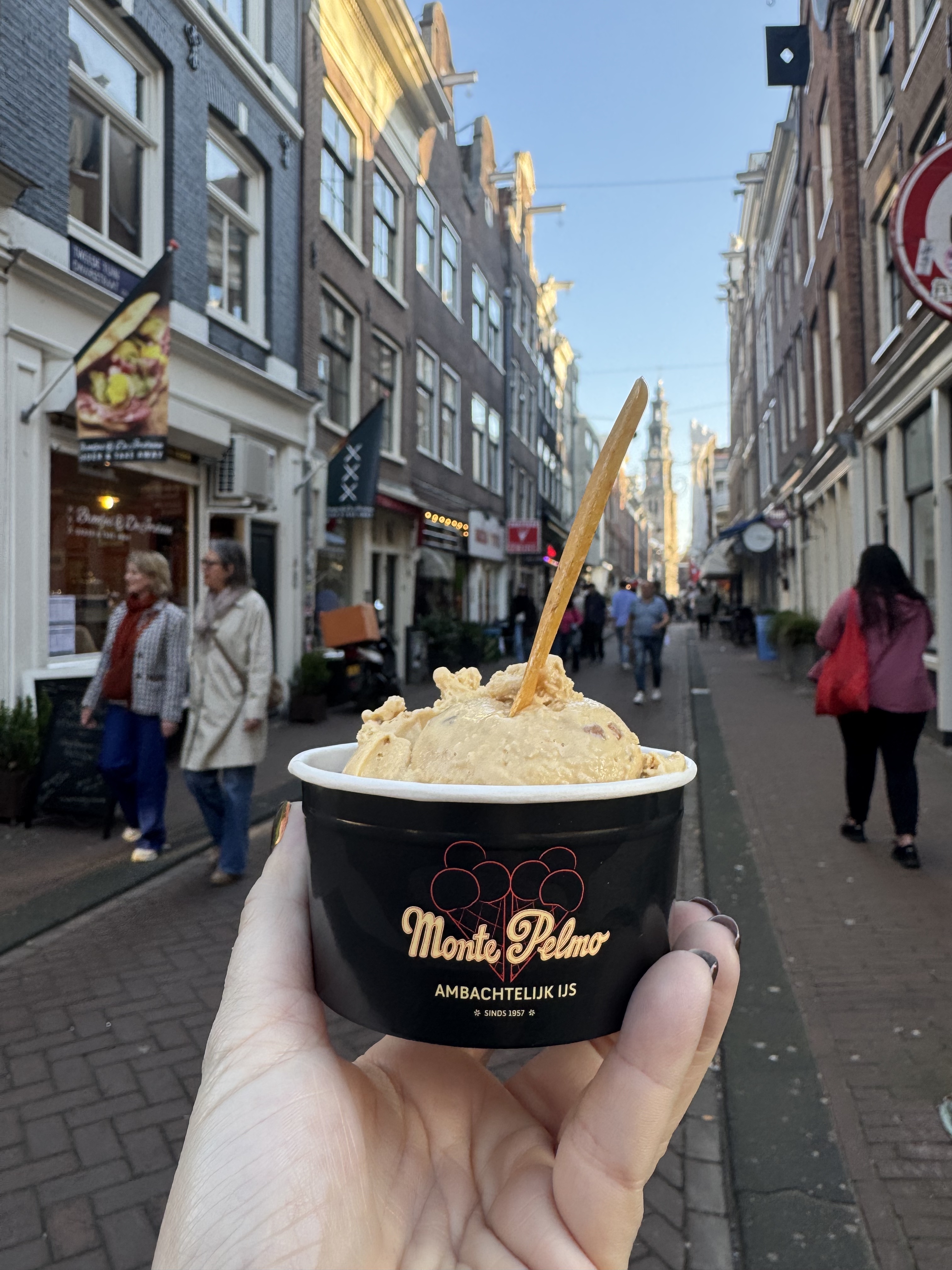
52 coffees with the 100 people I hoped to catch up with this year
0 umbrellas lost
1.5kg weight gained
49 flights
28 hotels
17 countries visited (11 of them new, taking me to 78 total)
46 weeknotes

In one second every day:

Some stuff I did the last couple of weeks

I’ve been easing myself back into work slowly.

  • Delivered a training session for editors on an intranet our client launched just before Christmas
  • Had a super positive meeting with another client about the plan we submitted for delivery of their new intranet in 2025. Pleased they’re happy with both the proposed direction and the rigour and clarity of the associated plan. The timeline is ambitious, but we’ve done everything we can to strip out unnecessary complexity
  • Started working on a new initiative for our DWXS benchmarking tool

Consuming

👩🏻‍💻 Internetting
Bits of digital lint from my browser’s belly-button

  • The World Economic Forum’s 2025 Future Of Jobs report. This bi-annual report is an essential read for anyone interested in the future of work, and more broadly in digital transformation. The predictions about the increasingly short shelf-life of the average skillset are particularly alarming.

📖  Reading
Books I’ve read (or tried to)

  • Character Limit, the book about Elon Musk’s takeover of Twitter. A compelling read that confirms everything I thought I knew about Elon. Tl;dr he is an awful person who fires everyone who disagrees with him, such that now he has no one left in his orbit to have a word while he has a very public breakdown, taking western democracy down with him
  • Rwanda Inc. by Patricia Crisafulli and Andrea Redmond. I like to get the background on places I visit, and a quick Google recommended  this examination of Rwanda’s post-genocide economic transformation under Paul Kagame’s leadership, focusing on its business-friendly policies, innovation, and ambitious development goals. While it champions Rwanda as a model of progress and stability, the book’s optimistic tone (written from the perspective of 2012) felt rose-tinted (naïve, even) in 2024, given growing concerns about political repression and inequality
  • The Teeth May Smile But The Heart Does Not Forget: Murder and memory in Uganda. A second read for the second stop on my tour, on the legacy of violence in Uganda through the investigation of Eliphaz Laki’s murder during Idi Amin’s rule. This gripping blend of true crime and history offers a deeply human perspective on justice, memory, and resilience, making it a compelling read for those interested in the intersection of personal stories and political turmoil. It certainly helped me make sense of the place as I was travelling around.
  • Rather than attempt two further books for Tanzania and Kenya I went for An African History of Africa by BBC correspondent Zeinab Badawi. This delves into the continent’s rich and diverse past, drawing on oral traditions, archaeology, and historical records. An engaging and accessible intro to Africa’s profound cultural, social, and political history. Great background read for someone who – like me – hasn’t paid nearly enough attention to the continent in the past

📺 Watching

  • Binge-watching the latest series of Queer Eye. Jeremiah is a wonderful new addition to the Fab 5 and I’ve found myself welling up every time he does. Which is a lot.

🎧 Listening

  • The news is all too depressing and angering so I’ve unsubscribed from most of my diet of news and politics podcasts and am just listening to music and, when I need spoken word, history
  • It was an eclectic music week, starting with Burna Boy and Afrobeats and moving on to indie Bristollians Getdown Services

🧳 Travelling

This week I’m heading to London (work) then Paris (meeting Ann for art, history and gluttony).

Weeknote 2024/52

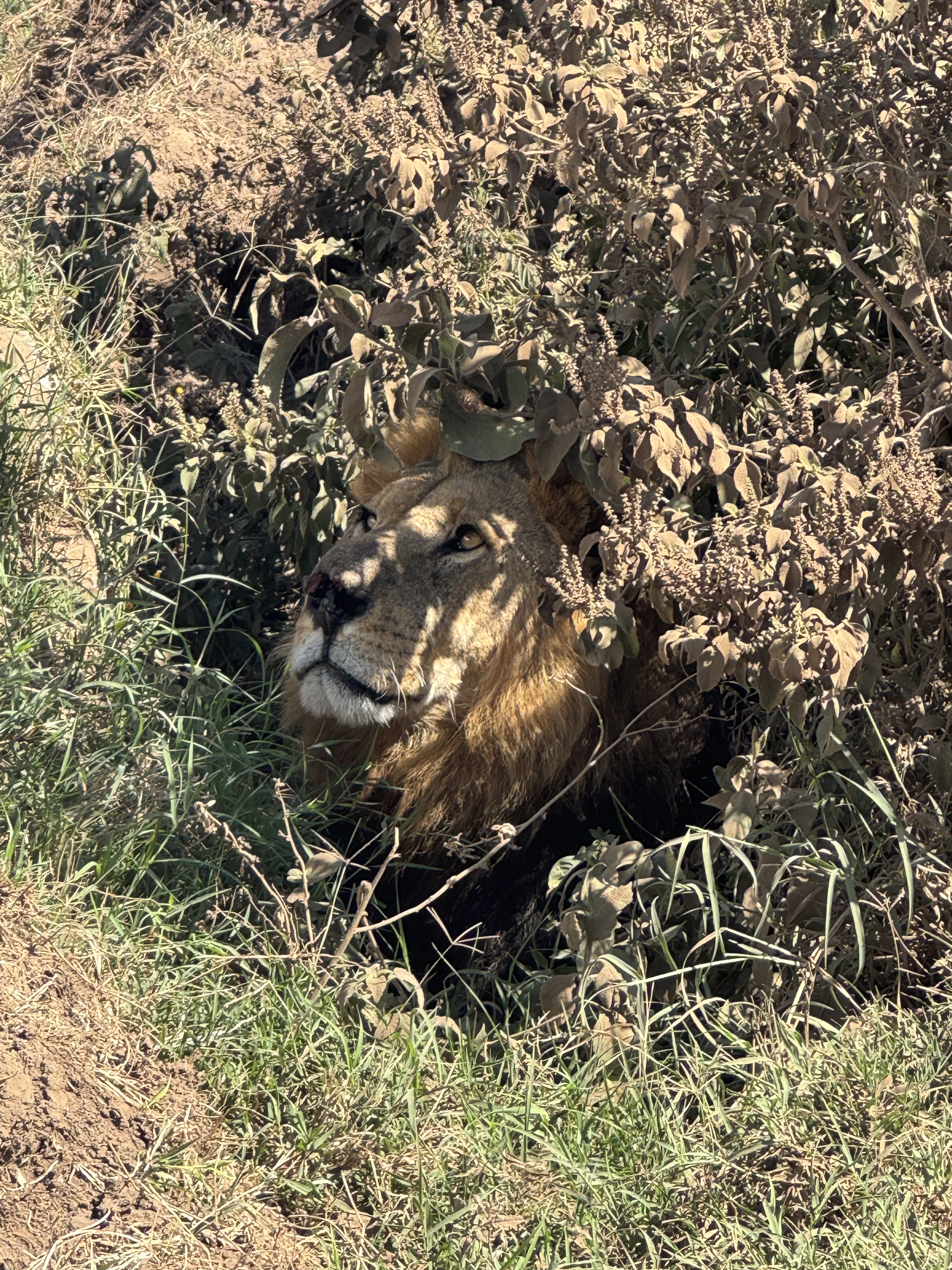
Look at this absolute UNIT. Photo by me.

In Weeknote 16, I mused that I hoped my first visit to Africa wouldn’t be my last. Little did I know it would take me a mere eight months to prove myself right.

After April’s adventure, I found myself with a travel itch to scratch. So, I did the sensible thing: finished my last work tasks for the year, caught a gig, and darted off to the airport.

The first stop was Kigali, Rwanda—a city that, while not exactly stuffed with sights, compensates admirably with charm. It’s possibly the safest city in Africa, and certainly its cleanest. Imagine Singapore levels of compulsive tidiness, and you’re halfway there. It was the perfect place to shake off the work-year cobwebs and ease into holiday mode. We zipped about on mopeds, visiting the quieter markets and sombre historical sites, including the scene where Belgian peacekeepers tragically lost their lives in the early days of the 1994 genocide.

Speaking of which, we also visited the Rwanda Genocide Memorial. Grim doesn’t quite cover it. A quarter of a million people lie in three mass graves on the site, making it an experience both sobering and difficult to put into words.

From Kigali we moved on to Volcanoes National Park to hit the safari trail. First up: hiking Mount Sabinyayo to find a troop of Golden Monkeys. Quirky little creatures, scuttling through the trees munching on twigs.

Next, the Dian Fossey Centre, a must-visit for anyone remotely interested in gorilla conservation. Think of it as the prelude to the main event: seeing mountain gorillas in the wild.

For this, we crossed into Uganda’s Mgahinga National Park. After a strenuous hike (read: I questioned my life choices more than once), we met up with the trackers. They’d already located the gorilla group and were busy hacking through the undergrowth with machetes. Just as we were expecting another guide to appear, a colossal silverback emerged instead.

This was one of the best things I’ve ever seen.


There he was, a metre away, calmly munching leaves like an oversized Zen master. And then—because why not—he got up and casually strolled past us, brushing against my leg as if to say, “Yes, you may bask in my magnificence.” In total, we saw three silverbacks, a juvenile male, a female, and a baby. It was beyond anything we’d hoped for.

Here’s the best minute of phone video I’ve ever shot, though it doesn’t quite capture the “pinch me” magic of the moment.

From there, we ventured to Queen Elizabeth National Park. Highlights included lions and leopards napping in trees (as one does), chimpanzees cavorting in Kyambura Gorge, hippos luxuriating in a watering hole, and elephants frolicking on the banks of the Kazinga Channel. It was like living inside a wildlife documentary, only with worse hair and more mosquito bites.

Next, Lake Mburo, where we mixed game drives with a walking safari. There’s something both humbling and slightly absurd about strolling among giraffes and zebras as if you’re just out for a yomp across the Sussex Downs.

Finally, we wrapped up in Entebbe. A jaunt to Kampala included scaling the Gaddafi Mosque’s minaret for a sweeping view of the city’s seven hills and a chilling visit to Idi Amin’s torture chambers.

And this morning we took a boat trip to Ngamba Island. There, we fed rescued chimps and watched a baby chimp gleefully somersault down a hill. Truly, the Olympic gymnastics team has nothing on this little guy.

I’d love to tell you there’s a profound lesson here about digital transformation, but I’m afraid there isn’t. Just a reminder that sometimes, the best thing you can do is step away, embrace the unexpected, and marvel at the sheer wonder of it all.

Happy New Year, folks.

Weeknote 2024/50

I’m already over these dark mornings. Photo by me.

This week saw the culmination of months of hard work as we launched a new intranet for a client. It’s always satisfying to see a project move from concept to delivery, and this one was no exception.

Our first meet with the client was in February, and it took another five months of to-and-fro before we had a final agreement on the work ahead.

But while it was slow to get started (and intranet projects usually are), it’s been a whirlwind ever since. In a little over three months we’ve planned and configured the site, integrated tens of apps, developed and tested the IA and worked with the team to design and establish governance and workflows.

On the content side, we’ve developed the content strategy and put it into practice, pulling together an ace team of content designers, working with stakeholders to create hundreds of pages of accessible, clear content – in two languages! We smashed it: over 400 pages, sites, applications and communities in smidge over three months.

And alongside that we’ve helped the organisation get ready for launch, designing and delivering training for communicators and content owners, so the site doesn’t just look good on  day 1, but will be just as good on day 365.

We began as three organisations – Lithos, the client and an IIAB vendor – but quickly we were working and delivering together as one team. We’re delighted that the newly-launched intranet has had positive feedback already, including from the CEO.

A successful launch is a splendid note to end the year on. But as we always say to clients, there’s no value in launch – the value is in adoption and use, with the platform positively impacting colleagues for years to come. The team have ambitious plans to grow and iterate their intranet; this launch is just the start of that journey.

I also delivered a webinar on hybrid work for Modo Labs, looking at trends in hybrid work for 2025. I think it’ll be available on demand – so NO SPOILERS, save to say the future of work is really a reflection of the future of the wider world, of changes in society, tech, the environment, and so on. So in this session I drilled down from the broad trends impacting the globe in the year ahead, to how these might manifest in the workplace, and finally what this means for hybrid work.

Remote work and return-to-office is once again a big debate – thanks in no small part to people desperate to make it part of their tedious culture war – but I always enjoy the opportunity to reflect and share insights. Prepping an hour’s material is a massive task though. Or at least it is for me, because I like to create fresh material when I’m commissioned to do something like this. I’m not one for phoning it in with a rinse-and-repeat presentation.

Overall I think it went pretty well. Timings were on point and feedback on LinkedIn etc was good. I’ve got a huge amount of material from my research, planning and thinking, so I’m going to think how I can put it to use with a few blog posts or articles.

With that, I’m winding down for the year.  There are a few loose ends to tie up, but I’m looking forward to a proper break and a chance to recharge before 2025’s challenges come into view.

Some non-work things

On Monday my pal Lauren and I went to an event called Knits and Tits, a crafting-meets-intersectional feminism event at the Paradiso that aims to “challenge traditional perceptions of knitting, showcasing it as a vibrant and empowering form of creative expression that embraces womanhood and intimacy in a bold and unapologetic manner”.

As someone who has been knitting for – checks notes – a month, it was fascinating to see the crafting subcultures of Amsterdam close up. Women of all ages come together for an evening of chilling, chatting and watching a band, while doing crafts. There was a talk from Marieke Voorsluijs on how knitted representations of anything make them friendlier and more approachable. Knit or crochet a packet of cigarettes or a knife and it’s immediately fun. And so she began knitting vulvas in all their variety of shapes and sizes. There’s even a web series on crafting vaginas.

It was a lovely vibe. I should go to more leftfield events like that one.

I also saw Conclave at the cinema. A compelling political thriller that delves into the secretive process of electing a new pope (kind of West Wing for lapsed Catholics). Solid performances from Ralph Fiennes, John Lithgow and Isabella Rossalini. I’d give it an 8/10.

Connections

Unily‘s Kaz Hassan was in town for Workday Rising, and we managed to find time for breakfast and intranet geek chat. We talked about the intranet as a critical interface for a hot mess of enterprise apps, the whole intranet/HR vendor space, and whether enterprise social is on its way out.

(On which I have views – will save that for another weeknote).

Me and Kaz Hassan. I look hammered. I’m not; we had breakfast.

The agenda for next year’s Camp Digital has been announced. Once again I’ll be working with the team to identify brand new speakers from under-represented groups, and supporting them to plan and deliver short talks in our 300 Seconds session. The aim is to give people an opportunity to try speaking at an event, to build confidence and experience – and in doing so, build a more diverse pipeline of speakers with new and interesting stories the rest of us can learn from. As ever, the rest of the agenda is cracking. Hope to see you there.

Travel

I’m off on HOLIDAY. Did I mention that? I’m going to Africa for three weeks. 🇷🇼🇺🇬🇹🇿 🇰🇪

The next couple of weeknotes, if I get around to doing them at all, are likely to be primate-heavy. 🦍

Weeknote 2024/49

Covent Garden looking Christmassy this week. Photo by me.

This week we finished and submitted a business case for an intranet. It’s the culmination of months of work. First looking at their existing content and services, and identifying ways to streamline and simplify them. Then spinning up a proof of concept to test and validate our thinking on site structure, IA and templates. Then once everyone was comfortable with the approach, going away and working out how what suppliers, budget and people will be needed to make it a reality.

For the client, it’s just the start of the journey. They still have to build and launch the thing. But I feel comfortable that they have a realistic, pragmatic plan which allows them to start small, deliver fast and grow from there.

But we can’t underestimate the scale of the task. Like many organisations, this one wants to build their intranet in SharePoint. There are lots of good reasons for that –  alignment with the rest of the stack, integration with other productivity tools, and the promise of AI magic in the future. And often teams are just being pragmatic; it’s easier to get the go-ahead to build an intranet using a platform you already have (SharePoint) than to make the case for anything else.

And you can build great intranets in SharePoint. For example, most years 8 of the top 10 intranets in the NNg Intranet Design Annual are SP.

But in a world where people want fully-formed toys, SharePoint is a box of Lego. And just as with Lego, your ability to deliver is limited by your skills, imagination and budget.

Allow me to stretch this analogy to the point of absurdity.

As it comes, SharePoint is an unlimited box of Lego. In theory you could do anything with this.

But in reality you lack the time, skill and imagination to build much more than this.

And that’s fine. It meets the brief. It shuts the kids up for five minutes.

But it’s not really what you were hoping for. You want something more impressive. You have a few options.

You could buy a Lego Kit. Following the instructions you get this, which looks way more impressive, in just a few hours.

Lego main street (Lego Store)

The intranet equivalent of this is an ‘Intranet In A Box’ (IIAB). These are products that work alongside SharePoint and make it work like a regular CMS. Using one of these you can spin up something that looks and works brilliantly, really quickly. We’ve just delivered one end-to-end, including all the content, in three and a half months. It’s still just Lego (SharePoint) but it looks good and is simple to use.

But you’re stuck with the pieces that come in the box. If you want to convert the Main Street Record Store into a bookshop, you’re bang out of luck because the kit only includes the orange and yellow storefront.

IIABs, like Lego kits, come in all shapes and sizes, from simple to complex, and you can choose based on your needs and budget.

If you want something more bespoke, you need to work with the box of Lego. But you need to find some experts to make it look good, and work consistently, or you’ll just have a proliferation of disconnected home-made crappy Lego houses.

You can engage an agency to build a site and templates for you using regular bricks. Think of this as the equivalent of getting someone to custom-design your own kit. You’ll get a box of parts and a set of instructions, so you can spin up Main Street and houses consistently and quickly.


This gets you broadly to where you’d have been if you’d just bought a kit, but this kit will be precisely to your specifications, with a bookshop instead of a garish record store. This will typically take 9-12 months.

If you want to switch the bookshop for a Gail’s Bakery in the future, you can go back to your agency, or hire a developer to change it for you. You’ll also need to hire a bunch of people to manage it all.

The other option is to custom-develop. If you have time, detailed knowledge of all the pieces and possibly a 3D printer (ie a team of in-house developers) you can build anything.

One of a bunch I found on Bored Panda

This looks pretty cool, to be fair. And so do all the winning SharePoint intranets in the NNg annual. But you have a remember that they took an average of 23 months to build, with a team of 15 behind them.

If you have the luxury of time and money, then fill your boots.

But typically organisations have neither of those things. And so they need to compromise, somehow, on a solution that is good enough for now and meets most of the needs they have.

Some non-work things I did this week

Like much of the middle-aged internet I have a soft spot for true crime podcasts. And few has sucked me in as much as Kill List, in which tech journalist Carl Miller uncovers a dark web murder-for-hire website listing hundreds of potential victims.

The team have, thankfully, eschewed the fashion for live podcast recordings but they did have a panel talk this week when I happened to be in London, moderated by Jamie Bartlett (the guy behind Missing Cryptoqueen).

Depressingly, but not surprisingly, the intended targets of murder-for-hire websites are mostly victims of intimate partner violence. But while these websites are scams that con people out of crypto for ‘hits’ that will never happen, the threats against people are very real indeed. The intent is there, and these people could well take matters into their own hands. Miller and the show’s producers talked about their frustrations when authorities were slow to act, leaving them in a race against time to warn those in danger.

Dark but fascinating. Do listen to the podcast.

What I’m reading

I’ve started reading A Certain Idea Of France, Julian Jackson’s biography of Charles de Gaulle.

It’s a hefty tome and I’m only part way through but he quotes de Gaulle asking “How can you govern a country with 258 cheeses?”

That line struck a chord immediately, as this week I’ve been putting the finishing touches to an intranet governance model for one of the most complex organisations I’ve ever worked with.

Managing this level of complexity isn’t about reducing variety—it’s about creating the structures and processes that allow diverse inputs, roles, and goals to align effectively. Clear governance doesn’t stifle creativity; it provides the guardrails to harness it.

De Gaulle had a lesson for us all here: Complexity isn’t the enemy. With the right framework, it can be a strength.

Connections

A trip to London gave me a chance to catch up with a whole bunch of people I’ve been meaning to see for ages including

Unfortunately there were just as many people I didn’t have time to meet. See you in 2025.

Coming up

2025 is less than a month away. So this upcoming week I’m doing a webinar for Modolabs on hybrid work trends for 2025. Despite high profile RTO mandates hybrid’s going nowhere. That’s because using people, places and digital work practices creates organisational resilience – and that’s critical to weathering whatever the future of work holds.

So in this session I’ll look at resilience, and at three related trends for the year ahead.

It’s on Thursday. Register here.

Travel

One more week until holiday. HMU with your tips for Kigali and Nairobi.

Weeknote 2024/48

Gorgeous sunset on my street this week. Photo by me.

December already? It feels like the year just started, yet here we are in its final chapter.

This time of year always sneaks up on me. Time for reflection, connection, glühwein and maybe a little chaos.

Some things I did this week

Ok, more than a little chaos. This week was A LOT. Three impending deadlines have left me and Jon chasing our tails a little.

But the end is in sight.

On one – a scoping and business case development project – I started the week feeling a bit overwhelmed, trying to put finishing touches to 114 slides. Then midweek I made the decision to strip it right back to a simple 10-ish page deck with a stronger, clearer story, and put all the detail in a supporting report.

Decision-makers aren’t going to read the detail; they need to be convinced and reassured. The short report makes a punchy case for change and has a clear ask on resources and timeline.  The full report is there to provide answers to questions and give confidence that we’ve fully worked through the detail. Which we have.

It’s in a much better place now. We still have a few details to finalise, but it’s so close to done. Phew.

On the other big project, we have an intranet due to launch in a week. We did a state of the nation on Friday and we’re in a great place. An intranet planned, configured and built, and hundreds of pages of content written in a little over three months. I’ll reflect on that more post-launch.

On top of that, I’m prepping for a webinar I’m doing on hybrid work trends for 2025 for Modolabs. I love thinking about future trends, so I’ve enjoyed getting stuck into this one and trying to translate noise about global megatrends into the practicalities of workplace comms and collaboration in the year ahead. I always forget how much work creating entirely fresh presentations is. But also how much I like doing that focused reading and research (I’d enjoy it more if I weren’t quite so busy on the other projects, mind you).

With month end yesterday this has also been a heavy and occasionally stressful admin week. Always my least favourite part of the job.

Some non-work things I did this week

On Wednesday this story about Cyberia, the world’s first internet café, fell into my feed. It’s a great read about the enthusiasm and utopianism of early internet entrepreneurs. And the connections between Cyberia and the music scene of the mid 90s.

But my memories of Cyberia are different. I went there on a school trip, sometime in late 1994 or early 1995. It was the first time I’d ever been on the internet. I was fascinated by it immediately. The prospect of connecting with ideas and people beyond my experience as a painfully shy, nerdy schoolgirl. I was hooked.

Reading that piece on Cyberia I reflected on how much that one school trip changed my life. I haven’t been offline since, and that’s given me so many wonderful experiences and opportunities in the 30 years since.

But by coincidence I’d signed up to an event on Wednesday night called The Offline Club, an initiative here in Amsterdam that offers “offline events and detox hangouts to unplug, relax and connect with like-minded people”.

I’m beyond terrible at being and staying offline. I have to go to extreme lengths to make myself disconnect. And I mean really extreme, like taking myself to an island with no electricity and no phone signal.

After 30 years, I’m not sure I even know who analogue me is. But I signed up to Offline Club weeks ago, in an effort to find out.

Wednesday’s event was their biggest yet, with over 300 people gathering at the Westerkerk, the big 17th-century church opposite my house. I’d followed the joining instructions and packed things to do and read, and a blanket to keep warm.

I handed my phone in and was given a cloakroom ticket to claim it back. My instinctive reaction was to reach for my phone to take a photo of it in case I lost it. But… oh yeah.

I slipped the cloakroom ticket into my back pocket, grabbed a cup of green tea and found a seat. The founder gave a short introduction, explaining the evening would be split into three sections. 45 mins of getting in touch with yourself, quietly, followed by an hour connecting with other people, and finally 45 minutes alone time.

Quiet time was accompanied by a piano recital. I grabbed a spot in a pulpit to read a book, which after a childhood of Catholic schooling felt vaguely subversive. It was here that I had a revelation. That revelation was that my PowerPoint was far too long. I was reading Ros Atkins’ The Art Of Explanation at the time. The Lord does indeed move in mysterious ways.

For an interminably long time – it felt like about six hours, but was probably about 20 minutes. I don’t know because I didn’t have my Apple Watch on – I felt troubled by my inability to Google every bizarre thought that entered my mind. So I wrote them down in my notebook so I could look them up later.

What was Rembrandt’s first name?
Does the universe have a middle?
Whatever happened to Zig and Zag?
If a Phillips screwdriver is the cross one what’s the flat one called?
What was that village that crowned a chicken as its king? (I think it was a chicken?). What was all that about?

When quiet time was over I wandered around the various activities designed to encourage meaningful connection and conversation. Some giant origami. Debating whether Ayr is a real place, and thus the answer to one of the clues on the massive wall-mounted crossword. Halfway through I realised I wasn’t really in the mood to people at all so found a spot in the choir stalls and listened to a lecture about the philosophy of place via some headphones while knitting a scarf. Who even am I?!

The final section. More introspection. A beautiful harpist played on a stage in the middle of the church. I drank my fourth cup of green tea huddled under my blanket sitting on what I later realised was a gravestone. I remembered that Rembrandt is interred somewhere under this collection of people reading books and drinking tea, and wondered what he’d make of it all.

But mostly I was just bitterly cold. The kind of cold that seeps into your bones leaving you wondering if you’ll ever be warm again.

Did I enjoy Offline Club? I think so. Would I do it again? Probably. But in the summer. 3.5 hours is just too long to spend in a cold church in November.

Has it made me rethink my digital dependency? Of course not.

Weeknote 2024/47

An empty bench by a large pond. The pond is surrounded by trees. The leaves on all the trees are turning brown and there are lots of autumn leaves on the ground.
Back in my old neighbourhood, Barnes, London, for the first time in years. Photo by me.

We’re approaching the finish line on both of our main projects.

On one, that means we’re in the peak period of coordinating stakeholders, content and publishing, while looking after training, testing and generally tidying up. At the same time we’re helping the in-house team get ready to manage and iterate the site themselves. This must be what it feels like having your kid do their A-levels, knowing that in just a few weeks time they’ll be off to university and you’ll be at home alone.

The other project is more of a detailed scoping exercise, but we’re now at the point where we’ve got to turn the big conceptual decisions into every tiny detail on the structure, architecture, planning and resourcing needed to turn these ideas into a reality so we have a solid, costed plan and business case.

Intranet business cases are frequently underfunded. In fact, in my experience, the majority of teams asking for budget get it wrong—sometimes badly wrong. The focus is often on what’s needed to get a site up and running for Day 1, rather than what’s needed to make it useful, usable, and valued. Teams also tend to underestimate the effort required to overcome organisational barriers to delivery.

Based on the 50 or so intranet projects I’ve worked on over the years, these are the areas of work that are most commonly underestimated:

  • Stakeholder engagement: Securing buy-in is critical; without it, delivery will take far longer than planned. The time and effort needed to align stakeholders is often overlooked
  • Site and template setup: This is particularly challenging in SharePoint. However many SharePoint admins you think you’ll need, budget for at least one more
  • Support for individual teams: Teams will need significant help to get their sections ready. This is nobody else’s job but yours—either you provide the support, or you sit around waiting while they eventually find the time
  • Initial content development: It’s often assumed this will be straightforward or that it can be entirely devolved to business units without central coordination. It can be, but the result will be a disorganised mess
  • Legacy content transfer: Moving content from old systems to a new intranet is a huge task. Auto-migration tools rarely produce usable pages without extensive manual clean-up
  • Search, taxonomy, and metadata: These are critical for helping users find information but are frequently underestimated or treated as afterthoughts
  • Training and support: Employees need training to use the new intranet effectively, yet this is often left out of the budget
  • System integration: People use intranets to get things done. Sustained adoption depends on integrating key systems. Fail to invest in integration, and you’ll miss that opportunity
  • UX and design: An intuitive, user-friendly interface is essential for adoption, but it requires time and expertise, both of which are often undervalued

Intranet projects are often led by communications or HR teams who focus on content and employee engagement but lack technical expertise. Without close collaboration between IT, HR, legal, and end users, it’s easy to overlook how these elements—technical, adoption, compliance—interact. Teams also frequently miss how vital non-comms, non-technical work will be done.

Vendors don’t help matters. Their claims about how quickly software can be deployed or how intuitive it is are often wildly unrealistic. To close deals, they underplay challenges such as legacy system integration, complex organisational workflows, and the time needed for proper data migration and testing. Vendors rarely include post-launch enablement, support, or training in their scope, leaving organisations to manage these on their own.

There’s also an element of wishful thinking. To secure funding, teams often downplay risks and costs, assuming they’ll figure it out later. While this can sometimes get a project started, it often means that essential work for a successful digital workplace is never properly funded. As a result, the intranet fails to deliver its intended benefits.

Fortunately, this client is keen to avoid these pitfalls. They’ve given us their full support to develop a detailed plan that covers everything necessary for success. This week we’re bringing all of that together. It’s equal parts satisfying and daunting.

A few changes in the Lithos team. We onboarded a new member of the team, a multi-lingual content designer supporting us with content creation. But our delivery manager, Nic, left last week when his contract wrapped up. He was our first hire in a delivery role, and made a huge impact in a short time. Jon and I are good at self-managing, but project management isn’t a strength of either of ours. We’d been winging it for way too long as our business grew and took on multiple, complex projects. Nic helped us to get the processes in place we need to up the game in what’s now a fast-growing little business.

That was reflected in the end-of-phase wrap-up with one client team. They went out of their way to praise our professionalism and our “relentless optimism”. I’ll take that.

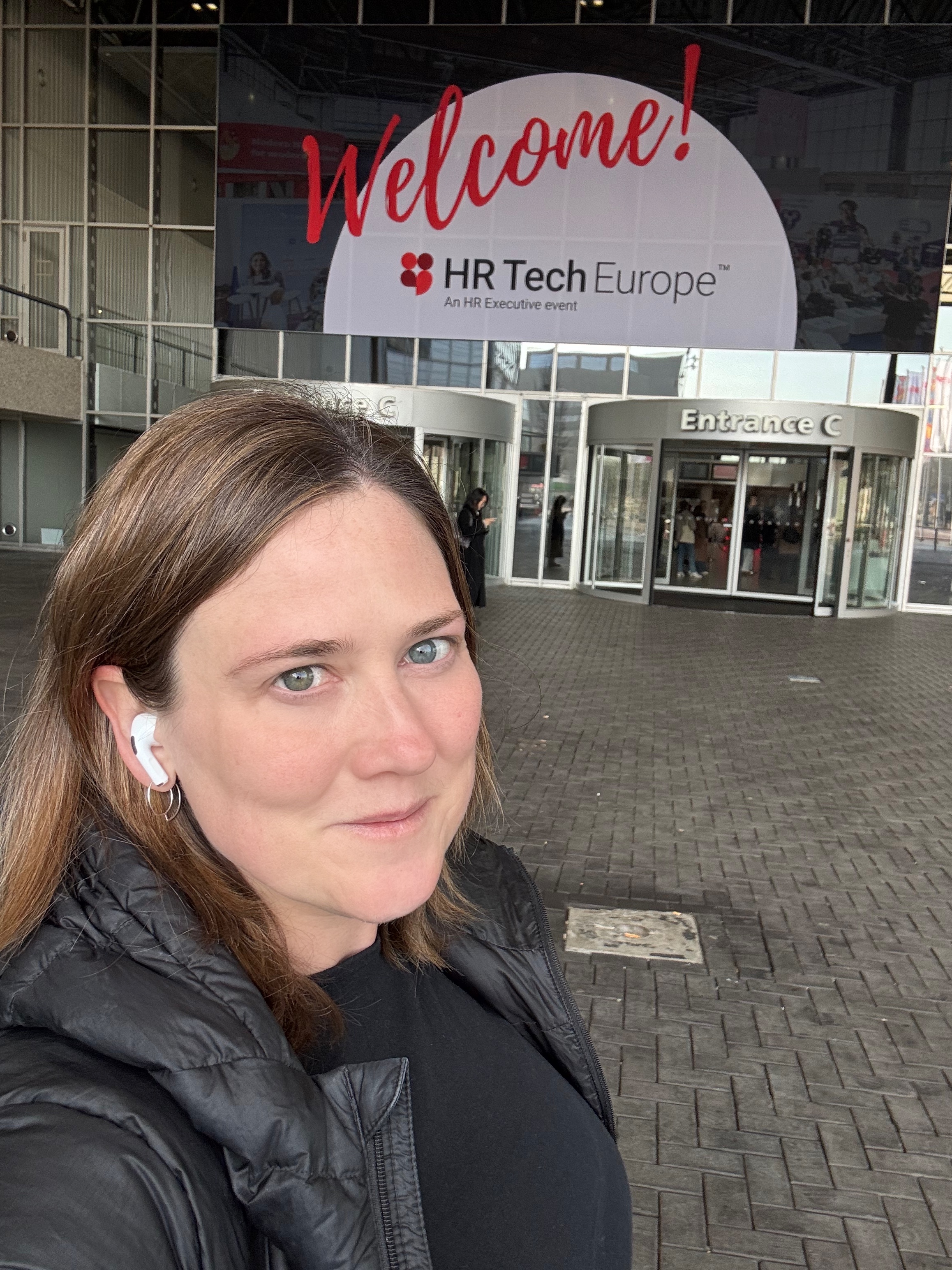
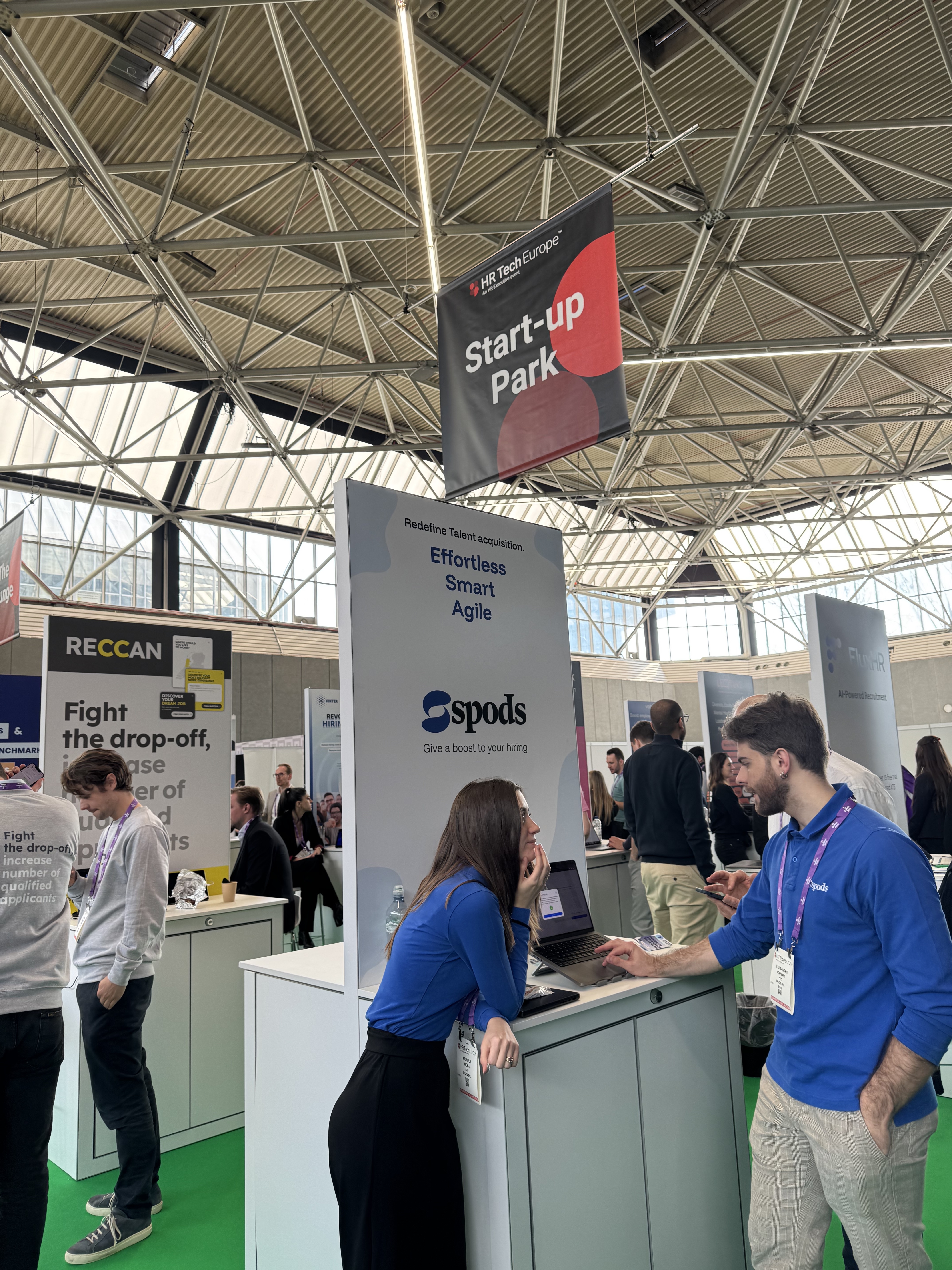
I was the token non-HR person on the panel at an HR Tech Europe event in Amsterdam. I took that provocateur role seriously and used my platform to remind everyone that no one aside from HR goes to work to do HR. It’s part of the admin overhead of having a job that we do, reluctantly, because we have to.

In a room full of people talking about user adoption and usability I no doubt I lost friends by pointing out that the best thing AI can do to improve HR tech is to make HR go away as far as is possible for ordinary employees.

Non-work things

My best friend, Katy, visited for the weekend, and we did an escape room for the very first time. It was great fun and I guess I’m one of those people who makes doing escape rooms my entire personality now.

I’ve been toying with learning to knit for a while, partly inspired by Tom Daley’s words on using knitting to manage anxiety, and partly in an effort to keep well clear of the news and scroll my phone less. I signed up for a scarf-knitting workshop with De Steek.

My first effort was terrible, but I tried again when I got home and I think I’ve got the hang of it. It’s strangely satisfying, getting better at something in real time. I now have about 20cm of chunky scarf and my phone screen time was down 18%.

Connections

With the end of year approaching, and in an effort to scroll less and offline more I signed up to a professional networking app. The irony is not lost on me. It’s called The Breakfast and it’s supposed to connect people to meet in-person over breakfast.

I’ve been on it for about three weeks now and so far have been ghosted twice and had two approaches that had kind of creepy vibes. But I persisted and this week met my first Breakfaster, a Russian software developer. We had a perfectly nice chat about moving to a new city and I was introduced to an excellent coffee place I hadn’t been to before.

I’m going to try a few more Breakfasts before making a judgement on whether the app is for me.

The HR Tech Europe gang

The HR tech event gave me an opportunity to reconnect with Debbie French and Luciana Popescu, then go for dinner with the other panellists and the HR Tech Europe team.

Last week WB40 host and inveterate people-gatherer Matt Ballantine was in town, so we met for a pint and a chat about workshops, consultancy, covid-era weirdness and meeting people. Like me, Matt borrowed Mary McKenna‘s 100 People concept, putting his own spin on it with a target to have 100 coffees with 100 people in 2023. Unlike me he managed to hit and exceed his target.

Matt put me in touch with his Equal Experts colleague James Donovan, who has his own spinoff 50 Coffees target. We chatted about employee value propositions, aligning incentives in distributed teams and how hiring it broken. We also had an excellent chocolate, ginger and speculaas cake at De Bakkerswinkel.

Coverage

Back in the summer I recorded a podcast with Stephen Parkins and my old colleague David Semmens. Called Culturedge, this series looks at driving innovation in and outside of the corporate world, and the episode with me came out this week.

We talked about driving innovation in complicated organisations, where so much of the work is about building support for change rather than delivering it.

Making digital transformation work in complex organisations is a looooooong process of stakeholder engagement, navigating risk-averse budget holders and making people comfortable with ambiguity in structures that demand certainty.

And when you DO manage to make a change, it will only deliver value if you bring people with you by building capability, confidence and enthusiasm. Investment in tech is only realised when that technology is used by people to deliver value.

In a phrase I borrowed from Ann Kempster and now use *all the time* technology is easy, people are hard.

🎧 It’s available on all your favourite podcatchers. Listen in, let me know what you think.

Travel

Apparently you can move out of the same house three times.

I was in London last week, sorting out my flat there, and failed to meet anyone.

So I’m back next week and would love to catch up with a few folks and nudge closer to my 100 people target (I am at 51 for this year, must try harder next year).

Give me a shout if you’re in London 3-6 December and wanna grab a coffee; my diary’s pretty flexible.

Weeknote 2024/45

Grey, wintery Amsterdam. Photo by me.

This is a bumper two-week edition as I didn’t get around to writing last week. The clocks have gone back, and clouds have come in, and a gloriously sunny autumn has turned quite suddenly into a dark and grey winter.

And then there’s events across the pond, so it feels like this is a winter that could be especially dark, and last for four years.

Work-wise It’s been a packed couple of weeks.

On one project – where they’ve opted for an ‘intranet in a box’ approach – we’ve made rapid progress. We’re so deep in the weeds on the detail that we need to remember to stop and take stock now and again. In the last month or so we’ve delivered a working platform, all the associated governance and processes, a good volume of great, user-focused content (in two languages), and a bunch of assets for support and launch. We’ve got an ace team on this and they’ve done a cracking job. The finish line is in sight now and I’m so proud of the work we’ve done.

Over on our other big project, they’re taking a different approach, using native SharePoint as the intranet foundation. There are plenty of advantages to that – not least saving on subscription costs long term – but the delivery path is typically much slower. You gain flexibility, but that comes with a greater admin overhead, with the intranet team having to devote a good chunk of time to managing the site.

There are pros and cons to both paths (which In shan’t bore you with here).

Our focus this week was to crystalise a recommended approach and scope for the future SharePoint site, finding the right architecture and a set of templates that balances consistency and usability for users against the flexibility that content creators want – while at the same time keeping a laser focus on the tight, immovable deadline all of this needs to be delivered by.

Balancing all of those competing priorities means we had a lot of healthy debate among the team. But that was reflected in a solid, well-considered approach that landed well with the client team. Once again I’m proud of a job well done and can move into the next phase of work confident in our plans and approach.

A big part of our work at Lithos Partners is helping our clients choose the right comms and collaboration platforms, and to configure and use them to deliver business value. More often than not that’s Microsoft (either on its own or with an IIAB layer, as in the projects above). But they’re not the only game in town. As a massive collaboration nerd I love to know what all the main vendors are offering and how best-in-class firms are using these tools to gain an edge.

And so I popped along to Slack‘s City Tour when it rode in to Amsterdam this week.

Slack City Tour event in Amsterdam, 8 November 2024

The key themes that stuck out to me were:

🤖 A predicted rise in ‘digital co-workers’ (AI agents to pick up drudge work or enhance what we’re doing). As I’ve said many times on here and elsewhere, this all has huge potential, but it’s never simply about the tech. The speaker highlighted the need to consider barriers to adoption and success, such as developing the necessary skills, ensuring our data is accurate (every organisation is littered with old docs creating new risks in the context of Gen AI), and ensuring our AI investment delivers real value – focusing on tangible benefits (which leaders care about), not marginal time savings (which they don’t).

👩🏻‍💻 The value of employee experience. The number of applications employees are forced to use is mushrooming, and that’s combined with a shift in admin work away from dedicated teams to individual workers (think self-service HR). We’re spending more time on the admin of work than ever before. It’s annoying and exhausting, contributing to growing levels of burnout. We can and should do more to streamline and simplify the experience of work, so people can get on with the things they came to work to do.

I also met some great folk from Slack and some of the big tech firms headquartered here in Amsterdam and geeked out on collaboration chat.

Non-work things

Diversity and Inclusion panel at Soho House Amsterdam

Last week I went to an interesting breakfast event on DEI in the creative industries, moderated by the brilliant Kerrie Finch. Here’s my takeaways:

🇳🇱 The Netherlands is a little behind the curve on DEI compared to other markets, but with the country attracting talent from across the globe, we can all do more to learn from and adopt best practices and successful programmes from elsewhere

📈 Show the value. At a time when DEI is getting pushback from tech bros and a rising political right wing, we must not forget that diverse teams and perspectives make our work better. We’re not championing this because it’s cool, but because it’s good for the bottom line. We must measure and demonstrate that.

😊 We need to create a culture of psychological safety in our organisations, where we respect different backgrounds and make space for conversations that might sometimes be uncomfortable.

🌻 With my digital pro hat on, it was good to hear several mentions of the need for representation and accessibility at the heart of what we do

The conversation touched on AI – what panel doesn’t these days? – but I feel like we need to get DEI more involved in our industry discourse on AI, given its potential to drive progress on diversity, equity and inclusion into reverse.

This evening I watched new historical drama Blitz. It’s visually brilliant, but felt like it was trying to bring a bunch of new angles to the WW2 movie genre, while not really doing any one of them justice.

It was refreshing, for example, to see working class East Enders shown as more complex than the usual downtrodden-yet-sentimental stereotypes. One plotline highlights the little-acknowledged phenomenon of looting and corpse-robbing that happened in the bombsites. Kathy Burke and her grizzly gang would have stolen the show if only this storyline had been given enough room to breathe.

On a lighter note, this week I saw Dutch-American comedian Derek Scott Mitchell’s live show, Double Dutch. His act was a delightful mix of the wry observations on Dutch language and culture I’ve seen him do on Instagram, and reflections on being an immigrant, where you exist in a kind of grey area of never quite fitting in where you live, while growing increasingly distant from the place you’re from.

What I’m reading

With my finger on the pulse as always, I finally got around to reading Salman Rushdie’s 1981 novel, Midnight’s Children. The story follows the life of Saleem Sinai, born at the exact moment India gained independence in August 1947. Saleem and other children born close to midnight have supernatural abilities, symbolising the dreams, challenges and identity struggles of the newly independent nation. Saleem’s life is marked by historical upheaval, family tensions, and a complex relationship with his own identity and heritage.

What stuck with me was Saleem’s concept of “chutneyfication,” which the character uses to describe his attempt to preserve memories, much like you’d preserve food as chutney. Personal and national histories are blended, spiced and bottled over time.  Saleem’s “chutneyfication” distils India’s history in a mix of flavours, textures, and contradictions, capturing the essence of a nation shaped by its diversity and its history.

Reading this I found myself reflecting on Derek Scott Mitchell’s words about grey areas and that liminal migrant existence. As immigrants we’re making our own mental chutneys, keeping the places we’re from and where we live in physchological jars of memory and culture. Pindakaasification doesn’t have the same ring to it, mind.

Connections

The news is too depressing to watch, so I’m making a conscious effort to scroll less and see real people more.

My old pal Josephine Grahl was in town last weekend, which gave me the opportunity to catch up for the first time in maybe seven years. We had a lot to catch up on.

This week I met marketer Martina Lipp for coffee and a long chat about AI in marcomms.

Travel

Heading to London next week. My diary’s pretty chocka but if we’ve been meaning to catch up and haven’t worked something out yet, then let’s try and grab a coffee before the year’s out.

Weeknote 2024/43

Sharon O'Dea on stage at the Global Marketing Summit. Behind her is a slide that says 'People Trust People'
Me on stage at the Global Marketing Summit last week.

I’ve just returned from keynoting at the Global Marketing Summit.

I posted this on my Instagram and immediately had a whole bunch of people reply “I didn’t know you worked in marketing”

I don’t. But marketing doesn’t exist in a bubble; it can only thrive when it’s aligned with or supported by other comms, product and operational functions. So it was a real credit to the organisers that the event’s agenda covered an impressive range of topics from sustainability to personal brand to internal comms.

What happens on the inside is reflected outside – in any interaction customers have with your people. Employees can be a company’s most powerful ambassadors, because they live and breathe the brand.

And that was the theme of my talk: employee advocacy. That is, when employees actively promote and support their company by sharing positive messages, brand content, or personal experiences on their own social networks. It helps enhance the company’s reputation, attract talent, and boost brand awareness through authentic voices.

In my keynote I shared examples of where we at Lithos have helped organisations find the right mix of tools, processes and governance to support and scale an advocacy programme.

But I caveated all of this by saying that while this stuff is hugely powerful, it’s not easy. Employees have to be highly engaged to advocate for the brand, and that means having effective internal comms where people understand and feel connected to the mission.

Your people can’t champion your products and services if they don’t understand or use them. They can’t share your values if they don’t experience them in their work and their interactions with others. They can’t speak positively about the digital experience you offer customers if their own experience is bad.

I’ve blogged before on how internal channels, projects and comms are all-too-frequently overlooked in favour of customer-facing ones. Talking to comms and marketing pros at this event reminded me how short-sighted that is, and what value the work we do on digital workplace and internal comms adds to organisations.

Some stuff I did this week

Much of my week was taken up at the Summit. It wan an honour to be invited and the organisers did a brilliant job curating an impressive agenda of local and international speakers.

I enjoyed meeting inspiring people from all over the world, and dive into so many marketing and marketing-adjacent topics. Once again it felt like the conversation around AI is maturing, from simple-but-unhelpful narratives on small productivity savings to tangible examples of hyper-personalisation at scale and driving efficiencies across different industries.

Lots to process and (hopefully) apply in the day job.

Four people stand in front of a branded sign for the Global Marketing Summit
Enjoying the Turkish autumn sunshine with (L-R) Aanya Wig, Luan Wise and Stephen Corlett

Speaking of which, our two big projects are cracking on at pace.

On one, the team have spent the last couple of weeks apply our early thinking around site structure and templates to some real-world content. As the old army adage goes, no plan survives contact with the enemy.

Or, in our world, no scope survives contact with real stakeholders and content. But so far it’s shaping up pretty well, and we’re tantalisingly close to a tested scope and roadmap for delivery.

Over on our other project – where we’re using an intranet-in-a-box approach – things are taking shape and fast. From a digital wasteland a month ago we have a functioning site with a growing body of high-quality content. There are always compromises involved in using OOTB solutions for intranets, but they’re rarely consequential and almost always compensated for by speed of delivery and quality of user experience.

(I could talk about this for hours – so will save that for another week).

Some non-work things I did this week

It was, somehow, my very first time in Istanbul, so I was glad to get a day off to explore a little. A crazy and brilliant city which I plan to return to asap.

To be honest I mostly ate my way around Istanbul. There’s no better way to experience a culture than via its food.

Connections

The Summit put me in touch with some brilliant folk – including a whole new bunch of Amsterdam locals. Particular shout-outs to Kerrie Finch, Luan Wise, Melanie Moeller, Stephen Corlett, Ben Keene, Fady Ramzy, Maria Ingold, Aifric Lennon, Elizabeth Solaru, Ekwy Chukwuji, Aanya Wig, Aycan Ferik, Seda Mizrakli Ferik and Fiona Harrold.

What I’m reading

I didn’t get much further with A History of Rome in 21 Women, but I’m home all week so hope to get my reading mojo back

Travel

None planned at all until December. I can’t tell you how excited I am about not visiting an airport for several weeks in a row.

Weeknote 2024/42

Me with the rest of the Flashpack in Georgia.

რასაცა გასცემ, შენია; რაც არა, დაკარგულია

“That which we give makes us richer, that which is hoarded is lost” wrote medieval Georgian poet Shota Rustaveli.

I assume he wrote these words in a book of some sort. But I read them in a bit of graffiti in a damp underpass in Tbilisi and had to look it up.

By sharing we build trust with others, and make them more inclined to share with us. It’s a principle that I recognised immediately. By sharing what we know, we encourage others to see and respect our expertise.

I don’t imagine the 12th century poet had digital consulting services in mind when he wrote those words, but the give-to-get tactic probably lands me more work than any other. Wise, was Rustaveli.

Some things I did this week

For the first half of the week I was on holiday. And for the most part I actually managed to do that. For the first few years Lithos Partners was really just Jonathan and I, with occasional inputs from freelancers. But over the past two years we’ve scaled so we’re managing bigger and more complex projects, and that means building out teams that plan and deliver by themselves. There have been some growing pains but I think we’ve cracked it. I left work in Jon’s capable hands, and that of our brilliant and talented team who I know and trust to crack on in my absence.

Which meant for the first time in years I took a holiday while work was still happening – and not just in a lull between clients – in the full confidence things would be just fine without me.

And they were.

I’ve landed back right in the middle of a busy period and some incoming deadlines. We’re taking a ‘divide and conquer’ approach, with Jon handling one big project and me the other, with smaller projects split between us. We’ve got this.

Non-work things

Like I said, I went on holiday. Specifically, I did this tour of Georgia with solo travel specialists Flashpack, followed by a few days on my own at the end to cross the border to Armenia (by my count the 73rd country I’ve visited).

Armenia in pics:

This was my third trip with Flashpack, who aim is to bring together like-minded professionals in their 30s and 40s, providing seamless itineraries that include everything from local cultural experiences to luxury accommodations.

The appeal lies in the convenience: for well-travelled people to explore somewhere new without worrying about logistics, safety, or navigating new destinations on their own. Everything is taken care of, ensuring a stress-free experience where participants can simply show up and enjoy the trip. 

While a normal person might schedule an activity on every other day of a holiday, leaving time to relax in-between, on a Flashpack trip there’ll be two or even three such activities every day, followed by a group dinner. On day 2 the guide kicked off a hike with an announcement that, being 9km and mostly uphill, we expected it to take four hours. We were done in 2:28. A guided sightseeing tour would finish and there would be a car waiting to take us to a cooking class, then a spa.

Inevitably these adventures attract a particular type. This (very funny) piece in the NYT is an all-too-fair summary. I am not ashamed to admit I am exactly That Type. And so was everyone else. The group WhatsApp would put the organisational skills of a FTSE 100 board to shame.

It’s not for the feint hearted but for those who want the thrill of solo travel with a safety net and a group of potential new friends, Flashpack delivers exactly what it promises.

I got back home on Thursday simultaneously exhausted and raring to do it all over again.

Over the weekend I saw 80s indie rock poptimists Redd Kross down at PAARD Poppodium in The Hague. A much underrated band who’ve been going as long as I’ve been alive, they put on a charming little show. I felt bad for them as it was very sparely attended with barely 75 people in the audience. I danced enough for at least three people.

Last night I caught the Sundance award-winning film from Irish band Kneecap. Raw, dark and politically charged, it’s a fictionalised and funny take on the rise of the hip-hop trio from Belfast. The ‘fillum’ blends some gritty social commentary on language and identity with a riotous, drug-fuelled coming-of-age story, with the trio themselves playing the leads. It’s a vibrant and rebellious reflection on the preservation of the Irish language and had me both laughing out loud and bopping along to the band’s bangers.

Connections

My visit to Tbilisi gave me a chance to finally catch up with Charlie Southwell. Charlie is one of those people I have known of for years and yet somehow never crossed paths with. We have various friends in common – who oddly aren’t even friends with each other – and even worked in the same place for a time but a few months apart.

Unsurprisingly Charlie was a very good egg. We had a lovely long chat in a café overlooking Freedom Square where we talked about marketing, SharePoint, AI, all the people we know in common and the forthcoming Georgian elections.

What I’m reading

I’ve just started on A History Of The Roman Empire in 21 Women. An attempt to revisit the history of Rome through the lens of the other 51% who are rarely mentioned in mainstream history books. I’m only a chapter in and I like it already.

Travel

This week I’m off to Istanbul for – surprisingly – the very first time. I’m speaking at the Global Marketing Summit about the importance of internal comms in employee advocacy.

I’ve got a day off on Friday to explore the city so please send me your top tips (and top eats… can’t wait to get stuck into that Turkish food!).

Weeknote 2024/41

The view from my room in Stepantstminda, Georgia, before my big hike this week. Photo by me.

Garmajoba from Tbilisi, Georgia 🇬🇪

This week’s been equal parts progress and reflection. Very much like Georgia itself. Known for its breathtaking landscapes, ancient traditions and resilience, this place reminds me of the importance of perseverance. Whether in building its unique winemaking heritage (did you know winemaking started in Georgia?), balancing the old and the new, or standing strong amidst rapid change, I feel like we can a lot about the art of moving forward one step at a time from this extraordinary little country.

Some things I did this week

It was a steady-as-she-goes kinda week, work-wise.

We’re a couple of months in on one intranet programme and it’s all starting to take shape. That is, we now have the bare bones of a site and the first content. Getting to this point is always a hard slog but then progress feels really rapid from there on. There’s plenty still to do but I’m glad we’ve got here, and our deadline feels ambitious but achievable.

Over on our other major project we’ve switched to doing some content creation, to test our assumptions about templates and workflow. That should allow us to validate whether the functionality and site structure we’ve proposed will work in practice. Because scope is all well as good in theory but it’s only when you start to build things out that requirements really become clear.

Non-work things

I’m taking some time out this week to visit Georgia and Armenia, starting with the digital nomad hub of Tbilisi.

It’s been fun. Exploring a new city, visiting Georgia’s wine country, learning about (and eating a lot of) Georgian cuisine, and hiking in the stunning landscapes of the Caucasus mountains.

More on that when I get home, but for now here’s some pictures.

Travel

I’m back at my (remote) desk on Tuesday, but heading to Istanbul next week for the Global Marketing Summit there. The organisers have pulled together a fab line-up of speakers. If you’re going, do come and say hello.