Weeknote 2024/15

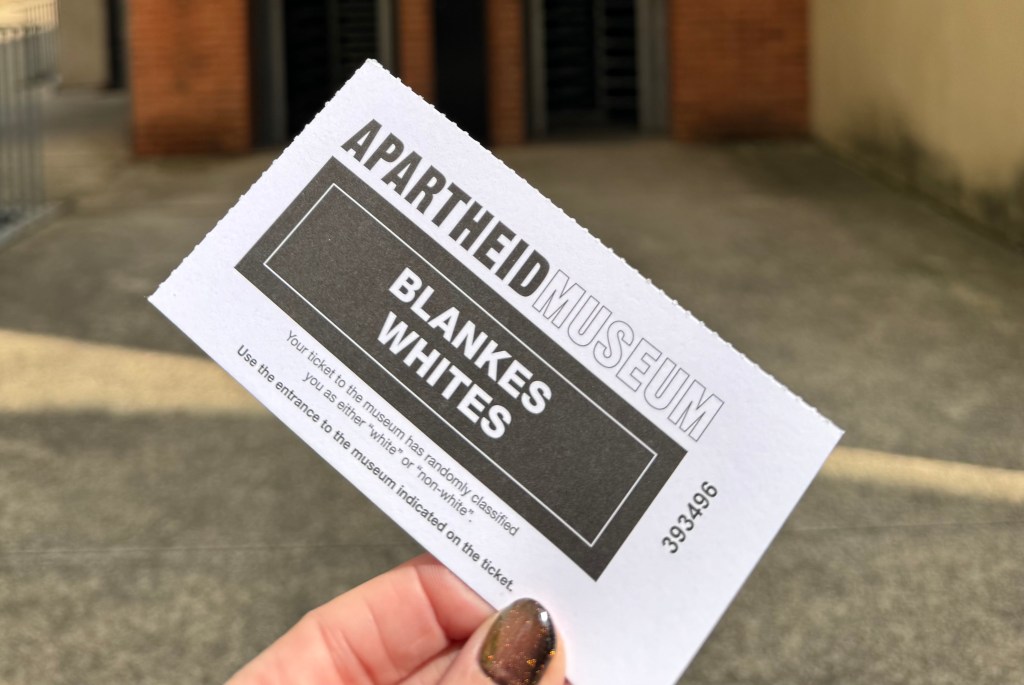
Me holding a ticket the Apartheid Museum, Johannesburg, South Africa. (Photo: Sharon O’Dea)

With my 40th birthday rapidly approaching, I was conscious that – while I’m reasonably well-travelled – I’d never been to Africa, at all. I thought I’d best remedy that pronto and booked myself two epic trips to the continent for the same year. 

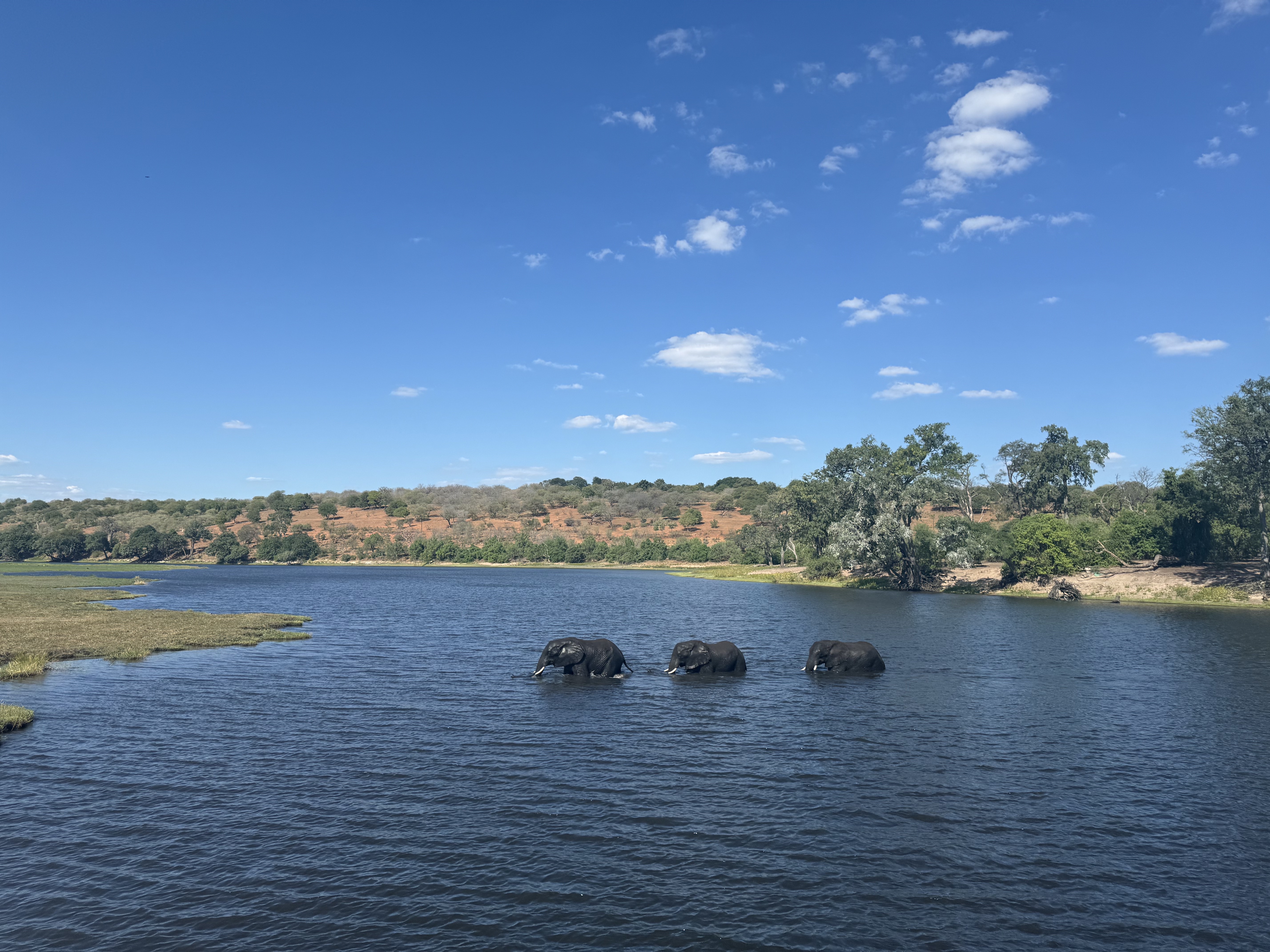
Unfortunately that year was 2020 and they both promptly got cancelled. But this week I finally made it! I’m writing this weeknote while watching the sun set over Kruger National Park and looking forward to hitting the safari trail early in the morning. 

So this is going to be a shortish weeknote but there are pics to make up for it (and many more over on my Insta).

Some things I did this week 

Wrapped up work in the first half of the week with a determination to actually take time off

  • Preparing for our upcoming 300 Seconds session at Camp Digital, where I’m working with the organisers, Nexxer, to bring new voices and stories to the stage 
  • Helping a client plan for their next phase of intranet work 
  • Getting into the thorny detail of information architecture on another 

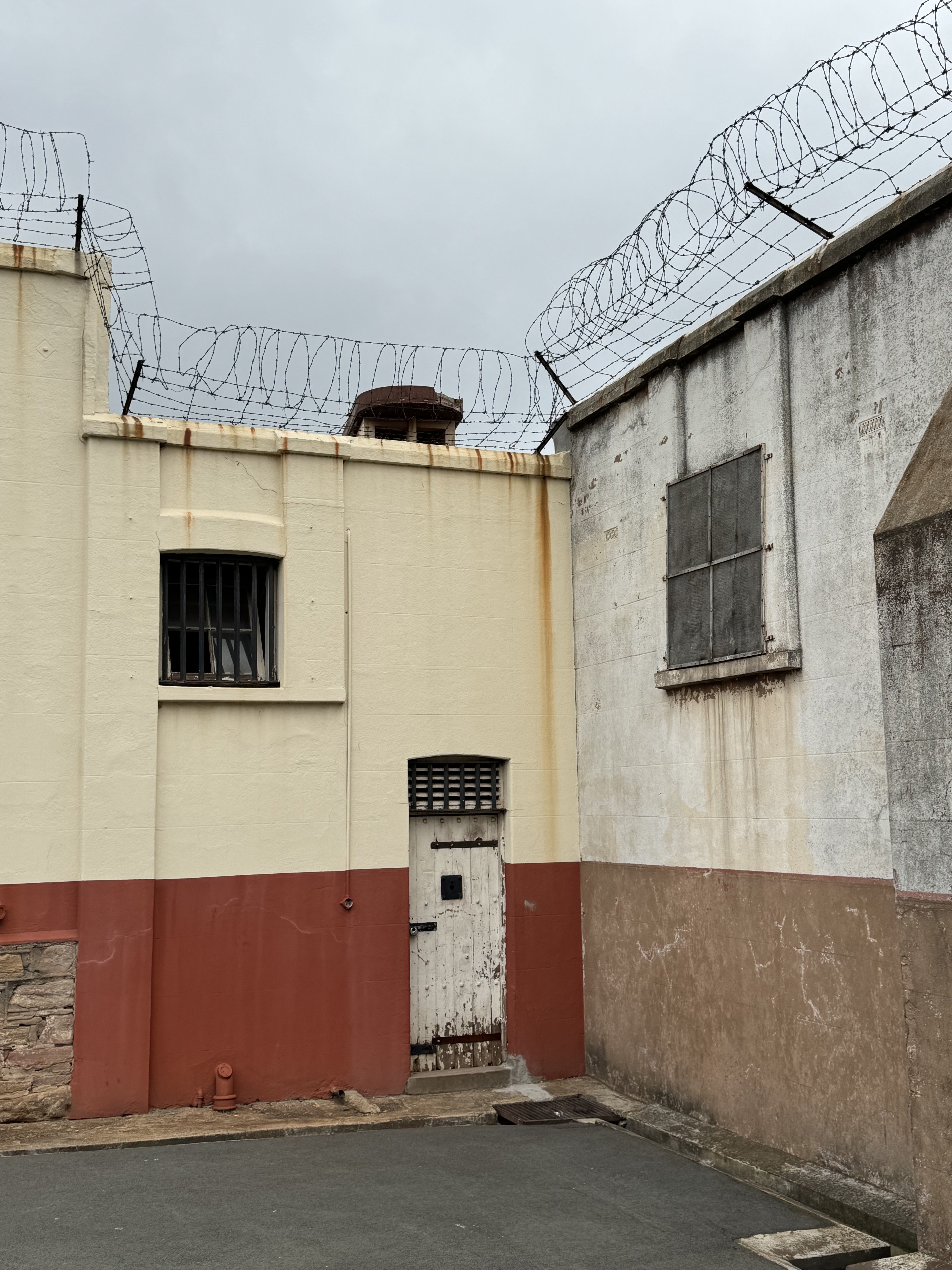
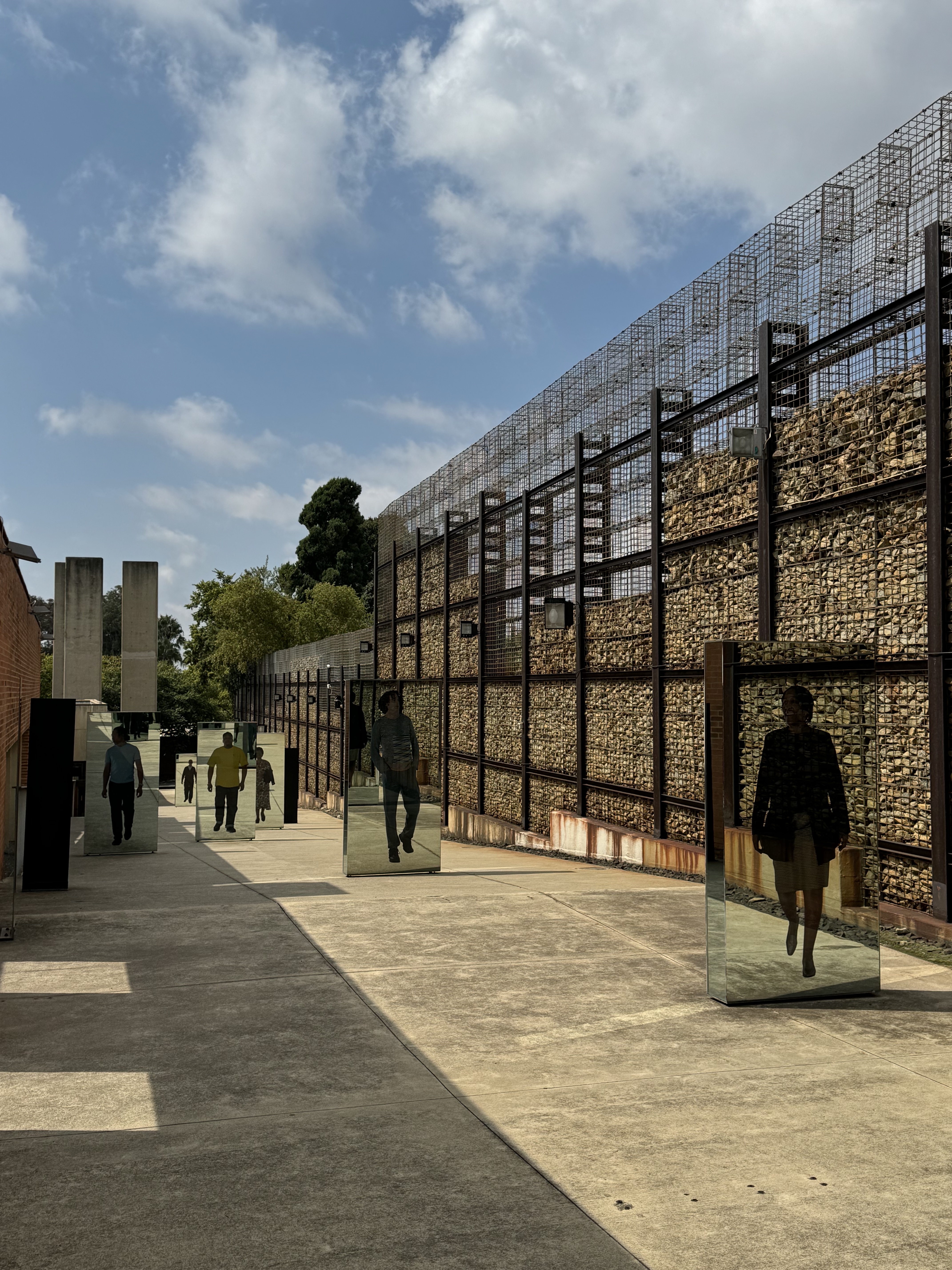
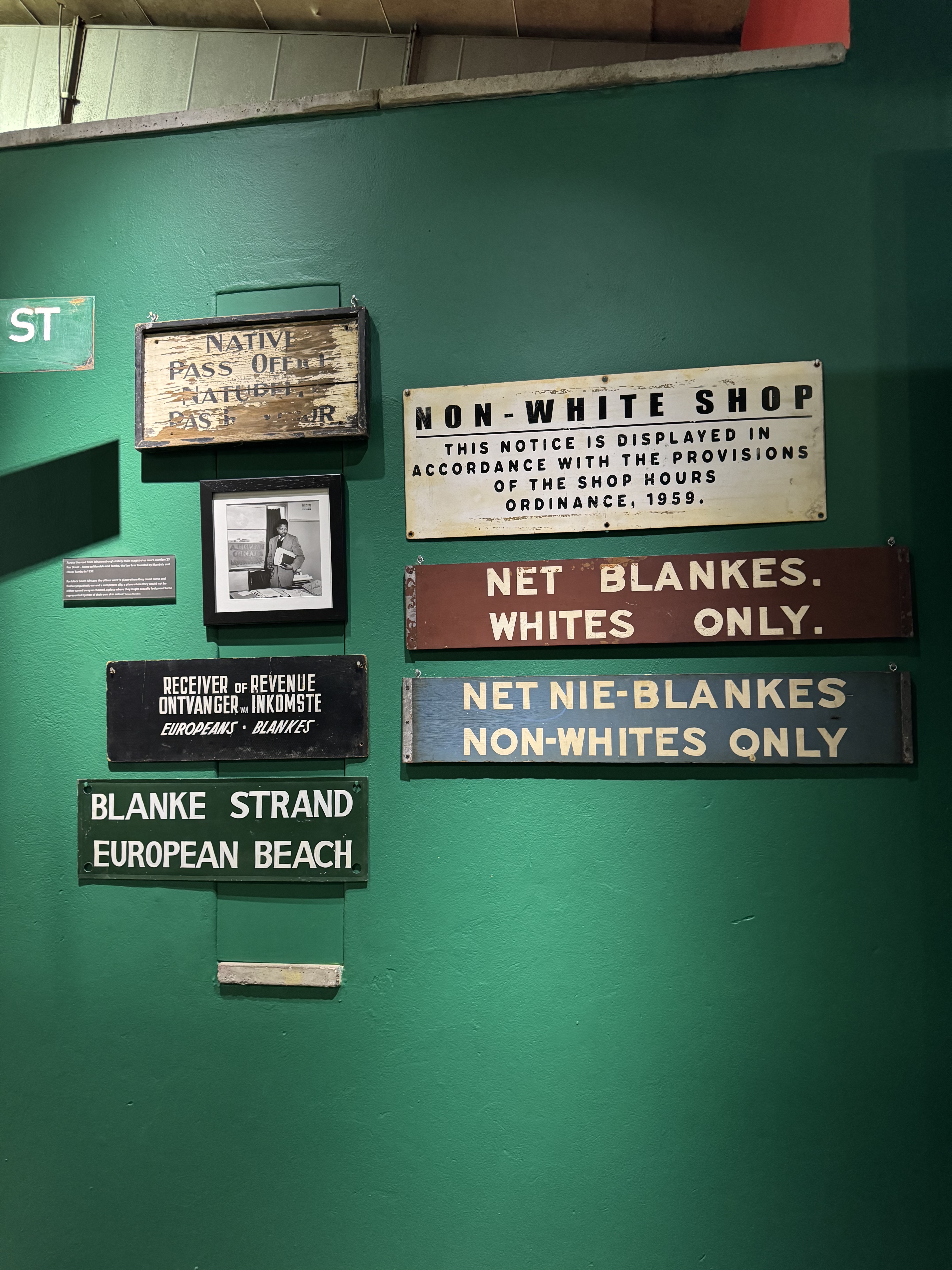
Then I jumped on a plane and went full-on with my holiday. A walking tour of Johannesburg, followed by a day learning about the apartheid era at Constitution Hill, the Apartheid Museum, and Soweto. 

It was emotionally hard going. Growing up in the 1980s anti-apartheid campaigns were talked about pretty frequently by the adults in my life. My nan told me about Steve Biko; my grandad sported Free Nelson Mandela badges; we were taught Nkosi Sikelel iAfrika as a protest song in the school choir. The kind of thing that’s probably familiar to anyone who attended a London primary school around that time.  

The injustice was one of the big themes that informed my emerging political consciousness, I guess. But I had no idea of the grim detail of systematic disenfranchisement, dehumanisation and sheer cruelty involved. Nor the extent to which it continues to ripple through later generations in the form of economic inequality. I cried a few times during the day, especially when it related to any of the late 80s/early 90s events that I remember watching on the news at the time. 

All that said, this trip has been a reminder that while every country is shaped by its past, it lives in the present. And present-day Johannesburg is far more fun than its reputation suggests and the South African bush is one of the most stunning landscapes I’ve ever seen. I’ll be back. 

What I’m reading 

I like to know a bit about countries I visit, especially when its somewhere I know little about, as it gives me context on the places I pass through and stories I hear from tour guides. So I’m getting stuck in to A Short History of South Africa by Gail Nattrass.  

Connections 

Caught up with my good friend Lindiwe Mazibuko for dinners and long, long chats about life and politics. Mostly politics. But the personal is political and all that.

Coverage 

The weekly round-up from PR Academy had some nice things to say about my Comms Rebel chat with Advita Patel. 

The hotel review no one asked for 

A triple hotel week. The first – Voco Johannesburg – was close to perfect: 

  • Full sized glasses for water 
  • Plentiful bedside power provision 
  • Hangers! Lots of them! 
  • An excellent hairdryer, clothes steamer and loads of nice little touches like a make-up-removing flannel in the bathroom. It’s so refreshing to see things like this, where a hotel recognises that women travel too and offers the little things that make life just that bit easier. 

Weeknote 2024/14

Photo: Sharon O’Dea

Clockwork Orange author Anthony Burgess once said “Manchester is the most wonderful city in the world. It’s full of bars, it’s full of wonderful music, it’s full of wonderful people, and it’s full of more life than any place where I’ve ever been in my life.”

Friedrich Engels provided a starker critique of the city: “The industrial revolution has completed the separation between the industrialists and the landowners. And has produced a new, socially created basis, which can serve only as the foundation of a social revolution, in which the industrial proletariat overthrows the domination of the bourgeoisie.”

I can only assume both were talking about spending an evening, as I did, in a warehouse watching The Happy Mondays, Inspiral Carpets and Stereo MCs along with 1000 or so euphoric 50-something Mancunians all desperate to relieve their increasingly distant youth.

As well as the triple-header gig, my weekend in Rainy City with my best mates delivered a comedy club, going out on the town dancing, an educational walking tour and a lot of excellent food. 

Who knew the foundation of social revolution would be such a laugh?

Some things I did this week

A quiet work week thanks to everyone being off (including me for the second half of the week). Caught up on admin. I even had my expenses done less than a week after the quarter finished. I didn’t know I had it in me.

On Friday I joined Advita Patel for an edition of Curious Rebel TV, her weekly LinkedIn Live show, to talk about the role of digital in internal comms. Inevitably we also talked about whether intranets are still needed (spoiler: they are), I introduced my Miss Marple Theory of Communication Needs and, inevitably, there were questions about Generative AI. If you missed it you can watch it back here.

What I’m reading

I started Hyperfocus: How to be more productive in a world of distraction. But, with no small dose of irony, I got distracted and didn’t finish it.

Connections

Caught up with Lilla Szulovszky and talked about venture building, getting settled in Amsterdam, migration and connecting people with complementary passions and skills so they can make great things.

With Q1 wrapped, it’s time for a progress update on my target of meeting my list of 100 people before the year’s out.

How am I doing? Not too bad: 14. One a week puts me behind target for 100 people by year end, but ahead of where I have been at this time previous years. I’ll give myself a B-.

If we haven’t caught up a while, then let’s do that soon. In the next few weeks I’m in Johannesburg, London and Lisbon. And of course Amsterdam. Let me know if you’re around and have time for a brew and a chat.

The hotel review no one asked for

A tale of two hotels this week. One had zero bedside plug sockets. But it a budget Ibis, chosen for its proximity to the venue where we were seeing the MOndays, so no great surprise there. You get what you pay for – or don’t, in this instance.

Moved to the centrally-located Townhouse Hotel for the rest of the weekend. An impressive array of sockets near the bed and elsewhere, but baffling wiring that turned the same corner light on regardless which order in which one flicked the ten or so switches in the room. Finding the right order in which to turn things off and have them all stay off was a proper challenge.

This was a skill which proved useful on Sunday when we did the Crystal Maze Experience.

Weeknote 2024/10

A woman is making a heart symbol with her hands, which is supposedly the symbol for 'inspire inclusion', an international women's day theme chosen by a PR firm. It's crossed out, with 'Show me the money' written across it.

Today is International Women’s Day. If you’ve been following me for a while you might remember that in previous years I spent this day making a nuisance of myself on LinkedIn.  Mostly responding to firms’ posts about how much they value women with data their own glaring gender pay gaps, asking what they’re doing to resolve that.

I figured it’s using my privilege as someone who isn’t answerable to a boss to advocate for those who’d find it career-limiting to do it themselves.

And that’s been fun, but this year I’m giving it a break. And here’s why.

First, the excellent Gender Pay Gap Bot has taken up the challenge of highlighting pay gap hypocrisy. That hasn’t moved the needle on actually closing the pay gap, but it has made organisations think twice about the chasm between their gender equality content and their own inaction when it comes to real pay packets.

I toyed with switching tack a bit and shitposting companies that claim to be inclusive while cracking down on flexible work, one of few things that have been proven to help women remain in and progress at work.

But as I sat down to prep I realised I’m just tired.

Tired of shouting from the sidelines. Tired hearing of talented women overlooked and under-invested. Tired of seeing women put in yet more unpaid labour to find and flag hypocrisy online, to speak at inspirational women-in-business breakfasts, to mentor younger women, to be visible (but not too visible, that would be crass), only to have a new podcast bro class emerge and ask if this equality thing has gone too far.

I have news for you, guys. It is 2024 and:

So, podcast bros, come back to me when women are no longer denied education, financial independence and bodily autonomy, and then we can chat.

The official theme of this year’s IWD is Invest In Women. So this year I’m taking a break from sniping on social and focusing on being a woman in business/tech. I’m investing in myself and my business, and using some of what I make to invest in businesses led by other women.

And I’m investing in my health – physical and mental. I’m taking the day off, taking a break from shouting at the endless stream of Inspire Inclusion social media snaps (why do so many of those look like hostage videos?), and having a weekend away with one of my besties.

I’m not hanging up my troublemaking hat for good – hell, I’m not sure I’ll keep off it for today (case in point here) – but we need to move beyond inspiration and irritation to action.

Hire women. Pay women. Promote women. Advocate for women. Invest in their companies. Buy from them. But for God’s sake drop the platitudes and perfomative nonsense and look at what meaningful actions you can take to accelerate progress for women.

Some things I did this week 

  • Helped an organisation turn the collaboration strategy we delivered for them last year into a roadmap, looking at how they can build collaborative behaviours and ways of working using their existing toolset
  • Pushed a bigger discovery project close to the finish line
  • Looked at what analytics and KPIs are genuinely helpful and useful for websites and intranets. Like lots of organisations, this client has a lot of data, but limited capacity for change. Analytics has an opportunity cost; time you spend looking at it, reporting it and presenting it, is time you don’t have to actually do anything as a result of the insights gleaned. So how can we measure less, better, so it results in positive change?

What I’m reading 

Very little. But I’m away for the weekend and have a metaphorical (Kindle-based) stack of books.

Connections 

Spending the weekend in Malaga, Spain, with Ann Kempster, for tapas, spas, and limited digital nerd chat. And seeing if I can remember any of my Spanish.

Something I learned 

At the current rate of progress, it will take 267 years to close the global gender pay gap.

Weeknote 2024/09

Friday marked the first day of meteorological spring, and it certainly feels springlike out there. It’s sunglasses and coat weather. One of my best friends came to visit for the weekend and we had a glorious time walking around a sunny-but-chilly Amsterdam. 

I took her to the Heineken Experience, because it’s somehow the top-rated tourist attraction in the city, and I have never been. Towards the end it included some photobooths where you can make your own ‘digital souvenirs’. These hadn’t been designed with short people in mind so results were, in their own way, the perfect souvenir.

Some things I did this week

  • Working on a business case for a new intranet. It’s always a tricky balance; on the one hand, everyone wants to keep the costs as low as possible to increase the chance of approval. But it’s vital you don’t overlook non-technology costs like implementation support, content, change management, training and adoption. Intranets are only as good as the content on them, and platforms that don’t get used don’t deliver value. Failure to invest in getting content and change right risks failing the entire programme. Make that case early on or you will live to regret it.
  • Spent a day on-site with a client’s team in the UK to help them plan for the next phase of work. It’s been really rewarding to see this programme making progress, and it’s a real credit to the teams behind it for navigating it through one of the most complex organisations I’ve ever worked with.
  • Had a tweet (or more accurately a thread) go viral for the first time since I lost my (OG) blue tick. The replies were glorious but I’d forgotten how much of a time-suck going viral is. The trick is to mute the tweet as soon as it starts doing numbers. But in a subliminal bid to prove myself wrong, I actually used Lancaster Gate station this week.
  • Went to two gigs; a surprisingly likeable shouty avant garde act at local indie venue De Nieuwe Anita, and former Super Furry Animal Gruff Rhys at Tolhuistuin for gentle tunes and excellent stage bants. 
  • My mate and I also went dancing until 4am like we did when we were 18, only to remember the next day why this is something 18-year-olds do and 43-year-olds do not. 

What I’m reading

Not a lot tbh. Managed a couple more chapters of Friends: Understanding the Power of Our Most Important Relationships by Robin Dunbar, but it’s been a crazy busy week so I didn’t have much time for reading. Need to get my book mojo back.

Connections

With Pete Johns this week

Caught up with Paul Loberman while he was visiting Amsterdam last weekend. And grabbed a coffee with Swoop Analytics‘ Pete Johns while I was over in Blighty, to nerd out over SharePoint and why you should only measure things if you’re in a position to do something with the results.

Something I learned

My visiting friend told me that a putting copper coin in the water stops your tulips drooping. Having bought 40 tulips  and only being able to find one copper coin (who uses coins in 2024?) afforded the opportunity to A/B test this across two large vases. Three days in this appears to stand up to testing.

Weeknote 2024/08

Two adults and a child in Caretos carnival costume of Podence, Portugal

After signing off my last weeknote I headed for the lesser-visited north-east of Portugal to join celebrations at a unique and colourful festival that takes place in the village of Podence.

One of the most iconic elements of the Carnival of Podence is the “Caretos,” young men dressed in handcrafted costumes made of woollen quilts and vibrant masks, who roam the streets in groups, engaging in playful mischief (and drinking cheap beer and burning things).

They’re known for their loud bells, which they wear around their waists, and for their dances that create an atmosphere that’s equal parts anarchy and joy. The ritual involves chasing people (mostly younger women) as a symbolic act of fertility and renewal, echoing pagan traditions that predate Christian influences.

The Carnival of Podence has deep cultural significance and is rooted in ancient rituals that herald the end of winter and the arrival of spring. It’s a time when the community comes together to preserve their heritage through dances, music, and traditional foods. 

I mostly experienced it through the medium of said traditional food, since houses in the village turn into pop-up restaurants. Barns become beer halls and the village’s aunties turn out hundreds of meals every day. It was a riot of colour and sound and I arrived home 60% grilled beef and stinking of bonfire. No regrets.

At the end of weeknote 5 I said there was a chance I might not get a chance to weeknote in week 6. Well I was right. But regular readers of my blog (hello Mum!) will have spotted I also missed week 7. Because as well as the week in Portugal it’s been quite a fortnight work-wise.

Some things I did since my last weeknote

  • Reported back early discovery findings with one client. It’s always tough when we need to tell an organisation they’re doing things wrong. On the one hand, that’s what they’re paying us to do; they want an outsider who’s been there, done it and got the t-shirt to identify what’s not working. But on the other, people are understandably close to – and defensive of – work they devoted months of their life to, so it’s important we acknowledge that and highlight the good as well as what could have been done better. In the end I think we handled it sensitively and got good buy-in on the future direction
  • Picking up pace on an intranet pilot with a longstanding client. It’s all getting very real. Great to see our earlier foundational work start to become real solutions that help people at work, but also conscious this is where the theoretical becomes practical, which means there are a bunch of thorny issues to work through at pace.
  • Pitched for and won a juicy project with an exciting new client. Excited to get my teeth into that one.
  • Started prepping for the second edition of 300 Seconds x Camp Digital, where we work together to showcase new stories and voices, and build a more diverse pipeline of conference speakers. Do come along!

What I’m reading

I’ve begun reading Friends: Understanding the Power of Our Most Important Relationships by Robin Dunbar. The psychologist author is the man behind Dunbar’s Number, or the idea that there may be a cognitive limit to the number of people with whom you can comfortably maintain stable social relationships. Or, as Stephen Fry put it on QI, the number of people “you would not hesitate to go and sit with if you happened to see them at 3am in the departure lounge at Hong Kong airport”. That number is about 150, with about five of them people you’d call ‘close friends’ (the kind you could call to ask for their help to dispose of the corpse of someone who tried to talk to you in an airport at 3am).

In this book Dunbar revisits his earlier work and finds his eponymous Number remarkably stable across time and culture — and also at work. He noted that in large organisations there reaches a point at which employees tend to form smaller, more manageable groups for effective communication and collaboration. 

I realised that’s something I see a lot in the organisations I work with. Dunbar’s Number can inform how we design or organisations to maximise efficiency and cohesion. There’s huge value in building smaller, interconnected communities within larger enterprise social networks to foster meaningful interactions, trust, and collaboration.

This book got me thinking how Dunbar’s Number provides a useful framework for understanding how relationships scale in professional settings.

Perhaps we should be designing more human-centric social structures within our digital workplaces, aiming for a balance between wide network benefits and the depth of personal connections.

By recognising the natural limits to people’s social bandwidth, platforms and structures should facilitate smaller group interactions within the larger organisational context, acknowledging the quality of connections over quantity.

I’m only a couple of chapters in. Later chapters promise to look at the way different types of friendship and family relationships intersect, and at the mix of psychological and behavioural mechanisms that underpin friendships and make them possible.

It also made me reflect on how I am lucky to have my own Dunbar-length list of people I would happy chat to at an airport at 3am. 

Connections

Ticked off one of my 100 people list this week thanks to an impromptu meet-up with DemSoc’s Anthony Zacharzewski. We talked about how knowledge moves around organisations, and how information it struggles to make it in or out of those same organisations. It got me thinking; in comms we often have advocacy programmes, where we equip people with the skills and information to talk about us and our work. To what extent should people be ambassadors for our orgs instead? That is, responsible for listening and feeding back as much as sharing and championing.

Something I learned

The Dutch for snail is Slakken.

So the Dutch for slug is Naaktslakken, or ‘naked snail’ 🐌

Weeknote 2024/05

Photo: Wikimedia Commons

Today is Groundhog Day, when the spotlight turns to a groundhog named Punxsutawney Phil. His handlers in the western Pennsylvania town today announced he did not see his shadow, and so we’re due for an early spring. 

I already knew this because I bought a massive puffa coat/wearable duvet on Wednesday, thus ensuring that – thanks to Sod’s Law– we are guaranteed to have the mildest winter any of us have ever experienced. You can thank me later.

Some things I did this week

Kicked off a new project. This client is in many ways similar to another we’ve been working with for a while. So what’s been interesting already is the extent to which, despite them having so much in common, their culture is different, and just a few days in it’s clear the approach we’re likely to take will have to differ too. 

There are never any rinse-and-repeat projects in this line of work, and this has been a lovely reminder why we spend time understanding the organisation, its needs, its users and any parallel change happening before we start to look at solutions. It’s what keeps it interesting after mumble-ty years in the industry.

What I’m reading

After three rather depressing reads in a row I needed a pick-me-up. I found it in the form of  Imaginable: How to See the Future Coming And Feel Ready For Anything, Even Things That Seem Impossible Today. In this much-needed positive read futurist and game designer Jane McGonigal builds on lessons from the pandemic and encourages readers to use their imagination to envision future possibilities.

I took McGonigal’s How To Think Like A Futurist course at Stanford back in 2019 and it left me energised about the potential for the world to change for the better, and my own ability to design and drive that change. I incorporated many futures thinking techniques into my work, and can’t help spotting signals of change around me.

When, two years later, I found myself trapped in a shoebox flat in the middle of a pandemic, in a foreign city where I barely knew anyone, I signed up to the updated-for-unprecedented-times Coursera version of the course.

In that course – and in this book – McGonigal stresses that both individually and collectively we’re capable of a lot more than we think. During the pandemic things that were previously unthinkable suddenly became possible. The unimaginable became… imaginable. 

We changed the way that we live, we work, we socialise. And if we can do that, we have the capacity and imagination to deal with all the other change we face.

McGonigal combines insights from futures studies, game design, and psychology in this call to arms for us all to actively shape the future instead of passively waiting for it to unfold. 

We can do that. All of us. Think how much your life has changed in the last ten years; when you see how far you’ve come, you see how far you can go in the next ten.

By taking the time to consider what the future might look like, and how it can be different, we can challenge our assumptions and play an active role in imagining, in creating a better future.

Connections

It was a quiet week on the social front, but I had a brief catch up with Eve Warren, the creative brain behind the DWXS brand, while she was in Amsterdam the other day.

Something I learned

Thinking about the future activates several brain regions. Picturing and planning for future events activates the prefrontal cortex (responsible for planning and decision-making) and the limbic system (involved in emotions). This activation can enhance cognitive functions like planning, problem-solving, and emotional regulation.

That’s one of the reasons many of us were low-key depressed during the pandemic; we had nothing to look forward to aside from it just being over. The things we had planned kept being cancelled.

The specific future event lighting up my prefrontal cortex is a very-much-not-work break in Portugal next week. Which is my roundabout way of saying there might not be a weeknote for week 6. 

Weeknote 2024/04

Last Saturday was National Tulip Day, marking the official start of the tulip season here in the Netherlands. Like most official days, this one is bullshit. While it is true that from this time of year you can find cheap and plentiful tulips, that’s only because farmers grow them in greenhouses. Tulips don’t naturally bloom until March. 

This does not deter 18,000 lunatics who descend on Amsterdam’s Museumplein and queue in the rain for hours to claim their 20 free tulips. People are idiots for free stuff. 

While the tulip industry was keen to pretend spring has arrived, the weather had other ideas. The country was battered by two storms in three days, knocking the power out in much of the city twice, like it’s 1974. 

Some things I did this week 

On the back of the arguable success of my PowerPoint-based routine at Boom Chicago last year, and because the advert fell into my Instagram feed after I’d had a glass of wine, I signed up to a ‘comedy crash course’ from an organisation called Funny Women

I had no idea what to expect. I don’t have any particular ambition to be a comedian, but I do a lot of presenting for work, I think I’m reasonably funny, and I figured I might learn a few useful tips. And falling that I might have a laugh. 

And it has been an absolute delight! Over four one-hour lunchtime sessions a string of brilliant female comics shared their insights on getting started, on finding ideas, and on making those ideas funnier. One session demystified the process of getting started on the comedy circuit to the point that it might even be something I’d conceivably do. Another walked us though a series of exercises to find and develop comic material, a process she called ‘finding your funny’ (which, on reflection, sounds like something the nurse does in a cervical exam). 

One of the comics led a session on improv. I hate improv, and I especially hate the kind people who do improv. At my local comedy theatre when greeted with the words “we’ve switched out this evening’s performance for the improv show, is that ok?”, I said “no”, got a refund, and went home rather than watch a bunch of highly indebted drama school graduates wang on for an hour. 

So now I’m doubly annoyed at how much I enjoyed it. 

But the best thing about all of this was the other people. My eight fellow attendees were some of the sharpest, kindest, most encouraging and utterly hilarious women I’ve met in a long time. Over the course of the week we’ve (over)shared, given each other helpful and supportive feedback and made each other belly laugh.

This culminated today in a final showcase, for which we’d each prepared a couple of minutes’ material. My fellow apprentice comics had me laughing out loud on the class politics of Muller Fruit Corner, Turkish barbers’ ear-hair-removal techniques, aspirational dog breeds, and celebrating your birthday when you’re north of 40.  

They say you should write about what you know… so I did a three minute monologue using material that began life as a LinkedIn post.  

I enjoyed the whole thing immensely and am still buzzing at what a joy it all was. 

What I’m reading 

Following on from last week’s tome (Chris Bryant’s Code of Conduct: Why We Need To Fix Parliament) I smashed through Rory Stewart’s Politics On The Edge. I hoped for a counterweight to his diagnosis, but this turned out to be a series of case studies of the very failures Bryant talked about. A reflection on the rot at the heart of British politics. 

The book offered thoroughly dispiriting insights into the chaos of cabinet posts. It exposes Johnson, Priti Patel and Liz Truss, all of he worked under at different points of his political career, as publicity-obsessed lightweights blessed (cursed?) with preternatural gifts for oversimplification. 

But what stuck with me most was the chapter on his spell as Prisons Minister. I’ve read a bit about the trail of disaster wrought by the botched privatisation of the Probation Service (see Ian Dunt’s How Westminster Works And Why It Doesn’t for the full, horrifying tale of Chris Grayling’s incompetence). But this memoir blew open the human consequences. Stewart describes his feeling of shame as he apologised in person to the mother of a woman who was violently raped and murdered by a man who, were it not for that failure, would have been behind bars. Political failure has a human cost.

Rory writes thoughtfully on the monumental mistakes of the invasion of Iraq. It’s made me reflect on the same. I marched against the war, but later – when I did some work in and with the Iraqi parliament and spoke to people there – came to believe toppling Saddam was right in principle. People I spoke to in Baghdad felt bringing freedom to the country was on balance a good thing, if flawed in execution. But that was over a decade ago, and the events of the years since have forced me to rethink. So it was helpful to read the mental journey of someone who was much more closely involved. 

Connections 

Anna Cupani slid into my DMs to say she was in Amsterdam for a few days. Ended up in my local spending two hours chatting about mid-life career changes, language as a medium of exchange, and working with organisations that are designed around a profession.  

Something I learned 

Tulips don’t strictly continue to grow after they’re cut, but they appear to because of two phenomena. The cells in the stem elongate as they absorb water, which makes the stem get longer. At the same time, the cells in the tulip stem continue to respond to light (what’s called phototropism). This response can cause the stem to bend towards the light, and it may appear as though the flower is continuing to grow despite technically being dead. 

One theme that threaded through our comedic conversations this week was the precipitous decline in fucks women have to give as we slide into middle age. I thought about the nine of us, like tulips, responding by growing towards the light. 

Weeknote 2024/03

Amsterdam, this week. Photo by me.

Like much of western Europe, the Netherlands was hit with an Arctic Blast, which turned out to be little more than a light dusting of snow. And Amsterdam is insanely pretty in the snow. 

Some stuff I did this week

We’re into the weeds with a client we’re supporting on a big digital comms transformation programme. Challenges this week included: 

  • finding names for things that make sense to people 
  • working out loud without creating more work for everyone because we don’t have answers to a lot of questions yet 
  • our concept of internal and external audiences is nowhere near as clear as it used to be for communicators. Lots of people are both, or have a need that changes over time. And people who are internal might well be internal somewhere else too so you need to work harder to accommodate – and can’t necessarily expect them to care to the same extent. All that means we need to think how we serve audiences that might sit just outside a traditional definition of internal comms. 

Won a new client 🎉 Looking forward to getting cracking with them soon.  

On the flipside, we’ve had to do a swift pivot on work with a third client as they have some major internal changes happening and everyone felt it wasn’t right to move ahead with the discovery work we had planned. It’s a little frustrating to have to hit pause, but from experience if you do surveys and interviews in a period of change, they become an outlet for people to vent about the change rather than your communications, and you don’t get particularly useful outputs. Hope to pick that up again when the time’s right. 

We sponsored UKEduCamp last week. It was the first time we’ve sponsored an event. I had no real idea if this would be worth doing, commercially, but we’ve been working with a few HE institutions lately and think it’s a fascinating space and wanted to support the folks making positive change in the sector. Anyway, we’ve had a few good conversations off the back of that this week. 

I also saw Soulwax at the Paradiso. They had three drummers and it was the most incredible, visceral, almost primal sound. I can assure you there are no lessons I can draw from this on the subject of digital transformation. 

Connections 

Just the one this week: Met up with Cerys Hersey from Post*Shift for lunch and excellent chat. 

What I’m reading 

Code of Conduct: Why We Need to Fix Parliament” by Chris Bryant MP. As chair of the Committee on Standards and Privileges and Parliament’s foremost history nerd, Bryant chronicles the decline in standards, with more MPs resigning or suspended in this Parliament than any in history. He argues for Members to have increased control over parliamentary affairs – taking this away from the Executive – and advocates for greater ministerial accountability, transparency in lobbying and stricter penalties for misbehaviour. So far, so sensible. 

But what I really appreciated was references ranged from the Merciless Parliament of 1388 to Ru Paul and the Sugababes. I love it when someone’s confident enough in their subject knowledge they can happily, unashamedly embrace the lowbrow. 

Something I learned 

On Weds and Thurs I tuned in to a few sessions of IntraTeam’s online event. I particularly like their events and community as there’s a core of people who attend year after year, all working on complex digital workplaces. That means the agenda aways includes in-depth sessions on really thorny case studies, huge organisations and mature ecosystems covering the full gamut of comms, collaboration, transactional and productivity tools. 

My highlight was a session led by Frank Giroux on implementing generative AI at pharmaceutical giant Bayer.  He talked about collecting and sharing stories on how colleagues are using (secure, enterprise) ChatGPT. What caught my attention was when he talked about a biweekly roundup of AI success stories which is shared across the organisation to encourage adoption and experimentation. Too many adoption programmes focus on selling defined benefits; it was interesting to see adoption comms encouraging people to experiment and inspiring them to find their own uses and affordances. An approach I fully intend to borrow. 

I also learned that the Dutch for baseball is honkbal and I am not at all sure I can get over this. 

Weeknote 2024/02

Photo by Lina Kivaka

When you work for yourself, you always have either not-quite-enough or slightly-too-much on. Last week was the former, then this week it felt like hitting the accelerator and going from 0-60 in seconds.

Some stuff I did this week

Kicked off the week by talking to an event organiser about facilitating a session on aligning comms with board-level strategic goals. Coincidentally I had just read this post from Craig Unsworth on priorities for boards in 2024. As I was reading it struck me how critical comms and engagement is to most of them. So it’s frustrating that we’re still having the same conversations about comms having a seat at the top table.

I spent the rest of the week in the UK, including two days on site with a client in Oxford, helping them to chose a platform for their new intranet. We’re now at the stage of the programme where we’re drilling down from bold ideas to thorny details. I love this bit, where we have to do the detailed thinking on how to make ideas a reality in messy, complicated organisations.

Connections

I drafted my 100 People list for the year. For the seventh year I’ve put together a list of people I’d like to catch up with – an idea I borrowed from Mary McKenna. They’re all business associates, former colleagues, or people in my wider professional network. Some are people I’m connected with online but have never met.

100 People started as an experiment in working my network, but now I no longer live in London I’ve found it’s a great way to be a bit more intentional and disciplined about keeping in touch with folks.

And that’s exactly what I did this week too, ticking four names off my list while I was in Britain this week, via excellent chats about comms, content, the future of work, and digital transformation.

Coverage

I was quoted in this report from SpeakApp on 2024 trends in internal comms. I did have to think for a bit as I don’t remember being interviewed, then realised it was lifted from a piece I wrote for Reworked last year.

What I’m reading

Finished Marie Le Conte’s Escape: How a generation shaped, destroyed and survived the internet. It’s a memoir, but really it’s a paean to the internet as it was, when it was a secret space for us socially awkward weirdos. Le Conte takes us on a journey through the platforms and main characters of nascent social media. Over time that’s shifted from a space we went to escape real life, to being a force that shapes real life. Often in negative, destructive ways.

I sometimes think about stepping away from it all. Deleting my accounts. Moving to a paradise island. But like Le Conte, I couldn’t if I tried. 

“I was born and bred online,” she writes in the introduction, “and if you remove the life I have led on there, it leaves me with no life at all.”

Hard relate.

Also finished The Last Mughal by William Dalrymple. A book about the fall of the Mughal Empire, focusing on the events of the 1857 rebellion against British rule. I started reading this while I was in India in November/December as I wanted to understand a bit more about the context and history of the places I was visiting; specifically the Red Fort, the fact that there isn’t a huge amount of Old Delhi left to see. But it was a bit heavy going to it took me a while to finish it.

It felt like a cautionary tale on the long term consequences of political figures manipulating religious and cultural differences to deepen and capitalise on societal rifts. A reminder – side-eye at politicians worldwide – that manipulating divisions for short-term political gain can have an impact that shapes societies for generations. 

Something I learned

The first webcam was created not for security, or comms (or by a man broadcasting their hospital parts to strangers on the internet). 

In 1991 Cambridge University scientists set up a camera to broadcast the state of the coffee pot in their computer lab, to help colleagues avoid the disappointment of schlepping down there only to find it empty. 

I stumbled on the story of the Trojan Room Coffee Pot when looking for examples of employee-bodge solutions driving innovation.

When we do discovery exercises with organisations we always find a bunch of seemingly bonkers tools created (usually in Excel) by an enthusiastic employee who left years ago, yet still in regular use and often business critical.

The coffee pot cam and intranet-in-Excel are examples of employees identifying a real user need and using whatever tools they have at hand to meet it. I’ve been pondering the Workplace Bodge and the ways in which giving employees tools (eg no-code workflow builders) could help – or make it all so much worse. On the backlog of blog posts I might eventually get around to writing.

Weeknote 2024/01

The quantity not quality approach to New Years fireworks here in Amsterdam

Inspired by Ann Kempster’s efforts, and having promised myself I’d write more this year, I’m going to start sharing a bit more about what I’m doing once a week or so*

* until I inevitably get too busy, or forget.

The new year arrived here in Amsterdam as it traditionally does… by making the city sound like a war zone. While other cities have one spectacular, giant firework display for people to gawp at, here in the Netherlands they have thousands of considerably less spectacular anarchic ones. For days leading up to oud en nieuw you’ll hear fireworks being set off everywhere, in an auditory scene redolent of Sam Mendes’ movie 1917. 

12 children are reported to have lost a hand thanks to oudjaarsavond fireworks this year.

My hearing returned roughly when my New Years hangover lifted sometime on 2 January, as I pulled together my round-up of 2023.

From Wednesday I eased myself into work slowly after the festive break. I began with the Opening Of Teams And Outlook. Working with multiple organisations at a time gives one the opportunity to compare their cultures and ways of working, and this was just such an occasion. I’m currently a member of four different Teams environments. I opened each, gingerly, in turn in their respective Chrome profiles.

One: Not a peep from anyone in over a week
Another: A bunch of emails and Teams messages, including some sent on Christmas Day itself

Yes, to a degree that’s a reflection of both local/national cultures (not everyone celebrates Christmas), but the online culture of work is led from the top. If people see leaders sending emails and messages over the holidays, they’ll feel pressure to do the same.

My tip: feel free to work when’s best for you, but if you’re a leader or manager then use that schedule button and send your message in regular working days/hours, to encourage healthy working habits in those around you.

(full disclosure: I used to be absolutely dreadful for all-hours emailing when I was in-house. If you worked with/for me back then, I’m sorry).

By Thursday the break was a distant memory as projects picked up in earnest.

Some stuff I did this week

Finished a ‘comms and collaboration playbook’ for one client to help them get the most out of Teams/M365 by aligning on agreed ways of working. Microsoft don’t help their users by offering at least three different ways of doing the same thing, all with same names. And which they keep changing. I work with this stuff day in day out, and even I’m confused a lot of the time. 

On the plus side, Jon accidentally discovered live gesture reactions on a Teams call this week, putting two thumbs up and accidentally injecting a firework display into a client call. To give Microsoft credit, it was both more impressive and a hell of a lot safer than your average Dutch display.

Got back into the weeds of work on an intranet programme, looking at some of the gnarly governance questions.

Landed an interesting speaking gig for later in the year. Not a bad start to the year, work-wise.

Connections

I haven’t yet written my 100 People list for 2024. But I had a couple of good not-work-related-but-kinda chats this week.

A nice call with a founder who’s interested in building something in the digital workplace space (I love geeking out on this stuff), 

A splendid irl catch up with Cate McLaurin over beer and ribs.

I’m in London and Oxford next week. I’ve already got a couple of catch-ups booked in for while I’m there; if you’re around and want to catch up, give me a shout and let’s see if we can find time.

What I’m reading

Friend and regular Lithos Partner-er Lisa Reimers bought me Marie Le Conte’s Escape for Christmas. I’m about halfway through and enjoying it very much so far. It’s interesting how much is relatable, as someone who’s been extremely online from my early teens… and yet how different some of it is to my own experience as someone a good decade older, joining the party when the internet was a very different place.

Something I learned this week

Quicksand is actually a thing that exists outside of 1970s movie plot twists, and we have it here in the Netherlands.