Weeknote 2024/48

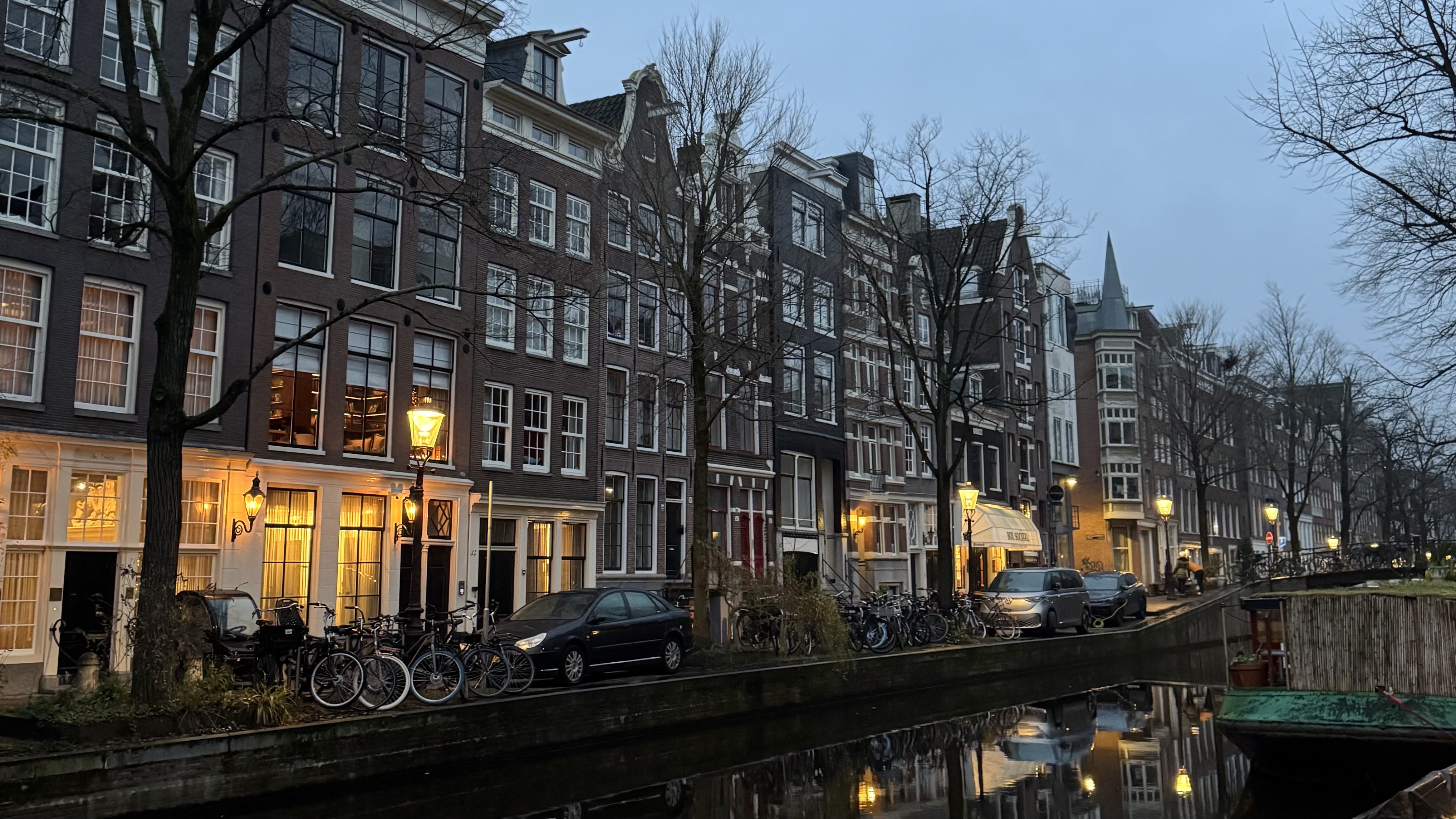
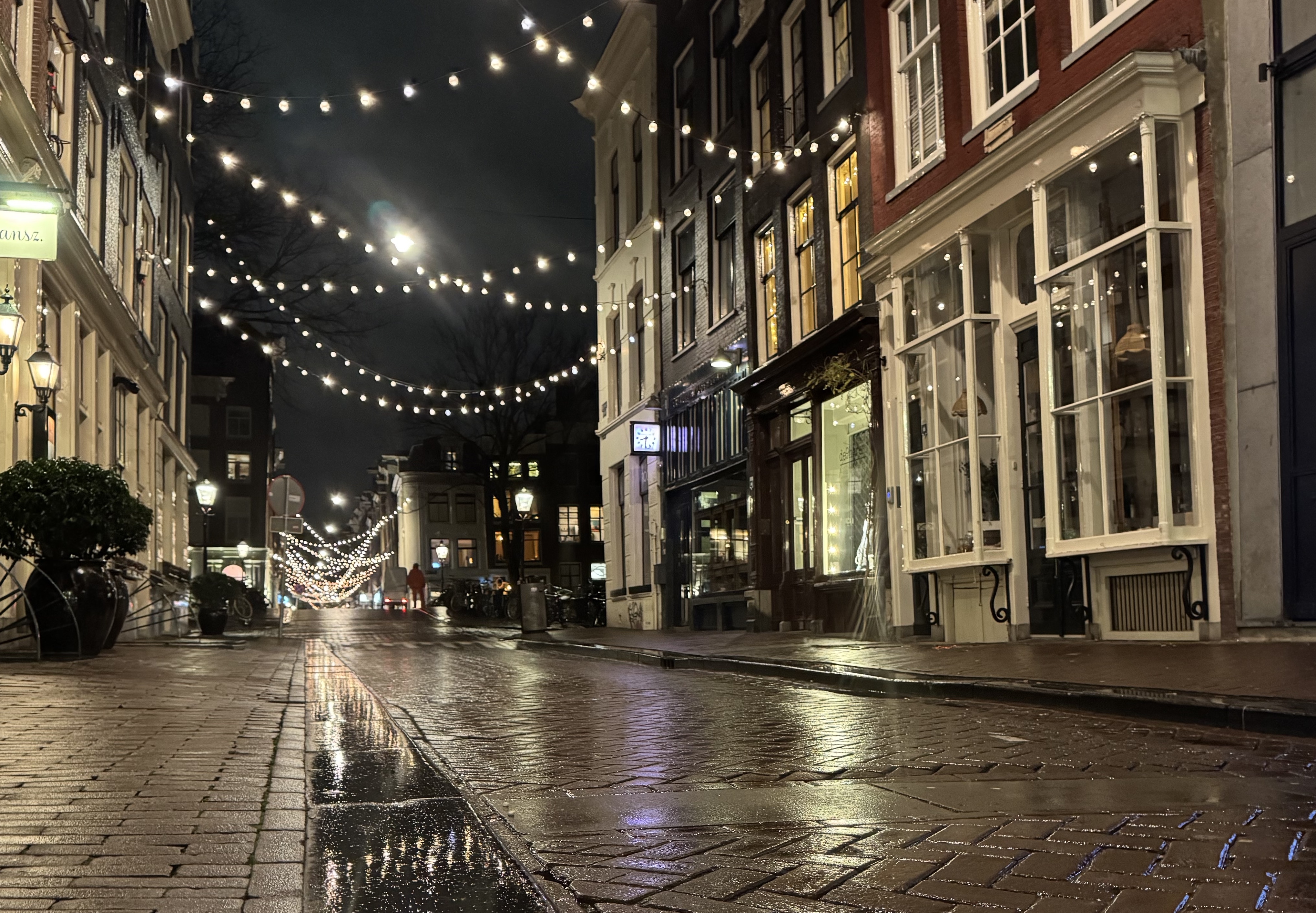
Gorgeous sunset on my street this week. Photo by me.

December already? It feels like the year just started, yet here we are in its final chapter.

This time of year always sneaks up on me. Time for reflection, connection, glühwein and maybe a little chaos.

Some things I did this week

Ok, more than a little chaos. This week was A LOT. Three impending deadlines have left me and Jon chasing our tails a little.

But the end is in sight.

On one – a scoping and business case development project – I started the week feeling a bit overwhelmed, trying to put finishing touches to 114 slides. Then midweek I made the decision to strip it right back to a simple 10-ish page deck with a stronger, clearer story, and put all the detail in a supporting report.

Decision-makers aren’t going to read the detail; they need to be convinced and reassured. The short report makes a punchy case for change and has a clear ask on resources and timeline.  The full report is there to provide answers to questions and give confidence that we’ve fully worked through the detail. Which we have.

It’s in a much better place now. We still have a few details to finalise, but it’s so close to done. Phew.

On the other big project, we have an intranet due to launch in a week. We did a state of the nation on Friday and we’re in a great place. An intranet planned, configured and built, and hundreds of pages of content written in a little over three months. I’ll reflect on that more post-launch.

On top of that, I’m prepping for a webinar I’m doing on hybrid work trends for 2025 for Modolabs. I love thinking about future trends, so I’ve enjoyed getting stuck into this one and trying to translate noise about global megatrends into the practicalities of workplace comms and collaboration in the year ahead. I always forget how much work creating entirely fresh presentations is. But also how much I like doing that focused reading and research (I’d enjoy it more if I weren’t quite so busy on the other projects, mind you).

With month end yesterday this has also been a heavy and occasionally stressful admin week. Always my least favourite part of the job.

Some non-work things I did this week

On Wednesday this story about Cyberia, the world’s first internet café, fell into my feed. It’s a great read about the enthusiasm and utopianism of early internet entrepreneurs. And the connections between Cyberia and the music scene of the mid 90s.

But my memories of Cyberia are different. I went there on a school trip, sometime in late 1994 or early 1995. It was the first time I’d ever been on the internet. I was fascinated by it immediately. The prospect of connecting with ideas and people beyond my experience as a painfully shy, nerdy schoolgirl. I was hooked.

Reading that piece on Cyberia I reflected on how much that one school trip changed my life. I haven’t been offline since, and that’s given me so many wonderful experiences and opportunities in the 30 years since.

But by coincidence I’d signed up to an event on Wednesday night called The Offline Club, an initiative here in Amsterdam that offers “offline events and detox hangouts to unplug, relax and connect with like-minded people”.

I’m beyond terrible at being and staying offline. I have to go to extreme lengths to make myself disconnect. And I mean really extreme, like taking myself to an island with no electricity and no phone signal.

After 30 years, I’m not sure I even know who analogue me is. But I signed up to Offline Club weeks ago, in an effort to find out.

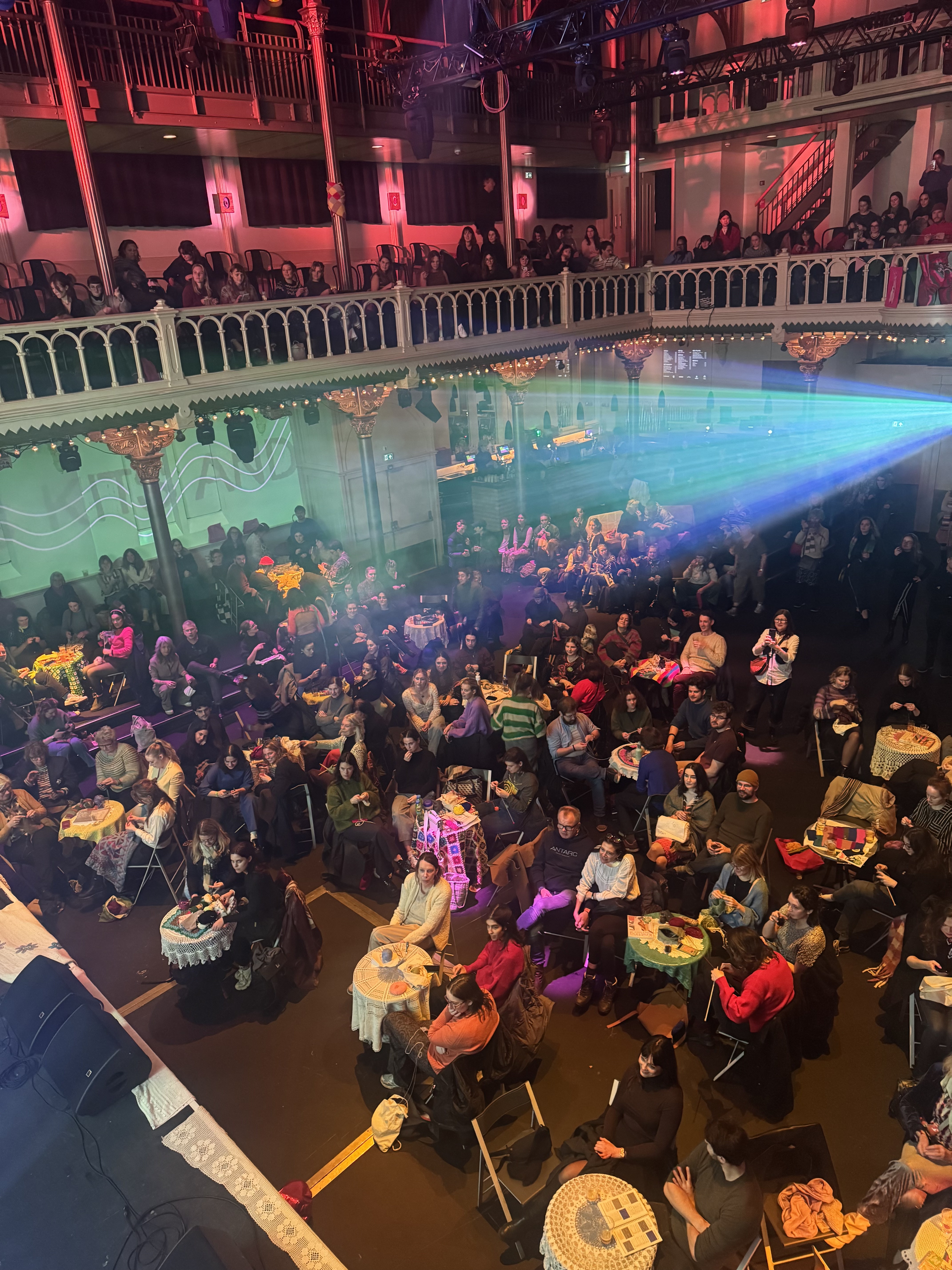
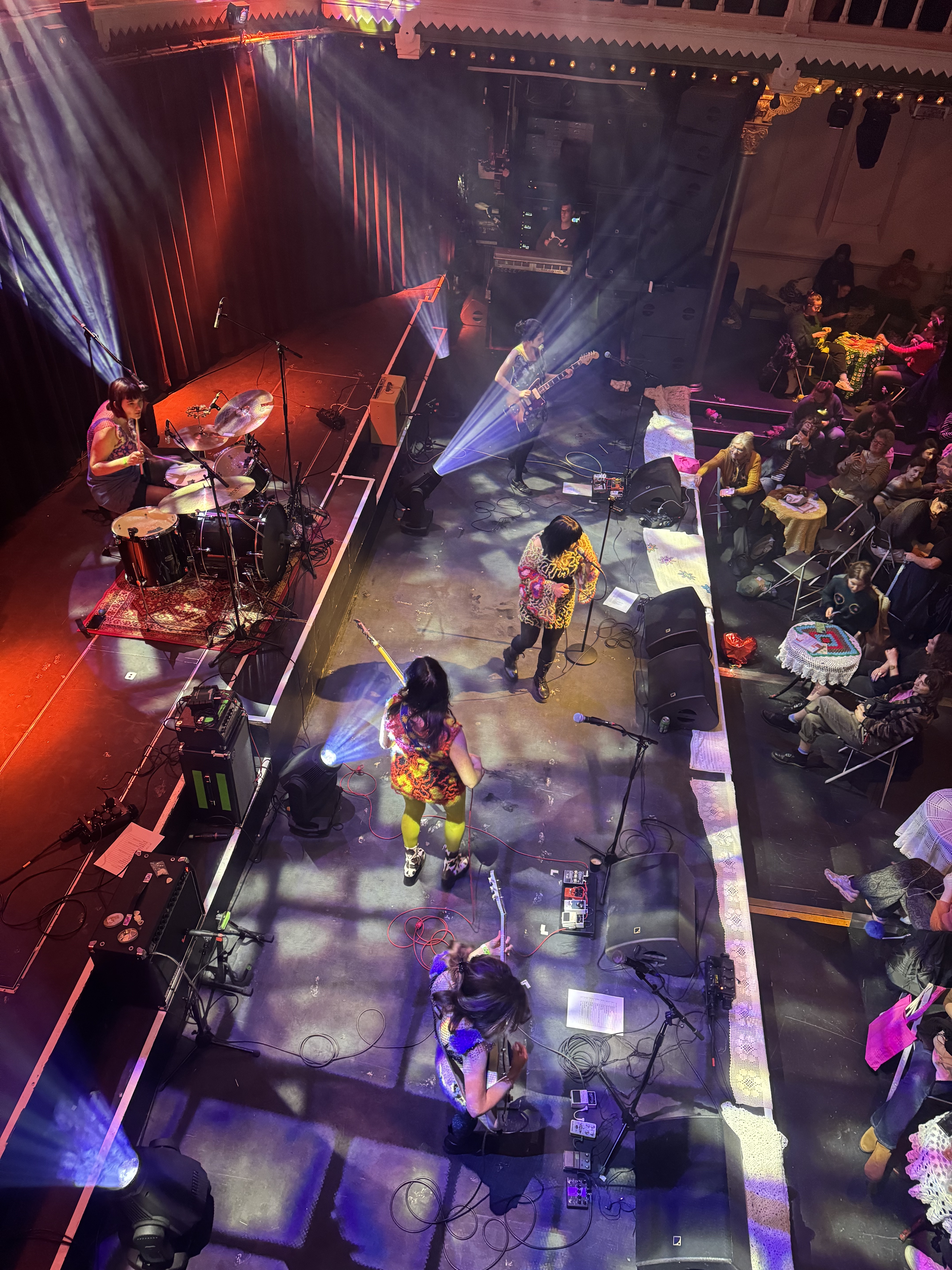
Wednesday’s event was their biggest yet, with over 300 people gathering at the Westerkerk, the big 17th-century church opposite my house. I’d followed the joining instructions and packed things to do and read, and a blanket to keep warm.

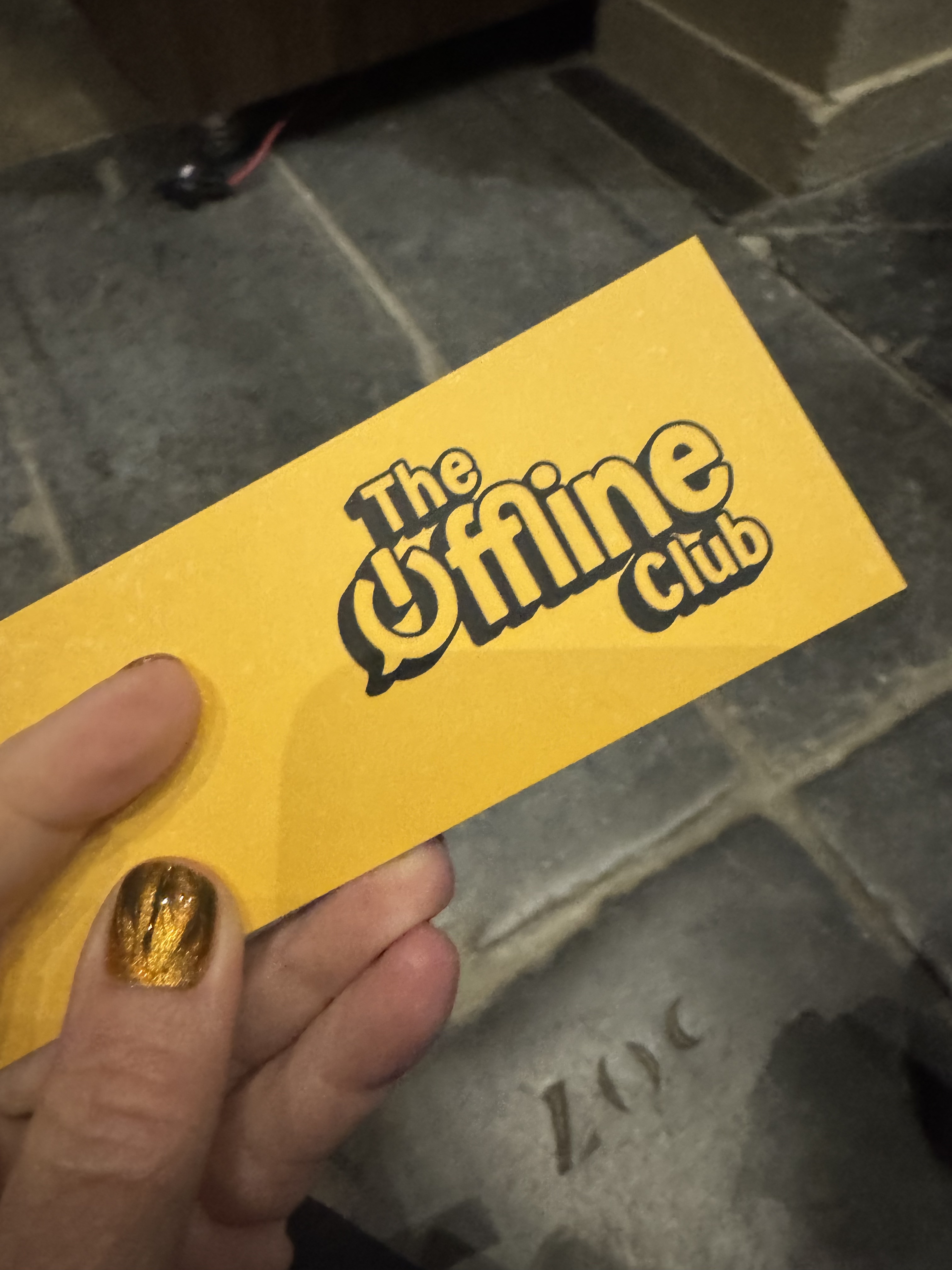
I handed my phone in and was given a cloakroom ticket to claim it back. My instinctive reaction was to reach for my phone to take a photo of it in case I lost it. But… oh yeah.

I slipped the cloakroom ticket into my back pocket, grabbed a cup of green tea and found a seat. The founder gave a short introduction, explaining the evening would be split into three sections. 45 mins of getting in touch with yourself, quietly, followed by an hour connecting with other people, and finally 45 minutes alone time.

Quiet time was accompanied by a piano recital. I grabbed a spot in a pulpit to read a book, which after a childhood of Catholic schooling felt vaguely subversive. It was here that I had a revelation. That revelation was that my PowerPoint was far too long. I was reading Ros Atkins’ The Art Of Explanation at the time. The Lord does indeed move in mysterious ways.

For an interminably long time – it felt like about six hours, but was probably about 20 minutes. I don’t know because I didn’t have my Apple Watch on – I felt troubled by my inability to Google every bizarre thought that entered my mind. So I wrote them down in my notebook so I could look them up later.

What was Rembrandt’s first name?
Does the universe have a middle?
Whatever happened to Zig and Zag?
If a Phillips screwdriver is the cross one what’s the flat one called?
What was that village that crowned a chicken as its king? (I think it was a chicken?). What was all that about?

When quiet time was over I wandered around the various activities designed to encourage meaningful connection and conversation. Some giant origami. Debating whether Ayr is a real place, and thus the answer to one of the clues on the massive wall-mounted crossword. Halfway through I realised I wasn’t really in the mood to people at all so found a spot in the choir stalls and listened to a lecture about the philosophy of place via some headphones while knitting a scarf. Who even am I?!

The final section. More introspection. A beautiful harpist played on a stage in the middle of the church. I drank my fourth cup of green tea huddled under my blanket sitting on what I later realised was a gravestone. I remembered that Rembrandt is interred somewhere under this collection of people reading books and drinking tea, and wondered what he’d make of it all.

But mostly I was just bitterly cold. The kind of cold that seeps into your bones leaving you wondering if you’ll ever be warm again.

Did I enjoy Offline Club? I think so. Would I do it again? Probably. But in the summer. 3.5 hours is just too long to spend in a cold church in November.

Has it made me rethink my digital dependency? Of course not.

Weeknote 2024/47

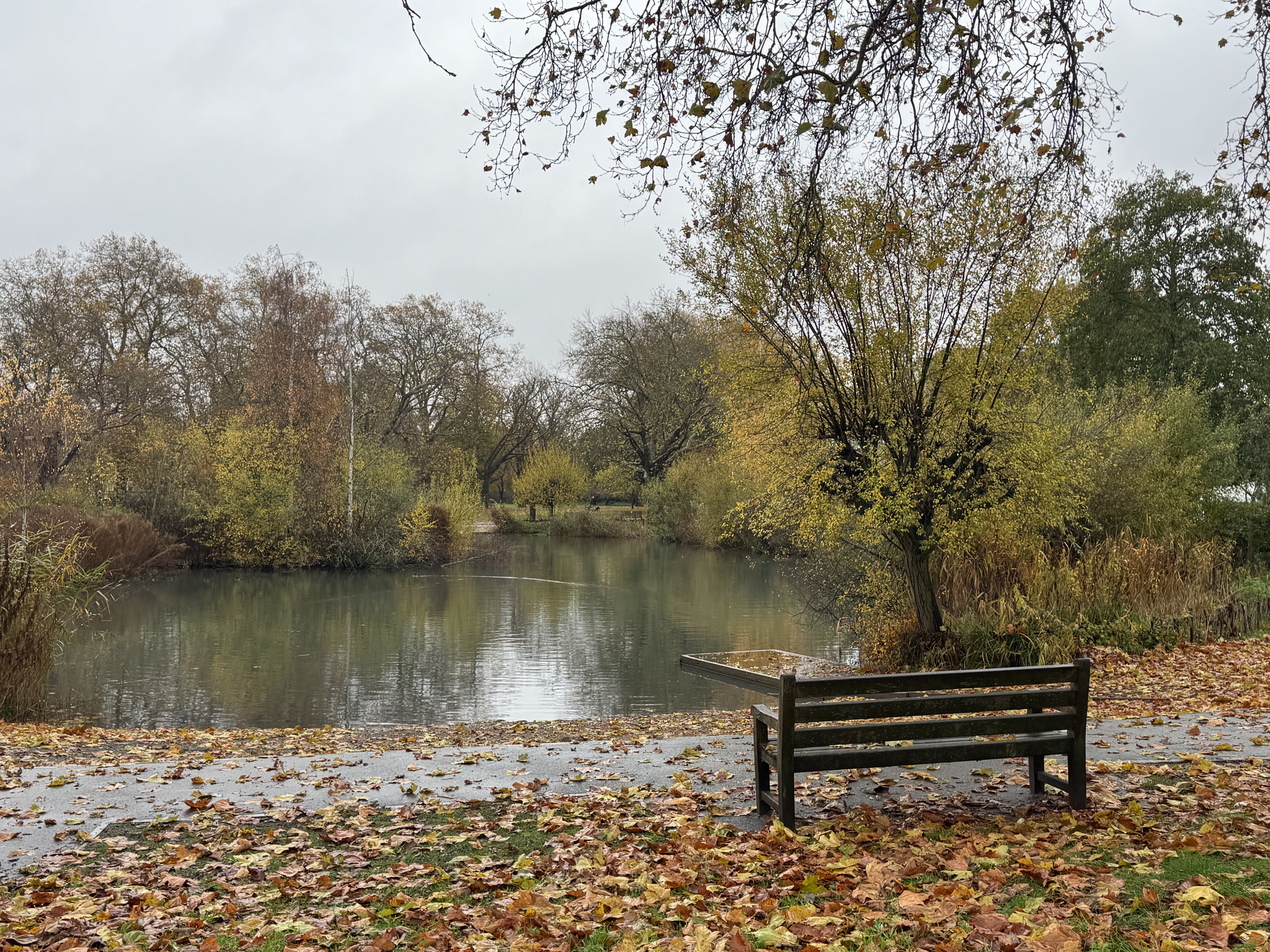
An empty bench by a large pond. The pond is surrounded by trees. The leaves on all the trees are turning brown and there are lots of autumn leaves on the ground.
Back in my old neighbourhood, Barnes, London, for the first time in years. Photo by me.

We’re approaching the finish line on both of our main projects.

On one, that means we’re in the peak period of coordinating stakeholders, content and publishing, while looking after training, testing and generally tidying up. At the same time we’re helping the in-house team get ready to manage and iterate the site themselves. This must be what it feels like having your kid do their A-levels, knowing that in just a few weeks time they’ll be off to university and you’ll be at home alone.

The other project is more of a detailed scoping exercise, but we’re now at the point where we’ve got to turn the big conceptual decisions into every tiny detail on the structure, architecture, planning and resourcing needed to turn these ideas into a reality so we have a solid, costed plan and business case.

Intranet business cases are frequently underfunded. In fact, in my experience, the majority of teams asking for budget get it wrong—sometimes badly wrong. The focus is often on what’s needed to get a site up and running for Day 1, rather than what’s needed to make it useful, usable, and valued. Teams also tend to underestimate the effort required to overcome organisational barriers to delivery.

Based on the 50 or so intranet projects I’ve worked on over the years, these are the areas of work that are most commonly underestimated:

  • Stakeholder engagement: Securing buy-in is critical; without it, delivery will take far longer than planned. The time and effort needed to align stakeholders is often overlooked
  • Site and template setup: This is particularly challenging in SharePoint. However many SharePoint admins you think you’ll need, budget for at least one more
  • Support for individual teams: Teams will need significant help to get their sections ready. This is nobody else’s job but yours—either you provide the support, or you sit around waiting while they eventually find the time
  • Initial content development: It’s often assumed this will be straightforward or that it can be entirely devolved to business units without central coordination. It can be, but the result will be a disorganised mess
  • Legacy content transfer: Moving content from old systems to a new intranet is a huge task. Auto-migration tools rarely produce usable pages without extensive manual clean-up
  • Search, taxonomy, and metadata: These are critical for helping users find information but are frequently underestimated or treated as afterthoughts
  • Training and support: Employees need training to use the new intranet effectively, yet this is often left out of the budget
  • System integration: People use intranets to get things done. Sustained adoption depends on integrating key systems. Fail to invest in integration, and you’ll miss that opportunity
  • UX and design: An intuitive, user-friendly interface is essential for adoption, but it requires time and expertise, both of which are often undervalued

Intranet projects are often led by communications or HR teams who focus on content and employee engagement but lack technical expertise. Without close collaboration between IT, HR, legal, and end users, it’s easy to overlook how these elements—technical, adoption, compliance—interact. Teams also frequently miss how vital non-comms, non-technical work will be done.

Vendors don’t help matters. Their claims about how quickly software can be deployed or how intuitive it is are often wildly unrealistic. To close deals, they underplay challenges such as legacy system integration, complex organisational workflows, and the time needed for proper data migration and testing. Vendors rarely include post-launch enablement, support, or training in their scope, leaving organisations to manage these on their own.

There’s also an element of wishful thinking. To secure funding, teams often downplay risks and costs, assuming they’ll figure it out later. While this can sometimes get a project started, it often means that essential work for a successful digital workplace is never properly funded. As a result, the intranet fails to deliver its intended benefits.

Fortunately, this client is keen to avoid these pitfalls. They’ve given us their full support to develop a detailed plan that covers everything necessary for success. This week we’re bringing all of that together. It’s equal parts satisfying and daunting.

A few changes in the Lithos team. We onboarded a new member of the team, a multi-lingual content designer supporting us with content creation. But our delivery manager, Nic, left last week when his contract wrapped up. He was our first hire in a delivery role, and made a huge impact in a short time. Jon and I are good at self-managing, but project management isn’t a strength of either of ours. We’d been winging it for way too long as our business grew and took on multiple, complex projects. Nic helped us to get the processes in place we need to up the game in what’s now a fast-growing little business.

That was reflected in the end-of-phase wrap-up with one client team. They went out of their way to praise our professionalism and our “relentless optimism”. I’ll take that.

I was the token non-HR person on the panel at an HR Tech Europe event in Amsterdam. I took that provocateur role seriously and used my platform to remind everyone that no one aside from HR goes to work to do HR. It’s part of the admin overhead of having a job that we do, reluctantly, because we have to.

In a room full of people talking about user adoption and usability I no doubt I lost friends by pointing out that the best thing AI can do to improve HR tech is to make HR go away as far as is possible for ordinary employees.

Non-work things

My best friend, Katy, visited for the weekend, and we did an escape room for the very first time. It was great fun and I guess I’m one of those people who makes doing escape rooms my entire personality now.

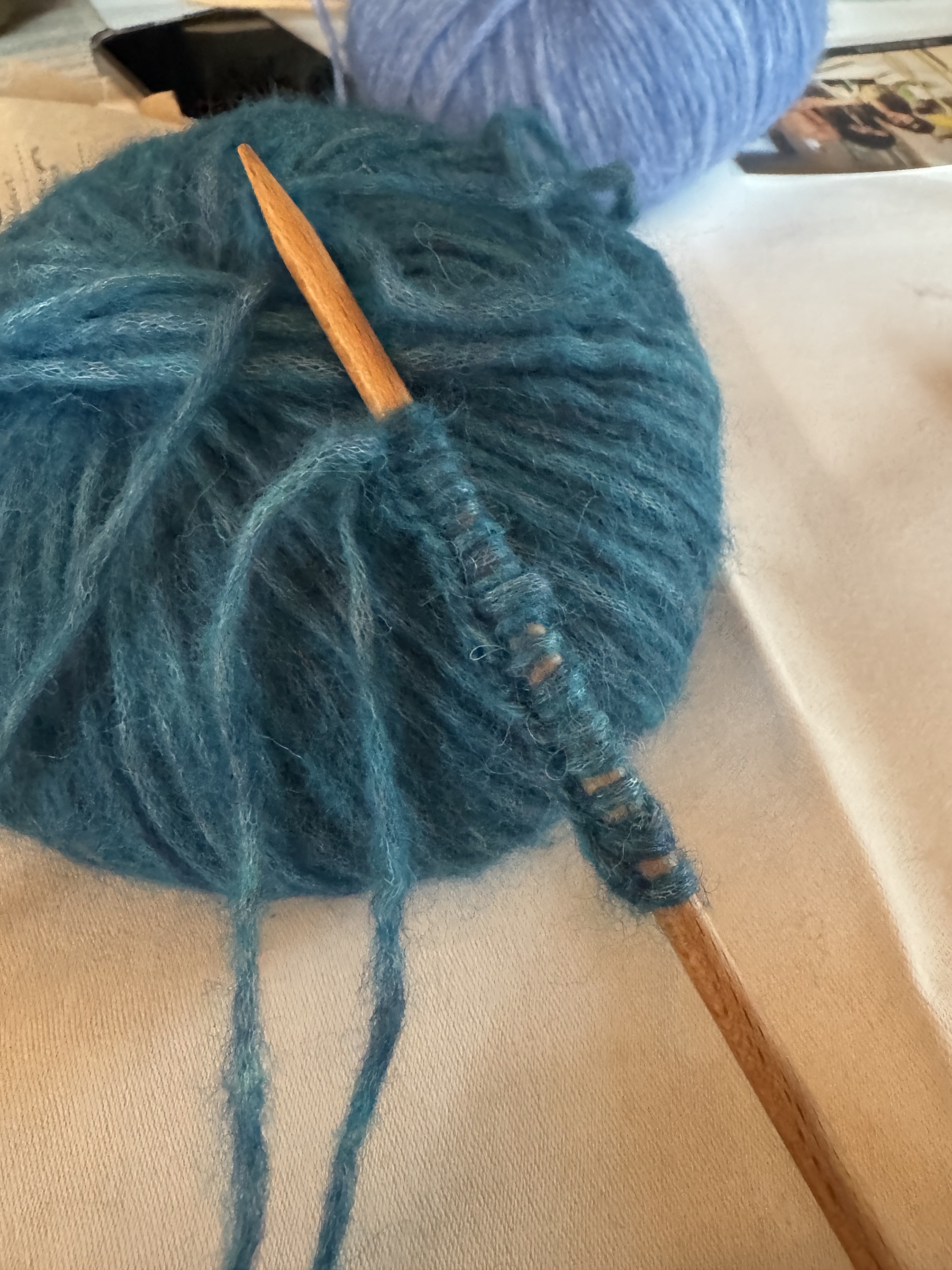
I’ve been toying with learning to knit for a while, partly inspired by Tom Daley’s words on using knitting to manage anxiety, and partly in an effort to keep well clear of the news and scroll my phone less. I signed up for a scarf-knitting workshop with De Steek.

My first effort was terrible, but I tried again when I got home and I think I’ve got the hang of it. It’s strangely satisfying, getting better at something in real time. I now have about 20cm of chunky scarf and my phone screen time was down 18%.

Connections

With the end of year approaching, and in an effort to scroll less and offline more I signed up to a professional networking app. The irony is not lost on me. It’s called The Breakfast and it’s supposed to connect people to meet in-person over breakfast.

I’ve been on it for about three weeks now and so far have been ghosted twice and had two approaches that had kind of creepy vibes. But I persisted and this week met my first Breakfaster, a Russian software developer. We had a perfectly nice chat about moving to a new city and I was introduced to an excellent coffee place I hadn’t been to before.

I’m going to try a few more Breakfasts before making a judgement on whether the app is for me.

The HR Tech Europe gang

The HR tech event gave me an opportunity to reconnect with Debbie French and Luciana Popescu, then go for dinner with the other panellists and the HR Tech Europe team.

Last week WB40 host and inveterate people-gatherer Matt Ballantine was in town, so we met for a pint and a chat about workshops, consultancy, covid-era weirdness and meeting people. Like me, Matt borrowed Mary McKenna‘s 100 People concept, putting his own spin on it with a target to have 100 coffees with 100 people in 2023. Unlike me he managed to hit and exceed his target.

Matt put me in touch with his Equal Experts colleague James Donovan, who has his own spinoff 50 Coffees target. We chatted about employee value propositions, aligning incentives in distributed teams and how hiring it broken. We also had an excellent chocolate, ginger and speculaas cake at De Bakkerswinkel.

Coverage

Back in the summer I recorded a podcast with Stephen Parkins and my old colleague David Semmens. Called Culturedge, this series looks at driving innovation in and outside of the corporate world, and the episode with me came out this week.

We talked about driving innovation in complicated organisations, where so much of the work is about building support for change rather than delivering it.

Making digital transformation work in complex organisations is a looooooong process of stakeholder engagement, navigating risk-averse budget holders and making people comfortable with ambiguity in structures that demand certainty.

And when you DO manage to make a change, it will only deliver value if you bring people with you by building capability, confidence and enthusiasm. Investment in tech is only realised when that technology is used by people to deliver value.

In a phrase I borrowed from Ann Kempster and now use *all the time* technology is easy, people are hard.

🎧 It’s available on all your favourite podcatchers. Listen in, let me know what you think.

Travel

Apparently you can move out of the same house three times.

I was in London last week, sorting out my flat there, and failed to meet anyone.

So I’m back next week and would love to catch up with a few folks and nudge closer to my 100 people target (I am at 51 for this year, must try harder next year).

Give me a shout if you’re in London 3-6 December and wanna grab a coffee; my diary’s pretty flexible.

Weeknote 2024/45

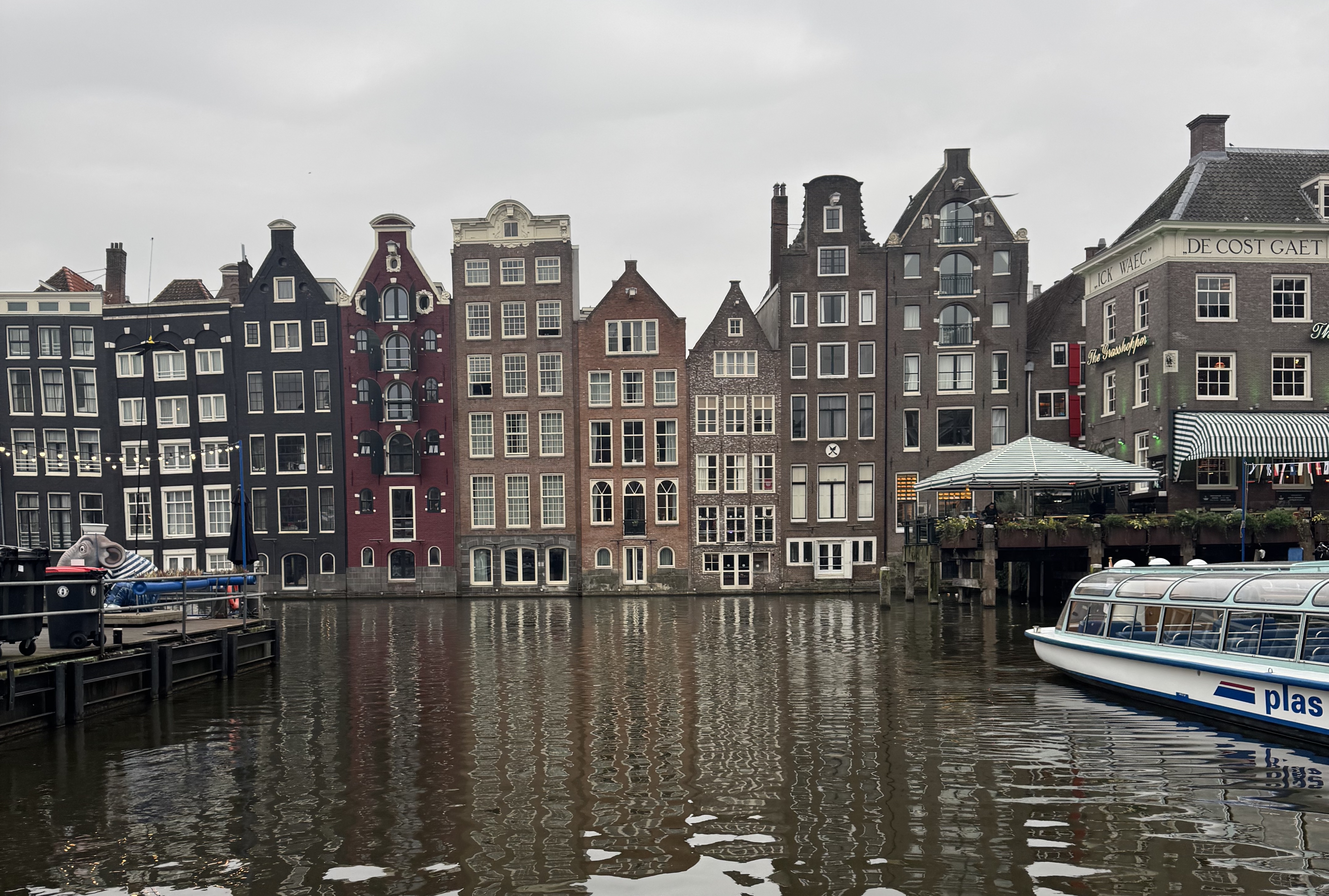
Grey, wintery Amsterdam. Photo by me.

This is a bumper two-week edition as I didn’t get around to writing last week. The clocks have gone back, and clouds have come in, and a gloriously sunny autumn has turned quite suddenly into a dark and grey winter.

And then there’s events across the pond, so it feels like this is a winter that could be especially dark, and last for four years.

Work-wise It’s been a packed couple of weeks.

On one project – where they’ve opted for an ‘intranet in a box’ approach – we’ve made rapid progress. We’re so deep in the weeds on the detail that we need to remember to stop and take stock now and again. In the last month or so we’ve delivered a working platform, all the associated governance and processes, a good volume of great, user-focused content (in two languages), and a bunch of assets for support and launch. We’ve got an ace team on this and they’ve done a cracking job. The finish line is in sight now and I’m so proud of the work we’ve done.

Over on our other big project, they’re taking a different approach, using native SharePoint as the intranet foundation. There are plenty of advantages to that – not least saving on subscription costs long term – but the delivery path is typically much slower. You gain flexibility, but that comes with a greater admin overhead, with the intranet team having to devote a good chunk of time to managing the site.

There are pros and cons to both paths (which In shan’t bore you with here).

Our focus this week was to crystalise a recommended approach and scope for the future SharePoint site, finding the right architecture and a set of templates that balances consistency and usability for users against the flexibility that content creators want – while at the same time keeping a laser focus on the tight, immovable deadline all of this needs to be delivered by.

Balancing all of those competing priorities means we had a lot of healthy debate among the team. But that was reflected in a solid, well-considered approach that landed well with the client team. Once again I’m proud of a job well done and can move into the next phase of work confident in our plans and approach.

A big part of our work at Lithos Partners is helping our clients choose the right comms and collaboration platforms, and to configure and use them to deliver business value. More often than not that’s Microsoft (either on its own or with an IIAB layer, as in the projects above). But they’re not the only game in town. As a massive collaboration nerd I love to know what all the main vendors are offering and how best-in-class firms are using these tools to gain an edge.

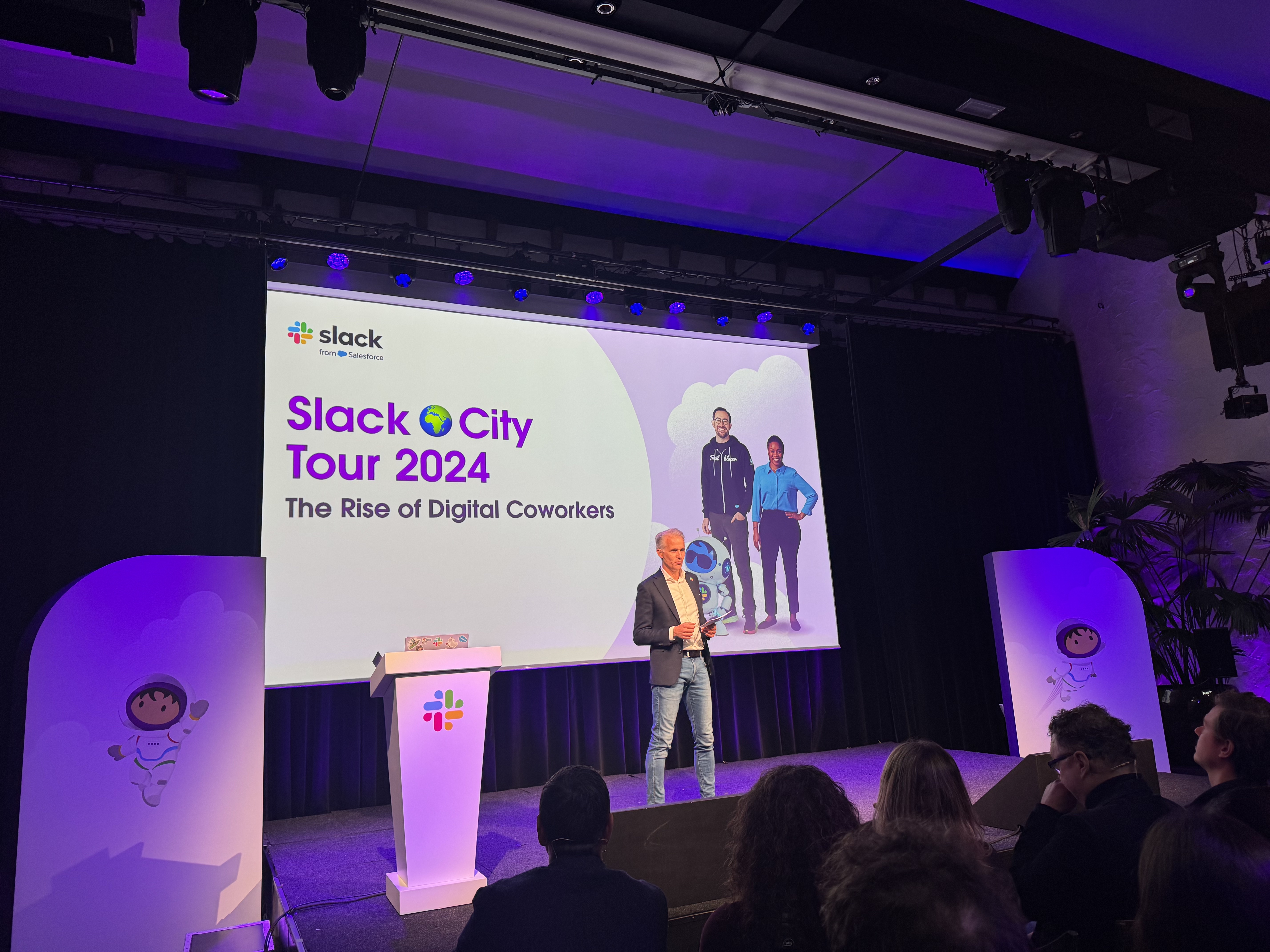
And so I popped along to Slack‘s City Tour when it rode in to Amsterdam this week.

Slack City Tour event in Amsterdam, 8 November 2024

The key themes that stuck out to me were:

🤖 A predicted rise in ‘digital co-workers’ (AI agents to pick up drudge work or enhance what we’re doing). As I’ve said many times on here and elsewhere, this all has huge potential, but it’s never simply about the tech. The speaker highlighted the need to consider barriers to adoption and success, such as developing the necessary skills, ensuring our data is accurate (every organisation is littered with old docs creating new risks in the context of Gen AI), and ensuring our AI investment delivers real value – focusing on tangible benefits (which leaders care about), not marginal time savings (which they don’t).

👩🏻‍💻 The value of employee experience. The number of applications employees are forced to use is mushrooming, and that’s combined with a shift in admin work away from dedicated teams to individual workers (think self-service HR). We’re spending more time on the admin of work than ever before. It’s annoying and exhausting, contributing to growing levels of burnout. We can and should do more to streamline and simplify the experience of work, so people can get on with the things they came to work to do.

I also met some great folk from Slack and some of the big tech firms headquartered here in Amsterdam and geeked out on collaboration chat.

Non-work things

Diversity and Inclusion panel at Soho House Amsterdam

Last week I went to an interesting breakfast event on DEI in the creative industries, moderated by the brilliant Kerrie Finch. Here’s my takeaways:

🇳🇱 The Netherlands is a little behind the curve on DEI compared to other markets, but with the country attracting talent from across the globe, we can all do more to learn from and adopt best practices and successful programmes from elsewhere

📈 Show the value. At a time when DEI is getting pushback from tech bros and a rising political right wing, we must not forget that diverse teams and perspectives make our work better. We’re not championing this because it’s cool, but because it’s good for the bottom line. We must measure and demonstrate that.

😊 We need to create a culture of psychological safety in our organisations, where we respect different backgrounds and make space for conversations that might sometimes be uncomfortable.

🌻 With my digital pro hat on, it was good to hear several mentions of the need for representation and accessibility at the heart of what we do

The conversation touched on AI – what panel doesn’t these days? – but I feel like we need to get DEI more involved in our industry discourse on AI, given its potential to drive progress on diversity, equity and inclusion into reverse.

This evening I watched new historical drama Blitz. It’s visually brilliant, but felt like it was trying to bring a bunch of new angles to the WW2 movie genre, while not really doing any one of them justice.

It was refreshing, for example, to see working class East Enders shown as more complex than the usual downtrodden-yet-sentimental stereotypes. One plotline highlights the little-acknowledged phenomenon of looting and corpse-robbing that happened in the bombsites. Kathy Burke and her grizzly gang would have stolen the show if only this storyline had been given enough room to breathe.

On a lighter note, this week I saw Dutch-American comedian Derek Scott Mitchell’s live show, Double Dutch. His act was a delightful mix of the wry observations on Dutch language and culture I’ve seen him do on Instagram, and reflections on being an immigrant, where you exist in a kind of grey area of never quite fitting in where you live, while growing increasingly distant from the place you’re from.

What I’m reading

With my finger on the pulse as always, I finally got around to reading Salman Rushdie’s 1981 novel, Midnight’s Children. The story follows the life of Saleem Sinai, born at the exact moment India gained independence in August 1947. Saleem and other children born close to midnight have supernatural abilities, symbolising the dreams, challenges and identity struggles of the newly independent nation. Saleem’s life is marked by historical upheaval, family tensions, and a complex relationship with his own identity and heritage.

What stuck with me was Saleem’s concept of “chutneyfication,” which the character uses to describe his attempt to preserve memories, much like you’d preserve food as chutney. Personal and national histories are blended, spiced and bottled over time.  Saleem’s “chutneyfication” distils India’s history in a mix of flavours, textures, and contradictions, capturing the essence of a nation shaped by its diversity and its history.

Reading this I found myself reflecting on Derek Scott Mitchell’s words about grey areas and that liminal migrant existence. As immigrants we’re making our own mental chutneys, keeping the places we’re from and where we live in physchological jars of memory and culture. Pindakaasification doesn’t have the same ring to it, mind.

Connections

The news is too depressing to watch, so I’m making a conscious effort to scroll less and see real people more.

My old pal Josephine Grahl was in town last weekend, which gave me the opportunity to catch up for the first time in maybe seven years. We had a lot to catch up on.

This week I met marketer Martina Lipp for coffee and a long chat about AI in marcomms.

Travel

Heading to London next week. My diary’s pretty chocka but if we’ve been meaning to catch up and haven’t worked something out yet, then let’s try and grab a coffee before the year’s out.

Weeknote 2024/43

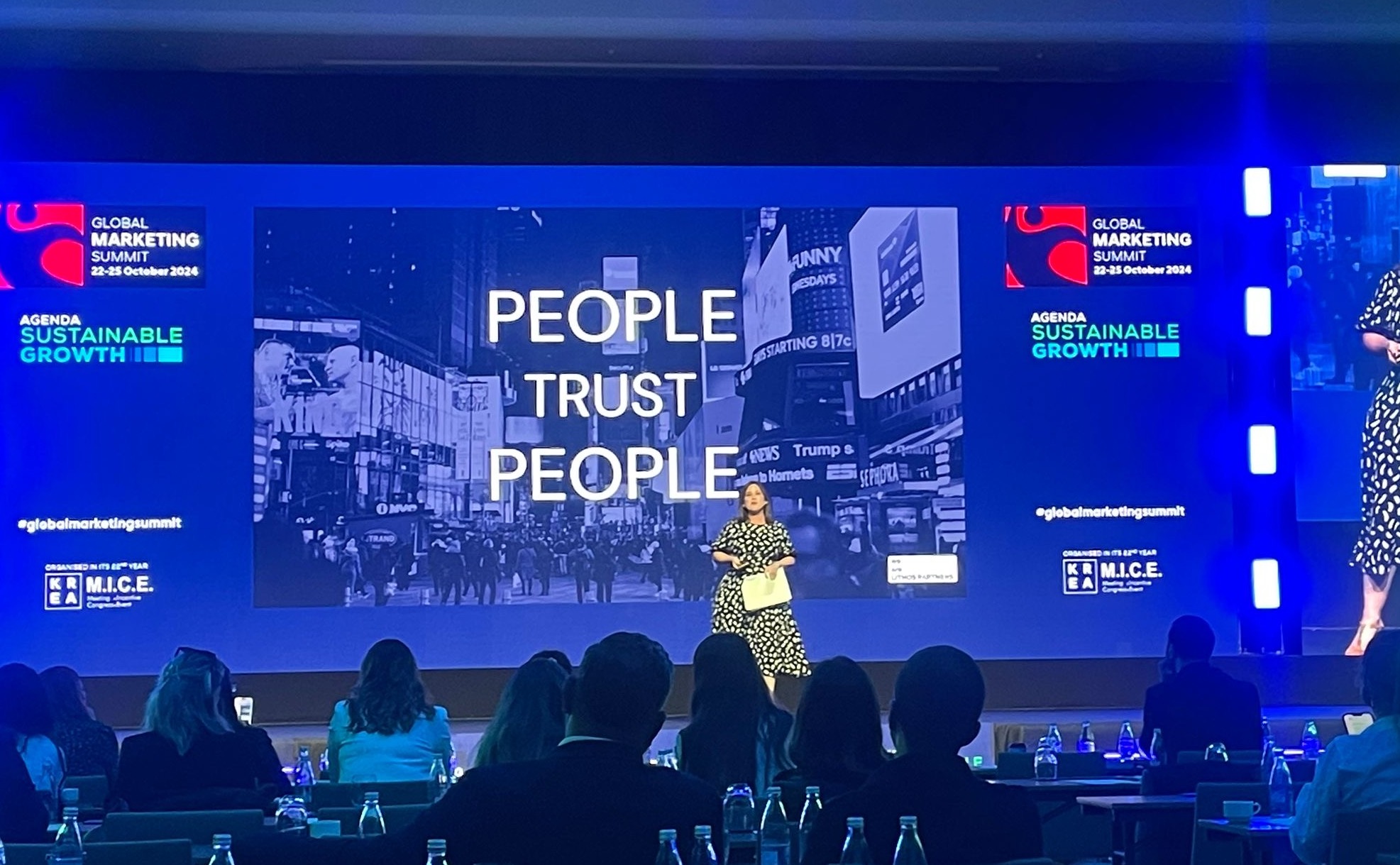
Sharon O'Dea on stage at the Global Marketing Summit. Behind her is a slide that says 'People Trust People'
Me on stage at the Global Marketing Summit last week.

I’ve just returned from keynoting at the Global Marketing Summit.

I posted this on my Instagram and immediately had a whole bunch of people reply “I didn’t know you worked in marketing”

I don’t. But marketing doesn’t exist in a bubble; it can only thrive when it’s aligned with or supported by other comms, product and operational functions. So it was a real credit to the organisers that the event’s agenda covered an impressive range of topics from sustainability to personal brand to internal comms.

What happens on the inside is reflected outside – in any interaction customers have with your people. Employees can be a company’s most powerful ambassadors, because they live and breathe the brand.

And that was the theme of my talk: employee advocacy. That is, when employees actively promote and support their company by sharing positive messages, brand content, or personal experiences on their own social networks. It helps enhance the company’s reputation, attract talent, and boost brand awareness through authentic voices.

In my keynote I shared examples of where we at Lithos have helped organisations find the right mix of tools, processes and governance to support and scale an advocacy programme.

But I caveated all of this by saying that while this stuff is hugely powerful, it’s not easy. Employees have to be highly engaged to advocate for the brand, and that means having effective internal comms where people understand and feel connected to the mission.

Your people can’t champion your products and services if they don’t understand or use them. They can’t share your values if they don’t experience them in their work and their interactions with others. They can’t speak positively about the digital experience you offer customers if their own experience is bad.

I’ve blogged before on how internal channels, projects and comms are all-too-frequently overlooked in favour of customer-facing ones. Talking to comms and marketing pros at this event reminded me how short-sighted that is, and what value the work we do on digital workplace and internal comms adds to organisations.

Some stuff I did this week

Much of my week was taken up at the Summit. It wan an honour to be invited and the organisers did a brilliant job curating an impressive agenda of local and international speakers.

I enjoyed meeting inspiring people from all over the world, and dive into so many marketing and marketing-adjacent topics. Once again it felt like the conversation around AI is maturing, from simple-but-unhelpful narratives on small productivity savings to tangible examples of hyper-personalisation at scale and driving efficiencies across different industries.

Lots to process and (hopefully) apply in the day job.

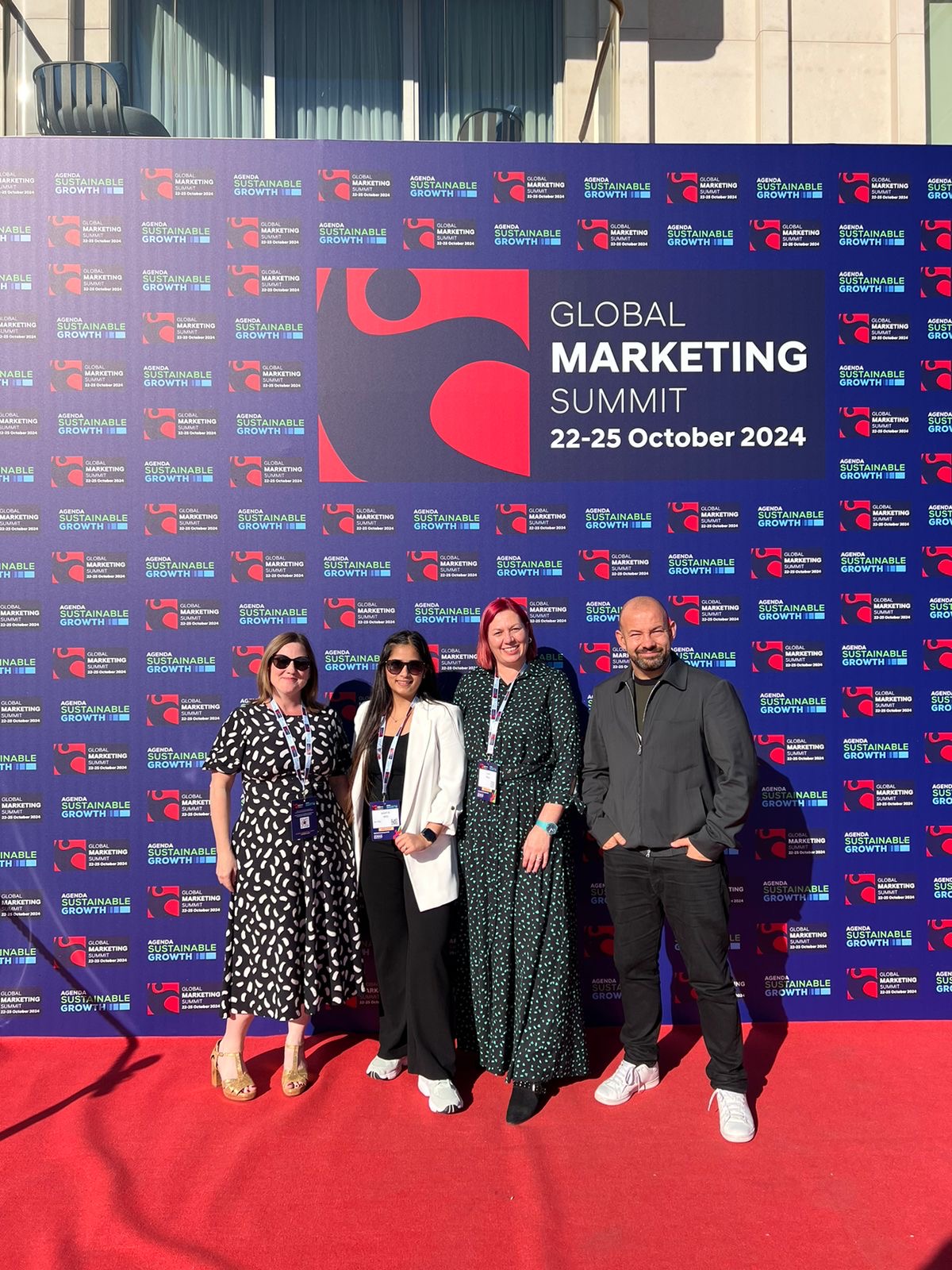
Four people stand in front of a branded sign for the Global Marketing Summit
Enjoying the Turkish autumn sunshine with (L-R) Aanya Wig, Luan Wise and Stephen Corlett

Speaking of which, our two big projects are cracking on at pace.

On one, the team have spent the last couple of weeks apply our early thinking around site structure and templates to some real-world content. As the old army adage goes, no plan survives contact with the enemy.

Or, in our world, no scope survives contact with real stakeholders and content. But so far it’s shaping up pretty well, and we’re tantalisingly close to a tested scope and roadmap for delivery.

Over on our other project – where we’re using an intranet-in-a-box approach – things are taking shape and fast. From a digital wasteland a month ago we have a functioning site with a growing body of high-quality content. There are always compromises involved in using OOTB solutions for intranets, but they’re rarely consequential and almost always compensated for by speed of delivery and quality of user experience.

(I could talk about this for hours – so will save that for another week).

Some non-work things I did this week

It was, somehow, my very first time in Istanbul, so I was glad to get a day off to explore a little. A crazy and brilliant city which I plan to return to asap.

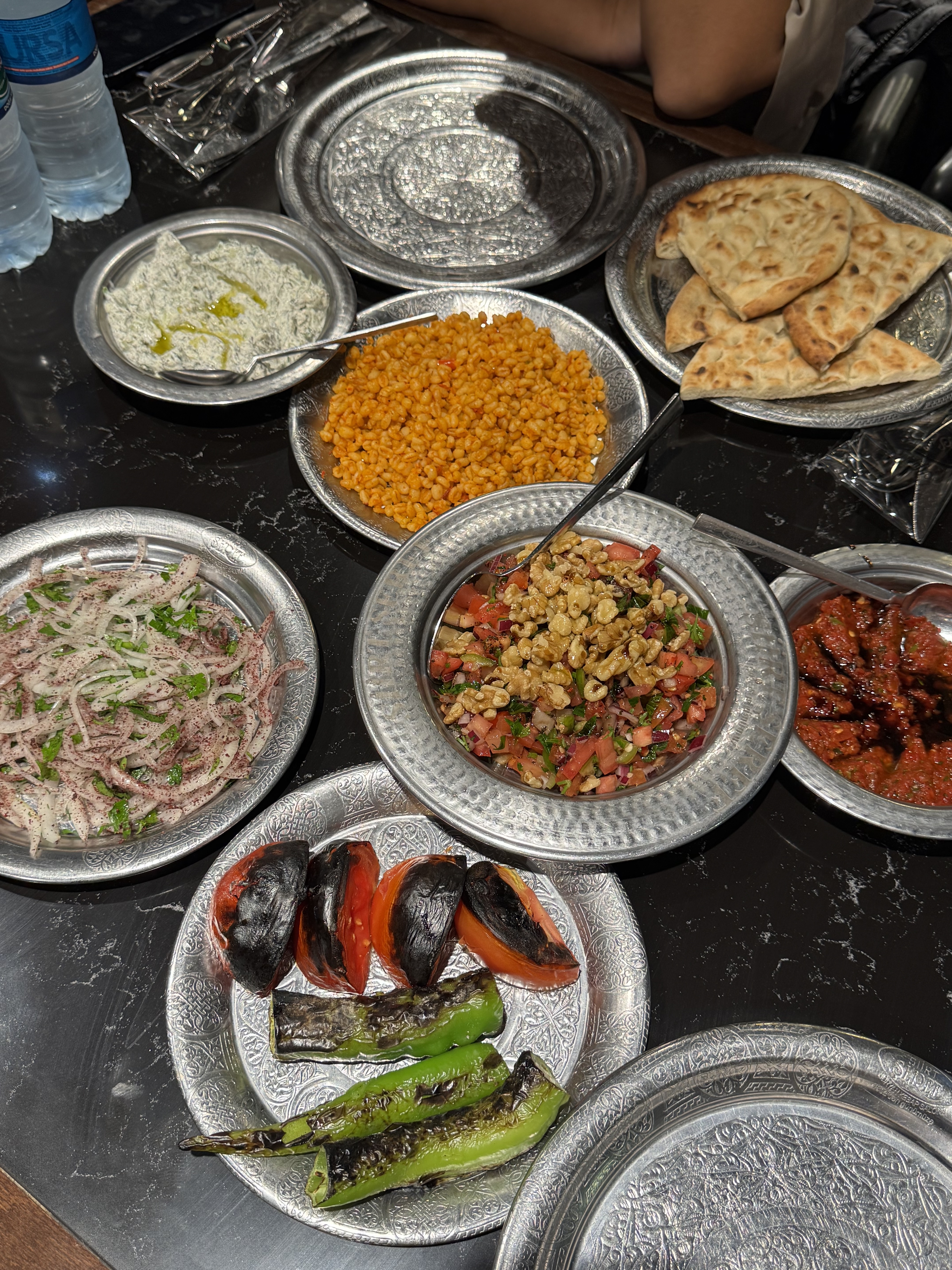
To be honest I mostly ate my way around Istanbul. There’s no better way to experience a culture than via its food.

Connections

The Summit put me in touch with some brilliant folk – including a whole new bunch of Amsterdam locals. Particular shout-outs to Kerrie Finch, Luan Wise, Melanie Moeller, Stephen Corlett, Ben Keene, Fady Ramzy, Maria Ingold, Aifric Lennon, Elizabeth Solaru, Ekwy Chukwuji, Aanya Wig, Aycan Ferik, Seda Mizrakli Ferik and Fiona Harrold.

What I’m reading

I didn’t get much further with A History of Rome in 21 Women, but I’m home all week so hope to get my reading mojo back

Travel

None planned at all until December. I can’t tell you how excited I am about not visiting an airport for several weeks in a row.

Weeknote 2024/42

Me with the rest of the Flashpack in Georgia.

რასაცა გასცემ, შენია; რაც არა, დაკარგულია

“That which we give makes us richer, that which is hoarded is lost” wrote medieval Georgian poet Shota Rustaveli.

I assume he wrote these words in a book of some sort. But I read them in a bit of graffiti in a damp underpass in Tbilisi and had to look it up.

By sharing we build trust with others, and make them more inclined to share with us. It’s a principle that I recognised immediately. By sharing what we know, we encourage others to see and respect our expertise.

I don’t imagine the 12th century poet had digital consulting services in mind when he wrote those words, but the give-to-get tactic probably lands me more work than any other. Wise, was Rustaveli.

Some things I did this week

For the first half of the week I was on holiday. And for the most part I actually managed to do that. For the first few years Lithos Partners was really just Jonathan and I, with occasional inputs from freelancers. But over the past two years we’ve scaled so we’re managing bigger and more complex projects, and that means building out teams that plan and deliver by themselves. There have been some growing pains but I think we’ve cracked it. I left work in Jon’s capable hands, and that of our brilliant and talented team who I know and trust to crack on in my absence.

Which meant for the first time in years I took a holiday while work was still happening – and not just in a lull between clients – in the full confidence things would be just fine without me.

And they were.

I’ve landed back right in the middle of a busy period and some incoming deadlines. We’re taking a ‘divide and conquer’ approach, with Jon handling one big project and me the other, with smaller projects split between us. We’ve got this.

Non-work things

Like I said, I went on holiday. Specifically, I did this tour of Georgia with solo travel specialists Flashpack, followed by a few days on my own at the end to cross the border to Armenia (by my count the 73rd country I’ve visited).

Armenia in pics:

This was my third trip with Flashpack, who aim is to bring together like-minded professionals in their 30s and 40s, providing seamless itineraries that include everything from local cultural experiences to luxury accommodations.

The appeal lies in the convenience: for well-travelled people to explore somewhere new without worrying about logistics, safety, or navigating new destinations on their own. Everything is taken care of, ensuring a stress-free experience where participants can simply show up and enjoy the trip. 

While a normal person might schedule an activity on every other day of a holiday, leaving time to relax in-between, on a Flashpack trip there’ll be two or even three such activities every day, followed by a group dinner. On day 2 the guide kicked off a hike with an announcement that, being 9km and mostly uphill, we expected it to take four hours. We were done in 2:28. A guided sightseeing tour would finish and there would be a car waiting to take us to a cooking class, then a spa.

Inevitably these adventures attract a particular type. This (very funny) piece in the NYT is an all-too-fair summary. I am not ashamed to admit I am exactly That Type. And so was everyone else. The group WhatsApp would put the organisational skills of a FTSE 100 board to shame.

It’s not for the feint hearted but for those who want the thrill of solo travel with a safety net and a group of potential new friends, Flashpack delivers exactly what it promises.

I got back home on Thursday simultaneously exhausted and raring to do it all over again.

Over the weekend I saw 80s indie rock poptimists Redd Kross down at PAARD Poppodium in The Hague. A much underrated band who’ve been going as long as I’ve been alive, they put on a charming little show. I felt bad for them as it was very sparely attended with barely 75 people in the audience. I danced enough for at least three people.

Last night I caught the Sundance award-winning film from Irish band Kneecap. Raw, dark and politically charged, it’s a fictionalised and funny take on the rise of the hip-hop trio from Belfast. The ‘fillum’ blends some gritty social commentary on language and identity with a riotous, drug-fuelled coming-of-age story, with the trio themselves playing the leads. It’s a vibrant and rebellious reflection on the preservation of the Irish language and had me both laughing out loud and bopping along to the band’s bangers.

Connections

My visit to Tbilisi gave me a chance to finally catch up with Charlie Southwell. Charlie is one of those people I have known of for years and yet somehow never crossed paths with. We have various friends in common – who oddly aren’t even friends with each other – and even worked in the same place for a time but a few months apart.

Unsurprisingly Charlie was a very good egg. We had a lovely long chat in a café overlooking Freedom Square where we talked about marketing, SharePoint, AI, all the people we know in common and the forthcoming Georgian elections.

What I’m reading

I’ve just started on A History Of The Roman Empire in 21 Women. An attempt to revisit the history of Rome through the lens of the other 51% who are rarely mentioned in mainstream history books. I’m only a chapter in and I like it already.

Travel

This week I’m off to Istanbul for – surprisingly – the very first time. I’m speaking at the Global Marketing Summit about the importance of internal comms in employee advocacy.

I’ve got a day off on Friday to explore the city so please send me your top tips (and top eats… can’t wait to get stuck into that Turkish food!).

Weeknote 2024/41

The view from my room in Stepantstminda, Georgia, before my big hike this week. Photo by me.

Garmajoba from Tbilisi, Georgia 🇬🇪

This week’s been equal parts progress and reflection. Very much like Georgia itself. Known for its breathtaking landscapes, ancient traditions and resilience, this place reminds me of the importance of perseverance. Whether in building its unique winemaking heritage (did you know winemaking started in Georgia?), balancing the old and the new, or standing strong amidst rapid change, I feel like we can a lot about the art of moving forward one step at a time from this extraordinary little country.

Some things I did this week

It was a steady-as-she-goes kinda week, work-wise.

We’re a couple of months in on one intranet programme and it’s all starting to take shape. That is, we now have the bare bones of a site and the first content. Getting to this point is always a hard slog but then progress feels really rapid from there on. There’s plenty still to do but I’m glad we’ve got here, and our deadline feels ambitious but achievable.

Over on our other major project we’ve switched to doing some content creation, to test our assumptions about templates and workflow. That should allow us to validate whether the functionality and site structure we’ve proposed will work in practice. Because scope is all well as good in theory but it’s only when you start to build things out that requirements really become clear.

Non-work things

I’m taking some time out this week to visit Georgia and Armenia, starting with the digital nomad hub of Tbilisi.

It’s been fun. Exploring a new city, visiting Georgia’s wine country, learning about (and eating a lot of) Georgian cuisine, and hiking in the stunning landscapes of the Caucasus mountains.

More on that when I get home, but for now here’s some pictures.

Travel

I’m back at my (remote) desk on Tuesday, but heading to Istanbul next week for the Global Marketing Summit there. The organisers have pulled together a fab line-up of speakers. If you’re going, do come and say hello.

Weeknote 2024/40

Three score years and ten; a rare example of vigesmial counting in English (Photo by Omar Ramadan)

This week I was back in London for my mother’s 70th birthday. My mother reaching “three score years and ten” feels like a real milestone.  Turning seventy is more than just a number; it’s a testament to resilience and a life well-lived. Seventy years, filled with countless memories, laughter, lessons, and love.

She threw a party on Saturday bringing together the remarkable collection of friends she’s gathered over the years together to celebrate with music, dancing, cake and wine.

I guess that’s where I got my love of all of those things from. Along with my fondness for travel and eternally itchy feet.

Some things I did this week

It was a short work week as I had commitments back home.

The finish line is in sight on one project. I’m proud of how much progress we’ve made, but also daunted at how much there still is to do. We’ve got a to-do list longer than a Leonard Cohen song. But I’m confident we’ll get there.

Our other project has been frustratingly stop-start, as we’ve struggled to get time from stakeholders who are dealing with a lot of other change at the same time.

Non-work things

Nothing to report this week – no gigs, no films!

What I’m reading

I feel like I have over-indexed on books about how and why Britain is broken this year. But this week I added another to the list: Sam Freedman’s Failed State: Why Nothing Works and How We Fix It.

Over the last fifty years, changes in how the government operates have made it hard – arguably impossible – for even the most skilled and well-meaning prime ministers to be effective (and those have been in short supply). The central government is simultaneously over-powerful and overburdened; harmful incentives are everywhere; short-term thinking dominates; and the mechanisms of power aren’t effectively linked to the system that should carry them out.

Connections

While I was in London I had the chance to catch up with Matt O’Neill. I knew it’d been a while since we last met, but was pretty staggered when he told me it’d been fourteen years. A lot’s changed for both of us, and we had a lovely long chat about AI, VR and becoming a futurist.

Travel

I’m briefly back in Amsterdam for a few days, before heading on a holiday to somewhere that’s been on my list for ages – Georgia 🇬🇪

Weeknote 2024/39

Photo of a statue of a monkey in a space suit, against a clear blue sky
Sam, a memorial to animals killed in space exploration in Riga, Latvia. Photo by me.

As summer’s warmth has faded fast, a quiet transformation begins to unfold. The golden sun now softens, casting longer, more thoughtful shadows across the landscape.

This shift has happened a little too quickly for my liking this year. When I headed to Riga it was glorious sunshine. When I returned autumn was well and truly upon us.

(the Riga trip was why there was no Weeknote 38 btw).

While the Dutch weather is already testing my patience, I’m trying to stay positive. The air carries a crispness, a promise of change, as the first leaves turn amber and red, dotting the trees like whispers of the season to come. There’s a gentle pause in the rhythm of life, as if nature itself is taking a breath, settling in for autumn’s embrace—a time for reflection, comfort, and preparing for the colder months ahead. The shorts-and-vests bit of my wardrobe goes into storage; the opaque tights and boots come out.

The shift from summer to autumn is more than just a change in the weather; it’s a reminder of the cyclical beauty of life. The vibrant, carefree days give way to a season of depth and colour, inviting us to slow down, savour the warmth of a cosy jumper and a baked potato and find joy in the rustling of leaves underfoot.

It’s in these little moments that I remember the real charm of autumn—a time to let go, just as the trees release their leaves, and make space for what’s next.

Some things I did this fortnight

We’ve been focused on a big shift in the plan on one intranet project. I’ve been quietly pleased at how swiftly we were able to identify and investigate alternative paths to delivery that meet their new strategic direction. We’ve barely even lost any time on our own project roadmap.

As part of that we’ve begun to explore how we might use auto-migration to move some content over from the existing landscape. On the whole I’m not a fan of any large-scale content migration. These just move crap over from one site to another, passing up the only real opportunity you have to improve it and focus on high-quality materials that deliver value. Migrated content is often never looked at again, until the cycle starts all over again with the next site. On one ill-fated programme we found content that was 17 years old, having been migrated from site to site twice (and, as far as I know, a third time – those pages are in their mid-20s now).

But sometimes using automated tools is simply the only pragmatic way forward. If there’s a hard deadline or a burning platform, for example. But while we’ve been exploring the technical feasibility, we’ve also been conducting an assessment of the outputs and associated risks.

That is: you can run a script to move it from A to B, but what you’ll get in B probably won’t be much good. We’re working out what’s needed to turn that into useable, useful and well-structured pages. I strongly suspect it’ll be a significant chunk of effort.

Over on our other project, after a few weeks of delays things were unblocked in a major way this week and suddenly we’re cracking on at pace. It’s been wonderful to see our team getting stuck in and delivering at speed.

Less positively, with it being the end of the month I did the usual round of invoices, and the sadly usual round of checking and seeing that none (0) of the ones that were due before the end of this month have been paid. It really grates that organisations don’t consider the impact treating due dates as – at best – guidance has on cashflow for SMEs like ours.

Some non-work things I did this fortnight

My husband and I headed for the Baltics for a long weekend. Mostly Riga, which was a delightful combination of fine weather, city walks, climbing up a tall building and delving into the darker side of the city’s history. The Museum of the Occupation was heavy going. We also booked in for a tour at the former KGB headquarters, with a guide who, having been a young man in the dying days of the Soviet occupation, knew much of the history of oppression first-hand. Somehow he bought just the right degree of levity to the occasion. Very much recommend.

On Monday we headed down to Lithuania – by my reckoning ticking off my 71st country – visiting the city of Šiauliai and the nearby Hill of Crosses. No one’s quite sure why people started leaving crosses on this old hill fort, but the practice is believed to have started in the mid 1800s. In Soviet times public displays of religion were banned, and so this became a site of resistance, with authorities removing or destroying the crucifixes, only for locals to sneak back and leave more. And so it became a symbol of anti-Soviet resistance and the fight for Baltic religious and national freedom. There are now thought to be over 100,000 crucifixes atop this small hill.

And if I’m honest we mostly went there because it’s creepy as fuck.


Saw retro pop-rocksters Lemon Twigs at the Tolhuistuin. Two weeks on I still can’t decide if their schtick is deliberate nostalgia-bait, or just some charming and annoyingly catchy 60s-inspired tunes. Enjoyable enough in any case.

We also saw Beetlejuice Beetlejuice at the cinema. A valiant attempt to capture the magic of the original, and a good performance from Michael Keaton. But maybe trying a little too hard. The plot felt over-stuffed. Overall it’s not a bad movie, but I’d wait for streaming rather than go out of your way to watch it.

Connections

Comms legends Advita Patel and Jenni Field were in town for the Amsterdam Business Forum. They were both pumped after meeting their hero, Brené Brown. And that enthusiasm was infectious. We had a lovely chat about emotions at work, how work’s changing – and how it isn’t – and what that means for communications. And some shared frustration at hearing the same tired debates in the industry when we should be stepping up and taking a lead as a critical business function in the context of a rapidly changing world of work.

Advita Patel is on the left. She is wearing a bright pink jacket.

Sharon O'Dea is in the centre in a brown top.

Jenni Field is on the right in a green and blue leopard-print top.

They are all smiling.
Advita, me and Jenni

It was only a brief wine and catch-up but I came away from this chat feeling energised and excited. I can see why people really rate the pair of them (and their co-conspirator Trudy) as business coaches.

I have finally downloaded the Brené Brown book to my Kindle.

I also managed to catch up with Kaisu Koskela, who’s a postdoctoral researcher on digital nomadism and digital labour mobility.

Coverage

Reworked’s Siobhan asked if I might have views on how ageism starts hitting in your 40s. And I certainly did. Here’s my piece on age, gender and the depressingly tiny window we have between being too young and past our prime. This was cathartic to write. And it seems to have touched a nerve, given how many shares this got on BlueSky.

Travel

I’m in London from Wednesday for five days. I’ve got a little spare time on Friday 4th; HMU if you want to catch up.

Upcoming in October:

🇬🇪 Tbilisi, Georgia
🇹🇷 Istanbul, Turkey

As ever, if you’re in either, or you know some interesting folk who are who I should meet, let me know.

Weeknote 2024/37

A woman (me) is on stage, holding a slide clicker. She has brown hair and is wearing a dark blue jumpsuit. She is smiling.
Me at the DW Brussels conference. Photo: Sam Marshall

As the Hackneyed old phrase goes, change is the only constant in life. The last few weeks have felt like we’re constantly re-planning and adapting as client needs have shifted.

I think we’ve done a good job in responding to change, and I’ve found the challenge of re-planning at speed quite rewarding. But I’ve had to get more comfortable with letting go of plans and ideas, having an open mind about direction… and a very flexible diary.

Some things I did this week

We’ve been making a progress on a big intranet content programme. Our internal stakeholders have been pulled in lots of different directions, but we were able to spend time getting foundations in place so we’re in a good position to crack on next week I think.

Over on our other big programme, an announcement from elsewhere in the organisation means we’re going to have shift focus a little.  This came quite late in the week so we need to spend the early half of this coming week working out what this means for us and our planned work. More change.

Hiring a delivery lead to help us manage all of this was the best thing we did this year.

I headed down to Belgium for the 7th Digital Workplace Brussels conference. It was great to see some familiar faces, and to meet some new folks too.  I get so energised meeting people in person – perhaps because it happens so much more rarely these days – and I came away buzzing and with loads of useful takeaways.

Organiser Guy Van Leemput curated a fantastic agenda. The theme was (natch) ‘AI in the digital workplace’. It feels like every conference has AI as an add on these days, but this was the first time it felt like a mature conversation that moved beyond ‘just look at what it can do!’ to real use cases, benefits, costs, risks and challenges for communication and collaboration. A sign that we’re over the hype curve at last.

Here’s some highlights:

  • Monique Zytnik’s opening keynote set the scene by talking about the need for comms to be a strategic partner, and the potential for AI to deliver immersive communications at scale. It made me reflect on some of recent client work and how we need to offer personalised, relevant communications if we want to get cut-through in a growing tide of noise. I liked the idea of AI offering people agency, for example to receive messaging in the format and language that works for them. I had lots to think about after this talk, so I grabbed Monique’s book so I can learn more.
  • Sam Marshall revealed his engineering heritage and what this teaches us about the present and future of AI in internal comms.
  • Marielle Harsveldt-Terlaak had a great case study on co-creating values and getting buy-in through transparency. I liked this approach as it builds lasting trust. It was especially refreshing to see this approach in financial services.

I did the last talk of the day, a tongue-in-cheek one on how to ensure your digital workplace programme fails. Here’s my key points… every one of them unfortunately learned first-hand.

  1. Don’t listen to end users; you know better
  2. Have a singular vision. Take inspiration from Elon Musk and don’t be dissuaded by user feedback, data, plummeting user engagement or basic logic.
  3. Devolve decision-making to as many committees as possible, ideally all with very different views and objectives, give each of them an equal vote, and don’t spend a moment trying to find alignment or common ground.
  4. Content is king. Forget about useful transactional tools and services. Just add more content. Generative AI can help, because it doesn’t matter if the content is any good
  5. Get your metrics right. Just collect data on absolutely everything and present it in a complex dashboard, shared with tens of people who don’t have the time, skills, authority or interest in doing anything with the insight. Time spent measuring is time you’re not spending actually fixing things.
  6. Build excitement, not features. Why have tools that instinctively make sense to people when you can have an adoption campaign instead?
  7. Redesigns are a great way of saying “yeah, we screwed up, everything about this page is wrong,” while at the same time not really making any improvements
  8. Insist that every element of your digital workplace is custom built to meet the very singular needs of your organisation. This will pile on additional cost for no reason and is guaranteed to put you years behind schedule. Even better, as these custom elements will need support and regular fixes, you can see your costs absolutely balloon for years to come.
  9. Ensure that your budget is slightly smaller than your ambition and your employees’ expectations… because hearing users say “is that it?” is the finest measure of success there is.

Non-work things I did this week

A quiet week as I was out of town for some of it. I did go and see Blur: To The End at the cinema. It’s a behind-the-scenes documentary about Blur re-forming and touring in 2023. Having gone to three dates on that tour it was interesting seeing it from the other side.

Their Wembley show really was something special. Like a big homecoming hug for every 90s indie kid in London. And this film was almost like experiencing that a second time.

Connections

As well as all the folks at the DW Brussels event, I found time to catch up with Anthony and Jane Zacharewski for Belgian food and European politics chat.

At the weekend my old university pal Mark Glennon was in town for IBC, the international broadcast tech and media convention. We had a chance to catch up for dinner and a chat about us getting old (when did that happen?), Blur getting old (same), and –  going a full circle – the explosion in AI in media production.

Travel

This week’s travels saw me staying at the unspectacular-but-reliable Moxy chain. Bagged a free upgrade, which it turns out is just the same room with a balcony. Which I then failed to even step on to. But they have decent hairdryers, which I did use, so it’s swings and roundabouts I guess.

Upcoming travel: Riga this week, London the week after next.

Weeknote 2024/36

The band Gossip on stage at the Tivoli Vredenberg in Utrecht. Beth Ditto is wearing a black sprakly dress. The word GOSSIP is across the back of the stage in graffiti-like writing. There are blue and yellow lights on the stage.
Gossip at TivoliVredenberg, Utrecht, 8th September 2024. Photo: Sharon O’Dea

Brat Summer is apparently over, without my ever really finding out what it was. And it’s been a full fortnight since the ‘very mindful, very demure’ meme popped up and I’m still resisting the urge to look up what the hell that’s about too.

I guess this is coming to peace with aging. Trends can now pass me by entirely without my noticing or caring.

Some things I did this week

After a month or so of our team taking a deep-dive into existing (but earmarked-for-shutdown) sites, we’ve gathered enough insights to start to identify what functionality and templates will be needed to publish content on the new site. This feels like good progress.

This programme gives the client an opportunity to streamline what’s currently a hot mess of layouts into a more consistent, uniform one. But at the same time we need to make sure the new intranet can accommodate a wide range of publishing needs. It’s always a balance between flexibility for publishers and usability for end users, but where possible we lean toward the latter.

We’ve developed a robust process that means we’re mapping and tagging needs as we see them, which gives us some nice data we can play around with to find commonalities (which we can prioritise in templates) and differences (which we need to assess in detail; can the need be met in another way? Or is this a development priority?).

It’s early days but the future scope is already taking shape, and we’re getting more detail as the team work through more of the existing estate. It’s satisfyingly nerdy.

Our other big project is picking up pace too. In any multi-vendor collaboration there’s a strong need for clear but quick decision-making and open communication, as delays on one side can leave everyone twiddling their thumbs. I’ve been impressed across the board here. While the programme started a little later than intended, both our team and the software vendor have worked their socks off and we’ve already made up a good chunk of time and we’re all set to dive into actually getting content written and on the new site.

Not Work things

Saw Japanese electro-punk-pop auteur Cornelius at the Paradiso. A splendid ethereal show that mixed sound, animation and lights to transport you to another reality.

Went to an Amsterdam Fashion Week screening of The Devil Wears Prada. That this film is 18(!) years old and yet in my mind still feels recent-ish speaks volumes about my rapid aging. Nonetheless it stands up incredibly well. The main storyline – of Andi giving her all to work in the hope of getting ahead in her career, before having a moment of clarity and jacking it in – spoke to me on a level it did not when I last watched it. After I got home my Facebook memories reminded me that this time a previous year I was still in the office at 10.45pm again. I got a bit emotional, but that might have been the two glasses of wine at the cinema.

My second cinema visit of the week was for newly released directoral debut Blink Twice. It’s a psychological thriller in which a tech bro lures women to an island and Bad Things Happen. It was a decent enough film with some brilliant attention to detail and plenty of dark humour. But watching it the same week that Gisele Pelicot waived her right to anonymity to ensure the men who raped her while she was drugged unconscious are bought to justice… well that was a little too on-the-nose.

Finally, last we went to Utrecht to see plus sized popstrel Beth Ditto’s outfit, Gossip. That was a super fun show and Ditto was very funny indeed. As it was the final date in this current tour we were treated to a bunch of bonus encore tracks which were well worth getting home late for.

What I’m reading

After a fallow period I found my reading mojo again this week when I picked up Going Mainstream: how extremists are taking over by Julia Ebner.

This is a chilling and meticulously researched exposé on how far-right extremism has infiltrated mainstream society with unnerving stealth and speed. Ebner, a counter-terrorism researcher, embedded herself in online communities and real-life gatherings where ideologies once considered fringe now blend disturbingly into everyday discourse.

I started this book last weekend. Then the news of charges being bought against US right-wing media and influencers broke, so the points she raised about the journey of extreme ideas from fringe to influencers and to the mainstream were particularly timely and worrying.

Her investigative style brings the reader face-to-face with the unsettling realisation that the digital world, with its echo chambers and algorithmic nudges, has allowed extremist views to slip seamlessly into political and cultural norms. Ebner’s writing is sharp and unflinching, exposing how language, memes, and humour are weaponised to make radicalism palatable.

Reading this helped my maintain my resolve and not skulk back to Twitter.

Coverage

Travel

None this week but next week I’m in Brussels from Weds to Friday for the Brussels Digital Workplace conference. Hope to see some of you there.