Like much of western Europe, the Netherlands was hit with an Arctic Blast, which turned out to be little more than a light dusting of snow. And Amsterdam is insanely pretty in the snow.
Some stuff I did this week
We’re into the weeds with a client we’re supporting on a big digital comms transformation programme. Challenges this week included:
working out loud without creating more work for everyone because we don’t have answers to a lot of questions yet
our concept of internal and external audiences is nowhere near as clear as it used to be for communicators. Lots of people are both, or have a need that changes over time. And people who are internal might well be internal somewhere else too so you need to work harder to accommodate – and can’t necessarily expect them to care to the same extent. All that means we need to think how we serve audiences that might sit just outside a traditional definition of internal comms.
Won a new client 🎉 Looking forward to getting cracking with them soon.
On the flipside, we’ve had to do a swift pivot on work with a third client as they have some major internal changes happening and everyone felt it wasn’t right to move ahead with the discovery work we had planned. It’s a little frustrating to have to hit pause, but from experience if you do surveys and interviews in a period of change, they become an outlet for people to vent about the change rather than your communications, and you don’t get particularly useful outputs. Hope to pick that up again when the time’s right.
We sponsored UKEduCamp last week. It was the first time we’ve sponsored an event. I had no real idea if this would be worth doing, commercially, but we’ve been working with a few HE institutions lately and think it’s a fascinating space and wanted to support the folks making positive change in the sector. Anyway, we’ve had a few good conversations off the back of that this week.
I also saw Soulwax at the Paradiso. They had three drummers and it was the most incredible, visceral, almost primal sound. I can assure you there are no lessons I can draw from this on the subject of digital transformation.
Connections
Just the one this week: Met up with Cerys Hersey from Post*Shift for lunch and excellent chat.
What I’m reading
Code of Conduct: Why We Need to Fix Parliament” by Chris Bryant MP. As chair of the Committee on Standards and Privileges and Parliament’s foremost history nerd, Bryant chronicles the decline in standards, with more MPs resigning or suspended in this Parliament than any in history. He argues for Members to have increased control over parliamentary affairs – taking this away from the Executive – and advocates for greater ministerial accountability, transparency in lobbying and stricter penalties for misbehaviour. So far, so sensible.
But what I really appreciated was references ranged from the Merciless Parliament of 1388 to Ru Paul and the Sugababes. I love it when someone’s confident enough in their subject knowledge they can happily, unashamedly embrace the lowbrow.
Something I learned
On Weds and Thurs I tuned in to a few sessions of IntraTeam’s online event. I particularly like their events and community as there’s a core of people who attend year after year, all working on complex digital workplaces. That means the agenda aways includes in-depth sessions on really thorny case studies, huge organisations and mature ecosystems covering the full gamut of comms, collaboration, transactional and productivity tools.
My highlight was a session led by Frank Giroux on implementing generative AI at pharmaceutical giant Bayer. He talked about collecting and sharing stories on how colleagues are using (secure, enterprise) ChatGPT. What caught my attention was when he talked about a biweekly roundup of AI success stories which is shared across the organisation to encourage adoption and experimentation. Too many adoption programmes focus on selling defined benefits; it was interesting to see adoption comms encouraging people to experiment and inspiring them to find their own uses and affordances. An approach I fully intend to borrow.
I also learned that the Dutch for baseball is honkbal and I am not at all sure I can get over this.
When you work for yourself, you always have either not-quite-enough or slightly-too-much on. Last week was the former, then this week it felt like hitting the accelerator and going from 0-60 in seconds.
Some stuff I did this week
Kicked off the week by talking to an event organiser about facilitating a session on aligning comms with board-level strategic goals. Coincidentally I had just read this post from Craig Unsworth on priorities for boards in 2024. As I was reading it struck me how critical comms and engagement is to most of them. So it’s frustrating that we’re still having the same conversations about comms having a seat at the top table.
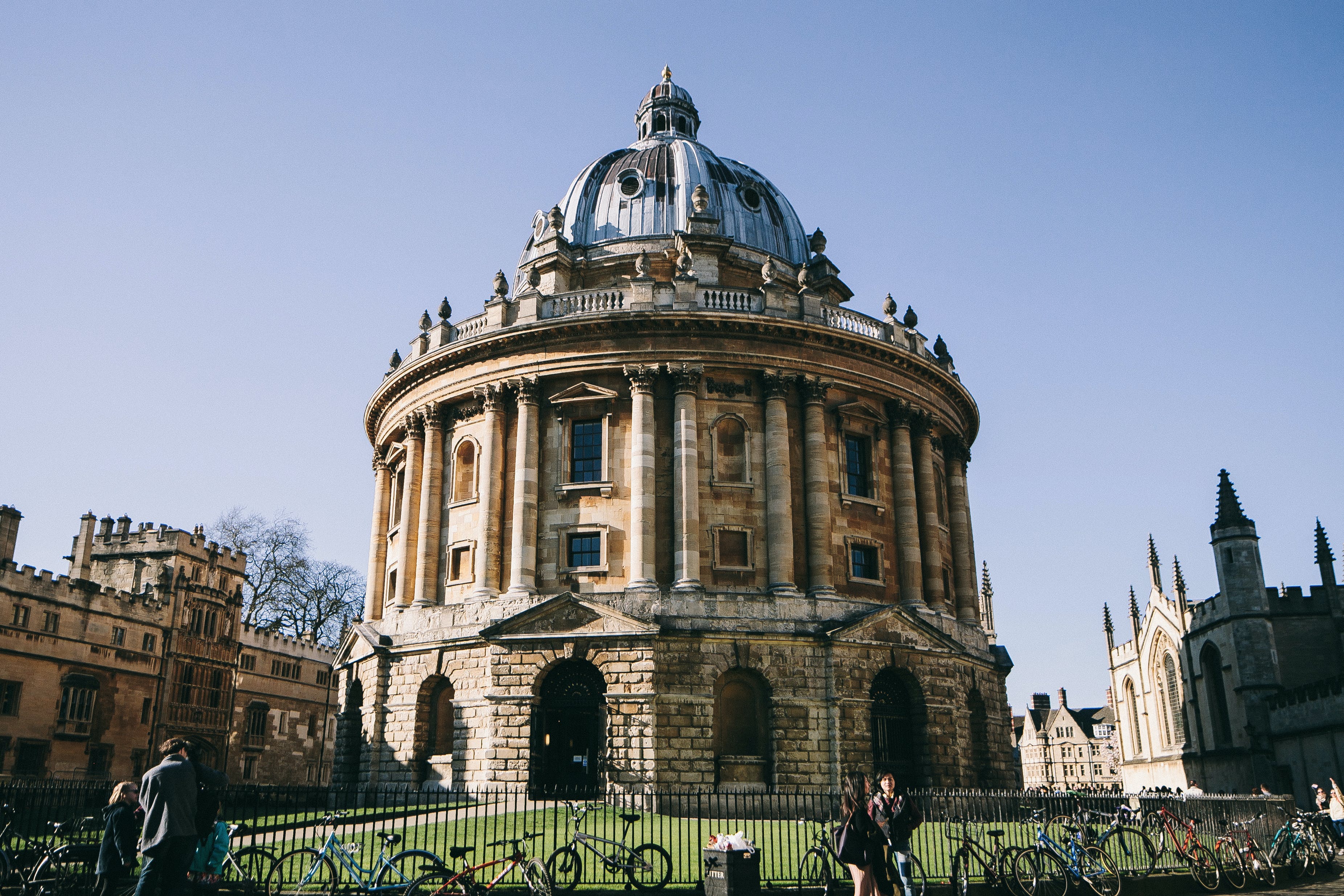
I spent the rest of the week in the UK, including two days on site with a client in Oxford, helping them to chose a platform for their new intranet. We’re now at the stage of the programme where we’re drilling down from bold ideas to thorny details. I love this bit, where we have to do the detailed thinking on how to make ideas a reality in messy, complicated organisations.
Connections
I drafted my 100 People list for the year. For the seventh year I’ve put together a list of people I’d like to catch up with – an idea I borrowed from Mary McKenna. They’re all business associates, former colleagues, or people in my wider professional network. Some are people I’m connected with online but have never met.
100 People started as an experiment in working my network, but now I no longer live in London I’ve found it’s a great way to be a bit more intentional and disciplined about keeping in touch with folks.
And that’s exactly what I did this week too, ticking four names off my list while I was in Britain this week, via excellent chats about comms, content, the future of work, and digital transformation.
Finished Marie Le Conte’s Escape: How a generation shaped, destroyed and survived the internet. It’s a memoir, but really it’s a paean to the internet as it was, when it was a secret space for us socially awkward weirdos. Le Conte takes us on a journey through the platforms and main characters of nascent social media. Over time that’s shifted from a space we went to escape real life, to being a force that shapes real life. Often in negative, destructive ways.
I sometimes think about stepping away from it all. Deleting my accounts. Moving to a paradise island. But like Le Conte, I couldn’t if I tried.
“I was born and bred online,” she writes in the introduction, “and if you remove the life I have led on there, it leaves me with no life at all.”
Hard relate.
Also finished The Last Mughal by William Dalrymple. A book about the fall of the Mughal Empire, focusing on the events of the 1857 rebellion against British rule. I started reading this while I was in India in November/December as I wanted to understand a bit more about the context and history of the places I was visiting; specifically the Red Fort, the fact that there isn’t a huge amount of Old Delhi left to see. But it was a bit heavy going to it took me a while to finish it.
It felt like a cautionary tale on the long term consequences of political figures manipulating religious and cultural differences to deepen and capitalise on societal rifts. A reminder – side-eye at politicians worldwide – that manipulating divisions for short-term political gain can have an impact that shapes societies for generations.
Something I learned
The first webcam was created not for security, or comms (or by a man broadcasting their hospital parts to strangers on the internet).
In 1991 Cambridge University scientists set up a camera to broadcast the state of the coffee pot in their computer lab, to help colleagues avoid the disappointment of schlepping down there only to find it empty.
I stumbled on the story of the Trojan Room Coffee Pot when looking for examples of employee-bodge solutions driving innovation.
When we do discovery exercises with organisations we always find a bunch of seemingly bonkers tools created (usually in Excel) by an enthusiastic employee who left years ago, yet still in regular use and often business critical.
The coffee pot cam and intranet-in-Excel are examples of employees identifying a real user need and using whatever tools they have at hand to meet it. I’ve been pondering the Workplace Bodge and the ways in which giving employees tools (eg no-code workflow builders) could help – or make it all so much worse. On the backlog of blog posts I might eventually get around to writing.
The quantity not quality approach to New Years fireworks here in Amsterdam
Inspired by Ann Kempster’s efforts, and having promised myself I’d write more this year, I’m going to start sharing a bit more about what I’m doing once a week or so*
* until I inevitably get too busy, or forget.
The new year arrived here in Amsterdam as it traditionally does… by making the city sound like a war zone. While other cities have one spectacular, giant firework display for people to gawp at, here in the Netherlands they have thousands of considerably less spectacular anarchic ones. For days leading up to oud en nieuw you’ll hear fireworks being set off everywhere, in an auditory scene redolent of Sam Mendes’ movie 1917.
12 children are reported to have lost a hand thanks to oudjaarsavond fireworks this year.
My hearing returned roughly when my New Years hangover lifted sometime on 2 January, as I pulled together my round-up of 2023.
From Wednesday I eased myself into work slowly after the festive break. I began with the Opening Of Teams And Outlook. Working with multiple organisations at a time gives one the opportunity to compare their cultures and ways of working, and this was just such an occasion. I’m currently a member of four different Teams environments. I opened each, gingerly, in turn in their respective Chrome profiles.
One: Not a peep from anyone in over a week Another: A bunch of emails and Teams messages, including some sent on Christmas Day itself
Yes, to a degree that’s a reflection of both local/national cultures (not everyone celebrates Christmas), but the online culture of work is led from the top. If people see leaders sending emails and messages over the holidays, they’ll feel pressure to do the same.
My tip: feel free to work when’s best for you, but if you’re a leader or manager then use that schedule button and send your message in regular working days/hours, to encourage healthy working habits in those around you.
(full disclosure: I used to be absolutely dreadful for all-hours emailing when I was in-house. If you worked with/for me back then, I’m sorry).
By Thursday the break was a distant memory as projects picked up in earnest.
Some stuff I did this week
Finished a ‘comms and collaboration playbook’ for one client to help them get the most out of Teams/M365 by aligning on agreed ways of working. Microsoft don’t help their users by offering at least three different ways of doing the same thing, all with same names. And which they keep changing. I work with this stuff day in day out, and even I’m confused a lot of the time.
On the plus side, Jon accidentally discovered live gesture reactions on a Teams call this week, putting two thumbs up and accidentally injecting a firework display into a client call. To give Microsoft credit, it was both more impressive and a hell of a lot safer than your average Dutch display.
Got back into the weeds of work on an intranet programme, looking at some of the gnarly governance questions.
Landed an interesting speaking gig for later in the year. Not a bad start to the year, work-wise.
Connections
I haven’t yet written my 100 People list for 2024. But I had a couple of good not-work-related-but-kinda chats this week.
A nice call with a founder who’s interested in building something in the digital workplace space (I love geeking out on this stuff),
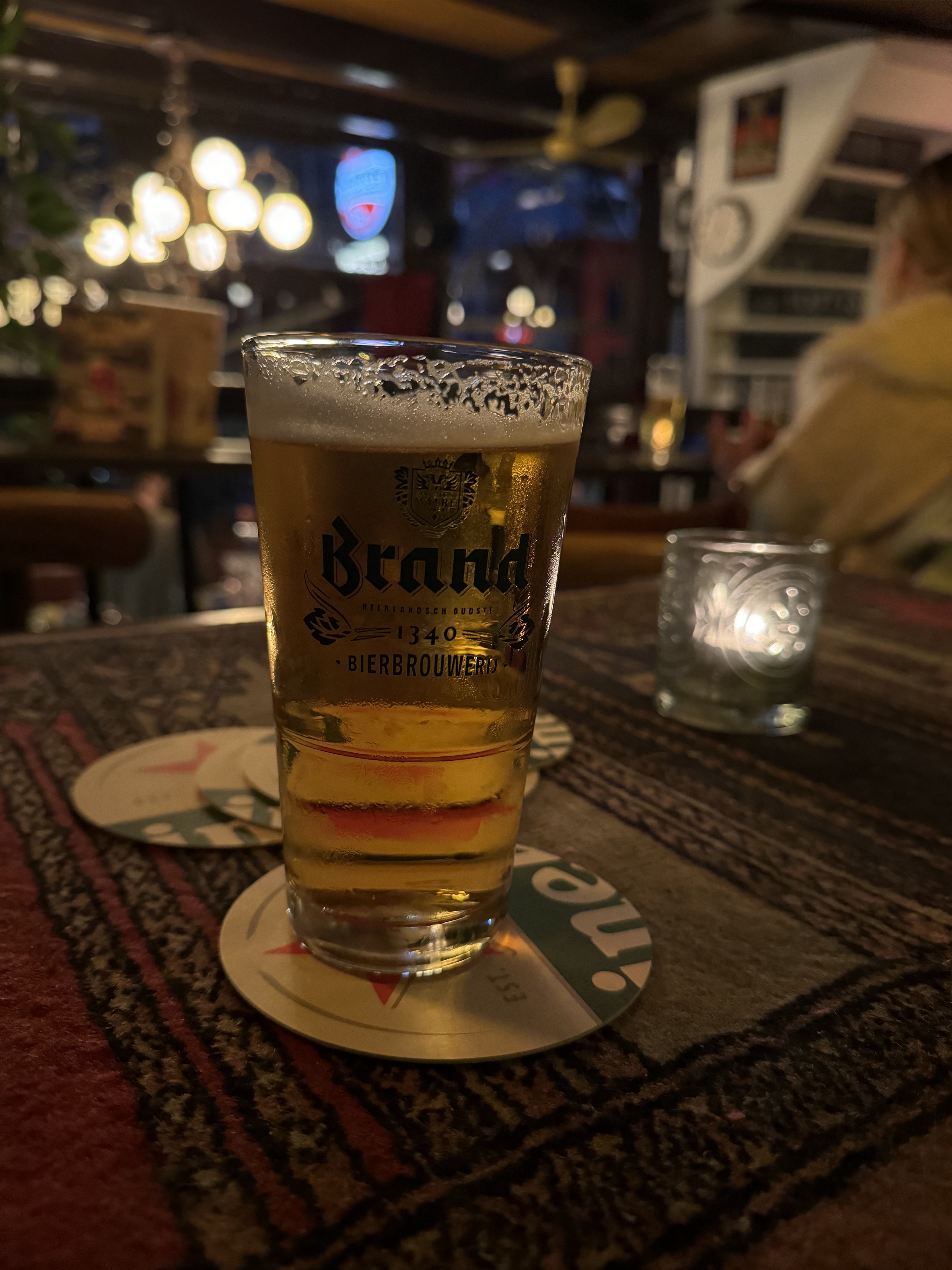
A splendid irl catch up with Cate McLaurin over beer and ribs.
I’m in London and Oxford next week. I’ve already got a couple of catch-ups booked in for while I’m there; if you’re around and want to catch up, give me a shout and let’s see if we can find time.
What I’m reading
Friend and regular Lithos Partner-er Lisa Reimers bought me Marie Le Conte’s Escape for Christmas. I’m about halfway through and enjoying it very much so far. It’s interesting how much is relatable, as someone who’s been extremely online from my early teens… and yet how different some of it is to my own experience as someone a good decade older, joining the party when the internet was a very different place.
2023 was a year of growth. Not literally – I remain, wearyingly, below the 5ft mark – but personally and professionally it was a good year.
Q1: Spinning plates
Towards the end of 2022 the work diary was looking a little barer than I’d like for the start of the year, so I said yes to a gig that I would otherwise have turned down, and invested some time and money in launching our new product, DWXS.
Naturally, no sooner had I started both than other juicy, rewarding projects turned up. So the first few months of the year was a crazy busy whirlwind of long days and weekend working, juggling clients and contractors.
My main focus in the first quarter was a discovery project with a thorny client that just the right level of challenging. We were really proud of the of the work we did – and rightly so, as we were quickly asked to partner with them on a few overlapping digital transformation workstreams. That’s kept us busy all year. On the plus side, that’s means I’ve felt more confident declining work that’s not a good fit, but it’s also meant I’ve not had the bandwidth to spend as much time as I’d hoped on DWXS.
Q2: Disconnecting, entertaining, Interrailing
After the craziness of the first 11 weeks of the year I badly needed a break. So I booked myself, last minute, on a group tour in the Philippines. It promised escapism and it delivered that in spades.
By day 2 I was headed for a private island which had no electricity or phone signal. This is exactly what I – someone who is terrible at switching off – needed. I took my Apple Watch off and let my 1500-day move streak finally end. Even I was surprised how liberating it was to finally break the clutches of my wrist-based prison guard. I jumped off the side of a boat into the clear, warm sea. I read. I ate. I laughed. But mostly I did absolutely nothing, and that was enough.
Ignoring my notifications in the Philippines
I spend my life pointing at PowerPoint, so I signed up to do a turn at a slideshow-based comedy night. I was more nervous than I’ve been over any professional speaking I’ve ever done, but I only went and won Best Act. Here it is if you’re interested.
Back in 2022 I bought an Interrail pass in the sale, feeling guilty about the number of flights I take and resolved to use lower-carbon transport where possible. With the expiry date impeding I did a badly-planned, disjointed rail tour. A few observations:
The idea of digital nomadding by rail is far better than the reality. I got a lot less done working on a train than I hoped to.
The German reputation for train efficiency is entirely undeserved
It’s striking how I can turn up to my local station, Amsterdam Centraal, and jump on a train to almost anywhere in Europe… except the UK, which demands passengers arrive 60-90 mins early, go through passport control twice, and waste time drinking vending machine coffee in a depressing waiting room. I’m not sure I could find a more perfect illustration of the UK’s self-defeating isolation from its neighbours.
If you have an address outside the UK, an Interrail pass is a great hack for the UK’s overpriced train tickets. The saving on a single, last-minute journey from Wales to London was over half of the cost of my two-month Europe-wide pass.
Would I do it again? Maybe, but only if I had time to plan it better.
One of many sub-optimal work-from-train setups I had this year
Q3: Teamwork
My business partner Jonathan Phillips and I work brilliantly together. Arguably a bit too well. On client calls we know exact what the other is about to say. Sometimes we’ll open a collaborative document and start writing exactly the same thing. Recently I sent him a slide I’d done to illustrate a web of relationships between different elements of a programme, only to find he’d created something almost identical at the same time.
We worry we’re in danger of failing to challenge our own thinking. And because we’re so aligned, when we bring others into the team we need to work harder to intentionally communicate our expectations. We’ve not always got that right in the past.
But Q3 was where it seemed to fall into place. A couple of chunky projects demanded we really beef up our team, bringing in experts on digital skills, training, user research, content strategy and adoption. We’ve worked with some brilliant and talented people over the years and love it when we have the opportunity to bring people we trust and respect into our client work. Expanding our team rapidly forced us to rethink the way that we plan and share our work, to delegate more, to share more consistently.
All of that meant that while Q3 was even busier than Q1, I shared that burden with a great team and didn’t end up burned out at the end of it.
Q4: Travelling, connecting, celebrating
The final quarter of the year started much like the others: at an airport. Kicked off with a new client in New York, which afforded me the opportunity to catch up with a few NY-based pals while I was there. Took a side quest to Philadelphia and ended up getting interviewed by Fox News.
On the ‘Rocky Steps’ in Philly
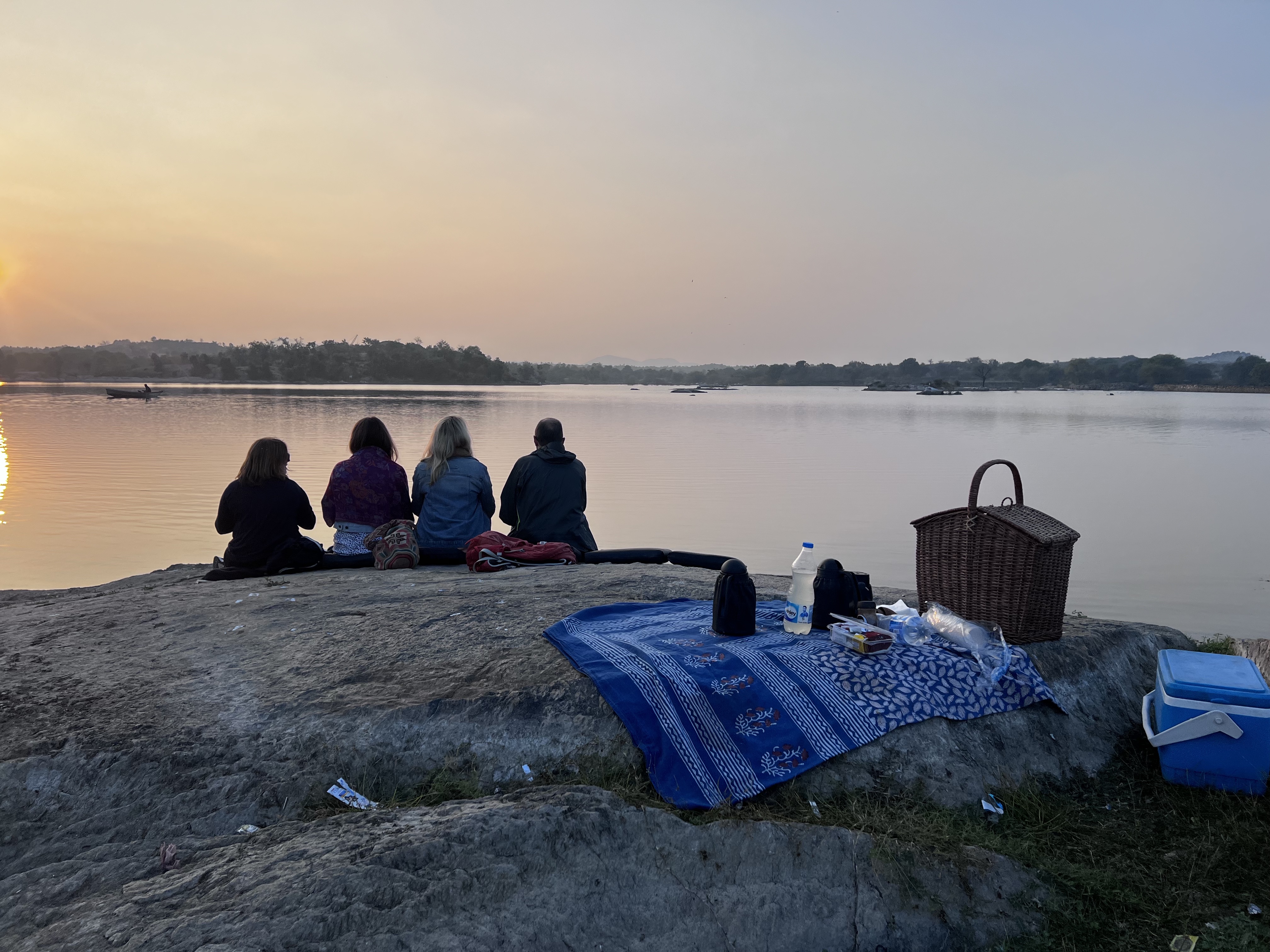
In November my husband and I celebrated 20 years together. He’s the best. Being an unconventional couple, after marking the event at home in Amsterdam we headed off on holiday… separately. I spent a little under a month travelling around India. Watched the cricket cup final with a tense crowd in Mumbai, worked from poolside in Goa, joined Hindu devotees waiting for sunrise on the beach, ate my way around old Delhi by tuktuk, took a Bollywood dance class, cycled in Jaipur (which I do NOT recommend), rode a camel in the Thar desert, took a train through rural Rajasthan, drank masala chai in the sunset in Udaipur and caught up with old friends in Bangalore.
For the 6th year in a row I had a list of 100 people I hoped to meet before the year was out. A mixture of former colleagues/business associates and online connections. I managed 53 catch-ups across 10 cities, which is less than I’d hoped, but every one of them left me energised and my mind bubbling with new ideas.
I’ve never been much of a planner. But a combination of sheer dumb luck and a few good decisions have given me the opportunity to do work I enjoy, with people I like, to live where I want to, given me a brilliant support network of friends and family, and allowed me to travel the world and see some incredible things. And for that I’m incredibly grateful.
I hope to see more of the world – and of you – in 2024.
Here’s my year in daily one-second snapshots
2023 in quant
Flights: 42
Trains: 22
Countries visited: 12
Cities visited: 22
Hotels stayed in: 36
Events spoken at: 7
Comedy gigs: 2
Podcasts: 1
Times voted: 1 (Dutch water board elections – there’s no vote too provincial for for me to get excited about)
Spin classes: 114
Weight lifted: 100kg
Weight lost: -2kg (the food was too good in India)
UK businesses face a perfect storm in the months ahead. The Brexit transition and pending deal means UK businesses must find their footing in a new—and currently uncertain—era of international trade. And at the same time, the crisis caused by Covid-19 shows little sign of abating, leaving a trail of economic impacts and forcing changes to the way that we live and work forever.
So firms face an almighty challenge; they must fundamentally adapt and find new ways to remain competitive at a time of unparalleled disruption. But how?
Having written about the factors businesses need to consider as they adapt previously, I was interested to see Microsoft’s latest report Creating a blueprint for UK competitiveness. This comprehensive piece of research looks at what it takes to compete in a post-COVID, post-Brexit world.
They partnered with an independent team of economists and researchers, led by Dr Chris Brauer (Director of Innovation at my alma mater, Goldsmiths, University of London). Through extensive qualitative and quantitative research, they uncovered the need for a new model of competitiveness.
Among the report’s recommendations, they focus on the need to shape a new world of work. They outline two potential paths to growth, which resonated with me and the work I’ve been doing this year.
Path 1: ‘Hollow Growth’: cost reduction with missed opportunities
The first path, which the report calls Hollow Growth, is characterised by a focus on cost reduction. While a switch to distributed work presents the opportunity for huge real estate savings, if businesses focus on savings alone, they’ll miss this chance to radically reshape the business.
When it comes to future readiness, hollow growth organisations are notable for:
rigid organisational structures (which, as I blogged about previously, are a barrier to strategic delivery in a remote-first world)
minimal support for workers when it comes to adapting and re-skilling for the future
basing forward plans heavily on the past, for example by sticking to traditional measures of productivity and ignoring less tangible outcomes like agility, resilience and culture
failure to use technology to optimise individual functions and services
Path 2: Sustainable Growth (or ‘Sustainable Growth’: finding strategic advantages to bring real transformation, over cost reduction)
As a counterpoint to the earlier short-termist approach, the report outlines an alternative, sustainable path to growth. One which:
focuses on organisational resilience
nurtures and grows the culture of trust, empowerment and inclusivity—essential to scale distributed ways of working adopts leadership defined by both empathy and decisiveness
Sustainable Growth organisations prioritise real transformation over cost reduction alone. This part of the report chimed with me, reflecting many of the points I’ve made about leadership, strategy and skills for example.
The Sustainable Growth model the report outlines provides a useful model for organisations looking to turn flexible and distributed work into a driver of strategic advantage. With a focus on people and culture, employees are empowered to work flexibly and supported to learn new skills.
Similarly, the Sustainable Growth model takes a more mature and (small ‘a’) agile approach to digital, embedding it into the heart of the organisation. This means tools are transitioned to quickly and systemically, making the organisation fit to respond to new challenges and opportunities when they arise.
But given the uncertain-looking future, companies want and need those cost savings, as does the economy. Can the Sustainable Growth model deliver? The authors certainly think so.
The report paints a powerful picture of the benefits of taking this sustainable path. The Goldsmiths researchers calculate that if, supported by the government, every UK organisation adopted a more sustainable growth model and achieved a small, incremental increase in their competitiveness, it would deliver a boost to the national economy of £48.2 billion.
It’s clear UK businesses will be put to the test like never before in 2021. Competitiveness will be critical in the short term as businesses fight to stay afloat and remain relevant. But a laser focus on sustainable growth is essential for the long term too—yielding a long-term impact on organisational performance that’s positive for people, communities and our planet, as we grow our economy out of crisis.
With the landscape moving so quickly, Matt and I spent some time last week working through the remaining themes we identified as priorities for organisations that want to make remote an enabler of (rather than a barrier to) delivery of their strategy.
In our first post we looked at systems, structure, shared values, skills and roles and strategy. Take a look.
Now we turn to the final four themes
Spaces
For a long time, offices – like factories before them – where were you accessed the equipment necessary to get work done. The availability of cheap laptops and ubiquitous broadband means this hasn’t been the case for at least a decade.
Nonetheless, offices continued to be the primary place of work because of their secondary purpose; the belief that bringing people together in the same place helped to foster collaborative working. Rows of open plan desks gave way to mixed environments offering impromptu meeting spaces to facilitate this. Even the most digital of companies such as Google and Facebook continued to encourage employees to come to the office in order to foster innovation.
Covid changed all of that, forcing all to figure out how we can work individually from home. In the past 10 weeks we’ve used collaboration tools to try re-create the in-person interactions we had while working in the physical office.
Spaces are now sitting empty, and people are wondering what we do with them next. There’s an assumption that we’ll continue to work at home for individual tasks, with offices being re-configured for more collaborative in-person working such as workshops once this is all over.
However, early indications suggest that assumption could be some way off the mark. Social distancing rules dictate that even where offices are being re-opened, meeting rooms and breakout areas need to stay out of bounds. A room that could have hosted ten is now strictly capped at two. How do you manage a group brainstorm around the whiteboard while keeping everyone two metres apart?
You don’t. You need to do what Matt and I did for this session and find ways to do this online.
(We used Miro, a tool we’ve both become evangelical about in recent weeks, because it allows you to do things collaboratively with people in a way that you can’t do in physical space, focusing conversation yet making it possible to integrate other media. It’s what hypertext was supposed to be.)
People will need to learn how to use such tools for virtual collaboration. But putting collaborative tools into the hands of every employee democratises them and, in turn, drives up the quality of collaboration. Especially when compared with scarce physical tools such as interactive meeting room whiteboards.
And once these skills and habits have been gained, it leaves open the question of what physical workplaces are actually for.
But physical spaces serve other purposes. These include:
Access to specialist equipment: clearly a research scientist is not going to set up a complete lab in their spare bedroom
Status symbols: those big glass towers making up some of the world’s most expensive real estate in New York, London and Hong Kong send a clear message about your brand and stability
Proof of life: for smaller companies, a physical office is considered evidence you exist, helping to build trust with customers
Grounding in the community: this is especially true for local businesses, public/voluntary sector organisations or those with a longstanding connection with place
Additionally, there will always be some people who can’t – or don’t want to – work from home. For example someone living in crowded accommodation with children at home.
So organisations shift to remote or distributed work, their use of physical space will change but not disappear. The focus will move to supporting smaller numbers of staff with specific needs for office space, and those secondary purposes listed above. Office space – and the roles supporting it – becomes a cost to be minimised.
This has some potentially huge second-order effects for property markets and for cities. WeWork’s business model looks even more precarious than it was, as corporate tenants retrench from secondary spaces on short leases to their owned properties. At the same time, we could see the rise of local co-working hubs providing office space for those who need it without the long (and in these socially-distanced times, potentially dangerous) commute. The Irish community organisation Grow Remote provides a useful model here; they champion physical and virtual hubs to those working remotely diverse organisations benefit from connection with one another and with the communities in which they’re based.
One outstanding question is what, if anything, replaces the function of the building as a signal of prestige. What’s the digital equivalent of the client floor or the tower projecting its logo across Hong Kong’s harbour?
Corporate communications
Organisations and their leadership need to communicate to their people about their goals, values and progress. They want to align employee action with their purpose and objectives, and keep people engaged and informed.
In the past couple of decades the internal communications profession has moved away from a top-down distribution role to one of curator, controller and advisor. They understand what is going on in the organisation at all levels, ensuring that employees are in the loop, and facilitate two-way conversation between employees and leadership.
Covid has forced corporate communications into crisis mode. The priority has been to keep people informed about what their employers are doing to keep them safe, keep customers happy, keep people in work and ensure the business stays solvent. And at the same time, many of the most effective tools in the communicators’ armoury aren’t available, like the old-fashioned poster and digital signage.
The result has been an overwhelming shift to broadcast channels. In a straw poll during my keynote at last week’s Brussels Digital Workplace Event, 87% of attendees said they had relied especially on email and 82% on a traditional intranet to keep employees in the loop. But at the same time, organisations have had to more actively listen to what employees, using things like sentiment analysis.
As organisations shift to this New Abnormal, corporate communications can’t simply go back to what they were doing pre-Covid. Instead, they need to redesign their channel architecture and content strategy around the needs of employees who rarely come into the office.
That means:
Understanding employees’ need for communication, and taking a user needs focused approach to designing and delivering it
Offering a mix of push and pull channels, so people receive the information they need, but also have the means to find what they want and be confident it’s accurate
Finding ways to cut though the (now somewhat overwhelming) noise and ensure what people get is relevant and timely. This could mean borrowing techniques from digital marketing and using data to target employees effectively. But equally, it could mean looking at how messages naturally propagate within organisations – via the grapevine – and hacking that.
Finding the right balance between listening to employees and understanding what they want, without surveiling them
Getting this balance right means relying less on copying best practices, and rather on understanding employee needs, experimenting with new approaches, and seeing what gets cut through. All of that requires a more robust approach to measurement.
Organisational communication
Related to this – and often using the same channels – is how people within organisations communicate with one another to get work done.
In a physically co-located team, communication is implicit. That is, you pick up on conversations happening around you. You can lean over the desk and say “Hey, Dave, are you working on this? Do you know where this file is? Can you tell me the latest on this customer?”. That communication is largely synchronous, in that it happens while you’re both in the room, and much of it is tacit; we communicate without even thinking about it, through our body language and tone.
In recovery mode we’re still working synchronously, but we’re having to work much harder to do that, and be more deliberate. But that’s exhausting. It also demands more of our energy and attention; Zoom fatigue is a very real phenomenon.
Making this work long term means retaining that explicit, deliberate communication, but adapting it to be less time-consuming and attention-demanding by embracing asynchronicity.
That means mixing up modes and channels, using interactive channels (like Miro) or collaborative documents, rather than video feeds.
Embracing asynchronous working has secondary benefits, too. It means more knowledge and conversation is committed to corporate memory, and allows people to work more flexibility across shifts or time zones.
To shift to asynchronous communication and collaboration in order to become truly remote-first, organisations need to give people training, coaching and time to experiment with a flexible suite of tools.
Support
Organisations offer support to employees to get their work done – from providing transactional services to troubleshooting issues and problems with equipment, facilities, software and so on.
Traditionally this is offered on a tool-by-tool or service-by-service basis, meaning the overall support landscape is as fractured and siloed as the organisation itself.
In a traditional workplace this is augmented by informal support. People will turn to a longer serving or otherwise helpful colleague to help them resolve problems.
Shifting to home work has left employees reliant on digital channels to get work done, but often struggling to access help to resolve problems or learn new systems, as colleague support is unavailable and helpdesks overwhelmed.
For organisations to turn remote work into a strategic advantage, they need a greater focus on supporting employees to be engaged and productive. They need to understand that employees are reliant on a complex and fragmented set of tools to get work done, and when these aren’t working employees are left frustrated and productive time is lost.
This means:
Replacing fractured single-system help with a concierge approach focused on unblocking problems for the user quickly
At the same time, helping employees to build their digital skills and confidence to use the tools they have and resolve their own problems
Consider the overall digital employee experience and, where possible, streamline and simplify this so it’s designed around the needs of staff and not the structure of the organisation
Build informal support networks to help resolve issues and unblock problems, and to share advice and learning with one another as it’s learned
Managers understanding the role they play in unblocking barriers and creating a successful work environment – and leading by example
On reflection, it makes sense to roll this into the ‘Roles and skills’ theme we covered in the last session.
Conclusions
Across all of our themes there were some clear principles:
Re-thinking how work gets done rather than translating existing office-based ways of working to digital channels
Taking a user needs-focused approach, understanding barriers to effective distributed/remote working and how these can be ameliorated
Helping people build their skills in communication and collaboration so they can embrace asynchronous working
Trust underpins all effective remote working. Organisations must look at how this can be built and sustained at scale and for the long haul.
In his WB40 podcast, Matt talked to Dave Coplin about his recent research. Coplin found trust for managers in their employees was important, but so too was trust in peers. Managers need to know that work is being done (and done properly) and employees at all levels need confidence that their peers are pulling their weight too.
Measuring productivity in knowledge workers is notoriously difficult. Very little work can easily be attributed to outcomes, forcing us to measure outputs and throughputs instead (particularly in public sector organisations, where there may be pressure to demonstrate value for money). But such measurement is largely inaccurate (as anyone who receives weekly emails from Microsoft’s MyAnalytics can attest) and open to being gamed.
Striking the right balance between demands for productivity monitoring, sentiment analysis and creepy employee surveillance presents one of the first thorny challenges organisations face as they move from recovery mode to the long haul.
The two whiteboard sessions enabled us to evolve our model a little. Here’s version 2. It’s still a work in progress and we’re keen to get your thoughts on how it can be improved. Let us know in the comments.
Last year I did a couple of conference keynotes on the future of work. I’ve been working with intranets and digital workplaces for about 15 years; over the past 18 months or so I’ve come to realise that for digital tools to work for people – and for them to truly add value to organisations – they need to be designed not for work as it is today, but for what will be tomorrow.
My talks looked at the trends that make up Future of Work discussions. The decline of the employer-employee relationship; the rise of portfolio careers, gig working and transactional working relationships; changing demographics; and the mainstreaming of AI at work. And the end of the office as we know it as ubiquitous high speed broadband means talent can be tapped into regardless of location.
My rallying cry was: “but these aren’t trends for 10 or even 5 years time. They’re already a lived reality for millions, and they will be for you too soon, so you’d best get ready.”
Little did I realise quite how soon that would happen.
In March COVID-19 forced a sudden shift in how we work, with social distancing closing offices and schools worldwide.
Those organisations who adapted best to being ‘suddenly remote’ were those who already had the tools, culture and practices to make that shift quickly and seamlessly. Smaller organisations, and particularly startups, found this easiest. Those reliant on legacy tech – predominantly larger organisations in regulated industries – faced teething problems such as limited VPN capacity and employees shifting to shadow IT (in particular Zoom) to get things done.
But several weeks on organisations of all sizes have settled into this new way of working… and realised that it works. Assumptions about who can and can’t work remotely have been crushed in this great homeworking experiment.
While lockdowns will eventually lift, the remote work genie isn’t going back in the bottle. This briefing note from WeWork unwittingly highlights the unsuitability of office environments in an era of social distancing. It’s clear the world of work will look very different for a long while, and perhaps forever. Barclays, for example, has already announced a review of how they use office space in the future.
Organisations are moving on from ‘recovery mode’ and beginning to look at what their own future of work looks like. What can they learn from this period of mass, enforced home working? What do people value? What are the challenges? And, critically, what are the opportunities?
Last week Matt Bannatyne kicked off a discussion online on what the world of work could look like. We kicked around some ideas with some interested folk in a collaborative document.
Tools for remote working are standard these days, but we know from our work that the strategy, culture, and practices to make the most of them often lag some way behind.
We asked: what does work look like today? And what does it look like for organisations who are truly remote-first?
First, we identified the characteristics of work in three stages of remote working maturity:
Pre-lockdown: the old BAU
Recovery mode: building immediate capacity
Growing through remote: using the benefits of remote for competitive advantage
We’d like to evolve this further so it can be a useful model for organisations to understand their current capacity for remote and understand what they need to do to become truly remote-first. What questions do we need to ask to assess current capacity? Are there themes we have missed?
This is a work in progress and we’re keen to get your feedback. Let me know your thoughts in the comments below.
Working with digital workplace teams I find myself looking at the intersection of people, technology and culture. In my view the digital workplace both enables changes to the way we work and reflects changes that are happening elsewhere, driven by technology and society.
For example, while digital workplace technologies can enable flexible and mobile ways of working, it’s changes to work patterns and expectations that are driving the demand for flexibility.
Many services that we use outside and inside of work are becoming smarter and more targeted.And as consumers we have begun to expect smart, intelligent and delightful systems and interfaces at work as well as at home.
Last year I began looking at how Artificial intelligence can streamline and simplify the digital workplace. As I researched more I realised its impacts on the world of work are likely to be far more wide-reaching.
Lots of repetitive tasks and analysis type of work could conceivably be done by AI in the years to come. And that, in turn, will change almost every profession. This year I was invited to join the CIPR’s Artificial Intelligence Panel to look at the impact AI will have on my own profession, communications.
The Bank of England caught some flack recently when Business Insider learned they’d spent almost £3000 on a Snapchat filter to promote the new £10 note.
The filter, which let Snapchat users overlay their selfies with the new note, was made available in seven cities around the UK, promoted by the Bank’s governor Mark Carney.
This struck me as a bizarre choice of ad spend for our central bank. Do banknotes really need promoting? Are they trying too hard to get down with the kids? Or is it just me – rapidly approaching middle age – who doesn’t get it?
So I followed up with a Freedom of Information request, hoping to find out why they chose this channel, and what increase in awareness the filter delivered, so I could better understand where Snapchat might add value for the businesses I advise.
I finally got a response to the request this week, a day after the statutory time limit elapsed. This doesn’t suggest a great commitment to transparency.
Shockingly, the answers to the questions I posed raised more concerns, not just about how they used Snapchat, but about the setting of outcome-based objectives in communications planning and execution. It appears that:
the BofE didn’t put together a business case for use of Snapchat
didn’t set any objectives for it
and haven’t evaluated its effectiveness
at least they didn’t spend a lot of money designing it
While this was a relatively small amount of money, what was more concerning than the potential waste of public funds was that the BofE lacked a robust, costed and measured campaign approach for their most high-profile launch this year.
Let’s take a closer look at some of the issues this raises.
Objectives
A campaign without an objective is not a campaign – it’s just some activity. Campaigns set out clearly what they’re trying to achieve, who they are targeting and how impact can be demonstrated. This, in turn guides the choice of channel and format and the allocation of spend across the channel mix.
“Raise awareness of the new £10 note” is an objective, but it’s not a very good one.
I’ll confess I find the idea of promoting a note that people have no choice about using absolutely baffling. I can understand them doing some PR on the new(ish) polymer maybe, or on the note featuring a woman (Jane Austen) after a controversial campaign. But not to simply tell people it exists. That’s what prompted me to ask for campaign objectives – but since they don’t exist, I’m none the wiser.
Did they have research to show that there needed to be awareness raising for a new note? Have they defined what awareness means in this context? What baseline are they measuring against?
You have to understand the current state of play in order to plan your response to it. This doesn’t seem to have happened here, which leaves the BofE without an effective basis on which to define, plan or measure success.
Better might be “To achieve 50% awareness of the new £10 (measured through surveys) by 31/09/17” as this is specific, measurable, achievable, realistic (when based on my fictional baseline) and time-bound.
Audiences
In their reply, the BofE told me “social media plays an important part of the Bank’s efforts to reach a broader range of people through non-traditional media.”
For fiat money to have value it needs to be accepted as a medium of exchange. That means it needs widespread acceptance across all age groups – and given the ubiquity of social media use among younger age groups, it makes sense to use it to reach them.
So why Snapchat? While the BofE hadn’t produced a business case – although I’d argue the email exchange in which this decision was made would count as one for the purposes of the FOIA – they did tell me:
“One of the reasons this was chosen ahead of other ideas was because a large percentage of Snapchat users are within the 16-24 demographic, which was one of the groups the Bank was keen to target within the overall campaign.”
Again on first glance this seems sensible. Having highlighted the need to target younger people, taking the message to the platforms, channels and communities where that audience segment is active is exactly what you should be doing.
But the beauty – and many would say the point – of paid social is the degree to which advertisers can use it to target audiences. While Snapchat’s targeting options aren’t anywhere near as granular as Facebook’s, they do enable targeting by demographics, interests and behaviours, as well as devices. Done properly this provides an effective and measureable way to hit their target of 16-25-year-old Brits.
Targeting
For those not familiar with Snapchat, it has a handful of ad products:
Ads: These are short vertical videos. According to research from Millward Brown Digital these are shown to boost brand favourability and mobile purchase intent – which explains their popularity with FMCG and lifestyle brands. There are ‘swipe up’ subcategories to drive web views, app installs and so on. In the course of this campaign the BofE spent £7250 on Snapchat video ads, but it’s not clear if these were targeted at particular demographic groups.
Filters: These allow users to add a graphic frame around a photo or selfie, which can then be made available within a specific geographic location or nationwide. KFC have had huge amounts of success with these, making the Colonel Sanders lens available only to those physically in or near their outlets – driving a 600% increase in footfall.This is the ad type BofE spent £2,819.28 on, and to which my FOI request refers.
Lenses: This is what comes to mind for most people think of Snapchat. Brand-sponsored lenses, active for 24 hours, allow users to interact with the lens and by opening their mouth or raising their eyebrows make their own funny, shareable video. These require significant investment to create and run, and typically are run nationally. And they can pack a punch; the Taco Bell Sponsored Lens received over 224 million views. Snapchatters tend to play with Sponsored Lenses for an average of 20 seconds. Think about that: while on most platforms people hate ads, people on Snapchat go out of their way to “play” with ads. So in terms of bang for buck, Lenses are pretty bloody good.
Which makes the decision to target by geography using lenses the most baffling element of the Bank of England’s approach. If the aim is to drive awareness among a broad demographic group all over the country – why make this available only in tiny geographic areas?
And why these areas? If I were to pick places where 16-to-25-year-olds hang out, I wouldn’t choose Borough Market or Winchester Cathedral. Piccadilly Circus was another location chosen. If they’d ever been there, there’d know it’s hardly teeming with young adult Brits on a Thursday (14 September, when the lens was live, was a weekday).
If the aim was to target young people, why not do it properly and develop a lens? Or make the geofilter available across the whole of the UK?
Given the miniscule ‘geofences’ they created for this campaign, the tiny budget allocated (relying on people on-sharing for reach), and the weekday timing, I’d argue they did this to say they’re doing something new and innovative, rather than as a serious attempt to use Snapchat to engage large numbers of under 25s. And that’s a missed opportunity.
Metrics
Communicators should consider outcome-based metrics right at the start of campaign planning, to ensure evaluation is built in before a single asset is produced or shared.
Again, the BofE have fallen short here. While admitting they “do not hold any ‘evaluations’ for the specific Snapchat geofilter”, the BofE did reveal their approach to measurement.
“progress against the educational campaign’s main objective was measured by independently run surveys of awareness amongst the general public, which showed that the level of overall awareness of the new £10 note increased over the duration of the campaign”.
Surveys aren’t, in principle, a bad way to measure awareness levels. But unless combined with additional approaches they tell you nothing about the role of the campaign in driving any increase in awareness (versus people simply becoming aware through, say, receiving the new note in change). To get a broader picture of campaign effectiveness this could have been combined with secondary metrics looking at advocacy and impact. For example:
Are people talking about the new note on social media?
Are there differences in volumes of queries about the note among groups who have seen the campaign versus those who did not?
Channel metrics are meaningless unless these are mapped against business objectives. We need to move away from outputs like impressions and look instead at outtakes and outcomes – that is, the stuff that actually matters. AMEC provides a useful, robust framework with which to do this. As a public body the BofE should also have followed the GCS OASIS framework. It’s not clear why they haven’t.
Value for money
Awareness surveys tell us nothing about the performance of any particular channel or asset, which makes it difficult to see whether Snapchat was a good use of resources. They did, however, share this insight:
“the Snapchat geofilter was used 1,415 times, earning 101,000 impressions”
What this does reveal is a spend of £1.99 per Snap and 2.8 pence per impression. Impressions are just vanity metrics, as they don’t tell you anything about whether the audience understood or recalled the message. But using the more common ad industry standard, this works out at a whopping £27.91 CPM. This is astoundingly poor value for a brand awareness campaign compared with other online display ad formats and platforms.
Resources
In response to my question about the cost of developing creative for the campaign, the BofE told me “the geofilter was designed in-house, and therefore there were no associated design and content development costs.”
The concept of cost-free internal resource is a new one on me. There might not be an invoice to pay, but bums on seats still cost money. In the context of the waste of resources that the filter represented, though, this is small fry.
Where did it go wrong?
By asking the right questions, communicators help an organisation determine and align to campaign metrics that drive business results rather than get distracted by vanity stats.
When this doesn’t happen, opportunities to test and optimise are missed, objectives aren’t met and money is flushed down the drain.
These days it not just enough to guess what is and isn’t working. The tools exist to track results, so they must be used and the data they produce be put to good use determining the effectiveness of any campaign.
So what’s perhaps most surprising of all is that this approach was, according to the FOI response, signed off by senior Bank of England officials, who then failed to ask for any evaluation or reporting. That suggests a worrying lack of strategic communications oversight.
While this was a small amount of money and a trivial campaign, the lack of management scrutiny over planning, execution and evaluation makes me wonder what else our money is being wasted on.
In the interview, the CEO claimed his team are “really motivated, really sharing the vision of where we want to go and as a result, they work long hours — they work at least 12, 13 hours a day. All the key people, all the core team. A lot of people also work on weekends.”
But this exemplified, to me, the very worst of the long hours culture that’s endemic in banking, tech, startups – and especially where those all meet in FinTech. So I shared this on Twitter, adding “and people wonder why there’s a gender diversity problem in Fintech”.
This generated quite the heated debate with replies coming from those (mostly women) who agreed with me, a handful of wearyingly predictable mansplain replies, and a bunch of more thoughtful contributors who believe there’s nothing wrong with employees working those hours if they want to.
I can understand why people might say that, but here’s why I think that argument is wrong.
Storonsky’s quoted as saying “No one is sitting there telling them they have to work long hours”. Which is probably true. In my experience, rarely are employees told to work 50, 60 hour weeks – but instead find they’re overlooked for projects if they don’t, side-eyed for leaving at 6pm when others don’t, looked over for bonuses and promotion, and generally saddled with guilt at not pulling their weight compared to others.
While there is a difference between people who work those hours for the love of the product/company and those who are coerced into doing so, it’s rarely clear-cut – and plenty of orgs harbour under the illusion they are the former when in fact they’ve just created a culture which normalises unhealthily long working days. Been there, done that – more than once – and while at the time it felt like passion, on reflection it was more like Stockholm Syndrome.
And if you like the people you work with, then of course you want to spend time with them, in the office and in the pub afterwards. Work quickly becomes your primary social circle, especially if you’re young and new in town. I get that too. Some of my closest friends are people I worked with and bonded over impossible deadlines, late-night tubs of M&S mini bites and rather too many glasses of post-work sauv blanc.
But there’s a fine line between healthy camaraderie and the siege mentality that comes from teams being under extreme stress (and for some this ‘work hard, play hard’ team ethic is a byword for an unhealthy dependence on alcohol for stress relief).
While of course it’s necessary to burn the midnight oil at crunch points to get a product over the line, if people are doing it all the time that’s poor planning and resourcing. As one commenter on the increasingly useful fintechinsidernews forum said:
“If you’re building software in a sensible fashion with a project plan, a project manager and product owner and a skilled, empowered team, then if they’re having to work 12-13 hours a day on a regular basis, your plan is wrong and your project is doomed. it might not show immediately, but give it 6 months and the signs will become clear. People will burn out, quality will drop, team members will leave and the end result will suffer. It’s not sustainable.”
Working at that pace long term is bad for business. People burn out and leave; replacing people and the organisational knowledge they take with them costs money.
It also makes the business less resilient. When a real crisis hits you won’t have any goodwill or energy from your team, or any slack in your resourcing to plug the gap as everyone is already at 120% burn.
And there is a limit to what people can really achieve in a day; when people are tired and stressed they make mistakes and bad decisions. What should matter is what you deliver, not how long you hang around the office doing it.
Excessive hours culture is bad for the product, too. If your team never experiences real life because they rarely leave the office and only socialise with one another, how is your product going to meet anyone’s needs?
If your team is drawn from the narrow demographic who can (or want to) stay in the office until 10pm, will they really understand how to develop products that meet the needs of a wider group of normal humans with social lives?
Reading Storonsky’s description sounded like a classic case of toxic work culture.
“The majority of people, they pass through but some of them, they just realise it’s not for them. It’s not because they are stupid – they just don’t share our vision and our passion.”
That reads to me like people who don’t conform to that culture – who aren’t sweating spinal fluid and pulling all-nighters – are considered lacking in the necessary passion and exit the firm. Still more, I would imagine, are put off joining in the first place. I’ve lost count of the number of capable developers and product managers in their 30s and over in my network who, when touting around for work, will explicitly say they’re not interested in fintech because of its perceived long hours bro culture.
Companies which make a virtue out of long hours are missing out on a wealth of experienced talent. Particularly, but not only, female talent.
I write this having worked the weekend, again. But I’m self-employed, so I have skin in the game and the only person making me do this is me.
As a leader, however, in bragging about the core team doing 12-13 hour days and weekends, Storonsky either explicitly or tacitly creates an expectation among those who work for him that they should do the same (perhaps to demonstrate sufficient commitment or passion).
When it’s your own company of course you’re going to give it all you have. But be wary of the example you set to your team or you risk creating a toxic work culture. Good leadership means modelling healthy ways of working yourself, and telling people to go home before they burn out or screw something up – because ultimately it’s you who carries the can when they do.
Startup life is demanding and isn’t for everyone. But for startups to truly scale they need to morph into sustainable businesses – ones which normal people can and want to work for long term – delivering great products in realistic, properly resourced ways, meeting the needs of real people. I hope high-growth players like Revolut can make that shift.